

State of approach
Overview
Why Explore Seaweed Based Biofuels?
Renewable energy will play a fundamental role in transitioning towards a more competitive, secure, and sustainable energy system internationally. Renewable fuels from biomass (biofuels) are expected to contribute especially in hard-to-electrify sectors such as aviation and shipping. The concept of biologically sourced transportation fuel is not theoretical: more than 98% of U.S. gasoline already contains 10% ethanol (E10) produced from large-scale cultivation of corn.
However, usage of terrestrial biofuel feedstocks has several ecological disadvantages. It requires arable land to be diverted from food production, the application of fertilizer and pesticides and the use of irrigation water, which is becoming scarce in many regions (Kite-Powell et al., 2021). In some cases, because of the land-use changes, net carbon emissions actually increase with land-based biofuel production relative to fossil-fuel usage (Searchinger et al., 2008).
As shown in the figure below, gross energy yield per hectare from seaweeds is similar to that for maize, the dominant terrestrial feedstock for biomethane.
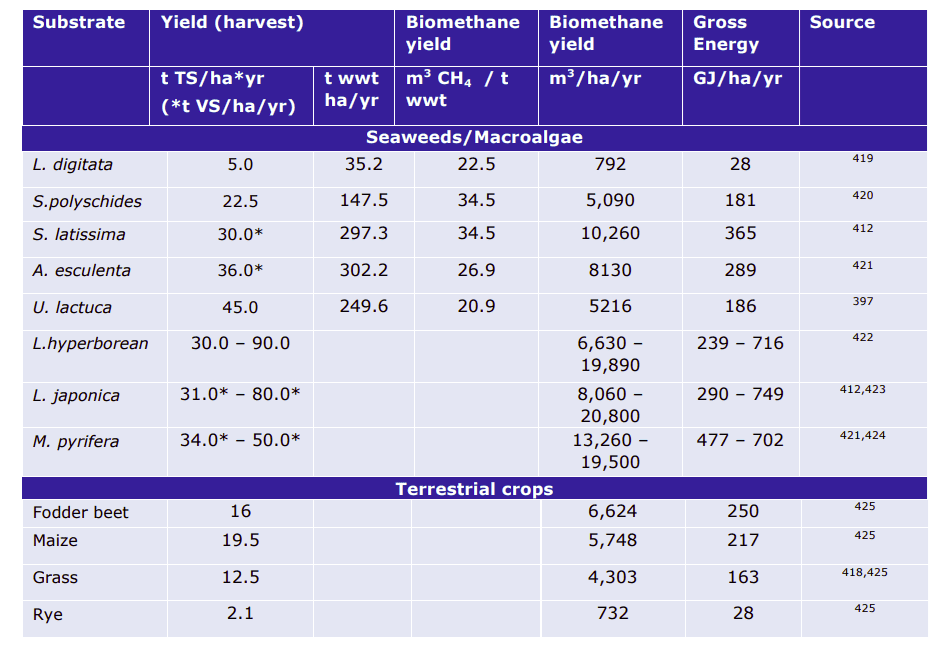
Figure 1: Potential gross energy production per hectare per annum based on a variety of species of seaweed (wwt = wet weight) Source: (State of Technology Review-Algae Bioenergy: IEA Bioenergy, 2017)
How Seaweed Is Converted to Biofuels
Seaweeds are biochemically well-suited for biofuel production. Their cell walls are rich in specialized polysaccharides (laminarin, mannitol, alginate, carrageenan, and ulvan) giving them high carbohydrate content (typically 40–65% of dry weight). Crucially, seaweeds contain little or no lignin, the recalcitrant structural polymer that makes terrestrial biomass costly and energy-intensive to process. This makes macroalgae considerably easier to break down and convert than wood, straw, or grasses.
There are multiple pathways for converting seaweed biomass into liquid or gaseous biofuels. This chapter focuses on three primary pathways. Each favors different seaweed species profiles and produces different fuel outputs:
| Pathway | Primary output | Key advantage | Main challenge |
| Anaerobic digestion (AD) | Biomethane / biogas | Uses wet feedstock; no energy-intensive drying required; digestate usable as fertilizer | Real-world yields below theoretical; inhibitory compounds in some species |
| Fermentation | Bioethanol / ABE (acetone-butanol-ethanol) | Produces higher-energy-density alcohols compatible with existing fuel infrastructure | Requires pre-treatment to release fermentable sugars; no large-scale operational data yet |
| Thermochemical: Hydrothermal liquefaction (HTL) | Bio-crude → gasoline / diesel / SAF | Handles wet, protein-rich biomass; produces energy-dense hydrocarbon fuel suitable for aviation | Capital-intensive; high catalyst cost; needs process optimization |
| Thermochemical: Pyrolysis / Gasification + Fischer-Tropsch (F-T) | Bio-oil, syngas → gasoline / diesel / SAF / biochar | Drop-in fuels with no blending limits; biochar co-product has carbon sequestration potential | High ash content in many seaweed species causes reactor slagging; requires pre-washing or ash-tolerant feedstocks |
Anaerobic digestion — producing biomethane and liquid fuels
Anaerobic digestion converts the organic matter in seaweed into biogas, a mixture of methane and carbon dioxide, through the action of microorganisms in an oxygen-free environment. This biogas can be used directly for heat and power, upgraded to biomethane (which can be used as a substitute for natural gas for electricity generation), or further processed into liquid transport fuels via established chemical synthesis routes. A key practical advantage is that AD can process wet biomass, avoiding the energy-intensive drying steps required by most other conversion routes. The remaining digestate is rich in nitrogen and phosphorus, making it a potential co-product fertilizer.
Fermentation — producing bioethanol and butanol
Fermentation converts seaweed sugars into bioethanol or acetone-butanol-ethanol (ABE). Unlike terrestrial crops, seaweed polysaccharides must first be broken down by enzymatic or acid hydrolysis before standard or engineered microorganisms can ferment the resulting sugars. The products, ethanol and butanol are compatible with existing fuel infrastructure and internal combustion engines. The MacroFuels EU project produced seaweed-derived fuel and demonstrated it in a road-going vehicle.
Hydrothermal liquefaction (HTL) — producing aviation-compatible bio-crude
Hydrothermal liquefaction processes wet seaweed biomass under high temperature and pressure, converting it directly into a bio-crude oil. This bio-crude can be upgraded into hydrocarbon fuels including gasoline, diesel, and critically sustainable aviation fuel (SAF), with energy density comparable to conventional jet fuel. HTL can accept wet feedstock without pre-drying, and an aqueous nutrient-rich co-product can be recycled back to seaweed cultivation. This makes HTL the most promising pathway for producing seaweed-derived aviation fuel, the largest identified strategic market for seaweed biofuels.
Thermochemical conversion — HTL, pyrolysis, gasification, and Fischer-Tropsch synthesis
Pyrolysis and gasification with Fischer-Tropsch (F-T) synthesis thermally decompose dried seaweed to produce bio-oil and syngas (a mixture of CO and H₂), which can then be converted via F-T synthesis into drop-in gasoline, diesel, or SAF with no blending limits and no engine modifications required. A solid biochar co-product is also generated, which has potential value as a soil amendment and carbon sequestration material. The main constraint for seaweed feedstocks is high ash content: species with more than approximately 20% ash by dry weight can cause slagging and corrosion in pyrolysis reactors, requiring either pre-washing or careful species selection. Pelagic biomass such as beach-cast Sargassum is an actively explored feedstock for this route.
Seaweed-based biofuels are at an early but pivotal stage. Pilot projects have demonstrated technical feasibility for example laboratory engine tests on seaweed-derived ethanol and acetone-butanol-ethanol (ABE) blends have demonstrated no significant performance degradation relative to fossil gasoline, along with measurable reductions in particulate emissions (MacroFuels EU project). The EU’s ReFuelEU Aviation regulation mandates sustainable aviation fuel use, while geopolitical energy security shocks have renewed political urgency around liquid fuel diversification. However, challenges in scaling, cost reduction, and regulatory alignment remain. Sustained investment in innovation, particularly in automation, offshore infrastructure, and in market development and the understanding of environmental impacts of scaling will be essential to unlock macroalgae’s full potential as a sustainable, large-scale bioenergy resource.
Why Explore Seaweed Based Biofuels?
Renewable energy will play a fundamental role in transitioning towards a more competitive, secure, and sustainable energy system internationally. Renewable fuels from biomass (biofuels) are expected to contribute especially in hard-to-electrify sectors such as aviation and shipping. The concept of biologically sourced transportation fuel is not theoretical: more than 98% of U.S. gasoline already contains 10% ethanol (E10) produced from large-scale cultivation of corn. However, usage of terrestrial biofuel feedstocks has several ecological disadvantages. It requires arable land to be diverted from food production, the application of fertilizer and pesticides and the use of irrigation water, which is becoming scarce in many regions (Kite-Powell et al., 2021). In some cases, because of the land-use changes, net carbon emissions actually increase with land-based biofuel production relative to fossil-fuel usage (Searchinger et al., 2008). As shown in the figure below, gross energy yield per hectare from seaweeds is similar to that for maize, the dominant terrestrial feedstock for biomethane.
Figure 1: Potential gross energy production per hectare per annum based on a variety of species of seaweed (wwt = wet weight) Source: (State of Technology Review-Algae Bioenergy: IEA Bioenergy, 2017)
How Seaweed Is Converted to Biofuels
Seaweeds are biochemically well-suited for biofuel production. Their cell walls are rich in specialized polysaccharides (laminarin, mannitol, alginate, carrageenan, and ulvan) giving them high carbohydrate content (typically 40–65% of dry weight). Crucially, seaweeds contain little or no lignin, the recalcitrant structural polymer that makes terrestrial biomass costly and energy-intensive to process. This makes macroalgae considerably easier to break down and convert than wood, straw, or grasses. There are multiple pathways for converting seaweed biomass into liquid or gaseous biofuels. This chapter focuses on three primary pathways. Each favors different seaweed species profiles and produces different fuel outputs:| Pathway | Primary output | Key advantage | Main challenge |
| Anaerobic digestion (AD) | Biomethane / biogas | Uses wet feedstock; no energy-intensive drying required; digestate usable as fertilizer | Real-world yields below theoretical; inhibitory compounds in some species |
| Fermentation | Bioethanol / ABE (acetone-butanol-ethanol) | Produces higher-energy-density alcohols compatible with existing fuel infrastructure | Requires pre-treatment to release fermentable sugars; no large-scale operational data yet |
| Thermochemical: Hydrothermal liquefaction (HTL) | Bio-crude → gasoline / diesel / SAF | Handles wet, protein-rich biomass; produces energy-dense hydrocarbon fuel suitable for aviation | Capital-intensive; high catalyst cost; needs process optimization |
| Thermochemical: Pyrolysis / Gasification + Fischer-Tropsch (F-T) | Bio-oil, syngas → gasoline / diesel / SAF / biochar | Drop-in fuels with no blending limits; biochar co-product has carbon sequestration potential | High ash content in many seaweed species causes reactor slagging; requires pre-washing or ash-tolerant feedstocks |
Anaerobic digestion — producing biomethane and liquid fuels
Anaerobic digestion converts the organic matter in seaweed into biogas, a mixture of methane and carbon dioxide, through the action of microorganisms in an oxygen-free environment. This biogas can be used directly for heat and power, upgraded to biomethane (which can be used as a substitute for natural gas for electricity generation), or further processed into liquid transport fuels via established chemical synthesis routes. A key practical advantage is that AD can process wet biomass, avoiding the energy-intensive drying steps required by most other conversion routes. The remaining digestate is rich in nitrogen and phosphorus, making it a potential co-product fertilizer.Fermentation — producing bioethanol and butanol
Fermentation converts seaweed sugars into bioethanol or acetone-butanol-ethanol (ABE). Unlike terrestrial crops, seaweed polysaccharides must first be broken down by enzymatic or acid hydrolysis before standard or engineered microorganisms can ferment the resulting sugars. The products, ethanol and butanol are compatible with existing fuel infrastructure and internal combustion engines. The MacroFuels EU project produced seaweed-derived fuel and demonstrated it in a road-going vehicle.Hydrothermal liquefaction (HTL) — producing aviation-compatible bio-crude
Hydrothermal liquefaction processes wet seaweed biomass under high temperature and pressure, converting it directly into a bio-crude oil. This bio-crude can be upgraded into hydrocarbon fuels including gasoline, diesel, and critically sustainable aviation fuel (SAF), with energy density comparable to conventional jet fuel. HTL can accept wet feedstock without pre-drying, and an aqueous nutrient-rich co-product can be recycled back to seaweed cultivation. This makes HTL the most promising pathway for producing seaweed-derived aviation fuel, the largest identified strategic market for seaweed biofuels.Thermochemical conversion — HTL, pyrolysis, gasification, and Fischer-Tropsch synthesis
Pyrolysis and gasification with Fischer-Tropsch (F-T) synthesis thermally decompose dried seaweed to produce bio-oil and syngas (a mixture of CO and H₂), which can then be converted via F-T synthesis into drop-in gasoline, diesel, or SAF with no blending limits and no engine modifications required. A solid biochar co-product is also generated, which has potential value as a soil amendment and carbon sequestration material. The main constraint for seaweed feedstocks is high ash content: species with more than approximately 20% ash by dry weight can cause slagging and corrosion in pyrolysis reactors, requiring either pre-washing or careful species selection. Pelagic biomass such as beach-cast Sargassum is an actively explored feedstock for this route. Seaweed-based biofuels are at an early but pivotal stage. Pilot projects have demonstrated technical feasibility for example laboratory engine tests on seaweed-derived ethanol and acetone-butanol-ethanol (ABE) blends have demonstrated no significant performance degradation relative to fossil gasoline, along with measurable reductions in particulate emissions (MacroFuels EU project). The EU's ReFuelEU Aviation regulation mandates sustainable aviation fuel use, while geopolitical energy security shocks have renewed political urgency around liquid fuel diversification. However, challenges in scaling, cost reduction, and regulatory alignment remain. Sustained investment in innovation, particularly in automation, offshore infrastructure, and in market development and the understanding of environmental impacts of scaling will be essential to unlock macroalgae’s full potential as a sustainable, large-scale bioenergy resource.Why Explore Seaweed Based Biofuels?
Renewable energy will play a fundamental role in transitioning towards a more competitive, secure, and sustainable energy system internationally. Renewable fuels from biomass (biofuels) are expected to contribute especially in hard-to-electrify sectors such as aviation and shipping. The concept of biologically sourced transportation fuel is not theoretical: more than 98% of U.S. gasoline already contains 10% ethanol (E10) produced from large-scale cultivation of corn. However, usage of terrestrial biofuel feedstocks has several ecological disadvantages. It requires arable land to be diverted from food production, the application of fertilizer and pesticides and the use of irrigation water, which is becoming scarce in many regions (Kite-Powell et al., 2021). In some cases, because of the land-use changes, net carbon emissions actually increase with land-based biofuel production relative to fossil-fuel usage (Searchinger et al., 2008). As shown in the figure below, gross energy yield per hectare from seaweeds is similar to that for maize, the dominant terrestrial feedstock for biomethane.
Figure 1: Potential gross energy production per hectare per annum based on a variety of species of seaweed (wwt = wet weight) Source: (State of Technology Review-Algae Bioenergy: IEA Bioenergy, 2017)
How Seaweed Is Converted to Biofuels
Seaweeds are biochemically well-suited for biofuel production. Their cell walls are rich in specialized polysaccharides (laminarin, mannitol, alginate, carrageenan, and ulvan) giving them high carbohydrate content (typically 40–65% of dry weight). Crucially, seaweeds contain little or no lignin, the recalcitrant structural polymer that makes terrestrial biomass costly and energy-intensive to process. This makes macroalgae considerably easier to break down and convert than wood, straw, or grasses. There are multiple pathways for converting seaweed biomass into liquid or gaseous biofuels. This chapter focuses on three primary pathways. Each favors different seaweed species profiles and produces different fuel outputs:| Pathway | Primary output | Key advantage | Main challenge |
| Anaerobic digestion (AD) | Biomethane / biogas | Uses wet feedstock; no energy-intensive drying required; digestate usable as fertilizer | Real-world yields below theoretical; inhibitory compounds in some species |
| Fermentation | Bioethanol / ABE (acetone-butanol-ethanol) | Produces higher-energy-density alcohols compatible with existing fuel infrastructure | Requires pre-treatment to release fermentable sugars; no large-scale operational data yet |
| Thermochemical: Hydrothermal liquefaction (HTL) | Bio-crude → gasoline / diesel / SAF | Handles wet, protein-rich biomass; produces energy-dense hydrocarbon fuel suitable for aviation | Capital-intensive; high catalyst cost; needs process optimization |
| Thermochemical: Pyrolysis / Gasification + Fischer-Tropsch (F-T) | Bio-oil, syngas → gasoline / diesel / SAF / biochar | Drop-in fuels with no blending limits; biochar co-product has carbon sequestration potential | High ash content in many seaweed species causes reactor slagging; requires pre-washing or ash-tolerant feedstocks |
Anaerobic digestion — producing biomethane and liquid fuels
Anaerobic digestion converts the organic matter in seaweed into biogas, a mixture of methane and carbon dioxide, through the action of microorganisms in an oxygen-free environment. This biogas can be used directly for heat and power, upgraded to biomethane (which can be used as a substitute for natural gas for electricity generation), or further processed into liquid transport fuels via established chemical synthesis routes. A key practical advantage is that AD can process wet biomass, avoiding the energy-intensive drying steps required by most other conversion routes. The remaining digestate is rich in nitrogen and phosphorus, making it a potential co-product fertilizer.Fermentation — producing bioethanol and butanol
Fermentation converts seaweed sugars into bioethanol or acetone-butanol-ethanol (ABE). Unlike terrestrial crops, seaweed polysaccharides must first be broken down by enzymatic or acid hydrolysis before standard or engineered microorganisms can ferment the resulting sugars. The products, ethanol and butanol are compatible with existing fuel infrastructure and internal combustion engines. The MacroFuels EU project produced seaweed-derived fuel and demonstrated it in a road-going vehicle.Thermochemical conversion — HTL, pyrolysis, gasification, and Fischer-Tropsch synthesis
Hydrothermal liquefaction (HTL) — producing aviation-compatible bio-crude
Hydrothermal liquefaction processes wet seaweed biomass under high temperature and pressure, converting it directly into a bio-crude oil. This bio-crude can be upgraded into hydrocarbon fuels including gasoline, diesel, and critically sustainable aviation fuel (SAF), with energy density comparable to conventional jet fuel. HTL can accept wet feedstock without pre-drying, and an aqueous nutrient-rich co-product can be recycled back to seaweed cultivation. This makes HTL the most promising pathway for producing seaweed-derived aviation fuel, the largest identified strategic market for seaweed biofuels. Pyrolysis and gasification with Fischer-Tropsch (F-T) synthesis thermally decompose dried seaweed to produce bio-oil and syngas (a mixture of CO and H₂), which can then be converted via F-T synthesis into drop-in gasoline, diesel, or SAF with no blending limits and no engine modifications required. A solid biochar co-product is also generated, which has potential value as a soil amendment and carbon sequestration material. The main constraint for seaweed feedstocks is high ash content: species with more than approximately 20% ash by dry weight can cause slagging and corrosion in pyrolysis reactors, requiring either pre-washing or careful species selection. Pelagic biomass such as beach-cast Sargassum is an actively explored feedstock for this route. Seaweed-based biofuels are at an early but pivotal stage. Pilot projects have demonstrated technical feasibility for example laboratory engine tests on seaweed-derived ethanol and acetone-butanol-ethanol (ABE) blends have demonstrated no significant performance degradation relative to fossil gasoline, along with measurable reductions in particulate emissions (MacroFuels EU project). The EU's ReFuelEU Aviation regulation mandates sustainable aviation fuel use, while geopolitical energy security shocks have renewed political urgency around liquid fuel diversification. However, challenges in scaling, cost reduction, and regulatory alignment remain. Sustained investment in innovation, particularly in automation, offshore infrastructure, and in market development and the understanding of environmental impacts of scaling will be essential to unlock macroalgae’s full potential as a sustainable, large-scale bioenergy resource.Why Explore Seaweed Based Biofuels?
Renewable energy will play a fundamental role in transitioning towards a more competitive, secure, and sustainable energy system internationally. Renewable fuels from biomass (biofuels) are expected to contribute especially in hard-to-electrify sectors such as aviation and shipping. The concept of biologically sourced transportation fuel is not theoretical: more than 98% of U.S. gasoline already contains 10% ethanol (E10) produced from large-scale cultivation of corn. However, usage of terrestrial biofuel feedstocks has several ecological disadvantages. It requires arable land to be diverted from food production, the application of fertilizer and pesticides and the use of irrigation water, which is becoming scarce in many regions (Kite-Powell et al., 2021). In some cases, because of the land-use changes, net carbon emissions actually increase with land-based biofuel production relative to fossil-fuel usage (Searchinger et al., 2008). As shown in the figure below, gross energy yield per hectare from seaweeds is similar to that for maize, the dominant terrestrial feedstock for biomethane.
Figure 1: Potential gross energy production per hectare per annum based on a variety of species of seaweed (wwt = wet weight) Source: (State of Technology Review-Algae Bioenergy: IEA Bioenergy, 2017)
How Seaweed Is Converted to Biofuels
Seaweeds are biochemically well-suited for biofuel production. Their cell walls are rich in specialized polysaccharides (laminarin, mannitol, alginate, carrageenan, and ulvan) giving them high carbohydrate content (typically 40–65% of dry weight). Crucially, seaweeds contain little or no lignin, the recalcitrant structural polymer that makes terrestrial biomass costly and energy-intensive to process. This makes macroalgae considerably easier to break down and convert than wood, straw, or grasses. There are three primary pathways for converting seaweed biomass into liquid or gaseous biofuels. Each favors different seaweed species profiles and produces different fuel outputs:| Pathway | Primary output | Key advantage | Main challenge |
| Anaerobic digestion (AD) | Biomethane / biogas | Uses wet feedstock; no energy-intensive drying required; digestate usable as fertilizer | Real-world yields below theoretical; inhibitory compounds in some species |
| Fermentation | Bioethanol / ABE (acetone-butanol-ethanol) | Produces higher-energy-density alcohols compatible with existing fuel infrastructure | Requires pre-treatment to release fermentable sugars; no large-scale operational data yet |
| Thermochemical: Hydrothermal liquefaction (HTL) | Bio-crude → gasoline / diesel / SAF | Handles wet, protein-rich biomass; produces energy-dense hydrocarbon fuel suitable for aviation | Capital-intensive; high catalyst cost; needs process optimization |
| Thermochemical: Pyrolysis / Gasification + Fischer-Tropsch (F-T) | Bio-oil, syngas → gasoline / diesel / SAF / biochar | Drop-in fuels with no blending limits; biochar co-product has carbon sequestration potential | High ash content in many seaweed species causes reactor slagging; requires pre-washing or ash-tolerant feedstocks |
Anaerobic digestion — producing biomethane and liquid fuels
Anaerobic digestion converts the organic matter in seaweed into biogas, a mixture of methane and carbon dioxide, through the action of microorganisms in an oxygen-free environment. This biogas can be used directly for heat and power, upgraded to biomethane (which can be used as a substitute for natural gas for electricity generation), or further processed into liquid transport fuels via established chemical synthesis routes. A key practical advantage is that AD can process wet biomass, avoiding the energy-intensive drying steps required by most other conversion routes. The remaining digestate is rich in nitrogen and phosphorus, making it a potential co-product fertilizer.Fermentation — producing bioethanol and butanol
Fermentation converts seaweed sugars into bioethanol or acetone-butanol-ethanol (ABE). Unlike terrestrial crops, seaweed polysaccharides must first be broken down by enzymatic or acid hydrolysis before standard or engineered microorganisms can ferment the resulting sugars. The products, ethanol and butanol are compatible with existing fuel infrastructure and internal combustion engines. The MacroFuels EU project produced seaweed-derived fuel and demonstrated it in a road-going vehicle.Thermochemical conversion — HTL, pyrolysis, gasification, and Fischer-Tropsch synthesis
Hydrothermal liquefaction (HTL) — producing aviation-compatible bio-crude
Hydrothermal liquefaction processes wet seaweed biomass under high temperature and pressure, converting it directly into a bio-crude oil. This bio-crude can be upgraded into hydrocarbon fuels including gasoline, diesel, and critically sustainable aviation fuel (SAF), with energy density comparable to conventional jet fuel. HTL can accept wet feedstock without pre-drying, and an aqueous nutrient-rich co-product can be recycled back to seaweed cultivation. This makes HTL the most promising pathway for producing seaweed-derived aviation fuel, the largest identified strategic market for seaweed biofuels. Pyrolysis and gasification with Fischer-Tropsch (F-T) synthesis thermally decompose dried seaweed to produce bio-oil and syngas (a mixture of CO and H₂), which can then be converted via F-T synthesis into drop-in gasoline, diesel, or SAF with no blending limits and no engine modifications required. A solid biochar co-product is also generated, which has potential value as a soil amendment and carbon sequestration material. The main constraint for seaweed feedstocks is high ash content: species with more than approximately 20% ash by dry weight can cause slagging and corrosion in pyrolysis reactors, requiring either pre-washing or careful species selection. Pelagic biomass such as beach-cast Sargassum is an actively explored feedstock for this route. Seaweed-based biofuels are at an early but pivotal stage. Pilot projects have demonstrated technical feasibility for example laboratory engine tests on seaweed-derived ethanol and acetone-butanol-ethanol (ABE) blends have demonstrated no significant performance degradation relative to fossil gasoline, along with measurable reductions in particulate emissions (MacroFuels EU project). The EU's ReFuelEU Aviation regulation mandates sustainable aviation fuel use, while geopolitical energy security shocks have renewed political urgency around liquid fuel diversification. However, challenges in scaling, cost reduction, and regulatory alignment remain. Sustained investment in innovation, particularly in automation, offshore infrastructure, and in market development and the understanding of environmental impacts of scaling will be essential to unlock macroalgae’s full potential as a sustainable, large-scale bioenergy resource.Why Explore Seaweed Based Biofuels?
Renewable energy will play a fundamental role in transitioning towards a more competitive, secure, and sustainable energy system internationally. Renewable fuels from biomass (biofuels) are expected to contribute especially in hard-to-electrify sectors such as aviation and shipping. The concept of biologically sourced transportation fuel is not theoretical: more than 98% of U.S. gasoline already contains 10% ethanol (E10) produced from corn biomass. However, usage of terrestrial biofuel feedstocks has several ecological disadvantages. It requires arable land to be diverted from food production, the application of fertilizer and pesticides and the use of irrigation water, which is becoming scarce in many regions (Kite-Powell et al., 2021). In some cases, because of the land-use changes, net carbon emissions actually increase with land-based biofuel production relative to fossil-fuel usage (Searchinger et al., 2008). As shown in the figure below, gross energy yield per hectare from seaweeds is similar to that for maize, the dominant terrestrial feedstock for biomethane.
Figure 1: Potential gross energy production per hectare per annum based on a variety of species of seaweed (wwt = wet weight) Source: (State of Technology Review-Algae Bioenergy: IEA Bioenergy, 2017)
How Seaweed Is Converted to Biofuels
Seaweeds are biochemically well-suited for biofuel production. Their cell walls are rich in specialized polysaccharides (laminarin, mannitol, alginate, carrageenan, and ulvan) giving them high carbohydrate content (typically 40–65% of dry weight). Crucially, seaweeds contain little or no lignin, the recalcitrant structural polymer that makes terrestrial biomass costly and energy-intensive to process. This makes macroalgae considerably easier to break down and convert than wood, straw, or grasses. There are three primary pathways for converting seaweed biomass into liquid or gaseous biofuels. Each favors different seaweed species profiles and produces different fuel outputs:| Pathway | Primary output | Key advantage | Main challenge |
| Anaerobic digestion (AD) | Biomethane / biogas | Uses wet feedstock; no energy-intensive drying required; digestate usable as fertilizer | Real-world yields below theoretical; inhibitory compounds in some species |
| Fermentation | Bioethanol / ABE (acetone-butanol-ethanol) | Produces higher-energy-density alcohols compatible with existing fuel infrastructure | Requires pre-treatment to release fermentable sugars; no large-scale operational data yet |
| Thermochemical: Hydrothermal liquefaction (HTL) | Bio-crude → gasoline / diesel / SAF | Handles wet, protein-rich biomass; produces energy-dense hydrocarbon fuel suitable for aviation | Capital-intensive; high catalyst cost; needs process optimization |
| Thermochemical: Pyrolysis / Gasification + Fischer-Tropsch (F-T) | Bio-oil, syngas → gasoline / diesel / SAF / biochar | Drop-in fuels with no blending limits; biochar co-product has carbon sequestration potential | High ash content in many seaweed species causes reactor slagging; requires pre-washing or ash-tolerant feedstocks |
Anaerobic digestion — producing biomethane and liquid fuels
Anaerobic digestion converts the organic matter in seaweed into biogas, a mixture of methane and carbon dioxide, through the action of microorganisms in an oxygen-free environment. This biogas can be used directly for heat and power, upgraded to biomethane (which can be used as a substitute for natural gas for electricity generation), or further processed into liquid transport fuels via established chemical synthesis routes. A key practical advantage is that AD can process wet biomass, avoiding the energy-intensive drying steps required by most other conversion routes. The remaining digestate is rich in nitrogen and phosphorus, making it a potential co-product fertilizer.Fermentation — producing bioethanol and butanol
Fermentation converts seaweed sugars into bioethanol or acetone-butanol-ethanol (ABE). Unlike terrestrial crops, seaweed polysaccharides must first be broken down by enzymatic or acid hydrolysis before standard or engineered microorganisms can ferment the resulting sugars. The products, ethanol and butanol are compatible with existing fuel infrastructure and internal combustion engines. The MacroFuels EU project produced seaweed-derived fuel and demonstrated it in a road-going vehicle.Thermochemical conversion — HTL, pyrolysis, gasification, and Fischer-Tropsch synthesis
Hydrothermal liquefaction (HTL) — producing aviation-compatible bio-crude
Hydrothermal liquefaction processes wet seaweed biomass under high temperature and pressure, converting it directly into a bio-crude oil. This bio-crude can be upgraded into hydrocarbon fuels including gasoline, diesel, and critically sustainable aviation fuel (SAF), with energy density comparable to conventional jet fuel. HTL can accept wet feedstock without pre-drying, and an aqueous nutrient-rich co-product can be recycled back to seaweed cultivation. This makes HTL the most promising pathway for producing seaweed-derived aviation fuel, the largest identified strategic market for seaweed biofuels. Pyrolysis and gasification with Fischer-Tropsch (F-T) synthesis thermally decompose dried seaweed to produce bio-oil and syngas (a mixture of CO and H₂), which can then be converted via F-T synthesis into drop-in gasoline, diesel, or SAF with no blending limits and no engine modifications required. A solid biochar co-product is also generated, which has potential value as a soil amendment and carbon sequestration material. The main constraint for seaweed feedstocks is high ash content: species with more than approximately 20% ash by dry weight can cause slagging and corrosion in pyrolysis reactors, requiring either pre-washing or careful species selection. Pelagic biomass such as beach-cast Sargassum is an actively explored feedstock for this route. Seaweed-based biofuels are at an early but pivotal stage. Pilot projects have demonstrated technical feasibility for example laboratory engine tests on seaweed-derived ethanol and acetone-butanol-ethanol (ABE) blends have demonstrated no significant performance degradation relative to fossil gasoline, along with measurable reductions in particulate emissions (MacroFuels EU project). The EU's ReFuelEU Aviation regulation mandates sustainable aviation fuel use, while geopolitical energy security shocks have renewed political urgency around liquid fuel diversification. However, challenges in scaling, cost reduction, and regulatory alignment remain. Sustained investment in innovation, particularly in automation, offshore infrastructure, and in market development and the understanding of environmental impacts of scaling will be essential to unlock macroalgae’s full potential as a sustainable, large-scale bioenergy resource.Why Explore Seaweed Based Biofuels?
Renewable energy will play a fundamental role in transitioning towards a more competitive, secure, and sustainable energy system internationally. Renewable fuels from biomass (biofuels) are expected to contribute especially in hard-to-electrify sectors such as aviation and shipping. The concept of biologically sourced transportation fuel is not theoretical: more than 98% of U.S. gasoline already contains 10% ethanol (E10) produced from corn biomass. However, usage of terrestrial biofuel feedstocks has several ecological disadvantages. It requires arable land to be diverted from food production, the application of fertilizer and pesticides and the use of irrigation water, which is becoming scarce in many regions (Kite-Powell et al., 2021). In some cases, because of the land-use changes, net carbon emissions actually increase with land-based biofuel production relative to fossil-fuel usage (Searchinger et al., 2008). As shown in the figure below, gross energy yield per hectare from seaweeds is similar to that for maize, the dominant terrestrial feedstock for biomethane.
Figure 1: Potential gross energy production per hectare per annum based on a variety of species of seaweed (wwt = wet weight) Source: (State of Technology Review-Algae Bioenergy: IEA Bioenergy, 2017)
How Seaweed Is Converted to Biofuels
Seaweeds are biochemically well-suited for biofuel production. Their cell walls are rich in specialized polysaccharides (laminarin, mannitol, alginate, carrageenan, and ulvan) giving them high carbohydrate content (typically 40–65% of dry weight). Crucially, seaweeds contain little or no lignin, the recalcitrant structural polymer that makes terrestrial biomass costly and energy-intensive to process. This makes macroalgae considerably easier to break down and convert than wood, straw, or grasses. There are three primary pathways for converting seaweed biomass into liquid or gaseous biofuels. Each favors different seaweed species profiles and produces different fuel outputs:| Pathway | Primary output | Key advantage | Main challenge |
| Anaerobic digestion (AD) | Biomethane / biogas | Uses wet feedstock; no energy-intensive drying required; digestate usable as fertilizer | Real-world yields below theoretical; inhibitory compounds in some species |
| Fermentation | Bioethanol / ABE (acetone-butanol-ethanol) | Produces higher-energy-density alcohols compatible with existing fuel infrastructure | Requires pre-treatment to release fermentable sugars; no large-scale operational data yet |
| Hydrothermal liquefaction (HTL) | Bio-crude → gasoline / diesel / SAF | Handles wet, protein-rich biomass; produces energy-dense hydrocarbon fuel suitable for aviation | Capital-intensive; high catalyst cost; needs process optimization |
Anaerobic digestion — producing biomethane and liquid fuels
Anaerobic digestion converts the organic matter in seaweed into biogas, a mixture of methane and carbon dioxide, through the action of microorganisms in an oxygen-free environment. This biogas can be used directly for heat and power, upgraded to biomethane (which can be used as a substitute for natural gas for electricity generation), or further processed into liquid transport fuels via established chemical synthesis routes. A key practical advantage is that AD can process wet biomass, avoiding the energy-intensive drying steps required by most other conversion routes. The remaining digestate is rich in nitrogen and phosphorus, making it a potential co-product fertilizer.Fermentation — producing bioethanol and butanol
Fermentation converts seaweed sugars into bioethanol or acetone-butanol-ethanol (ABE). Unlike terrestrial crops, seaweed polysaccharides must first be broken down by enzymatic or acid hydrolysis before standard or engineered microorganisms can ferment the resulting sugars. The products, ethanol and butanol are compatible with existing fuel infrastructure and internal combustion engines. The MacroFuels EU project produced seaweed-derived fuel and demonstrated it in a road-going vehicle.Hydrothermal liquefaction (HTL) — producing aviation-compatible bio-crude
Hydrothermal liquefaction processes wet seaweed biomass under high temperature and pressure, converting it directly into a bio-crude oil. This bio-crude can be upgraded into hydrocarbon fuels including gasoline, diesel, and critically sustainable aviation fuel (SAF), with energy density comparable to conventional jet fuel. HTL can accept wet feedstock without pre-drying, and an aqueous nutrient-rich co-product can be recycled back to seaweed cultivation. This makes HTL the most promising pathway for producing seaweed-derived aviation fuel, the largest identified strategic market for seaweed biofuels. Seaweed-based biofuels are at an early but pivotal stage. Pilot projects have demonstrated technical feasibility for example laboratory engine tests on seaweed-derived ethanol and acetone-butanol-ethanol (ABE) blends have demonstrated no significant performance degradation relative to fossil gasoline, along with measurable reductions in particulate emissions (MacroFuels EU project). The EU's ReFuelEU Aviation regulation mandates sustainable aviation fuel use, while geopolitical energy security shocks have renewed political urgency around liquid fuel diversification. However, challenges in scaling, cost reduction, and regulatory alignment remain. Sustained investment in innovation, particularly in automation, offshore infrastructure, and in market development and the understanding of environmental impacts of scaling will be essential to unlock macroalgae’s full potential as a sustainable, large-scale bioenergy resource.Why Explore Seaweed Based Biofuels?
Renewable energy will play a fundamental role in transitioning towards a more competitive, secure, and sustainable energy system internationally. Renewable fuels from biomass (biofuels) are expected to contribute especially in hard-to-electrify sectors such as aviation and shipping. The concept of biologically sourced transportation fuel is not theoretical: more than 98% of U.S. gasoline already contains 10% ethanol (E10) produced from corn biomass. However, usage of terrestrial biofuel feedstocks has several ecological disadvantages. It requires arable land to be diverted from food production, the application of fertilizer and pesticides and the use of irrigation water, which is becoming scarce in many regions (Kite-Powell et al., 2021). In some cases, because of the land-use changes, net carbon emissions actually increase with land-based biofuel production relative to fossil-fuel usage (Searchinger et al., 2008). As shown in the figure below, gross energy yield per hectare from seaweeds is similar to that for maize, the dominant terrestrial feedstock for biomethane.
Figure 1: Potential gross energy production per hectare per annum based on a variety of species of seaweed (wwt = wet weight) Source: (State of Technology Review-Algae Bioenergy: IEA Bioenergy, 2017)
How Seaweed Is Converted to Biofuels
Seaweeds are biochemically well-suited for biofuel production. Their cell walls are rich in specialized polysaccharides (laminarin, mannitol, alginate, carrageenan, and ulvan) giving them high carbohydrate content (typically 40–65% of dry weight). Crucially, seaweeds contain little or no lignin, the recalcitrant structural polymer that makes terrestrial biomass costly and energy-intensive to process. This makes macroalgae considerably easier to break down and convert than wood, straw, or grasses. There are three primary pathways for converting seaweed biomass into liquid or gaseous biofuels. Each favors different seaweed species profiles and produces different fuel outputs:| Pathway | Primary output | Key advantage | Main challenge |
| Anaerobic digestion (AD) | Biomethane / biogas | Uses wet feedstock; no energy-intensive drying required; digestate usable as fertilizer | Real-world yields below theoretical; inhibitory compounds in some species |
| Fermentation | Bioethanol / ABE (acetone-butanol-ethanol) | Produces higher-energy-density alcohols compatible with existing fuel infrastructure | Requires pre-treatment to release fermentable sugars; no large-scale operational data yet |
| Hydrothermal liquefaction (HTL) | Bio-crude → gasoline / diesel / SAF | Handles wet, protein-rich biomass; produces energy-dense hydrocarbon fuel suitable for aviation | Capital-intensive; high catalyst cost; needs process optimization |
Anaerobic digestion — producing biomethane and liquid fuels
Anaerobic digestion converts the organic matter in seaweed into biogas, a mixture of methane and carbon dioxide, through the action of microorganisms in an oxygen-free environment. This biogas can be used directly for heat and power, upgraded to biomethane (which can be used as a substitute for natural gas for electricity generation), or further processed into liquid transport fuels via established chemical synthesis routes. A key practical advantage is that AD can process wet biomass, avoiding the energy-intensive drying steps required by most other conversion routes. The remaining digestate is rich in nitrogen and phosphorus, making it a potential co-product fertilizer.Fermentation — producing bioethanol and butanol
Fermentation converts seaweed sugars into bioethanol or acetone-butanol-ethanol (ABE). Unlike terrestrial crops, seaweed polysaccharides must first be broken down by enzymatic or acid hydrolysis before standard or engineered microorganisms can ferment the resulting sugars. The products, ethanol and butanol are compatible with existing fuel infrastructure and internal combustion engines. The MacroFuels EU project produced seaweed-derived fuel and demonstrated it in a road-going vehicle.Hydrothermal liquefaction (HTL) — producing aviation-compatible bio-crude
Hydrothermal liquefaction processes wet seaweed biomass under high temperature and pressure, converting it directly into a bio-crude oil. This bio-crude can be upgraded into hydrocarbon fuels including gasoline, diesel, and critically sustainable aviation fuel (SAF), with energy density comparable to conventional jet fuel. HTL can accept wet feedstock without pre-drying, and an aqueous nutrient-rich co-product can be recycled back to seaweed cultivation. This makes HTL the most promising pathway for producing seaweed-derived aviation fuel, the largest identified strategic market for seaweed biofuels. Seaweed-based biofuels are at an early but pivotal stage. Pilot projects have demonstrated technical feasibility for example laboratory engine tests on seaweed-derived ethanol and acetone-butanol-ethanol (ABE) blends have demonstrated no significant performance degradation relative to fossil gasoline, along with measurable reductions in particulate emissions (MacroFuels EU project). The EU's ReFuelEU Aviation regulation mandates sustainable aviation fuel use, while geopolitical energy security shocks have renewed political urgency around liquid fuel diversification. However, challenges in scaling, cost reduction, and regulatory alignment remain. Sustained investment in innovation, particularly in automation, offshore infrastructure, and in market development and the understanding of environmental impacts of scaling will be essential to unlock macroalgae’s full potential as a sustainable, large-scale bioenergy resource.Why Explore Seaweed Based Biofuels?
Renewable energy will play a fundamental role in transitioning towards a more competitive, secure, and sustainable energy system internationally. Renewable fuels from biomass (biofuels) are expected to contribute especially in hard-to-electrify sectors such as aviation and shipping. The concept of biologically sourced transportation fuel is not theoretical: more than 98% of U.S. gasoline already contains 10% ethanol (E10) produced from corn biomass. However, usage of terrestrial biofuel feedstocks has several ecological disadvantages. It requires arable land to be diverted from food production, the application of fertilizer and pesticides and the use of irrigation water, which is becoming scarce in many regions (Kite-Powell et al., 2021). In some cases, because of the land-use changes, net carbon emissions actually increase with land-based biofuel production relative to fossil-fuel usage (Searchinger et al., 2008). As shown in the figure below, gross energy yield per hectare from seaweeds is similar to that for maize, the dominant terrestrial feedstock for biomethane.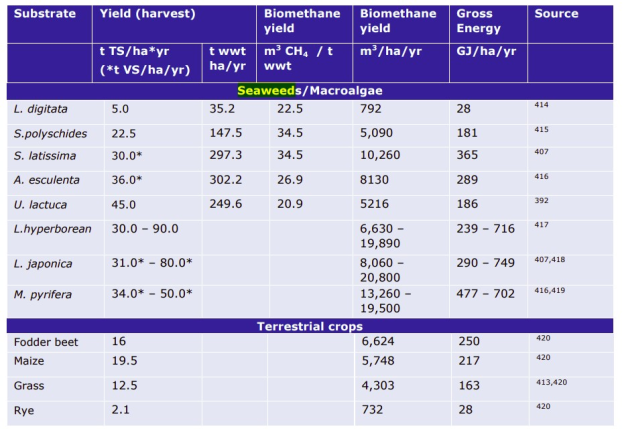 Figure 1: Potential gross energy production per hectare per annum based on a variety of species of seaweed (wwt = wet weight) Source: (State of Technology Review-Algae Bioenergy: IEA Bioenergy, 2017)
How Seaweed Is Converted to Biofuels
Seaweeds are biochemically well-suited for biofuel production. Their cell walls are rich in specialized polysaccharides (laminarin, mannitol, alginate, carrageenan, and ulvan) giving them high carbohydrate content (typically 40–65% of dry weight). Crucially, seaweeds contain little or no lignin, the recalcitrant structural polymer that makes terrestrial biomass costly and energy-intensive to process. This makes macroalgae considerably easier to break down and convert than wood, straw, or grasses. There are three primary pathways for converting seaweed biomass into liquid or gaseous biofuels. Each favors different seaweed species profiles and produces different fuel outputs:| Pathway | Primary output | Key advantage | Main challenge |
| Anaerobic digestion (AD) | Biomethane / biogas | Uses wet feedstock; no energy-intensive drying required; digestate usable as fertilizer | Real-world yields below theoretical; inhibitory compounds in some species |
| Fermentation | Bioethanol / ABE (acetone-butanol-ethanol) | Produces higher-energy-density alcohols compatible with existing fuel infrastructure | Requires pre-treatment to release fermentable sugars; no large-scale operational data yet |
| Hydrothermal liquefaction (HTL) | Bio-crude → gasoline / diesel / SAF | Handles wet, protein-rich biomass; produces energy-dense hydrocarbon fuel suitable for aviation | Capital-intensive; high catalyst cost; needs process optimization |
Anaerobic digestion — producing biomethane and liquid fuels
Anaerobic digestion converts the organic matter in seaweed into biogas, a mixture of methane and carbon dioxide, through the action of microorganisms in an oxygen-free environment. This biogas can be used directly for heat and power, upgraded to biomethane (which can be used as a substitute for natural gas for electricity generation), or further processed into liquid transport fuels via established chemical synthesis routes. A key practical advantage is that AD can process wet biomass, avoiding the energy-intensive drying steps required by most other conversion routes. The remaining digestate is rich in nitrogen and phosphorus, making it a potential co-product fertilizer.Fermentation — producing bioethanol and butanol
Fermentation converts seaweed sugars into bioethanol or acetone-butanol-ethanol (ABE). Unlike terrestrial crops, seaweed polysaccharides must first be broken down by enzymatic or acid hydrolysis before standard or engineered microorganisms can ferment the resulting sugars. The products, ethanol and butanol are compatible with existing fuel infrastructure and internal combustion engines. The MacroFuels EU project produced seaweed-derived fuel and demonstrated it in a road-going vehicle.Hydrothermal liquefaction (HTL) — producing aviation-compatible bio-crude
Hydrothermal liquefaction processes wet seaweed biomass under high temperature and pressure, converting it directly into a bio-crude oil. This bio-crude can be upgraded into hydrocarbon fuels including gasoline, diesel, and critically sustainable aviation fuel (SAF), with energy density comparable to conventional jet fuel. HTL can accept wet feedstock without pre-drying, and an aqueous nutrient-rich co-product can be recycled back to seaweed cultivation. This makes HTL the most promising pathway for producing seaweed-derived aviation fuel, the largest identified strategic market for seaweed biofuels. Seaweed-based biofuels are at an early but pivotal stage. Pilot projects have demonstrated technical feasibility for example laboratory engine tests on seaweed-derived ethanol and acetone-butanol-ethanol (ABE) blends have demonstrated no significant performance degradation relative to fossil gasoline, along with measurable reductions in particulate emissions (MacroFuels EU project). The EU's ReFuelEU Aviation regulation mandates sustainable aviation fuel use, while geopolitical energy security shocks have renewed political urgency around liquid fuel diversification. However, challenges in scaling, cost reduction, and regulatory alignment remain. Sustained investment in innovation, particularly in automation, offshore infrastructure, and in market development and the understanding of environmental impacts of scaling will be essential to unlock macroalgae’s full potential as a sustainable, large-scale bioenergy resource.Why Explore Seaweed Based Biofuels?
Renewable energy will play a fundamental role in transitioning towards a more competitive, secure, and sustainable energy system internationally. Renewable fuels from biomass (biofuels) are expected to contribute especially in hard-to-electrify sectors such as aviation and shipping. The concept of biologically sourced transportation fuel is not theoretical: more than 98% of U.S. gasoline already contains 10% ethanol (E10) produced from corn biomass. However, usage of terrestrial biofuel feedstocks has several ecological disadvantages. It requires arable land to be diverted from food production, the application of fertilizer and pesticides and the use of irrigation water, which is becoming scarce in many regions (Kite-Powell et al., 2021). In some cases, because of the land-use changes, net carbon emissions actually increase with land-based biofuel production relative to fossil-fuel usage (Searchinger et al., 2008). As shown in the figure below, gross energy yield per hectare from seaweeds is similar to that for maize, the dominant terrestrial feedstock for biomethane.
Figure 1: Potential gross energy production per hectare per annum based on a variety of species of seaweed (wwt = wet weight) Source: (State of Technology Review-Algae Bioenergy: IEA Bioenergy, 2017)
How Seaweed Is Converted to Biofuels
Seaweeds are biochemically well-suited for biofuel production. Their cell walls are rich in specialized polysaccharides (laminarin, mannitol, alginate, carrageenan, and ulvan) giving them high carbohydrate content (typically 40–65% of dry weight). Crucially, seaweeds contain little or no lignin, the recalcitrant structural polymer that makes terrestrial biomass costly and energy-intensive to process. This makes macroalgae considerably easier to break down and convert than wood, straw, or grasses. There are three primary pathways for converting seaweed biomass into liquid or gaseous biofuels. Each favors different seaweed species profiles and produces different fuel outputs:| Pathway | Primary output | Key advantage | Main challenge |
| Anaerobic digestion (AD) | Biomethane / biogas | Uses wet feedstock; no energy-intensive drying required; digestate usable as fertilizer | Real-world yields below theoretical; inhibitory compounds in some species |
| Fermentation | Bioethanol / ABE (acetone-butanol-ethanol) | Produces higher-energy-density alcohols compatible with existing fuel infrastructure | Requires pre-treatment to release fermentable sugars; no large-scale operational data yet |
| Hydrothermal liquefaction (HTL) | Bio-crude → gasoline / diesel / SAF | Handles wet, protein-rich biomass; produces energy-dense hydrocarbon fuel suitable for aviation | Capital-intensive; high catalyst cost; needs process optimization |
Anaerobic digestion — producing biomethane and liquid fuels
Anaerobic digestion converts the organic matter in seaweed into biogas, a mixture of methane and carbon dioxide, through the action of microorganisms in an oxygen-free environment. This biogas can be used directly for heat and power, upgraded to biomethane (which can be used as a substitute for natural gas for electricity generation), or further processed into liquid transport fuels via established chemical synthesis routes. A key practical advantage is that AD can process wet biomass, avoiding the energy-intensive drying steps required by most other conversion routes. The remaining digestate is rich in nitrogen and phosphorus, making it a potential co-product fertilizer.Fermentation — producing bioethanol and butanol
Fermentation converts seaweed sugars into bioethanol or acetone-butanol-ethanol (ABE). Unlike terrestrial crops, seaweed polysaccharides must first be broken down by enzymatic or acid hydrolysis before standard or engineered microorganisms can ferment the resulting sugars. The products, ethanol and butanol are compatible with existing fuel infrastructure and internal combustion engines. The MacroFuels EU project produced seaweed-derived fuel and demonstrated it in a road-going vehicle.Hydrothermal liquefaction (HTL) — producing aviation-compatible bio-crude
Hydrothermal liquefaction processes wet seaweed biomass under high temperature and pressure, converting it directly into a bio-crude oil. This bio-crude can be upgraded into hydrocarbon fuels including gasoline, diesel, and critically sustainable aviation fuel (SAF), with energy density comparable to conventional jet fuel. HTL can accept wet feedstock without pre-drying, and an aqueous nutrient-rich co-product can be recycled back to seaweed cultivation. This makes HTL the most promising pathway for producing seaweed-derived aviation fuel, the largest identified strategic market for seaweed biofuels. Seaweed-based biofuels are at an early but pivotal stage. Pilot projects have demonstrated technical feasibility for example laboratory engine tests on seaweed-derived ethanol and acetone-butanol-ethanol (ABE) blends have demonstrated no significant performance degradation relative to fossil gasoline, along with measurable reductions in particulate emissions (MacroFuels EU project). The EU's ReFuelEU Aviation regulation mandates sustainable aviation fuel use, while geopolitical energy security shocks have renewed political urgency around liquid fuel diversification. However, challenges in scaling, cost reduction, and regulatory alignment remain. Sustained investment in innovation, particularly in automation, offshore infrastructure, and in market development and the understanding of environmental impacts of scaling will be essential to unlock macroalgae’s full potential as a sustainable, large-scale bioenergy resource.Why Explore Seaweed Based Biofuels?
Renewable energy will play a fundamental role in transitioning towards a more competitive, secure, and sustainable energy system internationally. Renewable fuels from biomass (biofuels) are expected to contribute especially in hard-to-electrify sectors such as aviation and shipping. The concept of biologically sourced transportation fuel is not theoretical: more than 98% of U.S. gasoline already contains 10% ethanol (E10) produced from corn biomass. However, usage of terrestrial biofuel feedstocks has several ecological disadvantages. It requires arable land to be diverted from food production, the application of fertilizer and pesticides and the use of irrigation water, which is becoming scarce in many regions (Kite-Powell et al., 2021). In some cases, because of the land-use changes, net carbon emissions actually increase with land-based biofuel production relative to fossil-fuel usage (Searchinger et al., 2008). As shown in the figure below, gross energy yield per hectare from seaweeds could be similar to that for maize, the dominant terrestrial feedstock for biomethane.How Seaweed Is Converted to Biofuels
Seaweeds are biochemically well-suited for biofuel production. Their cell walls are rich in specialized polysaccharides (laminarin, mannitol, alginate, carrageenan, and ulvan) giving them high carbohydrate content (typically 40–65% of dry weight). Crucially, seaweeds contain little or no lignin, the recalcitrant structural polymer that makes terrestrial biomass costly and energy-intensive to process. This makes macroalgae considerably easier to break down and convert than wood, straw, or grasses. There are three primary pathways for converting seaweed biomass into liquid or gaseous biofuels. Each favors different seaweed species profiles and produces different fuel outputs:| Pathway | Primary output | Key advantage | Main challenge |
| Anaerobic digestion (AD) | Biomethane / biogas | Uses wet feedstock; no energy-intensive drying required; digestate usable as fertilizer | Real-world yields below theoretical; inhibitory compounds in some species |
| Fermentation | Bioethanol / ABE (acetone-butanol-ethanol) | Produces higher-energy-density alcohols compatible with existing fuel infrastructure | Requires pre-treatment to release fermentable sugars; no large-scale operational data yet |
| Hydrothermal liquefaction (HTL) | Bio-crude → gasoline / diesel / SAF | Handles wet, protein-rich biomass; produces energy-dense hydrocarbon fuel suitable for aviation | Capital-intensive; high catalyst cost; needs process optimization |
Anaerobic digestion — producing biomethane and liquid fuels
Anaerobic digestion converts the organic matter in seaweed into biogas, a mixture of methane and carbon dioxide, through the action of microorganisms in an oxygen-free environment. This biogas can be used directly for heat and power, upgraded to biomethane (which can be used as a substitute for natural gas for electricity generation), or further processed into liquid transport fuels via established chemical synthesis routes. A key practical advantage is that AD can process wet biomass, avoiding the energy-intensive drying steps required by most other conversion routes. The remaining digestate is rich in nitrogen and phosphorus, making it a potential co-product fertilizer.Fermentation — producing bioethanol and butanol
Fermentation converts seaweed sugars into bioethanol or acetone-butanol-ethanol (ABE). Unlike terrestrial crops, seaweed polysaccharides must first be broken down by enzymatic or acid hydrolysis before standard or engineered microorganisms can ferment the resulting sugars. The products, ethanol and butanol are compatible with existing fuel infrastructure and internal combustion engines. The MacroFuels EU project produced seaweed-derived fuel and demonstrated it in a road-going vehicle.Hydrothermal liquefaction (HTL) — producing aviation-compatible bio-crude
Hydrothermal liquefaction processes wet seaweed biomass under high temperature and pressure, converting it directly into a bio-crude oil. This bio-crude can be upgraded into hydrocarbon fuels including gasoline, diesel, and critically sustainable aviation fuel (SAF), with energy density comparable to conventional jet fuel. HTL can accept wet feedstock without pre-drying, and an aqueous nutrient-rich co-product can be recycled back to seaweed cultivation. This makes HTL the most promising pathway for producing seaweed-derived aviation fuel, the largest identified strategic market for seaweed biofuels. Seaweed-based biofuels are at an early but pivotal stage. Pilot projects have demonstrated technical feasibility for example laboratory engine tests on seaweed-derived ethanol and acetone-butanol-ethanol (ABE) blends have demonstrated no significant performance degradation relative to fossil gasoline, along with measurable reductions in particulate emissions (MacroFuels EU project). The EU's ReFuelEU Aviation regulation mandates sustainable aviation fuel use, while geopolitical energy security shocks have renewed political urgency around liquid fuel diversification. However, challenges in scaling, cost reduction, and regulatory alignment remain. Sustained investment in innovation, particularly in automation, offshore infrastructure, and in market development and the understanding of environmental impacts of scaling will be essential to unlock macroalgae’s full potential as a sustainable, large-scale bioenergy resource.Why Explore Seaweed Based Biofuels?
Renewable energy will play a fundamental role in transitioning towards a more competitive, secure, and sustainable energy system internationally. Renewable fuels from biomass (biofuels) are expected to contribute especially in hard-to-electrify sectors such as aviation and shipping. The concept of biologically sourced transportation fuel is not theoretical: more than 98% of U.S. gasoline already contains 10% ethanol (E10) produced from corn biomass. However, usage of terrestrial biofuel feedstocks has several ecological disadvantages. It requires arable land to be diverted from food production, the application of fertilizer and pesticides and the use of irrigation water, which is becoming scarce in many regions (Kite-Powell et al., 2021). In some cases, because of the land-use changes, net carbon emissions actually increase with land-based biofuel production relative to fossil-fuel usage (Searchinger et al., 2008). As shown in the figure below, gross energy yield per hectare from seaweeds could be similar to that for maize, the dominant terrestrial feedstock for biomethane.How Seaweed Is Converted to Biofuels
Seaweeds are biochemically well-suited for biofuel production. Their cell walls are rich in specialized polysaccharides (laminarin, mannitol, alginate, carrageenan, and ulvan) giving them high carbohydrate content (typically 40–65% of dry weight). Crucially, seaweeds contain little or no lignin, the recalcitrant structural polymer that makes terrestrial biomass costly and energy-intensive to process. This makes macroalgae considerably easier to break down and convert than wood, straw, or grasses. There are three primary pathways for converting seaweed biomass into liquid or gaseous biofuels. Each favors different seaweed species profiles and produces different fuel outputs:| Pathway | Primary output | Key advantage | Main challenge |
| Anaerobic digestion (AD) | Biomethane / biogas | Uses wet feedstock; no energy-intensive drying required; digestate usable as fertilizer | Real-world yields below theoretical; inhibitory compounds in some species |
| Fermentation | Bioethanol / ABE (acetone-butanol-ethanol) | Produces higher-energy-density alcohols compatible with existing fuel infrastructure | Requires pre-treatment to release fermentable sugars; no large-scale operational data yet |
| Hydrothermal liquefaction (HTL) | Bio-crude → gasoline / diesel / SAF | Handles wet, protein-rich biomass; produces energy-dense hydrocarbon fuel suitable for aviation | Capital-intensive; high catalyst cost; needs process optimization |
Anaerobic digestion — producing biomethane and liquid fuels
Anaerobic digestion converts the organic matter in seaweed into biogas, a mixture of methane and carbon dioxide, through the action of microorganisms in an oxygen-free environment. This biogas can be used directly for heat and power, upgraded to biomethane (which can be used as a substitute for natural gas for electricity generation), or further processed into liquid transport fuels via established chemical synthesis routes. A key practical advantage is that AD can process wet biomass, avoiding the energy-intensive drying steps required by most other conversion routes. The remaining digestate is rich in nitrogen and phosphorus, making it a potential co-product fertilizer.Fermentation — producing bioethanol and butanol
Fermentation converts seaweed sugars into bioethanol or acetone-butanol-ethanol (ABE). Unlike terrestrial crops, seaweed polysaccharides must first be broken down by enzymatic or acid hydrolysis before standard or engineered microorganisms can ferment the resulting sugars. The products, ethanol and butanol are compatible with existing fuel infrastructure and internal combustion engines. The MacroFuels EU project produced seaweed-derived fuel and demonstrated it in a road-going vehicle.Hydrothermal liquefaction (HTL) — producing aviation-compatible bio-crude
Hydrothermal liquefaction processes wet seaweed biomass under high temperature and pressure, converting it directly into a bio-crude oil. This bio-crude can be upgraded into hydrocarbon fuels including gasoline, diesel, and critically sustainable aviation fuel (SAF), with energy density comparable to conventional jet fuel. HTL can accept wet feedstock without pre-drying, and an aqueous nutrient-rich co-product can be recycled back to seaweed cultivation. This makes HTL the most promising pathway for producing seaweed-derived aviation fuel, the largest identified strategic market for seaweed biofuels. Seaweed-based biofuels are at an early but pivotal stage. Pilot projects have demonstrated technical feasibility for example laboratory engine tests on seaweed-derived ethanol and acetone-butanol-ethanol (ABE) blends have demonstrated no significant performance degradation relative to fossil gasoline, along with measurable reductions in particulate emissions (MacroFuels EU project). The EU's ReFuelEU Aviation regulation mandates sustainable aviation fuel use, while geopolitical energy security shocks have renewed political urgency around liquid fuel diversification. However, challenges in scaling, cost reduction, and regulatory alignment remain. Sustained investment in innovation, particularly in automation, offshore infrastructure, and in market development and the understanding of environmental impacts of scaling will be essential to unlock macroalgae’s full potential as a sustainable, large-scale bioenergy resource.Science, Technology and Engineering
Species Selection, Cultivation and Harvesting
Species selection:
Seaweeds possess complex cell wall architecture that serves crucial functions including mechanical support, cell-cell adhesion, and environmental protection. The cell wall is primarily composed of specialized polysaccharides-it is these polysaccharides that give seaweeds their high carbohydrate content, which combined with low lignin make them suitable for biofuel pathways. Several seaweed species have been studied for use in biofuels, but brown seaweeds such as Saccharina latissima (sugar kelp) have been the most widely researched for biofuel uses due to their high carbohydrate content and for their comparatively large biomass yields when using traditional cultivation approaches. Below are some popular species that are being explored for seaweed-based biofuels and their attributes.
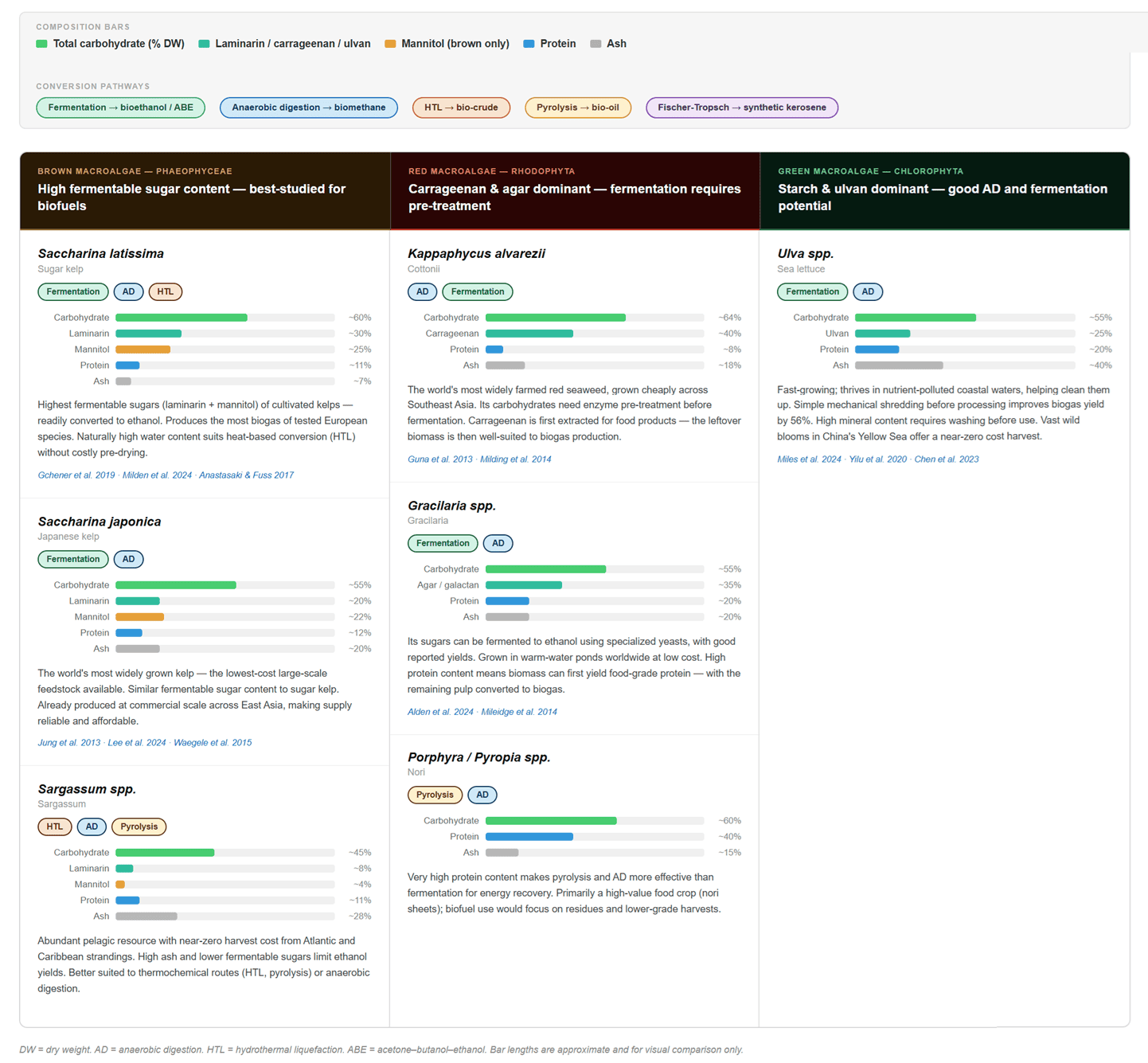
Figure 2: Seaweed Species being explored for biofuels
Hatchery/Nursery:
The two primary ways of propagating seaweeds are vegetative (using fragments of the seaweed) and spore-based methods. For more information on the state of approach of modern hatcheries nurseries, see the chapter, “Cultivation and Drying Considerations“.
Cultivation:
Adoption of seaweed-based biofuels will require a scale-up of several orders of magnitude in seaweed farming. According to an ARPA-E estimate, the United States has suitable conditions to grow 500 million dry metric tons of macroalgae per year, which is approximately 150 times current global production. Such production volumes would yield 10% of the US annual transportation energy demand. Given spatial constraints and competing uses in near-shore areas, much of the expansion will need to occur further offshore. (Definitions of offshore vary but according to ARPA-E’s HAEJO program, offshore refers to “deep water locations or waters beyond state jurisdiction but not including areas beyond national jurisdiction.” In the US, this typically means farming beyond approximately 3 nautical miles). For more details on offshore farming, refer to the section on offshore farming in the chapter, “Cultivation and Drying Considerations“.
Harvesting:
Once mature, seaweed is removed from artificial substrates. Several tropical seaweed species such as Kappaphycus alvarezii and Sargassum spp. are capable of producing multiple harvests a year, while most temperate seaweeds have one optimal harvest time a year. The decision to harvest is based on current water temperature (measured via in-situ thermometers or regional oceanographic services), visual assessment of seaweed canopy density and color and historical seasonal patterns. The current state of seaweed harvesting involves a mix of traditional manual techniques and developing mechanical methods. For large-scale offshore farms, cost-effective mechanized harvesting will be essential and prototype systems are being developed overseas. The most common systems include: -rotating blades that can be suitable for species growing attached to supporting structures; and -suction systems followed by cutting that can be used for floating seaweeds species (e.g. Sargassum and Gracilaria).For more information, refer to the harvesting section in the chapter, “Cultivation and Drying Considerations“.
When to harvest; Timing largely depends on local water temperature and species so can vary significantly by latitude. Through periodic destructive sampling, the BioMara project identified autumn as the optimal harvest season for biofuel production, due to the peak sugar content in seaweeds during this period (Šuopys et al., 2021). To extend the harvesting window, they recommended cultivating multiple seaweed species, as different species reach peak sugar content at different times.
Pre-treatment for Processing: After harvesting, macroalgae is washed to remove foreign objects and chopped or milled to increase surface area. Many conversion processes require dry feedstock; reducing water content from ~80% to 20–30% also increases shelf-life and reduces transportation costs (Stefania Rocca et al., 2015). Sun-drying is the main method of drying seaweed, but it is weather dependent (Milledge & Harvey, 2018). Conventional dryers such as drum dryers or conveyor dryers are also common, but they require energy and are therefore a source of emissions in areas without a clean electricity grid. Ensiling — preserving seaweed by controlled anaerobic fermentation with lactic acid bacteria — is an alternative that avoids drying entirely. The MacroFuels project demonstrated that ensiling sugar kelp significantly reduces heavy metal content (cadmium, mercury) while maintaining sugar and protein levels, enabling year-round continuous feedstock supply (Šuopys et al., 2021).
Harvesting Wild Seaweed
Wild seaweed harvesting remains commercially significant at global scale: for example, a significant portion of the world’s alginate supply is derived from wild-harvested Laminaria hyperborea along Norway’s Atlantic coastline. In addition to cultivated seaweed, there is growing interest in harvesting wild seaweed blooms, particularly Sargassum, which has proliferated across the Atlantic since 2011. These blooms, spanning over 5,000 miles from West Africa to the Gulf of Mexico, often wash ashore and decompose on beaches, releasing hydrogen sulfide and damaging local tourism—especially in the Caribbean. Initiatives to valorize this beach-cast seaweed for products, including as biofuels are underway. Similarly, in China, recurring Yellow Sea “green tides” of Ulva prolifera have led to research on tracking, harvesting and converting the biomass (Xing et al., 2019, Sun et al., 2022).
Conversion to Biofuels
There are three primary pathways for converting macroalgae to bioenergy. Table 1 below summarizes key parameters across all three pathways including current Technology Readiness Levels (TRL).
| Pathway | Key steps | Final product | Co-products | TRL | Main advantages | Main challenges |
| Anaerobic digestion (AD) | Milling/slurrying → anaerobic digestion → gas cleaning → methanol synthesis → MTG or Fischer-Tropsch (F-T) process | Gasoline / diesel / biomethane | AD digestate as fertilizer | 7 | Uses wet feedstock; digestate as fertilizer; mature core technology | H₂S removal required; real-world methane yields below theoretical |
| Fermentation | Milling/slurrying → pretreatment (enzymatic/acid hydrolysis) → fermentation → distillation | Ethanol, butanol | Glycerol | 5 | Produces higher-energy-density alcohols; drop-in compatible | Requires pre-treatment; no large-scale operational data |
| Thermochemical Processes Hydrothermal liquefaction (HTL) and Gasification via pyrolysis |
Slurry prep → HTL (300–350°C, 120–180 bar) → hydrotreating → hydrocracking | Gasoline, diesel, SAF | Biochar, aqueous nutrient phase | 4 | Handles wet, protein-rich biomass; aviation-compatible output | Capital-intensive; high catalyst cost; batch process to date |
Table 1: Summary of major conversion pathways for seaweed biofuels

Figure 3: Stylized View of the three major conversion pathways clockwise from left Anaerobic Digestion, Fermentation and Thermochemical process (represented by Hydrothermal Liquefaction) Adapted from (Roesijadi et al., 2010)
Products Generated by Conversion Processes and their Use
Depending on the conversion process, we can obtain a number of intermediate and final products from seaweed sources. See the table below for some of the key products and their uses.
| Product | Definition | Relevant Use |
| Methanol | A simple alcohol (CH₃OH), colorless, volatile, and flammable. | Precursor to fuels, Transportation Fuel, Chemical Feedstock |
| Ethanol | A two-carbon alcohol (C₂H₅OH) which is flammable, colorless and volatile. | Transportation Fuel, Chemical Feedstock |
| Butanol | A four-carbon alcohol (C₄H₉OH), more energy-dense and less volatile than ethanol. | Transportation Fuel, Solvent |
| Gasoline | Typically, a petroleum-derived liquid hydrocarbon blend is used as transport fuel. | Transportation Fuel |
| Syngas | A mixture of CO, H₂, and CO₂ produced by gasification. | Methanol Synthesis, Electricity |
| Volatile Fatty Acids (VFAs) | Short-chain organic acids (e.g., acetic, propionic, butyric). | Chemical Precursors, Biofuel Intermediates |
|
Bio-Oil |
A synthetic tar-like substance made from pyrolysis and HTL with high levels of oxygen and nitrogen (when made from algae) | Biofuel Intermediates, Carbon Sequestration |
Table 2: Definition of Seaweed Based Biofuel Products and Intermediaries
Companies and Key Research
| Process type | Key initiatives/Companies | Notable Research Findings |
| Anaerobic digestion (AD) | Solrød Biogas, Denmark (operational since 2016)
Co-digests beach-cast seaweed with CPKelco processing residues, manure, and food by-products. Upgraded to biomethane for grid injection c. 2020. Seaweed ~0.5% of feedstock by volume — proof of commercial-scale integration.
Barbados — Sargassum-to-biogas (early commercial stage) Small-scale digester demonstrated biogas from beach-stranded Sargassum, including a test drive of a biogas-powered Nissan Leaf. Estimated 20,000 m³/day biogas from 500 t/day Sargassum at full scale — equivalent to daily fuel sales of a standard filling station.
|
Core challenge: seaweed cell walls resist microbial breakdown, keeping real-world yields well below theoretical maxima. Pre-treatment (hydrothermal or enzymatic) has been a major lever.
Pre-treatment R&D for improved yields Lin et al. (2019): Hydrothermal pre-treatment of S. latissima at 140°C increased biomethane yield 22.6% (281 → 345 mL CH₄/g VS). Lamb et al. (2019): Enzyme pre-treatment of S. latissima increased biomethane yield 23.5%.
Ulva AD yield improved 56% by maceration pre-treatment (171 → 271 L CH₄/kg VS). |
| Fermentation | No major companies exist | MacroFuels EU project (2016–2019)
Six-partner consortium; most complete end-to-end fermentation demonstration to date. Key results: • Ethanol: laminarin extraction + hydrolysis + yeast fermentation achieved 4.9% ethanol by volume; 9.4 L distilled ethanol delivered for engine testing. • Butanol: 9.6 L purified n-butanol from S. latissima using an engineered Clostridium beijerinckii strain capable of direct conversion to ABE. • Furanics: high furfural and 5-methylfurfural yields from seaweed hydrolysates; furanic diesel additive from Palmaria palmata tested in compression-ignition engine. • Ensiling: biological ensiling with lactic acid bacteria validated for long-term storage, preserving fermentable sugars and reducing heavy metals (Cd, Hg).
Wargacki et al. (2012)— Science Engineered E. coli to simultaneously degrade, transport, and metabolize alginate — the polysaccharide standard organisms cannot ferment. Produced ethanol at ~80% of theoretical maximum yield directly from brown macroalgae. Biological proof-of-concept for enhanced seaweed sugar utilization. |
| Thermochemical Conversions
(Hydrothermal Liquefaction) |
Anastasakis & Ross (2011)
Foundational batch HTL of Laminaria saccharina (brown kelp): maximum bio-crude yield 19.3 wt% at 350°C; higher heating value 36.5 MJ/kg — comparable to heavy crude or bitumen.
Allen and Pearce (2024)— continuous-flow HTL of Sargassum First continuous-flow reactor applied to seaweed: 12% biocrude yield (vs ~20% in batch configuration). Transition to continuous flow is essential for commercial viability and is the active R&D frontier.
PNNL / DOE Bioenergy Technologies Office — algae HTL program (ongoing since 2014) Sustained US national lab program focused on microalgae; 2023 reactor design update addresses fouling and clogging — applicable to high-ash macroalgae feedstocks.
UCLA / Schmidt Sciences — alkaline thermal treatment + REE co-recovery Novel HTL variant using wet Sargassum: alkaline thermal treatment (NaOH + Ni catalyst + N₂) produces hydrogen fuel rather than bio-crude, with rare earth elements extracted from residual biomass. Avoids energy-intensive drying; uses problem biomass (invasive blooms) as feedstock. |
|
| Thermochemical Reactions: Gasification via Pyrolysis and Fischer-Tropsch (F-T) | Macrocarbon– Gran Canaria based startup aiming to grow Sargassum to convert to SAF, biochar and carbon black. | Pyrolysis produces bio-oil (liquid fuel precursor) and biochar (soil amendment / carbon sequestration co-product).
Ash content is the critical constraint: >20% DW causes slagging and corrosion in pyrolysis reactors, ruling out most brown and many green algae without pre-washing. Thermogravimetric and pyrolysis characterization of red macroalgae including Porphyra. Established ash content thresholds for reactor slagging. High protein in Porphyra (~40% DW) means food/nutraceutical use dominates commercially; pyrolysis most viable for post-extraction residue. Updated pathway comparison including F-T for macroalgae; assessed suitability of different species and cultivation systems for thermochemical routes.
|
Table 3: Summary of initiatives and foundational research into the major conversion pathways for seaweed biofuel.
Species Selection, Cultivation and Harvesting
Species selection:
Seaweeds possess complex cell wall architecture that serves crucial functions including mechanical support, cell-cell adhesion, and environmental protection. The cell wall is primarily composed of specialized polysaccharides-it is these polysaccharides that give seaweeds their high carbohydrate content, which combined with low lignin make them suitable for biofuel pathways. Several seaweed species have been studied for use in biofuels, but brown seaweeds such as Saccharina latissima (sugar kelp) have been the most widely researched for biofuel uses due to their high carbohydrate content and for their comparatively large biomass yields when using traditional cultivation approaches. Below are some popular species that are being explored for seaweed-based biofuels and their attributes.
Figure 2: Seaweed Species being explored for biofuels
Hatchery/Nursery:
The two primary ways of propagating seaweeds are vegetative (using fragments of the seaweed) and spore-based methods. For more information on the state of approach of modern hatcheries nurseries, see the chapter, "Cultivation and Drying Considerations".Cultivation:
Adoption of seaweed-based biofuels will require a scale-up of several orders of magnitude in seaweed farming. According to an ARPA-E estimate, the United States has suitable conditions to grow 500 million dry metric tons of macroalgae per year, which is approximately 150 times current global production. Such production volumes would yield 10% of the US annual transportation energy demand. Given spatial constraints and competing uses in near-shore areas, much of the expansion will need to occur further offshore. (Definitions of offshore vary but according to ARPA-E’s HAEJO program, offshore refers to “deep water locations or waters beyond state jurisdiction but not including areas beyond national jurisdiction.” In the US, this typically means farming beyond approximately 3 nautical miles). For more details on offshore farming, refer to the section on offshore farming in the chapter, "Cultivation and Drying Considerations".Harvesting:
Once mature, seaweed is removed from artificial substrates. Several tropical seaweed species such as Kappaphycus alvarezii and Sargassum spp. are capable of producing multiple harvests a year, while most temperate seaweeds have one optimal harvest time a year. The decision to harvest is based on current water temperature (measured via in-situ thermometers or regional oceanographic services), visual assessment of seaweed canopy density and color and historical seasonal patterns. The current state of seaweed harvesting involves a mix of traditional manual techniques and developing mechanical methods. For large-scale offshore farms, cost-effective mechanized harvesting will be essential and prototype systems are being developed overseas. The most common systems include: -rotating blades that can be suitable for species growing attached to supporting structures; and -suction systems followed by cutting that can be used for floating seaweeds species (e.g. Sargassum and Gracilaria).For more information, refer to the harvesting section in the chapter, "Cultivation and Drying Considerations". When to harvest; Timing largely depends on local water temperature and species so can vary significantly by latitude. Through periodic destructive sampling, the BioMara project identified autumn as the optimal harvest season for biofuel production, due to the peak sugar content in seaweeds during this period (Šuopys et al., 2021). To extend the harvesting window, they recommended cultivating multiple seaweed species, as different species reach peak sugar content at different times. Pre-treatment for Processing: After harvesting, macroalgae is washed to remove foreign objects and chopped or milled to increase surface area. Many conversion processes require dry feedstock; reducing water content from ~80% to 20–30% also increases shelf-life and reduces transportation costs (Stefania Rocca et al., 2015). Sun-drying is the main method of drying seaweed, but it is weather dependent (Milledge & Harvey, 2018). Conventional dryers such as drum dryers or conveyor dryers are also common, but they require energy and are therefore a source of emissions in areas without a clean electricity grid. Ensiling — preserving seaweed by controlled anaerobic fermentation with lactic acid bacteria — is an alternative that avoids drying entirely. The MacroFuels project demonstrated that ensiling sugar kelp significantly reduces heavy metal content (cadmium, mercury) while maintaining sugar and protein levels, enabling year-round continuous feedstock supply (Šuopys et al., 2021).Harvesting Wild Seaweed
Wild seaweed harvesting remains commercially significant at global scale: for example, a significant portion of the world's alginate supply is derived from wild-harvested Laminaria hyperborea along Norway's Atlantic coastline. In addition to cultivated seaweed, there is growing interest in harvesting wild seaweed blooms, particularly Sargassum, which has proliferated across the Atlantic since 2011. These blooms, spanning over 5,000 miles from West Africa to the Gulf of Mexico, often wash ashore and decompose on beaches, releasing hydrogen sulfide and damaging local tourism—especially in the Caribbean. Initiatives to valorize this beach-cast seaweed for products, including as biofuels are underway. Similarly, in China, recurring Yellow Sea “green tides” of Ulva prolifera have led to research on tracking, harvesting and converting the biomass (Xing et al., 2019, Sun et al., 2022).Conversion to Biofuels
There are three primary pathways for converting macroalgae to bioenergy. Table 1 below summarizes key parameters across all three pathways including current Technology Readiness Levels (TRL).| Pathway | Key steps | Final product | Co-products | TRL | Main advantages | Main challenges |
| Anaerobic digestion (AD) | Milling/slurrying → anaerobic digestion → gas cleaning → methanol synthesis → MTG or Fischer-Tropsch (F-T) process | Gasoline / diesel / biomethane | AD digestate as fertilizer | 7 | Uses wet feedstock; digestate as fertilizer; mature core technology | H₂S removal required; real-world methane yields below theoretical |
| Fermentation | Milling/slurrying → pretreatment (enzymatic/acid hydrolysis) → fermentation → distillation | Ethanol, butanol | Glycerol | 5 | Produces higher-energy-density alcohols; drop-in compatible | Requires pre-treatment; no large-scale operational data |
| Thermochemical Processes Hydrothermal liquefaction (HTL) and Gasification via pyrolysis | Slurry prep → HTL (300–350°C, 120–180 bar) → hydrotreating → hydrocracking | Gasoline, diesel, SAF | Biochar, aqueous nutrient phase | 4 | Handles wet, protein-rich biomass; aviation-compatible output | Capital-intensive; high catalyst cost; batch process to date |
Figure 3: Stylized View of the three major conversion pathways clockwise from left Anaerobic Digestion, Fermentation and Thermochemical process (represented by Hydrothermal Liquefaction) Adapted from (Roesijadi et al., 2010)
Products Generated by Conversion Processes and their Use
Depending on the conversion process, we can obtain a number of intermediate and final products from seaweed sources. See the table below for some of the key products and their uses.| Product | Definition | Relevant Use |
| Methanol | A simple alcohol (CH₃OH), colorless, volatile, and flammable. | Precursor to fuels, Transportation Fuel, Chemical Feedstock |
| Ethanol | A two-carbon alcohol (C₂H₅OH) which is flammable, colorless and volatile. | Transportation Fuel, Chemical Feedstock |
| Butanol | A four-carbon alcohol (C₄H₉OH), more energy-dense and less volatile than ethanol. | Transportation Fuel, Solvent |
| Gasoline | Typically, a petroleum-derived liquid hydrocarbon blend is used as transport fuel. | Transportation Fuel |
| Syngas | A mixture of CO, H₂, and CO₂ produced by gasification. | Methanol Synthesis, Electricity |
| Volatile Fatty Acids (VFAs) | Short-chain organic acids (e.g., acetic, propionic, butyric). | Chemical Precursors, Biofuel Intermediates |
| Bio-Oil | A synthetic tar-like substance made from pyrolysis and HTL with high levels of oxygen and nitrogen (when made from algae) | Biofuel Intermediates, Carbon Sequestration |
Companies and Key Research
| Process type | Key initiatives/Companies | Notable Research Findings |
| Anaerobic digestion (AD) | Solrød Biogas, Denmark (operational since 2016) Co-digests beach-cast seaweed with CPKelco processing residues, manure, and food by-products. Upgraded to biomethane for grid injection c. 2020. Seaweed ~0.5% of feedstock by volume — proof of commercial-scale integration. Barbados — Sargassum-to-biogas (early commercial stage) Small-scale digester demonstrated biogas from beach-stranded Sargassum, including a test drive of a biogas-powered Nissan Leaf. Estimated 20,000 m³/day biogas from 500 t/day Sargassum at full scale — equivalent to daily fuel sales of a standard filling station. | Core challenge: seaweed cell walls resist microbial breakdown, keeping real-world yields well below theoretical maxima. Pre-treatment (hydrothermal or enzymatic) has been a major lever. Pre-treatment R&D for improved yields Lin et al. (2019): Hydrothermal pre-treatment of S. latissima at 140°C increased biomethane yield 22.6% (281 → 345 mL CH₄/g VS). Lamb et al. (2019): Enzyme pre-treatment of S. latissima increased biomethane yield 23.5%. Ulva AD yield improved 56% by maceration pre-treatment (171 → 271 L CH₄/kg VS). |
| Fermentation | No major companies exist | MacroFuels EU project (2016–2019) Six-partner consortium; most complete end-to-end fermentation demonstration to date. Key results: • Ethanol: laminarin extraction + hydrolysis + yeast fermentation achieved 4.9% ethanol by volume; 9.4 L distilled ethanol delivered for engine testing. • Butanol: 9.6 L purified n-butanol from S. latissima using an engineered Clostridium beijerinckii strain capable of direct conversion to ABE. • Furanics: high furfural and 5-methylfurfural yields from seaweed hydrolysates; furanic diesel additive from Palmaria palmata tested in compression-ignition engine. • Ensiling: biological ensiling with lactic acid bacteria validated for long-term storage, preserving fermentable sugars and reducing heavy metals (Cd, Hg). Wargacki et al. (2012)— Science Engineered E. coli to simultaneously degrade, transport, and metabolize alginate — the polysaccharide standard organisms cannot ferment. Produced ethanol at ~80% of theoretical maximum yield directly from brown macroalgae. Biological proof-of-concept for enhanced seaweed sugar utilization. |
| Thermochemical Conversions (Hydrothermal Liquefaction) | Anastasakis & Ross (2011) Foundational batch HTL of Laminaria saccharina (brown kelp): maximum bio-crude yield 19.3 wt% at 350°C; higher heating value 36.5 MJ/kg — comparable to heavy crude or bitumen. Allen and Pearce (2024)— continuous-flow HTL of Sargassum First continuous-flow reactor applied to seaweed: 12% biocrude yield (vs ~20% in batch configuration). Transition to continuous flow is essential for commercial viability and is the active R&D frontier. PNNL / DOE Bioenergy Technologies Office — algae HTL program (ongoing since 2014) Sustained US national lab program focused on microalgae; 2023 reactor design update addresses fouling and clogging — applicable to high-ash macroalgae feedstocks. UCLA / Schmidt Sciences — alkaline thermal treatment + REE co-recovery Choi et al., (2025) Novel HTL variant using wet Sargassum: alkaline thermal treatment (NaOH + Ni catalyst + N₂) produces hydrogen fuel rather than bio-crude, with rare earth elements extracted from residual biomass. Avoids energy-intensive drying; uses problem biomass (invasive blooms) as feedstock. | |
| Thermochemical Reactions: Gasification via Pyrolysis and Fischer-Tropsch (F-T) | Macrocarbon- Gran Canaria based startup aiming to grow Sargassum to convert to SAF, biochar and carbon black. | Pyrolysis produces bio-oil (liquid fuel precursor) and biochar (soil amendment / carbon sequestration co-product). Ash content is the critical constraint: >20% DW causes slagging and corrosion in pyrolysis reactors, ruling out most brown and many green algae without pre-washing. Key advantage over fermentation: F-T products are drop-in fuels compatible with existing aviation and diesel infrastructure — no blending limits or engine modifications required. Del Río et al. (2022) Thermogravimetric and pyrolysis characterization of red macroalgae including Porphyra. Established ash content thresholds for reactor slagging. High protein in Porphyra (~40% DW) means food/nutraceutical use dominates commercially; pyrolysis most viable for post-extraction residue. Allen et al. (2024) Updated pathway comparison including F-T for macroalgae; assessed suitability of different species and cultivation systems for thermochemical routes. |
Species Selection, Cultivation and Harvesting
Species selection:
Seaweeds possess complex cell wall architecture that serves crucial functions including mechanical support, cell-cell adhesion, and environmental protection. The cell wall is primarily composed of specialized polysaccharides-it is these polysaccharides that give seaweeds their high carbohydrate content, which combined with low lignin make them suitable for biofuel pathways. Several seaweed species have been studied for use in biofuels, but brown seaweeds such as Saccharina latissima (sugar kelp) have been the most widely researched for biofuel uses due to their high carbohydrate content and for their comparatively large biomass yields when using traditional cultivation approaches. Below are some popular species that are being explored for seaweed-based biofuels and their attributes.
Figure 2: Seaweed Species being explored for biofuels
Hatchery/Nursery:
The two primary ways of propagating seaweeds are vegetative (using fragments of the seaweed) and spore-based methods. For more information on the state of approach of modern hatcheries nurseries, see the chapter, "Cultivation and Drying Considerations".Cultivation:
Adoption of seaweed-based biofuels will require a scale-up of several orders of magnitude in seaweed farming. According to an ARPA-E estimate, the United States has suitable conditions to grow 500 million dry metric tons of macroalgae per year, which is approximately 150 times current global production. Such production volumes would yield 10% of the US annual transportation energy demand. Given spatial constraints and competing uses in near-shore areas, much of the expansion will need to occur further offshore. (Definitions of offshore vary but according to ARPA-E’s HAEJO program, offshore refers to “deep water locations or waters beyond state jurisdiction but not including areas beyond national jurisdiction.” In the US, this typically means farming beyond approximately 3 nautical miles). For more details on offshore farming, refer to the section on offshore farming in the chapter, "Cultivation and Drying Considerations".Harvesting:
Once mature, seaweed is removed from artificial substrates. Several tropical seaweed species such as Kappaphycus alvarezii and Sargassum spp. are capable of producing multiple harvests a year, while most temperate seaweeds have one optimal harvest time a year. The decision to harvest is based on current water temperature (measured via in-situ thermometers or regional oceanographic services), visual assessment of seaweed canopy density and color and historical seasonal patterns. The current state of seaweed harvesting involves a mix of traditional manual techniques and developing mechanical methods. For large-scale offshore farms, cost-effective mechanized harvesting will be essential and prototype systems are being developed overseas. The most common systems include: -rotating blades that can be suitable for species growing attached to supporting structures; and -suction systems followed by cutting that can be used for floating seaweeds species (e.g. Sargassum and Gracilaria).For more information, refer to the harvesting section in the chapter, "Cultivation and Drying Considerations". When to harvest; Timing largely depends on local water temperature and species so can vary significantly by latitude. Through periodic destructive sampling, the BioMara project identified autumn as the optimal harvest season for biofuel production, due to the peak sugar content in seaweeds during this period (Šuopys et al., 2021). To extend the harvesting window, they recommended cultivating multiple seaweed species, as different species reach peak sugar content at different times. Pre-treatment for Processing: After harvesting, macroalgae is washed to remove foreign objects and chopped or milled to increase surface area. Many conversion processes require dry feedstock; reducing water content from ~80% to 20–30% also increases shelf-life and reduces transportation costs (Stefania Rocca et al., 2015). Sun-drying is the main method of drying seaweed, but it is weather dependent (Milledge & Harvey, 2018). Conventional dryers such as drum dryers or conveyor dryers are also common, but they require energy and are therefore a source of emissions in areas without a clean electricity grid. Ensiling — preserving seaweed by controlled anaerobic fermentation with lactic acid bacteria — is an alternative that avoids drying entirely. The MacroFuels project demonstrated that ensiling sugar kelp significantly reduces heavy metal content (cadmium, mercury) while maintaining sugar and protein levels, enabling year-round continuous feedstock supply (Šuopys et al., 2021).Harvesting Wild Seaweed
Wild seaweed harvesting remains commercially significant at global scale: for example, a significant portion of the world's alginate supply is derived from wild-harvested Laminaria hyperborea along Norway's Atlantic coastline. In addition to cultivated seaweed, there is growing interest in harvesting wild seaweed blooms, particularly Sargassum, which has proliferated across the Atlantic since 2011. These blooms, spanning over 5,000 miles from West Africa to the Gulf of Mexico, often wash ashore and decompose on beaches, releasing hydrogen sulfide and damaging local tourism—especially in the Caribbean. Initiatives to valorize this beach-cast seaweed for products, including as biofuels are underway. Similarly, in China, recurring Yellow Sea “green tides” of Ulva prolifera have led to research on tracking, harvesting and converting the biomass (Xing et al., 2019, Sun et al., 2022).Conversion to Biofuels
There are three primary pathways for converting macroalgae to bioenergy. Table 1 below summarizes key parameters across all three pathways including current Technology Readiness Levels (TRL).| Pathway | Key steps | Final product | Co-products | TRL | Main advantages | Main challenges |
| Anaerobic digestion (AD) | Milling/slurrying → anaerobic digestion → gas cleaning → methanol synthesis → MTG or Fischer-Tropsch (F-T) process | Gasoline / diesel / biomethane | AD digestate as fertilizer | 7 | Uses wet feedstock; digestate as fertilizer; mature core technology | H₂S removal required; real-world methane yields below theoretical |
| Fermentation | Milling/slurrying → pretreatment (enzymatic/acid hydrolysis) → fermentation → distillation | Ethanol, butanol | Glycerol | 5 | Produces higher-energy-density alcohols; drop-in compatible | Requires pre-treatment; no large-scale operational data |
| Thermochemical Processes Hydrothermal liquefaction (HTL) and Gasification via pyrolysis | Slurry prep → HTL (300–350°C, 120–180 bar) → hydrotreating → hydrocracking | Gasoline, diesel, SAF | Biochar, aqueous nutrient phase | 4 | Handles wet, protein-rich biomass; aviation-compatible output | Capital-intensive; high catalyst cost; batch process to date |
Figure 3: Stylized View of the three major conversion pathways clockwise from left Anaerobic Digestion, Fermentation and Thermochemical process (represented by Hydrothermal Liquefaction) Adapted from (Roesijadi et al., 2010)
Products Generated by Conversion Processes and their Use
Depending on the conversion process, we can obtain a number of intermediate and final products from seaweed sources. See the table below for some of the key products and their uses.| Product | Definition | Relevant Use |
| Methanol | A simple alcohol (CH₃OH), colorless, volatile, and flammable. | Precursor to fuels, Transportation Fuel, Chemical Feedstock |
| Ethanol | A two-carbon alcohol (C₂H₅OH) which is flammable, colorless and volatile. | Transportation Fuel, Chemical Feedstock |
| Butanol | A four-carbon alcohol (C₄H₉OH), more energy-dense and less volatile than ethanol. | Transportation Fuel, Solvent |
| Gasoline | Typically, a petroleum-derived liquid hydrocarbon blend is used as transport fuel. | Transportation Fuel |
| Syngas | A mixture of CO, H₂, and CO₂ produced by gasification. | Methanol Synthesis, Electricity |
| Volatile Fatty Acids (VFAs) | Short-chain organic acids (e.g., acetic, propionic, butyric). | Chemical Precursors, Biofuel Intermediates |
| Bio-Oil | A synthetic tar-like substance made from pyrolysis and HTL with high levels of oxygen and nitrogen (when made from algae) | Biofuel Intermediates, Carbon Sequestration |
Companies and Key Research
| Process type | Key initiatives/Companies | Notable Research Findings |
| Anaerobic digestion (AD) | Solrød Biogas, Denmark (operational since 2016) Co-digests beach-cast seaweed with CPKelco processing residues, manure, and food by-products. Upgraded to biomethane for grid injection c. 2020. Seaweed ~0.5% of feedstock by volume — proof of commercial-scale integration. Barbados — Sargassum-to-biogas (early commercial stage) Small-scale digester demonstrated biogas from beach-stranded Sargassum, including a test drive of a biogas-powered Nissan Leaf. Estimated 20,000 m³/day biogas from 500 t/day Sargassum at full scale — equivalent to daily fuel sales of a standard filling station. | Core challenge: seaweed cell walls resist microbial breakdown, keeping real-world yields well below theoretical maxima. Pre-treatment (hydrothermal or enzymatic) has been a major lever. Pre-treatment R&D for improved yields Lin et al. (2019): Hydrothermal pre-treatment of S. latissima at 140°C increased biomethane yield 22.6% (281 → 345 mL CH₄/g VS). Lamb et al. (2019): Enzyme pre-treatment of S. latissima increased biomethane yield 23.5%. Ulva AD yield improved 56% by maceration pre-treatment (171 → 271 L CH₄/kg VS). |
| Fermentation | No major companies exist | MacroFuels EU project (2016–2019) Six-partner consortium; most complete end-to-end fermentation demonstration to date. Key results: • Ethanol: laminarin extraction + hydrolysis + yeast fermentation achieved 4.9% ethanol by volume; 9.4 L distilled ethanol delivered for engine testing. • Butanol: 9.6 L purified n-butanol from S. latissima using an engineered Clostridium beijerinckii strain capable of direct conversion to ABE. • Furanics: high furfural and 5-methylfurfural yields from seaweed hydrolysates; furanic diesel additive from Palmaria palmata tested in compression-ignition engine. • Ensiling: biological ensiling with lactic acid bacteria validated for long-term storage, preserving fermentable sugars and reducing heavy metals (Cd, Hg). Wargacki et al. (2012)— Science Engineered E. coli to simultaneously degrade, transport, and metabolize alginate — the polysaccharide standard organisms cannot ferment. Produced ethanol at ~80% of theoretical maximum yield directly from brown macroalgae. Biological proof-of-concept for enhanced seaweed sugar utilization. |
| Thermochemical Conversions (Hydrothermal Liquefaction) | Anastasakis & Ross (2011) Foundational batch HTL of Laminaria saccharina (brown kelp): maximum bio-crude yield 19.3 wt% at 350°C; higher heating value 36.5 MJ/kg — comparable to heavy crude or bitumen. Allen and Pearce (2024)— continuous-flow HTL of Sargassum First continuous-flow reactor applied to seaweed: 12% biocrude yield (vs ~20% in batch configuration). Transition to continuous flow is essential for commercial viability and is the active R&D frontier. PNNL / DOE Bioenergy Technologies Office — algae HTL program (ongoing since 2014) Sustained US national lab program focused on microalgae; 2023 reactor design update addresses fouling and clogging — applicable to high-ash macroalgae feedstocks. UCLA / Schmidt Sciences — alkaline thermal treatment + REE co-recovery Choi et al., (2025) Novel HTL variant using wet Sargassum: alkaline thermal treatment (NaOH + Ni catalyst + N₂) produces hydrogen fuel rather than bio-crude, with rare earth elements extracted from residual biomass. Avoids energy-intensive drying; uses problem biomass (invasive blooms) as feedstock. | |
| Thermochemical Reactions: Gasification via Pyrolysis and Fischer-Tropsch (F-T) | Macrocarbon- Gran Canaria based startup aiming to grow Sargassum to convert to SAF, biochar and carbon black. | Pyrolysis produces bio-oil (liquid fuel precursor) and biochar (soil amendment / carbon sequestration co-product). Ash content is the critical constraint: >20% DW causes slagging and corrosion in pyrolysis reactors, ruling out most brown and many green algae without pre-washing. Key advantage over fermentation: F-T products are drop-in fuels compatible with existing aviation and diesel infrastructure — no blending limits or engine modifications required. Del Río et al. (2022) Thermogravimetric and pyrolysis characterization of red macroalgae including Porphyra. Established ash content thresholds for reactor slagging. High protein in Porphyra (~40% DW) means food/nutraceutical use dominates commercially; pyrolysis most viable for post-extraction residue. Allen et al. (2024) Updated pathway comparison including F-T for macroalgae; assessed suitability of different species and cultivation systems for thermochemical routes. |
Species Selection, Cultivation and Harvesting
Species selection:
Seaweeds possess complex cell wall architecture that serves crucial functions including mechanical support, cell-cell adhesion, and environmental protection. The cell wall is primarily composed of specialized polysaccharides-it is these polysaccharides that give seaweeds their high carbohydrate content, which combined with low lignin make them suitable for biofuel pathways. Several seaweed species have been studied for use in biofuels, but brown seaweeds such as Saccharina latissima (sugar kelp) have been the most widely researched for biofuel uses due to their high carbohydrate content and for their comparatively large biomass yields when using traditional cultivation approaches. Below are some popular species that are being explored for seaweed-based biofuels and their attributes.
Figure 2: Seaweed Species being explored for biofuels
Hatchery/Nursery:
The two primary ways of propagating seaweeds are vegetative (using fragments of the seaweed) and spore-based methods. For more information on the state of approach of modern hatcheries nurseries, see the chapter, "Cultivation and Drying Considerations".Cultivation:
Adoption of seaweed-based biofuels will require a scale-up of several orders of magnitude in seaweed farming. According to an ARPA-E estimate, the United States has suitable conditions to grow 500 million dry metric tons of macroalgae per year, which is approximately 150 times current global production. Such production volumes would yield 10% of the US annual transportation energy demand. Given spatial constraints and competing uses in near-shore areas, much of the expansion will need to occur further offshore. (Definitions of offshore vary but according to ARPA-E’s HAEJO program, offshore refers to “deep water locations or waters beyond state jurisdiction but not including areas beyond national jurisdiction.” In the US, this typically means farming beyond approximately 3 nautical miles). For more details on offshore farming, refer to the section on offshore farming in the chapter, "Cultivation and Drying Considerations".Harvesting:
Once mature, seaweed is removed from artificial substrates. Several tropical seaweed species such as Kappaphycus alvarezii and Sargassum spp. are capable of producing multiple harvests a year, while most temperate seaweeds have one optimal harvest time a year. The decision to harvest is based on current water temperature (measured via in-situ thermometers or regional oceanographic services), visual assessment of seaweed canopy density and color and historical seasonal patterns. The current state of seaweed harvesting involves a mix of traditional manual techniques and developing mechanical methods. For large-scale offshore farms, cost-effective mechanized harvesting will be essential and prototype systems are being developed overseas. The most common systems include: -rotating blades that can be suitable for species growing attached to supporting structures; and -suction systems followed by cutting that can be used for floating seaweeds species (e.g. Sargassum and Gracilaria).For more information, refer to the harvesting section in the chapter, "Cultivation and Drying Considerations". When to harvest; Timing largely depends on local water temperature and species so can vary significantly by latitude. Through periodic destructive sampling, the BioMara project identified autumn as the optimal harvest season for biofuel production, due to the peak sugar content in seaweeds during this period (Šuopys et al., 2021). To extend the harvesting window, they recommended cultivating multiple seaweed species, as different species reach peak sugar content at different times. Pre-treatment for Processing: After harvesting, macroalgae is washed to remove foreign objects and chopped or milled to increase surface area. Many conversion processes require dry feedstock; reducing water content from ~80% to 20–30% also increases shelf-life and reduces transportation costs (Stefania Rocca et al., 2015). Sun-drying is the main method of drying seaweed, but it is weather dependent (Milledge & Harvey, 2018). Conventional dryers such as drum dryers or conveyor dryers are also common, but they require energy and are therefore a source of emissions in areas without a clean electricity grid. Ensiling — preserving seaweed by controlled anaerobic fermentation with lactic acid bacteria — is an alternative that avoids drying entirely. The MacroFuels project demonstrated that ensiling sugar kelp significantly reduces heavy metal content (cadmium, mercury) while maintaining sugar and protein levels, enabling year-round continuous feedstock supply (Šuopys et al., 2021).Harvesting Wild Seaweed
Wild seaweed harvesting remains commercially significant at global scale: for example, a significant portion of the world's alginate supply is derived from wild-harvested Laminaria hyperborea along Norway's Atlantic coastline. In addition to cultivated seaweed, there is growing interest in harvesting wild seaweed blooms, particularly Sargassum, which has proliferated across the Atlantic since 2011. These blooms, spanning over 5,000 miles from West Africa to the Gulf of Mexico, often wash ashore and decompose on beaches, releasing hydrogen sulfide and damaging local tourism—especially in the Caribbean. Initiatives to valorize this beach-cast seaweed for products, including as biofuels are underway. Similarly, in China, recurring Yellow Sea “green tides” of Ulva prolifera have led to research on tracking, harvesting and converting the biomass (Xing et al., 2019, Sun et al., 2022).Conversion to Biofuels
There are three primary pathways for converting macroalgae to bioenergy. Table 1 below summarizes key parameters across all three pathways including current Technology Readiness Levels (TRL).| Pathway | Key steps | Final product | Co-products | TRL | Main advantages | Main challenges |
| Anaerobic digestion (AD) | Milling/slurrying → anaerobic digestion → gas cleaning → methanol synthesis → MTG or Fischer-Tropsch (F-T) process | Gasoline / diesel / biomethane | AD digestate as fertilizer | 7 | Uses wet feedstock; digestate as fertilizer; mature core technology | H₂S removal required; real-world methane yields below theoretical |
| Fermentation | Milling/slurrying → pretreatment (enzymatic/acid hydrolysis) → fermentation → distillation | Ethanol, butanol | Glycerol | 5 | Produces higher-energy-density alcohols; drop-in compatible | Requires pre-treatment; no large-scale operational data |
| Thermochemical Processes Hydrothermal liquefaction (HTL) and Gasification via pyrolysis | Slurry prep → HTL (300–350°C, 120–180 bar) → hydrotreating → hydrocracking | Gasoline, diesel, SAF | Biochar, aqueous nutrient phase | 4 | Handles wet, protein-rich biomass; aviation-compatible output | Capital-intensive; high catalyst cost; batch process to date |
Figure 3: Stylized View of the three major conversion pathways clockwise from left Anaerobic Digestion, Fermentation and Thermochemical process (represented by Hydrothermal Liquefaction) Adapted from (Roesijadi et al., 2010)
Products Generated by Conversion Processes and their Use
Depending on the conversion process, we can obtain a number of intermediate and final products from seaweed sources. See the table below for some of the key products and their uses.| Product | Definition | Relevant Use |
| Methanol | A simple alcohol (CH₃OH), colorless, volatile, and flammable. | Precursor to fuels, Transportation Fuel, Chemical Feedstock |
| Ethanol | A two-carbon alcohol (C₂H₅OH) which is flammable, colorless and volatile. | Transportation Fuel, Chemical Feedstock |
| Butanol | A four-carbon alcohol (C₄H₉OH), more energy-dense and less volatile than ethanol. | Transportation Fuel, Solvent |
| Gasoline | Typically, a petroleum-derived liquid hydrocarbon blend is used as transport fuel. | Transportation Fuel |
| Syngas | A mixture of CO, H₂, and CO₂ produced by gasification. | Methanol Synthesis, Electricity |
| Volatile Fatty Acids (VFAs) | Short-chain organic acids (e.g., acetic, propionic, butyric). | Chemical Precursors, Biofuel Intermediates |
| Bio-Oil | A synthetic tar-like substance made from pyrolysis and HTL with high levels of oxygen and nitrogen (when made from algae) | Biofuel Intermediates, Carbon Sequestration |
Companies and Key Research
| Process type | Key initiatives/Companies | Notable Research Findings |
| Anaerobic digestion (AD) | Solrød Biogas, Denmark (operational since 2016) Co-digests beach-cast seaweed with CPKelco processing residues, manure, and food by-products. Upgraded to biomethane for grid injection c. 2020. Seaweed ~0.5% of feedstock by volume — proof of commercial-scale integration. Barbados — Sargassum-to-biogas (early commercial stage) Small-scale digester demonstrated biogas from beach-stranded Sargassum, including a test drive of a biogas-powered Nissan Leaf. Estimated 20,000 m³/day biogas from 500 t/day Sargassum at full scale — equivalent to daily fuel sales of a standard filling station. | Core challenge: seaweed cell walls resist microbial breakdown, keeping real-world yields well below theoretical maxima. Pre-treatment (hydrothermal or enzymatic) has been a major lever. Pre-treatment R&D for improved yields Lin et al. (2019): Hydrothermal pre-treatment of S. latissima at 140°C increased biomethane yield 22.6% (281 → 345 mL CH₄/g VS). Lamb et al. (2019): Enzyme pre-treatment of S. latissima increased biomethane yield 23.5%. Ulva AD yield improved 56% by maceration pre-treatment (171 → 271 L CH₄/kg VS). |
| Fermentation | No major companies exist | MacroFuels EU project (2016–2019) Six-partner consortium; most complete end-to-end fermentation demonstration to date. Key results: • Ethanol: laminarin extraction + hydrolysis + yeast fermentation achieved 4.9% ethanol by volume; 9.4 L distilled ethanol delivered for engine testing. • Butanol: 9.6 L purified n-butanol from S. latissima using an engineered Clostridium beijerinckii strain capable of direct conversion to ABE. • Furanics: high furfural and 5-methylfurfural yields from seaweed hydrolysates; furanic diesel additive from Palmaria palmata tested in compression-ignition engine. • Ensiling: biological ensiling with lactic acid bacteria validated for long-term storage, preserving fermentable sugars and reducing heavy metals (Cd, Hg). Wargacki et al. (2012)— Science Engineered E. coli to simultaneously degrade, transport, and metabolize alginate — the polysaccharide standard organisms cannot ferment. Produced ethanol at ~80% of theoretical maximum yield directly from brown macroalgae. Biological proof-of-concept for enhanced seaweed sugar utilization. |
| Thermochemical Conversions (Hydrothermal Liquefaction) | Anastasakis & Ross (2011) Foundational batch HTL of Laminaria saccharina (brown kelp): maximum bio-crude yield 19.3 wt% at 350°C; higher heating value 36.5 MJ/kg — comparable to heavy crude or bitumen. Allen and Pearce (2024)— continuous-flow HTL of Sargassum First continuous-flow reactor applied to seaweed: 12% biocrude yield (vs ~20% in batch configuration). Transition to continuous flow is essential for commercial viability and is the active R&D frontier. PNNL / DOE Bioenergy Technologies Office — algae HTL program (ongoing since 2014) Sustained US national lab program focused on microalgae; 2023 reactor design update addresses fouling and clogging — applicable to high-ash macroalgae feedstocks. UCLA / Schmidt Sciences — alkaline thermal treatment + REE co-recovery Choi et al., (2025) Novel HTL variant using wet Sargassum: alkaline thermal treatment (NaOH + Ni catalyst + N₂) produces hydrogen fuel rather than bio-crude, with rare earth elements extracted from residual biomass. Avoids energy-intensive drying; uses problem biomass (invasive blooms) as feedstock. | |
| Thermochemical Reactions: Gasification via Pyrolysis and Fischer-Tropsch (F-T) | Macrocarbon- Gran Canaria based startup aiming to grow Sargassum to convert to SAF, biochar and carbon black. | Pyrolysis produces bio-oil (liquid fuel precursor) and biochar (soil amendment / carbon sequestration co-product). Ash content is the critical constraint: >20% DW causes slagging and corrosion in pyrolysis reactors, ruling out most brown and many green algae without pre-washing. Key advantage over fermentation: F-T products are drop-in fuels compatible with existing aviation and diesel infrastructure — no blending limits or engine modifications required. Del Río et al. (2022) Thermogravimetric and pyrolysis characterization of red macroalgae including Porphyra. Established ash content thresholds for reactor slagging. High protein in Porphyra (~40% DW) means food/nutraceutical use dominates commercially; pyrolysis most viable for post-extraction residue. Allen et al. (2024) Updated pathway comparison including F-T for macroalgae; assessed suitability of different species and cultivation systems for thermochemical routes. |
Species Selection, Cultivation and Harvesting
Species selection:
Seaweeds possess complex cell wall architecture that serves crucial functions including mechanical support, cell-cell adhesion, and environmental protection. The cell wall is primarily composed of specialized polysaccharides-it is these polysaccharides that give seaweeds their high carbohydrate content, which combined with low lignin make them suitable for biofuel pathways. Several seaweed species have been studied for use in biofuels, but brown seaweeds such as Saccharina latissima (sugar kelp) have been the most widely researched for biofuel uses due to their high carbohydrate content and for their comparatively large biomass yields when using traditional cultivation approaches. Below are some popular species that are being explored for seaweed-based biofuels and their attributes.
Figure 2: Seaweed Species being explored for biofuels
Hatchery/Nursery:
The two primary ways of propagating seaweeds are vegetative (using fragments of the seaweed) and spore-based methods. For more information on the state of approach of modern hatcheries nurseries, see the chapter, "Cultivation and Drying Considerations".Cultivation:
Adoption of seaweed-based biofuels will require a scale-up of several orders of magnitude in seaweed farming. According to an ARPA-E estimate, the United States has suitable conditions to grow 500 million dry metric tons of macroalgae per year, which is approximately 150 times current global production. Such production volumes would yield 10% of the US annual transportation energy demand. Given spatial constraints and competing uses in near-shore areas, much of the expansion will need to occur further offshore. (Definitions of offshore vary but according to ARPA-E’s HAEJO program, offshore refers to “deep water locations or waters beyond state jurisdiction but not including areas beyond national jurisdiction.” In the US, this typically means farming beyond approximately 3 nautical miles). For more details on offshore farming, refer to the section on offshore farming in the chapter, "Cultivation and Drying Considerations".Harvesting:
Once mature, seaweed is removed from artificial substrates. Several tropical seaweed species such as Kappaphycus alvarezii and Sargassum spp. are capable of producing multiple harvests a year, while most temperate seaweeds have one optimal harvest time a year. The decision to harvest is based on current water temperature (measured via in-situ thermometers or regional oceanographic services), visual assessment of seaweed canopy density and color and historical seasonal patterns. The current state of seaweed harvesting involves a mix of traditional manual techniques and developing mechanical methods. For large-scale offshore farms, cost-effective mechanized harvesting will be essential and prototype systems are being developed overseas. The most common systems include: -rotating blades that can be suitable for species growing attached to supporting structures; and -suction systems followed by cutting that can be used for floating seaweeds species (e.g. Sargassum and Gracilaria).For more information, refer to the harvesting section in the chapter, "Cultivation and Drying Considerations". When to harvest; Timing largely depends on local water temperature and species so can vary significantly by latitude. Through periodic destructive sampling, the BioMara project identified autumn as the optimal harvest season for biofuel production, due to the peak sugar content in seaweeds during this period (Šuopys et al., 2021). To extend the harvesting window, they recommended cultivating multiple seaweed species, as different species reach peak sugar content at different times. Pre-treatment for Processing: After harvesting, macroalgae is washed to remove foreign objects and chopped or milled to increase surface area. Many conversion processes require dry feedstock; reducing water content from ~80% to 20–30% also increases shelf-life and reduces transportation costs (Stefania Rocca et al., 2015). Sun-drying is the main method of drying seaweed, but it is weather dependent (Milledge & Harvey, 2018). Conventional dryers such as drum dryers or conveyor dryers are also common, but they require energy and are therefore a source of emissions in areas without a clean electricity grid. Ensiling — preserving seaweed by controlled anaerobic fermentation with lactic acid bacteria — is an alternative that avoids drying entirely. The MacroFuels project demonstrated that ensiling sugar kelp significantly reduces heavy metal content (cadmium, mercury) while maintaining sugar and protein levels, enabling year-round continuous feedstock supply (Šuopys et al., 2021).Harvesting Wild Seaweed
Wild seaweed harvesting remains commercially significant at global scale: for example, a significant portion of the world's alginate supply is derived from wild-harvested Laminaria hyperborea along Norway's Atlantic coastline. In addition to cultivated seaweed, there is growing interest in harvesting wild seaweed blooms, particularly Sargassum, which has proliferated across the Atlantic since 2011. These blooms, spanning over 5,000 miles from West Africa to the Gulf of Mexico, often wash ashore and decompose on beaches, releasing hydrogen sulfide and damaging local tourism—especially in the Caribbean. Initiatives to valorize this beach-cast seaweed for products, including as biofuels are underway. Similarly, in China, recurring Yellow Sea “green tides” of Ulva prolifera have led to research on tracking, harvesting and converting the biomass (Xing et al., 2019, Sun et al., 2022).Conversion to Biofuels
There are three primary pathways for converting macroalgae to bioenergy. Table 1 below summarizes key parameters across all three pathways including current Technology Readiness Levels (TRL).| Pathway | Key steps | Final product | Co-products | TRL | Main advantages | Main challenges |
| Anaerobic digestion (AD) | Milling/slurrying → anaerobic digestion → gas cleaning → methanol synthesis → MTG or F-T process | Gasoline / diesel / biomethane | AD digestate as fertilizer | 7 | Uses wet feedstock; digestate as fertilizer; mature core technology | H₂S removal required; real-world methane yields below theoretical |
| Fermentation | Milling/slurrying → pretreatment (enzymatic/acid hydrolysis) → fermentation → distillation | Ethanol, butanol | Glycerol | 5 | Produces higher-energy-density alcohols; drop-in compatible | Requires pre-treatment; no large-scale operational data |
| Thermochemical Processes Hydrothermal liquefaction (HTL) and Gasification via pyrolysis | Slurry prep → HTL (300–350°C, 120–180 bar) → hydrotreating → hydrocracking | Gasoline, diesel, SAF | Biochar, aqueous nutrient phase | 4 | Handles wet, protein-rich biomass; aviation-compatible output | Capital-intensive; high catalyst cost; batch process to date |
Figure 3: Stylized View of the three major conversion pathways clockwise from left Anaerobic Digestion, Fermentation and Thermochemical process (represented by Hydrothermal Liquefaction) Adapted from (Roesijadi et al., 2010)
Products Generated by Conversion Processes and their Use
Depending on the conversion process, we can obtain a number of intermediate and final products from seaweed sources. See the table below for some of the key products and their uses.| Product | Definition | Relevant Use |
| Methanol | A simple alcohol (CH₃OH), colorless, volatile, and flammable. | Precursor to fuels, Transportation Fuel, Chemical Feedstock |
| Ethanol | A two-carbon alcohol (C₂H₅OH) which is flammable, colorless and volatile. | Transportation Fuel, Chemical Feedstock |
| Butanol | A four-carbon alcohol (C₄H₉OH), more energy-dense and less volatile than ethanol. | Transportation Fuel, Solvent |
| Gasoline | Typically, a petroleum-derived liquid hydrocarbon blend is used as transport fuel. | Transportation Fuel |
| Syngas | A mixture of CO, H₂, and CO₂ produced by gasification. | Methanol Synthesis, Electricity |
| Volatile Fatty Acids (VFAs) | Short-chain organic acids (e.g., acetic, propionic, butyric). | Chemical Precursors, Biofuel Intermediates |
| Bio-Oil | A synthetic tar-like substance made from pyrolysis and HTL with high levels of oxygen and nitrogen (when made from algae) | Biofuel Intermediates, Carbon Sequestration |
Companies and Key Research
| Process type | Key initiatives/Companies | Notable Research Findings |
| Anaerobic digestion (AD) | Solrød Biogas, Denmark (operational since 2016) Co-digests beach-cast seaweed with CPKelco processing residues, manure, and food by-products. Upgraded to biomethane for grid injection c. 2020. Seaweed ~0.5% of feedstock by volume — proof of commercial-scale integration. Barbados — Sargassum-to-biogas (early commercial stage) Small-scale digester demonstrated biogas from beach-stranded Sargassum, including a test drive of a biogas-powered Nissan Leaf. Estimated 20,000 m³/day biogas from 500 t/day Sargassum at full scale — equivalent to daily fuel sales of a standard filling station. | Core challenge: seaweed cell walls resist microbial breakdown, keeping real-world yields well below theoretical maxima. Pre-treatment (hydrothermal or enzymatic) has been a major lever. Pre-treatment R&D for improved yields Lin et al. (2019): Hydrothermal pre-treatment of S. latissima at 140°C increased biomethane yield 22.6% (281 → 345 mL CH₄/g VS). Lamb et al. (2019): Enzyme pre-treatment of S. latissima increased biomethane yield 23.5%. Ulva AD yield improved 56% by maceration pre-treatment (171 → 271 L CH₄/kg VS). |
| Fermentation | No major companies exist | MacroFuels EU project (2016–2019) Six-partner consortium; most complete end-to-end fermentation demonstration to date. Key results: • Ethanol: laminarin extraction + hydrolysis + yeast fermentation achieved 4.9% ethanol by volume; 9.4 L distilled ethanol delivered for engine testing. • Butanol: 9.6 L purified n-butanol from S. latissima using an engineered Clostridium beijerinckii strain capable of direct conversion to ABE. • Furanics: high furfural and 5-methylfurfural yields from seaweed hydrolysates; furanic diesel additive from Palmaria palmata tested in compression-ignition engine. • Ensiling: biological ensiling with lactic acid bacteria validated for long-term storage, preserving fermentable sugars and reducing heavy metals (Cd, Hg). Wargacki et al. (2012) — Science Engineered E. coli to simultaneously degrade, transport, and metabolize alginate — the polysaccharide standard organisms cannot ferment. Produced ethanol at ~80% of theoretical maximum yield directly from brown macroalgae. Biological proof-of-concept for enhanced seaweed sugar utilization. |
| Thermochemical Conversions (Hydrothermal Liquefaction) | Anastasakis & Ross (2011) Foundational batch HTL of Laminaria saccharina (brown kelp): maximum bio-crude yield 19.3 wt% at 350°C; higher heating value 36.5 MJ/kg — comparable to heavy crude or bitumen. Allen and Pearce (2024)— continuous-flow HTL of Sargassum First continuous-flow reactor applied to seaweed: 12% biocrude yield (vs ~20% in batch configuration). Transition to continuous flow is essential for commercial viability and is the active R&D frontier. PNNL / DOE Bioenergy Technologies Office — algae HTL program (ongoing since 2014) Sustained US national lab program focused on microalgae; 2023 reactor design update addresses fouling and clogging — applicable to high-ash macroalgae feedstocks. UCLA / Schmidt Sciences — alkaline thermal treatment + REE co-recovery Choi et al., (2025) Novel HTL variant using wet Sargassum: alkaline thermal treatment (NaOH + Ni catalyst + N₂) produces hydrogen fuel rather than bio-crude, with rare earth elements extracted from residual biomass. Avoids energy-intensive drying; uses problem biomass (invasive blooms) as feedstock. | |
| Thermochemical Reactions: Gasification via Pyrolysis and Fischer-Tropsch (F-T) | Macrocarbon- Gran Canaria based startup aiming to grow Sargassum to convert to SAF, biochar and carbon black. | Pyrolysis produces bio-oil (liquid fuel precursor) and biochar (soil amendment / carbon sequestration co-product). Ash content is the critical constraint: >20% DW causes slagging and corrosion in pyrolysis reactors, ruling out most brown and many green algae without pre-washing. Key advantage over fermentation: F-T products are drop-in fuels compatible with existing aviation and diesel infrastructure — no blending limits or engine modifications required. Del Río et al. (2022) Thermogravimetric and pyrolysis characterization of red macroalgae including Porphyra. Established ash content thresholds for reactor slagging. High protein in Porphyra (~40% DW) means food/nutraceutical use dominates commercially; pyrolysis most viable for post-extraction residue. Allen et al. (2024) Updated pathway comparison including F-T for macroalgae; assessed suitability of different species and cultivation systems for thermochemical routes. |
Species Selection, Cultivation and Harvesting
Species selection:
Seaweeds possess complex cell wall architecture that serves crucial functions including mechanical support, cell-cell adhesion, and environmental protection. The cell wall is primarily composed of specialized polysaccharides-it is these polysaccharides that give seaweeds their high carbohydrate content, which combined with low lignin make them suitable for biofuel pathways. Several seaweed species have been studied for use in biofuels, but brown seaweeds such as Saccharina latissima (sugar kelp) have been the most widely researched for biofuel uses due to their high carbohydrate content and for their comparatively large biomass yields when using traditional cultivation approaches. Below are some popular species that are being explored for seaweed-based biofuels and their attributes.
Figure 2: Seaweed Species being explored for biofuels
Hatchery/Nursery:
The two primary ways of propagating seaweeds are vegetative (using fragments of the seaweed) and spore-based methods. For more information on the state of approach of modern hatcheries nurseries, see the chapter, "Cultivation and Drying Considerations".Cultivation:
Adoption of seaweed-based biofuels will require a scale-up of several orders of magnitude in seaweed farming. According to an ARPA-E estimate, the United States has suitable conditions to grow 500 million dry metric tons of macroalgae per year, which is approximately 150 times current global production. Such production volumes would yield 10% of the US annual transportation energy demand. Given spatial constraints and competing uses in near-shore areas, much of the expansion will need to occur further offshore. (Definitions of offshore vary but according to ARPA-E’s HAEJO program, offshore refers to “deep water locations or waters beyond state jurisdiction but not including areas beyond national jurisdiction.” In the US, this typically means farming beyond approximately 3 nautical miles). For more details on offshore farming, refer to the section on offshore farming in the chapter, "Cultivation and Drying Considerations".Harvesting:
Once mature, seaweed is removed from artificial substrates. Several tropical seaweed species such as Kappaphycus alvarezii and Sargassum spp. are capable of producing multiple harvests a year, while most temperate seaweeds have one optimal harvest time a year. The decision to harvest is based on current water temperature (measured via in-situ thermometers or regional oceanographic services), visual assessment of seaweed canopy density and color and historical seasonal patterns. The current state of seaweed harvesting involves a mix of traditional manual techniques and developing mechanical methods. For large-scale offshore farms, cost-effective mechanized harvesting will be essential and prototype systems are being developed overseas. The most common systems include: -rotating blades that can be suitable for species growing attached to supporting structures; and -suction systems followed by cutting that can be used for floating seaweeds species (e.g. Sargassum and Gracilaria).For more information, refer to the harvesting section in the chapter, "Cultivation and Drying Considerations". When to harvest; Timing largely depends on local water temperature and species so can vary significantly by latitude. Through periodic destructive sampling, the BioMara project identified autumn as the optimal harvest season for biofuel production, due to the peak sugar content in seaweeds during this period (Šuopys et al., 2021). To extend the harvesting window, they recommended cultivating multiple seaweed species, as different species reach peak sugar content at different times. Pre-treatment for Processing: After harvesting, macroalgae is washed to remove foreign objects and chopped or milled to increase surface area. Many conversion processes require dry feedstock; reducing water content from ~80% to 20–30% also increases shelf-life and reduces transportation costs (Stefania Rocca et al., 2015). Sun-drying is the main method of drying seaweed, but it is weather dependent (Milledge & Harvey, 2018). Conventional dryers such as drum dryers or conveyor dryers are also common, but they require energy and are therefore a source of emissions in areas without a clean electricity grid. Ensiling — preserving seaweed by controlled anaerobic fermentation with lactic acid bacteria — is an alternative that avoids drying entirely. The MacroFuels project demonstrated that ensiling sugar kelp significantly reduces heavy metal content (cadmium, mercury) while maintaining sugar and protein levels, enabling year-round continuous feedstock supply (Šuopys et al., 2021).Harvesting Wild Seaweed
Wild seaweed harvesting remains commercially significant at global scale: for example, a significant portion of the world's alginate supply is derived from wild-harvested Laminaria hyperborea along Norway's Atlantic coastline. In addition to cultivated seaweed, there is growing interest in harvesting wild seaweed blooms, particularly Sargassum, which has proliferated across the Atlantic since 2011. These blooms, spanning over 5,000 miles from West Africa to the Gulf of Mexico, often wash ashore and decompose on beaches, releasing hydrogen sulfide and damaging local tourism—especially in the Caribbean. Initiatives to valorize this beach-cast seaweed for products, including as biofuels are underway. Similarly, in China, recurring Yellow Sea “green tides” of Ulva prolifera have led to research on tracking, harvesting and converting the biomass (Xing et al., 2019, Sun et al., 2022).Conversion to Biofuels
There are three primary pathways for converting macroalgae to bioenergy. Table 1 below summarizes key parameters across all three pathways including current Technology Readiness Levels (TRL).| Pathway | Key steps | Final product | Co-products | TRL | Main advantages | Main challenges |
| Anaerobic digestion (AD) | Milling/slurrying → anaerobic digestion → gas cleaning → methanol synthesis → MTG or F-T process | Gasoline / diesel / biomethane | AD digestate as fertilizer | 7 | Uses wet feedstock; digestate as fertilizer; mature core technology | H₂S removal required; real-world methane yields below theoretical |
| Fermentation | Milling/slurrying → pretreatment (enzymatic/acid hydrolysis) → fermentation → distillation | Ethanol, butanol | Glycerol | 5 | Produces higher-energy-density alcohols; drop-in compatible | Requires pre-treatment; no large-scale operational data |
| Thermochemical Processes Hydrothermal liquefaction (HTL) and Gasification via pyrolysis | Slurry prep → HTL (300–350°C, 120–180 bar) → hydrotreating → hydrocracking | Gasoline, diesel, SAF | Biochar, aqueous nutrient phase | 4 | Handles wet, protein-rich biomass; aviation-compatible output | Capital-intensive; high catalyst cost; batch process to date |
Figure 3: Stylized View of the three major conversion pathways clockwise from left Anaerobic Digestion, Fermentation and Thermochemical process (represented by Hydrothermal Liquefaction) Adapted from (Roesijadi et al., 2010)
Products Generated by Conversion Processes and their Use
Depending on the conversion process, we can obtain a number of intermediate and final products from seaweed sources. See the table below for some of the key products and their uses.| Product | Definition | Relevant Use |
| Methanol | A simple alcohol (CH₃OH), colorless, volatile, and flammable. | Precursor to fuels, Transportation Fuel, Chemical Feedstock |
| Ethanol | A two-carbon alcohol (C₂H₅OH) which is flammable, colorless and volatile. | Transportation Fuel, Chemical Feedstock |
| Butanol | A four-carbon alcohol (C₄H₉OH), more energy-dense and less volatile than ethanol. | Transportation Fuel, Solvent |
| Gasoline | Typically, a petroleum-derived liquid hydrocarbon blend is used as transport fuel. | Transportation Fuel |
| Syngas | A mixture of CO, H₂, and CO₂ produced by gasification. | Methanol Synthesis, Electricity |
| Volatile Fatty Acids (VFAs) | Short-chain organic acids (e.g., acetic, propionic, butyric). | Chemical Precursors, Biofuel Intermediates |
| Bio-Oil | A synthetic tar-like substance made from pyrolysis and HTL with high levels of oxygen and nitrogen (when made from algae) | Biofuel Intermediates, Carbon Sequestration |
Companies and Key Research
| Process type | Key initiatives/Companies | Notable Research Findings |
| Anaerobic digestion (AD) | Solrød Biogas, Denmark (operational since 2016) Co-digests beach-cast seaweed with CPKelco processing residues, manure, and food by-products. Upgraded to biomethane for grid injection c. 2020. Seaweed ~0.5% of feedstock by volume — proof of commercial-scale integration. Barbados — Sargassum-to-biogas (early commercial stage) Small-scale digester demonstrated biogas from beach-stranded Sargassum, including a test drive of a biogas-powered Nissan Leaf. Estimated 20,000 m³/day biogas from 500 t/day Sargassum at full scale — equivalent to daily fuel sales of a standard filling station. | Core challenge: seaweed cell walls resist microbial breakdown, keeping real-world yields well below theoretical maxima. Pre-treatment (hydrothermal or enzymatic) has been a major lever. Pre-treatment R&D for improved yields Lin et al. (2019): Hydrothermal pre-treatment of S. latissima at 140°C increased biomethane yield 22.6% (281 → 345 mL CH₄/g VS). Lamb et al. (2019): Enzyme pre-treatment of S. latissima increased biomethane yield 23.5%. Ulva AD yield improved 56% by maceration pre-treatment (171 → 271 L CH₄/kg VS). |
| Fermentation | No major companies exist | MacroFuels EU project (2016–2019) Six-partner consortium; most complete end-to-end fermentation demonstration to date. Key results: • Ethanol: laminarin extraction + hydrolysis + yeast fermentation achieved 4.9% ethanol by volume; 9.4 L distilled ethanol delivered for engine testing. • Butanol: 9.6 L purified n-butanol from S. latissima using an engineered Clostridium beijerinckii strain capable of direct conversion to ABE. • Furanics: high furfural and 5-methylfurfural yields from seaweed hydrolysates; furanic diesel additive from Palmaria palmata tested in compression-ignition engine. • Ensiling: biological ensiling with lactic acid bacteria validated for long-term storage, preserving fermentable sugars and reducing heavy metals (Cd, Hg). Wargacki et al. (2012) — Science Engineered E. coli to simultaneously degrade, transport, and metabolize alginate — the polysaccharide standard organisms cannot ferment. Produced ethanol at ~80% of theoretical maximum yield directly from brown macroalgae. Biological proof-of-concept for enhanced seaweed sugar utilization. |
| Thermochemical Conversions (Hydrothermal Liquefaction) | Anastasakis & Ross (2011) Foundational batch HTL of Laminaria saccharina (brown kelp): maximum bio-crude yield 19.3 wt% at 350°C; higher heating value 36.5 MJ/kg — comparable to heavy crude or bitumen. Allen and Pearce (2024)— continuous-flow HTL of Sargassum First continuous-flow reactor applied to seaweed: 12% biocrude yield (vs ~20% in batch configuration). Transition to continuous flow is essential for commercial viability and is the active R&D frontier. PNNL / DOE Bioenergy Technologies Office — algae HTL program (ongoing since 2014) Sustained US national lab program focused on microalgae; 2023 reactor design update addresses fouling and clogging — applicable to high-ash macroalgae feedstocks. UCLA / Schmidt Sciences — alkaline thermal treatment + REE co-recovery Choi et al., (2025) Novel HTL variant using wet Sargassum: alkaline thermal treatment (NaOH + Ni catalyst + N₂) produces hydrogen fuel rather than bio-crude, with rare earth elements extracted from residual biomass. Avoids energy-intensive drying; uses problem biomass (invasive blooms) as feedstock. | |
| Thermochemical Reactions: Gasification via Pyrolysis and Fischer-Tropsch (F-T) | Macrocarbon- Gran Canaria based startup aiming to grow Sargassum to convert to SAF, biochar and carbon black. | Pyrolysis produces bio-oil (liquid fuel precursor) and biochar (soil amendment / carbon sequestration co-product). Ash content is the critical constraint: >20% DW causes slagging and corrosion in pyrolysis reactors, ruling out most brown and many green algae without pre-washing. Key advantage over fermentation: F-T products are drop-in fuels compatible with existing aviation and diesel infrastructure — no blending limits or engine modifications required. Del Río et al. (2022) Thermogravimetric and pyrolysis characterization of red macroalgae including Porphyra. Established ash content thresholds for reactor slagging. High protein in Porphyra (~40% DW) means food/nutraceutical use dominates commercially; pyrolysis most viable for post-extraction residue. Allen et al. (2024) Updated pathway comparison including F-T for macroalgae; assessed suitability of different species and cultivation systems for thermochemical routes. |
Species Selection, Cultivation and Harvesting
Species selection:
Seaweeds possess complex cell wall architecture that serves crucial functions including mechanical support, cell-cell adhesion, and environmental protection. The cell wall is primarily composed of specialized polysaccharides-it is these polysaccharides that give seaweeds their high carbohydrate content, which combined with low lignin make them suitable for biofuel pathways. Several seaweed species have been studied for use in biofuels, but brown seaweeds such as Saccharina latissima (sugar kelp) have been the most widely researched for biofuel uses due to their high carbohydrate content and for their comparatively large biomass yields when using traditional cultivation approaches. Below are some popular species that are being explored for seaweed-based biofuels and their attributes.
Figure 2: Seaweed Species being explored for biofuels
Hatchery/Nursery:
The two primary ways of propagating seaweeds are vegetative (using fragments of the seaweed) and spore-based methods. For more information on the state of approach of modern hatcheries nurseries, see the cross-cutting Cultivation chapter.Cultivation:
Adoption of seaweed-based biofuels will require a scale-up of several orders of magnitude in seaweed farming. According to an ARPA-E estimate, the United States has suitable conditions to grow 500 million dry metric tons of macroalgae per year, which is approximately 150 times current global production. Such production volumes would yield 10% of the US annual transportation energy demand. Given spatial constraints and competing uses in near-shore areas, much of the expansion will need to occur further offshore. (Definitions of offshore vary but according to ARPA-E’s HAEJO program, offshore refers to “deep water locations or waters beyond state jurisdiction but not including areas beyond national jurisdiction.” In the US, this typically means farming beyond approximately 3 nautical miles). For more details on offshore farming, refer to the section on offshore farming in the Cross Cutting Cultivation chapter.Harvesting:
Once mature, seaweed is removed from artificial substrates. Several tropical seaweed species such as Kappaphycus alvarezii and Sargassum spp. are capable of producing multiple harvests a year, while most temperate seaweeds have one optimal harvest time a year. The decision to harvest is based on current water temperature (measured via in-situ thermometers or regional oceanographic services), visual assessment of seaweed canopy density and color and historical seasonal patterns. The current state of seaweed harvesting involves a mix of traditional manual techniques and developing mechanical methods. For large-scale offshore farms, cost-effective mechanized harvesting will be essential and prototype systems are being developed overseas. The most common systems include: -rotating blades that can be suitable for species growing attached to supporting structures; and -suction systems followed by cutting that can be used for floating seaweeds species (e.g. Sargassum and Gracilaria).For more information, refer to the harvesting section in the Cross Cutting Cultivation chapter. When to harvest; Timing largely depends on local water temperature and species so can vary significantly by latitude. Through periodic destructive sampling, the BioMara project identified autumn as the optimal harvest season for biofuel production, due to the peak sugar content in seaweeds during this period (Šuopys et al., 2021). To extend the harvesting window, they recommended cultivating multiple seaweed species, as different species reach peak sugar content at different times. Pre-treatment for Processing: After harvesting, macroalgae is washed to remove foreign objects and chopped or milled to increase surface area. Many conversion processes require dry feedstock; reducing water content from ~80% to 20–30% also increases shelf-life and reduces transportation costs (Stefania Rocca et al., 2015). Sun-drying is the main method of drying seaweed, but it is weather dependent (Milledge & Harvey, 2018). Conventional dryers such as drum dryers or conveyor dryers are also common, but they require energy and are therefore a source of emissions in areas without a clean electricity grid. Ensiling — preserving seaweed by controlled anaerobic fermentation with lactic acid bacteria — is an alternative that avoids drying entirely. The MacroFuels project demonstrated that ensiling sugar kelp significantly reduces heavy metal content (cadmium, mercury) while maintaining sugar and protein levels, enabling year-round continuous feedstock supply (Šuopys et al., 2021).Harvesting Wild Seaweed
Wild seaweed harvesting remains commercially significant at global scale: for example, a significant portion of the world's alginate supply is derived from wild-harvested Laminaria hyperborea along Norway's Atlantic coastline. In addition to cultivated seaweed, there is growing interest in harvesting wild seaweed blooms, particularly Sargassum, which has proliferated across the Atlantic since 2011. These blooms, spanning over 5,000 miles from West Africa to the Gulf of Mexico, often wash ashore and decompose on beaches, releasing hydrogen sulfide and damaging local tourism—especially in the Caribbean. Initiatives to valorize this beach-cast seaweed for products, including as biofuels are underway. Similarly, in China, recurring Yellow Sea “green tides” of Ulva prolifera have led to research on tracking, harvesting and converting the biomass (Xing et al., 2019, Sun et al., 2022).Conversion to Biofuels
There are three primary pathways for converting macroalgae to bioenergy. Table 1 below summarizes key parameters across all three pathways including current Technology Readiness Levels (TRL).| Pathway | Key steps | Final product | Co-products | TRL | Main advantages | Main challenges |
| Anaerobic digestion (AD) | Milling/slurrying → anaerobic digestion → gas cleaning → methanol synthesis → MTG or F-T process | Gasoline / diesel / biomethane | AD digestate as fertilizer | 7 | Uses wet feedstock; digestate as fertilizer; mature core technology | H₂S removal required; real-world methane yields below theoretical |
| Fermentation | Milling/slurrying → pretreatment (enzymatic/acid hydrolysis) → fermentation → distillation | Ethanol, butanol | Glycerol | 5 | Produces higher-energy-density alcohols; drop-in compatible | Requires pre-treatment; no large-scale operational data |
| Thermochemical Processes Hydrothermal liquefaction (HTL) and Gasification via pyrolysis | Slurry prep → HTL (300–350°C, 120–180 bar) → hydrotreating → hydrocracking | Gasoline, diesel, SAF | Biochar, aqueous nutrient phase | 4 | Handles wet, protein-rich biomass; aviation-compatible output | Capital-intensive; high catalyst cost; batch process to date |
Figure 3: Stylized View of the three major conversion pathways clockwise from left Anaerobic Digestion, Fermentation and Thermochemical process (represented by Hydrothermal Liquefaction) Adapted from (Roesijadi et al., 2010)
Products Generated by Conversion Processes and their Use
Depending on the conversion process, we can obtain a number of intermediate and final products from seaweed sources. See the table below for some of the key products and their uses.| Product | Definition | Relevant Use |
| Methanol | A simple alcohol (CH₃OH), colorless, volatile, and flammable. | Precursor to fuels, Transportation Fuel, Chemical Feedstock |
| Ethanol | A two-carbon alcohol (C₂H₅OH) which is flammable, colorless and volatile. | Transportation Fuel, Chemical Feedstock |
| Butanol | A four-carbon alcohol (C₄H₉OH), more energy-dense and less volatile than ethanol. | Transportation Fuel, Solvent |
| Gasoline | Typically, a petroleum-derived liquid hydrocarbon blend is used as transport fuel. | Transportation Fuel |
| Syngas | A mixture of CO, H₂, and CO₂ produced by gasification. | Methanol Synthesis, Electricity |
| Volatile Fatty Acids (VFAs) | Short-chain organic acids (e.g., acetic, propionic, butyric). | Chemical Precursors, Biofuel Intermediates |
| Bio-Oil | A synthetic tar-like substance made from pyrolysis and HTL with high levels of oxygen and nitrogen (when made from algae) | Biofuel Intermediates, Carbon Sequestration |
Companies and Key Research
| Process type | Key initiatives/Companies | Notable Research Findings |
| Anaerobic digestion (AD) | Solrød Biogas, Denmark (operational since 2016) Co-digests beach-cast seaweed with CPKelco processing residues, manure, and food by-products. Upgraded to biomethane for grid injection c. 2020. Seaweed ~0.5% of feedstock by volume — proof of commercial-scale integration. Barbados — Sargassum-to-biogas (early commercial stage) Small-scale digester demonstrated biogas from beach-stranded Sargassum, including a test drive of a biogas-powered Nissan Leaf. Estimated 20,000 m³/day biogas from 500 t/day Sargassum at full scale — equivalent to daily fuel sales of a standard filling station. | Core challenge: seaweed cell walls resist microbial breakdown, keeping real-world yields well below theoretical maxima. Pre-treatment (hydrothermal or enzymatic) has been a major lever. Pre-treatment R&D for improved yields Lin et al. (2019): Hydrothermal pre-treatment of S. latissima at 140°C increased biomethane yield 22.6% (281 → 345 mL CH₄/g VS). Lamb et al. (2019): Enzyme pre-treatment of S. latissima increased biomethane yield 23.5%. Ulva AD yield improved 56% by maceration pre-treatment (171 → 271 L CH₄/kg VS). |
| Fermentation | No major companies exist | MacroFuels EU project (2016–2019) Six-partner consortium; most complete end-to-end fermentation demonstration to date. Key results: • Ethanol: laminarin extraction + hydrolysis + yeast fermentation achieved 4.9% ethanol by volume; 9.4 L distilled ethanol delivered for engine testing. • Butanol: 9.6 L purified n-butanol from S. latissima using an engineered Clostridium beijerinckii strain capable of direct conversion to ABE. • Furanics: high furfural and 5-methylfurfural yields from seaweed hydrolysates; furanic diesel additive from Palmaria palmata tested in compression-ignition engine. • Ensiling: biological ensiling with lactic acid bacteria validated for long-term storage, preserving fermentable sugars and reducing heavy metals (Cd, Hg). Wargacki et al. (2012) — Science Engineered E. coli to simultaneously degrade, transport, and metabolize alginate — the polysaccharide standard organisms cannot ferment. Produced ethanol at ~80% of theoretical maximum yield directly from brown macroalgae. Biological proof-of-concept for enhanced seaweed sugar utilization. |
| Thermochemical Conversions (Hydrothermal Liquefaction) | Anastasakis & Ross (2011) Foundational batch HTL of Laminaria saccharina (brown kelp): maximum bio-crude yield 19.3 wt% at 350°C; higher heating value 36.5 MJ/kg — comparable to heavy crude or bitumen. Allen and Pearce (2024)— continuous-flow HTL of Sargassum First continuous-flow reactor applied to seaweed: 12% biocrude yield (vs ~20% in batch configuration). Transition to continuous flow is essential for commercial viability and is the active R&D frontier. PNNL / DOE Bioenergy Technologies Office — algae HTL program (ongoing since 2014) Sustained US national lab program focused on microalgae; 2023 reactor design update addresses fouling and clogging — applicable to high-ash macroalgae feedstocks. UCLA / Schmidt Sciences — alkaline thermal treatment + REE co-recovery Choi et al., (2025) Novel HTL variant using wet Sargassum: alkaline thermal treatment (NaOH + Ni catalyst + N₂) produces hydrogen fuel rather than bio-crude, with rare earth elements extracted from residual biomass. Avoids energy-intensive drying; uses problem biomass (invasive blooms) as feedstock. | |
| Thermochemical Reactions: Gasification via Pyrolysis and Fischer-Tropsch (F-T) | Macrocarbon- Gran Canaria based startup aiming to grow Sargassum to convert to SAF, biochar and carbon black. | Pyrolysis produces bio-oil (liquid fuel precursor) and biochar (soil amendment / carbon sequestration co-product). Ash content is the critical constraint: >20% DW causes slagging and corrosion in pyrolysis reactors, ruling out most brown and many green algae without pre-washing. Key advantage over fermentation: F-T products are drop-in fuels compatible with existing aviation and diesel infrastructure — no blending limits or engine modifications required. Del Río et al. (2022) Thermogravimetric and pyrolysis characterization of red macroalgae including Porphyra. Established ash content thresholds for reactor slagging. High protein in Porphyra (~40% DW) means food/nutraceutical use dominates commercially; pyrolysis most viable for post-extraction residue. Allen et al. (2024) Updated pathway comparison including F-T for macroalgae; assessed suitability of different species and cultivation systems for thermochemical routes. |
Species Selection, Cultivation and Harvesting
Species selection:
Seaweeds possess complex cell wall architecture that serves crucial functions including mechanical support, cell-cell adhesion, and environmental protection. The cell wall is primarily composed of specialized polysaccharides-it is these polysaccharides that give seaweeds their high carbohydrate content, which combined with low lignin make them suitable for biofuel pathways. Several seaweed species have been studied for use in biofuels, but brown seaweeds such as Saccharina latissima (sugar kelp) have been the most widely researched for biofuel uses due to their high carbohydrate content and for their comparatively large biomass yields when using traditional cultivation approaches. Below are some popular species that are being explored for seaweed-based biofuels and their attributes.
Figure 2: Seaweed Species being explored for biofuels
Hatchery/Nursery:
The two primary ways of propagating seaweeds are vegetative (using fragments of the seaweed) and spore-based methods. For more information on the state of approach of modern hatcheries nurseries, see the cross-cutting Cultivation chapter.Cultivation:
Adoption of seaweed-based biofuels will require a scale-up of several orders of magnitude in seaweed farming. According to an ARPA-E estimate, the United States has suitable conditions to grow 500 million dry metric tons of macroalgae per year, which is approximately 150 times current global production. Such production volumes would yield 10% of the US annual transportation energy demand. Given spatial constraints and competing uses in near-shore areas, much of the expansion will need to occur further offshore. (Definitions of offshore vary but according to ARPA-E’s HAEJO program, offshore refers to “deep water locations or waters beyond state jurisdiction but not including areas beyond national jurisdiction.” In the US, this typically means farming beyond approximately 3 nautical miles). For more details on offshore farming, refer to the section on offshore farming in the Cross Cutting Cultivation chapter.Harvesting:
Once mature, seaweed is removed from artificial substrates. Several tropical seaweed species such as Kappaphycus alvarezii and Sargassum spp. are capable of producing multiple harvests a year, while most temperate seaweeds have one optimal harvest time a year. The decision to harvest is based on current water temperature (measured via in-situ thermometers or regional oceanographic services), visual assessment of seaweed canopy density and color and historical seasonal patterns. The current state of seaweed harvesting involves a mix of traditional manual techniques and developing mechanical methods. For large-scale offshore farms, cost-effective mechanized harvesting will be essential and prototype systems are being developed overseas. The most common systems include: -rotating blades that can be suitable for species growing attached to supporting structures; and -suction systems followed by cutting that can be used for floating seaweeds species (e.g. Sargassum and Gracilaria).For more information, refer to the harvesting section in the Cross Cutting Cultivation chapter. When to harvest; Timing largely depends on local water temperature and species so can vary significantly by latitude. Through periodic destructive sampling, the BioMara project identified autumn as the optimal harvest season for biofuel production, due to the peak sugar content in seaweeds during this period (Šuopys et al., 2021). To extend the harvesting window, they recommended cultivating multiple seaweed species, as different species reach peak sugar content at different times. Pre-treatment for Processing: After harvesting, macroalgae is washed to remove foreign objects and chopped or milled to increase surface area. Many conversion processes require dry feedstock; reducing water content from ~80% to 20–30% also increases shelf-life and reduces transportation costs (Stefania Rocca et al., 2015). Sun-drying is the main method of drying seaweed, but it is weather dependent (Milledge & Harvey, 2018). Conventional dryers such as drum dryers or conveyor dryers are also common, but they require energy and are therefore a source of emissions in areas without a clean electricity grid. Ensiling — preserving seaweed by controlled anaerobic fermentation with lactic acid bacteria — is an alternative that avoids drying entirely. The MacroFuels project demonstrated that ensiling sugar kelp significantly reduces heavy metal content (cadmium, mercury) while maintaining sugar and protein levels, enabling year-round continuous feedstock supply (Šuopys et al., 2021).Harvesting Wild Seaweed
Wild seaweed harvesting remains commercially significant at global scale: for example, a significant portion of the world's alginate supply is derived from wild-harvested Laminaria hyperborea along Norway's Atlantic coastline. In addition to cultivated seaweed, there is growing interest in harvesting wild seaweed blooms, particularly Sargassum, which has proliferated across the Atlantic since 2011. These blooms, spanning over 5,000 miles from West Africa to the Gulf of Mexico, often wash ashore and decompose on beaches, releasing hydrogen sulfide and damaging local tourism—especially in the Caribbean. Initiatives to valorize this beach-cast seaweed for products, including as biofuels are underway. Similarly, in China, recurring Yellow Sea “green tides” of Ulva prolifera have led to research on tracking, harvesting and converting the biomass (Xing et al., 2019, Sun et al., 2022).Conversion to Biofuels
There are three primary pathways for converting macroalgae to bioenergy. Table 1 below summarizes key parameters across all three pathways including current Technology Readiness Levels (TRL).| Pathway | Key steps | Final product | Co-products | TRL | Main advantages | Main challenges |
| Anaerobic digestion (AD) | Milling/slurrying → anaerobic digestion → gas cleaning → methanol synthesis → MTG or F-T process | Gasoline / diesel / biomethane | AD digestate as fertilizer | 7 | Uses wet feedstock; digestate as fertilizer; mature core technology | H₂S removal required; real-world methane yields below theoretical |
| Fermentation | Milling/slurrying → pretreatment (enzymatic/acid hydrolysis) → fermentation → distillation | Ethanol, butanol | Glycerol | 5 | Produces higher-energy-density alcohols; drop-in compatible | Requires pre-treatment; no large-scale operational data |
| Thermochemical Processes Hydrothermal liquefaction (HTL) and Gasification via pyrolysis | Slurry prep → HTL (300–350°C, 120–180 bar) → hydrotreating → hydrocracking | Gasoline, diesel, SAF | Biochar, aqueous nutrient phase | 4 | Handles wet, protein-rich biomass; aviation-compatible output | Capital-intensive; high catalyst cost; batch process to date |
Figure 3: Stylized View of the three major conversion pathways clockwise from left Anaerobic Digestion, Fermentation and Thermochemical process (represented by Hydrothermal Liquefaction) Adapted from (Roesijadi et al., 2010)
Products Generated by Conversion Processes and their Use
Depending on the conversion process, we can obtain a number of intermediate and final products from seaweed sources. See the table below for some of the key products and their uses.| Product | Definition | Relevant Use |
| Methanol | A simple alcohol (CH₃OH), colorless, volatile, and flammable. | Precursor to fuels, Transportation Fuel, Chemical Feedstock |
| Ethanol | A two-carbon alcohol (C₂H₅OH) which is flammable, colorless and volatile. | Transportation Fuel, Chemical Feedstock |
| Butanol | A four-carbon alcohol (C₄H₉OH), more energy-dense and less volatile than ethanol. | Transportation Fuel, Solvent |
| Gasoline | Typically, a petroleum-derived liquid hydrocarbon blend is used as transport fuel. | Transportation Fuel |
| Syngas | A mixture of CO, H₂, and CO₂ produced by gasification. | Methanol Synthesis, Electricity |
| Volatile Fatty Acids (VFAs) | Short-chain organic acids (e.g., acetic, propionic, butyric). | Chemical Precursors, Biofuel Intermediates |
| Bio-Oil | A synthetic tar-like substance made from pyrolysis and HTL with high levels of oxygen and nitrogen (when made from algae) | Biofuel Intermediates, Carbon Sequestration |
Companies and Key Research
| Process type | Key initiatives/Companies | Notable Research Findings |
| Anaerobic digestion (AD) | Solrød Biogas, Denmark (operational since 2016) Co-digests beach-cast seaweed with CPKelco processing residues, manure, and food by-products. Upgraded to biomethane for grid injection c. 2020. Seaweed ~0.5% of feedstock by volume — proof of commercial-scale integration. Barbados — Sargassum-to-biogas (early commercial stage) Small-scale digester demonstrated biogas from beach-stranded Sargassum, including a test drive of a biogas-powered Nissan Leaf. Estimated 20,000 m³/day biogas from 500 t/day Sargassum at full scale — equivalent to daily fuel sales of a standard filling station. | Core challenge: seaweed cell walls resist microbial breakdown, keeping real-world yields well below theoretical maxima. Pre-treatment (hydrothermal or enzymatic) has been a major lever. Pre-treatment R&D for improved yields Lin et al. (2019): Hydrothermal pre-treatment of S. latissima at 140°C increased biomethane yield 22.6% (281 → 345 mL CH₄/g VS). Lamb et al. (2019): Enzyme pre-treatment of S. latissima increased biomethane yield 23.5%. Ulva AD yield improved 56% by maceration pre-treatment (171 → 271 L CH₄/kg VS). |
| Fermentation | No major companies exist | MacroFuels EU project (2016–2019) Six-partner consortium; most complete end-to-end fermentation demonstration to date. Key results: • Ethanol: laminarin extraction + hydrolysis + yeast fermentation achieved 4.9% ethanol by volume; 9.4 L distilled ethanol delivered for engine testing. • Butanol: 9.6 L purified n-butanol from S. latissima using an engineered Clostridium beijerinckii strain capable of direct conversion to ABE. • Furanics: high furfural and 5-methylfurfural yields from seaweed hydrolysates; furanic diesel additive from Palmaria palmata tested in compression-ignition engine. • Ensiling: biological ensiling with lactic acid bacteria validated for long-term storage, preserving fermentable sugars and reducing heavy metals (Cd, Hg). Wargacki et al. (2012) — Science Engineered E. coli to simultaneously degrade, transport, and metabolize alginate — the polysaccharide standard organisms cannot ferment. Produced ethanol at ~80% of theoretical maximum yield directly from brown macroalgae. Biological proof-of-concept for enhanced seaweed sugar utilization. |
| Thermochemical Conversions (Hydrothermal Liquefaction) | Anastasakis & Ross (2011) Foundational batch HTL of Laminaria saccharina (brown kelp): maximum bio-crude yield 19.3 wt% at 350°C; higher heating value 36.5 MJ/kg — comparable to heavy crude or bitumen. Allen and Pearce (2024)— continuous-flow HTL of Sargassum First continuous-flow reactor applied to seaweed: 12% biocrude yield (vs ~20% in batch configuration). Transition to continuous flow is essential for commercial viability and is the active R&D frontier. PNNL / DOE Bioenergy Technologies Office — algae HTL program (ongoing since 2014) Sustained US national lab program focused on microalgae; 2023 reactor design update addresses fouling and clogging — applicable to high-ash macroalgae feedstocks. UCLA / Schmidt Sciences — alkaline thermal treatment + REE co-recovery Choi et al., (2025) Novel HTL variant using wet Sargassum: alkaline thermal treatment (NaOH + Ni catalyst + N₂) produces hydrogen fuel rather than bio-crude, with rare earth elements extracted from residual biomass. Avoids energy-intensive drying; uses problem biomass (invasive blooms) as feedstock. | |
| Thermochemical Reactions: Gasification via Pyrolysis and Fischer-Tropsch (F-T) | Macrocarbon- Gran Canaria based startup aiming to grow Sargassum to convert to SAF, biochar and carbon black. | Pyrolysis produces bio-oil (liquid fuel precursor) and biochar (soil amendment / carbon sequestration co-product). Ash content is the critical constraint: >20% DW causes slagging and corrosion in pyrolysis reactors, ruling out most brown and many green algae without pre-washing. Key advantage over fermentation: F-T products are drop-in fuels compatible with existing aviation and diesel infrastructure — no blending limits or engine modifications required. Del Río et al. (2022) Thermogravimetric and pyrolysis characterization of red macroalgae including Porphyra. Established ash content thresholds for reactor slagging. High protein in Porphyra (~40% DW) means food/nutraceutical use dominates commercially; pyrolysis most viable for post-extraction residue. Allen et al. (2024) Updated pathway comparison including F-T for macroalgae; assessed suitability of different species and cultivation systems for thermochemical routes. |
Species Selection, Cultivation and Harvesting
Species selection:
Seaweeds possess complex cell wall architecture that serves crucial functions including mechanical support, cell-cell adhesion, and environmental protection. The cell wall is primarily composed of specialized polysaccharides-it is these polysaccharides that give seaweeds their high carbohydrate content, which combined with low lignin make them suitable for biofuel pathways. Several seaweed species have been studied for use in biofuels, but brown seaweeds such as Saccharina latissima (sugar kelp) have been the most widely researched for biofuel uses due to their high carbohydrate content and for their comparatively large biomass yields when using traditional cultivation approaches. Below are some popular species that are being explored for seaweed-based biofuels and their attributes.
Figure 2: Seaweed Species being explored for biofuels
Hatchery/Nursery:
The two primary ways of propagating seaweeds are vegetative (using fragments of the seaweed) and spore-based methods. For more information on the state of approach of modern hatcheries nurseries, see the cross-cutting Cultivation chapter.Cultivation:
Adoption of seaweed-based biofuels will require a scale-up of several orders of magnitude in seaweed farming. According to an ARPA-E estimate, the United States has suitable conditions to grow 500 million dry metric tons of macroalgae per year, which is approximately 150 times current global production. Such production volumes would yield 10% of the US annual transportation energy demand. Given spatial constraints and competing uses in near-shore areas, much of the expansion will need to occur further offshore. (Definitions of offshore vary but according to ARPA-E’s HAEJO program, offshore refers to “deep water locations or waters beyond state jurisdiction but not including areas beyond national jurisdiction.” In the US, this typically means farming beyond approximately 3 nautical miles). For more details on offshore farming, refer to the section on offshore farming in the Cross Cutting Cultivation chapter.Harvesting:
Once mature, seaweed is removed from artificial substrates. Several tropical seaweed species such as Kappaphycus alvarezii and Sargassum spp. are capable of producing multiple harvests a year, while most temperate seaweeds have one optimal harvest time a year. The decision to harvest is based on current water temperature (measured via in-situ thermometers or regional oceanographic services), visual assessment of seaweed canopy density and color and historical seasonal patterns. The current state of seaweed harvesting involves a mix of traditional manual techniques and developing mechanical methods. For large-scale offshore farms, cost-effective mechanized harvesting will be essential and prototype systems are being developed overseas. The most common systems include: -rotating blades that can be suitable for species growing attached to supporting structures; and -suction systems followed by cutting that can be used for floating seaweeds species (e.g. Sargassum and Gracilaria).For more information, refer to the harvesting section in the Cross Cutting Cultivation chapter. When to harvest; Timing largely depends on local water temperature and species so can vary significantly by latitude. Through periodic destructive sampling, the BioMara project identified autumn as the optimal harvest season for biofuel production, due to the peak sugar content in seaweeds during this period (Šuopys et al., 2021). To extend the harvesting window, they recommended cultivating multiple seaweed species, as different species reach peak sugar content at different times. Pre-treatment for Processing: After harvesting, macroalgae is washed to remove foreign objects and chopped or milled to increase surface area. Many conversion processes require dry feedstock; reducing water content from ~80% to 20–30% also increases shelf-life and reduces transportation costs (Stefania Rocca et al., 2015). Sun-drying is the main method of drying seaweed, but it is weather dependent (Milledge & Harvey, 2018). Conventional dryers such as drum dryers or conveyor dryers are also common, but they require energy and are therefore a source of emissions in areas without a clean electricity grid. Ensiling — preserving seaweed by controlled anaerobic fermentation with lactic acid bacteria — is an alternative that avoids drying entirely. The MacroFuels project demonstrated that ensiling sugar kelp significantly reduces heavy metal content (cadmium, mercury) while maintaining sugar and protein levels, enabling year-round continuous feedstock supply (Šuopys et al., 2021).Harvesting Wild Seaweed
Wild seaweed harvesting remains commercially significant at global scale: for example, a significant portion of the world's alginate supply is derived from wild-harvested Laminaria hyperborea along Norway's Atlantic coastline. In addition to cultivated seaweed, there is growing interest in harvesting wild seaweed blooms, particularly Sargassum, which has proliferated across the Atlantic since 2011. These blooms, spanning over 5,000 miles from West Africa to the Gulf of Mexico, often wash ashore and decompose on beaches, releasing hydrogen sulfide and damaging local tourism—especially in the Caribbean. Initiatives to valorize this beach-cast seaweed for products, including as biofuels are underway. Similarly, in China, recurring Yellow Sea “green tides” of Ulva prolifera have led to research on tracking, harvesting and converting the biomass (Xing et al., 2019, Sun et al., 2022).Conversion to Biofuels
There are three primary pathways for converting macroalgae to bioenergy. Table 1 below summarizes key parameters across all three pathways including current Technology Readiness Levels (TRL).| Pathway | Key steps | Final product | Co-products | TRL | Main advantages | Main challenges |
| Anaerobic digestion (AD) | Milling/slurrying → anaerobic digestion → gas cleaning → methanol synthesis → MTG or F-T process | Gasoline / diesel / biomethane | AD digestate as fertilizer | 7 | Uses wet feedstock; digestate as fertilizer; mature core technology | H₂S removal required; real-world methane yields below theoretical |
| Fermentation | Milling/slurrying → pretreatment (enzymatic/acid hydrolysis) → fermentation → distillation | Ethanol, butanol | Glycerol | 5 | Produces higher-energy-density alcohols; drop-in compatible | Requires pre-treatment; no large-scale operational data |
| Thermochemical Processes Hydrothermal liquefaction (HTL) and Gasification via pyrolysis | Slurry prep → HTL (300–350°C, 120–180 bar) → hydrotreating → hydrocracking | Gasoline, diesel, SAF | Biochar, aqueous nutrient phase | 4 | Handles wet, protein-rich biomass; aviation-compatible output | Capital-intensive; high catalyst cost; batch process to date |
Figure 3: Stylized View of the three major conversion pathways clockwise from left Anaerobic Digestion, Fermentation and Thermochemical process (represented by Hydrothermal Liquefaction) Adapted from (Roesijadi et al., 2010)
Products Generated by Conversion Processes and their Use
Depending on the conversion process, we can obtain a number of intermediate and final products from seaweed sources. See the table below for some of the key products and their uses.| Product | Definition | Relevant Use |
| Methanol | A simple alcohol (CH₃OH), colorless, volatile, and flammable. | Precursor to fuels, Transportation Fuel, Chemical Feedstock |
| Ethanol | A two-carbon alcohol (C₂H₅OH) which is flammable, colorless and volatile. | Transportation Fuel, Chemical Feedstock |
| Butanol | A four-carbon alcohol (C₄H₉OH), more energy-dense and less volatile than ethanol. | Transportation Fuel, Solvent |
| Gasoline | Typically, a petroleum-derived liquid hydrocarbon blend is used as transport fuel. | Transportation Fuel |
| Syngas | A mixture of CO, H₂, and CO₂ produced by gasification. | Methanol Synthesis, Electricity |
| Volatile Fatty Acids (VFAs) | Short-chain organic acids (e.g., acetic, propionic, butyric). | Chemical Precursors, Biofuel Intermediates |
| Bio-Oil | A synthetic tar-like substance made from pyrolysis and HTL with high levels of oxygen and nitrogen (when made from algae) | Biofuel Intermediates, Carbon Sequestration |
Companies and Key Research
| Process type | Key initiatives/Companies | Notable Research Findings |
| Anaerobic digestion (AD) | Solrød Biogas, Denmark (operational since 2016) Co-digests beach-cast seaweed with CPKelco processing residues, manure, and food by-products. Upgraded to biomethane for grid injection c. 2020. Seaweed ~0.5% of feedstock by volume — proof of commercial-scale integration. Barbados — Sargassum-to-biogas (early commercial stage) Small-scale digester demonstrated biogas from beach-stranded Sargassum, including a test drive of a biogas-powered Nissan Leaf. Estimated 20,000 m³/day biogas from 500 t/day Sargassum at full scale — equivalent to daily fuel sales of a standard filling station. | Core challenge: seaweed cell walls resist microbial breakdown, keeping real-world yields well below theoretical maxima. Pre-treatment (hydrothermal or enzymatic) has been a major lever. Pre-treatment R&D for improved yields Lin et al. (2019): Hydrothermal pre-treatment of S. latissima at 140°C increased biomethane yield 22.6% (281 → 345 mL CH₄/g VS). Lamb et al. (2019): Enzyme pre-treatment of S. latissima increased biomethane yield 23.5%. Ulva AD yield improved 56% by maceration pre-treatment (171 → 271 L CH₄/kg VS). |
| Fermentation | No major companies exist | MacroFuels EU project (2016–2019) Six-partner consortium; most complete end-to-end fermentation demonstration to date. Key results: • Ethanol: laminarin extraction + hydrolysis + yeast fermentation achieved 4.9% ethanol by volume; 9.4 L distilled ethanol delivered for engine testing. • Butanol: 9.6 L purified n-butanol from S. latissima using an engineered Clostridium beijerinckii strain capable of direct conversion to ABE. • Furanics: high furfural and 5-methylfurfural yields from seaweed hydrolysates; furanic diesel additive from Palmaria palmata tested in compression-ignition engine. • Ensiling: biological ensiling with lactic acid bacteria validated for long-term storage, preserving fermentable sugars and reducing heavy metals (Cd, Hg). Wargacki et al. (2012) — Science Engineered E. coli to simultaneously degrade, transport, and metabolize alginate — the polysaccharide standard organisms cannot ferment. Produced ethanol at ~80% of theoretical maximum yield directly from brown macroalgae. Biological proof-of-concept for enhanced seaweed sugar utilization. |
| Thermochemical Conversions (Hydrothermal Liquefaction) | Anastasakis & Ross (2011) Foundational batch HTL of Laminaria saccharina (brown kelp): maximum bio-crude yield 19.3 wt% at 350°C; higher heating value 36.5 MJ/kg — comparable to heavy crude or bitumen. Allen and Pearce (2024)— continuous-flow HTL of Sargassum First continuous-flow reactor applied to seaweed: 12% biocrude yield (vs ~20% in batch configuration). Transition to continuous flow is essential for commercial viability and is the active R&D frontier. PNNL / DOE Bioenergy Technologies Office — algae HTL program (ongoing since 2014) Sustained US national lab program focused on microalgae; 2023 reactor design update addresses fouling and clogging — applicable to high-ash macroalgae feedstocks. UCLA / Schmidt Sciences — alkaline thermal treatment + REE co-recovery Choi et al., (2025) Novel HTL variant using wet Sargassum: alkaline thermal treatment (NaOH + Ni catalyst + N₂) produces hydrogen fuel rather than bio-crude, with rare earth elements extracted from residual biomass. Avoids energy-intensive drying; uses problem biomass (invasive blooms) as feedstock. | |
| Thermochemical Reactions: Gasification via Pyrolysis and Fischer-Tropsch (F-T) | Macrocarbon- Gran Canaria based startup aiming to grow Sargassum to convert to SAF, biochar and carbon black. | Pyrolysis produces bio-oil (liquid fuel precursor) and biochar (soil amendment / carbon sequestration co-product). Ash content is the critical constraint: >20% DW causes slagging and corrosion in pyrolysis reactors, ruling out most brown and many green algae without pre-washing. Key advantage over fermentation: F-T products are drop-in fuels compatible with existing aviation and diesel infrastructure — no blending limits or engine modifications required. Del Río et al. (2022) Thermogravimetric and pyrolysis characterization of red macroalgae including Porphyra. Established ash content thresholds for reactor slagging. High protein in Porphyra (~40% DW) means food/nutraceutical use dominates commercially; pyrolysis most viable for post-extraction residue. Allen et al. (2024) Updated pathway comparison including F-T for macroalgae; assessed suitability of different species and cultivation systems for thermochemical routes. |
Species Selection, Cultivation and Harvesting
Species selection:
Seaweeds possess complex cell wall architecture that serves crucial functions including mechanical support, cell-cell adhesion, and environmental protection. The cell wall is primarily composed of specialized polysaccharides-it is these polysaccharides that give seaweeds their high carbohydrate content, which combined with low lignin make them suitable for biofuel pathways. Several seaweed species have been studied for use in biofuels, but brown seaweeds such as Saccharina latissima (sugar kelp) have been the most widely researched for biofuel uses due to their high carbohydrate content and for their comparatively large biomass yields when using traditional cultivation approaches. Below are some popular species that are being explored for seaweed-based biofuels and their attributes.
Figure 2: Seaweed Species being explored for biofuels
Hatchery/Nursery:
The two primary ways of propagating seaweeds are vegetative (using fragments of the seaweed) and spore-based methods. For more information on the state of approach of modern hatcheries nurseries, see the cross-cutting Cultivation chapter.Cultivation:
Adoption of seaweed-based biofuels will require a scale-up of several orders of magnitude in seaweed farming. According to an ARPA-E estimate, the United States has suitable conditions to grow 500 million dry metric tons of macroalgae per year, which is approximately 150 times current global production. Such production volumes would yield 10% of the US annual transportation energy demand. Given spatial constraints and competing uses in near-shore areas, much of the expansion will need to occur further offshore. (Definitions of offshore vary but according to ARPA-E’s HAEJO program, offshore refers to “deep water locations or waters beyond state jurisdiction but not including areas beyond national jurisdiction.” In the US, this typically means farming beyond approximately 3 nautical miles). For more details on offshore farming, refer to the section on offshore farming in the Cross Cutting Cultivation chapter.Harvesting:
Once mature, seaweed is removed from artificial substrates. Several tropical seaweed species such as Kappaphycus alvarezii and Sargassum spp. are capable of producing multiple harvests a year, while most temperate seaweeds have one optimal harvest time a year. The decision to harvest is based on current water temperature (measured via in-situ thermometers or regional oceanographic services), visual assessment of seaweed canopy density and color and historical seasonal patterns. The current state of seaweed harvesting involves a mix of traditional manual techniques and developing mechanical methods. For large-scale offshore farms, cost-effective mechanized harvesting will be essential and prototype systems are being developed overseas. The most common systems include: -rotating blades that can be suitable for species growing attached to supporting structures; and -suction systems followed by cutting that can be used for floating seaweeds species (e.g. Sargassum and Gracilaria).For more information, refer to the harvesting section in the Cross Cutting Cultivation chapter. When to harvest; Timing largely depends on local water temperature and species so can vary significantly by latitude. Through periodic destructive sampling, the BioMara project identified autumn as the optimal harvest season for biofuel production, due to the peak sugar content in seaweeds during this period (Šuopys et al., 2021). To extend the harvesting window, they recommended cultivating multiple seaweed species, as different species reach peak sugar content at different times. Pre-treatment for Processing: After harvesting, macroalgae is washed to remove foreign objects and chopped or milled to increase surface area. Many conversion processes require dry feedstock; reducing water content from ~80% to 20–30% also increases shelf-life and reduces transportation costs (Stefania Rocca et al., 2015). Sun-drying is the main method of drying seaweed, but it is weather dependent (Milledge & Harvey, 2018). Conventional dryers such as drum dryers or conveyor dryers are also common, but they require energy and are therefore a source of emissions in areas without a clean electricity grid. Ensiling — preserving seaweed by controlled anaerobic fermentation with lactic acid bacteria — is an alternative that avoids drying entirely. The MacroFuels project demonstrated that ensiling sugar kelp significantly reduces heavy metal content (cadmium, mercury) while maintaining sugar and protein levels, enabling year-round continuous feedstock supply (Šuopys et al., 2021).Harvesting Wild Seaweed
Wild seaweed harvesting remains commercially significant at global scale: for example, a significant portion of the world's alginate supply is derived from wild-harvested Laminaria hyperborea along Norway's Atlantic coastline. In addition to cultivated seaweed, there is growing interest in harvesting wild seaweed blooms, particularly Sargassum, which has proliferated across the Atlantic since 2011. These blooms, spanning over 5,000 miles from West Africa to the Gulf of Mexico, often wash ashore and decompose on beaches, releasing hydrogen sulfide and damaging local tourism—especially in the Caribbean. Initiatives to valorize this beach-cast seaweed for products, including as biofuels are underway. Similarly, in China, recurring Yellow Sea “green tides” of Ulva prolifera have led to research on tracking, harvesting and converting the biomass (Xing et al., 2019, Sun et al., 2022).Conversion to Biofuels
There are three primary pathways for converting macroalgae to bioenergy. Table 1 below summarizes key parameters across all three pathways including current Technology Readiness Levels (TRL).| Pathway | Key steps | Final product | Co-products | TRL | Main advantages | Main challenges |
| Anaerobic digestion (AD) | Milling/slurrying → anaerobic digestion → gas cleaning → methanol synthesis → MTG or F-T process | Gasoline / diesel / biomethane | AD digestate as fertilizer | 7 | Uses wet feedstock; digestate as fertilizer; mature core technology | H₂S removal required; real-world methane yields below theoretical |
| Fermentation | Milling/slurrying → pretreatment (enzymatic/acid hydrolysis) → fermentation → distillation | Ethanol, butanol | Glycerol | 5 | Produces higher-energy-density alcohols; drop-in compatible | Requires pre-treatment; no large-scale operational data |
| Thermochemical Processes Hydrothermal liquefaction (HTL) and Gasification via pyrolysis | Slurry prep → HTL (300–350°C, 120–180 bar) → hydrotreating → hydrocracking | Gasoline, diesel, SAF | Biochar, aqueous nutrient phase | 4 | Handles wet, protein-rich biomass; aviation-compatible output | Capital-intensive; high catalyst cost; batch process to date |
Figure 3: Stylized View of the three major conversion pathways clockwise from left Anaerobic Digestion, Fermentation and Thermochemical process (represented by Hydrothermal Liquefaction) Adapted from (Roesijadi et al., 2010)
Products Generated by Conversion Processes and their Use
Depending on the conversion process, we can obtain a number of intermediate and final products from seaweed sources. See the table below for some of the key products and their uses.| Product | Definition | Relevant Use |
| Methanol | A simple alcohol (CH₃OH), colorless, volatile, and flammable. | Precursor to fuels, Transportation Fuel, Chemical Feedstock |
| Ethanol | A two-carbon alcohol (C₂H₅OH) which is flammable, colorless and volatile. | Transportation Fuel, Chemical Feedstock |
| Butanol | A four-carbon alcohol (C₄H₉OH), more energy-dense and less volatile than ethanol. | Transportation Fuel, Solvent |
| Gasoline | Typically, a petroleum-derived liquid hydrocarbon blend is used as transport fuel. | Transportation Fuel |
| Syngas | A mixture of CO, H₂, and CO₂ produced by gasification. | Methanol Synthesis, Electricity |
| Volatile Fatty Acids (VFAs) | Short-chain organic acids (e.g., acetic, propionic, butyric). | Chemical Precursors, Biofuel Intermediates |
| Bio-Oil | A synthetic tar-like substance made from pyrolysis and HTL with high levels of oxygen and nitrogen (when made from algae) | Biofuel Intermediates, Carbon Sequestration |
Companies and Key Research
| Process type | Key initiatives/Companies | Notable Research Findings |
| Anaerobic digestion (AD) | Solrød Biogas, Denmark (operational since 2016) Co-digests beach-cast seaweed with CPKelco processing residues, manure, and food by-products. Upgraded to biomethane for grid injection c. 2020. Seaweed ~0.5% of feedstock by volume — proof of commercial-scale integration. Barbados — Sargassum-to-biogas (early commercial stage) Small-scale digester demonstrated biogas from beach-stranded Sargassum, including a test drive of a biogas-powered Nissan Leaf. Estimated 20,000 m³/day biogas from 500 t/day Sargassum at full scale — equivalent to daily fuel sales of a standard filling station. | Core challenge: seaweed cell walls resist microbial breakdown, keeping real-world yields well below theoretical maxima. Pre-treatment (hydrothermal or enzymatic) has been a major lever. Pre-treatment R&D for improved yields Lin et al. (2019): Hydrothermal pre-treatment of S. latissima at 140°C increased biomethane yield 22.6% (281 → 345 mL CH₄/g VS). Lamb et al. (2019): Enzyme pre-treatment of S. latissima increased biomethane yield 23.5%. Ulva AD yield improved 56% by maceration pre-treatment (171 → 271 L CH₄/kg VS). |
| Fermentation | No major companies exist | MacroFuels EU project (2016–2019) Six-partner consortium; most complete end-to-end fermentation demonstration to date. Key results: • Ethanol: laminarin extraction + hydrolysis + yeast fermentation achieved 4.9% ethanol by volume; 9.4 L distilled ethanol delivered for engine testing. • Butanol: 9.6 L purified n-butanol from S. latissima using an engineered Clostridium beijerinckii strain capable of direct conversion to ABE. • Furanics: high furfural and 5-methylfurfural yields from seaweed hydrolysates; furanic diesel additive from Palmaria palmata tested in compression-ignition engine. • Ensiling: biological ensiling with lactic acid bacteria validated for long-term storage, preserving fermentable sugars and reducing heavy metals (Cd, Hg). Wargacki et al. (2012) — Science Engineered E. coli to simultaneously degrade, transport, and metabolize alginate — the polysaccharide standard organisms cannot ferment. Produced ethanol at ~80% of theoretical maximum yield directly from brown macroalgae. Biological proof-of-concept for enhanced seaweed sugar utilization. |
| Thermochemical Conversions (Hydrothermal Liquefaction) | Anastasakis & Ross (2011) Foundational batch HTL of Laminaria saccharina (brown kelp): maximum bio-crude yield 19.3 wt% at 350°C; higher heating value 36.5 MJ/kg — comparable to heavy crude or bitumen. Allen and Pearce (2024)— continuous-flow HTL of Sargassum First continuous-flow reactor applied to seaweed: 12% biocrude yield (vs ~20% in batch configuration). Transition to continuous flow is essential for commercial viability and is the active R&D frontier. PNNL / DOE Bioenergy Technologies Office — algae HTL program (ongoing since 2014) Sustained US national lab program focused on microalgae; 2023 reactor design update addresses fouling and clogging — applicable to high-ash macroalgae feedstocks. UCLA / Schmidt Sciences — alkaline thermal treatment + REE co-recovery Choi et al., (2025) Novel HTL variant using wet Sargassum: alkaline thermal treatment (NaOH + Ni catalyst + N₂) produces hydrogen fuel rather than bio-crude, with rare earth elements extracted from residual biomass. Avoids energy-intensive drying; uses problem biomass (invasive blooms) as feedstock. | |
| Thermochemical Reactions: Gasification via Pyrolysis and Fischer-Tropsch (F-T) | Macrocarbon- Gran Canaria based startup aiming to grow Sargassum to convert to SAF, biochar and carbon black. | Pyrolysis produces bio-oil (liquid fuel precursor) and biochar (soil amendment / carbon sequestration co-product). Ash content is the critical constraint: >20% DW causes slagging and corrosion in pyrolysis reactors, ruling out most brown and many green algae without pre-washing. Key advantage over fermentation: F-T products are drop-in fuels compatible with existing aviation and diesel infrastructure — no blending limits or engine modifications required. Del Río et al. (2022) Thermogravimetric and pyrolysis characterization of red macroalgae including Porphyra. Established ash content thresholds for reactor slagging. High protein in Porphyra (~40% DW) means food/nutraceutical use dominates commercially; pyrolysis most viable for post-extraction residue. Allen et al. (2024) Updated pathway comparison including F-T for macroalgae; assessed suitability of different species and cultivation systems for thermochemical routes. |
Species Selection, Cultivation and Harvesting
Species selection:
Seaweeds possess complex cell wall architecture that serves crucial functions including mechanical support, cell-cell adhesion, and environmental protection. The cell wall is primarily composed of specialized polysaccharides-it is these polysaccharides that give seaweeds their high carbohydrate content, which combined with low lignin make them suitable for biofuel pathways. Several seaweed species have been studied for use in biofuels, but brown seaweeds such as Saccharina latissima (sugar kelp) have been the most widely researched for biofuel uses due to their high carbohydrate content and for their comparatively large biomass yields when using traditional cultivation approaches. Below are some popular species that are being explored for seaweed-based biofuels and their attributes.
Figure 2: Seaweed Species being explored for biofuels
Hatchery/Nursery:
The two primary ways of propagating seaweeds are vegetative (using fragments of the seaweed) and spore-based methods. For more information on the state of approach of modern hatcheries nurseries, see the cross-cutting Cultivation chapter.Cultivation:
Adoption of seaweed-based biofuels will require a scale-up of several orders of magnitude in seaweed farming. According to an ARPA-E estimate, the United States has suitable conditions to grow 500 million dry metric tons of macroalgae per year, which is approximately 150 times current global production. Such production volumes would yield 10% of the US annual transportation energy demand. Given spatial constraints and competing uses in near-shore areas, much of the expansion will need to occur further offshore. (Definitions of offshore vary but according to ARPA-E’s HAEJO program, offshore refers to “deep water locations or waters beyond state jurisdiction but not including areas beyond national jurisdiction.” In the US, this typically means farming beyond approximately 3 nautical miles). For more details on offshore farming, refer to the section on offshore farming in the Cross Cutting Cultivation chapter.Harvesting:
Once mature, seaweed is removed from artificial substrates. Several tropical seaweed species such as Kappaphycus alvarezii and Sargassum spp. are capable of producing multiple harvests a year, while most temperate seaweeds have one optimal harvest time a year. The decision to harvest is based on current water temperature (measured via in-situ thermometers or regional oceanographic services), visual assessment of seaweed canopy density and color and historical seasonal patterns. The current state of seaweed harvesting involves a mix of traditional manual techniques and developing mechanical methods. For large-scale offshore farms, cost-effective mechanized harvesting will be essential and prototype systems are being developed overseas. The most common systems include: -rotating blades that can be suitable for species growing attached to supporting structures; and -suction systems followed by cutting that can be used for floating seaweeds species (e.g. Sargassum and Gracilaria).For more information, refer to the harvesting section in the Cross Cutting Cultivation chapter. When to harvest; Timing largely depends on local water temperature and species so can vary significantly by latitude. Through periodic destructive sampling, the BioMara project identified autumn as the optimal harvest season for biofuel production, due to the peak sugar content in seaweeds during this period (Šuopys et al., 2021). To extend the harvesting window, they recommended cultivating multiple seaweed species, as different species reach peak sugar content at different times. Pre-treatment for Processing: After harvesting, macroalgae is washed to remove foreign objects and chopped or milled to increase surface area. Many conversion processes require dry feedstock; reducing water content from ~80% to 20–30% also increases shelf-life and reduces transportation costs (Stefania Rocca et al., 2015). Sun-drying is the main method of drying seaweed, but it is weather dependent (Milledge & Harvey, 2018). Conventional dryers such as drum dryers or conveyor dryers are also common, but they require energy and are therefore a source of emissions in areas without a clean electricity grid. Ensiling — preserving seaweed by controlled anaerobic fermentation with lactic acid bacteria — is an alternative that avoids drying entirely. The MacroFuels project demonstrated that ensiling sugar kelp significantly reduces heavy metal content (cadmium, mercury) while maintaining sugar and protein levels, enabling year-round continuous feedstock supply (Šuopys et al., 2021).Harvesting Wild Seaweed
Wild seaweed harvesting remains commercially significant at global scale: for example, a significant portion of the world's alginate supply is derived from wild-harvested Laminaria hyperborea along Norway's Atlantic coastline. In addition to cultivated seaweed, there is growing interest in harvesting wild seaweed blooms, particularly Sargassum, which has proliferated across the Atlantic since 2011. These blooms, spanning over 5,000 miles from West Africa to the Gulf of Mexico, often wash ashore and decompose on beaches, releasing hydrogen sulfide and damaging local tourism—especially in the Caribbean. Initiatives to valorize this beach-cast seaweed for products, including as biofuels are underway. Similarly, in China, recurring Yellow Sea “green tides” of Ulva prolifera have led to research on tracking, harvesting and converting the biomass (Xing et al., 2019, Sun et al., 2022).Conversion to Biofuels
There are three primary pathways for converting macroalgae to bioenergy. Table 1 below summarizes key parameters across all three pathways including current Technology Readiness Levels (TRL).| Pathway | Key steps | Final product | Co-products | TRL | Main advantages | Main challenges |
| Anaerobic digestion (AD) | Milling/slurrying → anaerobic digestion → gas cleaning → methanol synthesis → MTG or F-T process | Gasoline / diesel / biomethane | AD digestate as fertilizer | 7 | Uses wet feedstock; digestate as fertilizer; mature core technology | H₂S removal required; real-world methane yields below theoretical |
| Fermentation | Milling/slurrying → pretreatment (enzymatic/acid hydrolysis) → fermentation → distillation | Ethanol, butanol | Glycerol | 5 | Produces higher-energy-density alcohols; drop-in compatible | Requires pre-treatment; no large-scale operational data |
| Thermochemical Processes Hydrothermal liquefaction (HTL) and Gasification via pyrolysis | Slurry prep → HTL (300–350°C, 120–180 bar) → hydrotreating → hydrocracking | Gasoline, diesel, SAF | Biochar, aqueous nutrient phase | 4 | Handles wet, protein-rich biomass; aviation-compatible output | Capital-intensive; high catalyst cost; batch process to date |
Figure 3: Stylized View of the three major conversion pathways clockwise from left Anaerobic Digestion, Fermentation and Thermochemical process (represented by Hydrothermal Liquefaction) Adapted from (Roesijadi et al., 2010)
Products Generated by Conversion Processes and their Use
Depending on the conversion process, we can obtain a number of intermediate and final products from seaweed sources. See the table below for some of the key products and their uses.| Product | Definition | Relevant Use |
| Methanol | A simple alcohol (CH₃OH), colorless, volatile, and flammable. | Precursor to fuels, Transportation Fuel, Chemical Feedstock |
| Ethanol | A two-carbon alcohol (C₂H₅OH) which is flammable, colorless and volatile. | Transportation Fuel, Chemical Feedstock |
| Butanol | A four-carbon alcohol (C₄H₉OH), more energy-dense and less volatile than ethanol. | Transportation Fuel, Solvent |
| Gasoline | Typically, a petroleum-derived liquid hydrocarbon blend is used as transport fuel. | Transportation Fuel |
| Syngas | A mixture of CO, H₂, and CO₂ produced by gasification. | Methanol Synthesis, Electricity |
| Volatile Fatty Acids (VFAs) | Short-chain organic acids (e.g., acetic, propionic, butyric). | Chemical Precursors, Biofuel Intermediates |
| Bio-Oil | A synthetic tar-like substance made from pyrolysis and HTL with high levels of oxygen and nitrogen (when made from algae) | Biofuel Intermediates, Carbon Sequestration |
Companies and Key Research
| Process type | Key initiatives/Companies | Notable Research Findings |
| Anaerobic digestion (AD) | Solrød Biogas, Denmark (operational since 2016) Co-digests beach-cast seaweed with CPKelco processing residues, manure, and food by-products. Upgraded to biomethane for grid injection c. 2020. Seaweed ~0.5% of feedstock by volume — proof of commercial-scale integration. Barbados — Sargassum-to-biogas (early commercial stage) Small-scale digester demonstrated biogas from beach-stranded Sargassum, including a test drive of a biogas-powered Nissan Leaf. Estimated 20,000 m³/day biogas from 500 t/day Sargassum at full scale — equivalent to daily fuel sales of a standard filling station. | Core challenge: seaweed cell walls resist microbial breakdown, keeping real-world yields well below theoretical maxima. Pre-treatment (hydrothermal or enzymatic) has been a major lever. Pre-treatment R&D for improved yields Lin et al. (2019): Hydrothermal pre-treatment of S. latissima at 140°C increased biomethane yield 22.6% (281 → 345 mL CH₄/g VS). Lamb et al. (2019): Enzyme pre-treatment of S. latissima increased biomethane yield 23.5%. Ulva AD yield improved 56% by maceration pre-treatment (171 → 271 L CH₄/kg VS). |
| Fermentation | No major companies exist | MacroFuels EU project (2016–2019) Six-partner consortium; most complete end-to-end fermentation demonstration to date. Key results: • Ethanol: laminarin extraction + hydrolysis + yeast fermentation achieved 4.9% ethanol by volume; 9.4 L distilled ethanol delivered for engine testing. • Butanol: 9.6 L purified n-butanol from S. latissima using an engineered Clostridium beijerinckii strain capable of direct conversion to ABE. • Furanics: high furfural and 5-methylfurfural yields from seaweed hydrolysates; furanic diesel additive from Palmaria palmata tested in compression-ignition engine. • Ensiling: biological ensiling with lactic acid bacteria validated for long-term storage, preserving fermentable sugars and reducing heavy metals (Cd, Hg). Wargacki et al. (2012) — Science Engineered E. coli to simultaneously degrade, transport, and metabolize alginate — the polysaccharide standard organisms cannot ferment. Produced ethanol at ~80% of theoretical maximum yield directly from brown macroalgae. Biological proof-of-concept for enhanced seaweed sugar utilization. |
| Thermochemical Conversions (Hydrothermal Liquefaction) | Anastasakis & Ross (2011) Foundational batch HTL of Laminaria saccharina (brown kelp): maximum bio-crude yield 19.3 wt% at 350°C; higher heating value 36.5 MJ/kg — comparable to heavy crude or bitumen. Allen and Pearce (2024)— continuous-flow HTL of Sargassum First continuous-flow reactor applied to seaweed: 12% biocrude yield (vs ~20% in batch configuration). Transition to continuous flow is essential for commercial viability and is the active R&D frontier. PNNL / DOE Bioenergy Technologies Office — algae HTL program (ongoing since 2014) Sustained US national lab program focused on microalgae; 2023 reactor design update addresses fouling and clogging — applicable to high-ash macroalgae feedstocks. UCLA / Schmidt Sciences — alkaline thermal treatment + REE co-recovery Choi et al., (2025) Novel HTL variant using wet Sargassum: alkaline thermal treatment (NaOH + Ni catalyst + N₂) produces hydrogen fuel rather than bio-crude, with rare earth elements extracted from residual biomass. Avoids energy-intensive drying; uses problem biomass (invasive blooms) as feedstock. | |
| Thermochemical Reactions: Gasification via Pyrolysis and Fischer-Tropsch (F-T) | Macrocarbon- Gran Canaria based startup aiming to grow Sargassum to convert to SAF, biochar and carbon black. | Pyrolysis produces bio-oil (liquid fuel precursor) and biochar (soil amendment / carbon sequestration co-product). Ash content is the critical constraint: >20% DW causes slagging and corrosion in pyrolysis reactors, ruling out most brown and many green algae without pre-washing. Key advantage over fermentation: F-T products are drop-in fuels compatible with existing aviation and diesel infrastructure — no blending limits or engine modifications required. Del Río et al. (2022) Thermogravimetric and pyrolysis characterization of red macroalgae including Porphyra. Established ash content thresholds for reactor slagging. High protein in Porphyra (~40% DW) means food/nutraceutical use dominates commercially; pyrolysis most viable for post-extraction residue. Allen et al. (2024) Updated pathway comparison including F-T for macroalgae; assessed suitability of different species and cultivation systems for thermochemical routes. |
Species Selection, Cultivation and Harvesting
Species selection:
Seaweeds possess complex cell wall architecture that serves crucial functions including mechanical support, cell-cell adhesion, and environmental protection. The cell wall is primarily composed of specialized polysaccharides-it is these polysaccharides that give seaweeds their high carbohydrate content, which combined with low lignin make them suitable for biofuel pathways. Several seaweed species have been studied for use in biofuels, but brown seaweeds such as Saccharina latissima (sugar kelp) have been the most widely researched for biofuel uses due to their high carbohydrate content and for their comparatively large biomass yields when using traditional cultivation approaches. Below are some popular species that are being explored for seaweed-based biofuels and their attributes.
Figure 2: Seaweed Species being explored for biofuels
Hatchery/Nursery:
The two primary ways of propagating seaweeds are vegetative (using fragments of the seaweed) and spore-based methods. For more information on the state of approach of modern hatcheries nurseries, see the cross-cutting Cultivation chapter.Cultivation:
Adoption of seaweed-based biofuels will require a scale-up of several orders of magnitude in seaweed farming. According to an ARPA-E estimate, the United States has suitable conditions to grow 500 million dry metric tons of macroalgae per year, which is approximately 150 times current global production. Such production volumes would yield 10% of the US annual transportation energy demand. Given spatial constraints and competing uses in near-shore areas, much of the expansion will need to occur further offshore. (Definitions of offshore vary but according to ARPA-E’s HAEJO program, offshore refers to “deep water locations or waters beyond state jurisdiction but not including areas beyond national jurisdiction.” In the US, this typically means farming beyond approximately 3 nautical miles). For more details on offshore farming, refer to the section on offshore farming in the Cross Cutting Cultivation chapter.Harvesting:
Once mature, seaweed is removed from artificial substrates. Several tropical seaweed species such as Kappaphycus alvarezii and Sargassum spp. are capable of producing multiple harvests a year, while most temperate seaweeds have one optimal harvest time a year. The decision to harvest is based on current water temperature (measured via in-situ thermometers or regional oceanographic services), visual assessment of seaweed canopy density and color and historical seasonal patterns. The current state of seaweed harvesting involves a mix of traditional manual techniques and developing mechanical methods. For large-scale offshore farms, cost-effective mechanized harvesting will be essential and prototype systems are being developed overseas. The most common systems include: -rotating blades that can be suitable for species growing attached to supporting structures; and -suction systems followed by cutting that can be used for floating seaweeds species (e.g. Sargassum and Gracilaria).For more information, refer to the harvesting section in the Cross Cutting Cultivation chapter. When to harvest; Timing largely depends on local water temperature and species so can vary significantly by latitude. Through periodic destructive sampling, the BioMara project identified autumn as the optimal harvest season for biofuel production, due to the peak sugar content in seaweeds during this period (Šuopys et al., 2021). To extend the harvesting window, they recommended cultivating multiple seaweed species, as different species reach peak sugar content at different times. Pre-treatment for Processing: After harvesting, macroalgae is washed to remove foreign objects and chopped or milled to increase surface area. Many conversion processes require dry feedstock; reducing water content from ~80% to 20–30% also increases shelf-life and reduces transportation costs (Stefania Rocca et al., 2015). Sun-drying is the main method of drying seaweed, but it is weather dependent (Milledge & Harvey, 2018). Conventional dryers such as drum dryers or conveyor dryers are also common, but they require energy and are therefore a source of emissions in areas without a clean electricity grid. Ensiling — preserving seaweed by controlled anaerobic fermentation with lactic acid bacteria — is an alternative that avoids drying entirely. The MacroFuels project demonstrated that ensiling sugar kelp significantly reduces heavy metal content (cadmium, mercury) while maintaining sugar and protein levels, enabling year-round continuous feedstock supply (Šuopys et al., 2021).Harvesting Wild Seaweed
Wild seaweed harvesting remains commercially significant at global scale: for example, a significant portion of the world's alginate supply is derived from wild-harvested Laminaria hyperborea along Norway's Atlantic coastline. In addition to cultivated seaweed, there is growing interest in harvesting wild seaweed blooms, particularly Sargassum, which has proliferated across the Atlantic since 2011. These blooms, spanning over 5,000 miles from West Africa to the Gulf of Mexico, often wash ashore and decompose on beaches, releasing hydrogen sulfide and damaging local tourism—especially in the Caribbean. Initiatives to valorize this beach-cast seaweed for products, including as biofuels are underway. Similarly, in China, recurring Yellow Sea “green tides” of Ulva prolifera have led to research on tracking, harvesting and converting the biomass (Xing et al., 2019, Sun et al., 2022).Conversion to Biofuels
There are three primary pathways for converting macroalgae to bioenergy. Table 1 below summarizes key parameters across all three pathways including current Technology Readiness Levels (TRL).| Pathway | Key steps | Final product | Co-products | TRL | Main advantages | Main challenges |
| Anaerobic digestion (AD) | Milling/slurrying → anaerobic digestion → gas cleaning → methanol synthesis → MTG or F-T process | Gasoline / diesel / biomethane | AD digestate as fertilizer | 7 | Uses wet feedstock; digestate as fertilizer; mature core technology | H₂S removal required; real-world methane yields below theoretical |
| Fermentation | Milling/slurrying → pretreatment (enzymatic/acid hydrolysis) → fermentation → distillation | Ethanol, butanol | Glycerol | 5 | Produces higher-energy-density alcohols; drop-in compatible | Requires pre-treatment; no large-scale operational data |
| Thermochemical Processes Hydrothermal liquefaction (HTL) and Gasification via pyrolysis | Slurry prep → HTL (300–350°C, 120–180 bar) → hydrotreating → hydrocracking | Gasoline, diesel, SAF | Biochar, aqueous nutrient phase | 4 | Handles wet, protein-rich biomass; aviation-compatible output | Capital-intensive; high catalyst cost; batch process to date |
Figure 3: Stylized View of the three major conversion pathways clockwise from left Anaerobic Digestion, Fermentation and Thermochemical process (represented by Hydrothermal Liquefaction) Adapted from (Roesijadi et al., 2010)
Products Generated by Conversion Processes and their Use
Depending on the conversion process, we can obtain a number of intermediate and final products from seaweed sources. See the table below for some of the key products and their uses.| Product | Definition | Relevant Use |
| Methanol | A simple alcohol (CH₃OH), colorless, volatile, and flammable. | Precursor to fuels, Transportation Fuel, Chemical Feedstock |
| Ethanol | A two-carbon alcohol (C₂H₅OH) which is flammable, colorless and volatile. | Transportation Fuel, Chemical Feedstock |
| Butanol | A four-carbon alcohol (C₄H₉OH), more energy-dense and less volatile than ethanol. | Transportation Fuel, Solvent |
| Gasoline | Typically, a petroleum-derived liquid hydrocarbon blend is used as transport fuel. | Transportation Fuel |
| Syngas | A mixture of CO, H₂, and CO₂ produced by gasification. | Methanol Synthesis, Electricity |
| Volatile Fatty Acids (VFAs) | Short-chain organic acids (e.g., acetic, propionic, butyric). | Chemical Precursors, Biofuel Intermediates |
| Bio-Oil | A synthetic tar-like substance made from pyrolysis and HTL with high levels of oxygen and nitrogen (when made from algae) | Biofuel Intermediates, Carbon Sequestration |
Companies and Key Research
| Process type | Key initiatives/Companies | Notable Research Findings |
| Anaerobic digestion (AD) | Solrød Biogas, Denmark (operational since 2016) Co-digests beach-cast seaweed with CPKelco processing residues, manure, and food by-products. Upgraded to biomethane for grid injection c. 2020. Seaweed ~0.5% of feedstock by volume — proof of commercial-scale integration. Barbados — Sargassum-to-biogas (early commercial stage) Small-scale digester demonstrated biogas from beach-stranded Sargassum, including a test drive of a biogas-powered Nissan Leaf. Estimated 20,000 m³/day biogas from 500 t/day Sargassum at full scale — equivalent to daily fuel sales of a standard filling station. | Core challenge: seaweed cell walls resist microbial breakdown, keeping real-world yields well below theoretical maxima. Pre-treatment (hydrothermal or enzymatic) has been a major lever. Pre-treatment R&D for improved yields Lin et al. (2019): Hydrothermal pre-treatment of S. latissima at 140°C increased biomethane yield 22.6% (281 → 345 mL CH₄/g VS). Lamb et al. (2019): Enzyme pre-treatment of S. latissima increased biomethane yield 23.5%. Ulva AD yield improved 56% by maceration pre-treatment (171 → 271 L CH₄/kg VS). |
| Fermentation | No major companies exist | MacroFuels EU project (2016–2019) Six-partner consortium; most complete end-to-end fermentation demonstration to date. Key results: • Ethanol: laminarin extraction + hydrolysis + yeast fermentation achieved 4.9% ethanol by volume; 9.4 L distilled ethanol delivered for engine testing. • Butanol: 9.6 L purified n-butanol from S. latissima using an engineered Clostridium beijerinckii strain capable of direct conversion to ABE. • Furanics: high furfural and 5-methylfurfural yields from seaweed hydrolysates; furanic diesel additive from Palmaria palmata tested in compression-ignition engine. • Ensiling: biological ensiling with lactic acid bacteria validated for long-term storage, preserving fermentable sugars and reducing heavy metals (Cd, Hg). Wargacki et al. (2012) — Science Engineered E. coli to simultaneously degrade, transport, and metabolize alginate — the polysaccharide standard organisms cannot ferment. Produced ethanol at ~80% of theoretical maximum yield directly from brown macroalgae. Biological proof-of-concept for enhanced seaweed sugar utilization. |
| Thermochemical Conversions (Hydrothermal Liquefaction) | Anastasakis & Ross (2011) Foundational batch HTL of Laminaria saccharina (brown kelp): maximum bio-crude yield 19.3 wt% at 350°C; higher heating value 36.5 MJ/kg — comparable to heavy crude or bitumen. Allen and Pearce (2024)— continuous-flow HTL of Sargassum First continuous-flow reactor applied to seaweed: 12% biocrude yield (vs ~20% in batch configuration). Transition to continuous flow is essential for commercial viability and is the active R&D frontier. PNNL / DOE Bioenergy Technologies Office — algae HTL program (ongoing since 2014) Sustained US national lab program focused on microalgae; 2023 reactor design update addresses fouling and clogging — applicable to high-ash macroalgae feedstocks. UCLA / Schmidt Sciences — alkaline thermal treatment + REE co-recovery Choi et al., (2025) Novel HTL variant using wet Sargassum: alkaline thermal treatment (NaOH + Ni catalyst + N₂) produces hydrogen fuel rather than bio-crude, with rare earth elements extracted from residual biomass. Avoids energy-intensive drying; uses problem biomass (invasive blooms) as feedstock. | |
| Thermochemical Reactions: Gasification via Pyrolysis and Fischer-Tropsch (F-T) | Macrocarbon- Gran Canaria based startup aiming to grow Sargassum to convert to SAF, biochar and carbon black. | Pyrolysis produces bio-oil (liquid fuel precursor) and biochar (soil amendment / carbon sequestration co-product). Ash content is the critical constraint: >20% DW causes slagging and corrosion in pyrolysis reactors, ruling out most brown and many green algae without pre-washing. Key advantage over fermentation: F-T products are drop-in fuels compatible with existing aviation and diesel infrastructure — no blending limits or engine modifications required. Del Río et al. (2022) Thermogravimetric and pyrolysis characterization of red macroalgae including Porphyra. Established ash content thresholds for reactor slagging. High protein in Porphyra (~40% DW) means food/nutraceutical use dominates commercially; pyrolysis most viable for post-extraction residue. Allen et al. (2024) Updated pathway comparison including F-T for macroalgae; assessed suitability of different species and cultivation systems for thermochemical routes. |
Species Selection, Cultivation and Harvesting
Species selection:
Seaweeds possess complex cell wall architecture that serves crucial functions including mechanical support, cell-cell adhesion, and environmental protection. The cell wall is primarily composed of specialized polysaccharides-it is these polysaccharides that give seaweeds their high carbohydrate content, which combined with low lignin make them suitable for biofuel pathways. Several seaweed species have been studied for use in biofuels, but brown seaweeds such as Saccharina latissima (sugar kelp) have been the most widely researched for biofuel uses due to their high carbohydrate content and for their comparatively large biomass yields when using traditional cultivation approaches. Below are some popular species that are being explored for seaweed-based biofuels and their attributes.
Figure 2: Seaweed Species being explored for biofuels
Hatchery/Nursery:
The two primary ways of propagating seaweeds are vegetative (using fragments of the seaweed) and spore-based methods. For more information on the state of approach of modern hatcheries nurseries, see the cross-cutting Cultivation chapter.Cultivation:
Adoption of seaweed-based biofuels will require a scale-up of several orders of magnitude in seaweed farming. According to an ARPA-E estimate, the United States has suitable conditions to grow 500 million dry metric tons of macroalgae per year, which is approximately 150 times current global production. Such production volumes would yield 10% of the US annual transportation energy demand. Given spatial constraints and competing uses in near-shore areas, much of the expansion will need to occur further offshore. (Definitions of offshore vary but according to ARPA-E’s HAEJO program, offshore refers to “deep water locations or waters beyond state jurisdiction but not including areas beyond national jurisdiction.” In the US, this typically means farming beyond approximately 3 nautical miles). For more details on offshore farming, refer to the section on offshore farming in the Cross Cutting Cultivation chapter.Harvesting:
Once mature, seaweed is removed from artificial substrates. Several tropical seaweed species such as Kappaphycus alvarezii and Sargassum spp. are capable of producing multiple harvests a year, while most temperate seaweeds have one optimal harvest time a year. The decision to harvest is based on current water temperature (measured via in-situ thermometers or regional oceanographic services), visual assessment of seaweed canopy density and color and historical seasonal patterns. The current state of seaweed harvesting involves a mix of traditional manual techniques and developing mechanical methods. For large-scale offshore farms, cost-effective mechanized harvesting will be essential and prototype systems are being developed overseas. The most common systems include: -rotating blades that can be suitable for species growing attached to supporting structures; and -suction systems followed by cutting that can be used for floating seaweeds species (e.g. Sargassum and Gracilaria).For more information, refer to the harvesting section in the Cross Cutting Cultivation chapter. When to harvest; Timing largely depends on local water temperature and species so can vary significantly by latitude. Through periodic destructive sampling, the BioMara project identified autumn as the optimal harvest season for biofuel production, due to the peak sugar content in seaweeds during this period (Šuopys et al., 2021). To extend the harvesting window, they recommended cultivating multiple seaweed species, as different species reach peak sugar content at different times. Pre-treatment for Processing: After harvesting, macroalgae is washed to remove foreign objects and chopped or milled to increase surface area. Many conversion processes require dry feedstock; reducing water content from ~80% to 20–30% also increases shelf-life and reduces transportation costs (Stefania Rocca et al., 2015). Sun-drying is the main method of drying seaweed, but it is weather dependent (Milledge & Harvey, 2018). Conventional dryers such as drum dryers or conveyor dryers are also common, but they require energy and are therefore a source of emissions in areas without a clean electricity grid. Ensiling — preserving seaweed by controlled anaerobic fermentation with lactic acid bacteria — is an alternative that avoids drying entirely. The MacroFuels project demonstrated that ensiling sugar kelp significantly reduces heavy metal content (cadmium, mercury) while maintaining sugar and protein levels, enabling year-round continuous feedstock supply (Šuopys et al., 2021).Harvesting Wild Seaweed
Wild seaweed harvesting remains commercially significant at global scale: for example, a significant portion of the world's alginate supply is derived from wild-harvested Laminaria hyperborea along Norway's Atlantic coastline. In addition to cultivated seaweed, there is growing interest in harvesting wild seaweed blooms, particularly Sargassum, which has proliferated across the Atlantic since 2011. These blooms, spanning over 5,000 miles from West Africa to the Gulf of Mexico, often wash ashore and decompose on beaches, releasing hydrogen sulfide and damaging local tourism—especially in the Caribbean. Initiatives to valorize this beach-cast seaweed for products, including as biofuels are underway. Similarly, in China, recurring Yellow Sea “green tides” of Ulva prolifera have led to research on tracking, harvesting and converting the biomass (Xing et al., 2019, Sun et al., 2022).Conversion to Biofuels
There are three primary pathways for converting macroalgae to bioenergy. Table 1 below summarizes key parameters across all three pathways including current Technology Readiness Levels (TRL).| Pathway | Key steps | Final product | Co-products | TRL | Main advantages | Main challenges |
| Anaerobic digestion (AD) | Milling/slurrying → anaerobic digestion → gas cleaning → methanol synthesis → MTG or F-T process | Gasoline / diesel / biomethane | AD digestate as fertilizer | 7 | Uses wet feedstock; digestate as fertilizer; mature core technology | H₂S removal required; real-world methane yields below theoretical |
| Fermentation | Milling/slurrying → pretreatment (enzymatic/acid hydrolysis) → fermentation → distillation | Ethanol, butanol | Glycerol | 5 | Produces higher-energy-density alcohols; drop-in compatible | Requires pre-treatment; no large-scale operational data |
| Thermochemical Processes Hydrothermal liquefaction (HTL) and Gasification via pyrolysis | Slurry prep → HTL (300–350°C, 120–180 bar) → hydrotreating → hydrocracking | Gasoline, diesel, SAF | Biochar, aqueous nutrient phase | 4 | Handles wet, protein-rich biomass; aviation-compatible output | Capital-intensive; high catalyst cost; batch process to date |
Figure 3: Stylized View of the three major conversion pathways clockwise from left Anaerobic Digestion, Fermentation and Thermochemical process (represented by Hydrothermal Liquefaction) Adapted from (Roesijadi et al., 2010)
Products Generated by Conversion Processes and their Use
Depending on the conversion process, we can obtain a number of intermediate and final products from seaweed sources. See the table below for some of the key products and their uses.| Product | Definition | Relevant Use |
| Methanol | A simple alcohol (CH₃OH), colorless, volatile, and flammable. | Precursor to fuels, Transportation Fuel, Chemical Feedstock |
| Ethanol | A two-carbon alcohol (C₂H₅OH) which is flammable, colorless and volatile. | Transportation Fuel, Chemical Feedstock |
| Butanol | A four-carbon alcohol (C₄H₉OH), more energy-dense and less volatile than ethanol. | Transportation Fuel, Solvent |
| Gasoline | Typically, a petroleum-derived liquid hydrocarbon blend is used as transport fuel. | Transportation Fuel |
| Syngas | A mixture of CO, H₂, and CO₂ produced by gasification. | Methanol Synthesis, Electricity |
| Volatile Fatty Acids (VFAs) | Short-chain organic acids (e.g., acetic, propionic, butyric). | Chemical Precursors, Biofuel Intermediates |
| Bio-Oil | A synthetic tar-like substance made from pyrolysis and HTL with high levels of oxygen and nitrogen (when made from algae) | Biofuel Intermediates, Carbon Sequestration |
Companies and Key Research
| Process type | Key initiatives/Companies | Notable Research Findings |
| Anaerobic digestion (AD) | Solrød Biogas, Denmark (operational since 2016) Co-digests beach-cast seaweed with CPKelco processing residues, manure, and food by-products. Upgraded to biomethane for grid injection c. 2020. Seaweed ~0.5% of feedstock by volume — proof of commercial-scale integration. Barbados — Sargassum-to-biogas (early commercial stage) Small-scale digester demonstrated biogas from beach-stranded Sargassum, including a test drive of a biogas-powered Nissan Leaf. Estimated 20,000 m³/day biogas from 500 t/day Sargassum at full scale — equivalent to daily fuel sales of a standard filling station. | Core challenge: seaweed cell walls resist microbial breakdown, keeping real-world yields well below theoretical maxima. Pre-treatment (hydrothermal or enzymatic) has been a major lever. Pre-treatment R&D for improved yields Lin et al. (2019): Hydrothermal pre-treatment of S. latissima at 140°C increased biomethane yield 22.6% (281 → 345 mL CH₄/g VS). Lamb et al. (2019): Enzyme pre-treatment of S. latissima increased biomethane yield 23.5%. Ulva AD yield improved 56% by maceration pre-treatment (171 → 271 L CH₄/kg VS). |
| Fermentation | No major companies exist | MacroFuels EU project (2016–2019) Six-partner consortium; most complete end-to-end fermentation demonstration to date. Key results: • Ethanol: laminarin extraction + hydrolysis + yeast fermentation achieved 4.9% ethanol by volume; 9.4 L distilled ethanol delivered for engine testing. • Butanol: 9.6 L purified n-butanol from S. latissima using an engineered Clostridium beijerinckii strain capable of direct conversion to ABE. • Furanics: high furfural and 5-methylfurfural yields from seaweed hydrolysates; furanic diesel additive from Palmaria palmata tested in compression-ignition engine. • Ensiling: biological ensiling with lactic acid bacteria validated for long-term storage, preserving fermentable sugars and reducing heavy metals (Cd, Hg). Wargacki et al. (2012) — Science Engineered E. coli to simultaneously degrade, transport, and metabolize alginate — the polysaccharide standard organisms cannot ferment. Produced ethanol at ~80% of theoretical maximum yield directly from brown macroalgae. Biological proof-of-concept for enhanced seaweed sugar utilization. |
| Thermochemical Conversions (Hydrothermal Liquefaction) | Anastasakis & Ross (2011) Foundational batch HTL of Laminaria saccharina (brown kelp): maximum bio-crude yield 19.3 wt% at 350°C; higher heating value 36.5 MJ/kg — comparable to heavy crude or bitumen. Allen and Pearce (2024)— continuous-flow HTL of Sargassum First continuous-flow reactor applied to seaweed: 12% biocrude yield (vs ~20% in batch configuration). Transition to continuous flow is essential for commercial viability and is the active R&D frontier. PNNL / DOE Bioenergy Technologies Office — algae HTL program (ongoing since 2014) Sustained US national lab program focused on microalgae; 2023 reactor design update addresses fouling and clogging — applicable to high-ash macroalgae feedstocks. UCLA / Schmidt Sciences — alkaline thermal treatment + REE co-recovery Choi et al., (2025) Novel HTL variant using wet Sargassum: alkaline thermal treatment (NaOH + Ni catalyst + N₂) produces hydrogen fuel rather than bio-crude, with rare earth elements extracted from residual biomass. Avoids energy-intensive drying; uses problem biomass (invasive blooms) as feedstock. | |
| Thermochemical Reactions: Gasification via Pyrolysis and Fischer-Tropsch (F-T) | Macrocarbon- Gran Canaria based startup aiming to grow Sargassum to convert to SAF, biochar and carbon black. | Pyrolysis produces bio-oil (liquid fuel precursor) and biochar (soil amendment / carbon sequestration co-product). Ash content is the critical constraint: >20% DW causes slagging and corrosion in pyrolysis reactors, ruling out most brown and many green algae without pre-washing. Key advantage over fermentation: F-T products are drop-in fuels compatible with existing aviation and diesel infrastructure — no blending limits or engine modifications required. Del Río et al. (2022) Thermogravimetric and pyrolysis characterization of red macroalgae including Porphyra. Established ash content thresholds for reactor slagging. High protein in Porphyra (~40% DW) means food/nutraceutical use dominates commercially; pyrolysis most viable for post-extraction residue. Allen et al. (2024) Updated pathway comparison including F-T for macroalgae; assessed suitability of different species and cultivation systems for thermochemical routes. |
Species Selection, Cultivation and Harvesting
Species selection:
Seaweeds possess complex cell wall architecture that serves crucial functions including mechanical support, cell-cell adhesion, and environmental protection. The cell wall is primarily composed of specialized polysaccharides-it is these polysaccharides that give seaweeds their high carbohydrate content, which combined with low lignin make them suitable for biofuel pathways. Several seaweed species have been studied for use in biofuels, but brown seaweeds such as Saccharina latissima (sugar kelp) have been the most widely researched for biofuel uses due to their high carbohydrate content and for their comparatively large biomass yields when using traditional cultivation approaches. Below are some popular species that are being explored for seaweed-based biofuels and their attributes.
Figure 2: Seaweed Species being explored for biofuels
Hatchery/Nursery:
The two primary ways of propagating seaweeds are vegetative (using fragments of the seaweed) and spore-based methods. For more information on the state of approach of modern hatcheries nurseries, see the cross-cutting Cultivation chapter.Cultivation:
Adoption of seaweed-based biofuels will require a scale-up of several orders of magnitude in seaweed farming. According to an ARPA-E estimate, the United States has suitable conditions to grow 500 million dry metric tons of macroalgae per year, which is approximately 150 times current global production. Such production volumes would yield 10% of the US annual transportation energy demand. Given spatial constraints and competing uses in near-shore areas, much of the expansion will need to occur further offshore. (Definitions of offshore vary but according to ARPA-E’s HAEJO program, offshore refers to “deep water locations or waters beyond state jurisdiction but not including areas beyond national jurisdiction.” In the US, this typically means farming beyond approximately 3 nautical miles). For more details on offshore farming, refer to the section on offshore farming in the Cross Cutting Cultivation chapter.Harvesting:
Once mature, seaweed is removed from artificial substrates. Several tropical seaweed species such as Kappaphycus alvarezii and Sargassum spp. are capable of producing multiple harvests a year, while most temperate seaweeds have one optimal harvest time a year. The decision to harvest is based on current water temperature (measured via in-situ thermometers or regional oceanographic services), visual assessment of seaweed canopy density and color and historical seasonal patterns. The current state of seaweed harvesting involves a mix of traditional manual techniques and developing mechanical methods. For large-scale offshore farms, cost-effective mechanized harvesting will be essential and prototype systems are being developed overseas. The most common systems include: -rotating blades that can be suitable for species growing attached to supporting structures; and -suction systems followed by cutting that can be used for floating seaweeds species (e.g. Sargassum and Gracilaria).For more information, refer to the harvesting section in the Cross Cutting Cultivation chapter. When to harvest; Timing largely depends on local water temperature and species so can vary significantly by latitude. Through periodic destructive sampling, the BioMara project identified autumn as the optimal harvest season for biofuel production, due to the peak sugar content in seaweeds during this period (Šuopys et al., 2021). To extend the harvesting window, they recommended cultivating multiple seaweed species, as different species reach peak sugar content at different times. Pre-treatment for Processing: After harvesting, macroalgae is washed to remove foreign objects and chopped or milled to increase surface area. Many conversion processes require dry feedstock; reducing water content from ~80% to 20–30% also increases shelf-life and reduces transportation costs (Stefania Rocca et al., 2015). Sun-drying is the main method of drying seaweed, but it is weather dependent (Milledge & Harvey, 2018). Conventional dryers such as drum dryers or conveyor dryers are also common, but they require energy and are therefore a source of emissions in areas without a clean electricity grid. Ensiling — preserving seaweed by controlled anaerobic fermentation with lactic acid bacteria — is an alternative that avoids drying entirely. The MacroFuels project demonstrated that ensiling sugar kelp significantly reduces heavy metal content (cadmium, mercury) while maintaining sugar and protein levels, enabling year-round continuous feedstock supply (Šuopys et al., 2021).Harvesting Wild Seaweed
Wild seaweed harvesting remains commercially significant at global scale: for example, a significant portion of the world's alginate supply is derived from wild-harvested Laminaria hyperborea along Norway's Atlantic coastline. In addition to cultivated seaweed, there is growing interest in harvesting wild seaweed blooms, particularly Sargassum, which has proliferated across the Atlantic since 2011. These blooms, spanning over 5,000 miles from West Africa to the Gulf of Mexico, often wash ashore and decompose on beaches, releasing hydrogen sulfide and damaging local tourism—especially in the Caribbean. Initiatives to valorize this beach-cast seaweed for products, including as biofuels are underway. Similarly, in China, recurring Yellow Sea “green tides” of Ulva prolifera have led to research on tracking, harvesting and converting the biomass (Xing et al., 2019, Sun et al., 2022).Conversion to Biofuels
There are three primary pathways for converting macroalgae to bioenergy. Table 1 below summarizes key parameters across all three pathways including current Technology Readiness Levels (TRL).| Pathway | Key steps | Final product | Co-products | TRL | Main advantages | Main challenges |
| Anaerobic digestion (AD) | Milling/slurrying → anaerobic digestion → gas cleaning → methanol synthesis → MTG or F-T process | Gasoline / diesel / biomethane | AD digestate as fertilizer | 7 | Uses wet feedstock; digestate as fertilizer; mature core technology | H₂S removal required; real-world methane yields below theoretical |
| Fermentation | Milling/slurrying → pretreatment (enzymatic/acid hydrolysis) → fermentation → distillation | Ethanol, butanol | Glycerol | 5 | Produces higher-energy-density alcohols; drop-in compatible | Requires pre-treatment; no large-scale operational data |
| Thermochemical Processes Hydrothermal liquefaction (HTL) and Gasification via pyrolysis | Slurry prep → HTL (300–350°C, 120–180 bar) → hydrotreating → hydrocracking | Gasoline, diesel, SAF | Biochar, aqueous nutrient phase | 4 | Handles wet, protein-rich biomass; aviation-compatible output | Capital-intensive; high catalyst cost; batch process to date |
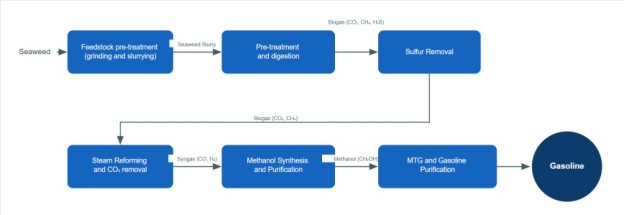
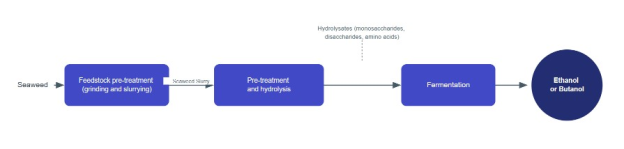
Figure 3: Stylized View of the Anaerobic Digestion Process Adapted from (Roesijadi et al., 2010) Figure 4: Stylized View of the Fermentation Process Adapted from (Roesijadi et al., 2010)
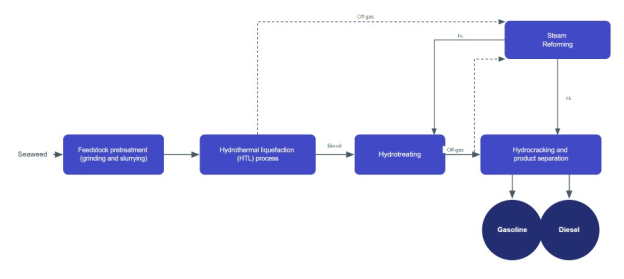
Figure 5: Stylized View of the Hydrothermal Liquefaction Process. Adapted from (Roesijadi et al., 2010)
Products Generated by Conversion Processes and their Use
| Product | Definition | Relevant Use |
| Methanol | A simple alcohol (CH₃OH), colorless, volatile, and flammable. | Precursor to fuels, Transportation Fuel, Chemical Feedstock |
| Ethanol | A two-carbon alcohol (C₂H₅OH) which is flammable, colorless and volatile. | Transportation Fuel, Chemical Feedstock |
| Butanol | A four-carbon alcohol (C₄H₉OH), more energy-dense and less volatile than ethanol. | Transportation Fuel, Solvent |
| Gasoline | Typically, a petroleum-derived liquid hydrocarbon blend is used as transport fuel. | Transportation Fuel |
| Syngas | A mixture of CO, H₂, and CO₂ produced by gasification. | Methanol Synthesis, Electricity |
| Volatile Fatty Acids (VFAs) | Short-chain organic acids (e.g., acetic, propionic, butyric). | Chemical Precursors, Biofuel Intermediates |
| Bio-Oil | A synthetic tar-like substance made from pyrolysis and HTL with high levels of oxygen and nitrogen (when made from algae) | Biofuel Intermediates, Carbon Sequestration |
Companies and Key Research
| Process type | Key initiatives/Companies | Notable Research Findings |
| Anaerobic digestion (AD) | Solrød Biogas, Denmark (operational since 2016) Co-digests beach-cast seaweed with CPKelco processing residues, manure, and food by-products. Upgraded to biomethane for grid injection c. 2020. Seaweed ~0.5% of feedstock by volume — proof of commercial-scale integration. Barbados — Sargassum-to-biogas (early commercial stage) Small-scale digester demonstrated biogas from beach-stranded Sargassum, including a test drive of a biogas-powered Nissan Leaf. Estimated 20,000 m³/day biogas from 500 t/day Sargassum at full scale — equivalent to daily fuel sales of a standard filling station. | Core challenge: seaweed cell walls resist microbial breakdown, keeping real-world yields well below theoretical maxima. Pre-treatment (hydrothermal or enzymatic) has been a major lever. Pre-treatment R&D for improved yields Lin et al. (2019): Hydrothermal pre-treatment of S. latissima at 140°C increased biomethane yield 22.6% (281 → 345 mL CH₄/g VS). Lamb et al. (2019): Enzyme pre-treatment of S. latissima increased biomethane yield 23.5%. Ulva AD yield improved 56% by maceration pre-treatment (171 → 271 L CH₄/kg VS). |
| Fermentation | No major companies exist | MacroFuels EU project (2016–2019) Six-partner consortium; most complete end-to-end fermentation demonstration to date. Key results: • Ethanol: laminarin extraction + hydrolysis + yeast fermentation achieved 4.9% ethanol by volume; 9.4 L distilled ethanol delivered for engine testing. • Butanol: 9.6 L purified n-butanol from S. latissima using an engineered Clostridium beijerinckii strain capable of direct conversion to ABE. • Furanics: high furfural and 5-methylfurfural yields from seaweed hydrolysates; furanic diesel additive from Palmaria palmata tested in compression-ignition engine. • Ensiling: biological ensiling with lactic acid bacteria validated for long-term storage, preserving fermentable sugars and reducing heavy metals (Cd, Hg). Wargacki et al. (2012) — Science Engineered E. coli to simultaneously degrade, transport, and metabolize alginate — the polysaccharide standard organisms cannot ferment. Produced ethanol at ~80% of theoretical maximum yield directly from brown macroalgae. Biological proof-of-concept for enhanced seaweed sugar utilization. |
| Thermochemical Conversions (Hydrothermal Liquefaction) | Anastasakis & Ross (2011) Foundational batch HTL of Laminaria saccharina (brown kelp): maximum bio-crude yield 19.3 wt% at 350°C; higher heating value 36.5 MJ/kg — comparable to heavy crude or bitumen. Allen and Pearce (2024)— continuous-flow HTL of Sargassum First continuous-flow reactor applied to seaweed: 12% biocrude yield (vs ~20% in batch configuration). Transition to continuous flow is essential for commercial viability and is the active R&D frontier. PNNL / DOE Bioenergy Technologies Office — algae HTL program (ongoing since 2014) Sustained US national lab program focused on microalgae; 2023 reactor design update addresses fouling and clogging — applicable to high-ash macroalgae feedstocks. UCLA / Schmidt Sciences — alkaline thermal treatment + REE co-recovery Choi et al., (2025) Novel HTL variant using wet Sargassum: alkaline thermal treatment (NaOH + Ni catalyst + N₂) produces hydrogen fuel rather than bio-crude, with rare earth elements extracted from residual biomass. Avoids energy-intensive drying; uses problem biomass (invasive blooms) as feedstock. | |
| Thermochemical Reactions: Gasification via Pyrolysis and Fischer-Tropsch (F-T) | Macrocarbon- Gran Canaria based startup aiming to grow Sargassum to convert to SAF, biochar and carbon black. | Pyrolysis produces bio-oil (liquid fuel precursor) and biochar (soil amendment / carbon sequestration co-product). Ash content is the critical constraint: >20% DW causes slagging and corrosion in pyrolysis reactors, ruling out most brown and many green algae without pre-washing. Key advantage over fermentation: F-T products are drop-in fuels compatible with existing aviation and diesel infrastructure — no blending limits or engine modifications required. Del Río et al. (2022) Thermogravimetric and pyrolysis characterization of red macroalgae including Porphyra. Established ash content thresholds for reactor slagging. High protein in Porphyra (~40% DW) means food/nutraceutical use dominates commercially; pyrolysis most viable for post-extraction residue. Allen et al. (2024) Updated pathway comparison including F-T for macroalgae; assessed suitability of different species and cultivation systems for thermochemical routes. |
Species Selection, Cultivation and Harvesting
Species selection:
Seaweeds possess complex cell wall architecture that serves crucial functions including mechanical support, cell-cell adhesion, and environmental protection. The cell wall is primarily composed of specialized polysaccharides-it is these polysaccharides that give seaweeds their high carbohydrate content, which combined with low lignin make them suitable for biofuel pathways. Several seaweed species have been studied for use in biofuels, but brown seaweeds such as Saccharina latissima (sugar kelp) have been the most widely researched for biofuel uses due to their high carbohydrate content and for their comparatively large biomass yields when using traditional cultivation approaches. Below are some popular species that are being explored for seaweed-based biofuels and their attributes.
Figure 2: Seaweed Species being explored for biofuels
Hatchery/Nursery:
The two primary ways of propagating seaweeds are vegetative (using fragments of the seaweed) and spore-based methods. For more information on the state of approach of modern hatcheries nurseries, see the cross-cutting Cultivation chapter.Cultivation:
Adoption of seaweed-based biofuels will require a scale-up of several orders of magnitude in seaweed farming. According to an ARPA-E estimate, the United States has suitable conditions to grow 500 million dry metric tons of macroalgae per year, which is approximately 150 times current global production. Such production volumes would yield 10% of the US annual transportation energy demand. Given spatial constraints and competing uses in near-shore areas, much of the expansion will need to occur further offshore. (Definitions of offshore vary but according to ARPA-E’s HAEJO program, offshore refers to “deep water locations or waters beyond state jurisdiction but not including areas beyond national jurisdiction.” In the US, this typically means farming beyond approximately 3 nautical miles). For more details on offshore farming, refer to the section on offshore farming in the Cross Cutting Cultivation chapter.Harvesting:
Once mature, seaweed is removed from artificial substrates. Several tropical seaweed species such as Kappaphycus alvarezii and Sargassum spp. are capable of producing multiple harvests a year, while most temperate seaweeds have one optimal harvest time a year. The decision to harvest is based on current water temperature (measured via in-situ thermometers or regional oceanographic services), visual assessment of seaweed canopy density and color and historical seasonal patterns. The current state of seaweed harvesting involves a mix of traditional manual techniques and developing mechanical methods. For large-scale offshore farms, cost-effective mechanized harvesting will be essential and prototype systems are being developed overseas. The most common systems include: -rotating blades that can be suitable for species growing attached to supporting structures; and -suction systems followed by cutting that can be used for floating seaweeds species (e.g. Sargassum and Gracilaria).For more information, refer to the harvesting section in the Cross Cutting Cultivation chapter. When to harvest; Timing largely depends on local water temperature and species so can vary significantly by latitude. Through periodic destructive sampling, the BioMara project identified autumn as the optimal harvest season for biofuel production, due to the peak sugar content in seaweeds during this period (Šuopys et al., 2021). To extend the harvesting window, they recommended cultivating multiple seaweed species, as different species reach peak sugar content at different times. Pre-treatment for Processing: After harvesting, macroalgae is washed to remove foreign objects and chopped or milled to increase surface area. Many conversion processes require dry feedstock; reducing water content from ~80% to 20–30% also increases shelf-life and reduces transportation costs (Stefania Rocca et al., 2015). Sun-drying is the main method of drying seaweed, but it is weather dependent (Milledge & Harvey, 2018). Conventional dryers such as drum dryers or conveyor dryers are also common, but they require energy and are therefore a source of emissions in areas without a clean electricity grid. Ensiling — preserving seaweed by controlled anaerobic fermentation with lactic acid bacteria — is an alternative that avoids drying entirely. The MacroFuels project demonstrated that ensiling sugar kelp significantly reduces heavy metal content (cadmium, mercury) while maintaining sugar and protein levels, enabling year-round continuous feedstock supply (Šuopys et al., 2021).Harvesting Wild Seaweed
Wild seaweed harvesting remains commercially significant at global scale: for example, a significant portion of the world's alginate supply is derived from wild-harvested Laminaria hyperborea along Norway's Atlantic coastline. In addition to cultivated seaweed, there is growing interest in harvesting wild seaweed blooms, particularly Sargassum, which has proliferated across the Atlantic since 2011. These blooms, spanning over 5,000 miles from West Africa to the Gulf of Mexico, often wash ashore and decompose on beaches, releasing hydrogen sulfide and damaging local tourism—especially in the Caribbean. Initiatives to valorize this beach-cast seaweed for products, including as biofuels are underway. Similarly, in China, recurring Yellow Sea “green tides” of Ulva prolifera have led to research on tracking, harvesting and converting the biomass (Xing et al., 2019, Sun et al., 2022).Conversion to Biofuels
There are three primary pathways for converting macroalgae to bioenergy. Table 1 below summarizes key parameters across all three pathways including current Technology Readiness Levels (TRL).| Pathway | Key steps | Final product | Co-products | TRL | Main advantages | Main challenges |
| Anaerobic digestion (AD) | Milling/slurrying → anaerobic digestion → gas cleaning → methanol synthesis → MTG or F-T process | Gasoline / diesel / biomethane | AD digestate as fertilizer | 7 | Uses wet feedstock; digestate as fertilizer; mature core technology | H₂S removal required; real-world methane yields below theoretical |
| Fermentation | Milling/slurrying → pretreatment (enzymatic/acid hydrolysis) → fermentation → distillation | Ethanol, butanol | Glycerol | 5 | Produces higher-energy-density alcohols; drop-in compatible | Requires pre-treatment; no large-scale operational data |
| Thermochemical Processes Hydrothermal liquefaction (HTL) and Gasification via pyrolysis | Slurry prep → HTL (300–350°C, 120–180 bar) → hydrotreating → hydrocracking | Gasoline, diesel, SAF | Biochar, aqueous nutrient phase | 4 | Handles wet, protein-rich biomass; aviation-compatible output | Capital-intensive; high catalyst cost; batch process to date |
Figure 3: Stylized View of the Anaerobic Digestion Process Adapted from (Roesijadi et al., 2010) Figure 4: Stylized View of the Fermentation Process Adapted from (Roesijadi et al., 2010)
Figure 5: Stylized View of the Hydrothermal Liquefaction Process. Adapted from (Roesijadi et al., 2010)
Products Generated by Conversion Processes and their Use
| Product | Definition | Relevant Use |
| Methanol | A simple alcohol (CH₃OH), colorless, volatile, and flammable. | Precursor to fuels, Transportation Fuel, Chemical Feedstock |
| Ethanol | A two-carbon alcohol (C₂H₅OH) which is flammable, colorless and volatile. | Transportation Fuel, Chemical Feedstock |
| Butanol | A four-carbon alcohol (C₄H₉OH), more energy-dense and less volatile than ethanol. | Transportation Fuel, Solvent |
| Gasoline | Typically, a petroleum-derived liquid hydrocarbon blend is used as transport fuel. | Transportation Fuel |
| Syngas | A mixture of CO, H₂, and CO₂ produced by gasification. | Methanol Synthesis, Electricity |
| Volatile Fatty Acids (VFAs) | Short-chain organic acids (e.g., acetic, propionic, butyric). | Chemical Precursors, Biofuel Intermediates |
| Bio-Oil | A synthetic tar-like substance made from pyrolysis and HTL with high levels of oxygen and nitrogen (when made from algae) | Biofuel Intermediates, Carbon Sequestration |
Companies and Key Research
| Process type | Key initiatives/Companies | Notable Research Findings |
| Anaerobic digestion (AD) | Solrød Biogas, Denmark (operational since 2016) Co-digests beach-cast seaweed with CPKelco processing residues, manure, and food by-products. Upgraded to biomethane for grid injection c. 2020. Seaweed ~0.5% of feedstock by volume — proof of commercial-scale integration. Barbados — Sargassum-to-biogas (early commercial stage) Small-scale digester demonstrated biogas from beach-stranded Sargassum, including a test drive of a biogas-powered Nissan Leaf. Estimated 20,000 m³/day biogas from 500 t/day Sargassum at full scale — equivalent to daily fuel sales of a standard filling station. | Core challenge: seaweed cell walls resist microbial breakdown, keeping real-world yields well below theoretical maxima. Pre-treatment (hydrothermal or enzymatic) has been a major lever. Pre-treatment R&D for improved yields Lin et al. (2019): Hydrothermal pre-treatment of S. latissima at 140°C increased biomethane yield 22.6% (281 → 345 mL CH₄/g VS). Lamb et al. (2019): Enzyme pre-treatment of S. latissima increased biomethane yield 23.5%. Ulva AD yield improved 56% by maceration pre-treatment (171 → 271 L CH₄/kg VS). |
| Fermentation | No major companies exist | MacroFuels EU project (2016–2019) Six-partner consortium; most complete end-to-end fermentation demonstration to date. Key results: • Ethanol: laminarin extraction + hydrolysis + yeast fermentation achieved 4.9% ethanol by volume; 9.4 L distilled ethanol delivered for engine testing. • Butanol: 9.6 L purified n-butanol from S. latissima using an engineered Clostridium beijerinckii strain capable of direct conversion to ABE. • Furanics: high furfural and 5-methylfurfural yields from seaweed hydrolysates; furanic diesel additive from Palmaria palmata tested in compression-ignition engine. • Ensiling: biological ensiling with lactic acid bacteria validated for long-term storage, preserving fermentable sugars and reducing heavy metals (Cd, Hg). Wargacki et al. (2012) — Science Engineered E. coli to simultaneously degrade, transport, and metabolize alginate — the polysaccharide standard organisms cannot ferment. Produced ethanol at ~80% of theoretical maximum yield directly from brown macroalgae. Biological proof-of-concept for enhanced seaweed sugar utilization. |
| Thermochemical Conversions (Hydrothermal Liquefaction) | Anastasakis & Ross (2011) Foundational batch HTL of Laminaria saccharina (brown kelp): maximum bio-crude yield 19.3 wt% at 350°C; higher heating value 36.5 MJ/kg — comparable to heavy crude or bitumen. Allen and Pearce (2024)— continuous-flow HTL of Sargassum First continuous-flow reactor applied to seaweed: 12% biocrude yield (vs ~20% in batch configuration). Transition to continuous flow is essential for commercial viability and is the active R&D frontier. PNNL / DOE Bioenergy Technologies Office — algae HTL program (ongoing since 2014) Sustained US national lab program focused on microalgae; 2023 reactor design update addresses fouling and clogging — applicable to high-ash macroalgae feedstocks. UCLA / Schmidt Sciences — alkaline thermal treatment + REE co-recovery Choi et al., (2025) Novel HTL variant using wet Sargassum: alkaline thermal treatment (NaOH + Ni catalyst + N₂) produces hydrogen fuel rather than bio-crude, with rare earth elements extracted from residual biomass. Avoids energy-intensive drying; uses problem biomass (invasive blooms) as feedstock. | |
| Thermochemical Reactions: Gasification via Pyrolysis and Fischer-Tropsch (F-T) | Macrocarbon- Gran Canaria based startup aiming to grow Sargassum to convert to SAF, biochar and carbon black. | Pyrolysis produces bio-oil (liquid fuel precursor) and biochar (soil amendment / carbon sequestration co-product). Ash content is the critical constraint: >20% DW causes slagging and corrosion in pyrolysis reactors, ruling out most brown and many green algae without pre-washing. Key advantage over fermentation: F-T products are drop-in fuels compatible with existing aviation and diesel infrastructure — no blending limits or engine modifications required. Del Río et al. (2022) Thermogravimetric and pyrolysis characterization of red macroalgae including Porphyra. Established ash content thresholds for reactor slagging. High protein in Porphyra (~40% DW) means food/nutraceutical use dominates commercially; pyrolysis most viable for post-extraction residue. Allen et al. (2024) Updated pathway comparison including F-T for macroalgae; assessed suitability of different species and cultivation systems for thermochemical routes. |
Species Selection, Cultivation and Harvesting
Species selection:
Seaweeds possess complex cell wall architecture that serves crucial functions including mechanical support, cell-cell adhesion, and environmental protection. The cell wall is primarily composed of specialized polysaccharides-it is these polysaccharides that give seaweeds their high carbohydrate content, which combined with low lignin make them suitable for biofuel pathways. Several seaweed species have been studied for use in biofuels, but brown seaweeds such as Saccharina latissima (sugar kelp) have been the most widely researched for biofuel uses due to their high carbohydrate content and for their comparatively large biomass yields when using traditional cultivation approaches. Below are some popular species that are being explored for seaweed-based biofuels and their attributes.
Figure 2: Seaweed Species being explored for biofuels
Hatchery/Nursery:
The two primary ways of propagating seaweeds are vegetative (using fragments of the seaweed) and spore-based methods. For more information on the state of approach of modern hatcheries nurseries, see the cross-cutting Cultivation chapter.Cultivation:
Adoption of seaweed-based biofuels will require a scale-up of several orders of magnitude in seaweed farming. According to an ARPA-E estimate, the United States has suitable conditions to grow 500 million dry metric tons of macroalgae per year, which is approximately 150 times current global production. Such production volumes would yield 10% of the US annual transportation energy demand. Given spatial constraints and competing uses in near-shore areas, much of the expansion will need to occur further offshore. (Definitions of offshore vary but according to ARPA-E’s HAEJO program, offshore refers to “deep water locations or waters beyond state jurisdiction but not including areas beyond national jurisdiction.” In the US, this typically means farming beyond approximately 3 nautical miles). For more details on offshore farming, refer to the section on offshore farming in the Cross Cutting Cultivation chapter.Harvesting:
Once mature, seaweed is removed from artificial substrates. Several tropical seaweed species such as Kappaphycus alvarezii and Sargassum spp. are capable of producing multiple harvests a year, while most temperate seaweeds have one optimal harvest time a year. The decision to harvest is based on current water temperature (measured via in-situ thermometers or regional oceanographic services), visual assessment of seaweed canopy density and color and historical seasonal patterns. The current state of seaweed harvesting involves a mix of traditional manual techniques and developing mechanical methods. For large-scale offshore farms, cost-effective mechanized harvesting will be essential and prototype systems are being developed overseas. The most common systems include: -rotating blades that can be suitable for species growing attached to supporting structures; and -suction systems followed by cutting that can be used for floating seaweeds species (e.g. Sargassum and Gracilaria).For more information, refer to the harvesting section in the Cross Cutting Cultivation chapter. When to harvest; Timing largely depends on local water temperature and species so can vary significantly by latitude. Through periodic destructive sampling, the BioMara project identified autumn as the optimal harvest season for biofuel production, due to the peak sugar content in seaweeds during this period (Šuopys et al., 2021). To extend the harvesting window, they recommended cultivating multiple seaweed species, as different species reach peak sugar content at different times. Pre-treatment for Processing: After harvesting, macroalgae is washed to remove foreign objects and chopped or milled to increase surface area. Many conversion processes require dry feedstock; reducing water content from ~80% to 20–30% also increases shelf-life and reduces transportation costs (Stefania Rocca et al., 2015). Sun-drying is the main method of drying seaweed, but it is weather dependent (Milledge & Harvey, 2018). Conventional dryers such as drum dryers or conveyor dryers are also common, but they require energy and are therefore a source of emissions in areas without a clean electricity grid. Ensiling — preserving seaweed by controlled anaerobic fermentation with lactic acid bacteria — is an alternative that avoids drying entirely. The MacroFuels project demonstrated that ensiling sugar kelp significantly reduces heavy metal content (cadmium, mercury) while maintaining sugar and protein levels, enabling year-round continuous feedstock supply (Šuopys et al., 2021).Harvesting Wild Seaweed
Wild seaweed harvesting remains commercially significant at global scale: for example, a significant portion of the world's alginate supply is derived from wild-harvested Laminaria hyperborea along Norway's Atlantic coastline. In addition to cultivated seaweed, there is growing interest in harvesting wild seaweed blooms, particularly Sargassum, which has proliferated across the Atlantic since 2011. These blooms, spanning over 5,000 miles from West Africa to the Gulf of Mexico, often wash ashore and decompose on beaches, releasing hydrogen sulfide and damaging local tourism—especially in the Caribbean. Initiatives to valorize this beach-cast seaweed for products, including as biofuels are underway. Similarly, in China, recurring Yellow Sea “green tides” of Ulva prolifera have led to research on tracking, harvesting and converting the biomass (Xing et al., 2019, Sun et al., 2022).Conversion to Biofuels
There are three primary pathways for converting macroalgae to bioenergy. Table 1 below summarizes key parameters across all three pathways including current Technology Readiness Levels (TRL).| Pathway | Key steps | Final product | Co-products | TRL | Main advantages | Main challenges |
| Anaerobic digestion (AD) | Milling/slurrying → anaerobic digestion → gas cleaning → methanol synthesis → MTG or F-T process | Gasoline / diesel / biomethane | AD digestate as fertilizer | 7 | Uses wet feedstock; digestate as fertilizer; mature core technology | H₂S removal required; real-world methane yields below theoretical |
| Fermentation | Milling/slurrying → pretreatment (enzymatic/acid hydrolysis) → fermentation → distillation | Ethanol, butanol | Glycerol | 5 | Produces higher-energy-density alcohols; drop-in compatible | Requires pre-treatment; no large-scale operational data |
| Thermochemical Processes Hydrothermal liquefaction (HTL) and Gasification via pyrolysis | Slurry prep → HTL (300–350°C, 120–180 bar) → hydrotreating → hydrocracking | Gasoline, diesel, SAF | Biochar, aqueous nutrient phase | 4 | Handles wet, protein-rich biomass; aviation-compatible output | Capital-intensive; high catalyst cost; batch process to date |
Companies and Key Research
| Process type | Key initiatives/Companies | Notable Research Findings |
| Anaerobic digestion (AD) | Solrød Biogas, Denmark (operational since 2016) Co-digests beach-cast seaweed with CPKelco processing residues, manure, and food by-products. Upgraded to biomethane for grid injection c. 2020. Seaweed ~0.5% of feedstock by volume — proof of commercial-scale integration. Barbados — Sargassum-to-biogas (early commercial stage) Small-scale digester demonstrated biogas from beach-stranded Sargassum, including a test drive of a biogas-powered Nissan Leaf. Estimated 20,000 m³/day biogas from 500 t/day Sargassum at full scale — equivalent to daily fuel sales of a standard filling station. | Core challenge: seaweed cell walls resist microbial breakdown, keeping real-world yields well below theoretical maxima. Pre-treatment (hydrothermal or enzymatic) has been a major lever. Pre-treatment R&D for improved yields Lin et al. (2019): Hydrothermal pre-treatment of S. latissima at 140°C increased biomethane yield 22.6% (281 → 345 mL CH₄/g VS). Lamb et al. (2019): Enzyme pre-treatment of S. latissima increased biomethane yield 23.5%. Ulva AD yield improved 56% by maceration pre-treatment (171 → 271 L CH₄/kg VS). |
| Fermentation | No major companies exist | MacroFuels EU project (2016–2019) Six-partner consortium; most complete end-to-end fermentation demonstration to date. Key results: • Ethanol: laminarin extraction + hydrolysis + yeast fermentation achieved 4.9% ethanol by volume; 9.4 L distilled ethanol delivered for engine testing. • Butanol: 9.6 L purified n-butanol from S. latissima using an engineered Clostridium beijerinckii strain capable of direct conversion to ABE. • Furanics: high furfural and 5-methylfurfural yields from seaweed hydrolysates; furanic diesel additive from Palmaria palmata tested in compression-ignition engine. • Ensiling: biological ensiling with lactic acid bacteria validated for long-term storage, preserving fermentable sugars and reducing heavy metals (Cd, Hg). Wargacki et al. (2012) — Science Engineered E. coli to simultaneously degrade, transport, and metabolize alginate — the polysaccharide standard organisms cannot ferment. Produced ethanol at ~80% of theoretical maximum yield directly from brown macroalgae. Biological proof-of-concept for enhanced seaweed sugar utilization. |
| Thermochemical Conversions (Hydrothermal Liquefaction) | Anastasakis & Ross (2011) Foundational batch HTL of Laminaria saccharina (brown kelp): maximum bio-crude yield 19.3 wt% at 350°C; higher heating value 36.5 MJ/kg — comparable to heavy crude or bitumen. Allen and Pearce (2024)— continuous-flow HTL of Sargassum First continuous-flow reactor applied to seaweed: 12% biocrude yield (vs ~20% in batch configuration). Transition to continuous flow is essential for commercial viability and is the active R&D frontier. PNNL / DOE Bioenergy Technologies Office — algae HTL program (ongoing since 2014) Sustained US national lab program focused on microalgae; 2023 reactor design update addresses fouling and clogging — applicable to high-ash macroalgae feedstocks. UCLA / Schmidt Sciences — alkaline thermal treatment + REE co-recovery Choi et al., (2025) Novel HTL variant using wet Sargassum: alkaline thermal treatment (NaOH + Ni catalyst + N₂) produces hydrogen fuel rather than bio-crude, with rare earth elements extracted from residual biomass. Avoids energy-intensive drying; uses problem biomass (invasive blooms) as feedstock. | |
| Thermochemical Reactions: Gasification via Pyrolysis and Fischer-Tropsch (F-T) | Macrocarbon- Gran Canaria based startup aiming to grow Sargassum to convert to SAF, biochar and carbon black. | Pyrolysis produces bio-oil (liquid fuel precursor) and biochar (soil amendment / carbon sequestration co-product). Ash content is the critical constraint: >20% DW causes slagging and corrosion in pyrolysis reactors, ruling out most brown and many green algae without pre-washing. Key advantage over fermentation: F-T products are drop-in fuels compatible with existing aviation and diesel infrastructure — no blending limits or engine modifications required. Del Río et al. (2022) Thermogravimetric and pyrolysis characterization of red macroalgae including Porphyra. Established ash content thresholds for reactor slagging. High protein in Porphyra (~40% DW) means food/nutraceutical use dominates commercially; pyrolysis most viable for post-extraction residue. Allen et al. (2024) Updated pathway comparison including F-T for macroalgae; assessed suitability of different species and cultivation systems for thermochemical routes. |
Figure 3: Stylized View of the Anaerobic Digestion Process Adapted from (Roesijadi et al., 2010) Figure 4: Stylized View of the Fermentation Process Adapted from (Roesijadi et al., 2010)
Figure 5: Stylized View of the Hydrothermal Liquefaction Process. Adapted from (Roesijadi et al., 2010)
Products Generated by Conversion Processes and their Use
| Product | Definition | Relevant Use |
| Methanol | A simple alcohol (CH₃OH), colorless, volatile, and flammable. | Precursor to fuels, Transportation Fuel, Chemical Feedstock |
| Ethanol | A two-carbon alcohol (C₂H₅OH) which is flammable, colorless and volatile. | Transportation Fuel, Chemical Feedstock |
| Butanol | A four-carbon alcohol (C₄H₉OH), more energy-dense and less volatile than ethanol. | Transportation Fuel, Solvent |
| Gasoline | Typically, a petroleum-derived liquid hydrocarbon blend is used as transport fuel. | Transportation Fuel |
| Syngas | A mixture of CO, H₂, and CO₂ produced by gasification. | Methanol Synthesis, Electricity |
| Volatile Fatty Acids (VFAs) | Short-chain organic acids (e.g., acetic, propionic, butyric). | Chemical Precursors, Biofuel Intermediates |
| Bio-Oil | A synthetic tar-like substance made from pyrolysis and HTL with high levels of oxygen and nitrogen (when made from algae) | Biofuel Intermediates, Carbon Sequestration |
Species Selection, Cultivation and Harvesting
Species selection:
Seaweeds possess complex cell wall architecture that serves crucial functions including mechanical support, cell-cell adhesion, and environmental protection. The cell wall is primarily composed of specialized polysaccharides-it is these polysaccharides that give seaweeds their high carbohydrate content, which combined with low lignin make them suitable for biofuel pathways. Several seaweed species have been studied for use in biofuels, but brown seaweeds such as Saccharina latissima (sugar kelp) have been the most widely researched for biofuel uses due to their high carbohydrate content and for their comparatively large biomass yields when using traditional cultivation approaches. Below are some popular species that are being explored for seaweed-based biofuels and their attributes.
Figure 2: Seaweed Species being explored for biofuels
Hatchery/Nursery:
The two primary ways of propagating seaweeds are vegetative (using fragments of the seaweed) and spore-based methods. For more information on the state of approach of modern hatcheries nurseries, see the cross-cutting Cultivation chapter.Cultivation:
Adoption of seaweed-based biofuels will require a scale-up of several orders of magnitude in seaweed farming. According to an ARPA-E estimate, the United States has suitable conditions to grow 500 million dry metric tons of macroalgae per year, which is approximately 150 times current global production. Such production volumes would yield 10% of the US annual transportation energy demand. Given spatial constraints and competing uses in near-shore areas, much of the expansion will need to occur further offshore. (Definitions of offshore vary but according to ARPA-E’s HAEJO program, offshore refers to “deep water locations or waters beyond state jurisdiction but not including areas beyond national jurisdiction.” In the US, this typically means farming beyond approximately 3 nautical miles). For more details on offshore farming, refer to the section on offshore farming in the Cross Cutting Cultivation chapter.Harvesting:
Once mature, seaweed is removed from artificial substrates. Several tropical seaweed species such as Kappaphycus alvarezii and Sargassum spp. are capable of producing multiple harvests a year, while most temperate seaweeds have one optimal harvest time a year. The decision to harvest is based on current water temperature (measured via in-situ thermometers or regional oceanographic services), visual assessment of seaweed canopy density and color and historical seasonal patterns. The current state of seaweed harvesting involves a mix of traditional manual techniques and developing mechanical methods. For large-scale offshore farms, cost-effective mechanized harvesting will be essential and prototype systems are being developed overseas. The most common systems include: -rotating blades that can be suitable for species growing attached to supporting structures; and -suction systems followed by cutting that can be used for floating seaweeds species (e.g. Sargassum and Gracilaria).For more information, refer to the harvesting section in the Cross Cutting Cultivation chapter. When to harvest; Timing largely depends on local water temperature and species so can vary significantly by latitude. Through periodic destructive sampling, the BioMara project identified autumn as the optimal harvest season for biofuel production, due to the peak sugar content in seaweeds during this period (Šuopys et al., 2021). To extend the harvesting window, they recommended cultivating multiple seaweed species, as different species reach peak sugar content at different times. Pre-treatment for Processing: After harvesting, macroalgae is washed to remove foreign objects and chopped or milled to increase surface area. Many conversion processes require dry feedstock; reducing water content from ~80% to 20–30% also increases shelf-life and reduces transportation costs (Stefania Rocca et al., 2015). Sun-drying is the main method of drying seaweed, but it is weather dependent (Milledge & Harvey, 2018). Conventional dryers such as drum dryers or conveyor dryers are also common, but they require energy and are therefore a source of emissions in areas without a clean electricity grid. Ensiling — preserving seaweed by controlled anaerobic fermentation with lactic acid bacteria — is an alternative that avoids drying entirely. The MacroFuels project demonstrated that ensiling sugar kelp significantly reduces heavy metal content (cadmium, mercury) while maintaining sugar and protein levels, enabling year-round continuous feedstock supply (Šuopys et al., 2021).Harvesting Wild Seaweed
Wild seaweed harvesting remains commercially significant at global scale: for example, a significant portion of the world's alginate supply is derived from wild-harvested Laminaria hyperborea along Norway's Atlantic coastline. In addition to cultivated seaweed, there is growing interest in harvesting wild seaweed blooms, particularly Sargassum, which has proliferated across the Atlantic since 2011. These blooms, spanning over 5,000 miles from West Africa to the Gulf of Mexico, often wash ashore and decompose on beaches, releasing hydrogen sulfide and damaging local tourism—especially in the Caribbean. Initiatives to valorize this beach-cast seaweed for products, including as biofuels are underway. Similarly, in China, recurring Yellow Sea “green tides” of Ulva prolifera have led to research on tracking, harvesting and converting the biomass (Xing et al., 2019, Sun et al., 2022).Conversion to Biofuels
There are three primary pathways for converting macroalgae to bioenergy. Table 1 below summarizes key parameters across all three pathways including current Technology Readiness Levels (TRL).| Pathway | Key steps | Final product | Co-products | TRL | Main advantages | Main challenges |
| Anaerobic digestion (AD) | Milling/slurrying → anaerobic digestion → gas cleaning → methanol synthesis → MTG or F-T process | Gasoline / diesel / biomethane | AD digestate as fertilizer | 7 | Uses wet feedstock; digestate as fertilizer; mature core technology | H₂S removal required; real-world methane yields below theoretical |
| Fermentation | Milling/slurrying → pretreatment (enzymatic/acid hydrolysis) → fermentation → distillation | Ethanol, butanol | Glycerol | 5 | Produces higher-energy-density alcohols; drop-in compatible | Requires pre-treatment; no large-scale operational data |
| Thermochemical Processes Hydrothermal liquefaction (HTL) and Gasification via pyrolysis | Slurry prep → HTL (300–350°C, 120–180 bar) → hydrotreating → hydrocracking | Gasoline, diesel, SAF | Biochar, aqueous nutrient phase | 4 | Handles wet, protein-rich biomass; aviation-compatible output | Capital-intensive; high catalyst cost; batch process to date |
Companies and Key Research
| Process type | Key initiatives/Companies | Notable Research Findings |
| Anaerobic digestion (AD) | Solrød Biogas, Denmark (operational since 2016) Co-digests beach-cast seaweed with CPKelco processing residues, manure, and food by-products. Upgraded to biomethane for grid injection c. 2020. Seaweed ~0.5% of feedstock by volume — proof of commercial-scale integration. Barbados — Sargassum-to-biogas (early commercial stage) Small-scale digester demonstrated biogas from beach-stranded Sargassum, including a test drive of a biogas-powered Nissan Leaf. Estimated 20,000 m³/day biogas from 500 t/day Sargassum at full scale — equivalent to daily fuel sales of a standard filling station. | Core challenge: seaweed cell walls resist microbial breakdown, keeping real-world yields well below theoretical maxima. Pre-treatment (hydrothermal or enzymatic) has been a major lever. Pre-treatment R&D for improved yields Lin et al. (2019): Hydrothermal pre-treatment of S. latissima at 140°C increased biomethane yield 22.6% (281 → 345 mL CH₄/g VS). Lamb et al. (2019): Enzyme pre-treatment of S. latissima increased biomethane yield 23.5%. Ulva AD yield improved 56% by maceration pre-treatment (171 → 271 L CH₄/kg VS). |
| Fermentation | No major companies exist | MacroFuels EU project (2016–2019) Six-partner consortium; most complete end-to-end fermentation demonstration to date. Key results: • Ethanol: laminarin extraction + hydrolysis + yeast fermentation achieved 4.9% ethanol by volume; 9.4 L distilled ethanol delivered for engine testing. • Butanol: 9.6 L purified n-butanol from S. latissima using an engineered Clostridium beijerinckii strain capable of direct conversion to ABE. • Furanics: high furfural and 5-methylfurfural yields from seaweed hydrolysates; furanic diesel additive from Palmaria palmata tested in compression-ignition engine. • Ensiling: biological ensiling with lactic acid bacteria validated for long-term storage, preserving fermentable sugars and reducing heavy metals (Cd, Hg). Wargacki et al. (2012) — Science Engineered E. coli to simultaneously degrade, transport, and metabolize alginate — the polysaccharide standard organisms cannot ferment. Produced ethanol at ~80% of theoretical maximum yield directly from brown macroalgae. Biological proof-of-concept for enhanced seaweed sugar utilization. |
| Thermochemical Conversions (Hydrothermal Liquefaction) | Anastasakis & Ross (2011) Foundational batch HTL of Laminaria saccharina (brown kelp): maximum bio-crude yield 19.3 wt% at 350°C; higher heating value 36.5 MJ/kg — comparable to heavy crude or bitumen. Allen and Pearce (2024)— continuous-flow HTL of Sargassum First continuous-flow reactor applied to seaweed: 12% biocrude yield (vs ~20% in batch configuration). Transition to continuous flow is essential for commercial viability and is the active R&D frontier. PNNL / DOE Bioenergy Technologies Office — algae HTL program (ongoing since 2014) Sustained US national lab program focused on microalgae; 2023 reactor design update addresses fouling and clogging — applicable to high-ash macroalgae feedstocks. UCLA / Schmidt Sciences — alkaline thermal treatment + REE co-recovery Choi et al., (2025) Novel HTL variant using wet Sargassum: alkaline thermal treatment (NaOH + Ni catalyst + N₂) produces hydrogen fuel rather than bio-crude, with rare earth elements extracted from residual biomass. Avoids energy-intensive drying; uses problem biomass (invasive blooms) as feedstock. | |
| Thermochemical Reactions: Gasification via Pyrolysis and Fischer-Tropsch (F-T) | Macrocarbon- Gran Canaria based startup aiming to grow Sargassum to convert to SAF, biochar and carbon black. | Pyrolysis produces bio-oil (liquid fuel precursor) and biochar (soil amendment / carbon sequestration co-product). Ash content is the critical constraint: >20% DW causes slagging and corrosion in pyrolysis reactors, ruling out most brown and many green algae without pre-washing. Key advantage over fermentation: F-T products are drop-in fuels compatible with existing aviation and diesel infrastructure — no blending limits or engine modifications required. Del Río et al. (2022) Thermogravimetric and pyrolysis characterization of red macroalgae including Porphyra. Established ash content thresholds for reactor slagging. High protein in Porphyra (~40% DW) means food/nutraceutical use dominates commercially; pyrolysis most viable for post-extraction residue. Allen et al. (2024) Updated pathway comparison including F-T for macroalgae; assessed suitability of different species and cultivation systems for thermochemical routes. |
Figure 3: Stylized View of the Anaerobic Digestion Process Adapted from (Roesijadi et al., 2010) Figure 4: Stylized View of the Fermentation Process Adapted from Roesijadi et al., 2010
Figure 5: Stylized View of the Hydrothermal Liquefaction Process. Adapted from Roesijadi et al., 2010
Products Generated by Conversion Processes and their Use
| Product | Definition | Relevant Use |
| Methanol | A simple alcohol (CH₃OH), colorless, volatile, and flammable. | Precursor to fuels, Transportation Fuel, Chemical Feedstock |
| Ethanol | A two-carbon alcohol (C₂H₅OH) which is flammable, colorless and volatile. | Transportation Fuel, Chemical Feedstock |
| Butanol | A four-carbon alcohol (C₄H₉OH), more energy-dense and less volatile than ethanol. | Transportation Fuel, Solvent |
| Gasoline | Typically, a petroleum-derived liquid hydrocarbon blend is used as transport fuel. | Transportation Fuel |
| Syngas | A mixture of CO, H₂, and CO₂ produced by gasification. | Methanol Synthesis, Electricity |
| Volatile Fatty Acids (VFAs) | Short-chain organic acids (e.g., acetic, propionic, butyric). | Chemical Precursors, Biofuel Intermediates |
| Bio-Oil | A synthetic tar-like substance made from pyrolysis and HTL with high levels of oxygen and nitrogen (when made from algae) | Biofuel Intermediates, Carbon Sequestration |
Species Selection, Cultivation and Harvesting
Species selection:
Seaweeds possess complex cell wall architecture that serves crucial functions including mechanical support, cell-cell adhesion, and environmental protection. The cell wall is primarily composed of specialized polysaccharides-it is these polysaccharides that give seaweeds their high carbohydrate content, which combined with low lignin make them suitable for biofuel pathways. Several seaweed species have been studied for use in biofuels, but brown seaweeds such as Saccharina latissima (sugar kelp) have been the most widely researched for biofuel uses due to their high carbohydrate content and for their comparatively large biomass yields when using traditional cultivation approaches. Below are some popular species that are being explored for seaweed-based biofuels and their attributes.
Figure 2: Seaweed Species being explored for biofuels
Hatchery/Nursery:
The two primary ways of propagating seaweeds are vegetative (using fragments of the seaweed) and spore-based methods. For more information on the state of approach of modern hatcheries nurseries, see the cross-cutting Cultivation chapter.Cultivation:
Adoption of seaweed-based biofuels will require a scale-up of several orders of magnitude in seaweed farming. According to an ARPA-E estimate, the United States has suitable conditions to grow 500 million dry metric tons of macroalgae per year, which is approximately 150 times current global production. Such production volumes would yield 10% of the US annual transportation energy demand. Given spatial constraints and competing uses in near-shore areas, much of the expansion will need to occur further offshore. (Definitions of offshore vary but according to ARPA-E’s HAEJO program, offshore refers to “deep water locations or waters beyond state jurisdiction but not including areas beyond national jurisdiction.” In the US, this typically means farming beyond approximately 3 nautical miles). For more details on offshore farming, refer to the section on offshore farming in the Cross Cutting Cultivation chapter.Harvesting:
Once mature, seaweed is removed from artificial substrates. Several tropical seaweed species such as Kappaphycus alvarezii and Sargassum spp. are capable of producing multiple harvests a year, while most temperate seaweeds have one optimal harvest time a year. The decision to harvest is based on current water temperature (measured via in-situ thermometers or regional oceanographic services), visual assessment of seaweed canopy density and color and historical seasonal patterns. The current state of seaweed harvesting involves a mix of traditional manual techniques and developing mechanical methods. For large-scale offshore farms, cost-effective mechanized harvesting will be essential and prototype systems are being developed overseas. The most common systems include: -rotating blades that can be suitable for species growing attached to supporting structures; and -suction systems followed by cutting that can be used for floating seaweeds species (e.g. Sargassum and Gracilaria).For more information, refer to the harvesting section in the Cross Cutting Cultivation chapter. When to harvest; Timing largely depends on local water temperature and species so can vary significantly by latitude. Through periodic destructive sampling, the BioMara project identified autumn as the optimal harvest season for biofuel production, due to the peak sugar content in seaweeds during this period (Šuopys et al., 2021). To extend the harvesting window, they recommended cultivating multiple seaweed species, as different species reach peak sugar content at different times. Pre-treatment for Processing: After harvesting, macroalgae is washed to remove foreign objects and chopped or milled to increase surface area. Many conversion processes require dry feedstock; reducing water content from ~80% to 20–30% also increases shelf-life and reduces transportation costs (Stefania Rocca et al., 2015). Sun-drying is the main method of drying seaweed, but it is weather dependent (Milledge & Harvey, 2018). Conventional dryers such as drum dryers or conveyor dryers are also common, but they require energy and are therefore a source of emissions in areas without a clean electricity grid. Ensiling — preserving seaweed by controlled anaerobic fermentation with lactic acid bacteria — is an alternative that avoids drying entirely. The MacroFuels project demonstrated that ensiling sugar kelp significantly reduces heavy metal content (cadmium, mercury) while maintaining sugar and protein levels, enabling year-round continuous feedstock supply (Šuopys et al., 2021).Harvesting Wild Seaweed
Wild seaweed harvesting remains commercially significant at global scale: for example, a significant portion of the world's alginate supply is derived from wild-harvested Laminaria hyperborea along Norway's Atlantic coastline. In addition to cultivated seaweed, there is growing interest in harvesting wild seaweed blooms, particularly Sargassum, which has proliferated across the Atlantic since 2011. These blooms, spanning over 5,000 miles from West Africa to the Gulf of Mexico, often wash ashore and decompose on beaches, releasing hydrogen sulfide and damaging local tourism—especially in the Caribbean. Initiatives to valorize this beach-cast seaweed for products, including as biofuels are underway. Similarly, in China, recurring Yellow Sea “green tides” of Ulva prolifera have led to research on tracking, harvesting and converting the biomass (Xing et al., 2019, Sun et al., 2022).Conversion to Biofuels
There are three primary pathways for converting macroalgae to bioenergy. Table 1 below summarizes key parameters across all three pathways including current Technology Readiness Levels (TRL).| Pathway | Key steps | Final product | Co-products | TRL | Main advantages | Main challenges |
| Anaerobic digestion (AD) | Milling/slurrying → anaerobic digestion → gas cleaning → methanol synthesis → MTG or F-T process | Gasoline / diesel / biomethane | AD digestate as fertilizer | 7 | Uses wet feedstock; digestate as fertilizer; mature core technology | H₂S removal required; real-world methane yields below theoretical |
| Fermentation | Milling/slurrying → pretreatment (enzymatic/acid hydrolysis) → fermentation → distillation | Ethanol, butanol | Glycerol | 5 | Produces higher-energy-density alcohols; drop-in compatible | Requires pre-treatment; no large-scale operational data |
| Thermochemical Processes Hydrothermal liquefaction (HTL) and Gasification via pyrolysis | Slurry prep → HTL (300–350°C, 120–180 bar) → hydrotreating → hydrocracking | Gasoline, diesel, SAF | Biochar, aqueous nutrient phase | 4 | Handles wet, protein-rich biomass; aviation-compatible output | Capital-intensive; high catalyst cost; batch process to date |
Companies and Key Research
| Process type | Key initiatives/Companies | Notable Research Findings |
| Anaerobic digestion (AD) | Solrød Biogas, Denmark (operational since 2016) Co-digests beach-cast seaweed with CPKelco processing residues, manure, and food by-products. Upgraded to biomethane for grid injection c. 2020. Seaweed ~0.5% of feedstock by volume — proof of commercial-scale integration. Barbados — Sargassum-to-biogas (early commercial stage) Small-scale digester demonstrated biogas from beach-stranded Sargassum, including a test drive of a biogas-powered Nissan Leaf. Estimated 20,000 m³/day biogas from 500 t/day Sargassum at full scale — equivalent to daily fuel sales of a standard filling station. | Core challenge: seaweed cell walls resist microbial breakdown, keeping real-world yields well below theoretical maxima. Pre-treatment (hydrothermal or enzymatic) has been a major lever. Pre-treatment R&D for improved yields Lin et al. (2019): Hydrothermal pre-treatment of S. latissima at 140°C increased biomethane yield 22.6% (281 → 345 mL CH₄/g VS). Lamb et al. (2019): Enzyme pre-treatment of S. latissima increased biomethane yield 23.5%. Ulva AD yield improved 56% by maceration pre-treatment (171 → 271 L CH₄/kg VS). |
| Fermentation | No major companies exist | MacroFuels EU project (2016–2019) Six-partner consortium; most complete end-to-end fermentation demonstration to date. Key results: • Ethanol: laminarin extraction + hydrolysis + yeast fermentation achieved 4.9% ethanol by volume; 9.4 L distilled ethanol delivered for engine testing. • Butanol: 9.6 L purified n-butanol from S. latissima using an engineered Clostridium beijerinckii strain capable of direct conversion to ABE. • Furanics: high furfural and 5-methylfurfural yields from seaweed hydrolysates; furanic diesel additive from Palmaria palmata tested in compression-ignition engine. • Ensiling: biological ensiling with lactic acid bacteria validated for long-term storage, preserving fermentable sugars and reducing heavy metals (Cd, Hg). Wargacki et al. (2012) — Science Engineered E. coli to simultaneously degrade, transport, and metabolize alginate — the polysaccharide standard organisms cannot ferment. Produced ethanol at ~80% of theoretical maximum yield directly from brown macroalgae. Biological proof-of-concept for enhanced seaweed sugar utilization. |
| Thermochemical Conversions (Hydrothermal Liquefaction) | Anastasakis & Ross (2011) Foundational batch HTL of Laminaria saccharina (brown kelp): maximum bio-crude yield 19.3 wt% at 350°C; higher heating value 36.5 MJ/kg — comparable to heavy crude or bitumen. Allen and Pearce (2024)— continuous-flow HTL of Sargassum First continuous-flow reactor applied to seaweed: 12% biocrude yield (vs ~20% in batch configuration). Transition to continuous flow is essential for commercial viability and is the active R&D frontier. PNNL / DOE Bioenergy Technologies Office — algae HTL program (ongoing since 2014) Sustained US national lab program focused on microalgae; 2023 reactor design update addresses fouling and clogging — applicable to high-ash macroalgae feedstocks. UCLA / Schmidt Sciences — alkaline thermal treatment + REE co-recovery Choi et al., (2025) Novel HTL variant using wet Sargassum: alkaline thermal treatment (NaOH + Ni catalyst + N₂) produces hydrogen fuel rather than bio-crude, with rare earth elements extracted from residual biomass. Avoids energy-intensive drying; uses problem biomass (invasive blooms) as feedstock. | |
| Thermochemical Reactions: Gasification via Pyrolysis and Fischer-Tropsch (F-T) | Macrocarbon- Gran Canaria based startup aiming to grow Sargassum to convert to SAF, biochar and carbon black. | Pyrolysis produces bio-oil (liquid fuel precursor) and biochar (soil amendment / carbon sequestration co-product). Ash content is the critical constraint: >20% DW causes slagging and corrosion in pyrolysis reactors, ruling out most brown and many green algae without pre-washing. Key advantage over fermentation: F-T products are drop-in fuels compatible with existing aviation and diesel infrastructure — no blending limits or engine modifications required. Del Río et al. (2022) Thermogravimetric and pyrolysis characterization of red macroalgae including Porphyra. Established ash content thresholds for reactor slagging. High protein in Porphyra (~40% DW) means food/nutraceutical use dominates commercially; pyrolysis most viable for post-extraction residue. Allen et al. (2024) Updated pathway comparison including F-T for macroalgae; assessed suitability of different species and cultivation systems for thermochemical routes. |
Figure 3: Stylized View of the Anaerobic Digestion Process Adapted from (Roesijadi et al., 2010)
Figure 4: Stylized View of the Fermentation Process Adapted from Roesijadi et al., 2010
Figure 5: Stylized View of the Hydrothermal Liquefaction Process. Adapted from Roesijadi et al., 2010
Products Generated by Conversion Processes and their Use
| Product | Definition | Relevant Use |
| Methanol | A simple alcohol (CH₃OH), colorless, volatile, and flammable. | Precursor to fuels, Transportation Fuel, Chemical Feedstock |
| Ethanol | A two-carbon alcohol (C₂H₅OH) which is flammable, colorless and volatile. | Transportation Fuel, Chemical Feedstock |
| Butanol | A four-carbon alcohol (C₄H₉OH), more energy-dense and less volatile than ethanol. | Transportation Fuel, Solvent |
| Gasoline | Typically, a petroleum-derived liquid hydrocarbon blend is used as transport fuel. | Transportation Fuel |
| Syngas | A mixture of CO, H₂, and CO₂ produced by gasification. | Methanol Synthesis, Electricity |
| Volatile Fatty Acids (VFAs) | Short-chain organic acids (e.g., acetic, propionic, butyric). | Chemical Precursors, Biofuel Intermediates |
| Bio-Oil | A synthetic tar-like substance made from pyrolysis and HTL with high levels of oxygen and nitrogen (when made from algae) | Biofuel Intermediates, Carbon Sequestration |
Species Selection, Cultivation and Harvesting
Species selection:
Seaweeds possess complex cell wall architecture that serves crucial functions including mechanical support, cell-cell adhesion, and environmental protection. The cell wall is primarily composed of specialized polysaccharides-it is these polysaccharides that give seaweeds their high carbohydrate content, which combined with low lignin make them suitable for biofuel pathways. Several seaweed species have been studied for use in biofuels, but brown seaweeds such as Saccharina latissima (sugar kelp) have been the most widely researched for biofuel uses due to their high carbohydrate content and for their comparatively large biomass yields when using traditional cultivation approaches. Below are some popular species that are being explored for seaweed-based biofuels and their attributes.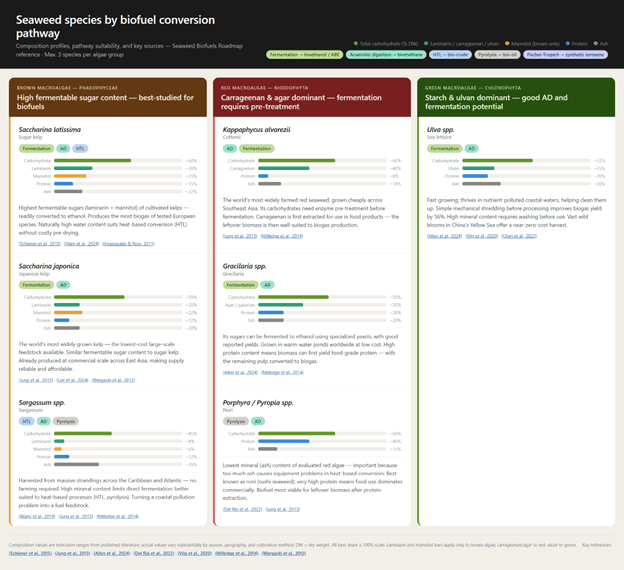
Figure 2: Seaweed Species being explored for biofuels
Hatchery/Nursery:
The two primary ways of propagating seaweeds are vegetative (using fragments of the seaweed) and spore-based methods. For more information on the state of approach of modern hatcheries nurseries, see the cross-cutting Cultivation chapter.Cultivation:
Adoption of seaweed-based biofuels will require a scale-up of several orders of magnitude in seaweed farming. According to an ARPA-E estimate, the United States has suitable conditions to grow 500 million dry metric tons of macroalgae per year, which is approximately 150 times current global production. Such production volumes would yield 10% of the US annual transportation energy demand. Given spatial constraints and competing uses in near-shore areas, much of the expansion will need to occur further offshore. (Definitions of offshore vary but according to ARPA-E’s HAEJO program, offshore refers to “deep water locations or waters beyond state jurisdiction but not including areas beyond national jurisdiction.” In the US, this typically means farming beyond approximately 3 nautical miles). For more details on offshore farming, refer to the section on offshore farming in the Cross Cutting Cultivation chapter.Harvesting:
Once mature, seaweed is removed from artificial substrates. Several tropical seaweed species such as Kappaphycus alvarezii and Sargassum spp. are capable of producing multiple harvests a year, while most temperate seaweeds have one optimal harvest time a year. The decision to harvest is based on current water temperature (measured via in-situ thermometers or regional oceanographic services), visual assessment of seaweed canopy density and color and historical seasonal patterns. The current state of seaweed harvesting involves a mix of traditional manual techniques and developing mechanical methods. For large-scale offshore farms, cost-effective mechanized harvesting will be essential and prototype systems are being developed overseas. The most common systems include: -rotating blades that can be suitable for species growing attached to supporting structures; and -suction systems followed by cutting that can be used for floating seaweeds species (e.g. Sargassum and Gracilaria).For more information, refer to the harvesting section in the Cross Cutting Cultivation chapter. When to harvest; Timing largely depends on local water temperature and species so can vary significantly by latitude. Through periodic destructive sampling, the BioMara project identified autumn as the optimal harvest season for biofuel production, due to the peak sugar content in seaweeds during this period (Šuopys et al., 2021). To extend the harvesting window, they recommended cultivating multiple seaweed species, as different species reach peak sugar content at different times. Pre-treatment for Processing: After harvesting, macroalgae is washed to remove foreign objects and chopped or milled to increase surface area. Many conversion processes require dry feedstock; reducing water content from ~80% to 20–30% also increases shelf-life and reduces transportation costs (Stefania Rocca et al., 2015). Sun-drying is the main method of drying seaweed, but it is weather dependent (Milledge & Harvey, 2018). Conventional dryers such as drum dryers or conveyor dryers are also common, but they require energy and are therefore a source of emissions in areas without a clean electricity grid. Ensiling — preserving seaweed by controlled anaerobic fermentation with lactic acid bacteria — is an alternative that avoids drying entirely. The MacroFuels project demonstrated that ensiling sugar kelp significantly reduces heavy metal content (cadmium, mercury) while maintaining sugar and protein levels, enabling year-round continuous feedstock supply (Šuopys et al., 2021).Harvesting Wild Seaweed
Wild seaweed harvesting remains commercially significant at global scale: for example, a significant portion of the world's alginate supply is derived from wild-harvested Laminaria hyperborea along Norway's Atlantic coastline. In addition to cultivated seaweed, there is growing interest in harvesting wild seaweed blooms, particularly Sargassum, which has proliferated across the Atlantic since 2011. These blooms, spanning over 5,000 miles from West Africa to the Gulf of Mexico, often wash ashore and decompose on beaches, releasing hydrogen sulfide and damaging local tourism—especially in the Caribbean. Initiatives to valorize this beach-cast seaweed for products, including as biofuels are underway. Similarly, in China, recurring Yellow Sea “green tides” of Ulva prolifera have led to research on tracking, harvesting and converting the biomass (Xing et al., 2019, Sun et al., 2022).Conversion to Biofuels
There are three primary pathways for converting macroalgae to bioenergy. Table 1 below summarizes key parameters across all three pathways including current Technology Readiness Levels (TRL).| Pathway | Key steps | Final product | Co-products | TRL | Main advantages | Main challenges |
| Anaerobic digestion (AD) | Milling/slurrying → anaerobic digestion → gas cleaning → methanol synthesis → MTG or F-T process | Gasoline / diesel / biomethane | AD digestate as fertilizer | 7 | Uses wet feedstock; digestate as fertilizer; mature core technology | H₂S removal required; real-world methane yields below theoretical |
| Fermentation | Milling/slurrying → pretreatment (enzymatic/acid hydrolysis) → fermentation → distillation | Ethanol, butanol | Glycerol | 5 | Produces higher-energy-density alcohols; drop-in compatible | Requires pre-treatment; no large-scale operational data |
| Thermochemical Processes Hydrothermal liquefaction (HTL) and Gasification via pyrolysis | Slurry prep → HTL (300–350°C, 120–180 bar) → hydrotreating → hydrocracking | Gasoline, diesel, SAF | Biochar, aqueous nutrient phase | 4 | Handles wet, protein-rich biomass; aviation-compatible output | Capital-intensive; high catalyst cost; batch process to date |
Companies and Key Research
| Process type | Key initiatives/Companies | Notable Research Findings |
| Anaerobic digestion (AD) | Solrød Biogas, Denmark (operational since 2016) Co-digests beach-cast seaweed with CPKelco processing residues, manure, and food by-products. Upgraded to biomethane for grid injection c. 2020. Seaweed ~0.5% of feedstock by volume — proof of commercial-scale integration. Barbados — Sargassum-to-biogas (early commercial stage) Small-scale digester demonstrated biogas from beach-stranded Sargassum, including a test drive of a biogas-powered Nissan Leaf. Estimated 20,000 m³/day biogas from 500 t/day Sargassum at full scale — equivalent to daily fuel sales of a standard filling station. | Core challenge: seaweed cell walls resist microbial breakdown, keeping real-world yields well below theoretical maxima. Pre-treatment (hydrothermal or enzymatic) has been a major lever. Pre-treatment R&D for improved yields Lin et al. (2019): Hydrothermal pre-treatment of S. latissima at 140°C increased biomethane yield 22.6% (281 → 345 mL CH₄/g VS). Lamb et al. (2019): Enzyme pre-treatment of S. latissima increased biomethane yield 23.5%. Ulva AD yield improved 56% by maceration pre-treatment (171 → 271 L CH₄/kg VS). |
| Fermentation | No major companies exist | MacroFuels EU project (2016–2019) Six-partner consortium; most complete end-to-end fermentation demonstration to date. Key results: • Ethanol: laminarin extraction + hydrolysis + yeast fermentation achieved 4.9% ethanol by volume; 9.4 L distilled ethanol delivered for engine testing. • Butanol: 9.6 L purified n-butanol from S. latissima using an engineered Clostridium beijerinckii strain capable of direct conversion to ABE. • Furanics: high furfural and 5-methylfurfural yields from seaweed hydrolysates; furanic diesel additive from Palmaria palmata tested in compression-ignition engine. • Ensiling: biological ensiling with lactic acid bacteria validated for long-term storage, preserving fermentable sugars and reducing heavy metals (Cd, Hg). Wargacki et al. (2012) — Science Engineered E. coli to simultaneously degrade, transport, and metabolize alginate — the polysaccharide standard organisms cannot ferment. Produced ethanol at ~80% of theoretical maximum yield directly from brown macroalgae. Biological proof-of-concept for enhanced seaweed sugar utilization. |
| Thermochemical Conversions (Hydrothermal Liquefaction) | Anastasakis & Ross (2011) Foundational batch HTL of Laminaria saccharina (brown kelp): maximum bio-crude yield 19.3 wt% at 350°C; higher heating value 36.5 MJ/kg — comparable to heavy crude or bitumen. Allen and Pearce (2024)— continuous-flow HTL of Sargassum First continuous-flow reactor applied to seaweed: 12% biocrude yield (vs ~20% in batch configuration). Transition to continuous flow is essential for commercial viability and is the active R&D frontier. PNNL / DOE Bioenergy Technologies Office — algae HTL program (ongoing since 2014) Sustained US national lab program focused on microalgae; 2023 reactor design update addresses fouling and clogging — applicable to high-ash macroalgae feedstocks. UCLA / Schmidt Sciences — alkaline thermal treatment + REE co-recovery Choi et al., (2025) Novel HTL variant using wet Sargassum: alkaline thermal treatment (NaOH + Ni catalyst + N₂) produces hydrogen fuel rather than bio-crude, with rare earth elements extracted from residual biomass. Avoids energy-intensive drying; uses problem biomass (invasive blooms) as feedstock. | |
| Thermochemical Reactions: Gasification via Pyrolysis and Fischer-Tropsch (F-T) | Macrocarbon- Gran Canaria based startup aiming to grow Sargassum to convert to SAF, biochar and carbon black. | Pyrolysis produces bio-oil (liquid fuel precursor) and biochar (soil amendment / carbon sequestration co-product). Ash content is the critical constraint: >20% DW causes slagging and corrosion in pyrolysis reactors, ruling out most brown and many green algae without pre-washing. Key advantage over fermentation: F-T products are drop-in fuels compatible with existing aviation and diesel infrastructure — no blending limits or engine modifications required. Del Río et al. (2022) Thermogravimetric and pyrolysis characterization of red macroalgae including Porphyra. Established ash content thresholds for reactor slagging. High protein in Porphyra (~40% DW) means food/nutraceutical use dominates commercially; pyrolysis most viable for post-extraction residue. Allen et al. (2024) Updated pathway comparison including F-T for macroalgae; assessed suitability of different species and cultivation systems for thermochemical routes. |
Figure 3: Stylized View of the Anaerobic Digestion Process Adapted from (Roesijadi et al., 2010)
Figure 4: Stylized View of the Fermentation Process Adapted from Roesijadi et al., 2010
Figure 5: Stylized View of the Hydrothermal Liquefaction Process. Adapted from Roesijadi et al., 2010
Products Generated by Conversion Processes and their Use
| Product | Definition | Relevant Use |
| Methanol | A simple alcohol (CH₃OH), colorless, volatile, and flammable. | Precursor to fuels, Transportation Fuel, Chemical Feedstock |
| Ethanol | A two-carbon alcohol (C₂H₅OH) which is flammable, colorless and volatile. | Transportation Fuel, Chemical Feedstock |
| Butanol | A four-carbon alcohol (C₄H₉OH), more energy-dense and less volatile than ethanol. | Transportation Fuel, Solvent |
| Gasoline | Typically, a petroleum-derived liquid hydrocarbon blend is used as transport fuel. | Transportation Fuel |
| Syngas | A mixture of CO, H₂, and CO₂ produced by gasification. | Methanol Synthesis, Electricity |
| Volatile Fatty Acids (VFAs) | Short-chain organic acids (e.g., acetic, propionic, butyric). | Chemical Precursors, Biofuel Intermediates |
| Bio-Oil | A synthetic tar-like substance made from pyrolysis and HTL with high levels of oxygen and nitrogen (when made from algae) | Biofuel Intermediates, Carbon Sequestration |
Species Selection, Cultivation and Harvesting
Species selection:
Seaweeds possess complex cell wall architecture that serves crucial functions including mechanical support, cell-cell adhesion, and environmental protection. The cell wall is primarily composed of specialized polysaccharides-it is these polysaccharides that give seaweeds their high carbohydrate content, which combined with low lignin make them suitable for biofuel pathways. Several seaweed species have been studied for use in biofuels, but brown seaweeds such as Saccharina latissima (sugar kelp) have been the most widely researched for biofuel uses due to their high carbohydrate content and for their comparatively large biomass yields when using traditional cultivation approaches. Below are some popular species that are being explored for seaweed-based biofuels and their attributes.
Figure 2: Seaweed Species being explored for biofuels
Hatchery/Nursery:
The two primary ways of propagating seaweeds are vegetative (using fragments of the seaweed) and spore-based methods. For more information on the state of approach of modern hatcheries nurseries, see the cross-cutting Cultivation chapter.Cultivation:
Adoption of seaweed-based biofuels will require a scale-up of several orders of magnitude in seaweed farming. According to an ARPA-E estimate, the United States has suitable conditions to grow 500 million dry metric tons of macroalgae per year, which is approximately 150 times current global production. Such production volumes would yield 10% of the US annual transportation energy demand. Given spatial constraints and competing uses in near-shore areas, much of the expansion will need to occur further offshore. (Definitions of offshore vary but according to ARPA-E’s HAEJO program, offshore refers to “deep water locations or waters beyond state jurisdiction but not including areas beyond national jurisdiction.” In the US, this typically means farming beyond approximately 3 nautical miles). For more details on offshore farming, refer to the section on offshore farming in the Cross Cutting Cultivation chapter.Harvesting:
Once mature, seaweed is removed from artificial substrates. Several tropical seaweed species such as Kappaphycus alvarezii and Sargassum spp. are capable of producing multiple harvests a year, while most temperate seaweeds have one optimal harvest time a year. The decision to harvest is based on current water temperature (measured via in-situ thermometers or regional oceanographic services), visual assessment of seaweed canopy density and color and historical seasonal patterns. The current state of seaweed harvesting involves a mix of traditional manual techniques and developing mechanical methods. For large-scale offshore farms, cost-effective mechanized harvesting will be essential and prototype systems are being developed overseas. The most common systems include: -rotating blades that can be suitable for species growing attached to supporting structures; and -suction systems followed by cutting that can be used for floating seaweeds species (e.g. Sargassum and Gracilaria).For more information, refer to the harvesting section in the Cross Cutting Cultivation chapter. When to harvest; Timing largely depends on local water temperature and species so can vary significantly by latitude. Through periodic destructive sampling, the BioMara project identified autumn as the optimal harvest season for biofuel production, due to the peak sugar content in seaweeds during this period (Šuopys et al., 2021). To extend the harvesting window, they recommended cultivating multiple seaweed species, as different species reach peak sugar content at different times. Pre-treatment for Processing: After harvesting, macroalgae is washed to remove foreign objects and chopped or milled to increase surface area. Many conversion processes require dry feedstock; reducing water content from ~80% to 20–30% also increases shelf-life and reduces transportation costs (Stefania Rocca et al., 2015). Sun-drying is the main method of drying seaweed, but it is weather dependent (Milledge & Harvey, 2018). Conventional dryers such as drum dryers or conveyor dryers are also common, but they require energy and are therefore a source of emissions in areas without a clean electricity grid. Ensiling — preserving seaweed by controlled anaerobic fermentation with lactic acid bacteria — is an alternative that avoids drying entirely. The MacroFuels project demonstrated that ensiling sugar kelp significantly reduces heavy metal content (cadmium, mercury) while maintaining sugar and protein levels, enabling year-round continuous feedstock supply (Šuopys et al., 2021).Harvesting Wild Seaweed
Wild seaweed harvesting remains commercially significant at global scale: for example, a significant portion of the world's alginate supply is derived from wild-harvested Laminaria hyperborea along Norway's Atlantic coastline. In addition to cultivated seaweed, there is growing interest in harvesting wild seaweed blooms, particularly Sargassum, which has proliferated across the Atlantic since 2011. These blooms, spanning over 5,000 miles from West Africa to the Gulf of Mexico, often wash ashore and decompose on beaches, releasing hydrogen sulfide and damaging local tourism—especially in the Caribbean. Initiatives to valorize this beach-cast seaweed for products, including as biofuels are underway. Similarly, in China, recurring Yellow Sea “green tides” of Ulva prolifera have led to research on tracking, harvesting and converting the biomass (Xing et al., 2019, Sun et al., 2022).Conversion to Biofuels
There are three primary pathways for converting macroalgae to bioenergy. Table 1 below summarizes key parameters across all three pathways including current Technology Readiness Levels (TRL).| Pathway | Key steps | Final product | Co-products | TRL | Main advantages | Main challenges |
| Anaerobic digestion (AD) | Milling/slurrying → anaerobic digestion → gas cleaning → methanol synthesis → MTG or F-T process | Gasoline / diesel / biomethane | AD digestate as fertilizer | 7 | Uses wet feedstock; digestate as fertilizer; mature core technology | H₂S removal required; real-world methane yields below theoretical |
| Fermentation | Milling/slurrying → pretreatment (enzymatic/acid hydrolysis) → fermentation → distillation | Ethanol, butanol | Glycerol | 5 | Produces higher-energy-density alcohols; drop-in compatible | Requires pre-treatment; no large-scale operational data |
| Thermochemical Processes Hydrothermal liquefaction (HTL) and Gasification via pyrolysis | Slurry prep → HTL (300–350°C, 120–180 bar) → hydrotreating → hydrocracking | Gasoline, diesel, SAF | Biochar, aqueous nutrient phase | 4 | Handles wet, protein-rich biomass; aviation-compatible output | Capital-intensive; high catalyst cost; batch process to date |
Companies and Key Research
| Process type | Key initiatives/Companies | Notable Research Findings |
| Anaerobic digestion (AD) | Solrød Biogas, Denmark (operational since 2016) Co-digests beach-cast seaweed with CPKelco processing residues, manure, and food by-products. Upgraded to biomethane for grid injection c. 2020. Seaweed ~0.5% of feedstock by volume — proof of commercial-scale integration. Barbados — Sargassum-to-biogas (early commercial stage) Small-scale digester demonstrated biogas from beach-stranded Sargassum, including a test drive of a biogas-powered Nissan Leaf. Estimated 20,000 m³/day biogas from 500 t/day Sargassum at full scale — equivalent to daily fuel sales of a standard filling station. | Core challenge: seaweed cell walls resist microbial breakdown, keeping real-world yields well below theoretical maxima. Pre-treatment (hydrothermal or enzymatic) has been a major lever. Pre-treatment R&D for improved yields Lin et al. (2019): Hydrothermal pre-treatment of S. latissima at 140°C increased biomethane yield 22.6% (281 → 345 mL CH₄/g VS). Lamb et al. (2019): Enzyme pre-treatment of S. latissima increased biomethane yield 23.5%. Ulva AD yield improved 56% by maceration pre-treatment (171 → 271 L CH₄/kg VS). |
| Fermentation | No major companies exist | MacroFuels EU project (2016–2019) Six-partner consortium; most complete end-to-end fermentation demonstration to date. Key results: • Ethanol: laminarin extraction + hydrolysis + yeast fermentation achieved 4.9% ethanol by volume; 9.4 L distilled ethanol delivered for engine testing. • Butanol: 9.6 L purified n-butanol from S. latissima using an engineered Clostridium beijerinckii strain capable of direct conversion to ABE. • Furanics: high furfural and 5-methylfurfural yields from seaweed hydrolysates; furanic diesel additive from Palmaria palmata tested in compression-ignition engine. • Ensiling: biological ensiling with lactic acid bacteria validated for long-term storage, preserving fermentable sugars and reducing heavy metals (Cd, Hg). Wargacki et al. (2012) — Science Engineered E. coli to simultaneously degrade, transport, and metabolize alginate — the polysaccharide standard organisms cannot ferment. Produced ethanol at ~80% of theoretical maximum yield directly from brown macroalgae. Biological proof-of-concept for enhanced seaweed sugar utilization. |
| Thermochemical Conversions (Hydrothermal Liquefaction) | Anastasakis & Ross (2011) Foundational batch HTL of Laminaria saccharina (brown kelp): maximum bio-crude yield 19.3 wt% at 350°C; higher heating value 36.5 MJ/kg — comparable to heavy crude or bitumen. Allen and Pearce (2024)— continuous-flow HTL of Sargassum First continuous-flow reactor applied to seaweed: 12% biocrude yield (vs ~20% in batch configuration). Transition to continuous flow is essential for commercial viability and is the active R&D frontier. PNNL / DOE Bioenergy Technologies Office — algae HTL program (ongoing since 2014) Sustained US national lab program focused on microalgae; 2023 reactor design update addresses fouling and clogging — applicable to high-ash macroalgae feedstocks. UCLA / Schmidt Sciences — alkaline thermal treatment + REE co-recovery Choi et al., (2025) Novel HTL variant using wet Sargassum: alkaline thermal treatment (NaOH + Ni catalyst + N₂) produces hydrogen fuel rather than bio-crude, with rare earth elements extracted from residual biomass. Avoids energy-intensive drying; uses problem biomass (invasive blooms) as feedstock. | |
| Thermochemical Reactions: Gasification via Pyrolysis and Fischer-Tropsch (F-T) | Macrocarbon- Gran Canaria based startup aiming to grow Sargassum to convert to SAF, biochar and carbon black. | Pyrolysis produces bio-oil (liquid fuel precursor) and biochar (soil amendment / carbon sequestration co-product). Ash content is the critical constraint: >20% DW causes slagging and corrosion in pyrolysis reactors, ruling out most brown and many green algae without pre-washing. Key advantage over fermentation: F-T products are drop-in fuels compatible with existing aviation and diesel infrastructure — no blending limits or engine modifications required. Del Río et al. (2022) Thermogravimetric and pyrolysis characterization of red macroalgae including Porphyra. Established ash content thresholds for reactor slagging. High protein in Porphyra (~40% DW) means food/nutraceutical use dominates commercially; pyrolysis most viable for post-extraction residue. Allen et al. (2024) Updated pathway comparison including F-T for macroalgae; assessed suitability of different species and cultivation systems for thermochemical routes. |
Figure 3: Stylized View of the Anaerobic Digestion Process Adapted from (Roesijadi et al., 2010)
Figure 4: Stylized View of the Fermentation Process Adapted from Roesijadi et al., 2010
Figure 5: Stylized View of the Hydrothermal Liquefaction Process. Adapted from Roesijadi et al., 2010
Products Generated by Conversion Processes and their Use
| Product | Definition | Relevant Use |
| Methanol | A simple alcohol (CH₃OH), colorless, volatile, and flammable. | Precursor to fuels, Transportation Fuel, Chemical Feedstock |
| Ethanol | A two-carbon alcohol (C₂H₅OH) which is flammable, colorless and volatile. | Transportation Fuel, Chemical Feedstock |
| Butanol | A four-carbon alcohol (C₄H₉OH), more energy-dense and less volatile than ethanol. | Transportation Fuel, Solvent |
| Gasoline | Typically, a petroleum-derived liquid hydrocarbon blend is used as transport fuel. | Transportation Fuel |
| Syngas | A mixture of CO, H₂, and CO₂ produced by gasification. | Methanol Synthesis, Electricity |
| Volatile Fatty Acids (VFAs) | Short-chain organic acids (e.g., acetic, propionic, butyric). | Chemical Precursors, Biofuel Intermediates |
| Bio-Oil | A synthetic tar-like substance made from pyrolysis and HTL with high levels of oxygen and nitrogen (when made from algae) | Biofuel Intermediates, Carbon Sequestration |
Species Selection, Cultivation and Harvesting
Species selection:
Seaweeds possess complex cell wall architecture that serves crucial functions including mechanical support, cell-cell adhesion, and environmental protection. The cell wall is primarily composed of specialized polysaccharides-it is these polysaccharides that give seaweeds their high carbohydrate content, which combined with low lignin make them suitable for biofuel pathways. Several seaweed species have been studied for use in biofuels, but brown seaweeds such as Saccharina latissima (sugar kelp) have been the most widely researched for biofuel uses due to their high carbohydrate content and for their comparatively large biomass yields when using traditional cultivation approaches. Below are some popular species that are being explored for seaweed-based biofuels and their attributes.
Figure 2: Seaweed Species being explored for biofuels
Hatchery/Nursery:
The two primary ways of propagating seaweeds are vegetative (using fragments of the seaweed) and spore-based methods. For more information on the state of approach of modern hatcheries nurseries, see the cross-cutting Cultivation chapter.Cultivation:
Adoption of seaweed-based biofuels will require a scale-up of several orders of magnitude in seaweed farming. According to an ARPA-E estimate, the United States has suitable conditions to grow 500 million dry metric tons of macroalgae per year, which is approximately 150 times current global production. Such production volumes would yield 10% of the US annual transportation energy demand. Given spatial constraints and competing uses in near-shore areas, much of the expansion will need to occur further offshore. (Definitions of offshore vary but according to ARPA-E’s HAEJO program, offshore refers to “deep water locations or waters beyond state jurisdiction but not including areas beyond national jurisdiction.” In the US, this typically means farming beyond approximately 3 nautical miles). For more details on offshore farming, refer to the section on offshore farming in the Cross Cutting Cultivation chapter.Harvesting:
Once mature, seaweed is removed from artificial substrates. Several tropical seaweed species such as Kappaphycus alvarezii and Sargassum spp. are capable of producing multiple harvests a year, while most temperate seaweeds have one optimal harvest time a year. The decision to harvest is based on current water temperature (measured via in-situ thermometers or regional oceanographic services), visual assessment of seaweed canopy density and color and historical seasonal patterns. The current state of seaweed harvesting involves a mix of traditional manual techniques and developing mechanical methods. For large-scale offshore farms, cost-effective mechanized harvesting will be essential and prototype systems are being developed overseas. The most common systems include: -rotating blades that can be suitable for species growing attached to supporting structures; and -suction systems followed by cutting that can be used for floating seaweeds species (e.g. Sargassum and Gracilaria).For more information, refer to the harvesting section in the Cross Cutting Cultivation chapter. When to harvest; Timing largely depends on local water temperature and species so can vary significantly by latitude. Through periodic destructive sampling, the BioMara project identified autumn as the optimal harvest season for biofuel production, due to the peak sugar content in seaweeds during this period (Šuopys et al., 2021). To extend the harvesting window, they recommended cultivating multiple seaweed species, as different species reach peak sugar content at different times. Pre-treatment for Processing: After harvesting, macroalgae is washed to remove foreign objects and chopped or milled to increase surface area. Many conversion processes require dry feedstock; reducing water content from ~80% to 20–30% also increases shelf-life and reduces transportation costs (Stefania Rocca et al., 2015). Sun-drying is the main method of drying seaweed, but it is weather dependent (Milledge & Harvey, 2018). Conventional dryers such as drum dryers or conveyor dryers are also common, but they require energy and are therefore a source of emissions in areas without a clean electricity grid. Ensiling — preserving seaweed by controlled anaerobic fermentation with lactic acid bacteria — is an alternative that avoids drying entirely. The MacroFuels project demonstrated that ensiling sugar kelp significantly reduces heavy metal content (cadmium, mercury) while maintaining sugar and protein levels, enabling year-round continuous feedstock supply (Šuopys et al., 2021).Harvesting Wild Seaweed
Wild seaweed harvesting remains commercially significant at global scale: for example, a significant portion of the world's alginate supply is derived from wild-harvested Laminaria hyperborea along Norway's Atlantic coastline. In addition to cultivated seaweed, there is growing interest in harvesting wild seaweed blooms, particularly Sargassum, which has proliferated across the Atlantic since 2011. These blooms, spanning over 5,000 miles from West Africa to the Gulf of Mexico, often wash ashore and decompose on beaches, releasing hydrogen sulfide and damaging local tourism—especially in the Caribbean. Initiatives to valorize this beach-cast seaweed for products, including as biofuels are underway. Similarly, in China, recurring Yellow Sea “green tides” of Ulva prolifera have led to research on tracking, harvesting and converting the biomass (Xing et al., 2019, Sun et al., 2022).Conversion to Biofuels
There are three primary pathways for converting macroalgae to bioenergy. Table 1 below summarizes key parameters across all three pathways including current Technology Readiness Levels (TRL).| Pathway | Key steps | Final product | Co-products | TRL | Main advantages | Main challenges |
| Anaerobic digestion (AD) | Milling/slurrying → anaerobic digestion → gas cleaning → methanol synthesis → MTG or F-T process | Gasoline / diesel / biomethane | AD digestate as fertilizer | 7 | Uses wet feedstock; digestate as fertilizer; mature core technology | H₂S removal required; real-world methane yields below theoretical |
| Fermentation | Milling/slurrying → pretreatment (enzymatic/acid hydrolysis) → fermentation → distillation | Ethanol, butanol | Glycerol | 5 | Produces higher-energy-density alcohols; drop-in compatible | Requires pre-treatment; no large-scale operational data |
| Thermochemical Processes Hydrothermal liquefaction (HTL) and Gasification via pyrolysis | Slurry prep → HTL (300–350°C, 120–180 bar) → hydrotreating → hydrocracking | Gasoline, diesel, SAF | Biochar, aqueous nutrient phase | 4 | Handles wet, protein-rich biomass; aviation-compatible output | Capital-intensive; high catalyst cost; batch process to date |
Companies and Key Research
| Process type | Key initiatives/Companies | Notable Research Findings |
| Anaerobic digestion (AD) | Solrød Biogas, Denmark (operational since 2016) Co-digests beach-cast seaweed with CPKelco processing residues, manure, and food by-products. Upgraded to biomethane for grid injection c. 2020. Seaweed ~0.5% of feedstock by volume — proof of commercial-scale integration. Barbados — Sargassum-to-biogas (early commercial stage) Small-scale digester demonstrated biogas from beach-stranded Sargassum, including a test drive of a biogas-powered Nissan Leaf. Estimated 20,000 m³/day biogas from 500 t/day Sargassum at full scale — equivalent to daily fuel sales of a standard filling station. | Core challenge: seaweed cell walls resist microbial breakdown, keeping real-world yields well below theoretical maxima. Pre-treatment (hydrothermal or enzymatic) has been a major lever. Pre-treatment R&D for improved yields Lin et al. (2019): Hydrothermal pre-treatment of S. latissima at 140°C increased biomethane yield 22.6% (281 → 345 mL CH₄/g VS). Lamb et al. (2019): Enzyme pre-treatment of S. latissima increased biomethane yield 23.5%. Ulva AD yield improved 56% by maceration pre-treatment (171 → 271 L CH₄/kg VS). |
| Fermentation | No major companies exist | MacroFuels EU project (2016–2019) Six-partner consortium; most complete end-to-end fermentation demonstration to date. Key results: • Ethanol: laminarin extraction + hydrolysis + yeast fermentation achieved 4.9% ethanol by volume; 9.4 L distilled ethanol delivered for engine testing. • Butanol: 9.6 L purified n-butanol from S. latissima using an engineered Clostridium beijerinckii strain capable of direct conversion to ABE. • Furanics: high furfural and 5-methylfurfural yields from seaweed hydrolysates; furanic diesel additive from Palmaria palmata tested in compression-ignition engine. • Ensiling: biological ensiling with lactic acid bacteria validated for long-term storage, preserving fermentable sugars and reducing heavy metals (Cd, Hg). Wargacki et al. (2012) — Science Engineered E. coli to simultaneously degrade, transport, and metabolize alginate — the polysaccharide standard organisms cannot ferment. Produced ethanol at ~80% of theoretical maximum yield directly from brown macroalgae. Biological proof-of-concept for enhanced seaweed sugar utilization. |
| Thermochemical Conversions (Hydrothermal Liquefaction) | Anastasakis & Ross (2011) Foundational batch HTL of Laminaria saccharina (brown kelp): maximum bio-crude yield 19.3 wt% at 350°C; higher heating value 36.5 MJ/kg — comparable to heavy crude or bitumen. Allen and Pearce (2024)— continuous-flow HTL of Sargassum First continuous-flow reactor applied to seaweed: 12% biocrude yield (vs ~20% in batch configuration). Transition to continuous flow is essential for commercial viability and is the active R&D frontier. PNNL / DOE Bioenergy Technologies Office — algae HTL program (ongoing since 2014) Sustained US national lab program focused on microalgae; 2023 reactor design update addresses fouling and clogging — applicable to high-ash macroalgae feedstocks. UCLA / Schmidt Sciences — alkaline thermal treatment + REE co-recovery Choi et al., (2025) Novel HTL variant using wet Sargassum: alkaline thermal treatment (NaOH + Ni catalyst + N₂) produces hydrogen fuel rather than bio-crude, with rare earth elements extracted from residual biomass. Avoids energy-intensive drying; uses problem biomass (invasive blooms) as feedstock. | |
| Thermochemical Reactions: Gasification via Pyrolysis and Fischer-Tropsch (F-T) | Macrocarbon- Gran Canaria based startup aiming to grow Sargassum to convert to SAF, biochar and carbon black. | Pyrolysis produces bio-oil (liquid fuel precursor) and biochar (soil amendment / carbon sequestration co-product). Ash content is the critical constraint: >20% DW causes slagging and corrosion in pyrolysis reactors, ruling out most brown and many green algae without pre-washing. Key advantage over fermentation: F-T products are drop-in fuels compatible with existing aviation and diesel infrastructure — no blending limits or engine modifications required. Del Río et al. (2022) Thermogravimetric and pyrolysis characterization of red macroalgae including Porphyra. Established ash content thresholds for reactor slagging. High protein in Porphyra (~40% DW) means food/nutraceutical use dominates commercially; pyrolysis most viable for post-extraction residue. Allen et al. (2024) Updated pathway comparison including F-T for macroalgae; assessed suitability of different species and cultivation systems for thermochemical routes. |
Figure 3: Stylized View of the Anaerobic Digestion Process Adapted from (Roesijadi et al., 2010)
Figure 4: Stylized View of the Fermentation Process Adapted from Roesijadi et al., 2010
Figure 5: Stylized View of the Hydrothermal Liquefaction Process. Adapted from Roesijadi et al., 2010
Products Generated by Conversion Processes and their Use
| Product | Definition | Relevant Use |
| Methanol | A simple alcohol (CH₃OH), colorless, volatile, and flammable. | Precursor to fuels, Transportation Fuel, Chemical Feedstock |
| Ethanol | A two-carbon alcohol (C₂H₅OH) which is flammable, colorless and volatile. | Transportation Fuel, Chemical Feedstock |
| Butanol | A four-carbon alcohol (C₄H₉OH), more energy-dense and less volatile than ethanol. | Transportation Fuel, Solvent |
| Gasoline | Typically, a petroleum-derived liquid hydrocarbon blend is used as transport fuel. | Transportation Fuel |
| Syngas | A mixture of CO, H₂, and CO₂ produced by gasification. | Methanol Synthesis, Electricity |
| Volatile Fatty Acids (VFAs) | Short-chain organic acids (e.g., acetic, propionic, butyric). | Chemical Precursors, Biofuel Intermediates |
| Bio-Oil | A synthetic tar-like substance made from pyrolysis and HTL with high levels of oxygen and nitrogen (when made from algae) | Biofuel Intermediates, Carbon Sequestration |
Species Selection, Cultivation and Harvesting
Species selection:
Seaweeds possess complex cell wall architecture that serves crucial functions including mechanical support, cell-cell adhesion, and environmental protection. The cell wall is primarily composed of specialized polysaccharides-it is these polysaccharides that give seaweeds their high carbohydrate content, which combined with low lignin make them suitable for biofuel pathways. Several seaweed species have been studied for use in biofuels, but brown seaweeds such as Saccharina latissima (sugar kelp) have been the most widely researched for biofuel uses due to their high carbohydrate content and for their comparatively large biomass yields when using traditional cultivation approaches. Below are some popular species that are being explored for seaweed-based biofuels and their attributes.
Figure 2: Seaweed Species being explored for biofuels
Hatchery/Nursery:
The two primary ways of propagating seaweeds are vegetative (using fragments of the seaweed) and spore-based methods. For more information on the state of approach of modern hatcheries nurseries, see the cross-cutting Cultivation chapter.Cultivation:
Adoption of seaweed-based biofuels will require a scale-up of several orders of magnitude in seaweed farming. According to an ARPA-E estimate, the United States has suitable conditions to grow 500 million dry metric tons of macroalgae per year, which is approximately 150 times current global production. Such production volumes would yield 10% of the US annual transportation energy demand. Given spatial constraints and competing uses in near-shore areas, much of the expansion will need to occur further offshore. (Definitions of offshore vary but according to ARPA-E’s HAEJO program, offshore refers to “deep water locations or waters beyond state jurisdiction but not including areas beyond national jurisdiction.” In the US, this typically means farming beyond approximately 3 nautical miles). For more details on offshore farming, refer to the section on offshore farming in the Cross Cutting Cultivation chapter.Harvesting:
Once mature, seaweed is removed from artificial substrates. Several tropical seaweed species such as Kappaphycus alvarezii and Sargassum spp. are capable of producing multiple harvests a year, while most temperate seaweeds have one optimal harvest time a year. The decision to harvest is based on current water temperature (measured via in-situ thermometers or regional oceanographic services), visual assessment of seaweed canopy density and color and historical seasonal patterns. The current state of seaweed harvesting involves a mix of traditional manual techniques and developing mechanical methods. For large-scale offshore farms, cost-effective mechanized harvesting will be essential and prototype systems are being developed overseas. The most common systems include: -rotating blades that can be suitable for species growing attached to supporting structures; and -suction systems followed by cutting that can be used for floating seaweeds species (e.g. Sargassum and Gracilaria).For more information, refer to the harvesting section in the Cross Cutting Cultivation chapter. When to harvest; Timing largely depends on local water temperature and species so can vary significantly by latitude. Through periodic destructive sampling, the BioMara project identified autumn as the optimal harvest season for biofuel production, due to the peak sugar content in seaweeds during this period (Šuopys et al., 2021). To extend the harvesting window, they recommended cultivating multiple seaweed species, as different species reach peak sugar content at different times. Pre-treatment for Processing: After harvesting, macroalgae is washed to remove foreign objects and chopped or milled to increase surface area. Many conversion processes require dry feedstock; reducing water content from ~80% to 20–30% also increases shelf-life and reduces transportation costs (Stefania Rocca et al., 2015). Sun-drying is the main method of drying seaweed, but it is weather dependent (Milledge & Harvey, 2018). Conventional dryers such as drum dryers or conveyor dryers are also common, but they require energy and are therefore a source of emissions in areas without a clean electricity grid. Ensiling — preserving seaweed by controlled anaerobic fermentation with lactic acid bacteria — is an alternative that avoids drying entirely. The MacroFuels project demonstrated that ensiling sugar kelp significantly reduces heavy metal content (cadmium, mercury) while maintaining sugar and protein levels, enabling year-round continuous feedstock supply (Šuopys et al., 2021).Harvesting Wild Seaweed
Wild seaweed harvesting remains commercially significant at global scale: for example, a significant portion of the world's alginate supply is derived from wild-harvested Laminaria hyperborea along Norway's Atlantic coastline. In addition to cultivated seaweed, there is growing interest in harvesting wild seaweed blooms, particularly Sargassum, which has proliferated across the Atlantic since 2011. These blooms, spanning over 5,000 miles from West Africa to the Gulf of Mexico, often wash ashore and decompose on beaches, releasing hydrogen sulfide and damaging local tourism—especially in the Caribbean. Initiatives to valorize this beach-cast seaweed for products, including as biofuels are underway. Similarly, in China, recurring Yellow Sea “green tides” of Ulva prolifera have led to research on tracking, harvesting and converting the biomass (Xing et al., 2019, Sun et al., 2022).Conversion to Biofuels
There are three primary pathways for converting macroalgae to bioenergy. Table 1 below summarizes key parameters across all three pathways including current Technology Readiness Levels (TRL).| Pathway | Key steps | Final product | Co-products | TRL | Main advantages | Main challenges |
| Anaerobic digestion (AD) | Milling/slurrying → anaerobic digestion → gas cleaning → methanol synthesis → MTG or F-T process | Gasoline / diesel / biomethane | AD digestate as fertilizer | 7 | Uses wet feedstock; digestate as fertilizer; mature core technology | H₂S removal required; real-world methane yields below theoretical |
| Fermentation | Milling/slurrying → pretreatment (enzymatic/acid hydrolysis) → fermentation → distillation | Ethanol, butanol | Glycerol | 5 | Produces higher-energy-density alcohols; drop-in compatible | Requires pre-treatment; no large-scale operational data |
| Thermochemical Processes Hydrothermal liquefaction (HTL) and Gasification via pyrolysis | Slurry prep → HTL (300–350°C, 120–180 bar) → hydrotreating → hydrocracking | Gasoline, diesel, SAF | Biochar, aqueous nutrient phase | 4 | Handles wet, protein-rich biomass; aviation-compatible output | Capital-intensive; high catalyst cost; batch process to date |
Companies and Key Research
| Process type | Key initiatives/Companies | Notable Research Findings |
| Anaerobic digestion (AD) | Solrød Biogas, Denmark (operational since 2016) Co-digests beach-cast seaweed with CPKelco processing residues, manure, and food by-products. Upgraded to biomethane for grid injection c. 2020. Seaweed ~0.5% of feedstock by volume — proof of commercial-scale integration. Barbados — Sargassum-to-biogas (early commercial stage) Small-scale digester demonstrated biogas from beach-stranded Sargassum, including a test drive of a biogas-powered Nissan Leaf. Estimated 20,000 m³/day biogas from 500 t/day Sargassum at full scale — equivalent to daily fuel sales of a standard filling station. | Core challenge: seaweed cell walls resist microbial breakdown, keeping real-world yields well below theoretical maxima. Pre-treatment (hydrothermal or enzymatic) has been a major lever. Pre-treatment R&D for improved yields Lin et al. (2019): Hydrothermal pre-treatment of S. latissima at 140°C increased biomethane yield 22.6% (281 → 345 mL CH₄/g VS). Lamb et al. (2019): Enzyme pre-treatment of S. latissima increased biomethane yield 23.5%. Ulva AD yield improved 56% by maceration pre-treatment (171 → 271 L CH₄/kg VS). |
| Fermentation | No major companies exist | MacroFuels EU project (2016–2019) Six-partner consortium; most complete end-to-end fermentation demonstration to date. Key results: • Ethanol: laminarin extraction + hydrolysis + yeast fermentation achieved 4.9% ethanol by volume; 9.4 L distilled ethanol delivered for engine testing. • Butanol: 9.6 L purified n-butanol from S. latissima using an engineered Clostridium beijerinckii strain capable of direct conversion to ABE. • Furanics: high furfural and 5-methylfurfural yields from seaweed hydrolysates; furanic diesel additive from Palmaria palmata tested in compression-ignition engine. • Ensiling: biological ensiling with lactic acid bacteria validated for long-term storage, preserving fermentable sugars and reducing heavy metals (Cd, Hg). Wargacki et al. (2012) — Science Engineered E. coli to simultaneously degrade, transport, and metabolize alginate — the polysaccharide standard organisms cannot ferment. Produced ethanol at ~80% of theoretical maximum yield directly from brown macroalgae. Biological proof-of-concept for enhanced seaweed sugar utilization. |
| Thermochemical Conversions (Hydrothermal Liquefaction) | Anastasakis & Ross (2011) Foundational batch HTL of Laminaria saccharina (brown kelp): maximum bio-crude yield 19.3 wt% at 350°C; higher heating value 36.5 MJ/kg — comparable to heavy crude or bitumen. Allen and Pearce (2024)— continuous-flow HTL of Sargassum First continuous-flow reactor applied to seaweed: 12% biocrude yield (vs ~20% in batch configuration). Transition to continuous flow is essential for commercial viability and is the active R&D frontier. PNNL / DOE Bioenergy Technologies Office — algae HTL program (ongoing since 2014) Sustained US national lab program focused on microalgae; 2023 reactor design update addresses fouling and clogging — applicable to high-ash macroalgae feedstocks. UCLA / Schmidt Sciences — alkaline thermal treatment + REE co-recovery Choi et al., (2025) Novel HTL variant using wet Sargassum: alkaline thermal treatment (NaOH + Ni catalyst + N₂) produces hydrogen fuel rather than bio-crude, with rare earth elements extracted from residual biomass. Avoids energy-intensive drying; uses problem biomass (invasive blooms) as feedstock. | |
| Thermochemical Reactions: Gasification via Pyrolysis and Fischer-Tropsch (F-T) | Macrocarbon- Gran Canaria based startup aiming to grow Sargassum to convert to SAF, biochar and carbon black. | Pyrolysis produces bio-oil (liquid fuel precursor) and biochar (soil amendment / carbon sequestration co-product). Ash content is the critical constraint: >20% DW causes slagging and corrosion in pyrolysis reactors, ruling out most brown and many green algae without pre-washing. Key advantage over fermentation: F-T products are drop-in fuels compatible with existing aviation and diesel infrastructure — no blending limits or engine modifications required. Del Río et al. (2022) Thermogravimetric and pyrolysis characterization of red macroalgae including Porphyra. Established ash content thresholds for reactor slagging. High protein in Porphyra (~40% DW) means food/nutraceutical use dominates commercially; pyrolysis most viable for post-extraction residue. Allen et al. (2024) Updated pathway comparison including F-T for macroalgae; assessed suitability of different species and cultivation systems for thermochemical routes. |
Figure 3: Stylized View of the Anaerobic Digestion Process Adapted from (Roesijadi et al., 2010)
Figure 4: Stylized View of the Fermentation Process Adapted from Roesijadi et al., 2010
Figure 5: Stylized View of the Hydrothermal Liquefaction Process. Adapted from Roesijadi et al., 2010
Products Generated by Conversion Processes and their Use
| Product | Definition | Relevant Use |
| Methanol | A simple alcohol (CH₃OH), colorless, volatile, and flammable. | Precursor to fuels, Transportation Fuel, Chemical Feedstock |
| Ethanol | A two-carbon alcohol (C₂H₅OH) which is flammable, colorless and volatile. | Transportation Fuel, Chemical Feedstock |
| Butanol | A four-carbon alcohol (C₄H₉OH), more energy-dense and less volatile than ethanol. | Transportation Fuel, Solvent |
| Gasoline | Typically, a petroleum-derived liquid hydrocarbon blend is used as transport fuel. | Transportation Fuel |
| Syngas | A mixture of CO, H₂, and CO₂ produced by gasification. | Methanol Synthesis, Electricity |
| Volatile Fatty Acids (VFAs) | Short-chain organic acids (e.g., acetic, propionic, butyric). | Chemical Precursors, Biofuel Intermediates |
| Bio-Oil | A synthetic tar-like substance made from pyrolysis and HTL with high levels of oxygen and nitrogen (when made from algae) | Biofuel Intermediates, Carbon Sequestration |
Species Selection, Cultivation and Harvesting
Species selection:
Seaweeds possess complex cell wall architecture that serves crucial functions including mechanical support, cell-cell adhesion, and environmental protection. The cell wall is primarily composed of specialized polysaccharides-it is these polysaccharides that give seaweeds their high carbohydrate content, which combined with low lignin make them suitable for biofuel pathways. Several seaweed species have been studied for use in biofuels, but brown seaweeds such as Saccharina latissima (sugar kelp) have been the most widely researched for biofuel uses due to their high carbohydrate content and for their comparatively large biomass yields when using traditional cultivation approaches. Below are some popular species that are being explored for seaweed-based biofuels and their attributes.
Figure 2: Seaweed Species being explored for biofuels
Hatchery/Nursery:
The two primary ways of propagating seaweeds are vegetative (using fragments of the seaweed) and spore-based methods. For more information on the state of approach of modern hatcheries nurseries, see the cross-cutting Cultivation chapter.Cultivation:
Adoption of seaweed-based biofuels will require a scale-up of several orders of magnitude in seaweed farming. According to an ARPA-E estimate, the United States has suitable conditions to grow 500 million dry metric tons of macroalgae per year, which is approximately 150 times current global production. Such production volumes would yield 10% of the US annual transportation energy demand. Given spatial constraints and competing uses in near-shore areas, much of the expansion will need to occur further offshore. (Definitions of offshore vary but according to ARPA-E’s HAEJO program, offshore refers to “deep water locations or waters beyond state jurisdiction but not including areas beyond national jurisdiction.” In the US, this typically means farming beyond approximately 3 nautical miles). For more details on offshore farming, refer to the section on offshore farming in the Cross Cutting Cultivation chapter.Harvesting:
Once mature, seaweed is removed from artificial substrates. Several tropical seaweed species such as Kappaphycus alvarezii and Sargassum spp. are capable of producing multiple harvests a year, while most temperate seaweeds have one optimal harvest time a year. The decision to harvest is based on current water temperature (measured via in-situ thermometers or regional oceanographic services), visual assessment of seaweed canopy density and color and historical seasonal patterns. The current state of seaweed harvesting involves a mix of traditional manual techniques and developing mechanical methods. For large-scale offshore farms, cost-effective mechanized harvesting will be essential and prototype systems are being developed overseas. The most common systems include: -rotating blades that can be suitable for species growing attached to supporting structures; and -suction systems followed by cutting that can be used for floating seaweeds species (e.g. Sargassum and Gracilaria).For more information, refer to the harvesting section in the Cross Cutting Cultivation chapter. When to harvest; Timing largely depends on local water temperature and species so can vary significantly by latitude. Through periodic destructive sampling, the BioMara project identified autumn as the optimal harvest season for biofuel production, due to the peak sugar content in seaweeds during this period (Šuopys et al., 2021). To extend the harvesting window, they recommended cultivating multiple seaweed species, as different species reach peak sugar content at different times. Pre-treatment for Processing: After harvesting, macroalgae is washed to remove foreign objects and chopped or milled to increase surface area. Many conversion processes require dry feedstock; reducing water content from ~80% to 20–30% also increases shelf-life and reduces transportation costs (Stefania Rocca et al., 2015). Sun-drying is the main method of drying seaweed, but it is weather dependent (Milledge & Harvey, 2018). Conventional dryers such as drum dryers or conveyor dryers are also common, but they require energy and are therefore a source of emissions in areas without a clean electricity grid. Ensiling — preserving seaweed by controlled anaerobic fermentation with lactic acid bacteria — is an alternative that avoids drying entirely. The MacroFuels project demonstrated that ensiling sugar kelp significantly reduces heavy metal content (cadmium, mercury) while maintaining sugar and protein levels, enabling year-round continuous feedstock supply (Šuopys et al., 2021).Harvesting Wild Seaweed
Wild seaweed harvesting remains commercially significant at global scale: for example, a significant portion of the world's alginate supply is derived from wild-harvested Laminaria hyperborea along Norway's Atlantic coastline. In addition to cultivated seaweed, there is growing interest in harvesting wild seaweed blooms, particularly Sargassum, which has proliferated across the Atlantic since 2011. These blooms, spanning over 5,000 miles from West Africa to the Gulf of Mexico, often wash ashore and decompose on beaches, releasing hydrogen sulfide and damaging local tourism—especially in the Caribbean. Initiatives to valorize this beach-cast seaweed for products, including as biofuels are underway. Similarly, in China, recurring Yellow Sea “green tides” of Ulva prolifera have led to research on tracking, harvesting and converting the biomass (Xing et al., 2019, Sun et al., 2022).Conversion to Biofuels
There are three primary pathways for converting macroalgae to bioenergy. Table 1 below summarizes key parameters across all three pathways including current Technology Readiness Levels (TRL).| Pathway | Key steps | Final product | Co-products | TRL | Main advantages | Main challenges |
| Anaerobic digestion (AD) | Milling/slurrying → anaerobic digestion → gas cleaning → methanol synthesis → MTG or F-T process | Gasoline / diesel / biomethane | AD digestate as fertilizer | 7 | Uses wet feedstock; digestate as fertilizer; mature core technology | H₂S removal required; real-world methane yields below theoretical |
| Fermentation | Milling/slurrying → pretreatment (enzymatic/acid hydrolysis) → fermentation → distillation | Ethanol, butanol | Glycerol | 5 | Produces higher-energy-density alcohols; drop-in compatible | Requires pre-treatment; no large-scale operational data |
| Thermochemical Processes Hydrothermal liquefaction (HTL) and Gasification via pyrolysis | Slurry prep → HTL (300–350°C, 120–180 bar) → hydrotreating → hydrocracking | Gasoline, diesel, SAF | Biochar, aqueous nutrient phase | 4 | Handles wet, protein-rich biomass; aviation-compatible output | Capital-intensive; high catalyst cost; batch process to date |
Companies and Key Research
| Process type | Key initiatives/Companies | Notable Research Findings |
| Anaerobic digestion (AD) | Solrød Biogas, Denmark (operational since 2016) Co-digests beach-cast seaweed with CPKelco processing residues, manure, and food by-products. Upgraded to biomethane for grid injection c. 2020. Seaweed ~0.5% of feedstock by volume — proof of commercial-scale integration. Barbados — Sargassum-to-biogas (early commercial stage) Small-scale digester demonstrated biogas from beach-stranded Sargassum, including a test drive of a biogas-powered Nissan Leaf. Estimated 20,000 m³/day biogas from 500 t/day Sargassum at full scale — equivalent to daily fuel sales of a standard filling station. | Core challenge: seaweed cell walls resist microbial breakdown, keeping real-world yields well below theoretical maxima. Pre-treatment (hydrothermal or enzymatic) has been a major lever. Pre-treatment R&D for improved yields Lin et al. (2019): Hydrothermal pre-treatment of S. latissima at 140°C increased biomethane yield 22.6% (281 → 345 mL CH₄/g VS). Lamb et al. (2019): Enzyme pre-treatment of S. latissima increased biomethane yield 23.5%. Ulva AD yield improved 56% by maceration pre-treatment (171 → 271 L CH₄/kg VS). |
| Fermentation | No major companies exist | MacroFuels EU project (2016–2019) Six-partner consortium; most complete end-to-end fermentation demonstration to date. Key results: • Ethanol: laminarin extraction + hydrolysis + yeast fermentation achieved 4.9% ethanol by volume; 9.4 L distilled ethanol delivered for engine testing. • Butanol: 9.6 L purified n-butanol from S. latissima using an engineered Clostridium beijerinckii strain capable of direct conversion to ABE. • Furanics: high furfural and 5-methylfurfural yields from seaweed hydrolysates; furanic diesel additive from Palmaria palmata tested in compression-ignition engine. • Ensiling: biological ensiling with lactic acid bacteria validated for long-term storage, preserving fermentable sugars and reducing heavy metals (Cd, Hg). Wargacki et al. (2012) — Science Engineered E. coli to simultaneously degrade, transport, and metabolize alginate — the polysaccharide standard organisms cannot ferment. Produced ethanol at ~80% of theoretical maximum yield directly from brown macroalgae. Biological proof-of-concept for enhanced seaweed sugar utilization. |
| Thermochemical Conversions (Hydrothermal Liquefaction) | Anastasakis & Ross (2011) Foundational batch HTL of Laminaria saccharina (brown kelp): maximum bio-crude yield 19.3 wt% at 350°C; higher heating value 36.5 MJ/kg — comparable to heavy crude or bitumen. Allen and Pearce (2024)— continuous-flow HTL of Sargassum First continuous-flow reactor applied to seaweed: 12% biocrude yield (vs ~20% in batch configuration). Transition to continuous flow is essential for commercial viability and is the active R&D frontier. PNNL / DOE Bioenergy Technologies Office — algae HTL program (ongoing since 2014) Sustained US national lab program focused on microalgae; 2023 reactor design update addresses fouling and clogging — applicable to high-ash macroalgae feedstocks. UCLA / Schmidt Sciences — alkaline thermal treatment + REE co-recovery Choi et al., (2025) Novel HTL variant using wet Sargassum: alkaline thermal treatment (NaOH + Ni catalyst + N₂) produces hydrogen fuel rather than bio-crude, with rare earth elements extracted from residual biomass. Avoids energy-intensive drying; uses problem biomass (invasive blooms) as feedstock. | |
| Thermochemical Reactions: Gasification via Pyrolysis and Fischer-Tropsch (F-T) | Macrocarbon- Gran Canaria based startup aiming to grow Sargassum to convert to SAF, biochar and carbon black. | Pyrolysis produces bio-oil (liquid fuel precursor) and biochar (soil amendment / carbon sequestration co-product). Ash content is the critical constraint: >20% DW causes slagging and corrosion in pyrolysis reactors, ruling out most brown and many green algae without pre-washing. Key advantage over fermentation: F-T products are drop-in fuels compatible with existing aviation and diesel infrastructure — no blending limits or engine modifications required. Del Río et al. (2022) Thermogravimetric and pyrolysis characterization of red macroalgae including Porphyra. Established ash content thresholds for reactor slagging. High protein in Porphyra (~40% DW) means food/nutraceutical use dominates commercially; pyrolysis most viable for post-extraction residue. Allen et al. (2024) Updated pathway comparison including F-T for macroalgae; assessed suitability of different species and cultivation systems for thermochemical routes. |
Figure 3: Stylized View of the Anaerobic Digestion Process Adapted from (Roesijadi et al., 2010)
Figure 4: Stylized View of the Fermentation Process Adapted from Roesijadi et al., 2010
Figure 5: Stylized View of the Hydrothermal Liquefaction Process. Adapted from Roesijadi et al., 2010
Products Generated by Conversion Processes and their Use
| Product | Definition | Relevant Use |
| Methanol | A simple alcohol (CH₃OH), colorless, volatile, and flammable. | Precursor to fuels, Transportation Fuel, Chemical Feedstock |
| Ethanol | A two-carbon alcohol (C₂H₅OH) which is flammable, colorless and volatile. | Transportation Fuel, Chemical Feedstock |
| Butanol | A four-carbon alcohol (C₄H₉OH), more energy-dense and less volatile than ethanol. | Transportation Fuel, Solvent |
| Gasoline | Typically, a petroleum-derived liquid hydrocarbon blend is used as transport fuel. | Transportation Fuel |
| Syngas | A mixture of CO, H₂, and CO₂ produced by gasification. | Methanol Synthesis, Electricity |
| Volatile Fatty Acids (VFAs) | Short-chain organic acids (e.g., acetic, propionic, butyric). | Chemical Precursors, Biofuel Intermediates |
| Bio-Oil | A synthetic tar-like substance made from pyrolysis and HTL with high levels of oxygen and nitrogen (when made from algae) | Biofuel Intermediates, Carbon Sequestration |
Species Selection, Cultivation and Harvesting
Species selection:
Seaweeds possess complex cell wall architecture that serves crucial functions including mechanical support, cell-cell adhesion, and environmental protection. The cell wall is primarily composed of specialized polysaccharides-it is these polysaccharides that give seaweeds their high carbohydrate content, which combined with low lignin make them suitable for biofuel pathways. Several seaweed species have been studied for use in biofuels, but brown seaweeds such as Saccharina latissima (sugar kelp) have been the most widely researched for biofuel uses due to their high carbohydrate content and for their comparatively large biomass yields when using traditional cultivation approaches. Below are some popular species that are being explored for seaweed-based biofuels and their attributes.
Figure 2: Seaweed Species being explored for biofuels
Hatchery/Nursery:
The two primary ways of propagating seaweeds are vegetative (using fragments of the seaweed) and spore-based methods. For more information on the state of approach of modern hatcheries nurseries, see the cross-cutting Cultivation chapter.Cultivation:
Adoption of seaweed-based biofuels will require a scale-up of several orders of magnitude in seaweed farming. According to an ARPA-E estimate, the United States has suitable conditions to grow 500 million dry metric tons of macroalgae per year, which is approximately 150 times current global production. Such production volumes would yield 10% of the US annual transportation energy demand. Given spatial constraints and competing uses in near-shore areas, much of the expansion will need to occur further offshore. (Definitions of offshore vary but according to ARPA-E’s HAEJO program, offshore refers to “deep water locations or waters beyond state jurisdiction but not including areas beyond national jurisdiction.” In the US, this typically means farming beyond approximately 3 nautical miles). For more details on offshore farming, refer to the section on offshore farming in the Cross Cutting Cultivation chapter.Harvesting:
Once mature, seaweed is removed from artificial substrates. Several tropical seaweed species such as Kappaphycus alvarezii and Sargassum spp. are capable of producing multiple harvests a year, while most temperate seaweeds have one optimal harvest time a year. The decision to harvest is based on current water temperature (measured via in-situ thermometers or regional oceanographic services), visual assessment of seaweed canopy density and color and historical seasonal patterns. The current state of seaweed harvesting involves a mix of traditional manual techniques and developing mechanical methods. For large-scale offshore farms, cost-effective mechanized harvesting will be essential and prototype systems are being developed overseas. The most common systems include: -rotating blades that can be suitable for species growing attached to supporting structures; and -suction systems followed by cutting that can be used for floating seaweeds species (e.g. Sargassum and Gracilaria).For more information, refer to the harvesting section in the Cross Cutting Cultivation chapter. When to harvest; Timing largely depends on local water temperature and species so can vary significantly by latitude. Through periodic destructive sampling, the BioMara project identified autumn as the optimal harvest season for biofuel production, due to the peak sugar content in seaweeds during this period (Šuopys et al., 2021). To extend the harvesting window, they recommended cultivating multiple seaweed species, as different species reach peak sugar content at different times. Pre-treatment for Processing: After harvesting, macroalgae is washed to remove foreign objects and chopped or milled to increase surface area. Many conversion processes require dry feedstock; reducing water content from ~80% to 20–30% also increases shelf-life and reduces transportation costs (Stefania Rocca et al., 2015). Sun-drying is the main method of drying seaweed, but it is weather dependent (Milledge & Harvey, 2018). Conventional dryers such as drum dryers or conveyor dryers are also common, but they require energy and are therefore a source of emissions in areas without a clean electricity grid. Ensiling — preserving seaweed by controlled anaerobic fermentation with lactic acid bacteria — is an alternative that avoids drying entirely. The MacroFuels project demonstrated that ensiling sugar kelp significantly reduces heavy metal content (cadmium, mercury) while maintaining sugar and protein levels, enabling year-round continuous feedstock supply (Šuopys et al., 2021).Harvesting Wild Seaweed
Wild seaweed harvesting remains commercially significant at global scale: for example, a significant portion of the world's alginate supply is derived from wild-harvested Laminaria hyperborea along Norway's Atlantic coastline. In addition to cultivated seaweed, there is growing interest in harvesting wild seaweed blooms, particularly Sargassum, which has proliferated across the Atlantic since 2011. These blooms, spanning over 5,000 miles from West Africa to the Gulf of Mexico, often wash ashore and decompose on beaches, releasing hydrogen sulfide and damaging local tourism—especially in the Caribbean. Initiatives to valorize this beach-cast seaweed for products, including as biofuels are underway. Similarly, in China, recurring Yellow Sea “green tides” of Ulva prolifera have led to research on tracking, harvesting and converting the biomass (Xing et al., 2019, Sun et al., 2022).Conversion to Biofuels
There are three primary pathways for converting macroalgae to bioenergy. Table 1 below summarizes key parameters across all three pathways including current Technology Readiness Levels (TRL).| Pathway | Key steps | Final product | Co-products | TRL | Main advantages | Main challenges |
| Anaerobic digestion (AD) | Milling/slurrying → anaerobic digestion → gas cleaning → methanol synthesis → MTG or F-T process | Gasoline / diesel / biomethane | AD digestate as fertilizer | 7 | Uses wet feedstock; digestate as fertilizer; mature core technology | H₂S removal required; real-world methane yields below theoretical |
| Fermentation | Milling/slurrying → pretreatment (enzymatic/acid hydrolysis) → fermentation → distillation | Ethanol, butanol | Glycerol | 5 | Produces higher-energy-density alcohols; drop-in compatible | Requires pre-treatment; no large-scale operational data |
| Thermochemical Processes Hydrothermal liquefaction (HTL) and Gasification via pyrolysis | Slurry prep → HTL (300–350°C, 120–180 bar) → hydrotreating → hydrocracking | Gasoline, diesel, SAF | Biochar, aqueous nutrient phase | 4 | Handles wet, protein-rich biomass; aviation-compatible output | Capital-intensive; high catalyst cost; batch process to date |
Companies and Key Research
| Process type | Key initiatives/Companies | Notable Research Findings |
| Anaerobic digestion (AD) | Solrød Biogas, Denmark (operational since 2016) Co-digests beach-cast seaweed with CPKelco processing residues, manure, and food by-products. Upgraded to biomethane for grid injection c. 2020. Seaweed ~0.5% of feedstock by volume — proof of commercial-scale integration. Barbados — Sargassum-to-biogas (early commercial stage) Small-scale digester demonstrated biogas from beach-stranded Sargassum, including a test drive of a biogas-powered Nissan Leaf. Estimated 20,000 m³/day biogas from 500 t/day Sargassum at full scale — equivalent to daily fuel sales of a standard filling station. | Core challenge: seaweed cell walls resist microbial breakdown, keeping real-world yields well below theoretical maxima. Pre-treatment (hydrothermal or enzymatic) has been a major lever. Pre-treatment R&D for improved yields Lin et al. (2019): Hydrothermal pre-treatment of S. latissima at 140°C increased biomethane yield 22.6% (281 → 345 mL CH₄/g VS). Lamb et al. (2019): Enzyme pre-treatment of S. latissima increased biomethane yield 23.5%. Ulva AD yield improved 56% by maceration pre-treatment (171 → 271 L CH₄/kg VS). |
| Fermentation | No major companies exist | MacroFuels EU project (2016–2019) Six-partner consortium; most complete end-to-end fermentation demonstration to date. Key results: • Ethanol: laminarin extraction + hydrolysis + yeast fermentation achieved 4.9% ethanol by volume; 9.4 L distilled ethanol delivered for engine testing. • Butanol: 9.6 L purified n-butanol from S. latissima using an engineered Clostridium beijerinckii strain capable of direct conversion to ABE. • Furanics: high furfural and 5-methylfurfural yields from seaweed hydrolysates; furanic diesel additive from Palmaria palmata tested in compression-ignition engine. • Ensiling: biological ensiling with lactic acid bacteria validated for long-term storage, preserving fermentable sugars and reducing heavy metals (Cd, Hg). Wargacki et al. (2012) — Science Engineered E. coli to simultaneously degrade, transport, and metabolize alginate — the polysaccharide standard organisms cannot ferment. Produced ethanol at ~80% of theoretical maximum yield directly from brown macroalgae. Biological proof-of-concept for enhanced seaweed sugar utilization. |
| Thermochemical Conversions (Hydrothermal Liquefaction) | Anastasakis & Ross (2011) Foundational batch HTL of Laminaria saccharina (brown kelp): maximum bio-crude yield 19.3 wt% at 350°C; higher heating value 36.5 MJ/kg — comparable to heavy crude or bitumen. Allen and Pearce (2024)— continuous-flow HTL of Sargassum First continuous-flow reactor applied to seaweed: 12% biocrude yield (vs ~20% in batch configuration). Transition to continuous flow is essential for commercial viability and is the active R&D frontier. PNNL / DOE Bioenergy Technologies Office — algae HTL program (ongoing since 2014) Sustained US national lab program focused on microalgae; 2023 reactor design update addresses fouling and clogging — applicable to high-ash macroalgae feedstocks. UCLA / Schmidt Sciences — alkaline thermal treatment + REE co-recovery Choi et al., (2025) Novel HTL variant using wet Sargassum: alkaline thermal treatment (NaOH + Ni catalyst + N₂) produces hydrogen fuel rather than bio-crude, with rare earth elements extracted from residual biomass. Avoids energy-intensive drying; uses problem biomass (invasive blooms) as feedstock. | |
| Thermochemical Reactions: Gasification via Pyrolysis and Fischer-Tropsch (F-T) | Macrocarbon- Gran Canaria based startup aiming to grow Sargassum to convert to SAF, biochar and carbon black. | Pyrolysis produces bio-oil (liquid fuel precursor) and biochar (soil amendment / carbon sequestration co-product). Ash content is the critical constraint: >20% DW causes slagging and corrosion in pyrolysis reactors, ruling out most brown and many green algae without pre-washing. Key advantage over fermentation: F-T products are drop-in fuels compatible with existing aviation and diesel infrastructure — no blending limits or engine modifications required. Del Río et al. (2022) Thermogravimetric and pyrolysis characterization of red macroalgae including Porphyra. Established ash content thresholds for reactor slagging. High protein in Porphyra (~40% DW) means food/nutraceutical use dominates commercially; pyrolysis most viable for post-extraction residue. Allen et al. (2024) Updated pathway comparison including F-T for macroalgae; assessed suitability of different species and cultivation systems for thermochemical routes. |
Figure 3: Stylized View of the Anaerobic Digestion Process Adapted from (Roesijadi et al., 2010)
Figure 4: Stylized View of the Fermentation Process Adapted from Roesijadi et al., 2010
Figure 5: Stylized View of the Hydrothermal Liquefaction Process. Adapted from Roesijadi et al., 2010
Products Generated by Conversion Processes and their Use
| Product | Definition | Relevant Use |
| Methanol | A simple alcohol (CH₃OH), colorless, volatile, and flammable. | Precursor to fuels, Transportation Fuel, Chemical Feedstock |
| Ethanol | A two-carbon alcohol (C₂H₅OH) which is flammable, colorless and volatile. | Transportation Fuel, Chemical Feedstock |
| Butanol | A four-carbon alcohol (C₄H₉OH), more energy-dense and less volatile than ethanol. | Transportation Fuel, Solvent |
| Gasoline | Typically, a petroleum-derived liquid hydrocarbon blend is used as transport fuel. | Transportation Fuel |
| Syngas | A mixture of CO, H₂, and CO₂ produced by gasification. | Methanol Synthesis, Electricity |
| Volatile Fatty Acids (VFAs) | Short-chain organic acids (e.g., acetic, propionic, butyric). | Chemical Precursors, Biofuel Intermediates |
| Bio-Oil | A synthetic tar-like substance made from pyrolysis and HTL with high levels of oxygen and nitrogen (when made from algae) | Biofuel Intermediates, Carbon Sequestration |
Species Selection, Cultivation and Harvesting
Species selection:
Seaweeds possess complex cell wall architecture that serves crucial functions including mechanical support, cell-cell adhesion, and environmental protection. The cell wall is primarily composed of specialized polysaccharides-it is these polysaccharides that give seaweeds their high carbohydrate content, which combined with low lignin make them suitable for biofuel pathways. Several seaweed species have been studied for use in biofuels, but brown seaweeds such as Saccharina latissima (sugar kelp) have been the most widely researched for biofuel uses due to their high carbohydrate content and for their comparatively large biomass yields when using traditional cultivation approaches. Below are some popular species that are being explored for seaweed-based biofuels and their attributes.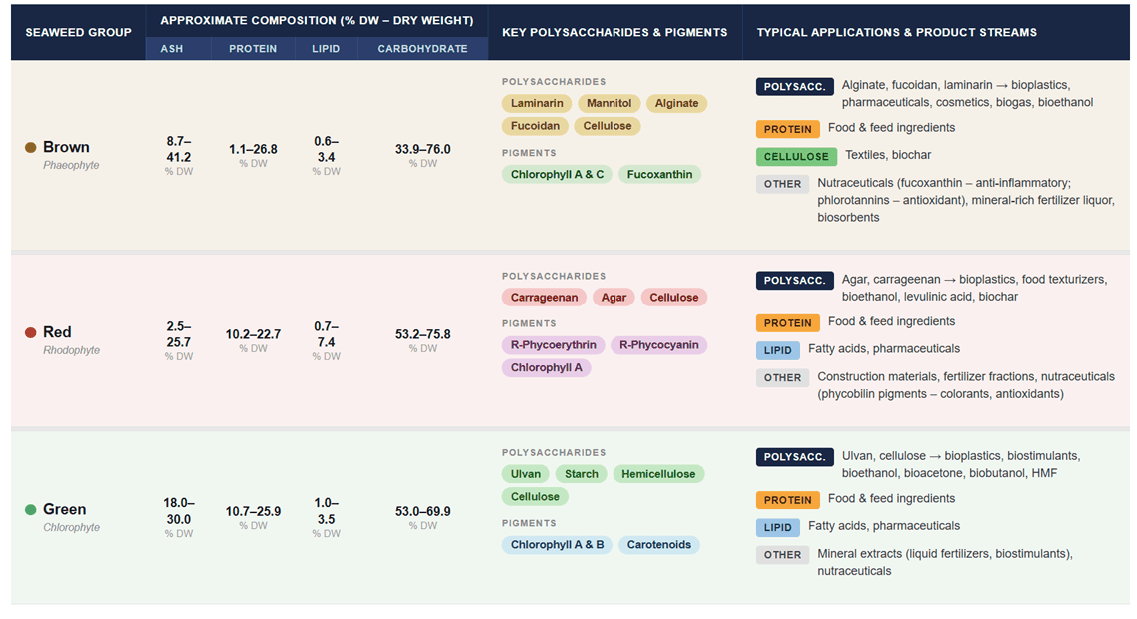
Figure 2: Seaweed Species being explored for biofuels
Hatchery/Nursery:
The two primary ways of propagating seaweeds are vegetative (using fragments of the seaweed) and spore-based methods. For more information on the state of approach of modern hatcheries nurseries, see the cross-cutting Cultivation chapter.Cultivation:
Adoption of seaweed-based biofuels will require a scale-up of several orders of magnitude in seaweed farming. According to an ARPA-E estimate, the United States has suitable conditions to grow 500 million dry metric tons of macroalgae per year, which is approximately 150 times current global production. Such production volumes would yield 10% of the US annual transportation energy demand. Given spatial constraints and competing uses in near-shore areas, much of the expansion will need to occur further offshore. (Definitions of offshore vary but according to ARPA-E’s HAEJO program, offshore refers to “deep water locations or waters beyond state jurisdiction but not including areas beyond national jurisdiction.” In the US, this typically means farming beyond approximately 3 nautical miles). For more details on offshore farming, refer to the section on offshore farming in the Cross Cutting Cultivation chapter.Harvesting:
Once mature, seaweed is removed from artificial substrates. Several tropical seaweed species such as Kappaphycus alvarezii and Sargassum spp. are capable of producing multiple harvests a year, while most temperate seaweeds have one optimal harvest time a year. The decision to harvest is based on current water temperature (measured via in-situ thermometers or regional oceanographic services), visual assessment of seaweed canopy density and color and historical seasonal patterns. The current state of seaweed harvesting involves a mix of traditional manual techniques and developing mechanical methods. For large-scale offshore farms, cost-effective mechanized harvesting will be essential and prototype systems are being developed overseas. The most common systems include: -rotating blades that can be suitable for species growing attached to supporting structures; and -suction systems followed by cutting that can be used for floating seaweeds species (e.g. Sargassum and Gracilaria).For more information, refer to the harvesting section in the Cross Cutting Cultivation chapter. When to harvest; Timing largely depends on local water temperature and species so can vary significantly by latitude. Through periodic destructive sampling, the BioMara project identified autumn as the optimal harvest season for biofuel production, due to the peak sugar content in seaweeds during this period (Šuopys et al., 2021). To extend the harvesting window, they recommended cultivating multiple seaweed species, as different species reach peak sugar content at different times. Pre-treatment for Processing: After harvesting, macroalgae is washed to remove foreign objects and chopped or milled to increase surface area. Many conversion processes require dry feedstock; reducing water content from ~80% to 20–30% also increases shelf-life and reduces transportation costs (Stefania Rocca et al., 2015). Sun-drying is the main method of drying seaweed, but it is weather dependent (Milledge & Harvey, 2018). Conventional dryers such as drum dryers or conveyor dryers are also common, but they require energy and are therefore a source of emissions in areas without a clean electricity grid. Ensiling — preserving seaweed by controlled anaerobic fermentation with lactic acid bacteria — is an alternative that avoids drying entirely. The MacroFuels project demonstrated that ensiling sugar kelp significantly reduces heavy metal content (cadmium, mercury) while maintaining sugar and protein levels, enabling year-round continuous feedstock supply (Šuopys et al., 2021).Harvesting Wild Seaweed
Wild seaweed harvesting remains commercially significant at global scale: for example, a significant portion of the world's alginate supply is derived from wild-harvested Laminaria hyperborea along Norway's Atlantic coastline. In addition to cultivated seaweed, there is growing interest in harvesting wild seaweed blooms, particularly Sargassum, which has proliferated across the Atlantic since 2011. These blooms, spanning over 5,000 miles from West Africa to the Gulf of Mexico, often wash ashore and decompose on beaches, releasing hydrogen sulfide and damaging local tourism—especially in the Caribbean. Initiatives to valorize this beach-cast seaweed for products, including as biofuels are underway. Similarly, in China, recurring Yellow Sea “green tides” of Ulva prolifera have led to research on tracking, harvesting and converting the biomass (Xing et al., 2019, Sun et al., 2022).Conversion to Biofuels
There are three primary pathways for converting macroalgae to bioenergy. Table 1 below summarizes key parameters across all three pathways including current Technology Readiness Levels (TRL).| Pathway | Key steps | Final product | Co-products | TRL | Main advantages | Main challenges |
| Anaerobic digestion (AD) | Milling/slurrying → anaerobic digestion → gas cleaning → methanol synthesis → MTG or F-T process | Gasoline / diesel / biomethane | AD digestate as fertilizer | 7 | Uses wet feedstock; digestate as fertilizer; mature core technology | H₂S removal required; real-world methane yields below theoretical |
| Fermentation | Milling/slurrying → pretreatment (enzymatic/acid hydrolysis) → fermentation → distillation | Ethanol, butanol | Glycerol | 5 | Produces higher-energy-density alcohols; drop-in compatible | Requires pre-treatment; no large-scale operational data |
| Thermochemical Processes Hydrothermal liquefaction (HTL) and Gasification via pyrolysis | Slurry prep → HTL (300–350°C, 120–180 bar) → hydrotreating → hydrocracking | Gasoline, diesel, SAF | Biochar, aqueous nutrient phase | 4 | Handles wet, protein-rich biomass; aviation-compatible output | Capital-intensive; high catalyst cost; batch process to date |
Companies and Key Research
| Process type | Key initiatives/Companies | Notable Research Findings |
| Anaerobic digestion (AD) | Solrød Biogas, Denmark (operational since 2016) Co-digests beach-cast seaweed with CPKelco processing residues, manure, and food by-products. Upgraded to biomethane for grid injection c. 2020. Seaweed ~0.5% of feedstock by volume — proof of commercial-scale integration. Barbados — Sargassum-to-biogas (early commercial stage) Small-scale digester demonstrated biogas from beach-stranded Sargassum, including a test drive of a biogas-powered Nissan Leaf. Estimated 20,000 m³/day biogas from 500 t/day Sargassum at full scale — equivalent to daily fuel sales of a standard filling station. | Core challenge: seaweed cell walls resist microbial breakdown, keeping real-world yields well below theoretical maxima. Pre-treatment (hydrothermal or enzymatic) has been a major lever. Pre-treatment R&D for improved yields Lin et al. (2019): Hydrothermal pre-treatment of S. latissima at 140°C increased biomethane yield 22.6% (281 → 345 mL CH₄/g VS). Lamb et al. (2019): Enzyme pre-treatment of S. latissima increased biomethane yield 23.5%. Ulva AD yield improved 56% by maceration pre-treatment (171 → 271 L CH₄/kg VS). |
| Fermentation | No major companies exist | MacroFuels EU project (2016–2019) Six-partner consortium; most complete end-to-end fermentation demonstration to date. Key results: • Ethanol: laminarin extraction + hydrolysis + yeast fermentation achieved 4.9% ethanol by volume; 9.4 L distilled ethanol delivered for engine testing. • Butanol: 9.6 L purified n-butanol from S. latissima using an engineered Clostridium beijerinckii strain capable of direct conversion to ABE. • Furanics: high furfural and 5-methylfurfural yields from seaweed hydrolysates; furanic diesel additive from Palmaria palmata tested in compression-ignition engine. • Ensiling: biological ensiling with lactic acid bacteria validated for long-term storage, preserving fermentable sugars and reducing heavy metals (Cd, Hg). Wargacki et al. (2012) — Science Engineered E. coli to simultaneously degrade, transport, and metabolize alginate — the polysaccharide standard organisms cannot ferment. Produced ethanol at ~80% of theoretical maximum yield directly from brown macroalgae. Biological proof-of-concept for enhanced seaweed sugar utilization. |
| Thermochemical Conversions (Hydrothermal Liquefaction) | Anastasakis & Ross (2011) Foundational batch HTL of Laminaria saccharina (brown kelp): maximum bio-crude yield 19.3 wt% at 350°C; higher heating value 36.5 MJ/kg — comparable to heavy crude or bitumen. Allen and Pearce (2024)— continuous-flow HTL of Sargassum First continuous-flow reactor applied to seaweed: 12% biocrude yield (vs ~20% in batch configuration). Transition to continuous flow is essential for commercial viability and is the active R&D frontier. PNNL / DOE Bioenergy Technologies Office — algae HTL program (ongoing since 2014) Sustained US national lab program focused on microalgae; 2023 reactor design update addresses fouling and clogging — applicable to high-ash macroalgae feedstocks. UCLA / Schmidt Sciences — alkaline thermal treatment + REE co-recovery Choi et al., (2025) Novel HTL variant using wet Sargassum: alkaline thermal treatment (NaOH + Ni catalyst + N₂) produces hydrogen fuel rather than bio-crude, with rare earth elements extracted from residual biomass. Avoids energy-intensive drying; uses problem biomass (invasive blooms) as feedstock. | |
| Thermochemical Reactions: Gasification via Pyrolysis and Fischer-Tropsch (F-T) | Macrocarbon- Gran Canaria based startup aiming to grow Sargassum to convert to SAF, biochar and carbon black. | Pyrolysis produces bio-oil (liquid fuel precursor) and biochar (soil amendment / carbon sequestration co-product). Ash content is the critical constraint: >20% DW causes slagging and corrosion in pyrolysis reactors, ruling out most brown and many green algae without pre-washing. Key advantage over fermentation: F-T products are drop-in fuels compatible with existing aviation and diesel infrastructure — no blending limits or engine modifications required. Del Río et al. (2022) Thermogravimetric and pyrolysis characterization of red macroalgae including Porphyra. Established ash content thresholds for reactor slagging. High protein in Porphyra (~40% DW) means food/nutraceutical use dominates commercially; pyrolysis most viable for post-extraction residue. Allen et al. (2024) Updated pathway comparison including F-T for macroalgae; assessed suitability of different species and cultivation systems for thermochemical routes. |
Figure 3: Stylized View of the Anaerobic Digestion Process Adapted from (Roesijadi et al., 2010)
Figure 4: Stylized View of the Fermentation Process Adapted from Roesijadi et al., 2010
Figure 5: Stylized View of the Hydrothermal Liquefaction Process. Adapted from Roesijadi et al., 2010
Products Generated by Conversion Processes and their Use
| Product | Definition | Relevant Use |
| Methanol | A simple alcohol (CH₃OH), colorless, volatile, and flammable. | Precursor to fuels, Transportation Fuel, Chemical Feedstock |
| Ethanol | A two-carbon alcohol (C₂H₅OH) which is flammable, colorless and volatile. | Transportation Fuel, Chemical Feedstock |
| Butanol | A four-carbon alcohol (C₄H₉OH), more energy-dense and less volatile than ethanol. | Transportation Fuel, Solvent |
| Gasoline | Typically, a petroleum-derived liquid hydrocarbon blend is used as transport fuel. | Transportation Fuel |
| Syngas | A mixture of CO, H₂, and CO₂ produced by gasification. | Methanol Synthesis, Electricity |
| Volatile Fatty Acids (VFAs) | Short-chain organic acids (e.g., acetic, propionic, butyric). | Chemical Precursors, Biofuel Intermediates |
| Bio-Oil | A synthetic tar-like substance made from pyrolysis and HTL with high levels of oxygen and nitrogen (when made from algae) | Biofuel Intermediates, Carbon Sequestration |
Species Selection, Cultivation and Harvesting
Species selection:
Seaweeds possess complex cell wall architecture that serves crucial functions including mechanical support, cell-cell adhesion, and environmental protection. The cell wall is primarily composed of specialized polysaccharides-it is these polysaccharides that give seaweeds their high carbohydrate content, which combined with low lignin make them suitable for biofuel pathways. Several seaweed species have been studied for use in biofuels, but brown seaweeds such as Saccharina latissima (sugar kelp) have been the most widely researched for biofuel uses due to their high carbohydrate content and for their comparatively large biomass yields when using traditional cultivation approaches. Below are some popular species that are being explored for seaweed-based biofuels and their attributes.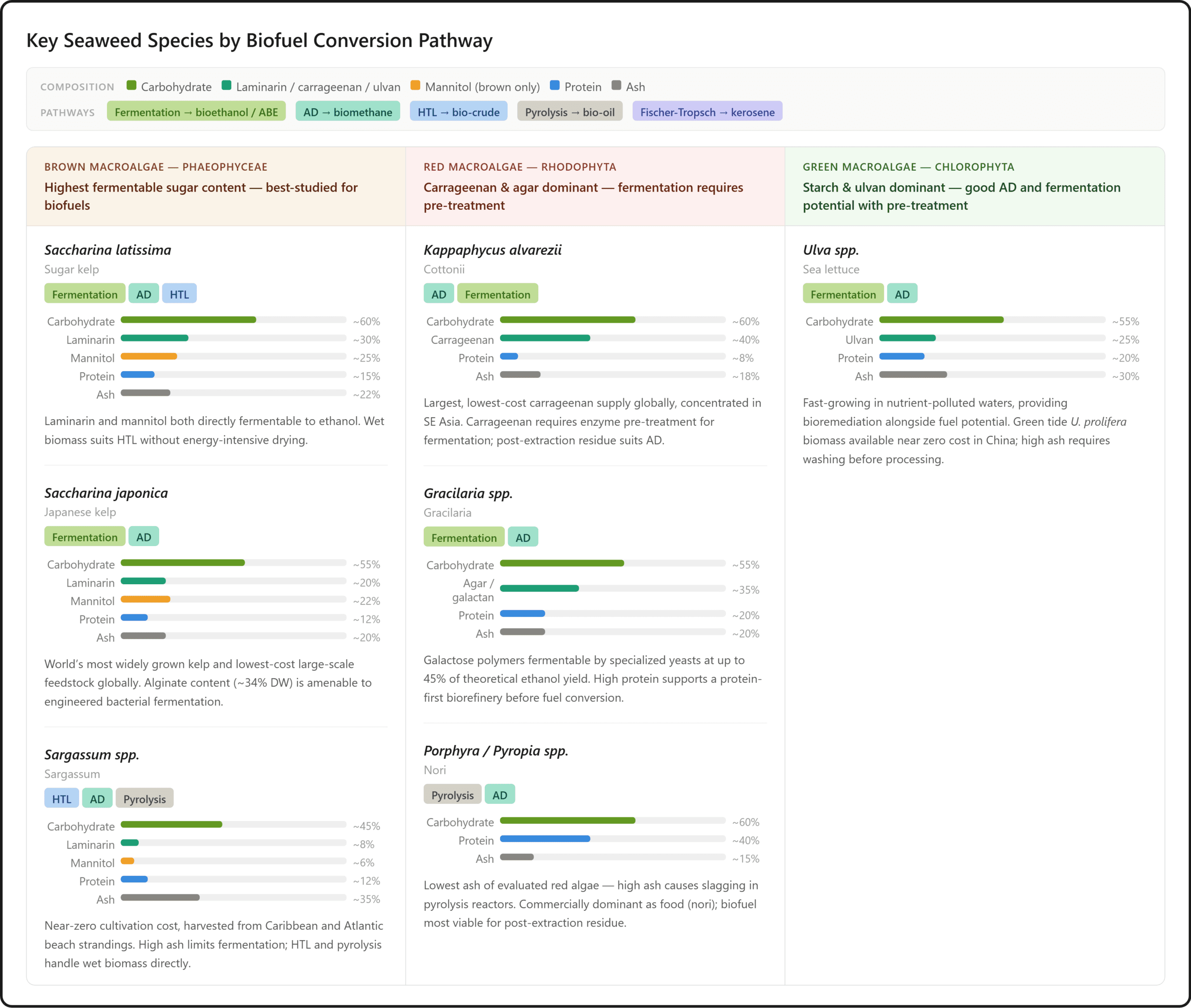
Figure 2: Seaweed Species being explored for biofuels
Hatchery/Nursery:
The two primary ways of propagating seaweeds are vegetative (using fragments of the seaweed) and spore-based methods. For more information on the state of approach of modern hatcheries nurseries, see the cross-cutting Cultivation chapter.Cultivation:
Adoption of seaweed-based biofuels will require a scale-up of several orders of magnitude in seaweed farming. According to an ARPA-E estimate, the United States has suitable conditions to grow 500 million dry metric tons of macroalgae per year, which is approximately 150 times current global production. Such production volumes would yield 10% of the US annual transportation energy demand. Given spatial constraints and competing uses in near-shore areas, much of the expansion will need to occur further offshore. (Definitions of offshore vary but according to ARPA-E’s HAEJO program, offshore refers to “deep water locations or waters beyond state jurisdiction but not including areas beyond national jurisdiction.” In the US, this typically means farming beyond approximately 3 nautical miles). For more details on offshore farming, refer to the section on offshore farming in the Cross Cutting Cultivation chapter.Harvesting:
Once mature, seaweed is removed from artificial substrates. Several tropical seaweed species such as Kappaphycus alvarezii and Sargassum spp. are capable of producing multiple harvests a year, while most temperate seaweeds have one optimal harvest time a year. The decision to harvest is based on current water temperature (measured via in-situ thermometers or regional oceanographic services), visual assessment of seaweed canopy density and color and historical seasonal patterns. The current state of seaweed harvesting involves a mix of traditional manual techniques and developing mechanical methods. For large-scale offshore farms, cost-effective mechanized harvesting will be essential and prototype systems are being developed overseas. The most common systems include: -rotating blades that can be suitable for species growing attached to supporting structures; and -suction systems followed by cutting that can be used for floating seaweeds species (e.g. Sargassum and Gracilaria).For more information, refer to the harvesting section in the Cross Cutting Cultivation chapter. When to harvest; Timing largely depends on local water temperature and species so can vary significantly by latitude. Through periodic destructive sampling, the BioMara project identified autumn as the optimal harvest season for biofuel production, due to the peak sugar content in seaweeds during this period (Šuopys et al., 2021). To extend the harvesting window, they recommended cultivating multiple seaweed species, as different species reach peak sugar content at different times. Pre-treatment for Processing: After harvesting, macroalgae is washed to remove foreign objects and chopped or milled to increase surface area. Many conversion processes require dry feedstock; reducing water content from ~80% to 20–30% also increases shelf-life and reduces transportation costs (Stefania Rocca et al., 2015). Sun-drying is the main method of drying seaweed, but it is weather dependent (Milledge & Harvey, 2018). Conventional dryers such as drum dryers or conveyor dryers are also common, but they require energy and are therefore a source of emissions in areas without a clean electricity grid. Ensiling — preserving seaweed by controlled anaerobic fermentation with lactic acid bacteria — is an alternative that avoids drying entirely. The MacroFuels project demonstrated that ensiling sugar kelp significantly reduces heavy metal content (cadmium, mercury) while maintaining sugar and protein levels, enabling year-round continuous feedstock supply (Šuopys et al., 2021).Harvesting Wild Seaweed
Wild seaweed harvesting remains commercially significant at global scale: for example, a significant portion of the world's alginate supply is derived from wild-harvested Laminaria hyperborea along Norway's Atlantic coastline. In addition to cultivated seaweed, there is growing interest in harvesting wild seaweed blooms, particularly Sargassum, which has proliferated across the Atlantic since 2011. These blooms, spanning over 5,000 miles from West Africa to the Gulf of Mexico, often wash ashore and decompose on beaches, releasing hydrogen sulfide and damaging local tourism—especially in the Caribbean. Initiatives to valorize this beach-cast seaweed for products, including as biofuels are underway. Similarly, in China, recurring Yellow Sea “green tides” of Ulva prolifera have led to research on tracking, harvesting and converting the biomass (Xing et al., 2019, Sun et al., 2022).Conversion to Biofuels
There are three primary pathways for converting macroalgae to bioenergy. Table 1 below summarizes key parameters across all three pathways including current Technology Readiness Levels (TRL).| Pathway | Key steps | Final product | Co-products | TRL | Main advantages | Main challenges |
| Anaerobic digestion (AD) | Milling/slurrying → anaerobic digestion → gas cleaning → methanol synthesis → MTG or F-T process | Gasoline / diesel / biomethane | AD digestate as fertilizer | 7 | Uses wet feedstock; digestate as fertilizer; mature core technology | H₂S removal required; real-world methane yields below theoretical |
| Fermentation | Milling/slurrying → pretreatment (enzymatic/acid hydrolysis) → fermentation → distillation | Ethanol, butanol | Glycerol | 5 | Produces higher-energy-density alcohols; drop-in compatible | Requires pre-treatment; no large-scale operational data |
| Thermochemical Processes Hydrothermal liquefaction (HTL) and Gasification via pyrolysis | Slurry prep → HTL (300–350°C, 120–180 bar) → hydrotreating → hydrocracking | Gasoline, diesel, SAF | Biochar, aqueous nutrient phase | 4 | Handles wet, protein-rich biomass; aviation-compatible output | Capital-intensive; high catalyst cost; batch process to date |
Companies and Key Research
| Process type | Key initiatives/Companies | Notable Research Findings |
| Anaerobic digestion (AD) | Solrød Biogas, Denmark (operational since 2016) Co-digests beach-cast seaweed with CPKelco processing residues, manure, and food by-products. Upgraded to biomethane for grid injection c. 2020. Seaweed ~0.5% of feedstock by volume — proof of commercial-scale integration. Barbados — Sargassum-to-biogas (early commercial stage) Small-scale digester demonstrated biogas from beach-stranded Sargassum, including a test drive of a biogas-powered Nissan Leaf. Estimated 20,000 m³/day biogas from 500 t/day Sargassum at full scale — equivalent to daily fuel sales of a standard filling station. | Core challenge: seaweed cell walls resist microbial breakdown, keeping real-world yields well below theoretical maxima. Pre-treatment (hydrothermal or enzymatic) has been a major lever. Pre-treatment R&D for improved yields Lin et al. (2019): Hydrothermal pre-treatment of S. latissima at 140°C increased biomethane yield 22.6% (281 → 345 mL CH₄/g VS). Lamb et al. (2019): Enzyme pre-treatment of S. latissima increased biomethane yield 23.5%. Ulva AD yield improved 56% by maceration pre-treatment (171 → 271 L CH₄/kg VS). |
| Fermentation | No major companies exist | MacroFuels EU project (2016–2019) Six-partner consortium; most complete end-to-end fermentation demonstration to date. Key results: • Ethanol: laminarin extraction + hydrolysis + yeast fermentation achieved 4.9% ethanol by volume; 9.4 L distilled ethanol delivered for engine testing. • Butanol: 9.6 L purified n-butanol from S. latissima using an engineered Clostridium beijerinckii strain capable of direct conversion to ABE. • Furanics: high furfural and 5-methylfurfural yields from seaweed hydrolysates; furanic diesel additive from Palmaria palmata tested in compression-ignition engine. • Ensiling: biological ensiling with lactic acid bacteria validated for long-term storage, preserving fermentable sugars and reducing heavy metals (Cd, Hg). Wargacki et al. (2012) — Science Engineered E. coli to simultaneously degrade, transport, and metabolize alginate — the polysaccharide standard organisms cannot ferment. Produced ethanol at ~80% of theoretical maximum yield directly from brown macroalgae. Biological proof-of-concept for enhanced seaweed sugar utilization. |
| Thermochemical Conversions (Hydrothermal Liquefaction) | Anastasakis & Ross (2011) Foundational batch HTL of Laminaria saccharina (brown kelp): maximum bio-crude yield 19.3 wt% at 350°C; higher heating value 36.5 MJ/kg — comparable to heavy crude or bitumen. Allen and Pearce (2024)— continuous-flow HTL of Sargassum First continuous-flow reactor applied to seaweed: 12% biocrude yield (vs ~20% in batch configuration). Transition to continuous flow is essential for commercial viability and is the active R&D frontier. PNNL / DOE Bioenergy Technologies Office — algae HTL program (ongoing since 2014) Sustained US national lab program focused on microalgae; 2023 reactor design update addresses fouling and clogging — applicable to high-ash macroalgae feedstocks. UCLA / Schmidt Sciences — alkaline thermal treatment + REE co-recovery Choi et al., (2025) Novel HTL variant using wet Sargassum: alkaline thermal treatment (NaOH + Ni catalyst + N₂) produces hydrogen fuel rather than bio-crude, with rare earth elements extracted from residual biomass. Avoids energy-intensive drying; uses problem biomass (invasive blooms) as feedstock. | |
| Thermochemical Reactions: Gasification via Pyrolysis and Fischer-Tropsch (F-T) | Macrocarbon- Gran Canaria based startup aiming to grow Sargassum to convert to SAF, biochar and carbon black. | Pyrolysis produces bio-oil (liquid fuel precursor) and biochar (soil amendment / carbon sequestration co-product). Ash content is the critical constraint: >20% DW causes slagging and corrosion in pyrolysis reactors, ruling out most brown and many green algae without pre-washing. Key advantage over fermentation: F-T products are drop-in fuels compatible with existing aviation and diesel infrastructure — no blending limits or engine modifications required. Del Río et al. (2022) Thermogravimetric and pyrolysis characterization of red macroalgae including Porphyra. Established ash content thresholds for reactor slagging. High protein in Porphyra (~40% DW) means food/nutraceutical use dominates commercially; pyrolysis most viable for post-extraction residue. Allen et al. (2024) Updated pathway comparison including F-T for macroalgae; assessed suitability of different species and cultivation systems for thermochemical routes. |
Figure 3: Stylized View of the Anaerobic Digestion Process Adapted from (Roesijadi et al., 2010)
Figure 4: Stylized View of the Fermentation Process Adapted from Roesijadi et al., 2010
Figure 5: Stylized View of the Hydrothermal Liquefaction Process. Adapted from Roesijadi et al., 2010
Products Generated by Conversion Processes and their Use
| Product | Definition | Relevant Use |
| Methanol | A simple alcohol (CH₃OH), colorless, volatile, and flammable. | Precursor to fuels, Transportation Fuel, Chemical Feedstock |
| Ethanol | A two-carbon alcohol (C₂H₅OH) which is flammable, colorless and volatile. | Transportation Fuel, Chemical Feedstock |
| Butanol | A four-carbon alcohol (C₄H₉OH), more energy-dense and less volatile than ethanol. | Transportation Fuel, Solvent |
| Gasoline | Typically, a petroleum-derived liquid hydrocarbon blend is used as transport fuel. | Transportation Fuel |
| Syngas | A mixture of CO, H₂, and CO₂ produced by gasification. | Methanol Synthesis, Electricity |
| Volatile Fatty Acids (VFAs) | Short-chain organic acids (e.g., acetic, propionic, butyric). | Chemical Precursors, Biofuel Intermediates |
| Bio-Oil | A synthetic tar-like substance made from pyrolysis and HTL with high levels of oxygen and nitrogen (when made from algae) | Biofuel Intermediates, Carbon Sequestration |
Species Selection, Cultivation and Harvesting
Species selection:
Seaweeds possess complex cell wall architecture that serves crucial functions including mechanical support, cell-cell adhesion, and environmental protection. The cell wall is primarily composed of specialized polysaccharides-it is these polysaccharides that give seaweeds their high carbohydrate content, which combined with low lignin make them suitable for biofuel pathways. Several seaweed species have been studied for use in biofuels, but brown seaweeds such as Saccharina latissima (sugar kelp) have been the most widely researched for biofuel uses due to their high carbohydrate content and for their comparatively large biomass yields when using traditional cultivation approaches. Below are some popular species that are being explored for seaweed-based biofuels and their attributes.
Figure 2: Seaweed Species being explored for biofuels
Hatchery/Nursery:
The two primary ways of propagating seaweeds are vegetative (using fragments of the seaweed) and spore-based methods. For more information on the state of approach of modern hatcheries nurseries, see the cross-cutting Cultivation chapter.Cultivation:
Adoption of seaweed-based biofuels will require a scale-up of several orders of magnitude in seaweed farming. According to an ARPA-E estimate, the United States has suitable conditions to grow 500 million dry metric tons of macroalgae per year, which is approximately 150 times current global production. Such production volumes would yield 10% of the US annual transportation energy demand. Given spatial constraints and competing uses in near-shore areas, much of the expansion will need to occur further offshore. (Definitions of offshore vary but according to ARPA-E’s HAEJO program, offshore refers to “deep water locations or waters beyond state jurisdiction but not including areas beyond national jurisdiction.” In the US, this typically means farming beyond approximately 3 nautical miles). For more details on offshore farming, refer to the section on offshore farming in the Cross Cutting Cultivation chapter.Harvesting:
Once mature, seaweed is removed from artificial substrates. Several tropical seaweed species such as Kappaphycus alvarezii and Sargassum spp. are capable of producing multiple harvests a year, while most temperate seaweeds have one optimal harvest time a year. The decision to harvest is based on current water temperature (measured via in-situ thermometers or regional oceanographic services), visual assessment of seaweed canopy density and color and historical seasonal patterns. The current state of seaweed harvesting involves a mix of traditional manual techniques and developing mechanical methods. For large-scale offshore farms, cost-effective mechanized harvesting will be essential and prototype systems are being developed overseas. The most common systems include: -rotating blades that can be suitable for species growing attached to supporting structures; and -suction systems followed by cutting that can be used for floating seaweeds species (e.g. Sargassum and Gracilaria).For more information, refer to the harvesting section in the Cross Cutting Cultivation chapter. When to harvest; Timing largely depends on local water temperature and species so can vary significantly by latitude. Through periodic destructive sampling, the BioMara project identified autumn as the optimal harvest season for biofuel production, due to the peak sugar content in seaweeds during this period (Šuopys et al., 2021). To extend the harvesting window, they recommended cultivating multiple seaweed species, as different species reach peak sugar content at different times. Pre-treatment for Processing: After harvesting, macroalgae is washed to remove foreign objects and chopped or milled to increase surface area. Many conversion processes require dry feedstock; reducing water content from ~80% to 20–30% also increases shelf-life and reduces transportation costs (Stefania Rocca et al., 2015). Sun-drying is the main method of drying seaweed, but it is weather dependent (Milledge & Harvey, 2018). Conventional dryers such as drum dryers or conveyor dryers are also common, but they require energy and are therefore a source of emissions in areas without a clean electricity grid. Ensiling — preserving seaweed by controlled anaerobic fermentation with lactic acid bacteria — is an alternative that avoids drying entirely. The MacroFuels project demonstrated that ensiling sugar kelp significantly reduces heavy metal content (cadmium, mercury) while maintaining sugar and protein levels, enabling year-round continuous feedstock supply (Šuopys et al., 2021).Harvesting Wild Seaweed
Wild seaweed harvesting remains commercially significant at global scale: for example, a significant portion of the world's alginate supply is derived from wild-harvested Laminaria hyperborea along Norway's Atlantic coastline. In addition to cultivated seaweed, there is growing interest in harvesting wild seaweed blooms, particularly Sargassum, which has proliferated across the Atlantic since 2011. These blooms, spanning over 5,000 miles from West Africa to the Gulf of Mexico, often wash ashore and decompose on beaches, releasing hydrogen sulfide and damaging local tourism—especially in the Caribbean. Initiatives to valorize this beach-cast seaweed for products, including as biofuels are underway. Similarly, in China, recurring Yellow Sea “green tides” of Ulva prolifera have led to research on tracking, harvesting and converting the biomass (Xing et al., 2019, Sun et al., 2022).Conversion to Biofuels
There are three primary pathways for converting macroalgae to bioenergy. Table 1 below summarizes key parameters across all three pathways including current Technology Readiness Levels (TRL).| Pathway | Key steps | Final product | Co-products | TRL | Main advantages | Main challenges |
| Anaerobic digestion (AD) | Milling/slurrying → anaerobic digestion → gas cleaning → methanol synthesis → MTG or F-T process | Gasoline / diesel / biomethane | AD digestate as fertilizer | 7 | Uses wet feedstock; digestate as fertilizer; mature core technology | H₂S removal required; real-world methane yields below theoretical |
| Fermentation | Milling/slurrying → pretreatment (enzymatic/acid hydrolysis) → fermentation → distillation | Ethanol, butanol | Glycerol | 5 | Produces higher-energy-density alcohols; drop-in compatible | Requires pre-treatment; no large-scale operational data |
| Thermochemical Processes Hydrothermal liquefaction (HTL) and Gasification via pyrolysis | Slurry prep → HTL (300–350°C, 120–180 bar) → hydrotreating → hydrocracking | Gasoline, diesel, SAF | Biochar, aqueous nutrient phase | 4 | Handles wet, protein-rich biomass; aviation-compatible output | Capital-intensive; high catalyst cost; batch process to date |
Companies and Key Research
| Process type | Key initiatives/Companies | Notable Research Findings |
| Anaerobic digestion (AD) | Solrød Biogas, Denmark (operational since 2016) Co-digests beach-cast seaweed with CPKelco processing residues, manure, and food by-products. Upgraded to biomethane for grid injection c. 2020. Seaweed ~0.5% of feedstock by volume — proof of commercial-scale integration. Barbados — Sargassum-to-biogas (early commercial stage) Small-scale digester demonstrated biogas from beach-stranded Sargassum, including a test drive of a biogas-powered Nissan Leaf. Estimated 20,000 m³/day biogas from 500 t/day Sargassum at full scale — equivalent to daily fuel sales of a standard filling station. | Core challenge: seaweed cell walls resist microbial breakdown, keeping real-world yields well below theoretical maxima. Pre-treatment (hydrothermal or enzymatic) has been a major lever. Pre-treatment R&D for improved yields Lin et al. (2019): Hydrothermal pre-treatment of S. latissima at 140°C increased biomethane yield 22.6% (281 → 345 mL CH₄/g VS). Lamb et al. (2019): Enzyme pre-treatment of S. latissima increased biomethane yield 23.5%. Ulva AD yield improved 56% by maceration pre-treatment (171 → 271 L CH₄/kg VS). |
| Fermentation | No major companies exist | MacroFuels EU project (2016–2019) Six-partner consortium; most complete end-to-end fermentation demonstration to date. Key results: • Ethanol: laminarin extraction + hydrolysis + yeast fermentation achieved 4.9% ethanol by volume; 9.4 L distilled ethanol delivered for engine testing. • Butanol: 9.6 L purified n-butanol from S. latissima using an engineered Clostridium beijerinckii strain capable of direct conversion to ABE. • Furanics: high furfural and 5-methylfurfural yields from seaweed hydrolysates; furanic diesel additive from Palmaria palmata tested in compression-ignition engine. • Ensiling: biological ensiling with lactic acid bacteria validated for long-term storage, preserving fermentable sugars and reducing heavy metals (Cd, Hg). Wargacki et al. (2012) — Science Engineered E. coli to simultaneously degrade, transport, and metabolize alginate — the polysaccharide standard organisms cannot ferment. Produced ethanol at ~80% of theoretical maximum yield directly from brown macroalgae. Biological proof-of-concept for enhanced seaweed sugar utilization. |
| Thermochemical Conversions (Hydrothermal Liquefaction) | Anastasakis & Ross (2011) Foundational batch HTL of Laminaria saccharina (brown kelp): maximum bio-crude yield 19.3 wt% at 350°C; higher heating value 36.5 MJ/kg — comparable to heavy crude or bitumen. Allen and Pearce (2024)— continuous-flow HTL of Sargassum First continuous-flow reactor applied to seaweed: 12% biocrude yield (vs ~20% in batch configuration). Transition to continuous flow is essential for commercial viability and is the active R&D frontier. PNNL / DOE Bioenergy Technologies Office — algae HTL program (ongoing since 2014) Sustained US national lab program focused on microalgae; 2023 reactor design update addresses fouling and clogging — applicable to high-ash macroalgae feedstocks. UCLA / Schmidt Sciences — alkaline thermal treatment + REE co-recovery Choi et al., (2025) Novel HTL variant using wet Sargassum: alkaline thermal treatment (NaOH + Ni catalyst + N₂) produces hydrogen fuel rather than bio-crude, with rare earth elements extracted from residual biomass. Avoids energy-intensive drying; uses problem biomass (invasive blooms) as feedstock. | |
| Thermochemical Reactions: Gasification via Pyrolysis and Fischer-Tropsch (F-T) | Macrocarbon- Gran Canaria based startup aiming to grow Sargassum to convert to SAF, biochar and carbon black. | Pyrolysis produces bio-oil (liquid fuel precursor) and biochar (soil amendment / carbon sequestration co-product). Ash content is the critical constraint: >20% DW causes slagging and corrosion in pyrolysis reactors, ruling out most brown and many green algae without pre-washing. Key advantage over fermentation: F-T products are drop-in fuels compatible with existing aviation and diesel infrastructure — no blending limits or engine modifications required. Del Río et al. (2022) Thermogravimetric and pyrolysis characterization of red macroalgae including Porphyra. Established ash content thresholds for reactor slagging. High protein in Porphyra (~40% DW) means food/nutraceutical use dominates commercially; pyrolysis most viable for post-extraction residue. Allen et al. (2024) Updated pathway comparison including F-T for macroalgae; assessed suitability of different species and cultivation systems for thermochemical routes. |
Figure 3: Stylized View of the Anaerobic Digestion Process Adapted from (Roesijadi et al., 2010)
Figure 4: Stylized View of the Fermentation Process Adapted from Roesijadi et al., 2010
Figure 5: Stylized View of the Hydrothermal Liquefaction Process. Adapted from Roesijadi et al., 2010
Products Generated by Conversion Processes and their Use
| Product | Definition | Relevant Use |
| Methanol | A simple alcohol (CH₃OH), colorless, volatile, and flammable. | Precursor to fuels, Transportation Fuel, Chemical Feedstock |
| Ethanol | A two-carbon alcohol (C₂H₅OH) which is flammable, colorless and volatile. | Transportation Fuel, Chemical Feedstock |
| Butanol | A four-carbon alcohol (C₄H₉OH), more energy-dense and less volatile than ethanol. | Transportation Fuel, Solvent |
| Gasoline | Typically, a petroleum-derived liquid hydrocarbon blend is used as transport fuel. | Transportation Fuel |
| Syngas | A mixture of CO, H₂, and CO₂ produced by gasification. | Methanol Synthesis, Electricity |
| Volatile Fatty Acids (VFAs) | Short-chain organic acids (e.g., acetic, propionic, butyric). | Chemical Precursors, Biofuel Intermediates |
| Bio-Oil | A synthetic tar-like substance made from pyrolysis and HTL with high levels of oxygen and nitrogen (when made from algae) | Biofuel Intermediates, Carbon Sequestration |
Species Selection, Cultivation and Harvesting
Species selection:
Seaweeds possess complex cell wall architecture that serves crucial functions including mechanical support, cell-cell adhesion, and environmental protection. The cell wall is primarily composed of specialized polysaccharides-it is these polysaccharides that give seaweeds their high carbohydrate content, which combined with low lignin make them suitable for biofuel pathways. Several seaweed species have been studied for use in biofuels, but brown seaweeds such as Saccharina latissima (sugar kelp) have been the most widely researched for biofuel uses due to their high carbohydrate content and for their comparatively large biomass yields when using traditional cultivation approaches. Below are some popular species that are being explored for seaweed-based biofuels and their attributes.
Figure 2: Seaweed Species being explored for biofuels
Hatchery/Nursery:
The two primary ways of propagating seaweeds are vegetative (using fragments of the seaweed) and spore-based methods. For more information on the state of approach of modern hatcheries nurseries, see the cross-cutting Cultivation chapter.Cultivation:
Adoption of seaweed-based biofuels will require a scale-up of several orders of magnitude in seaweed farming. According to an ARPA-E estimate, the United States has suitable conditions to grow 500 million dry metric tons of macroalgae per year, which is approximately 150 times current global production. Such production volumes would yield 10% of the US annual transportation energy demand. Given spatial constraints and competing uses in near-shore areas, much of the expansion will need to occur further offshore. (Definitions of offshore vary but according to ARPA-E’s HAEJO program, offshore refers to “deep water locations or waters beyond state jurisdiction but not including areas beyond national jurisdiction.” In the US, this typically means farming beyond approximately 3 nautical miles). For more details on offshore farming, refer to the section on offshore farming in the Cross Cutting Cultivation chapter.Harvesting:
Once mature, seaweed is removed from artificial substrates. Several tropical seaweed species such as Kappaphycus alvarezii and Sargassum spp. are capable of producing multiple harvests a year, while most temperate seaweeds have one optimal harvest time a year. The decision to harvest is based on current water temperature (measured via in-situ thermometers or regional oceanographic services), visual assessment of seaweed canopy density and color and historical seasonal patterns. The current state of seaweed harvesting involves a mix of traditional manual techniques and developing mechanical methods. For large-scale offshore farms, cost-effective mechanized harvesting will be essential and prototype systems are being developed overseas. The most common systems include: -rotating blades that can be suitable for species growing attached to supporting structures; and -suction systems followed by cutting that can be used for floating seaweeds species (e.g. Sargassum and Gracilaria).For more information, refer to the harvesting section in the Cross Cutting Cultivation chapter. When to harvest; Timing largely depends on local water temperature and species so can vary significantly by latitude. Through periodic destructive sampling, the BioMara project identified autumn as the optimal harvest season for biofuel production, due to the peak sugar content in seaweeds during this period (Šuopys et al., 2021). To extend the harvesting window, they recommended cultivating multiple seaweed species, as different species reach peak sugar content at different times. Pre-treatment for Processing: After harvesting, macroalgae is washed to remove foreign objects and chopped or milled to increase surface area. Many conversion processes require dry feedstock; reducing water content from ~80% to 20–30% also increases shelf-life and reduces transportation costs (Stefania Rocca et al., 2015). Sun-drying is the main method of drying seaweed, but it is weather dependent (Milledge & Harvey, 2018). Conventional dryers such as drum dryers or conveyor dryers are also common, but they require energy and are therefore a source of emissions in areas without a clean electricity grid. Ensiling — preserving seaweed by controlled anaerobic fermentation with lactic acid bacteria — is an alternative that avoids drying entirely. The MacroFuels project demonstrated that ensiling sugar kelp significantly reduces heavy metal content (cadmium, mercury) while maintaining sugar and protein levels, enabling year-round continuous feedstock supply (Šuopys et al., 2021).Harvesting Wild Seaweed
Wild seaweed harvesting remains commercially significant at global scale: for example, a significant portion of the world's alginate supply is derived from wild-harvested Laminaria hyperborea along Norway's Atlantic coastline. In addition to cultivated seaweed, there is growing interest in harvesting wild seaweed blooms, particularly Sargassum, which has proliferated across the Atlantic since 2011. These blooms, spanning over 5,000 miles from West Africa to the Gulf of Mexico, often wash ashore and decompose on beaches, releasing hydrogen sulfide and damaging local tourism—especially in the Caribbean. Initiatives to valorize this beach-cast seaweed for products, including as biofuels are underway. Similarly, in China, recurring Yellow Sea “green tides” of Ulva prolifera have led to research on tracking, harvesting and converting the biomass (Xing et al., 2019, Sun et al., 2022).Conversion to Biofuels
There are three primary pathways for converting macroalgae to bioenergy. Table 1 below summarizes key parameters across all three pathways including current Technology Readiness Levels (TRL).| Pathway | Key steps | Final product | Co-products | TRL | Main advantages | Main challenges |
| Anaerobic digestion (AD) | Milling/slurrying → anaerobic digestion → gas cleaning → methanol synthesis → MTG or F-T process | Gasoline / diesel / biomethane | AD digestate as fertilizer | 7 | Uses wet feedstock; digestate as fertilizer; mature core technology | H₂S removal required; real-world methane yields below theoretical |
| Fermentation | Milling/slurrying → pretreatment (enzymatic/acid hydrolysis) → fermentation → distillation | Ethanol, butanol | Glycerol | 5 | Produces higher-energy-density alcohols; drop-in compatible | Requires pre-treatment; no large-scale operational data |
| Thermochemical Processes Hydrothermal liquefaction (HTL) and Gasification via pyrolysis | Slurry prep → HTL (300–350°C, 120–180 bar) → hydrotreating → hydrocracking | Gasoline, diesel, SAF | Biochar, aqueous nutrient phase | 4 | Handles wet, protein-rich biomass; aviation-compatible output | Capital-intensive; high catalyst cost; batch process to date |
Companies and Key Research
| Process type | Key initiatives/Companies | Notable Research Findings |
| Anaerobic digestion (AD) | Solrød Biogas, Denmark (operational since 2016) Co-digests beach-cast seaweed with CPKelco processing residues, manure, and food by-products. Upgraded to biomethane for grid injection c. 2020. Seaweed ~0.5% of feedstock by volume — proof of commercial-scale integration. Barbados — Sargassum-to-biogas (early commercial stage) Small-scale digester demonstrated biogas from beach-stranded Sargassum, including a test drive of a biogas-powered Nissan Leaf. Estimated 20,000 m³/day biogas from 500 t/day Sargassum at full scale — equivalent to daily fuel sales of a standard filling station. | Core challenge: seaweed cell walls resist microbial breakdown, keeping real-world yields well below theoretical maxima. Pre-treatment (hydrothermal or enzymatic) has been a major lever. Pre-treatment R&D for improved yields Lin et al. (2019): Hydrothermal pre-treatment of S. latissima at 140°C increased biomethane yield 22.6% (281 → 345 mL CH₄/g VS). Lamb et al. (2019): Enzyme pre-treatment of S. latissima increased biomethane yield 23.5%. Ulva AD yield improved 56% by maceration pre-treatment (171 → 271 L CH₄/kg VS). |
| Fermentation | No major companies exist | MacroFuels EU project (2016–2019) Six-partner consortium; most complete end-to-end fermentation demonstration to date. Key results: • Ethanol: laminarin extraction + hydrolysis + yeast fermentation achieved 4.9% ethanol by volume; 9.4 L distilled ethanol delivered for engine testing. • Butanol: 9.6 L purified n-butanol from S. latissima using an engineered Clostridium beijerinckii strain capable of direct conversion to ABE. • Furanics: high furfural and 5-methylfurfural yields from seaweed hydrolysates; furanic diesel additive from Palmaria palmata tested in compression-ignition engine. • Ensiling: biological ensiling with lactic acid bacteria validated for long-term storage, preserving fermentable sugars and reducing heavy metals (Cd, Hg). Wargacki et al. (2012) — Science Engineered E. coli to simultaneously degrade, transport, and metabolize alginate — the polysaccharide standard organisms cannot ferment. Produced ethanol at ~80% of theoretical maximum yield directly from brown macroalgae. Biological proof-of-concept for enhanced seaweed sugar utilization. |
| Thermochemical Conversions (Hydrothermal Liquefaction) | Anastasakis & Ross (2011) Foundational batch HTL of Laminaria saccharina (brown kelp): maximum bio-crude yield 19.3 wt% at 350°C; higher heating value 36.5 MJ/kg — comparable to heavy crude or bitumen. Allen and Pearce (2024)— continuous-flow HTL of Sargassum First continuous-flow reactor applied to seaweed: 12% biocrude yield (vs ~20% in batch configuration). Transition to continuous flow is essential for commercial viability and is the active R&D frontier. PNNL / DOE Bioenergy Technologies Office — algae HTL program (ongoing since 2014) Sustained US national lab program focused on microalgae; 2023 reactor design update addresses fouling and clogging — applicable to high-ash macroalgae feedstocks. UCLA / Schmidt Sciences — alkaline thermal treatment + REE co-recovery Choi et al., (2025) Novel HTL variant using wet Sargassum: alkaline thermal treatment (NaOH + Ni catalyst + N₂) produces hydrogen fuel rather than bio-crude, with rare earth elements extracted from residual biomass. Avoids energy-intensive drying; uses problem biomass (invasive blooms) as feedstock. | |
| Thermochemical Reactions: Gasification via Pyrolysis and Fischer-Tropsch (F-T) | Macrocarbon- Gran Canaria based startup aiming to grow Sargassum to convert to SAF, biochar and carbon black. | Pyrolysis produces bio-oil (liquid fuel precursor) and biochar (soil amendment / carbon sequestration co-product). Ash content is the critical constraint: >20% DW causes slagging and corrosion in pyrolysis reactors, ruling out most brown and many green algae without pre-washing. Key advantage over fermentation: F-T products are drop-in fuels compatible with existing aviation and diesel infrastructure — no blending limits or engine modifications required. Del Río et al. (2022) Thermogravimetric and pyrolysis characterization of red macroalgae including Porphyra. Established ash content thresholds for reactor slagging. High protein in Porphyra (~40% DW) means food/nutraceutical use dominates commercially; pyrolysis most viable for post-extraction residue. Allen et al. (2024) Updated pathway comparison including F-T for macroalgae; assessed suitability of different species and cultivation systems for thermochemical routes. |
Figure 3: Stylized View of the Anaerobic Digestion Process Adapted from (Roesijadi et al., 2010)
Figure 4: Stylized View of the Fermentation Process Adapted from Roesijadi et al., 2010
Figure 5: Stylized View of the Hydrothermal Liquefaction Process. Adapted from Roesijadi et al., 2010
Products Generated by Conversion Processes and their Use
| Product | Definition | Relevant Use |
| Methanol | A simple alcohol (CH₃OH), colorless, volatile, and flammable. | Precursor to fuels, Transportation Fuel, Chemical Feedstock |
| Ethanol | A two-carbon alcohol (C₂H₅OH) which is flammable, colorless and volatile. | Transportation Fuel, Chemical Feedstock |
| Butanol | A four-carbon alcohol (C₄H₉OH), more energy-dense and less volatile than ethanol. | Transportation Fuel, Solvent |
| Gasoline | Typically, a petroleum-derived liquid hydrocarbon blend is used as transport fuel. | Transportation Fuel |
| Syngas | A mixture of CO, H₂, and CO₂ produced by gasification. | Methanol Synthesis, Electricity |
| Volatile Fatty Acids (VFAs) | Short-chain organic acids (e.g., acetic, propionic, butyric). | Chemical Precursors, Biofuel Intermediates |
| Bio-Oil | A synthetic tar-like substance made from pyrolysis and HTL with high levels of oxygen and nitrogen (when made from algae) | Biofuel Intermediates, Carbon Sequestration |
Species Selection, Cultivation and Harvesting
Species selection:
Seaweeds possess complex cell wall architecture that serves crucial functions including mechanical support, cell-cell adhesion, and environmental protection. The cell wall is primarily composed of specialized polysaccharides-it is these polysaccharides that give seaweeds their high carbohydrate content, which combined with low lignin make them suitable for biofuel pathways. Several seaweed species have been studied for use in biofuels, but brown seaweeds such as Saccharina latissima (sugar kelp) have been the most widely researched for biofuel uses due to their high carbohydrate content and for their comparatively large biomass yields when using traditional cultivation approaches. Below are some popular species that are being explored for seaweed-based biofuels and their attributes.
Figure 2: Seaweed Species being explored for biofuels
Hatchery/Nursery:
The two primary ways of propagating seaweeds are vegetative (using fragments of the seaweed) and spore-based methods. For more information on the state of approach of modern hatcheries nurseries, see the cross-cutting Cultivation chapter.Cultivation:
Adoption of seaweed-based biofuels will require a scale-up of several orders of magnitude in seaweed farming. According to an ARPA-E estimate, the United States has suitable conditions to grow 500 million dry metric tons of macroalgae per year, which is approximately 150 times current global production. Such production volumes would yield 10% of the US annual transportation energy demand. Given spatial constraints and competing uses in near-shore areas, much of the expansion will need to occur further offshore. (Definitions of offshore vary but according to ARPA-E’s HAEJO program, offshore refers to “deep water locations or waters beyond state jurisdiction but not including areas beyond national jurisdiction.” In the US, this typically means farming beyond approximately 3 nautical miles). For more details on offshore farming, refer to the section on offshore farming in the Cross Cutting Cultivation chapter.Harvesting:
Once mature, seaweed is removed from artificial substrates. Several tropical seaweed species such as Kappaphycus alvarezii and Sargassum spp. are capable of producing multiple harvests a year, while most temperate seaweeds have one optimal harvest time a year. The decision to harvest is based on current water temperature (measured via in-situ thermometers or regional oceanographic services), visual assessment of seaweed canopy density and color and historical seasonal patterns. The current state of seaweed harvesting involves a mix of traditional manual techniques and developing mechanical methods. For large-scale offshore farms, cost-effective mechanized harvesting will be essential and prototype systems are being developed overseas. The most common systems include: -rotating blades that can be suitable for species growing attached to supporting structures; and -suction systems followed by cutting that can be used for floating seaweeds species (e.g. Sargassum and Gracilaria).For more information, refer to the harvesting section in the Cross Cutting Cultivation chapter. When to harvest; Timing largely depends on local water temperature and species so can vary significantly by latitude. Through periodic destructive sampling, the BioMara project identified autumn as the optimal harvest season for biofuel production, due to the peak sugar content in seaweeds during this period (Šuopys et al., 2021). To extend the harvesting window, they recommended cultivating multiple seaweed species, as different species reach peak sugar content at different times. Pre-treatment for Processing: After harvesting, macroalgae is washed to remove foreign objects and chopped or milled to increase surface area. Many conversion processes require dry feedstock; reducing water content from ~80% to 20–30% also increases shelf-life and reduces transportation costs (Stefania Rocca et al., 2015). Sun-drying is the main method of drying seaweed, but it is weather dependent (Milledge & Harvey, 2018). Conventional dryers such as drum dryers or conveyor dryers are also common, but they require energy and are therefore a source of emissions in areas without a clean electricity grid. Ensiling — preserving seaweed by controlled anaerobic fermentation with lactic acid bacteria — is an alternative that avoids drying entirely. The MacroFuels project demonstrated that ensiling sugar kelp significantly reduces heavy metal content (cadmium, mercury) while maintaining sugar and protein levels, enabling year-round continuous feedstock supply (Šuopys et al., 2021).Harvesting Wild Seaweed
Wild seaweed harvesting remains commercially significant at global scale: for example, a significant portion of the world's alginate supply is derived from wild-harvested Laminaria hyperborea along Norway's Atlantic coastline. In addition to cultivated seaweed, there is growing interest in harvesting wild seaweed blooms, particularly Sargassum, which has proliferated across the Atlantic since 2011. These blooms, spanning over 5,000 miles from West Africa to the Gulf of Mexico, often wash ashore and decompose on beaches, releasing hydrogen sulfide and damaging local tourism—especially in the Caribbean. Initiatives to valorize this beach-cast seaweed for products, including as biofuels are underway. Similarly, in China, recurring Yellow Sea “green tides” of Ulva prolifera have led to research on tracking, harvesting and converting the biomass (Xing et al., 2019, Sun et al., 2022).Conversion to Biofuels
There are three primary pathways for converting macroalgae to bioenergy. Table 1 below summarizes key parameters across all three pathways including current Technology Readiness Levels (TRL).| Pathway | Key steps | Final product | Co-products | TRL | Main advantages | Main challenges |
| Anaerobic digestion (AD) | Milling/slurrying → anaerobic digestion → gas cleaning → methanol synthesis → MTG or F-T process | Gasoline / diesel / biomethane | AD digestate as fertilizer | 7 | Uses wet feedstock; digestate as fertilizer; mature core technology | H₂S removal required; real-world methane yields below theoretical |
| Fermentation | Milling/slurrying → pretreatment (enzymatic/acid hydrolysis) → fermentation → distillation | Ethanol, butanol | Glycerol | 5 | Produces higher-energy-density alcohols; drop-in compatible | Requires pre-treatment; no large-scale operational data |
| Thermochemical Processes Hydrothermal liquefaction (HTL) and Gasification via pyrolysis | Slurry prep → HTL (300–350°C, 120–180 bar) → hydrotreating → hydrocracking | Gasoline, diesel, SAF | Biochar, aqueous nutrient phase | 4 | Handles wet, protein-rich biomass; aviation-compatible output | Capital-intensive; high catalyst cost; batch process to date |
Companies and Key Research
| Process type | Key initiatives/Companies | Notable Research Findings |
| Anaerobic digestion (AD) | Solrød Biogas, Denmark (operational since 2016) Co-digests beach-cast seaweed with CPKelco processing residues, manure, and food by-products. Upgraded to biomethane for grid injection c. 2020. Seaweed ~0.5% of feedstock by volume — proof of commercial-scale integration. Barbados — Sargassum-to-biogas (early commercial stage) Small-scale digester demonstrated biogas from beach-stranded Sargassum, including a test drive of a biogas-powered Nissan Leaf. Estimated 20,000 m³/day biogas from 500 t/day Sargassum at full scale — equivalent to daily fuel sales of a standard filling station. | Core challenge: seaweed cell walls resist microbial breakdown, keeping real-world yields well below theoretical maxima. Pre-treatment (hydrothermal or enzymatic) has been a major lever. Pre-treatment R&D for improved yields Lin et al. (2019): Hydrothermal pre-treatment of S. latissima at 140°C increased biomethane yield 22.6% (281 → 345 mL CH₄/g VS). Lamb et al. (2019): Enzyme pre-treatment of S. latissima increased biomethane yield 23.5%. Ulva AD yield improved 56% by maceration pre-treatment (171 → 271 L CH₄/kg VS). |
| Fermentation | No major companies exist | MacroFuels EU project (2016–2019) Six-partner consortium; most complete end-to-end fermentation demonstration to date. Key results: • Ethanol: laminarin extraction + hydrolysis + yeast fermentation achieved 4.9% ethanol by volume; 9.4 L distilled ethanol delivered for engine testing. • Butanol: 9.6 L purified n-butanol from S. latissima using an engineered Clostridium beijerinckii strain capable of direct conversion to ABE. • Furanics: high furfural and 5-methylfurfural yields from seaweed hydrolysates; furanic diesel additive from Palmaria palmata tested in compression-ignition engine. • Ensiling: biological ensiling with lactic acid bacteria validated for long-term storage, preserving fermentable sugars and reducing heavy metals (Cd, Hg). Wargacki et al. (2012) — Science Engineered E. coli to simultaneously degrade, transport, and metabolize alginate — the polysaccharide standard organisms cannot ferment. Produced ethanol at ~80% of theoretical maximum yield directly from brown macroalgae. Biological proof-of-concept for enhanced seaweed sugar utilization. |
| Thermochemical Conversions (Hydrothermal Liquefaction) | Anastasakis & Ross (2011) Foundational batch HTL of Laminaria saccharina (brown kelp): maximum bio-crude yield 19.3 wt% at 350°C; higher heating value 36.5 MJ/kg — comparable to heavy crude or bitumen. Allen and Pearce (2024)— continuous-flow HTL of Sargassum First continuous-flow reactor applied to seaweed: 12% biocrude yield (vs ~20% in batch configuration). Transition to continuous flow is essential for commercial viability and is the active R&D frontier. PNNL / DOE Bioenergy Technologies Office — algae HTL program (ongoing since 2014) Sustained US national lab program focused on microalgae; 2023 reactor design update addresses fouling and clogging — applicable to high-ash macroalgae feedstocks. UCLA / Schmidt Sciences — alkaline thermal treatment + REE co-recovery Choi et al., (2025) Novel HTL variant using wet Sargassum: alkaline thermal treatment (NaOH + Ni catalyst + N₂) produces hydrogen fuel rather than bio-crude, with rare earth elements extracted from residual biomass. Avoids energy-intensive drying; uses problem biomass (invasive blooms) as feedstock. | |
| Thermochemical Reactions: Gasification via Pyrolysis and Fischer-Tropsch (F-T) | Macrocarbon- Gran Canaria based startup aiming to grow Sargassum to convert to SAF, biochar and carbon black. | Pyrolysis produces bio-oil (liquid fuel precursor) and biochar (soil amendment / carbon sequestration co-product). Ash content is the critical constraint: >20% DW causes slagging and corrosion in pyrolysis reactors, ruling out most brown and many green algae without pre-washing. Key advantage over fermentation: F-T products are drop-in fuels compatible with existing aviation and diesel infrastructure — no blending limits or engine modifications required. Del Río et al. (2022) Thermogravimetric and pyrolysis characterization of red macroalgae including Porphyra. Established ash content thresholds for reactor slagging. High protein in Porphyra (~40% DW) means food/nutraceutical use dominates commercially; pyrolysis most viable for post-extraction residue. Allen et al. (2024) Updated pathway comparison including F-T for macroalgae; assessed suitability of different species and cultivation systems for thermochemical routes. |
Figure 3: Stylized View of the Anaerobic Digestion Process Adapted from (Roesijadi et al., 2010)
Figure 4: Stylized View of the Fermentation Process Adapted from Roesijadi et al., 2010
Figure 5: Stylized View of the Hydrothermal Liquefaction Process. Adapted from Roesijadi et al., 2010
Products Generated by Conversion Processes and their Use
| Product | Definition | Relevant Use |
| Methanol | A simple alcohol (CH₃OH), colorless, volatile, and flammable. | Precursor to fuels, Transportation Fuel, Chemical Feedstock |
| Ethanol | A two-carbon alcohol (C₂H₅OH) which is flammable, colorless and volatile. | Transportation Fuel, Chemical Feedstock |
| Butanol | A four-carbon alcohol (C₄H₉OH), more energy-dense and less volatile than ethanol. | Transportation Fuel, Solvent |
| Gasoline | Typically, a petroleum-derived liquid hydrocarbon blend is used as transport fuel. | Transportation Fuel |
| Syngas | A mixture of CO, H₂, and CO₂ produced by gasification. | Methanol Synthesis, Electricity |
| Volatile Fatty Acids (VFAs) | Short-chain organic acids (e.g., acetic, propionic, butyric). | Chemical Precursors, Biofuel Intermediates |
| Bio-Oil | A synthetic tar-like substance made from pyrolysis and HTL with high levels of oxygen and nitrogen (when made from algae) | Biofuel Intermediates, Carbon Sequestration |
Species Selection, Cultivation and Harvesting
Species selection:
Seaweeds possess complex cell wall architecture that serves crucial functions including mechanical support, cell-cell adhesion, and environmental protection. The cell wall is primarily composed of specialized polysaccharides-it is these polysaccharides that give seaweeds their high carbohydrate content, which combined with low lignin make them suitable for biofuel pathways. Several seaweed species have been studied for use in biofuels, but brown seaweeds such as Saccharina latissima (sugar kelp) have been the most widely researched for biofuel uses due to their high carbohydrate content and for their comparatively large biomass yields when using traditional cultivation approaches. Below are some popular species that are being explored for seaweed-based biofuels and their attributes.
Figure 2: Seaweed Species being explored for biofuels
Hatchery/Nursery:
The two primary ways of propagating seaweeds are vegetative (using fragments of the seaweed) and spore-based methods. For more information on the state of approach of modern hatcheries nurseries, see the cross-cutting Cultivation chapter.Cultivation:
Adoption of seaweed-based biofuels will require a scale-up of several orders of magnitude in seaweed farming. According to an ARPA-E estimate, the United States has suitable conditions to grow 500 million dry metric tons of macroalgae per year, which is approximately 150 times current global production. Such production volumes would yield 10% of the US annual transportation energy demand. Given spatial constraints and competing uses in near-shore areas, much of the expansion will need to occur further offshore. (Definitions of offshore vary but according to ARPA-E’s HAEJO program, offshore refers to “deep water locations or waters beyond state jurisdiction but not including areas beyond national jurisdiction.” In the US, this typically means farming beyond approximately 3 nautical miles). For more details on offshore farming, refer to the section on offshore farming in the Cross Cutting Cultivation chapter.Harvesting:
Once mature, seaweed is removed from artificial substrates. Several tropical seaweed species such as Kappaphycus alvarezii and Sargassum spp. are capable of producing multiple harvests a year, while most temperate seaweeds have one optimal harvest time a year. The decision to harvest is based on current water temperature (measured via in-situ thermometers or regional oceanographic services), visual assessment of seaweed canopy density and color and historical seasonal patterns. The current state of seaweed harvesting involves a mix of traditional manual techniques and developing mechanical methods. For large-scale offshore farms, cost-effective mechanized harvesting will be essential and prototype systems are being developed overseas. The most common systems include: -rotating blades that can be suitable for species growing attached to supporting structures; and -suction systems followed by cutting that can be used for floating seaweeds species (e.g. Sargassum and Gracilaria).For more information, refer to the harvesting section in the Cross Cutting Cultivation chapter. When to harvest; Timing largely depends on local water temperature and species so can vary significantly by latitude. Through periodic destructive sampling, the BioMara project identified autumn as the optimal harvest season for biofuel production, due to the peak sugar content in seaweeds during this period (Šuopys et al., 2021). To extend the harvesting window, they recommended cultivating multiple seaweed species, as different species reach peak sugar content at different times. Pre-treatment for Processing: After harvesting, macroalgae is washed to remove foreign objects and chopped or milled to increase surface area. Many conversion processes require dry feedstock; reducing water content from ~80% to 20–30% also increases shelf-life and reduces transportation costs (Stefania Rocca et al., 2015). Sun-drying is the main method of drying seaweed, but it is weather dependent (Milledge & Harvey, 2018). Conventional dryers such as drum dryers or conveyor dryers are also common, but they require energy and are therefore a source of emissions in areas without a clean electricity grid. Ensiling — preserving seaweed by controlled anaerobic fermentation with lactic acid bacteria — is an alternative that avoids drying entirely. The MacroFuels project demonstrated that ensiling sugar kelp significantly reduces heavy metal content (cadmium, mercury) while maintaining sugar and protein levels, enabling year-round continuous feedstock supply (Šuopys et al., 2021).Harvesting Wild Seaweed
Wild seaweed harvesting remains commercially significant at global scale: for example, a significant portion of the world's alginate supply is derived from wild-harvested Laminaria hyperborea along Norway's Atlantic coastline. In addition to cultivated seaweed, there is growing interest in harvesting wild seaweed blooms, particularly Sargassum, which has proliferated across the Atlantic since 2011. These blooms, spanning over 5,000 miles from West Africa to the Gulf of Mexico, often wash ashore and decompose on beaches, releasing hydrogen sulfide and damaging local tourism—especially in the Caribbean. Initiatives to valorize this beach-cast seaweed for products, including as biofuels are underway. Similarly, in China, recurring Yellow Sea “green tides” of Ulva prolifera have led to research on tracking, harvesting and converting the biomass (Xing et al., 2019, Sun et al., 2022).Conversion to Biofuels
There are three primary pathways for converting macroalgae to bioenergy. Table 1 below summarizes key parameters across all three pathways including current Technology Readiness Levels (TRL).| Pathway | Key steps | Final product | Co-products | TRL | Main advantages | Main challenges |
| Anaerobic digestion (AD) | Milling/slurrying → anaerobic digestion → gas cleaning → methanol synthesis → MTG or F-T process | Gasoline / diesel / biomethane | AD digestate as fertilizer | 7 | Uses wet feedstock; digestate as fertilizer; mature core technology | H₂S removal required; real-world methane yields below theoretical |
| Fermentation | Milling/slurrying → pretreatment (enzymatic/acid hydrolysis) → fermentation → distillation | Ethanol, butanol | Glycerol | 5 | Produces higher-energy-density alcohols; drop-in compatible | Requires pre-treatment; no large-scale operational data |
| Thermochemical Processes Hydrothermal liquefaction (HTL) and Gasification via pyrolysis | Slurry prep → HTL (300–350°C, 120–180 bar) → hydrotreating → hydrocracking | Gasoline, diesel, SAF | Biochar, aqueous nutrient phase | 4 | Handles wet, protein-rich biomass; aviation-compatible output | Capital-intensive; high catalyst cost; batch process to date |
Companies and Key Research
| Process type | Key initiatives/Companies | Notable Research Findings |
| Anaerobic digestion (AD) | Solrød Biogas, Denmark (operational since 2016) Co-digests beach-cast seaweed with CPKelco processing residues, manure, and food by-products. Upgraded to biomethane for grid injection c. 2020. Seaweed ~0.5% of feedstock by volume — proof of commercial-scale integration. Barbados — Sargassum-to-biogas (early commercial stage) Small-scale digester demonstrated biogas from beach-stranded Sargassum, including a test drive of a biogas-powered Nissan Leaf. Estimated 20,000 m³/day biogas from 500 t/day Sargassum at full scale — equivalent to daily fuel sales of a standard filling station. | Core challenge: seaweed cell walls resist microbial breakdown, keeping real-world yields well below theoretical maxima. Pre-treatment (hydrothermal or enzymatic) has been a major lever. Pre-treatment R&D for improved yields Lin et al. (2019): Hydrothermal pre-treatment of S. latissima at 140°C increased biomethane yield 22.6% (281 → 345 mL CH₄/g VS). Lamb et al. (2019): Enzyme pre-treatment of S. latissima increased biomethane yield 23.5%. Ulva AD yield improved 56% by maceration pre-treatment (171 → 271 L CH₄/kg VS). |
| Fermentation | No major companies exist | MacroFuels EU project (2016–2019) Six-partner consortium; most complete end-to-end fermentation demonstration to date. Key results: • Ethanol: laminarin extraction + hydrolysis + yeast fermentation achieved 4.9% ethanol by volume; 9.4 L distilled ethanol delivered for engine testing. • Butanol: 9.6 L purified n-butanol from S. latissima using an engineered Clostridium beijerinckii strain capable of direct conversion to ABE. • Furanics: high furfural and 5-methylfurfural yields from seaweed hydrolysates; furanic diesel additive from Palmaria palmata tested in compression-ignition engine. • Ensiling: biological ensiling with lactic acid bacteria validated for long-term storage, preserving fermentable sugars and reducing heavy metals (Cd, Hg). Wargacki et al. (2012) — Science Engineered E. coli to simultaneously degrade, transport, and metabolize alginate — the polysaccharide standard organisms cannot ferment. Produced ethanol at ~80% of theoretical maximum yield directly from brown macroalgae. Biological proof-of-concept for enhanced seaweed sugar utilization. |
| Thermochemical Conversions (Hydrothermal Liquefaction) | Anastasakis & Ross (2011) Foundational batch HTL of Laminaria saccharina (brown kelp): maximum bio-crude yield 19.3 wt% at 350°C; higher heating value 36.5 MJ/kg — comparable to heavy crude or bitumen. Allen and Pearce (2024)— continuous-flow HTL of Sargassum First continuous-flow reactor applied to seaweed: 12% biocrude yield (vs ~20% in batch configuration). Transition to continuous flow is essential for commercial viability and is the active R&D frontier. PNNL / DOE Bioenergy Technologies Office — algae HTL program (ongoing since 2014) Sustained US national lab program focused on microalgae; 2023 reactor design update addresses fouling and clogging — applicable to high-ash macroalgae feedstocks. UCLA / Schmidt Sciences — alkaline thermal treatment + REE co-recovery Choi et al., (2025) Novel HTL variant using wet Sargassum: alkaline thermal treatment (NaOH + Ni catalyst + N₂) produces hydrogen fuel rather than bio-crude, with rare earth elements extracted from residual biomass. Avoids energy-intensive drying; uses problem biomass (invasive blooms) as feedstock. | |
| Thermochemical Reactions: Gasification via Pyrolysis and Fischer-Tropsch (F-T) | Macrocarbon- Gran Canaria based startup aiming to grow Sargassum to convert to SAF, biochar and carbon black. | Pyrolysis produces bio-oil (liquid fuel precursor) and biochar (soil amendment / carbon sequestration co-product). Ash content is the critical constraint: >20% DW causes slagging and corrosion in pyrolysis reactors, ruling out most brown and many green algae without pre-washing. Key advantage over fermentation: F-T products are drop-in fuels compatible with existing aviation and diesel infrastructure — no blending limits or engine modifications required. Del Río et al. (2022) Thermogravimetric and pyrolysis characterization of red macroalgae including Porphyra. Established ash content thresholds for reactor slagging. High protein in Porphyra (~40% DW) means food/nutraceutical use dominates commercially; pyrolysis most viable for post-extraction residue. Allen et al. (2024) Updated pathway comparison including F-T for macroalgae; assessed suitability of different species and cultivation systems for thermochemical routes. |
Figure 3: Stylized View of the Anaerobic Digestion Process Adapted from (Roesijadi et al., 2010)
Figure 4: Stylized View of the Fermentation Process Adapted from Roesijadi et al., 2010
Figure 5: Stylized View of the Hydrothermal Liquefaction Process. Adapted from Roesijadi et al., 2010
Products Generated by Conversion Processes and their Use
| Product | Definition | Relevant Use |
| Methanol | A simple alcohol (CH₃OH), colorless, volatile, and flammable. | Precursor to fuels, Transportation Fuel, Chemical Feedstock |
| Ethanol | A two-carbon alcohol (C₂H₅OH) which is flammable, colorless and volatile. | Transportation Fuel, Chemical Feedstock |
| Butanol | A four-carbon alcohol (C₄H₉OH), more energy-dense and less volatile than ethanol. | Transportation Fuel, Solvent |
| Gasoline | Typically, a petroleum-derived liquid hydrocarbon blend is used as transport fuel. | Transportation Fuel |
| Syngas | A mixture of CO, H₂, and CO₂ produced by gasification. | Methanol Synthesis, Electricity |
| Volatile Fatty Acids (VFAs) | Short-chain organic acids (e.g., acetic, propionic, butyric). | Chemical Precursors, Biofuel Intermediates |
| Bio-Oil | A synthetic tar-like substance made from pyrolysis and HTL with high levels of oxygen and nitrogen (when made from algae) | Biofuel Intermediates, Carbon Sequestration |
Species Selection, Cultivation and Harvesting
Species selection:
Seaweeds possess complex cell wall architecture that serves crucial functions including mechanical support, cell-cell adhesion, and environmental protection. The cell wall is primarily composed of specialized polysaccharides-it is these polysaccharides that give seaweeds their high carbohydrate content, which combined with low lignin make them suitable for biofuel pathways. Several seaweed species have been studied for use in biofuels, but brown seaweeds such as Saccharina latissima (sugar kelp) have been the most widely researched for biofuel uses due to their high carbohydrate content and for their comparatively large biomass yields when using traditional cultivation approaches. Below are some popular species that are being explored for seaweed-based biofuels and their attributes.
Figure 2: Seaweed Species being explored for biofuels
Hatchery/Nursery:
The two primary ways of propagating seaweeds are vegetative (using fragments of the seaweed) and spore-based methods. For more information on the state of approach of modern hatcheries nurseries, see the cross-cutting Cultivation chapter.Cultivation:
Adoption of seaweed-based biofuels will require a scale-up of several orders of magnitude in seaweed farming. According to an ARPA-E estimate, the United States has suitable conditions to grow 500 million dry metric tons of macroalgae per year, which is approximately 150 times current global production. Such production volumes would yield 10% of the US annual transportation energy demand. Given spatial constraints and competing uses in near-shore areas, much of the expansion will need to occur further offshore. (Definitions of offshore vary but according to ARPA-E’s HAEJO program, offshore refers to “deep water locations or waters beyond state jurisdiction but not including areas beyond national jurisdiction.” In the US, this typically means farming beyond approximately 3 nautical miles). For more details on offshore farming, refer to the section on offshore farming in the Cross Cutting Cultivation chapter.Harvesting:
Once mature, seaweed is removed from artificial substrates. Several tropical seaweed species such as Kappaphycus alvarezii and Sargassum spp. are capable of producing multiple harvests a year, while most temperate seaweeds have one optimal harvest time a year. The decision to harvest is based on current water temperature (measured via in-situ thermometers or regional oceanographic services), visual assessment of seaweed canopy density and color and historical seasonal patterns. The current state of seaweed harvesting involves a mix of traditional manual techniques and developing mechanical methods. For large-scale offshore farms, cost-effective mechanized harvesting will be essential and prototype systems are being developed overseas. The most common systems include: -rotating blades that can be suitable for species growing attached to supporting structures; and -suction systems followed by cutting that can be used for floating seaweeds species (e.g. Sargassum and Gracilaria).For more information, refer to the harvesting section in the Cross Cutting Cultivation chapter. When to harvest; Timing largely depends on local water temperature and species so can vary significantly by latitude. Through periodic destructive sampling, the BioMara project identified autumn as the optimal harvest season for biofuel production, due to the peak sugar content in seaweeds during this period (Šuopys et al., 2021). To extend the harvesting window, they recommended cultivating multiple seaweed species, as different species reach peak sugar content at different times. Pre-treatment for Processing: After harvesting, macroalgae is washed to remove foreign objects and chopped or milled to increase surface area. Many conversion processes require dry feedstock; reducing water content from ~80% to 20–30% also increases shelf-life and reduces transportation costs (Stefania Rocca et al., 2015). Sun-drying is the main method of drying seaweed, but it is weather dependent (Milledge & Harvey, 2018). Conventional dryers such as drum dryers or conveyor dryers are also common, but they require energy and are therefore a source of emissions in areas without a clean electricity grid. Ensiling — preserving seaweed by controlled anaerobic fermentation with lactic acid bacteria — is an alternative that avoids drying entirely. The MacroFuels project demonstrated that ensiling sugar kelp significantly reduces heavy metal content (cadmium, mercury) while maintaining sugar and protein levels, enabling year-round continuous feedstock supply (Šuopys et al., 2021).Harvesting Wild Seaweed
Wild seaweed harvesting remains commercially significant at global scale: for example, a significant portion of the world's alginate supply is derived from wild-harvested Laminaria hyperborea along Norway's Atlantic coastline. In addition to cultivated seaweed, there is growing interest in harvesting wild seaweed blooms, particularly Sargassum, which has proliferated across the Atlantic since 2011. These blooms, spanning over 5,000 miles from West Africa to the Gulf of Mexico, often wash ashore and decompose on beaches, releasing hydrogen sulfide and damaging local tourism—especially in the Caribbean. Initiatives to valorize this beach-cast seaweed for products, including as biofuels are underway. Similarly, in China, recurring Yellow Sea “green tides” of Ulva prolifera have led to research on tracking, harvesting and converting the biomass (Xing et al., 2019, Sun et al., 2022).Conversion to Biofuels
There are three primary pathways for converting macroalgae to bioenergy. Table 1 below summarizes key parameters across all three pathways including current Technology Readiness Levels (TRL).| Pathway | Key steps | Final product | Co-products | TRL | Main advantages | Main challenges |
| Anaerobic digestion (AD) | Milling/slurrying → anaerobic digestion → gas cleaning → methanol synthesis → MTG or F-T process | Gasoline / diesel / biomethane | AD digestate as fertilizer | 7 | Uses wet feedstock; digestate as fertilizer; mature core technology | H₂S removal required; real-world methane yields below theoretical |
| Fermentation | Milling/slurrying → pretreatment (enzymatic/acid hydrolysis) → fermentation → distillation | Ethanol, butanol | Glycerol | 5 | Produces higher-energy-density alcohols; drop-in compatible | Requires pre-treatment; no large-scale operational data |
| Thermochemical Processes Hydrothermal liquefaction (HTL) and Gasification via pyrolysis | Slurry prep → HTL (300–350°C, 120–180 bar) → hydrotreating → hydrocracking | Gasoline, diesel, SAF | Biochar, aqueous nutrient phase | 4 | Handles wet, protein-rich biomass; aviation-compatible output | Capital-intensive; high catalyst cost; batch process to date |
Companies and Key Research
| Process type | Key initiatives/Companies | Notable Research Findings |
| Anaerobic digestion (AD) | Solrød Biogas, Denmark (operational since 2016) Co-digests beach-cast seaweed with CPKelco processing residues, manure, and food by-products. Upgraded to biomethane for grid injection c. 2020. Seaweed ~0.5% of feedstock by volume — proof of commercial-scale integration. Barbados — Sargassum-to-biogas (early commercial stage) Small-scale digester demonstrated biogas from beach-stranded Sargassum, including a test drive of a biogas-powered Nissan Leaf. Estimated 20,000 m³/day biogas from 500 t/day Sargassum at full scale — equivalent to daily fuel sales of a standard filling station. | Core challenge: seaweed cell walls resist microbial breakdown, keeping real-world yields well below theoretical maxima. Pre-treatment (hydrothermal or enzymatic) has been a major lever. Pre-treatment R&D for improved yields Lin et al. (2019): Hydrothermal pre-treatment of S. latissima at 140°C increased biomethane yield 22.6% (281 → 345 mL CH₄/g VS). Lamb et al. (2019): Enzyme pre-treatment of S. latissima increased biomethane yield 23.5%. Ulva AD yield improved 56% by maceration pre-treatment (171 → 271 L CH₄/kg VS). |
| Fermentation | No major companies exist | MacroFuels EU project (2016–2019) Six-partner consortium; most complete end-to-end fermentation demonstration to date. Key results: • Ethanol: laminarin extraction + hydrolysis + yeast fermentation achieved 4.9% ethanol by volume; 9.4 L distilled ethanol delivered for engine testing. • Butanol: 9.6 L purified n-butanol from S. latissima using an engineered Clostridium beijerinckii strain capable of direct conversion to ABE. • Furanics: high furfural and 5-methylfurfural yields from seaweed hydrolysates; furanic diesel additive from Palmaria palmata tested in compression-ignition engine. • Ensiling: biological ensiling with lactic acid bacteria validated for long-term storage, preserving fermentable sugars and reducing heavy metals (Cd, Hg). Wargacki et al. (2012) — Science Engineered E. coli to simultaneously degrade, transport, and metabolize alginate — the polysaccharide standard organisms cannot ferment. Produced ethanol at ~80% of theoretical maximum yield directly from brown macroalgae. Biological proof-of-concept for enhanced seaweed sugar utilization. |
| Thermochemical Conversions (Hydrothermal Liquefaction) | Anastasakis & Ross (2011) Foundational batch HTL of Laminaria saccharina (brown kelp): maximum bio-crude yield 19.3 wt% at 350°C; higher heating value 36.5 MJ/kg — comparable to heavy crude or bitumen. Allen and Pearce (2024)— continuous-flow HTL of Sargassum First continuous-flow reactor applied to seaweed: 12% biocrude yield (vs ~20% in batch configuration). Transition to continuous flow is essential for commercial viability and is the active R&D frontier. PNNL / DOE Bioenergy Technologies Office — algae HTL program (ongoing since 2014) Sustained US national lab program focused on microalgae; 2023 reactor design update addresses fouling and clogging — applicable to high-ash macroalgae feedstocks. UCLA / Schmidt Sciences — alkaline thermal treatment + REE co-recovery Choi et al., (2025) Novel HTL variant using wet Sargassum: alkaline thermal treatment (NaOH + Ni catalyst + N₂) produces hydrogen fuel rather than bio-crude, with rare earth elements extracted from residual biomass. Avoids energy-intensive drying; uses problem biomass (invasive blooms) as feedstock. | |
| Thermochemical Reactions: Gasification via Pyrolysis and Fischer-Tropsch (F-T) | Macrocarbon- Gran Canaria based startup aiming to grow Sargassum to convert to SAF, biochar and carbon black. | Pyrolysis produces bio-oil (liquid fuel precursor) and biochar (soil amendment / carbon sequestration co-product). Ash content is the critical constraint: >20% DW causes slagging and corrosion in pyrolysis reactors, ruling out most brown and many green algae without pre-washing. Key advantage over fermentation: F-T products are drop-in fuels compatible with existing aviation and diesel infrastructure — no blending limits or engine modifications required. Del Río et al. (2022) Thermogravimetric and pyrolysis characterization of red macroalgae including Porphyra. Established ash content thresholds for reactor slagging. High protein in Porphyra (~40% DW) means food/nutraceutical use dominates commercially; pyrolysis most viable for post-extraction residue. Allen et al. (2024) Updated pathway comparison including F-T for macroalgae; assessed suitability of different species and cultivation systems for thermochemical routes. |
Table 2: Summary of initiatives and foundational research into the major conversion pathways for seaweed biofuels
Figure 3: Stylized View of the Anaerobic Digestion Process Adapted from (Roesijadi et al., 2010)
Figure 4: Stylized View of the Fermentation Process Adapted from Roesijadi et al., 2010
Figure 5: Stylized View of the Hydrothermal Liquefaction Process. Adapted from Roesijadi et al., 2010
Products Generated by Conversion Processes and their Use
| Product | Definition | Relevant Use |
| Methanol | A simple alcohol (CH₃OH), colorless, volatile, and flammable. | Precursor to fuels, Transportation Fuel, Chemical Feedstock |
| Ethanol | A two-carbon alcohol (C₂H₅OH) which is flammable, colorless and volatile. | Transportation Fuel, Chemical Feedstock |
| Butanol | A four-carbon alcohol (C₄H₉OH), more energy-dense and less volatile than ethanol. | Transportation Fuel, Solvent |
| Gasoline | Typically, a petroleum-derived liquid hydrocarbon blend is used as transport fuel. | Transportation Fuel |
| Syngas | A mixture of CO, H₂, and CO₂ produced by gasification. | Methanol Synthesis, Electricity |
| Volatile Fatty Acids (VFAs) | Short-chain organic acids (e.g., acetic, propionic, butyric). | Chemical Precursors, Biofuel Intermediates |
| Bio-Oil | A synthetic tar-like substance made from pyrolysis and HTL with high levels of oxygen and nitrogen (when made from algae) | Biofuel Intermediates, Carbon Sequestration |
Species Selection, Cultivation and Harvesting
Species selection:
Seaweeds possess complex cell wall architecture that serves crucial functions including mechanical support, cell-cell adhesion, and environmental protection. The cell wall is primarily composed of specialized polysaccharides-it is these polysaccharides that give seaweeds their high carbohydrate content, which combined with low lignin make them suitable for biofuel pathways. Several seaweed species have been studied for use in biofuels, but brown seaweeds such as Saccharina latissima (sugar kelp) have been the most widely researched for biofuel uses due to their high carbohydrate content and for their comparatively large biomass yields when using traditional cultivation approaches. Below are some popular species that are being explored for seaweed-based biofuels and their attributes.
Figure 2: Seaweed Species being explored for biofuels
Hatchery/Nursery:
The two primary ways of propagating seaweeds are vegetative (using fragments of the seaweed) and spore-based methods. For more information on the state of approach of modern hatcheries nurseries, see the cross-cutting Cultivation chapter.Cultivation:
Adoption of seaweed-based biofuels will require a scale-up of several orders of magnitude in seaweed farming. According to an ARPA-E estimate, the United States has suitable conditions to grow 500 million dry metric tons of macroalgae per year, which is approximately 150 times current global production. Such production volumes would yield 10% of the US annual transportation energy demand. Given spatial constraints and competing uses in near-shore areas, much of the expansion will need to occur further offshore. (Definitions of offshore vary but according to ARPA-E’s HAEJO program, offshore refers to “deep water locations or waters beyond state jurisdiction but not including areas beyond national jurisdiction.” In the US, this typically means farming beyond approximately 3 nautical miles). For more details on offshore farming, refer to the section on offshore farming in the Cross Cutting Cultivation chapter.Harvesting:
Once mature, seaweed is removed from artificial substrates. Several tropical seaweed species such as Kappaphycus alvarezii and Sargassum spp. are capable of producing multiple harvests a year, while most temperate seaweeds have one optimal harvest time a year. The decision to harvest is based on current water temperature (measured via in-situ thermometers or regional oceanographic services), visual assessment of seaweed canopy density and color and historical seasonal patterns. The current state of seaweed harvesting involves a mix of traditional manual techniques and developing mechanical methods. For large-scale offshore farms, cost-effective mechanized harvesting will be essential and prototype systems are being developed overseas. The most common systems include: -rotating blades that can be suitable for species growing attached to supporting structures; and -suction systems followed by cutting that can be used for floating seaweeds species (e.g. Sargassum and Gracilaria).For more information, refer to the harvesting section in the Cross Cutting Cultivation chapter. When to harvest; Timing largely depends on local water temperature and species so can vary significantly by latitude. Through periodic destructive sampling, the BioMara project identified autumn as the optimal harvest season for biofuel production, due to the peak sugar content in seaweeds during this period (Šuopys et al., 2021). To extend the harvesting window, they recommended cultivating multiple seaweed species, as different species reach peak sugar content at different times. Pre-treatment for Processing: After harvesting, macroalgae is washed to remove foreign objects and chopped or milled to increase surface area. Many conversion processes require dry feedstock; reducing water content from ~80% to 20–30% also increases shelf-life and reduces transportation costs (Stefania Rocca et al., 2015). Sun-drying is the main method of drying seaweed, but it is weather dependent (Milledge & Harvey, 2018). Conventional dryers such as drum dryers or conveyor dryers are also common, but they require energy and are therefore a source of emissions in areas without a clean electricity grid. Ensiling — preserving seaweed by controlled anaerobic fermentation with lactic acid bacteria — is an alternative that avoids drying entirely. The MacroFuels project demonstrated that ensiling sugar kelp significantly reduces heavy metal content (cadmium, mercury) while maintaining sugar and protein levels, enabling year-round continuous feedstock supply (Šuopys et al., 2021).Harvesting Wild Seaweed
Wild seaweed harvesting remains commercially significant at global scale: for example, a significant portion of the world's alginate supply is derived from wild-harvested Laminaria hyperborea along Norway's Atlantic coastline. In addition to cultivated seaweed, there is growing interest in harvesting wild seaweed blooms, particularly Sargassum, which has proliferated across the Atlantic since 2011. These blooms, spanning over 5,000 miles from West Africa to the Gulf of Mexico, often wash ashore and decompose on beaches, releasing hydrogen sulfide and damaging local tourism—especially in the Caribbean. Initiatives to valorize this beach-cast seaweed for products, including as biofuels are underway. Similarly, in China, recurring Yellow Sea “green tides” of Ulva prolifera have led to research on tracking, harvesting and converting the biomass (Xing et al., 2019, Sun et al., 2022).Conversion to Biofuels
There are three primary pathways for converting macroalgae to bioenergy. Table 1 below summarizes key parameters across all three pathways including current Technology Readiness Levels (TRL).| Pathway | Key steps | Final product | Co-products | TRL | Main advantages | Main challenges |
| Anaerobic digestion (AD) | Milling/slurrying → anaerobic digestion → gas cleaning → methanol synthesis → MTG or F-T process | Gasoline / diesel / biomethane | AD digestate as fertilizer | 7 | Uses wet feedstock; digestate as fertilizer; mature core technology | H₂S removal required; real-world methane yields below theoretical |
| Fermentation | Milling/slurrying → pretreatment (enzymatic/acid hydrolysis) → fermentation → distillation | Ethanol, butanol | Glycerol | 5 | Produces higher-energy-density alcohols; drop-in compatible | Requires pre-treatment; no large-scale operational data |
| Hydrothermal liquefaction (HTL) | Slurry prep → HTL (300–350°C, 120–180 bar) → hydrotreating → hydrocracking | Gasoline, diesel, SAF | Biochar, aqueous nutrient phase | 4 | Handles wet, protein-rich biomass; aviation-compatible output | Capital-intensive; high catalyst cost; batch process to date |
Anaerobic Digestion (Technological Readiness Level 7)
AD is the most mature seaweed-to-fuel pathway. The core technology is commercially proven for seaweed as a minor co-feedstock ; the outstanding question is whether seaweed can serve as a viable primary or significant co-feedstock at commercial scale.
Figure 3: Stylized View of the Anaerobic Digestion Process Adapted from (Roesijadi et al., 2010)
Key Projects and Research Solrød Biogas — Denmark (operational since 2016) The most-cited example of seaweed in a commercial-scale AD facility. Commissioned in 2016 outside Copenhagen, the plant co-digests beach-cast seaweed collected from Køge Bay alongside residues from the CPKelco pectin/carrageenan processing plant, agricultural manure, and food industry by-products. Seaweed represents approximately 0.5% of the total feedstock by volume — not a primary feedstock, but a proof of concept for integration at commercial scale. The plant has since been upgraded with a biogas upgrading unit (supplied by Malmberg, commissioned c. 2020) to produce biomethane for injection into the gas grid. Barbados — Sargassum-to-biogas (early commercial stage) A Caribbean team has demonstrated biogas production from beach-stranded Sargassum using a small-scale digester in Barbados, culminating in a test drive of a biogas-powered Nissan Leaf. The team has estimated that processing 500 tonnes of Sargassum per day at a full-scale facility could generate 20,000 m³ of biogas which is equivalent in energy to the daily fuel sales of a standard filling station. This represents the most advanced attempt to commercialize Sargassum for AD. Pre-treatment research to improve AD yields Real-world methane yields from seaweed AD remain well below theoretical values, primarily because seaweed cell walls are difficult for microorganisms to break down into simpler carbohydrates. Most recent R&D has focused on pre-treatment methods to address this: Hydrothermal pre-treatment of Saccharina latissima mild heat treatment (140°C) increased biomethane yield by 22.6%, from 281 to 345 mL CH₄/g of volatile solids (Lin et al., 2019). Similarly, pre-treatment of S. latissima with enzymes before AD increased the biomethane yield by 23.5% (Lamb et al., 2019).Fermentation to Alcohols (e.g., Ethanol and Butanol)
Fermentation of seaweed to ethanol and butanol has advanced primarily through the EU MacroFuels project (2016–2019), which remains the single most significant body of work in this area. The core challenge that seaweed polysaccharides cannot be fermented by conventional yeast without prior hydrolysis has been partially addressed, but no commercial-scale fermentation using seaweed as a primary feedstock yet exists.
Figure 4: Stylized View of the Fermentation Process Adapted from Roesijadi et al., 2010
Key Projects and Research MacroFuels EU Horizon 2020 project (2016–2019) MacroFuels was a six-partner European research consortium funded under Horizon 2020, targeting a range of products (bioethanol, biobutanol, furanics, and biogas) from macroalgae. It represents the most complete end-to-end demonstration of seaweed fermentation to date Key Results:- Ethanol production: A new fermentation strategy combining laminarin extraction, hydrolysis, and yeast fermentation achieved 4.9% ethanol by volume. 9.4 liters of distilled ethanol were delivered for engine testing.
- Butanol production: 9.6 litres of purified n-butanol were produced from Saccharina latissima. The MacroFuels team engineered a novel strain of Clostridium beijerinckii capable of directly converting algal biomass to ABE (acetone-butanol-ethanol).
- Furanics (thermochemical route): High yields of furfural and 5-methylfurfural were obtained from seaweed hydrolysates. Furfural was upgraded to furanic fuel blends by reaction with ethanol or butanol. A furanic diesel additive derived from red seaweed (Palmaria palmata) was produced at kg-scale and tested in a compression-ignition engine.
- Ensiling advance: Biological ensiling with lactic acid bacteria was validated as a cost-effective long-term storage method that preserves fermentable sugars and reduces heavy metals (cadmium, mercury) in the biomass — a key step toward year-round processing.
Hydrothermal liquefaction (HTL) — TRL 4
HTL of seaweed has been demonstrated in laboratory-scale batch reactors. The primary R&D challenge is transitioning to continuous-flow operation, which is essential for any commercially viable plant. This transition is actively being pursued in academia and for general biomass feedstocks, with some seaweed-specific work emerging.
Figure 5: Stylized View of the Hydrothermal Liquefaction Process. Adapted from Roesijadi et al., 2010
Key Projects and Research
Foundational seaweed HTL work Anastasakis & Ross, 2011 demonstrated batch HTL of the brown kelp Laminaria saccharina, achieving a maximum bio-crude yield of 19.3 wt% at 350°C, with a higher heating value of 36.5 MJ/kg that is comparable to heavy crude oil or bitumen. Continuous HTL of Sargassum Shifting to continuous-flow is essential for commercial viability, Allen and Pearce, 2024 used a continuous-flow reactor on Sargassum. This first of a kind system achieved biocrude yield of 12%, compared to yield for batch systems with the same configuration at 20%. PNNL DOE algae HTL program The Pacific Northwest National Laboratory, funded by the US DOE Bioenergy Technologies Office, has run a sustained algae HTL program since 2014.. Work focuses on microalgae but the continuous-flow reactor design is applicable to macroalgae. The most recent design update (2023) to address fouling and clogging can benefit high-ash feedstocks like seaweed. Novel approach: alkaline thermal treatment for hydrogen Researchers at UCLA, funded by Schmidt Sciences' Virtual Institute of Feedstocks of the Future, have developed an alternative to standard HTL using Sargassum as feedstock. Wet Sargassum is treated with sodium hydroxide, a nickel catalyst, and nitrogen gas via alkaline thermal treatment to produce hydrogen fuel, with rare earth elements extracted from the residual biomass as a co-product. Unlike standard HTL this route produces hydrogen (a zero-emission fuel) rather than bio-crude. Source: C&EN news coverage (March 2025)| Definition | Relevant Use | |
| Methanol | A simple alcohol (CH₃OH), colorless, volatile, and flammable. | Precursor to fuels, Transportation Fuel, Chemical Feedstock |
| Ethanol | A two-carbon alcohol (C₂H₅OH) which is flammable, colorless and volatile. | Transportation Fuel, Chemical Feedstock |
| Butanol | A four-carbon alcohol (C₄H₉OH), more energy-dense and less volatile than ethanol. | Transportation Fuel, Solvent |
| Gasoline | Typically, a petroleum-derived liquid hydrocarbon blend is used as transport fuel. | Transportation Fuel |
| Syngas | A mixture of CO, H₂, and CO₂ produced by gasification. | Methanol Synthesis, Electricity |
| Volatile Fatty Acids (VFAs) | Short-chain organic acids (e.g., acetic, propionic, butyric). | Chemical Precursors, Biofuel Intermediates |
| Bio-Oil | A synthetic tar-like substance made from pyrolysis and HTL with high levels of oxygen and nitrogen (when made from algae) | Biofuel Intermediates, Carbon Sequestration |
Species Selection, Cultivation and Harvesting
Species selection:
Seaweeds possess complex cell wall architecture that serves crucial functions including mechanical support, cell-cell adhesion, and environmental protection. The cell wall is primarily composed of specialized polysaccharides-it is these polysaccharides that give seaweeds their high carbohydrate content, which combined with low lignin make them suitable for biofuel pathways. Several seaweed species have been studied for use in biofuels, but brown seaweeds such as Saccharina latissima (sugar kelp) have been the most widely researched for biofuel uses due to their high carbohydrate content and for their comparatively large biomass yields when using traditional cultivation approaches. Below are some popular species that are being explored for seaweed-based biofuels and their attributes.
Figure 2: Seaweed Species being explored for biofuels
Hatchery/Nursery:
The two primary ways of propagating seaweeds are vegetative (using fragments of the seaweed) and spore-based methods. For more information on the state of approach of modern hatcheries nurseries, see the cross-cutting Cultivation chapter.Cultivation:
Adoption of seaweed-based biofuels will require a scale-up of several orders of magnitude in seaweed farming. According to an ARPA-E estimate, the United States has suitable conditions to grow 500 million dry metric tons of macroalgae per year, which is approximately 150 times current global production. Such production volumes would yield 10% of the US annual transportation energy demand. Given spatial constraints and competing uses in near-shore areas, much of the expansion will need to occur further offshore. (Definitions of offshore vary but according to ARPA-E’s HAEJO program, offshore refers to “deep water locations or waters beyond state jurisdiction but not including areas beyond national jurisdiction.” In the US, this typically means farming beyond approximately 3 nautical miles). For more details on offshore farming, refer to the section on offshore farming in the Cross Cutting Cultivation chapter.Harvesting:
Once mature, seaweed is removed from artificial substrates. Several tropical seaweed species such as Kappaphycus alvarezii and Sargassum spp. are capable of producing multiple harvests a year, while most temperate seaweeds have one optimal harvest time a year. The decision to harvest is based on current water temperature (measured via in-situ thermometers or regional oceanographic services), visual assessment of seaweed canopy density and color and historical seasonal patterns. The current state of seaweed harvesting involves a mix of traditional manual techniques and developing mechanical methods. For large-scale offshore farms, cost-effective mechanized harvesting will be essential and prototype systems are being developed overseas. The most common systems include: -rotating blades that can be suitable for species growing attached to supporting structures; and -suction systems followed by cutting that can be used for floating seaweeds species (e.g. Sargassum and Gracilaria).For more information, refer to the harvesting section in the Cross Cutting Cultivation chapter. When to harvest; Timing largely depends on local water temperature and species so can vary significantly by latitude. Through periodic destructive sampling, the BioMara project identified autumn as the optimal harvest season for biofuel production, due to the peak sugar content in seaweeds during this period (Šuopys et al., 2021). To extend the harvesting window, they recommended cultivating multiple seaweed species, as different species reach peak sugar content at different times. Pre-treatment for Processing: After harvesting, macroalgae is washed to remove foreign objects and chopped or milled to increase surface area. Many conversion processes require dry feedstock; reducing water content from ~80% to 20–30% also increases shelf-life and reduces transportation costs (Stefania Rocca et al., 2015). Sun-drying is the main method of drying seaweed, but it is weather dependent (Milledge & Harvey, 2018). Conventional dryers such as drum dryers or conveyor dryers are also common, but they require energy and are therefore a source of emissions in areas without a clean electricity grid. Ensiling — preserving seaweed by controlled anaerobic fermentation with lactic acid bacteria — is an alternative that avoids drying entirely. The MacroFuels project demonstrated that ensiling sugar kelp significantly reduces heavy metal content (cadmium, mercury) while maintaining sugar and protein levels, enabling year-round continuous feedstock supply (Šuopys et al., 2021).Harvesting Wild Seaweed
Wild seaweed harvesting remains commercially significant at global scale: for example, a significant portion of the world's alginate supply is derived from wild-harvested Laminaria hyperborea along Norway's Atlantic coastline. In addition to cultivated seaweed, there is growing interest in harvesting wild seaweed blooms, particularly Sargassum, which has proliferated across the Atlantic since 2011. These blooms, spanning over 5,000 miles from West Africa to the Gulf of Mexico, often wash ashore and decompose on beaches, releasing hydrogen sulfide and damaging local tourism—especially in the Caribbean. Initiatives to valorize this beach-cast seaweed for products, including as biofuels are underway. Similarly, in China, recurring Yellow Sea “green tides” of Ulva prolifera have led to research on tracking, harvesting and converting the biomass (Xing et al., 2019, Sun et al., 2022).Conversion to Biofuels
There are three primary pathways for converting macroalgae to bioenergy. Table 1 below summarizes key parameters across all three pathways including current Technology Readiness Levels (TRL).| Pathway | Key steps | Final product | Co-products | TRL | Main advantages | Main challenges |
| Anaerobic digestion (AD) | Milling/slurrying → anaerobic digestion → gas cleaning → methanol synthesis → MTG or F-T process | Gasoline / diesel / biomethane | AD digestate as fertilizer | 7 | Uses wet feedstock; digestate as fertilizer; mature core technology | H₂S removal required; real-world methane yields below theoretical |
| Fermentation | Milling/slurrying → pretreatment (enzymatic/acid hydrolysis) → fermentation → distillation | Ethanol, butanol | Glycerol | 5 | Produces higher-energy-density alcohols; drop-in compatible | Requires pre-treatment; no large-scale operational data |
| Hydrothermal liquefaction (HTL) | Slurry prep → HTL (300–350°C, 120–180 bar) → hydrotreating → hydrocracking | Gasoline, diesel, SAF | Biochar, aqueous nutrient phase | 4 | Handles wet, protein-rich biomass; aviation-compatible output | Capital-intensive; high catalyst cost; batch process to date |
Anaerobic Digestion (Technological Readiness Level 7)
AD is the most mature seaweed-to-fuel pathway. The core technology is commercially proven for seaweed as a minor co-feedstock ; the outstanding question is whether seaweed can serve as a viable primary or significant co-feedstock at commercial scale.
Figure 3: Stylized View of the Anaerobic Digestion Process Adapted from (Roesijadi et al., 2010)
Key Projects and Research Solrød Biogas — Denmark (operational since 2016) The most-cited example of seaweed in a commercial-scale AD facility. Commissioned in 2016 outside Copenhagen, the plant co-digests beach-cast seaweed collected from Køge Bay alongside residues from the CPKelco pectin/carrageenan processing plant, agricultural manure, and food industry by-products. Seaweed represents approximately 0.5% of the total feedstock by volume — not a primary feedstock, but a proof of concept for integration at commercial scale. The plant has since been upgraded with a biogas upgrading unit (supplied by Malmberg, commissioned c. 2020) to produce biomethane for injection into the gas grid. Barbados — Sargassum-to-biogas (early commercial stage) A Caribbean team has demonstrated biogas production from beach-stranded Sargassum using a small-scale digester in Barbados, culminating in a test drive of a biogas-powered Nissan Leaf. The team has estimated that processing 500 tonnes of Sargassum per day at a full-scale facility could generate 20,000 m³ of biogas which is equivalent in energy to the daily fuel sales of a standard filling station. This represents the most advanced attempt to commercialize Sargassum for AD. Pre-treatment research to improve AD yields Real-world methane yields from seaweed AD remain well below theoretical values, primarily because seaweed cell walls are difficult for microorganisms to break down into simpler carbohydrates. Most recent R&D has focused on pre-treatment methods to address this: Hydrothermal pre-treatment of Saccharina latissima mild heat treatment (140°C) increased biomethane yield by 22.6%, from 281 to 345 mL CH₄/g of volatile solids (Lin et al., 2019). Similarly, pre-treatment of S. latissima with enzymes before AD increased the biomethane yield by 23.5% (Lamb et al., 2019).Fermentation to Alcohols (e.g., Ethanol and Butanol)
Fermentation of seaweed to ethanol and butanol has advanced primarily through the EU MacroFuels project (2016–2019), which remains the single most significant body of work in this area. The core challenge that seaweed polysaccharides cannot be fermented by conventional yeast without prior hydrolysis has been partially addressed, but no commercial-scale fermentation using seaweed as a primary feedstock yet exists.
Figure 4: Stylized View of the Fermentation Process Adapted from Roesijadi et al., 2010
Key Projects and Research MacroFuels EU Horizon 2020 project (2016–2019) MacroFuels was a six-partner European research consortium funded under Horizon 2020, targeting a range of products (bioethanol, biobutanol, furanics, and biogas) from macroalgae. It represents the most complete end-to-end demonstration of seaweed fermentation to date Key Results:- Ethanol production: A new fermentation strategy combining laminarin extraction, hydrolysis, and yeast fermentation achieved 4.9% ethanol by volume. 9.4 liters of distilled ethanol were delivered for engine testing.
- Butanol production: 9.6 litres of purified n-butanol were produced from Saccharina latissima. The MacroFuels team engineered a novel strain of Clostridium beijerinckii capable of directly converting algal biomass to ABE (acetone-butanol-ethanol).
- Furanics (thermochemical route): High yields of furfural and 5-methylfurfural were obtained from seaweed hydrolysates. Furfural was upgraded to furanic fuel blends by reaction with ethanol or butanol. A furanic diesel additive derived from red seaweed (Palmaria palmata) was produced at kg-scale and tested in a compression-ignition engine.
- Ensiling advance: Biological ensiling with lactic acid bacteria was validated as a cost-effective long-term storage method that preserves fermentable sugars and reduces heavy metals (cadmium, mercury) in the biomass — a key step toward year-round processing.
Hydrothermal liquefaction (HTL) — TRL 4
HTL of seaweed has been demonstrated in laboratory-scale batch reactors. The primary R&D challenge is transitioning to continuous-flow operation, which is essential for any commercially viable plant. This transition is actively being pursued in academia and for general biomass feedstocks, with some seaweed-specific work emerging.
Figure 5: Stylized View of the Hydrothermal Liquefaction Process. Adapted from Roesijadi et al., 2010
Key Projects and Research
Foundational seaweed HTL work Anastasakis & Ross, 2011 demonstrated batch HTL of the brown kelp Laminaria saccharina, achieving a maximum bio-crude yield of 19.3 wt% at 350°C, with a higher heating value of 36.5 MJ/kg that is comparable to heavy crude oil or bitumen. Continuous HTL of Sargassum Shifting to continuous-flow is essential for commercial viability, Allen and Pearce, 2024 used a continuous-flow reactor on Sargassum. This first of a kind system achieved biocrude yield of 12%, compared to yield for batch systems with the same configuration at 20%. PNNL DOE algae HTL program The Pacific Northwest National Laboratory, funded by the US DOE Bioenergy Technologies Office, has run a sustained algae HTL program since 2014.. Work focuses on microalgae but the continuous-flow reactor design is applicable to macroalgae. The most recent design update (2023) to address fouling and clogging can benefit high-ash feedstocks like seaweed. Novel approach: alkaline thermal treatment for hydrogen Researchers at UCLA, funded by Schmidt Sciences' Virtual Institute of Feedstocks of the Future, have developed an alternative to standard HTL using Sargassum as feedstock. Wet Sargassum is treated with sodium hydroxide, a nickel catalyst, and nitrogen gas via alkaline thermal treatment to produce hydrogen fuel, with rare earth elements extracted from the residual biomass as a co-product. Unlike standard HTL this route produces hydrogen (a zero-emission fuel) rather than bio-crude. Source: C&EN news coverage (March 2025)| Definition | Relevant Use | |
| Methanol | A simple alcohol (CH₃OH), colorless, volatile, and flammable. | Precursor to fuels, Transportation Fuel, Chemical Feedstock |
| Ethanol | A two-carbon alcohol (C₂H₅OH) which is flammable, colorless and volatile. | Transportation Fuel, Chemical Feedstock |
| Butanol | A four-carbon alcohol (C₄H₉OH), more energy-dense and less volatile than ethanol. | Transportation Fuel, Solvent |
| Gasoline | Typically, a petroleum-derived liquid hydrocarbon blend is used as transport fuel. | Transportation Fuel |
| Syngas | A mixture of CO, H₂, and CO₂ produced by gasification. | Methanol Synthesis, Electricity |
| Volatile Fatty Acids (VFAs) | Short-chain organic acids (e.g., acetic, propionic, butyric). | Chemical Precursors, Biofuel Intermediates |
| Bio-Oil | A synthetic tar-like substance made from pyrolysis and HTL with high levels of oxygen and nitrogen (when made from algae) | Biofuel Intermediates, Carbon Sequestration |
Species Selection, Cultivation and Harvesting
Species selection:
Seaweeds possess complex cell wall architecture that serves crucial functions including mechanical support, cell-cell adhesion, and environmental protection. The cell wall is primarily composed of specialized polysaccharides-it is these polysaccharides that give seaweeds their high carbohydrate content, which combined with low lignin make them suitable for biofuel pathways. Several seaweed species have been studied for use in biofuels, but brown seaweeds such as Saccharina latissima (sugar kelp) have been the most widely researched for biofuel uses due to their high carbohydrate content and for their comparatively large biomass yields when using traditional cultivation approaches. Below are some popular species that are being explored for seaweed-based biofuels and their attributes.
Figure 2: Seaweed Species being explored for biofuels
Hatchery/Nursery:
The two primary ways of propagating seaweeds are vegetative (using fragments of the seaweed) and spore-based methods. For more information on the state of approach of modern hatcheries nurseries, see the cross-cutting Cultivation chapter.Cultivation:
Adoption of seaweed-based biofuels will require a scale-up of several orders of magnitude in seaweed farming. According to an ARPA-E estimate, the United States has suitable conditions to grow 500 million dry metric tons of macroalgae per year, which is approximately 150 times current global production. Such production volumes would yield 10% of the US annual transportation energy demand. Given spatial constraints and competing uses in near-shore areas, much of the expansion will need to occur further offshore. (Definitions of offshore vary but according to ARPA-E’s HAEJO program, offshore refers to “deep water locations or waters beyond state jurisdiction but not including areas beyond national jurisdiction.” In the US, this typically means farming beyond approximately 3 nautical miles). For more details on offshore farming, refer to the section on offshore farming in the Cross Cutting Cultivation chapter.Harvesting:
Once mature, seaweed is removed from artificial substrates. Several tropical seaweed species such as Kappaphycus alvarezii and Sargassum spp. are capable of producing multiple harvests a year, while most temperate seaweeds have one optimal harvest time a year. The decision to harvest is based on current water temperature (measured via in-situ thermometers or regional oceanographic services), visual assessment of seaweed canopy density and color and historical seasonal patterns. The current state of seaweed harvesting involves a mix of traditional manual techniques and developing mechanical methods. For large-scale offshore farms, cost-effective mechanized harvesting will be essential and prototype systems are being developed overseas. The most common systems include: -rotating blades that can be suitable for species growing attached to supporting structures; and -suction systems followed by cutting that can be used for floating seaweeds species (e.g. Sargassum and Gracilaria).For more information, refer to the harvesting section in the Cross Cutting Cultivation chapter. When to harvest; Timing largely depends on local water temperature and species so can vary significantly by latitude. Through periodic destructive sampling, the BioMara project identified autumn as the optimal harvest season for biofuel production, due to the peak sugar content in seaweeds during this period (Šuopys et al., 2021). To extend the harvesting window, they recommended cultivating multiple seaweed species, as different species reach peak sugar content at different times. Pre-treatment for Processing: After harvesting, macroalgae is washed to remove foreign objects and chopped or milled to increase surface area. Many conversion processes require dry feedstock; reducing water content from ~80% to 20–30% also increases shelf-life and reduces transportation costs (Stefania Rocca et al., 2015). Sun-drying is the main method of drying seaweed, but it is weather dependent (Milledge & Harvey, 2018). Conventional dryers such as drum dryers or conveyor dryers are also common, but they require energy and are therefore a source of emissions in areas without a clean electricity grid. Ensiling — preserving seaweed by controlled anaerobic fermentation with lactic acid bacteria — is an alternative that avoids drying entirely. The MacroFuels project demonstrated that ensiling sugar kelp significantly reduces heavy metal content (cadmium, mercury) while maintaining sugar and protein levels, enabling year-round continuous feedstock supply (Šuopys et al., 2021).Harvesting Wild Seaweed
Wild seaweed harvesting remains commercially significant at global scale: for example, a significant portion of the world's alginate supply is derived from wild-harvested Laminaria hyperborea along Norway's Atlantic coastline. In addition to cultivated seaweed, there is growing interest in harvesting wild seaweed blooms, particularly Sargassum, which has proliferated across the Atlantic since 2011. These blooms, spanning over 5,000 miles from West Africa to the Gulf of Mexico, often wash ashore and decompose on beaches, releasing hydrogen sulfide and damaging local tourism—especially in the Caribbean. Initiatives to valorize this beach-cast seaweed for products, including as biofuels are underway. Similarly, in China, recurring Yellow Sea “green tides” of Ulva prolifera have led to research on tracking, harvesting and converting the biomass (Xing et al., 2019, Sun et al., 2022).Conversion to Biofuels
There are three primary pathways for converting macroalgae to bioenergy. Table 1 below summarizes key parameters across all three pathways including current Technology Readiness Levels (TRL).| Pathway | Key steps | Final product | Co-products | TRL | Main advantages | Main challenges |
| Anaerobic digestion (AD) | Milling/slurrying → anaerobic digestion → gas cleaning → methanol synthesis → MTG or F-T process | Gasoline / diesel / biomethane | AD digestate as fertilizer | 7 | Uses wet feedstock; digestate as fertilizer; mature core technology | H₂S removal required; real-world methane yields below theoretical |
| Fermentation | Milling/slurrying → pretreatment (enzymatic/acid hydrolysis) → fermentation → distillation | Ethanol, butanol | Glycerol | 5 | Produces higher-energy-density alcohols; drop-in compatible | Requires pre-treatment; no large-scale operational data |
| Hydrothermal liquefaction (HTL) | Slurry prep → HTL (300–350°C, 120–180 bar) → hydrotreating → hydrocracking | Gasoline, diesel, SAF | Biochar, aqueous nutrient phase | 4 | Handles wet, protein-rich biomass; aviation-compatible output | Capital-intensive; high catalyst cost; batch process to date |
Anaerobic Digestion (Technological Readiness Level 7)
AD is the most mature seaweed-to-fuel pathway. The core technology is commercially proven for seaweed as a minor co-feedstock ; the outstanding question is whether seaweed can serve as a viable primary or significant co-feedstock at commercial scale.
Figure 3: Stylized View of the Anaerobic Digestion Process Adapted from (Roesijadi et al., 2010)
Key Projects and Research Solrød Biogas — Denmark (operational since 2016) The most-cited example of seaweed in a commercial-scale AD facility. Commissioned in 2016 outside Copenhagen, the plant co-digests beach-cast seaweed collected from Køge Bay alongside residues from the CPKelco pectin/carrageenan processing plant, agricultural manure, and food industry by-products. Seaweed represents approximately 0.5% of the total feedstock by volume — not a primary feedstock, but a proof of concept for integration at commercial scale. The plant has since been upgraded with a biogas upgrading unit (supplied by Malmberg, commissioned c. 2020) to produce biomethane for injection into the gas grid. Barbados — Sargassum-to-biogas (early commercial stage) A Caribbean team has demonstrated biogas production from beach-stranded Sargassum using a small-scale digester in Barbados, culminating in a test drive of a biogas-powered Nissan Leaf. The team has estimated that processing 500 tonnes of Sargassum per day at a full-scale facility could generate 20,000 m³ of biogas which is equivalent in energy to the daily fuel sales of a standard filling station. This represents the most advanced attempt to commercialize Sargassum for AD. Pre-treatment research to improve AD yields Real-world methane yields from seaweed AD remain well below theoretical values, primarily because seaweed cell walls are difficult for microorganisms to break down into simpler carbohydrates. Most recent R&D has focused on pre-treatment methods to address this: Hydrothermal pre-treatment of Saccharina latissima mild heat treatment (140°C) increased biomethane yield by 22.6%, from 281 to 345 mL CH₄/g of volatile solids (Lin et al., 2019). Similarly, pre-treatment of S. latissima with enzymes before AD increased the biomethane yield by 23.5% (Lamb et al., 2019).Fermentation to Alcohols (e.g., Ethanol and Butanol)
Fermentation of seaweed to ethanol and butanol has advanced primarily through the EU MacroFuels project (2016–2019), which remains the single most significant body of work in this area. The core challenge that seaweed polysaccharides cannot be fermented by conventional yeast without prior hydrolysis has been partially addressed, but no commercial-scale fermentation using seaweed as a primary feedstock yet exists.
Figure 4: Stylized View of the Fermentation Process Adapted from Roesijadi et al., 2010
Key Projects and Research MacroFuels EU Horizon 2020 project (2016–2019) MacroFuels was a six-partner European research consortium funded under Horizon 2020, targeting a range of products (bioethanol, biobutanol, furanics, and biogas) from macroalgae. It represents the most complete end-to-end demonstration of seaweed fermentation to date Key Results:- Ethanol production: A new fermentation strategy combining laminarin extraction, hydrolysis, and yeast fermentation achieved 4.9% ethanol by volume. 9.4 liters of distilled ethanol were delivered for engine testing.
- Butanol production: 9.6 litres of purified n-butanol were produced from Saccharina latissima. The MacroFuels team engineered a novel strain of Clostridium beijerinckii capable of directly converting algal biomass to ABE (acetone-butanol-ethanol).
- Furanics (thermochemical route): High yields of furfural and 5-methylfurfural were obtained from seaweed hydrolysates. Furfural was upgraded to furanic fuel blends by reaction with ethanol or butanol. A furanic diesel additive derived from red seaweed (Palmaria palmata) was produced at kg-scale and tested in a compression-ignition engine.
- Ensiling advance: Biological ensiling with lactic acid bacteria was validated as a cost-effective long-term storage method that preserves fermentable sugars and reduces heavy metals (cadmium, mercury) in the biomass — a key step toward year-round processing.
Hydrothermal liquefaction (HTL) — TRL 4
HTL of seaweed has been demonstrated in laboratory-scale batch reactors. The primary R&D challenge is transitioning to continuous-flow operation, which is essential for any commercially viable plant. This transition is actively being pursued in academia and for general biomass feedstocks, with some seaweed-specific work emerging.
Figure 5: Stylized View of the Hydrothermal Liquefaction Process. Adapted from Roesijadi et al., 2010
Key Projects and Research
Foundational seaweed HTL work Anastasakis & Ross, 2011 demonstrated batch HTL of the brown kelp Laminaria saccharina, achieving a maximum bio-crude yield of 19.3 wt% at 350°C, with a higher heating value of 36.5 MJ/kg that is comparable to heavy crude oil or bitumen. Continuous HTL of Sargassum Shifting to continuous-flow is essential for commercial viability, Allen and Pearce, 2024 used a continuous-flow reactor on Sargassum. This first of a kind system achieved biocrude yield of 12%, compared to yield for batch systems with the same configuration at 20%. PNNL DOE algae HTL program The Pacific Northwest National Laboratory, funded by the US DOE Bioenergy Technologies Office, has run a sustained algae HTL program since 2014.. Work focuses on microalgae but the continuous-flow reactor design is applicable to macroalgae. The most recent design update (2023) to address fouling and clogging can benefit high-ash feedstocks like seaweed. Novel approach: alkaline thermal treatment for hydrogen Researchers at UCLA, funded by Schmidt Sciences' Virtual Institute of Feedstocks of the Future, have developed an alternative to standard HTL using Sargassum as feedstock. Wet Sargassum is treated with sodium hydroxide, a nickel catalyst, and nitrogen gas via alkaline thermal treatment to produce hydrogen fuel, with rare earth elements extracted from the residual biomass as a co-product. Unlike standard HTL this route produces hydrogen (a zero-emission fuel) rather than bio-crude. Source: C&EN news coverage (March 2025)| Definition | Relevant Use | |
| Methanol | A simple alcohol (CH₃OH), colorless, volatile, and flammable. | Precursor to fuels, Transportation Fuel, Chemical Feedstock |
| Ethanol | A two-carbon alcohol (C₂H₅OH) which is flammable, colorless and volatile. | Transportation Fuel, Chemical Feedstock |
| Butanol | A four-carbon alcohol (C₄H₉OH), more energy-dense and less volatile than ethanol. | Transportation Fuel, Solvent |
| Gasoline | Typically, a petroleum-derived liquid hydrocarbon blend is used as transport fuel. | Transportation Fuel |
| Syngas | A mixture of CO, H₂, and CO₂ produced by gasification. | Methanol Synthesis, Electricity |
| Volatile Fatty Acids (VFAs) | Short-chain organic acids (e.g., acetic, propionic, butyric). | Chemical Precursors, Biofuel Intermediates |
| Bio-Oil | A synthetic tar-like substance made from pyrolysis and HTL with high levels of oxygen and nitrogen (when made from algae) | Biofuel Intermediates, Carbon Sequestration |
Species Selection, Cultivation and Harvesting
Species selection:
Seaweeds possess complex cell wall architecture that serves crucial functions including mechanical support, cell-cell adhesion, and environmental protection. The cell wall is primarily composed of specialized polysaccharides-it is these polysaccharides that give seaweeds their high carbohydrate content, which combined with low lignin make them suitable for biofuel pathways. Several seaweed species have been studied for use in biofuels, but brown seaweeds such as Saccharina latissima (sugar kelp) have been the most widely researched for biofuel uses due to their high carbohydrate content and for their comparatively large biomass yields when using traditional cultivation approaches. Below are some popular species that are being explored for seaweed-based biofuels and their attributes.
Figure 2: Seaweed Species being explored for biofuels
Hatchery/Nursery:
The two primary ways of propagating seaweeds are vegetative (using fragments of the seaweed) and spore-based methods. For more information on the state of approach of modern hatcheries nurseries, see the cross-cutting Cultivation chapter.Cultivation:
Adoption of seaweed-based biofuels will require a scale-up of several orders of magnitude in seaweed farming. According to an ARPA-E estimate, the United States has suitable conditions to grow 500 million dry metric tons of macroalgae per year, which is approximately 150 times current global production. Such production volumes would yield 10% of the US annual transportation energy demand. Given spatial constraints and competing uses in near-shore areas, much of the expansion will need to occur further offshore. (Definitions of offshore vary but according to ARPA-E’s HAEJO program, offshore refers to “deep water locations or waters beyond state jurisdiction but not including areas beyond national jurisdiction.” In the US, this typically means farming beyond approximately 3 nautical miles). For more details on offshore farming, refer to the section on offshore farming in the Cross Cutting Cultivation chapter.Harvesting:
Once mature, seaweed is removed from artificial substrates. Several tropical seaweed species such as Kappaphycus alvarezii and Sargassum spp. are capable of producing multiple harvests a year, while most temperate seaweeds have one optimal harvest time a year. The decision to harvest is based on current water temperature (measured via in-situ thermometers or regional oceanographic services), visual assessment of seaweed canopy density and color and historical seasonal patterns. The current state of seaweed harvesting involves a mix of traditional manual techniques and developing mechanical methods. For large-scale offshore farms, cost-effective mechanized harvesting will be essential and prototype systems are being developed overseas. The most common systems include: -rotating blades that can be suitable for species growing attached to supporting structures; and -suction systems followed by cutting that can be used for floating seaweeds species (e.g. Sargassum and Gracilaria).For more information, refer to the harvesting section in the Cross Cutting Cultivation chapter. When to harvest; Timing largely depends on local water temperature and species so can vary significantly by latitude. Through periodic destructive sampling, the BioMara project identified autumn as the optimal harvest season for biofuel production, due to the peak sugar content in seaweeds during this period (Šuopys et al., 2021). To extend the harvesting window, they recommended cultivating multiple seaweed species, as different species reach peak sugar content at different times. Pre-treatment for Processing: After harvesting, macroalgae is washed to remove foreign objects and chopped or milled to increase surface area. Many conversion processes require dry feedstock; reducing water content from ~80% to 20–30% also increases shelf-life and reduces transportation costs (Stefania Rocca et al., 2015). Sun-drying is the main method of drying seaweed, but it is weather dependent (Milledge & Harvey, 2018). Conventional dryers such as drum dryers or conveyor dryers are also common, but they require energy and are therefore a source of emissions in areas without a clean electricity grid. Ensiling — preserving seaweed by controlled anaerobic fermentation with lactic acid bacteria — is an alternative that avoids drying entirely. The MacroFuels project demonstrated that ensiling sugar kelp significantly reduces heavy metal content (cadmium, mercury) while maintaining sugar and protein levels, enabling year-round continuous feedstock supply (Šuopys et al., 2021).Harvesting Wild Seaweed
Wild seaweed harvesting remains commercially significant at global scale: for example, a significant portion of the world's alginate supply is derived from wild-harvested Laminaria hyperborea along Norway's Atlantic coastline. In addition to cultivated seaweed, there is growing interest in harvesting wild seaweed blooms, particularly Sargassum, which has proliferated across the Atlantic since 2011. These blooms, spanning over 5,000 miles from West Africa to the Gulf of Mexico, often wash ashore and decompose on beaches, releasing hydrogen sulfide and damaging local tourism—especially in the Caribbean. Initiatives to valorize this beach-cast seaweed for products, including as biofuels are underway. Similarly, in China, recurring Yellow Sea “green tides” of Ulva prolifera have led to research on tracking, harvesting and converting the biomass (Xing et al., 2019, Sun et al., 2022).Conversion to Biofuels
There are three primary pathways for converting macroalgae to bioenergy. Table 1 below summarizes key parameters across all three pathways including current Technology Readiness Levels (TRL).| Pathway | Key steps | Final product | Co-products | TRL | Main advantages | Main challenges |
| Anaerobic digestion (AD) | Milling/slurrying → anaerobic digestion → gas cleaning → methanol synthesis → MTG or F-T process | Gasoline / diesel / biomethane | AD digestate as fertilizer | 7 | Uses wet feedstock; digestate as fertilizer; mature core technology | H₂S removal required; real-world methane yields below theoretical |
| Fermentation | Milling/slurrying → pretreatment (enzymatic/acid hydrolysis) → fermentation → distillation | Ethanol, butanol | Glycerol | 5 | Produces higher-energy-density alcohols; drop-in compatible | Requires pre-treatment; no large-scale operational data |
| Hydrothermal liquefaction (HTL) | Slurry prep → HTL (300–350°C, 120–180 bar) → hydrotreating → hydrocracking | Gasoline, diesel, SAF | Biochar, aqueous nutrient phase | 4 | Handles wet, protein-rich biomass; aviation-compatible output | Capital-intensive; high catalyst cost; batch process to date |
Anaerobic Digestion (Technological Readiness Level 7)
AD is the most mature seaweed-to-fuel pathway. The core technology is commercially proven for seaweed as a minor co-feedstock ; the outstanding question is whether seaweed can serve as a viable primary or significant co-feedstock at commercial scale.
Figure 3: Stylized View of the Anaerobic Digestion Process Adapted from (Roesijadi et al., 2010)
Key Projects and Research Solrød Biogas — Denmark (operational since 2016) The most-cited example of seaweed in a commercial-scale AD facility. Commissioned in 2016 outside Copenhagen, the plant co-digests beach-cast seaweed collected from Køge Bay alongside residues from the CPKelco pectin/carrageenan processing plant, agricultural manure, and food industry by-products. Seaweed represents approximately 0.5% of the total feedstock by volume — not a primary feedstock, but a proof of concept for integration at commercial scale. The plant has since been upgraded with a biogas upgrading unit (supplied by Malmberg, commissioned c. 2020) to produce biomethane for injection into the gas grid. Barbados — Sargassum-to-biogas (early commercial stage) A Caribbean team has demonstrated biogas production from beach-stranded Sargassum using a small-scale digester in Barbados, culminating in a test drive of a biogas-powered Nissan Leaf. The team has estimated that processing 500 tonnes of Sargassum per day at a full-scale facility could generate 20,000 m³ of biogas which is equivalent in energy to the daily fuel sales of a standard filling station. This represents the most advanced attempt to commercialize Sargassum for AD. Pre-treatment research to improve AD yields Real-world methane yields from seaweed AD remain well below theoretical values, primarily because seaweed cell walls are difficult for microorganisms to break down into simpler carbohydrates. Most recent R&D has focused on pre-treatment methods to address this: Hydrothermal pre-treatment of Saccharina latissima mild heat treatment (140°C) increased biomethane yield by 22.6%, from 281 to 345 mL CH₄/g of volatile solids (Lin et al., 2019). Similarly, pre-treatment of S. latissima with enzymes before AD increased the biomethane yield by 23.5% (Lamb et al., 2019).Fermentation to Alcohols (e.g., Ethanol and Butanol)
Fermentation of seaweed to ethanol and butanol has advanced primarily through the EU MacroFuels project (2016–2019), which remains the single most significant body of work in this area. The core challenge that seaweed polysaccharides cannot be fermented by conventional yeast without prior hydrolysis has been partially addressed, but no commercial-scale fermentation using seaweed as a primary feedstock yet exists.
Figure 4: Stylized View of the Fermentation Process Adapted from Roesijadi et al., 2010
Key Projects and Research MacroFuels EU Horizon 2020 project (2016–2019) MacroFuels was a six-partner European research consortium funded under Horizon 2020, targeting a range of products (bioethanol, biobutanol, furanics, and biogas) from macroalgae. It represents the most complete end-to-end demonstration of seaweed fermentation to date Key Results:- Ethanol production: A new fermentation strategy combining laminarin extraction, hydrolysis, and yeast fermentation achieved 4.9% ethanol by volume. 9.4 liters of distilled ethanol were delivered for engine testing.
- Butanol production: 9.6 litres of purified n-butanol were produced from Saccharina latissima. The MacroFuels team engineered a novel strain of Clostridium beijerinckii capable of directly converting algal biomass to ABE (acetone-butanol-ethanol).
- Furanics (thermochemical route): High yields of furfural and 5-methylfurfural were obtained from seaweed hydrolysates. Furfural was upgraded to furanic fuel blends by reaction with ethanol or butanol. A furanic diesel additive derived from red seaweed (Palmaria palmata) was produced at kg-scale and tested in a compression-ignition engine.
- Ensiling advance: Biological ensiling with lactic acid bacteria was validated as a cost-effective long-term storage method that preserves fermentable sugars and reduces heavy metals (cadmium, mercury) in the biomass — a key step toward year-round processing.
Hydrothermal liquefaction (HTL) — TRL 4
HTL of seaweed has been demonstrated in laboratory-scale batch reactors. The primary R&D challenge is transitioning to continuous-flow operation, which is essential for any commercially viable plant. This transition is actively being pursued in academia and for general biomass feedstocks, with some seaweed-specific work emerging.
Figure 5: Stylized View of the Hydrothermal Liquefaction Process. Adapted from Roesijadi et al., 2010
Key Projects and Research
Foundational seaweed HTL work Anastasakis & Ross, 2011 demonstrated batch HTL of the brown kelp Laminaria saccharina, achieving a maximum bio-crude yield of 19.3 wt% at 350°C, with a higher heating value of 36.5 MJ/kg that is comparable to heavy crude oil or bitumen. Continuous HTL of Sargassum Shifting to continuous-flow is essential for commercial viability, Allen and Pearce, 2024 used a continuous-flow reactor on Sargassum. This first of a kind system achieved biocrude yield of 12%, compared to yield for batch systems with the same configuration at 20%. PNNL DOE algae HTL program The Pacific Northwest National Laboratory, funded by the US DOE Bioenergy Technologies Office, has run a sustained algae HTL program since 2014.. Work focuses on microalgae but the continuous-flow reactor design is applicable to macroalgae. The most recent design update (2023) to address fouling and clogging can benefit high-ash feedstocks like seaweed. Novel approach: alkaline thermal treatment for hydrogen Researchers at UCLA, funded by Schmidt Sciences' Virtual Institute of Feedstocks of the Future, have developed an alternative to standard HTL using Sargassum as feedstock. Wet Sargassum is treated with sodium hydroxide, a nickel catalyst, and nitrogen gas via alkaline thermal treatment to produce hydrogen fuel, with rare earth elements extracted from the residual biomass as a co-product. Unlike standard HTL this route produces hydrogen (a zero-emission fuel) rather than bio-crude. Source: C&EN news coverage (March 2025)| Definition | Relevant Use | |
| Methanol | A simple alcohol (CH₃OH), colorless, volatile, and flammable. | Precursor to fuels, Transportation Fuel, Chemical Feedstock |
| Ethanol | A two-carbon alcohol (C₂H₅OH) which is flammable, colorless and volatile. | Transportation Fuel, Chemical Feedstock |
| Butanol | A four-carbon alcohol (C₄H₉OH), more energy-dense and less volatile than ethanol. | Transportation Fuel, Solvent |
| Gasoline | Typically, a petroleum-derived liquid hydrocarbon blend is used as transport fuel. | Transportation Fuel |
| Syngas | A mixture of CO, H₂, and CO₂ produced by gasification. | Methanol Synthesis, Electricity |
| Volatile Fatty Acids (VFAs) | Short-chain organic acids (e.g., acetic, propionic, butyric). | Chemical Precursors, Biofuel Intermediates |
| Bio-Oil | A synthetic tar-like substance made from pyrolysis and HTL with high levels of oxygen and nitrogen (when made from algae) | Biofuel Intermediates, Carbon Sequestration |
Species Selection, Cultivation and Harvesting
Species selection:
Seaweeds possess complex cell wall architecture that serves crucial functions including mechanical support, cell-cell adhesion, and environmental protection. The cell wall is primarily composed of specialized polysaccharides-it is these polysaccharides that give seaweeds their high carbohydrate content, which combined with low lignin make them suitable for biofuel pathways. Several seaweed species have been studied for use in biofuels, but brown seaweeds such as Saccharina latissima (sugar kelp) have been the most widely researched for biofuel uses due to their high carbohydrate content and for their comparatively large biomass yields when using traditional cultivation approaches. Below are some popular species that are being explored for seaweed-based biofuels and their attributes.
Figure 2: Seaweed Species being explored for biofuels
Hatchery/Nursery:
The two primary ways of propagating seaweeds are vegetative (using fragments of the seaweed) and spore-based methods. For more information on the state of approach of modern hatcheries nurseries, see the cross-cutting Cultivation chapter.Cultivation:
Adoption of seaweed-based biofuels will require a scale-up of several orders of magnitude in seaweed farming. According to an ARPA-E estimate, the United States has suitable conditions to grow 500 million dry metric tons of macroalgae per year, which is approximately 150 times current global production. Such production volumes would yield 10% of the US annual transportation energy demand. Given spatial constraints and competing uses in near-shore areas, much of the expansion will need to occur further offshore. (Definitions of offshore vary but according to ARPA-E’s HAEJO program, offshore refers to “deep water locations or waters beyond state jurisdiction but not including areas beyond national jurisdiction.” In the US, this typically means farming beyond approximately 3 nautical miles). For more details on offshore farming, refer to the section on offshore farming in the Cross Cutting Cultivation chapter.Harvesting:
Once mature, seaweed is removed from artificial substrates. Several tropical seaweed species such as Kappaphycus alvarezii and Sargassum spp. are capable of producing multiple harvests a year, while most temperate seaweeds have one optimal harvest time a year. The decision to harvest is based on current water temperature (measured via in-situ thermometers or regional oceanographic services), visual assessment of seaweed canopy density and color and historical seasonal patterns. The current state of seaweed harvesting involves a mix of traditional manual techniques and developing mechanical methods. For large-scale offshore farms, cost-effective mechanized harvesting will be essential and prototype systems are being developed overseas. The most common systems include: -rotating blades that can be suitable for species growing attached to supporting structures; and -suction systems followed by cutting that can be used for floating seaweeds species (e.g. Sargassum and Gracilaria).For more information, refer to the harvesting section in the Cross Cutting Cultivation chapter. When to harvest; Timing largely depends on local water temperature and species so can vary significantly by latitude. Through periodic destructive sampling, the BioMara project identified autumn as the optimal harvest season for biofuel production, due to the peak sugar content in seaweeds during this period (Šuopys et al., 2021). To extend the harvesting window, they recommended cultivating multiple seaweed species, as different species reach peak sugar content at different times. Pre-treatment for Processing: After harvesting, macroalgae is washed to remove foreign objects and chopped or milled to increase surface area. Many conversion processes require dry feedstock; reducing water content from ~80% to 20–30% also increases shelf-life and reduces transportation costs (Stefania Rocca et al., 2015). Sun-drying is the main method of drying seaweed, but it is weather dependent (Milledge & Harvey, 2018). Conventional dryers such as drum dryers or conveyor dryers are also common, but they require energy and are therefore a source of emissions in areas without a clean electricity grid. Ensiling — preserving seaweed by controlled anaerobic fermentation with lactic acid bacteria — is an alternative that avoids drying entirely. The MacroFuels project demonstrated that ensiling sugar kelp significantly reduces heavy metal content (cadmium, mercury) while maintaining sugar and protein levels, enabling year-round continuous feedstock supply (Šuopys et al., 2021).Harvesting Wild Seaweed
Wild seaweed harvesting remains commercially significant at global scale: for example, a significant portion of the world's alginate supply is derived from wild-harvested Laminaria hyperborea along Norway's Atlantic coastline. In addition to cultivated seaweed, there is growing interest in harvesting wild seaweed blooms, particularly Sargassum, which has proliferated across the Atlantic since 2011. These blooms, spanning over 5,000 miles from West Africa to the Gulf of Mexico, often wash ashore and decompose on beaches, releasing hydrogen sulfide and damaging local tourism—especially in the Caribbean. Initiatives to valorize this beach-cast seaweed for products, including as biofuels are underway. Similarly, in China, recurring Yellow Sea “green tides” of Ulva prolifera have led to research on tracking, harvesting and converting the biomass (Xing et al., 2019, Sun et al., 2022).Conversion to Biofuels
There are three primary pathways for converting macroalgae to bioenergy. Table 1 below summarizes key parameters across all three pathways including current Technology Readiness Levels (TRL).| Pathway | Key steps | Final product | Co-products | TRL | Main advantages | Main challenges |
| Anaerobic digestion (AD) | Milling/slurrying → anaerobic digestion → gas cleaning → methanol synthesis → MTG or F-T process | Gasoline / diesel / biomethane | AD digestate as fertilizer | 7 | Uses wet feedstock; digestate as fertilizer; mature core technology | H₂S removal required; real-world methane yields below theoretical |
| Fermentation | Milling/slurrying → pretreatment (enzymatic/acid hydrolysis) → fermentation → distillation | Ethanol, butanol | Glycerol | 5 | Produces higher-energy-density alcohols; drop-in compatible | Requires pre-treatment; no large-scale operational data |
| Hydrothermal liquefaction (HTL) | Slurry prep → HTL (300–350°C, 120–180 bar) → hydrotreating → hydrocracking | Gasoline, diesel, SAF | Biochar, aqueous nutrient phase | 4 | Handles wet, protein-rich biomass; aviation-compatible output | Capital-intensive; high catalyst cost; batch process to date |
Anaerobic Digestion (Technological Readiness Level 7)
AD is the most mature seaweed-to-fuel pathway. The core technology is commercially proven for seaweed as a minor co-feedstock ; the outstanding question is whether seaweed can serve as a viable primary or significant co-feedstock at commercial scale.
Figure 3: Stylized View of the Anaerobic Digestion Process Adapted from (Roesijadi et al., 2010)
Key Projects and Research Solrød Biogas — Denmark (operational since 2016) The most-cited example of seaweed in a commercial-scale AD facility. Commissioned in 2016 outside Copenhagen, the plant co-digests beach-cast seaweed collected from Køge Bay alongside residues from the CPKelco pectin/carrageenan processing plant, agricultural manure, and food industry by-products. Seaweed represents approximately 0.5% of the total feedstock by volume — not a primary feedstock, but a proof of concept for integration at commercial scale. The plant has since been upgraded with a biogas upgrading unit (supplied by Malmberg, commissioned c. 2020) to produce biomethane for injection into the gas grid. Barbados — Sargassum-to-biogas (early commercial stage) A Caribbean team has demonstrated biogas production from beach-stranded Sargassum using a small-scale digester in Barbados, culminating in a test drive of a biogas-powered Nissan Leaf. The team has estimated that processing 500 tonnes of Sargassum per day at a full-scale facility could generate 20,000 m³ of biogas which is equivalent in energy to the daily fuel sales of a standard filling station. This represents the most advanced attempt to commercialize Sargassum for AD. Pre-treatment research to improve AD yields Real-world methane yields from seaweed AD remain well below theoretical values, primarily because seaweed cell walls are difficult for microorganisms to break down into simpler carbohydrates. Most recent R&D has focused on pre-treatment methods to address this: Hydrothermal pre-treatment of Saccharina latissima mild heat treatment (140°C) increased biomethane yield by 22.6%, from 281 to 345 mL CH₄/g of volatile solids (Lin et al., 2019). Similarly, pre-treatment of S. latissima with enzymes before AD increased the biomethane yield by 23.5% (Lamb et al., 2019).Fermentation to Alcohols (e.g., Ethanol and Butanol)
Fermentation of seaweed to ethanol and butanol has advanced primarily through the EU MacroFuels project (2016–2019), which remains the single most significant body of work in this area. The core challenge that seaweed polysaccharides cannot be fermented by conventional yeast without prior hydrolysis has been partially addressed, but no commercial-scale fermentation using seaweed as a primary feedstock yet exists.
Figure 4: Stylized View of the Fermentation Process Adapted from Roesijadi et al., 2010
Key Projects and Research MacroFuels EU Horizon 2020 project (2016–2019) MacroFuels was a six-partner European research consortium funded under Horizon 2020, targeting a range of products (bioethanol, biobutanol, furanics, and biogas) from macroalgae. It represents the most complete end-to-end demonstration of seaweed fermentation to date Key Results:- Ethanol production: A new fermentation strategy combining laminarin extraction, hydrolysis, and yeast fermentation achieved 4.9% ethanol by volume. 9.4 liters of distilled ethanol were delivered for engine testing.
- Butanol production: 9.6 litres of purified n-butanol were produced from Saccharina latissima. The MacroFuels team engineered a novel strain of Clostridium beijerinckii capable of directly converting algal biomass to ABE (acetone-butanol-ethanol).
- Furanics (thermochemical route): High yields of furfural and 5-methylfurfural were obtained from seaweed hydrolysates. Furfural was upgraded to furanic fuel blends by reaction with ethanol or butanol. A furanic diesel additive derived from red seaweed (Palmaria palmata) was produced at kg-scale and tested in a compression-ignition engine.
- Ensiling advance: Biological ensiling with lactic acid bacteria was validated as a cost-effective long-term storage method that preserves fermentable sugars and reduces heavy metals (cadmium, mercury) in the biomass — a key step toward year-round processing.
Hydrothermal liquefaction (HTL) — TRL 4
HTL of seaweed has been demonstrated in laboratory-scale batch reactors. The primary R&D challenge is transitioning to continuous-flow operation, which is essential for any commercially viable plant. This transition is actively being pursued in academia and for general biomass feedstocks, with some seaweed-specific work emerging.
Figure 5: Stylized View of the Hydrothermal Liquefaction Process. Adapted from Roesijadi et al., 2010
Key Projects and Research
Foundational seaweed HTL work Anastasakis & Ross, 2011 demonstrated batch HTL of the brown kelp Laminaria saccharina, achieving a maximum bio-crude yield of 19.3 wt% at 350°C, with a higher heating value of 36.5 MJ/kg that is comparable to heavy crude oil or bitumen. Continuous HTL of Sargassum Shifting to continuous-flow is essential for commercial viability, Allen and Pearce, 2024 used a continuous-flow reactor on Sargassum. This first of a kind system achieved biocrude yield of 12%, compared to yield for batch systems with the same configuration at 20%. PNNL DOE algae HTL program The Pacific Northwest National Laboratory, funded by the US DOE Bioenergy Technologies Office, has run a sustained algae HTL program since 2014.. Work focuses on microalgae but the continuous-flow reactor design is applicable to macroalgae. The most recent design update (2023) to address fouling and clogging can benefit high-ash feedstocks like seaweed. Novel approach: alkaline thermal treatment for hydrogen Researchers at UCLA, funded by Schmidt Sciences' Virtual Institute of Feedstocks of the Future, have developed an alternative to standard HTL using Sargassum as feedstock. Wet Sargassum is treated with sodium hydroxide, a nickel catalyst, and nitrogen gas via alkaline thermal treatment to produce hydrogen fuel, with rare earth elements extracted from the residual biomass as a co-product. Unlike standard HTL this route produces hydrogen (a zero-emission fuel) rather than bio-crude. Source: C&EN news coverage (March 2025)| Definition | Relevant Use | |
| Methanol | A simple alcohol (CH₃OH), colorless, volatile, and flammable. | Precursor to fuels, Transportation Fuel, Chemical Feedstock |
| Ethanol | A two-carbon alcohol (C₂H₅OH) which is flammable, colorless and volatile. | Transportation Fuel, Chemical Feedstock |
| Butanol | A four-carbon alcohol (C₄H₉OH), more energy-dense and less volatile than ethanol. | Transportation Fuel, Solvent |
| Gasoline | Typically, a petroleum-derived liquid hydrocarbon blend is used as transport fuel. | Transportation Fuel |
| Syngas | A mixture of CO, H₂, and CO₂ produced by gasification. | Methanol Synthesis, Electricity |
| Volatile Fatty Acids (VFAs) | Short-chain organic acids (e.g., acetic, propionic, butyric). | Chemical Precursors, Biofuel Intermediates |
| Bio-Oil | A synthetic tar-like substance made from pyrolysis and HTL with high levels of oxygen and nitrogen (when made from algae) | Biofuel Intermediates, Carbon Sequestration |
Species Selection, Cultivation and Harvesting
Species selection:
Seaweeds possess complex cell wall architecture that serves crucial functions including mechanical support, cell-cell adhesion, and environmental protection. The cell wall is primarily composed of specialized polysaccharides-it is these polysaccharides that give seaweeds their high carbohydrate content, which combined with low lignin make them suitable for biofuel pathways. Several seaweed species have been studied for use in biofuels, but brown seaweeds such as Saccharina latissima (sugar kelp) have been the most widely researched for biofuel uses due to their high carbohydrate content and for their comparatively large biomass yields when using traditional cultivation approaches. Below are some popular species that are being explored for seaweed-based biofuels and their attributes.
Figure 2: Seaweed Species being explored for biofuels
Hatchery/Nursery:
The two primary ways of propagating seaweeds are vegetative (using fragments of the seaweed) and spore-based methods. For more information on the state of approach of modern hatcheries nurseries, see the cross-cutting Cultivation chapter.Cultivation:
Adoption of seaweed-based biofuels will require a scale-up of several orders of magnitude in seaweed farming. According to an ARPA-E estimate, the United States has suitable conditions to grow 500 million dry metric tons of macroalgae per year, which is approximately 150 times current global production. Such production volumes would yield 10% of the US annual transportation energy demand. Given spatial constraints and competing uses in near-shore areas, much of the expansion will need to occur further offshore. (Definitions of offshore vary but according to ARPA-E’s HAEJO program, offshore refers to “deep water locations or waters beyond state jurisdiction but not including areas beyond national jurisdiction.” In the US, this typically means farming beyond approximately 3 nautical miles). For more details on offshore farming, refer to the section on offshore farming in the Cross Cutting Cultivation chapter.Harvesting:
Once mature, seaweed is removed from artificial substrates. Several tropical seaweed species such as Kappaphycus alvarezii and Sargassum spp. are capable of producing multiple harvests a year, while most temperate seaweeds have one optimal harvest time a year. The decision to harvest is based on current water temperature (measured via in-situ thermometers or regional oceanographic services), visual assessment of seaweed canopy density and color and historical seasonal patterns. The current state of seaweed harvesting involves a mix of traditional manual techniques and developing mechanical methods. For large-scale offshore farms, cost-effective mechanized harvesting will be essential and prototype systems are being developed overseas. The most common systems include: -rotating blades that can be suitable for species growing attached to supporting structures; and -suction systems followed by cutting that can be used for floating seaweeds species (e.g. Sargassum and Gracilaria).For more information, refer to the harvesting section in the Cross Cutting Cultivation chapter. When to harvest; Timing largely depends on local water temperature and species so can vary significantly by latitude. Through periodic destructive sampling, the BioMara project identified autumn as the optimal harvest season for biofuel production, due to the peak sugar content in seaweeds during this period (Šuopys et al., 2021). To extend the harvesting window, they recommended cultivating multiple seaweed species, as different species reach peak sugar content at different times. Pre-treatment for Processing: After harvesting, macroalgae is washed to remove foreign objects and chopped or milled to increase surface area. Many conversion processes require dry feedstock; reducing water content from ~80% to 20–30% also increases shelf-life and reduces transportation costs (Stefania Rocca et al., 2015). Sun-drying is the main method of drying seaweed, but it is weather dependent (Milledge & Harvey, 2018). Conventional dryers such as drum dryers or conveyor dryers are also common, but they require energy and are therefore a source of emissions in areas without a clean electricity grid. Ensiling — preserving seaweed by controlled anaerobic fermentation with lactic acid bacteria — is an alternative that avoids drying entirely. The MacroFuels project demonstrated that ensiling sugar kelp significantly reduces heavy metal content (cadmium, mercury) while maintaining sugar and protein levels, enabling year-round continuous feedstock supply (Šuopys et al., 2021).Harvesting Wild Seaweed
Wild seaweed harvesting remains commercially significant at global scale: for example, a significant portion of the world's alginate supply is derived from wild-harvested Laminaria hyperborea along Norway's Atlantic coastline. In addition to cultivated seaweed, there is growing interest in harvesting wild seaweed blooms, particularly Sargassum, which has proliferated across the Atlantic since 2011. These blooms, spanning over 5,000 miles from West Africa to the Gulf of Mexico, often wash ashore and decompose on beaches, releasing hydrogen sulfide and damaging local tourism—especially in the Caribbean. Initiatives to valorize this beach-cast seaweed for products, including as biofuels are underway. Similarly, in China, recurring Yellow Sea “green tides” of Ulva prolifera have led to research on tracking, harvesting and converting the biomass (Xing et al., 2019, Sun et al., 2022).Conversion to Biofuels
There are three primary pathways for converting macroalgae to bioenergy. Table 1 below summarizes key parameters across all three pathways including current Technology Readiness Levels (TRL).| Pathway | Key steps | Final product | Co-products | TRL | Main advantages | Main challenges |
| Anaerobic digestion (AD) | Milling/slurrying → anaerobic digestion → gas cleaning → methanol synthesis → MTG or F-T process | Gasoline / diesel / biomethane | AD digestate as fertilizer | 7 | Uses wet feedstock; digestate as fertilizer; mature core technology | H₂S removal required; real-world methane yields below theoretical |
| Fermentation | Milling/slurrying → pretreatment (enzymatic/acid hydrolysis) → fermentation → distillation | Ethanol, butanol | Glycerol | 5 | Produces higher-energy-density alcohols; drop-in compatible | Requires pre-treatment; no large-scale operational data |
| Hydrothermal liquefaction (HTL) | Slurry prep → HTL (300–350°C, 120–180 bar) → hydrotreating → hydrocracking | Gasoline, diesel, SAF | Biochar, aqueous nutrient phase | 4 | Handles wet, protein-rich biomass; aviation-compatible output | Capital-intensive; high catalyst cost; batch process to date |
Anaerobic Digestion (Technological Readiness Level 7)
AD is the most mature seaweed-to-fuel pathway. The core technology is commercially proven for seaweed as a minor co-feedstock ; the outstanding question is whether seaweed can serve as a viable primary or significant co-feedstock at commercial scale.
Figure 3: Stylized View of the Anaerobic Digestion Process Adapted from (Roesijadi et al., 2010)
Key Projects and Research Solrød Biogas — Denmark (operational since 2016) The most-cited example of seaweed in a commercial-scale AD facility. Commissioned in 2016 outside Copenhagen, the plant co-digests beach-cast seaweed collected from Køge Bay alongside residues from the CPKelco pectin/carrageenan processing plant, agricultural manure, and food industry by-products. Seaweed represents approximately 0.5% of the total feedstock by volume — not a primary feedstock, but a proof of concept for integration at commercial scale. The plant has since been upgraded with a biogas upgrading unit (supplied by Malmberg, commissioned c. 2020) to produce biomethane for injection into the gas grid. Barbados — Sargassum-to-biogas (early commercial stage) A Caribbean team has demonstrated biogas production from beach-stranded Sargassum using a small-scale digester in Barbados, culminating in a test drive of a biogas-powered Nissan Leaf. The team has estimated that processing 500 tonnes of Sargassum per day at a full-scale facility could generate 20,000 m³ of biogas which is equivalent in energy to the daily fuel sales of a standard filling station. This represents the most advanced attempt to commercialize Sargassum for AD. Pre-treatment research to improve AD yields Real-world methane yields from seaweed AD remain well below theoretical values, primarily because seaweed cell walls are difficult for microorganisms to break down into simpler carbohydrates. Most recent R&D has focused on pre-treatment methods to address this: Hydrothermal pre-treatment of Saccharina latissima mild heat treatment (140°C) increased biomethane yield by 22.6%, from 281 to 345 mL CH₄/g of volatile solids (Lin et al., 2019). Similarly, pre-treatment of S. latissima with enzymes before AD increased the biomethane yield by 23.5% (Lamb et al., 2019).Fermentation to Alcohols (e.g., Ethanol and Butanol)
Fermentation of seaweed to ethanol and butanol has advanced primarily through the EU MacroFuels project (2016–2019), which remains the single most significant body of work in this area. The core challenge that seaweed polysaccharides cannot be fermented by conventional yeast without prior hydrolysis has been partially addressed, but no commercial-scale fermentation using seaweed as a primary feedstock yet exists.
Figure 4: Stylized View of the Fermentation Process Adapted from Roesijadi et al., 2010
Key Projects and Research MacroFuels EU Horizon 2020 project (2016–2019) MacroFuels was a six-partner European research consortium funded under Horizon 2020, targeting a range of products (bioethanol, biobutanol, furanics, and biogas) from macroalgae. It represents the most complete end-to-end demonstration of seaweed fermentation to date Key Results:- Ethanol production: A new fermentation strategy combining laminarin extraction, hydrolysis, and yeast fermentation achieved 4.9% ethanol by volume. 9.4 liters of distilled ethanol were delivered for engine testing.
- Butanol production: 9.6 litres of purified n-butanol were produced from Saccharina latissima. The MacroFuels team engineered a novel strain of Clostridium beijerinckii capable of directly converting algal biomass to ABE (acetone-butanol-ethanol).
- Furanics (thermochemical route): High yields of furfural and 5-methylfurfural were obtained from seaweed hydrolysates. Furfural was upgraded to furanic fuel blends by reaction with ethanol or butanol. A furanic diesel additive derived from red seaweed (Palmaria palmata) was produced at kg-scale and tested in a compression-ignition engine.
- Ensiling advance: Biological ensiling with lactic acid bacteria was validated as a cost-effective long-term storage method that preserves fermentable sugars and reduces heavy metals (cadmium, mercury) in the biomass — a key step toward year-round processing.
Hydrothermal liquefaction (HTL) — TRL 4
HTL of seaweed has been demonstrated in laboratory-scale batch reactors. The primary R&D challenge is transitioning to continuous-flow operation, which is essential for any commercially viable plant. This transition is actively being pursued in academia and for general biomass feedstocks, with some seaweed-specific work emerging.
Figure 5: Stylized View of the Hydrothermal Liquefaction Process. Adapted from Roesijadi et al., 2010
Key Projects and Research
Foundational seaweed HTL work Anastasakis & Ross, 2011 demonstrated batch HTL of the brown kelp Laminaria saccharina, achieving a maximum bio-crude yield of 19.3 wt% at 350°C, with a higher heating value of 36.5 MJ/kg that is comparable to heavy crude oil or bitumen. Continuous HTL of Sargassum Shifting to continuous-flow is essential for commercial viability, Allen and Pearce, 2024 used a continuous-flow reactor on Sargassum. This first of a kind system achieved biocrude yield of 12%, compared to yield for batch systems with the same configuration at 20%. PNNL DOE algae HTL program The Pacific Northwest National Laboratory, funded by the US DOE Bioenergy Technologies Office, has run a sustained algae HTL program since 2014.. Work focuses on microalgae but the continuous-flow reactor design is applicable to macroalgae. The most recent design update (2023) to address fouling and clogging can benefit high-ash feedstocks like seaweed. Novel approach: alkaline thermal treatment for hydrogen Researchers at UCLA, funded by Schmidt Sciences' Virtual Institute of Feedstocks of the Future, have developed an alternative to standard HTL using Sargassum as feedstock. Wet Sargassum is treated with sodium hydroxide, a nickel catalyst, and nitrogen gas via alkaline thermal treatment to produce hydrogen fuel, with rare earth elements extracted from the residual biomass as a co-product. Unlike standard HTL this route produces hydrogen (a zero-emission fuel) rather than bio-crude. Source: C&EN news coverage (March 2025)| Definition | Relevant Use | |
| Methanol | A simple alcohol (CH₃OH), colorless, volatile, and flammable. | Precursor to fuels, Transportation Fuel, Chemical Feedstock |
| Ethanol | A two-carbon alcohol (C₂H₅OH) which is flammable, colorless and volatile. | Transportation Fuel, Chemical Feedstock |
| Butanol | A four-carbon alcohol (C₄H₉OH), more energy-dense and less volatile than ethanol. | Transportation Fuel, Solvent |
| Gasoline | Typically, a petroleum-derived liquid hydrocarbon blend is used as transport fuel. | Transportation Fuel |
| Syngas | A mixture of CO, H₂, and CO₂ produced by gasification. | Methanol Synthesis, Electricity |
| Volatile Fatty Acids (VFAs) | Short-chain organic acids (e.g., acetic, propionic, butyric). | Chemical Precursors, Biofuel Intermediates |
| Bio-Oil | A synthetic tar-like substance made from pyrolysis and HTL with high levels of oxygen and nitrogen (when made from algae) | Biofuel Intermediates, Carbon Sequestration |
Species Selection, Cultivation and Harvesting
Species selection:
Seaweeds possess complex cell wall architecture that serves crucial functions including mechanical support, cell-cell adhesion, and environmental protection. The cell wall is primarily composed of specialized polysaccharides-it is these polysaccharides that give seaweeds their high carbohydrate content, which combined with low lignin make them suitable for biofuel pathways. Several seaweed species have been studied for use in biofuels, but brown seaweeds such as Saccharina latissima (sugar kelp) have been the most widely researched for biofuel uses due to their high carbohydrate content and for their comparatively large biomass yields when using traditional cultivation approaches. Below are some popular species that are being explored for seaweed-based biofuels and their attributes.
Figure 2: Seaweed Species being explored for biofuels
Hatchery/Nursery:
The two primary ways of propagating seaweeds are vegetative (using fragments of the seaweed) and spore-based methods. For more information on the state of approach of modern hatcheries nurseries, see the cross-cutting Cultivation chapter.Cultivation:
Adoption of seaweed-based biofuels will require a scale-up of several orders of magnitude in seaweed farming. According to an ARPA-E estimate, the United States has suitable conditions to grow 500 million dry metric tons of macroalgae per year, which is approximately 150 times current global production. Such production volumes would yield 10% of the US annual transportation energy demand. Given spatial constraints and competing uses in near-shore areas, much of the expansion will need to occur further offshore. (Definitions of offshore vary but according to ARPA-E’s HAEJO program, offshore refers to “deep water locations or waters beyond state jurisdiction but not including areas beyond national jurisdiction.” In the US, this typically means farming beyond approximately 3 nautical miles). For more details on offshore farming, refer to the section on offshore farming in the Cross Cutting Cultivation chapter.Harvesting:
Once mature, seaweed is removed from artificial substrates. Several tropical seaweed species such as Kappaphycus alvarezii and Sargassum spp. are capable of producing multiple harvests a year, while most temperate seaweeds have one optimal harvest time a year. The decision to harvest is based on current water temperature (measured via in-situ thermometers or regional oceanographic services), visual assessment of seaweed canopy density and color and historical seasonal patterns. The current state of seaweed harvesting involves a mix of traditional manual techniques and developing mechanical methods. For large-scale offshore farms, cost-effective mechanized harvesting will be essential and prototype systems are being developed overseas. The most common systems include: -rotating blades that can be suitable for species growing attached to supporting structures; and -suction systems followed by cutting that can be used for floating seaweeds species (e.g. Sargassum and Gracilaria).For more information, refer to the harvesting section in the Cross Cutting Cultivation chapter. When to harvest; Timing largely depends on local water temperature and species so can vary significantly by latitude. Through periodic destructive sampling, the BioMara project identified autumn as the optimal harvest season for biofuel production, due to the peak sugar content in seaweeds during this period (Šuopys et al., 2021). To extend the harvesting window, they recommended cultivating multiple seaweed species, as different species reach peak sugar content at different times. Pre-treatment for Processing: After harvesting, macroalgae is washed to remove foreign objects and chopped or milled to increase surface area. Many conversion processes require dry feedstock; reducing water content from ~80% to 20–30% also increases shelf-life and reduces transportation costs (Stefania Rocca et al., 2015). Sun-drying is the main method of drying seaweed, but it is weather dependent (Milledge & Harvey, 2018). Conventional dryers such as drum dryers or conveyor dryers are also common, but they require energy and are therefore a source of emissions in areas without a clean electricity grid. Ensiling — preserving seaweed by controlled anaerobic fermentation with lactic acid bacteria — is an alternative that avoids drying entirely. The MacroFuels project demonstrated that ensiling sugar kelp significantly reduces heavy metal content (cadmium, mercury) while maintaining sugar and protein levels, enabling year-round continuous feedstock supply (Šuopys et al., 2021).Harvesting Wild Seaweed
Wild seaweed harvesting remains commercially significant at global scale: for example, a significant portion of the world's alginate supply is derived from wild-harvested Laminaria hyperborea along Norway's Atlantic coastline. In addition to cultivated seaweed, there is growing interest in harvesting wild seaweed blooms, particularly Sargassum, which has proliferated across the Atlantic since 2011. These blooms, spanning over 5,000 miles from West Africa to the Gulf of Mexico, often wash ashore and decompose on beaches, releasing hydrogen sulfide and damaging local tourism—especially in the Caribbean. Initiatives to valorize this beach-cast seaweed for products, including as biofuels are underway. Similarly, in China, recurring Yellow Sea “green tides” of Ulva prolifera have led to research on tracking, harvesting and converting the biomass (Xing et al., 2019, Sun et al., 2022).Conversion to Biofuels
There are three primary pathways for converting macroalgae to bioenergy. Table 1 below summarizes key parameters across all three pathways including current Technology Readiness Levels (TRL).| Pathway | Key steps | Final product | Co-products | TRL | Main advantages | Main challenges |
| Anaerobic digestion (AD) | Milling/slurrying → anaerobic digestion → gas cleaning → methanol synthesis → MTG or F-T process | Gasoline / diesel / biomethane | AD digestate as fertilizer | 7 | Uses wet feedstock; digestate as fertilizer; mature core technology | H₂S removal required; real-world methane yields below theoretical |
| Fermentation | Milling/slurrying → pretreatment (enzymatic/acid hydrolysis) → fermentation → distillation | Ethanol, butanol | Glycerol | 5 | Produces higher-energy-density alcohols; drop-in compatible | Requires pre-treatment; no large-scale operational data |
| Hydrothermal liquefaction (HTL) | Slurry prep → HTL (300–350°C, 120–180 bar) → hydrotreating → hydrocracking | Gasoline, diesel, SAF | Biochar, aqueous nutrient phase | 4 | Handles wet, protein-rich biomass; aviation-compatible output | Capital-intensive; high catalyst cost; batch process to date |
Anaerobic Digestion (Technological Readiness Level 7)
AD is the most mature seaweed-to-fuel pathway. The core technology is commercially proven for seaweed as a minor co-feedstock ; the outstanding question is whether seaweed can serve as a viable primary or significant co-feedstock at commercial scale.
Figure 3: Stylized View of the Anaerobic Digestion Process Adapted from (Roesijadi et al., 2010)
Key Projects and Research Solrød Biogas — Denmark (operational since 2016) The most-cited example of seaweed in a commercial-scale AD facility. Commissioned in 2016 outside Copenhagen, the plant co-digests beach-cast seaweed collected from Køge Bay alongside residues from the CPKelco pectin/carrageenan processing plant, agricultural manure, and food industry by-products. Seaweed represents approximately 0.5% of the total feedstock by volume — not a primary feedstock, but a proof of concept for integration at commercial scale. The plant has since been upgraded with a biogas upgrading unit (supplied by Malmberg, commissioned c. 2020) to produce biomethane for injection into the gas grid. Barbados — Sargassum-to-biogas (early commercial stage) A Caribbean team has demonstrated biogas production from beach-stranded Sargassum using a small-scale digester in Barbados, culminating in a test drive of a biogas-powered Nissan Leaf. The team has estimated that processing 500 tonnes of Sargassum per day at a full-scale facility could generate 20,000 m³ of biogas which is equivalent in energy to the daily fuel sales of a standard filling station. This represents the most advanced attempt to commercialize Sargassum for AD. Pre-treatment research to improve AD yields Real-world methane yields from seaweed AD remain well below theoretical values, primarily because seaweed cell walls are difficult for microorganisms to break down into simpler carbohydrates. Most recent R&D has focused on pre-treatment methods to address this: Hydrothermal pre-treatment of Saccharina latissima mild heat treatment (140°C) increased biomethane yield by 22.6%, from 281 to 345 mL CH₄/g of volatile solids (Lin et al., 2019). Similarly, pre-treatment of S. latissima with enzymes before AD increased the biomethane yield by 23.5% (Lamb et al., 2019).Fermentation to Alcohols (e.g., Ethanol and Butanol)
Fermentation of seaweed to ethanol and butanol has advanced primarily through the EU MacroFuels project (2016–2019), which remains the single most significant body of work in this area. The core challenge that seaweed polysaccharides cannot be fermented by conventional yeast without prior hydrolysis has been partially addressed, but no commercial-scale fermentation using seaweed as a primary feedstock yet exists.
Figure 4: Stylized View of the Fermentation Process Adapted from Roesijadi et al., 2010
Key Projects and Research MacroFuels EU Horizon 2020 project (2016–2019) MacroFuels was a six-partner European research consortium funded under Horizon 2020, targeting a range of products (bioethanol, biobutanol, furanics, and biogas) from macroalgae. It represents the most complete end-to-end demonstration of seaweed fermentation to date Key Results:- Ethanol production: A new fermentation strategy combining laminarin extraction, hydrolysis, and yeast fermentation achieved 4.9% ethanol by volume. 9.4 liters of distilled ethanol were delivered for engine testing.
- Butanol production: 9.6 litres of purified n-butanol were produced from Saccharina latissima. The MacroFuels team engineered a novel strain of Clostridium beijerinckii capable of directly converting algal biomass to ABE (acetone-butanol-ethanol).
- Furanics (thermochemical route): High yields of furfural and 5-methylfurfural were obtained from seaweed hydrolysates. Furfural was upgraded to furanic fuel blends by reaction with ethanol or butanol. A furanic diesel additive derived from red seaweed (Palmaria palmata) was produced at kg-scale and tested in a compression-ignition engine.
- Ensiling advance: Biological ensiling with lactic acid bacteria was validated as a cost-effective long-term storage method that preserves fermentable sugars and reduces heavy metals (cadmium, mercury) in the biomass — a key step toward year-round processing.
Hydrothermal liquefaction (HTL) — TRL 4
HTL of seaweed has been demonstrated in laboratory-scale batch reactors. The primary R&D challenge is transitioning to continuous-flow operation, which is essential for any commercially viable plant. This transition is actively being pursued in academia and for general biomass feedstocks, with some seaweed-specific work emerging.
Figure 5: Stylized View of the Hydrothermal Liquefaction Process. Adapted from Roesijadi et al., 2010
Key Projects and Research
Foundational seaweed HTL work Anastasakis & Ross, 2011 demonstrated batch HTL of the brown kelp Laminaria saccharina, achieving a maximum bio-crude yield of 19.3 wt% at 350°C, with a higher heating value of 36.5 MJ/kg that is comparable to heavy crude oil or bitumen. Continuous HTL of Sargassum Shifting to continuous-flow is essential for commercial viability, Allen and Pearce, 2024 used a continuous-flow reactor on Sargassum. This first of a kind system achieved biocrude yield of 12%, compared to yield for batch systems with the same configuration at 20%. PNNL DOE algae HTL program The Pacific Northwest National Laboratory, funded by the US DOE Bioenergy Technologies Office, has run a sustained algae HTL program since 2014.. Work focuses on microalgae but the continuous-flow reactor design is applicable to macroalgae. The most recent design update (2023) to address fouling and clogging can benefit high-ash feedstocks like seaweed. Novel approach: alkaline thermal treatment for hydrogen Researchers at UCLA, funded by Schmidt Sciences' Virtual Institute of Feedstocks of the Future, have developed an alternative to standard HTL using Sargassum as feedstock. Wet Sargassum is treated with sodium hydroxide, a nickel catalyst, and nitrogen gas via alkaline thermal treatment to produce hydrogen fuel, with rare earth elements extracted from the residual biomass as a co-product. Unlike standard HTL this route produces hydrogen (a zero-emission fuel) rather than bio-crude. Source: C&EN news coverage (March 2025)| Definition | Relevant Use | |
| Methanol | A simple alcohol (CH₃OH), colorless, volatile, and flammable. | Precursor to fuels, Transportation Fuel, Chemical Feedstock |
| Ethanol | A two-carbon alcohol (C₂H₅OH) which is flammable, colorless and volatile. | Transportation Fuel, Chemical Feedstock |
| Butanol | A four-carbon alcohol (C₄H₉OH), more energy-dense and less volatile than ethanol. | Transportation Fuel, Solvent |
| Gasoline | Typically, a petroleum-derived liquid hydrocarbon blend is used as transport fuel. | Transportation Fuel |
| Syngas | A mixture of CO, H₂, and CO₂ produced by gasification. | Methanol Synthesis, Electricity |
| Volatile Fatty Acids (VFAs) | Short-chain organic acids (e.g., acetic, propionic, butyric). | Chemical Precursors, Biofuel Intermediates |
| Bio-Oil | A synthetic tar-like substance made from pyrolysis and HTL with high levels of oxygen and nitrogen (when made from algae) | Biofuel Intermediates, Carbon Sequestration |
Species Selection, Cultivation and Harvesting
Species selection:
Seaweeds possess complex cell wall architecture that serves crucial functions including mechanical support, cell-cell adhesion, and environmental protection. The cell wall is primarily composed of specialized polysaccharides-it is these polysaccharides that give seaweeds their high carbohydrate content, which combined with low lignin make them suitable for biofuel pathways. Several seaweed species have been studied for use in biofuels, but brown seaweeds such as Saccharina latissima (sugar kelp) have been the most widely researched for biofuel uses due to their high carbohydrate content and for their comparatively large biomass yields when using traditional cultivation approaches. Below are some popular species that are being explored for seaweed-based biofuels and their attributes.
Figure 2: Seaweed Species being explored for biofuels
Hatchery/Nursery:
The two primary ways of propagating seaweeds are vegetative (using fragments of the seaweed) and spore-based methods. For more information on the state of approach of modern hatcheries nurseries, see the cross-cutting Cultivation chapter.Cultivation:
Adoption of seaweed-based biofuels will require a scale-up of several orders of magnitude in seaweed farming. According to an ARPA-E estimate, the United States has suitable conditions to grow 500 million dry metric tons of macroalgae per year, which is approximately 150 times current global production. Such production volumes would yield 10% of the US annual transportation energy demand. Given spatial constraints and competing uses in near-shore areas, much of the expansion will need to occur further offshore. (Definitions of offshore vary but according to ARPA-E’s HAEJO program, offshore refers to “deep water locations or waters beyond state jurisdiction but not including areas beyond national jurisdiction.” In the US, this typically means farming beyond approximately 3 nautical miles). For more details on offshore farming, refer to the section on offshore farming in the Cross Cutting Cultivation chapter.Harvesting:
Once mature, seaweed is removed from artificial substrates. Several tropical seaweed species such as Kappaphycus alvarezii and Sargassum spp. are capable of producing multiple harvests a year, while most temperate seaweeds have one optimal harvest time a year. The decision to harvest is based on current water temperature (measured via in-situ thermometers or regional oceanographic services), visual assessment of seaweed canopy density and color and historical seasonal patterns. The current state of seaweed harvesting involves a mix of traditional manual techniques and developing mechanical methods. For large-scale offshore farms, cost-effective mechanized harvesting will be essential and prototype systems are being developed overseas. The most common systems include: -rotating blades that can be suitable for species growing attached to supporting structures; and -suction systems followed by cutting that can be used for floating seaweeds species (e.g. Sargassum and Gracilaria).For more information, refer to the harvesting section in the Cross Cutting Cultivation chapter. When to harvest; Timing largely depends on local water temperature and species so can vary significantly by latitude. Through periodic destructive sampling, the BioMara project identified autumn as the optimal harvest season for biofuel production, due to the peak sugar content in seaweeds during this period (Šuopys et al., 2021). To extend the harvesting window, they recommended cultivating multiple seaweed species, as different species reach peak sugar content at different times. Pre-treatment for Processing: After harvesting, macroalgae is washed to remove foreign objects and chopped or milled to increase surface area. Many conversion processes require dry feedstock; reducing water content from ~80% to 20–30% also increases shelf-life and reduces transportation costs (Stefania Rocca et al., 2015). Sun-drying is the main method of drying seaweed, but it is weather dependent (Milledge & Harvey, 2018). Conventional dryers such as drum dryers or conveyor dryers are also common, but they require energy and are therefore a source of emissions in areas without a clean electricity grid. Ensiling — preserving seaweed by controlled anaerobic fermentation with lactic acid bacteria — is an alternative that avoids drying entirely. The MacroFuels project demonstrated that ensiling sugar kelp significantly reduces heavy metal content (cadmium, mercury) while maintaining sugar and protein levels, enabling year-round continuous feedstock supply (Šuopys et al., 2021).Harvesting Wild Seaweed
Wild seaweed harvesting remains commercially significant at global scale: for example, a significant portion of the world's alginate supply is derived from wild-harvested Laminaria hyperborea along Norway's Atlantic coastline. In addition to cultivated seaweed, there is growing interest in harvesting wild seaweed blooms, particularly Sargassum, which has proliferated across the Atlantic since 2011. These blooms, spanning over 5,000 miles from West Africa to the Gulf of Mexico, often wash ashore and decompose on beaches, releasing hydrogen sulfide and damaging local tourism—especially in the Caribbean. Initiatives to valorize this beach-cast seaweed for products, including as biofuels are underway. Similarly, in China, recurring Yellow Sea “green tides” of Ulva prolifera have led to research on tracking, harvesting and converting the biomass (Xing et al., 2019, Sun et al., 2022).Conversion to Biofuels
There are three primary pathways for converting macroalgae to bioenergy. Table 1 below summarizes key parameters across all three pathways including current Technology Readiness Levels (TRL).| Pathway | Key steps | Final product | Co-products | TRL | Main advantages | Main challenges |
| Anaerobic digestion (AD) | Milling/slurrying → anaerobic digestion → gas cleaning → methanol synthesis → MTG or F-T process | Gasoline / diesel / biomethane | AD digestate as fertilizer | 7 | Uses wet feedstock; digestate as fertilizer; mature core technology | H₂S removal required; real-world methane yields below theoretical |
| Fermentation | Milling/slurrying → pretreatment (enzymatic/acid hydrolysis) → fermentation → distillation | Ethanol, butanol | Glycerol | 5 | Produces higher-energy-density alcohols; drop-in compatible | Requires pre-treatment; no large-scale operational data |
| Hydrothermal liquefaction (HTL) | Slurry prep → HTL (300–350°C, 120–180 bar) → hydrotreating → hydrocracking | Gasoline, diesel, SAF | Biochar, aqueous nutrient phase | 4 | Handles wet, protein-rich biomass; aviation-compatible output | Capital-intensive; high catalyst cost; batch process to date |
Anaerobic Digestion (Technological Readiness Level 7)
AD is the most mature seaweed-to-fuel pathway. The core technology is commercially proven for seaweed as a minor co-feedstock ; the outstanding question is whether seaweed can serve as a viable primary or significant co-feedstock at commercial scale.
Figure 3: Stylized View of the Anaerobic Digestion Process Adapted from (Roesijadi et al., 2010)
Key Projects and Research Solrød Biogas — Denmark (operational since 2016) The most-cited example of seaweed in a commercial-scale AD facility. Commissioned in 2016 outside Copenhagen, the plant co-digests beach-cast seaweed collected from Køge Bay alongside residues from the CPKelco pectin/carrageenan processing plant, agricultural manure, and food industry by-products. Seaweed represents approximately 0.5% of the total feedstock by volume — not a primary feedstock, but a proof of concept for integration at commercial scale. The plant has since been upgraded with a biogas upgrading unit (supplied by Malmberg, commissioned c. 2020) to produce biomethane for injection into the gas grid. Barbados — Sargassum-to-biogas (early commercial stage) A Caribbean team has demonstrated biogas production from beach-stranded Sargassum using a small-scale digester in Barbados, culminating in a test drive of a biogas-powered Nissan Leaf. The team has estimated that processing 500 tonnes of Sargassum per day at a full-scale facility could generate 20,000 m³ of biogas which is equivalent in energy to the daily fuel sales of a standard filling station. This represents the most advanced attempt to commercialize Sargassum for AD. Pre-treatment research to improve AD yields Real-world methane yields from seaweed AD remain well below theoretical values, primarily because seaweed cell walls are difficult for microorganisms to break down into simpler carbohydrates. Most recent R&D has focused on pre-treatment methods to address this: Hydrothermal pre-treatment of Saccharina latissima mild heat treatment (140°C) increased biomethane yield by 22.6%, from 281 to 345 mL CH₄/g of volatile solids (Lin et al., 2019). Similarly, pre-treatment of S. latissima with enzymes before AD increased the biomethane yield by 23.5% (Lamb et al., 2019).Fermentation to Alcohols (e.g., Ethanol and Butanol)
Fermentation of seaweed to ethanol and butanol has advanced primarily through the EU MacroFuels project (2016–2019), which remains the single most significant body of work in this area. The core challenge that seaweed polysaccharides cannot be fermented by conventional yeast without prior hydrolysis has been partially addressed, but no commercial-scale fermentation using seaweed as a primary feedstock yet exists.
Figure 4: Stylized View of the Fermentation Process Adapted from Roesijadi et al., 2010
Key Projects and Research MacroFuels EU Horizon 2020 project (2016–2019) MacroFuels was a six-partner European research consortium funded under Horizon 2020, targeting a range of products (bioethanol, biobutanol, furanics, and biogas) from macroalgae. It represents the most complete end-to-end demonstration of seaweed fermentation to date Key Results:- Ethanol production: A new fermentation strategy combining laminarin extraction, hydrolysis, and yeast fermentation achieved 4.9% ethanol by volume. 9.4 liters of distilled ethanol were delivered for engine testing.
- Butanol production: 9.6 litres of purified n-butanol were produced from Saccharina latissima. The MacroFuels team engineered a novel strain of Clostridium beijerinckii capable of directly converting algal biomass to ABE (acetone-butanol-ethanol).
- Furanics (thermochemical route): High yields of furfural and 5-methylfurfural were obtained from seaweed hydrolysates. Furfural was upgraded to furanic fuel blends by reaction with ethanol or butanol. A furanic diesel additive derived from red seaweed (Palmaria palmata) was produced at kg-scale and tested in a compression-ignition engine.
- Ensiling advance: Biological ensiling with lactic acid bacteria was validated as a cost-effective long-term storage method that preserves fermentable sugars and reduces heavy metals (cadmium, mercury) in the biomass — a key step toward year-round processing.
Hydrothermal liquefaction (HTL) — TRL 4
HTL of seaweed has been demonstrated in laboratory-scale batch reactors. The primary R&D challenge is transitioning to continuous-flow operation, which is essential for any commercially viable plant. This transition is actively being pursued in academia and for general biomass feedstocks, with some seaweed-specific work emerging.
Figure 5: Stylized View of the Hydrothermal Liquefaction Process. Adapted from Roesijadi et al., 2010
Key Projects and Research
Foundational seaweed HTL work Anastasakis & Ross, 2011 demonstrated batch HTL of the brown kelp Laminaria saccharina, achieving a maximum bio-crude yield of 19.3 wt% at 350°C, with a higher heating value of 36.5 MJ/kg that is comparable to heavy crude oil or bitumen. Continuous HTL of Sargassum Shifting to continuous-flow is essential for commercial viability, Allen and Pearce, 2024 used a continuous-flow reactor on Sargassum. This first of a kind system achieved biocrude yield of 12%, compared to yield for batch systems with the same configuration at 20%. PNNL DOE algae HTL program The Pacific Northwest National Laboratory, funded by the US DOE Bioenergy Technologies Office, has run a sustained algae HTL program since 2014.. Work focuses on microalgae but the continuous-flow reactor design is applicable to macroalgae. The most recent design update (2023) to address fouling and clogging can benefit high-ash feedstocks like seaweed. Novel approach: alkaline thermal treatment for hydrogen Researchers at UCLA, funded by Schmidt Sciences' Virtual Institute of Feedstocks of the Future, have developed an alternative to standard HTL using Sargassum as feedstock. Wet Sargassum is treated with sodium hydroxide, a nickel catalyst, and nitrogen gas via alkaline thermal treatment to produce hydrogen fuel, with rare earth elements extracted from the residual biomass as a co-product. Unlike standard HTL this route produces hydrogen (a zero-emission fuel) rather than bio-crude. Source: C&EN news coverage (March 2025)| Definition | Relevant Use | |
| Methanol | A simple alcohol (CH₃OH), colorless, volatile, and flammable. | Precursor to fuels, Transportation Fuel, Chemical Feedstock |
| Ethanol | A two-carbon alcohol (C₂H₅OH) which is flammable, colorless and volatile. | Transportation Fuel, Chemical Feedstock |
| Butanol | A four-carbon alcohol (C₄H₉OH), more energy-dense and less volatile than ethanol. | Transportation Fuel, Solvent |
| Gasoline | Typically, a petroleum-derived liquid hydrocarbon blend is used as transport fuel. | Transportation Fuel |
| Syngas | A mixture of CO, H₂, and CO₂ produced by gasification. | Methanol Synthesis, Electricity |
| Volatile Fatty Acids (VFAs) | Short-chain organic acids (e.g., acetic, propionic, butyric). | Chemical Precursors, Biofuel Intermediates |
| Bio-Oil | A synthetic tar-like substance made from pyrolysis and HTL with high levels of oxygen and nitrogen (when made from algae) | Biofuel Intermediates, Carbon Sequestration |
Species Selection, Cultivation and Harvesting
Species selection:
Seaweeds possess complex cell wall architecture that serves crucial functions including mechanical support, cell-cell adhesion, and environmental protection. The cell wall is primarily composed of specialized polysaccharides-it is these polysaccharides that give seaweeds their high carbohydrate content, which combined with low lignin make them suitable for biofuel pathways. Several seaweed species have been studied for use in biofuels, but brown seaweeds such as Saccharina latissima (sugar kelp) have been the most widely researched for biofuel uses due to their high carbohydrate content and for their comparatively large biomass yields when using traditional cultivation approaches. Below are some popular species that are being explored for seaweed-based biofuels and their attributes.
Figure 2: Seaweed Species being explored for biofuels
Hatchery/Nursery:
The two primary ways of propagating seaweeds are vegetative (using fragments of the seaweed) and spore-based methods. For more information on the state of approach of modern hatcheries nurseries, see the cross-cutting Cultivation chapter.Cultivation:
Adoption of seaweed-based biofuels will require a scale-up of several orders of magnitude in seaweed farming. According to an ARPA-E estimate, the United States has suitable conditions to grow 500 million dry metric tons of macroalgae per year, which is approximately 150 times current global production. Such production volumes would yield 10% of the US annual transportation energy demand. Given spatial constraints and competing uses in near-shore areas, much of the expansion will need to occur further offshore. (Definitions of offshore vary but according to ARPA-E’s HAEJO program, offshore refers to “deep water locations or waters beyond state jurisdiction but not including areas beyond national jurisdiction.” In the US, this typically means farming beyond approximately 3 nautical miles). For more details on offshore farming, refer to the section on offshore farming in the Cross Cutting Cultivation chapter.Harvesting:
Once mature, seaweed is removed from artificial substrates. Several tropical seaweed species such as Kappaphycus alvarezii and Sargassum spp. are capable of producing multiple harvests a year, while most temperate seaweeds have one optimal harvest time a year. The decision to harvest is based on current water temperature (measured via in-situ thermometers or regional oceanographic services), visual assessment of seaweed canopy density and color and historical seasonal patterns. The current state of seaweed harvesting involves a mix of traditional manual techniques and developing mechanical methods. For large-scale offshore farms, cost-effective mechanized harvesting will be essential and prototype systems are being developed overseas. The most common systems include: -rotating blades that can be suitable for species growing attached to supporting structures; and -suction systems followed by cutting that can be used for floating seaweeds species (e.g. Sargassum and Gracilaria).For more information, refer to the harvesting section in the Cross Cutting Cultivation chapter. When to harvest; Timing largely depends on local water temperature and species so can vary significantly by latitude. Through periodic destructive sampling, the BioMara project identified autumn as the optimal harvest season for biofuel production, due to the peak sugar content in seaweeds during this period (Šuopys et al., 2021). To extend the harvesting window, they recommended cultivating multiple seaweed species, as different species reach peak sugar content at different times. Pre-treatment for Processing: After harvesting, macroalgae is washed to remove foreign objects and chopped or milled to increase surface area. Many conversion processes require dry feedstock; reducing water content from ~80% to 20–30% also increases shelf-life and reduces transportation costs (Stefania Rocca et al., 2015). Sun-drying is the main method of drying seaweed, but it is weather dependent (Milledge & Harvey, 2018). Conventional dryers such as drum dryers or conveyor dryers are also common, but they require energy and are therefore a source of emissions in areas without a clean electricity grid. Ensiling — preserving seaweed by controlled anaerobic fermentation with lactic acid bacteria — is an alternative that avoids drying entirely. The MacroFuels project demonstrated that ensiling sugar kelp significantly reduces heavy metal content (cadmium, mercury) while maintaining sugar and protein levels, enabling year-round continuous feedstock supply (Šuopys et al., 2021).Harvesting Wild Seaweed
Wild seaweed harvesting remains commercially significant at global scale: for example, a significant portion of the world's alginate supply is derived from wild-harvested Laminaria hyperborea along Norway's Atlantic coastline. In addition to cultivated seaweed, there is growing interest in harvesting wild seaweed blooms, particularly Sargassum, which has proliferated across the Atlantic since 2011. These blooms, spanning over 5,000 miles from West Africa to the Gulf of Mexico, often wash ashore and decompose on beaches, releasing hydrogen sulfide and damaging local tourism—especially in the Caribbean. Initiatives to valorize this beach-cast seaweed for products, including as biofuels are underway. Similarly, in China, recurring Yellow Sea “green tides” of Ulva prolifera have led to research on tracking, harvesting and converting the biomass (Xing et al., 2019, Sun et al., 2022).Conversion to Biofuels
There are three primary pathways for converting macroalgae to bioenergy. Table 1 below summarizes key parameters across all three pathways including current Technology Readiness Levels (TRL).| Pathway | Key steps | Final product | Co-products | TRL | Main advantages | Main challenges |
| Anaerobic digestion (AD) | Milling/slurrying → anaerobic digestion → gas cleaning → methanol synthesis → MTG or F-T process | Gasoline / diesel / biomethane | AD digestate as fertilizer | 7 | Uses wet feedstock; digestate as fertilizer; mature core technology | H₂S removal required; real-world methane yields below theoretical |
| Fermentation | Milling/slurrying → pretreatment (enzymatic/acid hydrolysis) → fermentation → distillation | Ethanol, butanol | Glycerol | 5 | Produces higher-energy-density alcohols; drop-in compatible | Requires pre-treatment; no large-scale operational data |
| Hydrothermal liquefaction (HTL) | Slurry prep → HTL (300–350°C, 120–180 bar) → hydrotreating → hydrocracking | Gasoline, diesel, SAF | Biochar, aqueous nutrient phase | 4 | Handles wet, protein-rich biomass; aviation-compatible output | Capital-intensive; high catalyst cost; batch process to date |
Anaerobic Digestion (Technological Readiness Level 7)
AD is the most mature seaweed-to-fuel pathway. The core technology is commercially proven for seaweed as a minor co-feedstock ; the outstanding question is whether seaweed can serve as a viable primary or significant co-feedstock at commercial scale.
Figure 3: Stylized View of the Anaerobic Digestion Process Adapted from (Roesijadi et al., 2010)
Key Projects and Research Solrød Biogas — Denmark (operational since 2016) The most-cited example of seaweed in a commercial-scale AD facility. Commissioned in 2016 outside Copenhagen, the plant co-digests beach-cast seaweed collected from Køge Bay alongside residues from the CPKelco pectin/carrageenan processing plant, agricultural manure, and food industry by-products. Seaweed represents approximately 0.5% of the total feedstock by volume — not a primary feedstock, but a proof of concept for integration at commercial scale. The plant has since been upgraded with a biogas upgrading unit (supplied by Malmberg, commissioned c. 2020) to produce biomethane for injection into the gas grid. Barbados — Sargassum-to-biogas (early commercial stage) A Caribbean team has demonstrated biogas production from beach-stranded Sargassum using a small-scale digester in Barbados, culminating in a test drive of a biogas-powered Nissan Leaf. The team has estimated that processing 500 tonnes of Sargassum per day at a full-scale facility could generate 20,000 m³ of biogas which is equivalent in energy to the daily fuel sales of a standard filling station. This represents the most advanced attempt to commercialize Sargassum for AD. Pre-treatment research to improve AD yields Real-world methane yields from seaweed AD remain well below theoretical values, primarily because seaweed cell walls are difficult for microorganisms to break down into simpler carbohydrates. Most recent R&D has focused on pre-treatment methods to address this: Hydrothermal pre-treatment of Saccharina latissima mild heat treatment (140°C) increased biomethane yield by 22.6%, from 281 to 345 mL CH₄/g of volatile solids (Lin et al., 2019). Similarly, pre-treatment of S. latissima with enzymes before AD increased the biomethane yield by 23.5% (Lamb et al., 2019).Fermentation to Alcohols (e.g., Ethanol and Butanol)
Fermentation of seaweed to ethanol and butanol has advanced primarily through the EU MacroFuels project (2016–2019), which remains the single most significant body of work in this area. The core challenge that seaweed polysaccharides cannot be fermented by conventional yeast without prior hydrolysis has been partially addressed, but no commercial-scale fermentation using seaweed as a primary feedstock yet exists.
Figure 4: Stylized View of the Fermentation Process Adapted from Roesijadi et al., 2010
Key Projects and Research MacroFuels EU Horizon 2020 project (2016–2019) MacroFuels was a six-partner European research consortium funded under Horizon 2020, targeting a range of products (bioethanol, biobutanol, furanics, and biogas) from macroalgae. It represents the most complete end-to-end demonstration of seaweed fermentation to date Key Results:- Ethanol production: A new fermentation strategy combining laminarin extraction, hydrolysis, and yeast fermentation achieved 4.9% ethanol by volume. 9.4 liters of distilled ethanol were delivered for engine testing.
- Butanol production: 9.6 litres of purified n-butanol were produced from Saccharina latissima. The MacroFuels team engineered a novel strain of Clostridium beijerinckii capable of directly converting algal biomass to ABE (acetone-butanol-ethanol).
- Furanics (thermochemical route): High yields of furfural and 5-methylfurfural were obtained from seaweed hydrolysates. Furfural was upgraded to furanic fuel blends by reaction with ethanol or butanol. A furanic diesel additive derived from red seaweed (Palmaria palmata) was produced at kg-scale and tested in a compression-ignition engine.
- Ensiling advance: Biological ensiling with lactic acid bacteria was validated as a cost-effective long-term storage method that preserves fermentable sugars and reduces heavy metals (cadmium, mercury) in the biomass — a key step toward year-round processing.
Hydrothermal liquefaction (HTL) — TRL 4
HTL of seaweed has been demonstrated in laboratory-scale batch reactors. The primary R&D challenge is transitioning to continuous-flow operation, which is essential for any commercially viable plant. This transition is actively being pursued in academia and for general biomass feedstocks, with some seaweed-specific work emerging.
Figure 5: Stylized View of the Hydrothermal Liquefaction Process. Adapted from Roesijadi et al., 2010
Key Projects and Research
Foundational seaweed HTL work Anastasakis & Ross, 2011 demonstrated batch HTL of the brown kelp Laminaria saccharina, achieving a maximum bio-crude yield of 19.3 wt% at 350°C, with a higher heating value of 36.5 MJ/kg that is comparable to heavy crude oil or bitumen. Continuous HTL of Sargassum Shifting to continuous-flow is essential for commercial viability, Allen and Pearce, 2024 used a continuous-flow reactor on Sargassum. This first of a kind system achieved biocrude yield of 12%, compared to yield for batch systems with the same configuration at 20%. PNNL DOE algae HTL program The Pacific Northwest National Laboratory, funded by the US DOE Bioenergy Technologies Office, has run a sustained algae HTL program since 2014.. Work focuses on microalgae but the continuous-flow reactor design is applicable to macroalgae. The most recent design update (2023) to address fouling and clogging can benefit high-ash feedstocks like seaweed. Novel approach: alkaline thermal treatment for hydrogen Researchers at UCLA, funded by Schmidt Sciences' Virtual Institute of Feedstocks of the Future, have developed an alternative to standard HTL using Sargassum as feedstock. Wet Sargassum is treated with sodium hydroxide, a nickel catalyst, and nitrogen gas via alkaline thermal treatment to produce hydrogen fuel, with rare earth elements extracted from the residual biomass as a co-product. Unlike standard HTL this route produces hydrogen (a zero-emission fuel) rather than bio-crude. Source: C&EN news coverage (March 2025)| Definition | Relevant Use | |
| Methanol | A simple alcohol (CH₃OH), colorless, volatile, and flammable. | Precursor to fuels, Transportation Fuel, Chemical Feedstock |
| Ethanol | A two-carbon alcohol (C₂H₅OH) which is flammable, colorless and volatile. | Transportation Fuel, Chemical Feedstock |
| Butanol | A four-carbon alcohol (C₄H₉OH), more energy-dense and less volatile than ethanol. | Transportation Fuel, Solvent |
| Gasoline | Typically, a petroleum-derived liquid hydrocarbon blend is used as transport fuel. | Transportation Fuel |
| Syngas | A mixture of CO, H₂, and CO₂ produced by gasification. | Methanol Synthesis, Electricity |
| Volatile Fatty Acids (VFAs) | Short-chain organic acids (e.g., acetic, propionic, butyric). | Chemical Precursors, Biofuel Intermediates |
| Bio-Oil | A synthetic tar-like substance made from pyrolysis and HTL with high levels of oxygen and nitrogen (when made from algae) | Biofuel Intermediates, Carbon Sequestration |
Species Selection, Cultivation and Harvesting
Species selection:
Seaweeds possess complex cell wall architecture that serves crucial functions including mechanical support, cell-cell adhesion, and environmental protection. The cell wall is primarily composed of specialized polysaccharides-it is these polysaccharides that give seaweeds their high carbohydrate content, which combined with low lignin make them suitable for biofuel pathways. Several seaweed species have been studied for use in biofuels, but brown seaweeds such as Saccharina latissima (sugar kelp) have been the most widely researched for biofuel uses due to their high carbohydrate content and for their comparatively large biomass yields when using traditional cultivation approaches. Below are some popular species that are being explored for seaweed-based biofuels and their attributes.
Figure 2: Seaweed Species being explored for biofuels
Hatchery/Nursery:
The two primary ways of propagating seaweeds are vegetative (using fragments of the seaweed) and spore-based methods. For more information on the state of approach of modern hatcheries nurseries, see the cross-cutting Cultivation chapter.Cultivation:
Adoption of seaweed-based biofuels will require a scale-up of several orders of magnitude in seaweed farming. According to an ARPA-E estimate, the United States has suitable conditions to grow 500 million dry metric tons of macroalgae per year, which is approximately 150 times current global production. Such production volumes would yield 10% of the US annual transportation energy demand. Given spatial constraints and competing uses in near-shore areas, much of the expansion will need to occur further offshore. (Definitions of offshore vary but according to ARPA-E’s HAEJO program, offshore refers to “deep water locations or waters beyond state jurisdiction but not including areas beyond national jurisdiction.” In the US, this typically means farming beyond approximately 3 nautical miles). For more details on offshore farming, refer to the section on offshore farming in the Cross Cutting Cultivation chapter.Harvesting:
Once mature, seaweed is removed from artificial substrates. Several tropical seaweed species such as Kappaphycus alvarezii and Sargassum spp. are capable of producing multiple harvests a year, while most temperate seaweeds have one optimal harvest time a year. The decision to harvest is based on current water temperature (measured via in-situ thermometers or regional oceanographic services), visual assessment of seaweed canopy density and color and historical seasonal patterns. The current state of seaweed harvesting involves a mix of traditional manual techniques and developing mechanical methods. For large-scale offshore farms, cost-effective mechanized harvesting will be essential and prototype systems are being developed overseas. The most common systems include: -rotating blades that can be suitable for species growing attached to supporting structures; and -suction systems followed by cutting that can be used for floating seaweeds species (e.g. Sargassum and Gracilaria).For more information, refer to the harvesting section in the Cross Cutting Cultivation chapter. When to harvest; Timing largely depends on local water temperature and species so can vary significantly by latitude. Through periodic destructive sampling, the BioMara project identified autumn as the optimal harvest season for biofuel production, due to the peak sugar content in seaweeds during this period (Šuopys et al., 2021). To extend the harvesting window, they recommended cultivating multiple seaweed species, as different species reach peak sugar content at different times. Pre-treatment for Processing: After harvesting, macroalgae is washed to remove foreign objects and chopped or milled to increase surface area. Many conversion processes require dry feedstock; reducing water content from ~80% to 20–30% also increases shelf-life and reduces transportation costs (Stefania Rocca et al., 2015). Sun-drying is the main method of drying seaweed, but it is weather dependent (Milledge & Harvey, 2018). Conventional dryers such as drum dryers or conveyor dryers are also common, but they require energy and are therefore a source of emissions in areas without a clean electricity grid. Ensiling — preserving seaweed by controlled anaerobic fermentation with lactic acid bacteria — is an alternative that avoids drying entirely. The MacroFuels project demonstrated that ensiling sugar kelp significantly reduces heavy metal content (cadmium, mercury) while maintaining sugar and protein levels, enabling year-round continuous feedstock supply (Šuopys et al., 2021).Harvesting Wild Seaweed
Wild seaweed harvesting remains commercially significant at global scale: for example, a significant portion of the world's alginate supply is derived from wild-harvested Laminaria hyperborea along Norway's Atlantic coastline. In addition to cultivated seaweed, there is growing interest in harvesting wild seaweed blooms, particularly Sargassum, which has proliferated across the Atlantic since 2011. These blooms, spanning over 5,000 miles from West Africa to the Gulf of Mexico, often wash ashore and decompose on beaches, releasing hydrogen sulfide and damaging local tourism—especially in the Caribbean. Initiatives to valorize this beach-cast seaweed for products, including as biofuels are underway. Similarly, in China, recurring Yellow Sea “green tides” of Ulva prolifera have led to research on tracking, harvesting and converting the biomass (Xing et al., 2019, Sun et al., 2022).Conversion to Biofuels
There are three primary pathways for converting macroalgae to bioenergy. Table 1 below summarizes key parameters across all three pathways including current Technology Readiness Levels (TRL).| Pathway | Key steps | Final product | Co-products | TRL | Main advantages | Main challenges |
| Anaerobic digestion (AD) | Milling/slurrying → anaerobic digestion → gas cleaning → methanol synthesis → MTG or F-T process | Gasoline / diesel / biomethane | AD digestate as fertilizer | 7 | Uses wet feedstock; digestate as fertilizer; mature core technology | H₂S removal required; real-world methane yields below theoretical |
| Fermentation | Milling/slurrying → pretreatment (enzymatic/acid hydrolysis) → fermentation → distillation | Ethanol, butanol | Glycerol | 5 | Produces higher-energy-density alcohols; drop-in compatible | Requires pre-treatment; no large-scale operational data |
| Hydrothermal liquefaction (HTL) | Slurry prep → HTL (300–350°C, 120–180 bar) → hydrotreating → hydrocracking | Gasoline, diesel, SAF | Biochar, aqueous nutrient phase | 4 | Handles wet, protein-rich biomass; aviation-compatible output | Capital-intensive; high catalyst cost; batch process to date |
Anaerobic Digestion (Technological Readiness Level 7)
AD is the most mature seaweed-to-fuel pathway. The core technology is commercially proven for seaweed as a minor co-feedstock ; the outstanding question is whether seaweed can serve as a viable primary or significant co-feedstock at commercial scale.
Figure 3: Stylized View of the Anaerobic Digestion Process Adapted from (Roesijadi et al., 2010)
Key Projects and Research Solrød Biogas — Denmark (operational since 2016) The most-cited example of seaweed in a commercial-scale AD facility. Commissioned in 2016 outside Copenhagen, the plant co-digests beach-cast seaweed collected from Køge Bay alongside residues from the CPKelco pectin/carrageenan processing plant, agricultural manure, and food industry by-products. Seaweed represents approximately 0.5% of the total feedstock by volume — not a primary feedstock, but a proof of concept for integration at commercial scale. The plant has since been upgraded with a biogas upgrading unit (supplied by Malmberg, commissioned c. 2020) to produce biomethane for injection into the gas grid. Barbados — Sargassum-to-biogas (early commercial stage) A Caribbean team has demonstrated biogas production from beach-stranded Sargassum using a small-scale digester in Barbados, culminating in a test drive of a biogas-powered Nissan Leaf. The team has estimated that processing 500 tonnes of Sargassum per day at a full-scale facility could generate 20,000 m³ of biogas which is equivalent in energy to the daily fuel sales of a standard filling station. This represents the most advanced attempt to commercialize Sargassum for AD. Pre-treatment research to improve AD yields Real-world methane yields from seaweed AD remain well below theoretical values, primarily because seaweed cell walls are difficult for microorganisms to break down into simpler carbohydrates. Most recent R&D has focused on pre-treatment methods to address this: Hydrothermal pre-treatment of Saccharina latissima mild heat treatment (140°C) increased biomethane yield by 22.6%, from 281 to 345 mL CH₄/g of volatile solids (Lin et al., 2019). Similarly, pre-treatment of S. latissima with enzymes before AD increased the biomethane yield by 23.5% (Lamb et al., 2019).Fermentation to Alcohols (e.g., Ethanol and Butanol)
Fermentation of seaweed to ethanol and butanol has advanced primarily through the EU MacroFuels project (2016–2019), which remains the single most significant body of work in this area. The core challenge that seaweed polysaccharides cannot be fermented by conventional yeast without prior hydrolysis has been partially addressed, but no commercial-scale fermentation using seaweed as a primary feedstock yet exists.
Figure 4: Stylized View of the Fermentation Process Adapted from Roesijadi et al., 2010
Key Projects and Research MacroFuels EU Horizon 2020 project (2016–2019) MacroFuels was a six-partner European research consortium funded under Horizon 2020, targeting a range of products (bioethanol, biobutanol, furanics, and biogas) from macroalgae. It represents the most complete end-to-end demonstration of seaweed fermentation to date Key Results:- Ethanol production: A new fermentation strategy combining laminarin extraction, hydrolysis, and yeast fermentation achieved 4.9% ethanol by volume. 9.4 liters of distilled ethanol were delivered for engine testing.
- Butanol production: 9.6 litres of purified n-butanol were produced from Saccharina latissima. The MacroFuels team engineered a novel strain of Clostridium beijerinckii capable of directly converting algal biomass to ABE (acetone-butanol-ethanol).
- Furanics (thermochemical route): High yields of furfural and 5-methylfurfural were obtained from seaweed hydrolysates. Furfural was upgraded to furanic fuel blends by reaction with ethanol or butanol. A furanic diesel additive derived from red seaweed (Palmaria palmata) was produced at kg-scale and tested in a compression-ignition engine.
- Ensiling advance: Biological ensiling with lactic acid bacteria was validated as a cost-effective long-term storage method that preserves fermentable sugars and reduces heavy metals (cadmium, mercury) in the biomass — a key step toward year-round processing.
Hydrothermal liquefaction (HTL) — TRL 4
HTL of seaweed has been demonstrated in laboratory-scale batch reactors. The primary R&D challenge is transitioning to continuous-flow operation, which is essential for any commercially viable plant. This transition is actively being pursued in academia and for general biomass feedstocks, with some seaweed-specific work emerging.
Figure 5: Stylized View of the Hydrothermal Liquefaction Process. Adapted from Roesijadi et al., 2010
Key Projects and Research
Foundational seaweed HTL work
Anastasakis & Ross, 2011 demonstrated batch HTL of the brown kelp Laminaria saccharina, achieving a maximum bio-crude yield of 19.3 wt% at 350°C, with a higher heating value of 36.5 MJ/kg that is comparable to heavy crude oil or bitumen. Continuous HTL of Sargassum Shifting to continuous-flow is essential for commercial viability, Allen and Pearce, 2024 used a continuous-flow reactor on Sargassum. This first of a kind system achieved biocrude yield of 12%, compared to yield for batch systems with the same configuration at 20%. PNNL DOE algae HTL program The Pacific Northwest National Laboratory, funded by the US DOE Bioenergy Technologies Office, has run a sustained algae HTL program since 2014.. Work focuses on microalgae but the continuous-flow reactor design is applicable to macroalgae. The most recent design update (2023) to address fouling and clogging can benefit high-ash feedstocks like seaweed.Novel approach: alkaline thermal treatment for hydrogen
Researchers at UCLA, funded by Schmidt Sciences' Virtual Institute of Feedstocks of the Future, have developed an alternative to standard HTL using Sargassum as feedstock. Wet Sargassum is treated with sodium hydroxide, a nickel catalyst, and nitrogen gas via alkaline thermal treatment to produce hydrogen fuel, with rare earth elements extracted from the residual biomass as a co-product. Unlike standard HTL this route produces hydrogen (a zero-emission fuel) rather than bio-crude. Source: C&EN news coverage (March 2025)Other potential methods:
Supercritical CO₂ Extraction: This is an experimental method that has been explored for producing biodiesel from green macroalgae (Chaetomorpha linum). It yielded less oil than HTL in one study (Roesijadi et al., 2010). Pyrolysis is another thermochemical method that can convert macroalgae into bioenergy. However, pyrolysis requires a dry feedstock with a moisture content of less than 10%. (Stefania Rocca et al., 2015) This necessitates considerable energy for drying the macroalgae biomass before pyrolysis.| Product | Definition | Relevant Use |
| Methanol | A simple alcohol (CH₃OH), colorless, volatile, and flammable. | Precursor to fuels, Transportation Fuel, Chemical Feedstock |
| Ethanol | A two-carbon alcohol (C₂H₅OH) which is flammable, colorless and volatile. | Transportation Fuel, Chemical Feedstock |
| Butanol | A four-carbon alcohol (C₄H₉OH), more energy-dense and less volatile than ethanol. | Transportation Fuel, Solvent |
| Gasoline | Typically, a petroleum-derived liquid hydrocarbon blend is used as transport fuel. | Transportation Fuel |
| Syngas | A mixture of CO, H₂, and CO₂ produced by gasification. | Methanol Synthesis, Electricity |
| Volatile Fatty Acids (VFAs) | Short-chain organic acids (e.g., acetic, propionic, butyric). | Chemical Precursors, Biofuel Intermediates |
| Bio-Oil | A synthetic tar-like substance made from pyrolysis and HTL with high levels of oxygen and nitrogen (when made from algae) | Biofuel Intermediates, Carbon Sequestration |
Species Selection, Cultivation and Harvesting
Species selection:
Seaweeds possess complex cell wall architecture that serves crucial functions including mechanical support, cell-cell adhesion, and environmental protection. The cell wall is primarily composed of specialized polysaccharides-it is these polysaccharides that give seaweeds their high carbohydrate content, which combined with low lignin make them suitable for biofuel pathways. Several seaweed species have been studied for use in biofuels, but brown seaweeds such as Saccharina latissima (sugar kelp) have been the most widely researched for biofuel uses due to their high carbohydrate content and for their comparatively large biomass yields when using traditional cultivation approaches. Below are some popular species that are being explored for seaweed-based biofuels and their attributes.
Figure 2: Seaweed Species being explored for biofuels
Hatchery/Nursery:
The two primary ways of propagating seaweeds are vegetative (using fragments of the seaweed) and spore-based methods. For more information on the state of approach of modern hatcheries nurseries, see the cross-cutting Cultivation chapter.Cultivation:
Adoption of seaweed-based biofuels will require a scale-up of several orders of magnitude in seaweed farming. According to an ARPA-E estimate, the United States has suitable conditions to grow 500 million dry metric tons of macroalgae per year, which is approximately 150 times current global production. Such production volumes would yield 10% of the US annual transportation energy demand. Given spatial constraints and competing uses in near-shore areas, much of the expansion will need to occur further offshore. (Definitions of offshore vary but according to ARPA-E’s HAEJO program, offshore refers to “deep water locations or waters beyond state jurisdiction but not including areas beyond national jurisdiction.” In the US, this typically means farming beyond approximately 3 nautical miles). For more details on offshore farming, refer to the section on offshore farming in the Cross Cutting Cultivation chapter.Harvesting:
Once mature, seaweed is removed from artificial substrates. Several tropical seaweed species such as Kappaphycus alvarezii and Sargassum spp. are capable of producing multiple harvests a year, while most temperate seaweeds have one optimal harvest time a year. The decision to harvest is based on current water temperature (measured via in-situ thermometers or regional oceanographic services), visual assessment of seaweed canopy density and color and historical seasonal patterns. The current state of seaweed harvesting involves a mix of traditional manual techniques and developing mechanical methods. For large-scale offshore farms, cost-effective mechanized harvesting will be essential and prototype systems are being developed overseas. The most common systems include: -rotating blades that can be suitable for species growing attached to supporting structures; and -suction systems followed by cutting that can be used for floating seaweeds species (e.g. Sargassum and Gracilaria).For more information, refer to the harvesting section in the Cross Cutting Cultivation chapter. When to harvest; Timing largely depends on local water temperature and species so can vary significantly by latitude. Through periodic destructive sampling, the BioMara project identified autumn as the optimal harvest season for biofuel production, due to the peak sugar content in seaweeds during this period (Šuopys et al., 2021). To extend the harvesting window, they recommended cultivating multiple seaweed species, as different species reach peak sugar content at different times. Pre-treatment for Processing: After harvesting, macroalgae is washed to remove foreign objects and chopped or milled to increase surface area. Many conversion processes require dry feedstock; reducing water content from ~80% to 20–30% also increases shelf-life and reduces transportation costs (Stefania Rocca et al., 2015). Sun-drying is the main method of drying seaweed, but it is weather dependent (Milledge & Harvey, 2018). Conventional dryers such as drum dryers or conveyor dryers are also common, but they require energy and are therefore a source of emissions in areas without a clean electricity grid. Ensiling — preserving seaweed by controlled anaerobic fermentation with lactic acid bacteria — is an alternative that avoids drying entirely. The MacroFuels project demonstrated that ensiling sugar kelp significantly reduces heavy metal content (cadmium, mercury) while maintaining sugar and protein levels, enabling year-round continuous feedstock supply (Šuopys et al., 2021).Harvesting Wild Seaweed
Wild seaweed harvesting remains commercially significant at global scale: for example, a significant portion of the world's alginate supply is derived from wild-harvested Laminaria hyperborea along Norway's Atlantic coastline. In addition to cultivated seaweed, there is growing interest in harvesting wild seaweed blooms, particularly Sargassum, which has proliferated across the Atlantic since 2011. These blooms, spanning over 5,000 miles from West Africa to the Gulf of Mexico, often wash ashore and decompose on beaches, releasing hydrogen sulfide and damaging local tourism—especially in the Caribbean. Initiatives to valorize this beach-cast seaweed for products, including as biofuels are underway. Similarly, in China, recurring Yellow Sea “green tides” of Ulva prolifera have led to research on tracking, harvesting and converting the biomass (Xing et al., 2019, Sun et al., 2022).Conversion to Biofuels
There are three primary pathways for converting macroalgae to bioenergy. Table 1 below summarizes key parameters across all three pathways including current Technology Readiness Levels (TRL).| Pathway | Key steps | Final product | Co-products | TRL | Main advantages | Main challenges |
| Anaerobic digestion (AD) | Milling/slurrying → anaerobic digestion → gas cleaning → methanol synthesis → MTG or F-T process | Gasoline / diesel / biomethane | AD digestate as fertilizer | 7 | Uses wet feedstock; digestate as fertilizer; mature core technology | H₂S removal required; real-world methane yields below theoretical |
| Fermentation | Milling/slurrying → pretreatment (enzymatic/acid hydrolysis) → fermentation → distillation | Ethanol, butanol | Glycerol | 5 | Produces higher-energy-density alcohols; drop-in compatible | Requires pre-treatment; no large-scale operational data |
| Hydrothermal liquefaction (HTL) | Slurry prep → HTL (300–350°C, 120–180 bar) → hydrotreating → hydrocracking | Gasoline, diesel, SAF | Biochar, aqueous nutrient phase | 4 | Handles wet, protein-rich biomass; aviation-compatible output | Capital-intensive; high catalyst cost; batch process to date |
Anaerobic Digestion (Technological Readiness Level 7)
AD is the most mature seaweed-to-fuel pathway. The core technology is commercially proven for seaweed as a minor co-feedstock ; the outstanding question is whether seaweed can serve as a viable primary or significant co-feedstock at commercial scale.
Figure 3: Stylized View of the Anaerobic Digestion Process Adapted from (Roesijadi et al., 2010)
The following projects represent the main advances and active R&D. Commercial and pilot-scale plants Solrød Biogas — Denmark (operational since 2016) The most-cited example of seaweed in a commercial-scale AD facility. Commissioned in 2016 outside Copenhagen, the plant co-digests beach-cast seaweed collected from Køge Bay alongside residues from the CPKelco pectin/carrageenan processing plant, agricultural manure, and food industry by-products. Seaweed represents approximately 0.5% of the total feedstock by volume — not a primary feedstock, but a proof of concept for integration at commercial scale. The plant has since been upgraded with a biogas upgrading unit (supplied by Malmberg, commissioned c. 2020) to produce biomethane for injection into the gas grid. Barbados — Sargassum-to-biogas (early commercial stage) A Caribbean team has demonstrated biogas production from beach-stranded Sargassum using a small-scale digester in Barbados, culminating in a test drive of a biogas-powered Nissan Leaf. The team has estimated that processing 500 tonnes of Sargassum per day at a full-scale facility could generate 20,000 m³ of biogas which is equivalent in energy to the daily fuel sales of a standard filling station. This represents the most advanced attempt to commercialize Sargassum for AD. Pre-treatment research to improve AD yields Real-world methane yields from seaweed AD remain well below theoretical values, primarily because seaweed cell walls are difficult for microorganisms to break down into simpler carbohydrates. Most recent R&D has focused on pre-treatment methods to address this: Hydrothermal pre-treatment of Saccharina latissima mild heat treatment (140°C) increased biomethane yield by 22.6%, from 281 to 345 mL CH₄/g of volatile solids (Lin et al., 2019). Similarly, pre-treatment of S. latissima with enzymes before AD increased the biomethane yield by 23.5% (Lamb et al., 2019).Fermentation to Alcohols (e.g., Ethanol and Butanol)
Fermentation of seaweed to ethanol and butanol has advanced primarily through the EU MacroFuels project (2016–2019), which remains the single most significant body of work in this area. The core challenge that seaweed polysaccharides cannot be fermented by conventional yeast without prior hydrolysis has been partially addressed, but no commercial-scale fermentation using seaweed as a primary feedstock yet exists.
Figure 4: Stylized View of the Fermentation Process Adapted from Roesijadi et al., 2010
Some key projects and research to advance the technology include MacroFuels EU Horizon 2020 project (2016–2019) MacroFuels was a six-partner European research consortium funded under Horizon 2020, targeting a range of products (bioethanol, biobutanol, furanics, and biogas) from macroalgae. It represents the most complete end-to-end demonstration of seaweed fermentation to date Key Results:- Ethanol production: A new fermentation strategy combining laminarin extraction, hydrolysis, and yeast fermentation achieved 4.9% ethanol by volume. 9.4 liters of distilled ethanol were delivered for engine testing.
- Butanol production: 9.6 litres of purified n-butanol were produced from Saccharina latissima. The MacroFuels team engineered a novel strain of Clostridium beijerinckii capable of directly converting algal biomass to ABE (acetone-butanol-ethanol).
- Furanics (thermochemical route): High yields of furfural and 5-methylfurfural were obtained from seaweed hydrolysates. Furfural was upgraded to furanic fuel blends by reaction with ethanol or butanol. A furanic diesel additive derived from red seaweed (Palmaria palmata) was produced at kg-scale and tested in a compression-ignition engine.
- Ensiling advance: Biological ensiling with lactic acid bacteria was validated as a cost-effective long-term storage method that preserves fermentable sugars and reduces heavy metals (cadmium, mercury) in the biomass — a key step toward year-round processing.
Hydrothermal liquefaction (HTL) — TRL 4
HTL of seaweed has been demonstrated in laboratory-scale batch reactors. The primary R&D challenge is transitioning to continuous-flow operation, which is essential for any commercially viable plant. This transition is actively being pursued in academia and for general biomass feedstocks, with some seaweed-specific work emerging.
Figure 5: Stylized View of the Hydrothermal Liquefaction Process. Adapted from Roesijadi et al., 2010
Some key projects includeFoundational seaweed HTL work
Anastasakis & Ross, 2011 demonstrated batch HTL of the brown kelp Laminaria saccharina, achieving a maximum bio-crude yield of 19.3 wt% at 350°C, with a higher heating value of 36.5 MJ/kg that is comparable to heavy crude oil or bitumen. Continuous HTL of Sargassum Shifting to continuous-flow is essential for commercial viability, Allen and Pearce, 2024 used a continuous-flow reactor on Sargassum. This first of a kind system achieved biocrude yield of 12%, compared to yield for batch systems with the same configuration at 20%. PNNL DOE algae HTL program The Pacific Northwest National Laboratory, funded by the US DOE Bioenergy Technologies Office, has run a sustained algae HTL program since 2014.. Work focuses on microalgae but the continuous-flow reactor design is applicable to macroalgae. The most recent design update (2023) to address fouling and clogging can benefit high-ash feedstocks like seaweed.Novel approach: alkaline thermal treatment for hydrogen
Researchers at UCLA, funded by Schmidt Sciences' Virtual Institute of Feedstocks of the Future, have developed an alternative to standard HTL using Sargassum as feedstock. Wet Sargassum is treated with sodium hydroxide, a nickel catalyst, and nitrogen gas via alkaline thermal treatment to produce hydrogen fuel, with rare earth elements extracted from the residual biomass as a co-product. Unlike standard HTL this route produces hydrogen (a zero-emission fuel) rather than bio-crude. Source: C&EN news coverage (March 2025)Other potential methods:
Supercritical CO₂ Extraction: This is an experimental method that has been explored for producing biodiesel from green macroalgae (Chaetomorpha linum). It yielded less oil than HTL in one study (Roesijadi et al., 2010). Pyrolysis is another thermochemical method that can convert macroalgae into bioenergy. However, pyrolysis requires a dry feedstock with a moisture content of less than 10%. (Stefania Rocca et al., 2015) This necessitates considerable energy for drying the macroalgae biomass before pyrolysis.| Product | Definition | Relevant Use |
| Methanol | A simple alcohol (CH₃OH), colorless, volatile, and flammable. | Precursor to fuels, Transportation Fuel, Chemical Feedstock |
| Ethanol | A two-carbon alcohol (C₂H₅OH) which is flammable, colorless and volatile. | Transportation Fuel, Chemical Feedstock |
| Butanol | A four-carbon alcohol (C₄H₉OH), more energy-dense and less volatile than ethanol. | Transportation Fuel, Solvent |
| Gasoline | Typically, a petroleum-derived liquid hydrocarbon blend is used as transport fuel. | Transportation Fuel |
| Syngas | A mixture of CO, H₂, and CO₂ produced by gasification. | Methanol Synthesis, Electricity |
| Volatile Fatty Acids (VFAs) | Short-chain organic acids (e.g., acetic, propionic, butyric). | Chemical Precursors, Biofuel Intermediates |
| Bio-Oil | A synthetic tar-like substance made from pyrolysis and HTL with high levels of oxygen and nitrogen (when made from algae) | Biofuel Intermediates, Carbon Sequestration |
Species Selection, Cultivation and Harvesting
Species selection:
Seaweeds possess complex cell wall architecture that serves crucial functions including mechanical support, cell-cell adhesion, and environmental protection. The cell wall is primarily composed of specialized polysaccharides-it is these polysaccharides that give seaweeds their high carbohydrate content, which combined with low lignin make them suitable for biofuel pathways. Several seaweed species have been studied for use in biofuels, but brown seaweeds such as Saccharina latissima (sugar kelp) have been the most widely researched for biofuel uses due to their high carbohydrate content and for their comparatively large biomass yields when using traditional cultivation approaches. Below are some popular species that are being explored for seaweed-based biofuels and their attributes.
Figure 2: Seaweed Species being explored for biofuels
Hatchery/Nursery:
The two primary ways of propagating seaweeds are vegetative (using fragments of the seaweed) and spore-based methods. For more information on the state of approach of modern hatcheries nurseries, see the cross-cutting Cultivation chapter.Cultivation:
Adoption of seaweed-based biofuels will require a scale-up of several orders of magnitude in seaweed farming. According to an ARPA-E estimate, the United States has suitable conditions to grow 500 million dry metric tons of macroalgae per year, which is approximately 150 times current global production. Such production volumes would yield 10% of the US annual transportation energy demand. Given spatial constraints and competing uses in near-shore areas, much of the expansion will need to occur further offshore. (Definitions of offshore vary but according to ARPA-E’s HAEJO program, offshore refers to “deep water locations or waters beyond state jurisdiction but not including areas beyond national jurisdiction.” In the US, this typically means farming beyond approximately 3 nautical miles). For more details on offshore farming, refer to the section on offshore farming in the Cross Cutting Cultivation chapter.Harvesting:
Once mature, seaweed is removed from artificial substrates. Several tropical seaweed species such as Kappaphycus alvarezii and Sargassum spp. are capable of producing multiple harvests a year, while most temperate seaweeds have one optimal harvest time a year. The decision to harvest is based on current water temperature (measured via in-situ thermometers or regional oceanographic services), visual assessment of seaweed canopy density and color and historical seasonal patterns. The current state of seaweed harvesting involves a mix of traditional manual techniques and developing mechanical methods. For large-scale offshore farms, cost-effective mechanized harvesting will be essential and prototype systems are being developed overseas. The most common systems include: -rotating blades that can be suitable for species growing attached to supporting structures; and -suction systems followed by cutting that can be used for floating seaweeds species (e.g. Sargassum and Gracilaria).For more information, refer to the harvesting section in the Cross Cutting Cultivation chapter. When to harvest; Timing largely depends on local water temperature and species so can vary significantly by latitude. Through periodic destructive sampling, the BioMara project identified autumn as the optimal harvest season for biofuel production, due to the peak sugar content in seaweeds during this period (Šuopys et al., 2021). To extend the harvesting window, they recommended cultivating multiple seaweed species, as different species reach peak sugar content at different times. Pre-treatment for Processing: After harvesting, macroalgae is washed to remove foreign objects and chopped or milled to increase surface area. Many conversion processes require dry feedstock; reducing water content from ~80% to 20–30% also increases shelf-life and reduces transportation costs (Stefania Rocca et al., 2015). Sun-drying is the main method of drying seaweed, but it is weather dependent (Milledge & Harvey, 2018). Conventional dryers such as drum dryers or conveyor dryers are also common, but they require energy and are therefore a source of emissions in areas without a clean electricity grid. Ensiling — preserving seaweed by controlled anaerobic fermentation with lactic acid bacteria — is an alternative that avoids drying entirely. The MacroFuels project demonstrated that ensiling sugar kelp significantly reduces heavy metal content (cadmium, mercury) while maintaining sugar and protein levels, enabling year-round continuous feedstock supply (Šuopys et al., 2021).Harvesting Wild Seaweed
Wild seaweed harvesting remains commercially significant at global scale: for example, a significant portion of the world's alginate supply is derived from wild-harvested Laminaria hyperborea along Norway's Atlantic coastline. In addition to cultivated seaweed, there is growing interest in harvesting wild seaweed blooms, particularly Sargassum, which has proliferated across the Atlantic since 2011. These blooms, spanning over 5,000 miles from West Africa to the Gulf of Mexico, often wash ashore and decompose on beaches, releasing hydrogen sulfide and damaging local tourism—especially in the Caribbean. Initiatives to valorize this beach-cast seaweed for products, including as biofuels are underway. Similarly, in China, recurring Yellow Sea “green tides” of Ulva prolifera have led to research on tracking, harvesting and converting the biomass (Xing et al., 2019, Sun et al., 2022).Conversion to Biofuels
There are three primary pathways for converting macroalgae to bioenergy. Table 1 below summarizes key parameters across all three pathways including current Technology Readiness Levels (TRL).| Pathway | Key steps | Final product | Co-products | TRL | Main advantages | Main challenges |
| Anaerobic digestion (AD) | Milling/slurrying → anaerobic digestion → gas cleaning → methanol synthesis → MTG or F-T process | Gasoline / diesel / biomethane | AD digestate as fertilizer | 7 | Uses wet feedstock; digestate as fertilizer; mature core technology | H₂S removal required; real-world methane yields below theoretical |
| Fermentation | Milling/slurrying → pretreatment (enzymatic/acid hydrolysis) → fermentation → distillation | Ethanol, butanol | Glycerol | 5 | Produces higher-energy-density alcohols; drop-in compatible | Requires pre-treatment; no large-scale operational data |
| Hydrothermal liquefaction (HTL) | Slurry prep → HTL (300–350°C, 120–180 bar) → hydrotreating → hydrocracking | Gasoline, diesel, SAF | Biochar, aqueous nutrient phase | 4 | Handles wet, protein-rich biomass; aviation-compatible output | Capital-intensive; high catalyst cost; batch process to date |
Anaerobic Digestion (Technological Readiness Level 7)
AD is the most mature seaweed-to-fuel pathway. The core technology is commercially proven for seaweed as a minor co-feedstock ; the outstanding question is whether seaweed can serve as a viable primary or significant co-feedstock at commercial scale.
Figure 3: Stylized View of the Anaerobic Digestion Process Adapted from (Roesijadi et al., 2010)
The following projects represent the main advances and active R&D. Commercial and pilot-scale plants Solrød Biogas — Denmark (operational since 2016) The most-cited example of seaweed in a commercial-scale AD facility. Commissioned in 2016 outside Copenhagen, the plant co-digests beach-cast seaweed collected from Køge Bay alongside residues from the CPKelco pectin/carrageenan processing plant, agricultural manure, and food industry by-products. Seaweed represents approximately 0.5% of the total feedstock by volume — not a primary feedstock, but a proof of concept for integration at commercial scale. The plant has since been upgraded with a biogas upgrading unit (supplied by Malmberg, commissioned c. 2020) to produce biomethane for injection into the gas grid. Barbados — Sargassum-to-biogas (early commercial stage) A Caribbean team has demonstrated biogas production from beach-stranded Sargassum using a small-scale digester in Barbados, culminating in a test drive of a biogas-powered Nissan Leaf. The team has estimated that processing 500 tonnes of Sargassum per day at a full-scale facility could generate 20,000 m³ of biogas which is equivalent in energy to the daily fuel sales of a standard filling station. This represents the most advanced attempt to commercialize Sargassum for AD. Pre-treatment research to improve AD yields Real-world methane yields from seaweed AD remain well below theoretical values, primarily because seaweed cell walls are difficult for microorganisms to break down into simpler carbohydrates. Most recent R&D has focused on pre-treatment methods to address this: Hydrothermal pre-treatment of Saccharina latissima mild heat treatment (140°C) increased biomethane yield by 22.6%, from 281 to 345 mL CH₄/g of volatile solids (Lin et al., 2019). Similarly, pre-treatment of S. latissima with enzymes before AD increased the biomethane yield by 23.5% (Lamb et al., 2019).Fermentation to Alcohols (e.g., Ethanol and Butanol)
Fermentation of seaweed to ethanol and butanol has advanced primarily through the EU MacroFuels project (2016–2019), which remains the single most significant body of work in this area. The core challenge that seaweed polysaccharides cannot be fermented by conventional yeast without prior hydrolysis has been partially addressed, but no commercial-scale fermentation using seaweed as a primary feedstock yet exists.
Figure 4: Stylized View of the Fermentation Process Adapted from Roesijadi et al., 2010
Some key projects and research to advance the technology include MacroFuels EU Horizon 2020 project (2016–2019) MacroFuels was a six-partner European research consortium funded under Horizon 2020, targeting a range of products (bioethanol, biobutanol, furanics, and biogas) from macroalgae. It represents the most complete end-to-end demonstration of seaweed fermentation to date Key Results:- Ethanol production: A new fermentation strategy combining laminarin extraction, hydrolysis, and yeast fermentation achieved 4.9% ethanol by volume. 9.4 liters of distilled ethanol were delivered for engine testing.
- Butanol production: 9.6 litres of purified n-butanol were produced from Saccharina latissima. The MacroFuels team engineered a novel strain of Clostridium beijerinckii capable of directly converting algal biomass to ABE (acetone-butanol-ethanol).
- Furanics (thermochemical route): High yields of furfural and 5-methylfurfural were obtained from seaweed hydrolysates. Furfural was upgraded to furanic fuel blends by reaction with ethanol or butanol. A furanic diesel additive derived from red seaweed (Palmaria palmata) was produced at kg-scale and tested in a compression-ignition engine.
- Ensiling advance: Biological ensiling with lactic acid bacteria was validated as a cost-effective long-term storage method that preserves fermentable sugars and reduces heavy metals (cadmium, mercury) in the biomass — a key step toward year-round processing.
Hydrothermal liquefaction (HTL) — TRL 4
HTL of seaweed has been demonstrated in laboratory-scale batch reactors. The primary R&D challenge is transitioning to continuous-flow operation, which is essential for any commercially viable plant. This transition is actively being pursued in academia and for general biomass feedstocks, with some seaweed-specific work emerging.
Figure 5: Stylized View of the Hydrothermal Liquefaction Process. Adapted from Roesijadi et al., 2010
Some key projects includeFoundational seaweed HTL work
Anastasakis & Ross, 2011 demonstrated batch HTL of the brown kelp Laminaria saccharina, achieving a maximum bio-crude yield of 19.3 wt% at 350°C, with a higher heating value of 36.5 MJ/kg that is comparable to heavy crude oil or bitumen. Continuous HTL of Sargassum Shifting to continuous-flow is essential for commercial viability, Allen and Pearce, 2024 used a continuous-flow reactor on Sargassum. This first of a kind system achieved biocrude yield of 12%, compared to yield for batch systems with the same configuration at 20%. PNNL DOE algae HTL program The Pacific Northwest National Laboratory, funded by the US DOE Bioenergy Technologies Office, has run a sustained algae HTL program since 2014.. Work focuses on microalgae but the continuous-flow reactor design is applicable to macroalgae. The most recent design update (2023) to address fouling and clogging can benefit high-ash feedstocks like seaweed.Novel approach: alkaline thermal treatment for hydrogen
Researchers at UCLA, funded by Schmidt Sciences' Virtual Institute of Feedstocks of the Future, have developed an alternative to standard HTL using Sargassum as feedstock. Wet Sargassum is treated with sodium hydroxide, a nickel catalyst, and nitrogen gas via alkaline thermal treatment to produce hydrogen fuel, with rare earth elements extracted from the residual biomass as a co-product. Unlike standard HTL this route produces hydrogen (a zero-emission fuel) rather than bio-crude. Source: C&EN news coverage (March 2025)Other potential methods:
Supercritical CO₂ Extraction: This is an experimental method that has been explored for producing biodiesel from green macroalgae (Chaetomorpha linum). It yielded less oil than HTL in one study (Roesijadi et al., 2010). Pyrolysis is another thermochemical method that can convert macroalgae into bioenergy. However, pyrolysis requires a dry feedstock with a moisture content of less than 10%. (Stefania Rocca et al., 2015) This necessitates considerable energy for drying the macroalgae biomass before pyrolysis.| Product | Definition | Relevant Use |
| Methanol | A simple alcohol (CH₃OH), colorless, volatile, and flammable. | Precursor to fuels, Transportation Fuel, Chemical Feedstock |
| Ethanol | A two-carbon alcohol (C₂H₅OH) which is flammable, colorless and volatile. | Transportation Fuel, Chemical Feedstock |
| Butanol | A four-carbon alcohol (C₄H₉OH), more energy-dense and less volatile than ethanol. | Transportation Fuel, Solvent |
| Gasoline | Typically, a petroleum-derived liquid hydrocarbon blend is used as transport fuel. | Transportation Fuel |
| Syngas | A mixture of CO, H₂, and CO₂ produced by gasification. | Methanol Synthesis, Electricity |
| Volatile Fatty Acids (VFAs) | Short-chain organic acids (e.g., acetic, propionic, butyric). | Chemical Precursors, Biofuel Intermediates |
| Bio-Oil | A synthetic tar-like substance made from pyrolysis and HTL with high levels of oxygen and nitrogen (when made from algae) | Biofuel Intermediates, Carbon Sequestration |
Species Selection, Cultivation and Harvesting
Species selection:
Seaweeds possess complex cell wall architecture that serves crucial functions including mechanical support, cell-cell adhesion, and environmental protection. The cell wall is primarily composed of specialized polysaccharides-it is these polysaccharides that give seaweeds their high carbohydrate content, which combined with low lignin make them suitable for biofuel pathways. Several seaweed species have been studied for use in biofuels, but brown seaweeds such as Saccharina latissima (sugar kelp) have been the most widely researched for biofuel uses due to their high carbohydrate content and for their comparatively large biomass yields when using traditional cultivation approaches. Below are some popular species that are being explored for seaweed-based biofuels and their attributes.
Figure 2: Seaweed Species being explored for biofuels
Hatchery/Nursery:
The two primary ways of propagating seaweeds are vegetative (using fragments of the seaweed) and spore-based methods. For more information on the state of approach of modern hatcheries nurseries, see the cross-cutting Cultivation chapter.Cultivation:
Adoption of seaweed-based biofuels will require a scale-up of several orders of magnitude in seaweed farming. According to an ARPA-E estimate, the United States has suitable conditions to grow 500 million dry metric tons of macroalgae per year, which is approximately 150 times current global production. Such production volumes would yield 10% of the US annual transportation energy demand. Given spatial constraints and competing uses in near-shore areas, much of the expansion will need to occur further offshore. (Definitions of offshore vary but according to ARPA-E’s HAEJO program, offshore refers to “deep water locations or waters beyond state jurisdiction but not including areas beyond national jurisdiction.” In the US, this typically means farming beyond approximately 3 nautical miles). For more details on offshore farming, refer to the section on offshore farming in the Cross Cutting Cultivation chapter.Harvesting:
Once mature, seaweed is removed from artificial substrates. Several tropical seaweed species such as Kappaphycus alvarezii and Sargassum spp. are capable of producing multiple harvests a year, while most temperate seaweeds have one optimal harvest time a year. The decision to harvest is based on current water temperature (measured via in-situ thermometers or regional oceanographic services), visual assessment of seaweed canopy density and color and historical seasonal patterns. The current state of seaweed harvesting involves a mix of traditional manual techniques and developing mechanical methods. For large-scale offshore farms, cost-effective mechanized harvesting will be essential and prototype systems are being developed overseas. The most common systems include: -rotating blades that can be suitable for species growing attached to supporting structures; and -suction systems followed by cutting that can be used for floating seaweeds species (e.g. Sargassum and Gracilaria).For more information, refer to the harvesting section in the Cross Cutting Cultivation chapter. When to harvest; Timing largely depends on local water temperature and species so can vary significantly by latitude. Through periodic destructive sampling, the BioMara project identified autumn as the optimal harvest season for biofuel production, due to the peak sugar content in seaweeds during this period (Šuopys et al., 2021). To extend the harvesting window, they recommended cultivating multiple seaweed species, as different species reach peak sugar content at different times. Pre-treatment for Processing: After harvesting, macroalgae is washed to remove foreign objects and chopped or milled to increase surface area. Many conversion processes require dry feedstock; reducing water content from ~80% to 20–30% also increases shelf-life and reduces transportation costs (Stefania Rocca et al., 2015). Sun-drying is the main method of drying seaweed, but it is weather dependent (Milledge & Harvey, 2018). Conventional dryers such as drum dryers or conveyor dryers are also common, but they require energy and are therefore a source of emissions in areas without a clean electricity grid. Ensiling — preserving seaweed by controlled anaerobic fermentation with lactic acid bacteria — is an alternative that avoids drying entirely. The MacroFuels project demonstrated that ensiling sugar kelp significantly reduces heavy metal content (cadmium, mercury) while maintaining sugar and protein levels, enabling year-round continuous feedstock supply (Šuopys et al., 2021).Harvesting Wild Seaweed
Wild seaweed harvesting remains commercially significant at global scale: for example, a significant portion of the world's alginate supply is derived from wild-harvested Laminaria hyperborea along Norway's Atlantic coastline. In addition to cultivated seaweed, there is growing interest in harvesting wild seaweed blooms, particularly Sargassum, which has proliferated across the Atlantic since 2011. These blooms, spanning over 5,000 miles from West Africa to the Gulf of Mexico, often wash ashore and decompose on beaches, releasing hydrogen sulfide and damaging local tourism—especially in the Caribbean. Initiatives to valorize this beach-cast seaweed for products, including as biofuels are underway. Similarly, in China, recurring Yellow Sea “green tides” of Ulva prolifera have led to research on tracking, harvesting and converting the biomass (Xing et al., 2019, Sun et al., 2022).Conversion to Biofuels
There are three primary pathways for converting macroalgae to bioenergy. Table 1 below summarizes key parameters across all three pathways including current Technology Readiness Levels (TRL).| Pathway | Key steps | Final product | Co-products | TRL | Main advantages | Main challenges |
| Anaerobic digestion (AD) | Milling/slurrying → anaerobic digestion → gas cleaning → methanol synthesis → MTG or F-T process | Gasoline / diesel / biomethane | AD digestate as fertilizer | 7 | Uses wet feedstock; digestate as fertilizer; mature core technology | H₂S removal required; real-world methane yields below theoretical |
| Fermentation | Milling/slurrying → pretreatment (enzymatic/acid hydrolysis) → fermentation → distillation | Ethanol, butanol | Glycerol | 5 | Produces higher-energy-density alcohols; drop-in compatible | Requires pre-treatment; no large-scale operational data |
| Hydrothermal liquefaction (HTL) | Slurry prep → HTL (300–350°C, 120–180 bar) → hydrotreating → hydrocracking | Gasoline, diesel, SAF | Biochar, aqueous nutrient phase | 4 | Handles wet, protein-rich biomass; aviation-compatible output | Capital-intensive; high catalyst cost; batch process to date |
Anaerobic Digestion (Technological Readiness Level 7)
AD is the most mature seaweed-to-fuel pathway. The core technology is commercially proven for seaweed as a minor co-feedstock ; the outstanding question is whether seaweed can serve as a viable primary or significant co-feedstock at commercial scale.
Figure 3: Stylized View of the Anaerobic Digestion Process Adapted from (Roesijadi et al., 2010)
The following projects represent the main advances and active R&D.
Commercial and pilot-scale plants
Solrød Biogas — Denmark (operational since 2016)
The most-cited example of seaweed in a commercial-scale AD facility. Commissioned in 2016 outside Copenhagen, the plant co-digests beach-cast seaweed collected from Køge Bay alongside residues from the CPKelco pectin/carrageenan processing plant, agricultural manure, and food industry by-products. Seaweed represents approximately 0.5% of the total feedstock by volume — not a primary feedstock, but a proof of concept for integration at commercial scale. The plant has since been upgraded with a biogas upgrading unit (supplied by Malmberg, commissioned c. 2020) to produce biomethane for injection into the gas grid.
Barbados — Sargassum-to-biogas (early commercial stage)
A Caribbean team has demonstrated biogas production from beach-stranded Sargassum using a small-scale digester in Barbados, culminating in a test drive of a biogas-powered Nissan Leaf. The team has estimated that processing 500 tonnes of Sargassum per day at a full-scale facility could generate 20,000 m³ of biogas which is equivalent in energy to the daily fuel sales of a standard filling station. This represents the most advanced attempt to commercialize Sargassum for AD.
Pre-treatment research to improve AD yields
Real-world methane yields from seaweed AD remain well below theoretical values, primarily because seaweed cell walls are difficult for microorganisms to break down into simpler carbohydrates. Most recent R&D has focused on pre-treatment methods to address this:
Hydrothermal pre-treatment of Saccharina latissima mild heat treatment (140°C) increased biomethane yield by 22.6%, from 281 to 345 mL CH₄/g of volatile solids (Lin et al., 2019). Similarly, pre-treatment of S. latissima with enzymes before AD increased the biomethane yield by 23.5% (Lamb et al., 2019).
Fermentation to Alcohols (e.g., Ethanol and Butanol)
Fermentation of seaweed to ethanol and butanol has advanced primarily through the EU MacroFuels project (2016–2019), which remains the single most significant body of work in this area. The core challenge that seaweed polysaccharides cannot be fermented by conventional yeast without prior hydrolysis has been partially addressed, but no commercial-scale fermentation using seaweed as a primary feedstock yet exists.
Figure 4: Stylized View of the Fermentation Process Adapted from Roesijadi et al., 2010
Some key projects and research to advance the technology include
MacroFuels EU Horizon 2020 project (2016–2019)
MacroFuels was a six-partner European research consortium funded under Horizon 2020, targeting a range of products (bioethanol, biobutanol, furanics, and biogas) from macroalgae. It represents the most complete end-to-end demonstration of seaweed fermentation to date
Key Results:
- Ethanol production: A new fermentation strategy combining laminarin extraction, hydrolysis, and yeast fermentation achieved 4.9% ethanol by volume. 9.4 liters of distilled ethanol were delivered for engine testing.
- Butanol production: 9.6 litres of purified n-butanol were produced from Saccharina latissima. The MacroFuels team engineered a novel strain of Clostridium beijerinckii capable of directly converting algal biomass to ABE (acetone-butanol-ethanol).
- Furanics (thermochemical route): High yields of furfural and 5-methylfurfural were obtained from seaweed hydrolysates. Furfural was upgraded to furanic fuel blends by reaction with ethanol or butanol. A furanic diesel additive derived from red seaweed (Palmaria palmata) was produced at kg-scale and tested in a compression-ignition engine.
- Ensiling advance: Biological ensiling with lactic acid bacteria was validated as a cost-effective long-term storage method that preserves fermentable sugars and reduces heavy metals (cadmium, mercury) in the biomass — a key step toward year-round processing.
Hydrothermal liquefaction (HTL) — TRL 4
HTL of seaweed has been demonstrated in laboratory-scale batch reactors. The primary R&D challenge is transitioning to continuous-flow operation, which is essential for any commercially viable plant. This transition is actively being pursued in academia and for general biomass feedstocks, with some seaweed-specific work emerging.
Figure 5: Stylized View of the Hydrothermal Liquefaction Process. Adapted from Roesijadi et al., 2010
Some key projects include
Foundational seaweed HTL work
Anastasakis & Ross, 2011 demonstrated batch HTL of the brown kelp Laminaria saccharina, achieving a maximum bio-crude yield of 19.3 wt% at 350°C, with a higher heating value of 36.5 MJ/kg that is comparable to heavy crude oil or bitumen. Continuous HTL of Sargassum Shifting to continuous-flow is essential for commercial viability, Allen and Pearce, 2024 used a continuous-flow reactor on Sargassum. This first of a kind system achieved biocrude yield of 12%, compared to yield for batch systems with the same configuration at 20%. PNNL DOE algae HTL program The Pacific Northwest National Laboratory, funded by the US DOE Bioenergy Technologies Office, has run a sustained algae HTL program since 2014.. Work focuses on microalgae but the continuous-flow reactor design is applicable to macroalgae. The most recent design update (2023) to address fouling and clogging can benefit high-ash feedstocks like seaweed.Novel approach: alkaline thermal treatment for hydrogen
Researchers at UCLA, funded by Schmidt Sciences' Virtual Institute of Feedstocks of the Future, have developed an alternative to standard HTL using Sargassum as feedstock. Wet Sargassum is treated with sodium hydroxide, a nickel catalyst, and nitrogen gas via alkaline thermal treatment to produce hydrogen fuel, with rare earth elements extracted from the residual biomass as a co-product. Unlike standard HTL this route produces hydrogen (a zero-emission fuel) rather than bio-crude. Source: C&EN news coverage (March 2025)Other potential methods:
Supercritical CO₂ Extraction: This is an experimental method that has been explored for producing biodiesel from green macroalgae (Chaetomorpha linum). It yielded less oil than HTL in one study (Roesijadi et al., 2010). Pyrolysis is another thermochemical method that can convert macroalgae into bioenergy. However, pyrolysis requires a dry feedstock with a moisture content of less than 10%. (Stefania Rocca et al., 2015) This necessitates considerable energy for drying the macroalgae biomass before pyrolysis.| Product | Definition | Relevant Use |
| Methanol | A simple alcohol (CH₃OH), colorless, volatile, and flammable. | Precursor to fuels, Transportation Fuel, Chemical Feedstock |
| Ethanol | A two-carbon alcohol (C₂H₅OH) which is flammable, colorless and volatile. | Transportation Fuel, Chemical Feedstock |
| Butanol | A four-carbon alcohol (C₄H₉OH), more energy-dense and less volatile than ethanol. | Transportation Fuel, Solvent |
| Gasoline | Typically, a petroleum-derived liquid hydrocarbon blend is used as transport fuel. | Transportation Fuel |
| Syngas | A mixture of CO, H₂, and CO₂ produced by gasification. | Methanol Synthesis, Electricity |
| Volatile Fatty Acids (VFAs) | Short-chain organic acids (e.g., acetic, propionic, butyric). | Chemical Precursors, Biofuel Intermediates |
| Bio-Oil | A synthetic tar-like substance made from pyrolysis and HTL with high levels of oxygen and nitrogen (when made from algae) | Biofuel Intermediates, Carbon Sequestration |
Mitigation Potential
Context
Transport fuels — particularly aviation and maritime shipping — are among the hardest sectors to decarbonize. Global aviation accounts for approximately 2.5% of energy-related CO2 emissions; maritime shipping contributes a further 2.9% (IEA, 2023). Both face binding mandates: the EU’s ReFuelEU Aviation regulation requires 2% SAF blending from 2025 rising to 70% by 2050, and the IMO approved net-zero shipping regulations in 2023.
Seaweed biofuels have a structural advantage over first-generation terrestrial biofuels: no arable land, no freshwater, no synthetic fertilizers, and critically, none of the indirect land-use change (iLUC) emissions that have nullified the climate emissions reduction impact of corn ethanol and palm biodiesel. However, since seaweed cultivation hasn’t been optimized to reduce emissions and processing technologies are still in the research and development phase, an estimate of mitigation potential is currently difficult.
The realistic 2030 scenario is anchored to what seaweed supply can actually be allocated to be used for biofuels. Global seaweed production reached 38 million tons wet weight in 2022. The vast majority of this is already committed to established markets food, hydrocolloids, animal feed. A doubling of production by 2030 (to ~74–76 Mt ww, consistent with announced cultivation expansion programs including the European Commission’s 8 million tons target) would yield an increment of approximately 37 Mt ww available for new markets. Biofuels would be one of several competing claims on that increment. A realistic biofuels allocation from that increment is approximately 7 Mt ww by 2030, less than 20% of the new production. The SAF and maritime fuel pathway, at TRL 4, does not feature meaningfully in 2030 but could be realistic in the 2040-2050 timeframe.
Emissions Reduction Potential
Note: The mitigation potential estimates presented here are screening-level calculations to establish order-of-magnitude plausibility under specific adoption scenarios. Each estimate is derived by combining published values for seaweed production growth, AD conversion yields, and lifecycle GHG performance from Czyrnek-Delêtre et al. (2017), the only published cradle-to-grave LCA for seaweed biomethane. All figures should be treated as indicative only.
| Scenario | Pathway | Basis / Source | Mt CO2e/yr | Key condition |
| Current process — MacroFuels fermentation | Fermentation | Reid et al. (2019) | 0 — higher lifecycle GHG than fossil fuels | Process improvements must be demonstrated first |
| 2030 Scenario | AD biomethane | Czyrnek-Delêtre et al. (2017) | ~0.7 Mt CO2e/yr | Optimized cultivation; increased production by 2030 |
| 2050 Long term scenario: | AD biomethane plus thermochemical processes | Based on IMO and IETA 2050 demand assessment and assumption of 50% reduction in emissions intensity relative to fossil fuels | ~70 Mt CO2e/yr | Optimized cultivation; Significant scale up of seaweed production |
Evidence Base
Czyrnek-Delêtre et al. (2017) found that seaweed biomethane from an integrated multi-trophic aquaculture (IMTA) system in Ireland delivers over 60% carbon emissions reduction compared to fossil fuel, with seaweed farming representing 53% of production impacts and proper digestate management offsetting 3–7 g CO2e/MJ. At approximately 40.6 g CO2e/MJ against fossil gas at 87–94 g CO2e/MJ, this is the only seaweed biofuel pathway currently demonstrable within EU RED II eligibility criteria.
Reid et al. (2019), the only cradle-to-grave LCA study for seaweed fermentation, found that the MacroFuels bioethanol pathway under current process parameters produces lifecycle GHG emissions exceeding those of fossil petrol, diesel, and terrestrial biofuels. However, the authors model an optimized future process (higher seaweed yields, use of renewable energy, reduced enzyme use) under which emissions fall below fossil fuels.
| Source | Pathway | Current carbon intensity | Optimized carbon intensity | LCA boundary |
| Czyrnek-Delêtre et al. (2017) | AD biomethane | ~40.6 g CO2e/MJ (>60% savings vs fossil gas) | ~27 g CO2e/MJ best case | Cradle-to-grave; IMTA Ireland |
| Reid et al. (2019) — MacroFuels | Fermentation | Worse than fossil fuels | Significantly lower than fossil fuels | Cradle-to-grave; modelled at 1.3M t DW/yr |
| Allen & Pearce (2024) | HTL → SAF | Not calculable | Not calculable | Lab-scale only; no LCA |
Calculation
Step 1 — 2030 Scenario: Seaweed Supply
| Parameter | Value | Source |
| Current global seaweed production (2023) | ~37 Mt ww | FAO, 2023 |
| Realistic 2030 production (doubling scenario) | ~74 Mt ww | Consistent with European Commission 8 Mt target; global CAGR ~8% |
| Biofuels allocation (conservative; ~20% of increment) | ~7 Mt ww | One of several competing new market claims; biostimulants, bioplastics, human foods, animal feed, existing markets all draw on 80% of the additional seaweed produced |
Step 2 — 2050 Scenario- Seaweed Supply
| Parameter | Value | Source |
| Current global seaweed production (2023) | ~37 Mt ww | FAO, 2023 |
| Annual growth rate in seaweed production | 13% | Ambitious target; Current global CAGR ~8% |
| Global seaweed production (2050) | ~1000 Mt WW | Derived |
| Global seaweed used for biofuels | 750 MT | 75% of production (assumed) |
Note: 13% was the median growth rate of ocean industries (including offshore wind, offshore oil and gas, seaborne trade, aquaculture ) during their scale up period
Step 3 — Energy generated from Biomethane
From Czyrnek-Delêtre et al. (2017
The paper reports a yield of 338 m³ CH₄/ton volatile solid (VS) after optimization. The VS content used in the baseline scenario is 14.42% of wet weight. The energy content of methane of 39.8 MJ/m³ is standard and used throughout the paper’s calculations.
2030 Scenario
7 MT ww of seaweed is used for biofuel production, then methane yield= 14.42%*7 Mt * 338 m³ CH₄= 341.2 × 10⁶ m³ CH₄
Energy content:
341.2 × 10⁶ m³ × 39.8 MJ/m³ = 13,580 × 10⁶ MJ
= ~0.0136 Exajoules/yr
2050 Scenario
750 MT ww of seaweed is used for biofuel production, then methane yield = 14.42%*750 Mt * 338 m³ CH₄= 36.55 × 10⁹ m³ CH₄
Total energy content = 36.55 × 10⁹ m³ * 39.8 MJ/m= 1.45 Exajoules/yr
| Pathway | Seaweed Fuel Emission Intensity (g CO₂e/MJ) | Fossil Fuel Emission Intensity (g CO₂e/MJ) | Displacement factor | Source |
| AD biomethane (IMTA conditions) | 40.6 | ~90 (natural gas midpoint) | 49.4 g CO2e/MJ | Czyrnek-Delêtre et al. (2017) |
Step 5 — Net mitigation
2030 Scenario
1.36 × 10¹⁰ MJ × 49.4 g CO₂e/MJ ÷ 10¹² = ~0.67 Mt CO₂e/yr
2050 Scenario
1.45 × 10¹² MJ × 49.4 g CO₂e/MJ ÷ 10¹² = ~71.6 Mt CO₂e/yr
Key Assumptions and Limitations
| Assumption | Value used | Uncertainty |
|---|---|---|
| Dry matter fraction | 12% | Species-dependent; range 8–20% across production mix |
| 13% CAGR sustained to 2050 | 23.9× multiplier | Requires production reaching 1000 MT ww/year by 2050; Limits to scalability of seaweed are not established; Also current documented CAGR ~8% |
| AD methane yield | 338 mL CH₄/g VS | Based on S. latissima; no equivalent data for tropical red seaweed species |
| Displacement factor | 49.4 g CO₂e/MJ | Derived from intermediate optimized IMTA scenario in Czyrnek-Delêtre et al. (2017); infrastructure and equipment explicitly excluded from system boundary since LCA was at pilot scale |
| Full increment to biomethane | 75% of new production | Upper bound only; competing market claims will reduce this allocation in practice |
| Scenario | Pathway | Basis / Source | Mt CO2e/yr | Key condition |
| Current process — MacroFuels fermentation | Fermentation | Reid et al. (2019) | 0 — higher lifecycle GHG than fossil fuels | Process improvements must be demonstrated first |
| 2030 Scenario | AD biomethane | Czyrnek-Delêtre et al. (2017) | ~0.7 Mt CO2e/yr | Optimized cultivation; increased production by 2030 |
| 2050 Long term scenario: | AD biomethane plus thermochemical processes | Based on IMO and IETA 2050 demand assessment and assumption of 50% reduction in emissions intensity relative to fossil fuels | ~70 Mt CO2e/yr | Optimized cultivation; Significant scale up of seaweed production |
| Source | Pathway | Current carbon intensity | Optimized carbon intensity | LCA boundary |
| Czyrnek-Delêtre et al. (2017) | AD biomethane | ~40.6 g CO2e/MJ (>60% savings vs fossil gas) | ~27 g CO2e/MJ best case | Cradle-to-grave; IMTA Ireland |
| Reid et al. (2019) — MacroFuels | Fermentation | Worse than fossil fuels | Significantly lower than fossil fuels | Cradle-to-grave; modelled at 1.3M t DW/yr |
| Allen & Pearce (2024) | HTL → SAF | Not calculable | Not calculable | Lab-scale only; no LCA |
| Parameter | Value | Source |
| Current global seaweed production (2023) | ~37 Mt ww | FAO, 2023 |
| Realistic 2030 production (doubling scenario) | ~74 Mt ww | Consistent with European Commission 8 Mt target; global CAGR ~8% |
| Biofuels allocation (conservative; ~20% of increment) | ~7 Mt ww | One of several competing new market claims; biostimulants, bioplastics, human foods, animal feed, existing markets all draw on 80% of the additional seaweed produced |
| Parameter | Value | Source |
| Current global seaweed production (2023) | ~37 Mt ww | FAO, 2023 |
| Annual growth rate in seaweed production | 13% | Ambitious target; Current global CAGR ~8% |
| Global seaweed production (2050) | ~1000 Mt WW | Derived |
| Global seaweed used for biofuels | 750 MT | 75% of production (assumed) |
Step 3 — Energy generated from Biomethane
From Czyrnek-Delêtre et al. (2017
The paper reports a yield of 338 m³ CH₄/ton volatile solid (VS) after optimization. The VS content used in the baseline scenario is 14.42% of wet weight. The energy content of methane of 39.8 MJ/m³ is standard and used throughout the paper's calculations.
2030 Scenario 7 MT ww of seaweed is used for biofuel production, then methane yield= 14.42%*7 Mt * 338 m³ CH₄= 341.2 × 10⁶ m³ CH₄Energy content:
341.2 × 10⁶ m³ × 39.8 MJ/m³ = 13,580 × 10⁶ MJ
= ~0.0136 Exajoules/yr
2050 Scenario 750 MT ww of seaweed is used for biofuel production, then methane yield = 14.42%*750 Mt * 338 m³ CH₄= 36.55 × 10⁹ m³ CH₄ Total energy content = 36.55 × 10⁹ m³ * 39.8 MJ/m= 1.45 Exajoules/yr| Pathway | Seaweed Fuel Emission Intensity (g CO₂e/MJ) | Fossil Fuel Emission Intensity (g CO₂e/MJ) | Displacement factor | Source |
| AD biomethane (IMTA conditions) | 40.6 | ~90 (natural gas midpoint) | 49.4 g CO2e/MJ | Czyrnek-Delêtre et al. (2017) |
Key Assumptions and Limitations
| Assumption | Value used | Uncertainty |
|---|---|---|
| Dry matter fraction | 12% | Species-dependent; range 8–20% across production mix |
| 13% CAGR sustained to 2050 | 23.9× multiplier | Requires production reaching 1000 MT ww/year by 2050; Limits to scalability of seaweed are not established; Also current documented CAGR ~8% |
| AD methane yield | 338 mL CH₄/g VS | Based on S. latissima; no equivalent data for tropical red seaweed species |
| Displacement factor | 49.4 g CO₂e/MJ | Derived from intermediate optimized IMTA scenario in Czyrnek-Delêtre et al. (2017); infrastructure and equipment explicitly excluded from system boundary since LCA was at pilot scale |
| Full increment to biomethane | 75% of new production | Upper bound only; competing market claims will reduce this allocation in practice |
| Scenario | Pathway | Basis / Source | Mt CO2e/yr | Key condition |
| Current process — MacroFuels fermentation | Fermentation | Reid et al. (2019) | 0 — higher lifecycle GHG than fossil fuels | Process improvements must be demonstrated first |
| 2030 Scenario | AD biomethane | Czyrnek-Delêtre et al. (2017) | ~0.7 Mt CO2e/yr | IMTA or optimized cultivation; doubling of seaweed production by 2030 |
| 2050 Long term scenario: | AD biomethane plus thermochemical processes | Based on IMO and IETA 2050 demand assessment and assumption of 50% reduction in emissions intensity relative to fossil fuels | ~70 Mt CO2e/yr | IMTA or optimized cultivation; requires significant scale up of seaweed production |
| Source | Pathway | Current carbon intensity | Optimized carbon intensity | LCA boundary |
| Czyrnek-Delêtre et al. (2017) | AD biomethane | ~40.6 g CO2e/MJ (>60% savings vs fossil gas) | ~27 g CO2e/MJ best case | Cradle-to-grave; IMTA Ireland |
| Reid et al. (2019) — MacroFuels | Fermentation | Worse than fossil fuels | Significantly lower than fossil fuels | Cradle-to-grave; modelled at 1.3M t DW/yr |
| Allen & Pearce (2024) | HTL → SAF | Not calculable | Not calculable | Lab-scale only; no LCA |
| Parameter | Value | Source |
| Current global seaweed production (2023) | ~37 Mt ww | FAO, 2023 |
| Realistic 2030 production (doubling scenario) | ~74 Mt ww | Consistent with European Commission 8 Mt target; global CAGR ~8% |
| Increment available for new markets | ~37 Mt ww | 2030 production minus current committed uses |
| Biofuels allocation (conservative; ~20% of increment) | ~7 Mt ww | One of several competing new market claims; biostimulants, bioplastics, human foods, animal feed all draw on same increment |
| Parameter | Value | Source |
| Current global seaweed production (2023) | ~37 Mt ww | FAO, 2023 |
| Annual growth rate in seaweed production | 13% | Ambitious target; Current global CAGR ~8% |
| Global seaweed production (2050) | ~1000 Mt WW | Derived |
| Global seaweed used for biofuels | 750 MT | 75% of production (assumed) |
Step 3 — Energy generated from Biomethane
From Czyrnek-Delêtre et al. (2017
The paper reports a yield of 338 m³ CH₄/ton volatile solid (VS) after acclimatization. The VS content used in the baseline scenario is 14.42% of wet weight. The energy content of methane of 39.8 MJ/m³ is standard and used throughout the paper's calculations.
2030 Scenario 7 MT ww of seaweed is used for biofuel production, then methane yield= 14.42%*7 Mt * 338 m³ CH₄= 341.2 × 10⁶ m³ CH₄Energy content:
341.2 × 10⁶ m³ × 39.8 MJ/m³ = 13,580 × 10⁶ MJ
= ~0.0136 Exajoules/yr
2050 Scenario 750 MT ww of seaweed is used for biofuel production, then methane yield = 14.42%*750 Mt * 338 m³ CH₄= 36.55 × 10⁹ m³ CH₄ Total energy content = 36.55 × 10⁹ m³ * 39.8 MJ/m= 1.45 Exajoules/yr| Pathway | Seaweed GWP (g CO₂e/MJ) | Fossil GWP (g CO₂e/MJ) | Displacement factor | Source |
| AD biomethane (IMTA conditions) | 40.6 | ~90 (natural gas midpoint) | 49.4 g CO2e/MJ | Czyrnek-Delêtre et al. (2017) |
Key Assumptions and Limitations
| Assumption | Value used | Uncertainty |
|---|---|---|
| Dry matter fraction | 12% | Species-dependent; range 8–20% across production mix |
| 13% CAGR sustained to 2050 | 23.9× multiplier | Requires production reaching 1000 MT ww/year by 2050; Limits to scalability of seaweed are not established; Also current documented CAGR ~8% |
| AD methane yield | 338 mL CH₄/g VS | Based on S. latissima; no equivalent data for tropical red seaweed species |
| Displacement factor | 49.4 g CO₂e/MJ | Derived from intermediate optimized IMTA scenario in Czyrnek-Delêtre et al. (2017); infrastructure and equipment explicitly excluded from system boundary since LCA was at pilot scale |
| Full increment to biomethane | 75% of new production | Upper bound only; competing market claims will reduce this allocation in practice |
| Scenario | Pathway | Basis / Source | Mt CO2e/yr | Key condition |
| Current process — MacroFuels fermentation | Fermentation | Reid et al. (2019) | 0 — higher lifecycle GHG than fossil fuels | Process improvements must be demonstrated first |
| 2030 Scenario | AD biomethane | Czyrnek-Delêtre et al. (2017) | ~0.7 Mt CO2e/yr | IMTA or optimized cultivation; doubling of seaweed production by 2030 |
| 2050 Long term scenario: | AD biomethane plus thermochemical processes | Based on IMO and IETA 2050 demand assessment and assumption of 50% reduction in emissions intensity relative to fossil fuel based fuel | ~70 Mt CO2e/yr | IMTA or optimized cultivation; requires significant scale up of seaweed production |
| Source | Pathway | Current carbon intensity | Optimized carbon intensity | LCA boundary |
| Czyrnek-Delêtre et al. (2017) | AD biomethane | ~40.6 g CO2e/MJ (>60% savings vs fossil gas) | ~27 g CO2e/MJ best case | Cradle-to-grave; IMTA Ireland |
| Reid et al. (2019) — MacroFuels | Fermentation | Worse than fossil fuels | Significantly lower than fossil fuels | Cradle-to-grave; modelled at 1.3M t DW/yr |
| Allen & Pearce (2024) | HTL → SAF | Not calculable | Not calculable | Lab-scale only; no LCA |
| Parameter | Value | Source |
| Current global seaweed production (2023) | ~37 Mt ww | FAO, 2023 |
| Realistic 2030 production (doubling scenario) | ~74 Mt ww | Consistent with European Commission 8 Mt target; global CAGR ~8% |
| Increment available for new markets | ~37 Mt ww | 2030 production minus current committed uses |
| Biofuels allocation (conservative; ~20% of increment) | ~7 Mt ww | One of several competing new market claims; biostimulants, bioplastics, human foods, animal feed all draw on same increment |
| Parameter | Value | Source |
| Current global seaweed production (2023) | ~37 Mt ww | FAO, 2023 |
| Annual growth rate in seaweed production | 13% | Ambitious target; Current global CAGR ~8% |
| Global seaweed production (2050) | ~1000 Mt WW | Derived |
| Global seaweed used for biofuels | 750 MT | 75% of production (assumed) |
Step 3 — Energy generated from Biomethane
From Czyrnek-Delêtre et al. (2017
The paper reports a yield of 338 m³ CH₄/ton volatile solid (VS) after acclimatization. The VS content used in the baseline scenario is 14.42% of wet weight. The energy content of methane of 39.8 MJ/m³ is standard and used throughout the paper's calculations.
2030 Scenario 7 MT ww of seaweed is used for biofuel production, then methane yield= 14.42%*7 Mt * 338 m³ CH₄= 341.2 × 10⁶ m³ CH₄Energy content:
341.2 × 10⁶ m³ × 39.8 MJ/m³ = 13,580 × 10⁶ MJ
= ~0.0136 Exajoules/yr
2050 Scenario 750 MT ww of seaweed is used for biofuel production, then methane yield = 14.42%*750 Mt * 338 m³ CH₄= 36.55 × 10⁹ m³ CH₄ Total energy content = 36.55 × 10⁹ m³ * 39.8 MJ/m= 1.45 Exajoules/yr| Pathway | Seaweed GWP (g CO₂e/MJ) | Fossil GWP (g CO₂e/MJ) | Displacement factor | Source |
| AD biomethane (IMTA conditions) | 40.6 | ~90 (natural gas midpoint) | 49.4 g CO2e/MJ | Czyrnek-Delêtre et al. (2017) |
Key Assumptions and Limitations
| Assumption | Value used | Uncertainty |
|---|---|---|
| Dry matter fraction | 12% | Species-dependent; range 8–20% across production mix |
| 13% CAGR sustained to 2050 | 23.9× multiplier | Requires production reaching 1000 MT ww/year by 2050; Limits to scalability of seaweed are not established; Also current documented CAGR ~8% |
| AD methane yield | 338 mL CH₄/g VS | Based on S. latissima; no equivalent data for tropical red seaweed species |
| Displacement factor | 49.4 g CO₂e/MJ | Derived from intermediate optimized IMTA scenario in Czyrnek-Delêtre et al. (2017); infrastructure and equipment explicitly excluded from system boundary since LCA was at pilot scale |
| Full increment to biomethane | 75% of new production | Upper bound only; competing market claims will reduce this allocation in practice |
| Scenario | Pathway | Basis / Source | Mt CO2e/yr | Key condition |
| Current process — MacroFuels fermentation | Fermentation | Reid et al. (2019) | 0 — higher lifecycle GHG than fossil fuels | Process improvements must be demonstrated first |
| 2030 Scenario | AD biomethane | Czyrnek-Delêtre et al. (2017) | ~0.7 Mt CO2e/yr | IMTA or optimized cultivation; doubling of seaweed production by 2030 |
| 2050 Long term scenario: | AD biomethane plus thermochemical processes | Based on IMO and IETA 2050 demand assessment and assumption of 50% reduction in emissions intensity relative to fossil fuel based fuel | ~70 Mt CO2e/yr | IMTA or optimized cultivation; requires significant scale up of seaweed production |
| Source | Pathway | Current carbon intensity | Optimized carbon intensity | LCA boundary |
| Czyrnek-Delêtre et al. (2017) | AD biomethane | ~40.6 g CO2e/MJ (>60% savings vs fossil gas) | ~27 g CO2e/MJ best case | Cradle-to-grave; IMTA Ireland |
| Reid et al. (2019) — MacroFuels | Fermentation | Worse than fossil fuels | Significantly lower than fossil fuels | Cradle-to-grave; modelled at 1.3M t DW/yr |
| Allen & Pearce (2024) | HTL → SAF | Not calculable | Not calculable | Lab-scale only; no LCA |
| Parameter | Value | Source |
| Current global seaweed production (2023) | ~37 Mt ww | FAO, 2023 |
| Realistic 2030 production (doubling scenario) | ~74 Mt ww | Consistent with European Commission 8 Mt target; global CAGR ~8% |
| Increment available for new markets | ~37 Mt ww | 2030 production minus current committed uses |
| Biofuels allocation (conservative; ~20% of increment) | ~7 Mt ww | One of several competing new market claims; biostimulants, bioplastics, human foods, animal feed all draw on same increment |
| Parameter | Value | Source |
| Current global seaweed production (2023) | ~37 Mt ww | FAO, 2023 |
| Annual growth rate in seaweed production | 13% | Ambitious target; Current global CAGR ~8% |
| Global seaweed production (2050) | ~1000 Mt WW | Derived |
| Global seaweed used for biofuels | 750 MT | 75% of production (assumed) |
Step 3 — Energy generated from Biomethane
From Czyrnek-Delêtre et al. (2017
The paper reports a yield of 338 m³ CH₄/ton volatile solid (VS) after acclimatization. The VS content used in the baseline scenario is 14.42% of wet weight. The energy content of methane of 39.8 MJ/m³ is standard and used throughout the paper's calculations.
2030 Scenario 7 MT ww of seaweed is used for biofuel production, then methane yield= 14.42%*7 Mt * 338 m³ CH₄= 341.2 × 10⁶ m³ CH₄Energy content:
341.2 × 10⁶ m³ × 39.8 MJ/m³ = 13,580 × 10⁶ MJ
= ~0.0136 Exajoules/yr
2050 Scenario 750 MT ww of seaweed is used for biofuel production, then methane yield = 14.42%*750 Mt * 338 m³ CH₄= 36.55 × 10⁹ m³ CH₄ Total energy content = 36.55 × 10⁹ m³ * 39.8 MJ/m= 1.45 Exajoules/yr| Pathway | Seaweed GWP (g CO₂e/MJ) | Fossil GWP (g CO₂e/MJ) | Displacement factor | Source |
| AD biomethane (IMTA conditions) | 40.6 | ~90 (natural gas midpoint) | 49.4 g CO2e/MJ | Czyrnek-Delêtre et al. (2017) |
Key Assumptions and Limitations
| Assumption | Value used | Uncertainty |
|---|---|---|
| Dry matter fraction | 12% | Species-dependent; range 8–20% across production mix |
| 13% CAGR sustained to 2050 | 23.9× multiplier | Requires production reaching 1000 MT ww/year by 2050; Limits to scalability of seaweed are not established; Also current documented CAGR ~8% |
| AD methane yield | 338 mL CH₄/g VS | Based on S. latissima; no equivalent data for tropical red seaweed species |
| Displacement factor | 49.4 g CO₂e/MJ | Derived from intermediate optimized IMTA scenario in Czyrnek-Delêtre et al. (2017); infrastructure and equipment explicitly excluded from system boundary since LCA was at pilot scale |
| Full increment to biomethane | 75% of new production | Upper bound only; competing market claims will reduce this allocation in practice |
| Scenario | Pathway | Basis / Source | Mt CO2e/yr | Key condition |
| Current process — MacroFuels fermentation | Fermentation | Reid et al. (2019) | 0 — higher lifecycle GHG than fossil fuels | Process improvements must be demonstrated first |
| 2030 Scenario | AD biomethane | Czyrnek-Delêtre et al. (2017) | ~0.7 Mt CO2e/yr | IMTA or optimized cultivation; doubling of seaweed production by 2030 |
| 2050 Long term scenario: | AD biomethane plus thermochemical processes | Based on IMO and IETA 2050 demand assessment and assumption of 50% reduction in emissions intensity relative to fossil fuel based fuel | ~70 Mt CO2e/yr | IMTA or optimized cultivation; requires significant scale up of seaweed production |
| Source | Pathway | Current carbon intensity | Optimized carbon intensity | LCA boundary |
| Czyrnek-Delêtre et al. (2017) | AD biomethane | ~40.6 g CO2e/MJ (>60% savings vs fossil gas) | ~27 g CO2e/MJ best case | Cradle-to-grave; IMTA Ireland |
| Reid et al. (2019) — MacroFuels | Fermentation | Worse than fossil fuels | Significantly lower than fossil fuels | Cradle-to-grave; modelled at 1.3M t DW/yr |
| Allen & Pearce (2024) | HTL → SAF | Not calculable | Not calculable | Lab-scale only; no LCA |
| Parameter | Value | Source |
| Current global seaweed production (2023) | ~37 Mt ww | FAO, 2023 |
| Realistic 2030 production (doubling scenario) | ~74 Mt ww | Consistent with European Commission 8 Mt target; global CAGR ~8% |
| Increment available for new markets | ~37 Mt ww | 2030 production minus current committed uses |
| Biofuels allocation (conservative; ~20% of increment) | ~7 Mt ww | One of several competing new market claims; biostimulants, bioplastics, human foods, animal feed all draw on same increment |
| Parameter | Value | Source |
| Current global seaweed production (2023) | ~37 Mt ww | FAO, 2023 |
| Annual growth rate in seaweed production | 13% | Ambitious target; Current global CAGR ~8% |
| Global seaweed production (2050) | ~1000 Mt WW | Derived |
| Global seaweed used for biofuels | 750 MT | 75% of production (assumed) |
Step 3 — Energy generated from Biomethane
From Czyrnek-Delêtre et al. (2017
The paper reports a yield of 338 m³ CH₄/ton volatile solid (VS) after acclimatization. The VS content used in the baseline scenario is 14.42% of wet weight. The energy content of methane of 39.8 MJ/m³ is standard and used throughout the paper's calculations.
2030 Scenario 7 MT ww of seaweed is used for biofuel production, then methane yield= 14.42%*7 Mt * 338 m³ CH₄= 341.2 × 10⁶ m³ CH₄Energy content:
341.2 × 10⁶ m³ × 39.8 MJ/m³ = 13,580 × 10⁶ MJ
= ~0.0136 Exajoules/yr
2050 Scenario 750 MT ww of seaweed is used for biofuel production, then methane yield = 14.42%*750 Mt * 338 m³ CH₄= 36.55 × 10⁹ m³ CH₄ Total energy content = 36.55 × 10⁹ m³ * 39.8 MJ/m= 1.45 Exajoules/yr| Pathway | Seaweed GWP (g CO₂e/MJ) | Fossil GWP (g CO₂e/MJ) | Displacement factor | Source |
| AD biomethane (IMTA conditions) | 40.6 | ~90 (natural gas midpoint) | 49.4 g CO2e/MJ | Czyrnek-Delêtre et al. (2017) |
Key Assumptions and Limitations
| Assumption | Value used | Uncertainty |
|---|---|---|
| Dry matter fraction | 12% | Species-dependent; range 8–20% across production mix |
| 13% CAGR sustained to 2050 | 23.9× multiplier | Requires production reaching 1000 MT ww/year by 2050; Limits to scalability of seaweed are not established; Also current documented CAGR ~8% |
| AD methane yield | 338 mL CH₄/g VS | Based on S. latissima; no equivalent data for tropical red seaweed species |
| Displacement factor | 49.4 g CO₂e/MJ | Derived from intermediate optimized IMTA scenario in Czyrnek-Delêtre et al. (2017); infrastructure and equipment explicitly excluded from system boundary since LCA was at pilot scale |
| Full increment to biomethane | 75% of new production | Upper bound only; competing market claims will reduce this allocation in practice |
| Scenario | Pathway | Basis / Source | Mt CO2e/yr | Key condition |
| Current process — MacroFuels fermentation | Fermentation | Reid et al. (2019) | 0 — higher lifecycle GHG than fossil fuels | Process improvements must be demonstrated first |
| 2030 realistic: ~7 Mt ww allocated to AD biomethane | AD biomethane | Czyrnek-Delêtre et al. (2017) | ~0.36 Mt CO2e/yr | IMTA or optimized cultivation; doubling of seaweed production by 2030 |
| 2050 Long term scenario: 20% of biofuels demand from seaweed | Thermochemical processes and fermentation | Based on IMO and IETA 2050 demand assessment and assumption of 50% reduction in emissions intensity relative to fossil fuel based fuel | ~40 Mt CO2e/yr | Long-term aspiration; requires scale up of seaweed production |
| Source | Pathway | Current carbon intensity | Optimized carbon intensity | LCA boundary |
| Czyrnek-Delêtre et al. (2017) | AD biomethane | ~40.6 g CO2e/MJ (>60% savings vs fossil gas) | ~27 g CO2e/MJ best case | Cradle-to-grave; IMTA Ireland |
| Reid et al. (2019) — MacroFuels | Fermentation | Worse than fossil fuels | Significantly lower than fossil fuels | Cradle-to-grave; modelled at 1.3M t DW/yr |
| Allen & Pearce (2024) | HTL → SAF | Not calculable | Not calculable | Lab-scale only; no LCA |
| Parameter | Value | Source |
| Current global seaweed production (2023) | ~37 Mt ww | FAO, 2023 |
| Realistic 2030 production (doubling scenario) | ~74 Mt ww | Consistent with European Commission 8 Mt target; global CAGR ~8% |
| Increment available for new markets | ~37 Mt ww | 2030 production minus current committed uses |
| Biofuels allocation (conservative; ~20% of increment) | ~7 Mt ww | One of several competing new market claims; biostimulants, bioplastics, human foods, animal feed all draw on same increment |
| Pathway | Seaweed GWP (g CO₂e/MJ) | Fossil GWP (g CO₂e/MJ) | Displacement factor | Source |
| AD biomethane (IMTA conditions) | 40.6 | ~90 (natural gas midpoint) | 49.4 g CO2e/MJ | Czyrnek-Delêtre et al. (2017) |
| Parameter | Value | Derivation |
| Seaweed allocated to AD | 7,000,000 t ww | From Step 1 |
| Energy yield per ton | 1,039 MJ/t | See above |
| Total energy | 7,000,000 × 1,039 = 7,273,000,000 MJ = 7.27 PJ | |
| Displacement factor | 49.4 g CO2e/MJ | Czyrnek-Delêtre et al. (2017) |
| Net mitigation | 7.27 × 10⁹ MJ × 49.4 g/MJ ÷ 10¹² = ~0.36 Mt CO2e/yr |
| Parameter | Value | Derivation |
| Seaweed based Sustainable Aviation Fuels | 100 MT/ year | Assumption: 20% of projected annual SAF demand (500 million tons) |
| Energy yield | 43.2 MJ/kg | Latent heating value of drop in aviation fuel ~ 43.2 MJ/kg |
| Total energy supplied by seaweed based SAF | 100 Mt/yr × 43.2 MJ/kg= 0.432 Exajoules | |
| Displacement factor | 45 g CO2e/MJ | Assuming a 50% reduction in emissions intensity from baseline of 90 g CO2e/MJ |
| Net mitigation | 0.432 × 10¹² MJ × 45 g/MJ ÷ 10¹² = ~19,4 Mt CO2e/yr |
| Biofuels contribution to maritime decarbonization by 2050 | 2-7.8 Exajoules | Based on DNV analysis for IMO |
| Seaweed's potential contribution | 0.2-0.78 Exajoules | Assumption: 20% |
| Displacement factor | 46.5 g CO2e/MJ | Assumption: 50% reduction in average emissions from 2008 baseline of 93.3 g CO2e/MJ |
| Net Mitigation | 0.49× 10¹² MJ × 46.5 g/MJ ÷ 10¹² = ~22.8 Mt CO2e/yr |
| Scenario | Pathway | Basis / Source | Mt CO2e/yr | Key condition |
| Current process — MacroFuels fermentation | Fermentation | Reid et al. (2019) | 0 — higher lifecycle GHG than fossil fuels | Process improvements must be demonstrated first |
| 2030 realistic: ~7 Mt ww allocated to AD biomethane | AD biomethane | Czyrnek-Delêtre et al. (2017) | ~0.36 Mt CO2e/yr | IMTA or optimized cultivation; doubling of seaweed production by 2030 |
| 2050 Long term scenario: 20% of biofuels demand from seaweed | Thermochemical processes and fermentation | Based on IMO and IETA 2050 demand assessment and assumption of 50% reduction in emissions intensity relative to fossil fuel based fuel | ~40 Mt CO2e/yr | Long-term aspiration; requires scale up of seaweed production |
| Source | Pathway | Current carbon intensity | Optimized carbon intensity | LCA boundary |
| Czyrnek-Delêtre et al. (2017) | AD biomethane | ~40.6 g CO2e/MJ (>60% savings vs fossil gas) | ~27 g CO2e/MJ best case | Cradle-to-grave; IMTA Ireland |
| Reid et al. (2019) — MacroFuels | Fermentation | Worse than fossil fuels | Significantly lower than fossil fuels | Cradle-to-grave; modelled at 1.3M t DW/yr |
| Allen & Pearce (2024) | HTL → SAF | Not calculable | Not calculable | Lab-scale only; no LCA |
| Parameter | Value | Source |
| Current global seaweed production (2023) | ~37 Mt ww | FAO, 2023 |
| Realistic 2030 production (doubling scenario) | ~74 Mt ww | Consistent with European Commission 8 Mt target; global CAGR ~8% |
| Increment available for new markets | ~37 Mt ww | 2030 production minus current committed uses |
| Biofuels allocation (conservative; ~20% of increment) | ~7 Mt ww | One of several competing new market claims; biostimulants, bioplastics, human foods, animal feed all draw on same increment |
| Pathway | Seaweed GWP (g CO₂e/MJ) | Fossil GWP (g CO₂e/MJ) | Displacement factor | Source |
| AD biomethane (IMTA conditions) | 40.6 | ~90 (natural gas midpoint) | 49.4 g CO2e/MJ | Czyrnek-Delêtre et al. (2017) |
| Parameter | Value | Derivation |
| Seaweed allocated to AD | 7,000,000 t ww | From Step 1 |
| Energy yield per ton | 1,039 MJ/t | See above |
| Total energy | 7,000,000 × 1,039 = 7,273,000,000 MJ = 7.27 PJ | |
| Displacement factor | 49.4 g CO2e/MJ | Czyrnek-Delêtre et al. (2017) |
| Net mitigation | 7.27 × 10⁹ MJ × 49.4 g/MJ ÷ 10¹² = ~0.36 Mt CO2e/yr |
| Parameter | Value | Derivation |
| Seaweed based Sustainable Aviation Fuels | 100 MT/ year | Assumption: 20% of projected annual SAF demand (500 million tons) |
| Energy yield | 43.2 MJ/kg | Latent heating value of drop in aviation fuel ~ 43.2 MJ/kg |
| Total energy supplied by seaweed based SAF | 100 Mt/yr × 43.2 MJ/kg= 0.432 Exajoules | |
| Displacement factor | 45 g CO2e/MJ | Assuming a 50% reduction in emissions intensity from baseline of 90 g CO2e/MJ |
| Net mitigation | 0.432 × 10¹² MJ × 45 g/MJ ÷ 10¹² = ~19,4 Mt CO2e/yr |
| Biofuels contribution to maritime decarbonization by 2050 | 2-7.8 Exajoules | Based on DNV analysis for IMO |
| Seaweed's potential contribution | 0.2-0.78 Exajoules | Assumption: 20% |
| Displacement factor | 46.5 g CO2e/MJ | Assumption: 50% reduction in average emissions from 2008 baseline of 93.3 g CO2e/MJ |
| Net Mitigation | 0.49× 10¹² MJ × 46.5 g/MJ ÷ 10¹² = ~22.8 Mt CO2e/yr |
| Scenario | Pathway | Basis / Source | Mt CO2e/yr | Key condition |
| Current process — MacroFuels fermentation | Fermentation | Reid et al. (2019) | 0 — higher lifecycle GHG than fossil fuels | Process improvements must be demonstrated first |
| 2030 realistic: ~7 Mt ww allocated to AD biomethane | AD biomethane | Czyrnek-Delêtre et al. (2017) | ~0.36 Mt CO2e/yr | IMTA or optimized cultivation; doubling of seaweed production by 2030 |
| 2050 Long term scenario: 20% of biofuels demand from seaweed | Thermochemical processes and fermentation | Based on IMO and IETA 2050 demand assessment and assumption of 50% reduction in emissions intensity relative to fossil fuel based fuel | ~40 Mt CO2e/yr | Long-term aspiration; requires scale up of seaweed production |
| Source | Pathway | Current carbon intensity | Optimized carbon intensity | LCA boundary |
| Czyrnek-Delêtre et al. (2017) | AD biomethane | ~40.6 g CO2e/MJ (>60% savings vs fossil gas) | ~27 g CO2e/MJ best case | Cradle-to-grave; IMTA Ireland |
| Reid et al. (2019) — MacroFuels | Fermentation | Worse than fossil fuels | Significantly lower than fossil fuels | Cradle-to-grave; modelled at 1.3M t DW/yr |
| Allen & Pearce (2024) | HTL → SAF | Not calculable | Not calculable | Lab-scale only; no LCA |
| Parameter | Value | Source |
| Current global seaweed production (2023) | ~37 Mt ww | FAO, 2023 |
| Realistic 2030 production (doubling scenario) | ~74 Mt ww | Consistent with European Commission 8 Mt target; global CAGR ~8% |
| Increment available for new markets | ~37 Mt ww | 2030 production minus current committed uses |
| Biofuels allocation (conservative; ~20% of increment) | ~7 Mt ww | One of several competing new market claims; biostimulants, bioplastics, human foods, animal feed all draw on same increment |
| Pathway | Seaweed GWP (g CO₂e/MJ) | Fossil GWP (g CO₂e/MJ) | Displacement factor | Source |
| AD biomethane (IMTA conditions) | 40.6 | ~90 (natural gas midpoint) | 49.4 g CO2e/MJ | Czyrnek-Delêtre et al. (2017) |
| Parameter | Value | Derivation |
| Seaweed allocated to AD | 7,000,000 t ww | From Step 1 |
| Energy yield per ton | 1,039 MJ/t | See above |
| Total energy | 7,000,000 × 1,039 = 7,273,000,000 MJ = 7.27 PJ | |
| Displacement factor | 49.4 g CO2e/MJ | Czyrnek-Delêtre et al. (2017) |
| Net mitigation | 7.27 × 10⁹ MJ × 49.4 g/MJ ÷ 10¹² = ~0.36 Mt CO2e/yr |
| Parameter | Value | Derivation |
| Seaweed based Sustainable Aviation Fuels | 100 MT/ year | Assumption: 20% of projected annual SAF demand (500 million tons) |
| Energy yield | 43.2 MJ/kg | Latent heating value of drop in aviation fuel ~ 43.2 MJ/kg |
| Total energy supplied by seaweed based SAF | 100 Mt/yr × 43.2 MJ/kg= 0.432 Exajoules | |
| Displacement factor | 45 g CO2e/MJ | Assuming a 50% reduction in emissions intensity from baseline of 90 g CO2e/MJ |
| Net mitigation | 0.432 × 10¹² MJ × 45 g/MJ ÷ 10¹² = ~19,4 Mt CO2e/yr |
| Biofuels contribution to maritime decarbonization by 2050 | 2-7.8 Exajoules | Based on DNV analysis for IMO |
| Seaweed's potential contribution | 0.2-0.78 Exajoules | Assumption: 20% |
| Displacement factor | 46.5 g CO2e/MJ | Assumption: 50% reduction in average emissions from 2008 baseline of 93.3 g CO2e/MJ |
| Net Mitigation | 0.49× 10¹² MJ × 46.5 g/MJ ÷ 10¹² = ~22.8 Mt CO2e/yr |
| Scenario | Pathway | Basis / Source | Mt CO2e/yr | Key condition |
| Current process — MacroFuels fermentation | Fermentation | Reid et al. (2019) | 0 — higher lifecycle GHG than fossil fuels | Process improvements must be demonstrated first |
| 2030 realistic: ~7 Mt ww allocated to AD biomethane | AD biomethane | Czyrnek-Delêtre et al. (2017) | ~0.36 Mt CO2e/yr | IMTA or optimized cultivation; doubling of seaweed production by 2030 |
| 2050 Long term scenario: 20% of biofuels demand from seaweed | Thermochemical processes and fermentation | Based on IMO and IETA 2050 demand assessment and assumption of 50% reduction in emissions intensity relative to fossil fuel based fuel | ~40 Mt CO2e/yr | Long-term aspiration; requires scale up of seaweed production |
| Source | Pathway | Current carbon intensity | Optimized carbon intensity | LCA boundary |
| Czyrnek-Delêtre et al. (2017) | AD biomethane | ~40.6 g CO2e/MJ (>60% savings vs fossil gas) | ~27 g CO2e/MJ best case | Cradle-to-grave; IMTA Ireland |
| Reid et al. (2019) — MacroFuels | Fermentation | Worse than fossil fuels | Significantly lower than fossil fuels | Cradle-to-grave; modelled at 1.3M t DW/yr |
| Allen & Pearce (2024) | HTL → SAF | Not calculable | Not calculable | Lab-scale only; no LCA |
| Parameter | Value | Source |
| Current global seaweed production (2023) | ~37 Mt ww | FAO, 2023 |
| Realistic 2030 production (doubling scenario) | ~74 Mt ww | Consistent with European Commission 8 Mt target; global CAGR ~8% |
| Increment available for new markets | ~37 Mt ww | 2030 production minus current committed uses |
| Biofuels allocation (conservative; ~20% of increment) | ~7 Mt ww | One of several competing new market claims; biostimulants, bioplastics, human foods, animal feed all draw on same increment |
| Pathway | Seaweed GWP (g CO₂e/MJ) | Fossil GWP (g CO₂e/MJ) | Displacement factor | Source |
| AD biomethane (IMTA conditions) | 40.6 | ~90 (natural gas midpoint) | 49.4 g CO2e/MJ | Czyrnek-Delêtre et al. (2017) |
| Parameter | Value | Derivation |
| Seaweed allocated to AD | 7,000,000 t ww | From Step 1 |
| Energy yield per ton | 1,039 MJ/t | See above |
| Total energy | 7,000,000 × 1,039 = 7,273,000,000 MJ = 7.27 PJ | |
| Displacement factor | 49.4 g CO2e/MJ | Czyrnek-Delêtre et al. (2017) |
| Net mitigation | 7.27 × 10⁹ MJ × 49.4 g/MJ ÷ 10¹² = ~0.36 Mt CO2e/yr |
| Parameter | Value | Derivation |
| Seaweed based Sustainable Aviation Fuels | 100 MT/ year | Assumption: 20% of projected annual SAF demand (500 million tons) |
| Energy yield | 43.2 MJ/kg | Latent heating value of drop in aviation fuel ~ 43.2 MJ/kg |
| Total energy supplied by seaweed based SAF | 100 Mt/yr × 43.2 MJ/kg= 0.432 Exajoules | |
| Displacement factor | 45 g CO2e/MJ | Assuming a 50% reduction in emissions intensity from baseline of 90 g CO2e/MJ |
| Net mitigation | 0.432 × 10¹² MJ × 45 g/MJ ÷ 10¹² = ~19,4 Mt CO2e/yr |
| Biofuels contribution to maritime decarbonization by 2050 | 2-7.8 Exajoules | Based on DNV analysis for IMO |
| Seaweed's potential contribution | 0.2-0.78 Exajoules | Assumption: 20% |
| Displacement factor | 46.5 g CO2e/MJ | Assumption: 50% reduction in average emissions from 2008 baseline of 93.3 g CO2e/MJ |
| Net Mitigation | 0.49× 10¹² MJ × 46.5 g/MJ ÷ 10¹² = ~22.8 Mt CO2e/yr |
| Scenario | Pathway | Basis / Source | Mt CO2e/yr | Key condition |
| Current process — MacroFuels fermentation | Fermentation | Reid et al. (2019) | 0 — higher lifecycle GHG than fossil fuels | Process improvements must be demonstrated first |
| 2030 realistic: ~7 Mt ww allocated to AD biomethane | AD biomethane | Czyrnek-Delêtre et al. (2017) | ~0.36 Mt CO2e/yr | IMTA or optimized cultivation; doubling of seaweed production by 2030 |
| 2050 Long term scenario: 20% of biofuels demand from seaweed | Thermochemical processes and fermentation | Based on IMO and IETA 2050 demand assessment and assumption of 50% reduction in emissions intensity relative to fossil fuel based fuel | ~40 Mt CO2e/yr | Long-term aspiration; requires scale up of seaweed production |
| Source | Pathway | Current carbon intensity | Optimized carbon intensity | LCA boundary |
| Czyrnek-Delêtre et al. (2017) | AD biomethane | ~40.6 g CO2e/MJ (>60% savings vs fossil gas) | ~27 g CO2e/MJ best case | Cradle-to-grave; IMTA Ireland |
| Reid et al. (2019) — MacroFuels | Fermentation | Worse than fossil fuels | Significantly lower than fossil fuels | Cradle-to-grave; modelled at 1.3M t DW/yr |
| Allen & Pearce (2024) | HTL → SAF | Not calculable | Not calculable | Lab-scale only; no LCA |
| Parameter | Value | Source |
| Current global seaweed production (2023) | ~37 Mt ww | FAO, 2023 |
| Realistic 2030 production (doubling scenario) | ~74 Mt ww | Consistent with European Commission 8 Mt target; global CAGR ~8% |
| Increment available for new markets | ~37 Mt ww | 2030 production minus current committed uses |
| Biofuels allocation (conservative; ~20% of increment) | ~7 Mt ww | One of several competing new market claims; biostimulants, bioplastics, human foods, animal feed all draw on same increment |
| Pathway | Seaweed GWP (g CO₂e/MJ) | Fossil GWP (g CO₂e/MJ) | Displacement factor | Source |
| AD biomethane (IMTA conditions) | 40.6 | ~90 (natural gas midpoint) | 49.4 g CO2e/MJ | Czyrnek-Delêtre et al. (2017) |
| Parameter | Value | Derivation |
| Seaweed allocated to AD | 7,000,000 t ww | From Step 1 |
| Energy yield per ton | 1,039 MJ/t | See above |
| Total energy | 7,000,000 × 1,039 = 7,273,000,000 MJ = 7.27 PJ | |
| Displacement factor | 49.4 g CO2e/MJ | Czyrnek-Delêtre et al. (2017) |
| Net mitigation | 7.27 × 10⁹ MJ × 49.4 g/MJ ÷ 10¹² = ~0.36 Mt CO2e/yr |
| Parameter | Value | Derivation |
| Seaweed based Sustainable Aviation Fuels | 100 MT/ year | Assumption: 20% of projected annual SAF demand (500 million tons) |
| Energy yield | 43.2 MJ/kg | Latent heating value of drop in aviation fuel ~ 43.2 MJ/kg |
| Total energy supplied by seaweed based SAF | 100 Mt/yr × 43.2 MJ/kg= 0.432 Exajoules | |
| Displacement factor | 45 g CO2e/MJ | Assuming a 50% reduction in emissions intensity from baseline of 90 g CO2e/MJ |
| Net mitigation | 0.432 × 10¹² MJ × 45 g/MJ ÷ 10¹² = ~19,4 Mt CO2e/yr |
| Biofuels contribution to maritime decarbonization by 2050 | 2-7.8 Exajoules | Based on DNV analysis for IMO |
| Seaweed's potential contribution | 0.2-0.78 Exajoules | Assumption: 20% |
| Displacement factor | 46.5 g CO2e/MJ | Assumption: 50% reduction in average emissions from 2008 baseline of 93.3 g CO2e/MJ |
| Net Mitigation | 0.49× 10¹² MJ × 46.5 g/MJ ÷ 10¹² = ~22.8 Mt CO2e/yr |
| Scenario | Pathway | Basis / Source | Mt CO2e/yr | Key condition |
| Current process — MacroFuels fermentation | Fermentation | Reid et al. (2019) | 0 — higher lifecycle GHG than fossil fuels | Process improvements must be demonstrated first |
| 2030 realistic: ~7 Mt ww allocated to AD biomethane | AD biomethane | Czyrnek-Delêtre et al. (2017) | ~0.36 Mt CO2e/yr | IMTA or optimized cultivation; doubling of seaweed production by 2030 |
| 2050 Long term scenario: Optimized seaweed-based biofuels at 20% of SAF market (thought exercise; long-term) | Thermochemical processes and fermentation | Reid et al. (2019) optimized, IETA 2050 demand | ~25 Mt CO2e/yr | Long-term aspiration; requires scale up of seaweed production |
| Source | Pathway | Current carbon intensity | Optimised carbon intensity | LCA boundary |
| Czyrnek-Delêtre et al. (2017) | AD biomethane | ~40.6 g CO2e/MJ (>60% savings vs fossil gas) | ~27 g CO2e/MJ best case | Cradle-to-grave; IMTA Ireland |
| Reid et al. (2019) — MacroFuels | Fermentation | Worse than fossil fuels | Significantly lower than fossil fuels | Cradle-to-grave; modelled at 1.3M t DW/yr |
| Allen & Pearce (2024) | HTL → SAF | Not calculable | Not calculable | Lab-scale only; no LCA |
| Parameter | Value | Source |
| Current global seaweed production (2023) | ~37 Mt ww | FAO, 2023 |
| Realistic 2030 production (doubling scenario) | ~74 Mt ww | Consistent with European Commission 8 Mt target; global CAGR ~8% |
| Increment available for new markets | ~37 Mt ww | 2030 production minus current committed uses |
| Biofuels allocation (conservative; ~20% of increment) | ~7 Mt ww | One of several competing new market claims; biostimulants, bioplastics, human foods, animal feed all draw on same increment |
| Pathway | Seaweed GWP (g CO₂e/MJ) | Fossil GWP (g CO₂e/MJ) | Displacement factor | Source |
| AD biomethane (IMTA conditions) | 40.6 | ~90 (natural gas midpoint) | 49.4 g CO2e/MJ | Czyrnek-Delêtre et al. (2017) |
| SAF optimized | ~30 (modelled) | ~87 (fossil jet fuel; ICAO) | 57 g CO2e/MJ | Reid et al. (2019) optimized |
| Parameter | Value | Derivation |
| Seaweed allocated to AD | 7,000,000 t ww | From Step 1 |
| Energy yield per ton | 1,039 MJ/t | See above |
| Total energy | 7,000,000 × 1,039 = 7,273,000,000 MJ = 7.27 PJ | |
| Displacement factor | 49.4 g CO2e/MJ | Czyrnek-Delêtre et al. (2017) |
| Gross mitigation | 7.27 × 10⁹ MJ × 49.4 g/MJ ÷ 10¹² = ~0.36 Mt CO2e/yr |
| Parameter | Value | Derivation |
| Seaweed based Sustainable Aviation Fuels | 100 MT/ year | 20% of projected annual SAF demand (500 million tons) |
| Energy yield | 43.2 MJ/kg | Latent heating value of drop in aviation fuel ~ 43.2 MJ/kg |
| Total energy | 100 Mt/yr × 43.2 MJ/kg= 0.432 Exajoules | |
| Displacement factor | 57 g CO2e/MJ | Czyrnek-Delêtre et al. (2017) |
| Gross mitigation | 0.432 × 10¹² MJ × 57 g/MJ ÷ 10¹² = ~24.6 Mt CO2e/yr |
| Scenario | Pathway | Basis / Source | Mt CO2e/yr | Key condition |
| Current process — MacroFuels fermentation | Fermentation | Reid et al. (2019) | 0 — higher lifecycle GHG than fossil fuels | Process improvements must be demonstrated first |
| 2030 realistic: ~7 Mt ww allocated to AD biomethane | AD biomethane | Czyrnek-Delêtre et al. (2017) | ~0.36 Mt CO2e/yr | IMTA or optimized cultivation; doubling of seaweed production by 2030 |
| 2050 Long term scenario: Optimized seaweed-based biofuels at 10% of SAF market (thought exercise; long-term) | Thermochemical processes and fermentation | Reid et al. (2019) optimized, IETA 2050 demand | ~25 Mt CO2e/yr | Long-term aspiration; requires scale up of seaweed production |
| Source | Pathway | Current carbon intensity | Optimised carbon intensity | LCA boundary |
| Czyrnek-Delêtre et al. (2017) | AD biomethane | ~40.6 g CO2e/MJ (>60% savings vs fossil gas) | ~27 g CO2e/MJ best case | Cradle-to-grave; IMTA Ireland |
| Reid et al. (2019) — MacroFuels | Fermentation | Worse than fossil fuels | Significantly lower than fossil fuels | Cradle-to-grave; modelled at 1.3M t DW/yr |
| Allen & Pearce (2024) | HTL → SAF | Not calculable | Not calculable | Lab-scale only; no LCA |
| Parameter | Value | Source |
| Current global seaweed production (2023) | ~37 Mt ww | FAO, 2023 |
| Realistic 2030 production (doubling scenario) | ~74 Mt ww | Consistent with European Commission 8 Mt target; global CAGR ~8% |
| Increment available for new markets | ~37 Mt ww | 2030 production minus current committed uses |
| Biofuels allocation (conservative; ~20% of increment) | ~7 Mt ww | One of several competing new market claims; biostimulants, bioplastics, human foods, animal feed all draw on same increment |
| Pathway | Seaweed GWP (g CO₂e/MJ) | Fossil GWP (g CO₂e/MJ) | Displacement factor | Source |
| AD biomethane (IMTA conditions) | 40.6 | ~90 (natural gas midpoint) | 49.4 g CO2e/MJ | Czyrnek-Delêtre et al. (2017) |
| SAF optimized | ~30 (modelled) | ~87 (fossil jet fuel; ICAO) | 57 g CO2e/MJ | Reid et al. (2019) optimized |
| Parameter | Value | Derivation |
| Seaweed allocated to AD | 7,000,000 t ww | From Step 1 |
| Energy yield per ton | 1,039 MJ/t | See above |
| Total energy | 7,000,000 × 1,039 = 7,273,000,000 MJ = 7.27 PJ | |
| Displacement factor | 49.4 g CO2e/MJ | Czyrnek-Delêtre et al. (2017) |
| Gross mitigation | 7.27 × 10⁹ MJ × 49.4 g/MJ ÷ 10¹² = ~0.36 Mt CO2e/yr |
| Parameter | Value | Derivation |
| Seaweed based Sustainable Aviation Fuels | 100 MT/ year | 20% of projected annual SAF demand (500 million tons) |
| Energy yield | 43.2 MJ/kg | Latent heating value of drop in aviation fuel ~ 43.2 MJ/kg |
| Total energy | 100 Mt/yr × 43.2 MJ/kg= 0.432 Exajoules | |
| Displacement factor | 57 g CO2e/MJ | Czyrnek-Delêtre et al. (2017) |
| Gross mitigation | 0.432 × 10¹² MJ × 57 g/MJ ÷ 10¹² = ~24.6 Mt CO2e/yr |
| Scenario | Pathway | Basis / Source | Mt CO₂e/yr | Key condition |
| Current process — MacroFuels fermentation | Fermentation | Reid et al. (2019) | 0 — higher lifecycle GHG than fossil fuels | Process improvements must be demonstrated first |
| 2030 realistic: ~7 Mt ww allocated to AD biomethane | AD biomethane | Czyrnek-Delêtre et al. (2017) | ~0.36 Mt CO₂e/yr | IMTA or optimized cultivation; doubling of seaweed production by 2030 |
| 2050 Long term scenario: Optimized seaweed-based biofuels at 10% of SAF market (thought exercise; long-term) | Thermochemical processes and fermentation | Reid et al. (2019) optimized, IETA 2050 demand | ~25 Mt CO₂e/yr | Long-term aspiration; requires scale up of seaweed production |
| Source | Pathway | Current carbon intensity | Optimised carbon intensity | LCA boundary |
| Czyrnek-Delêtre et al. (2017) | AD biomethane | ~40.6 g CO₂e/MJ (>60% savings vs fossil gas) | ~27 g CO₂e/MJ best case | Cradle-to-grave; IMTA Ireland |
| Reid et al. (2019) — MacroFuels | Fermentation | Worse than fossil fuels | Significantly lower than fossil fuels | Cradle-to-grave; modelled at 1.3M t DW/yr |
| Allen & Pearce (2024) | HTL → SAF | Not calculable | Not calculable | Lab-scale only; no LCA |
| Parameter | Value | Source |
| Current global seaweed production (2023) | ~37 Mt ww | FAO, 2023 |
| Realistic 2030 production (doubling scenario) | ~74 Mt ww | Consistent with European Commission 8 Mt target; global CAGR ~8% |
| Increment available for new markets | ~37 Mt ww | 2030 production minus current committed uses |
| Biofuels allocation (conservative; ~20% of increment) | ~7 Mt ww | One of several competing new market claims; biostimulants, bioplastics, human foods, animal feed all draw on same increment |
| Pathway | Seaweed GWP (g CO₂e/MJ) | Fossil GWP (g CO₂e/MJ) | Displacement factor | Source |
| AD biomethane (IMTA conditions) | 40.6 | ~90 (natural gas midpoint) | 49.4 g CO₂e/MJ | Czyrnek-Delêtre et al. (2017) |
| SAF optimized | ~30 (modelled) | ~87 (fossil jet fuel; ICAO) | 57 g CO₂e/MJ | Reid et al. (2019) optimized |
| Parameter | Value | Derivation |
| Seaweed allocated to AD | 7,000,000 t ww | From Step 1 |
| Energy yield per tonne | 1,039 MJ/t | See above |
| Total energy | 7,000,000 × 1,039 = 7,273,000,000 MJ = 7.27 PJ | |
| Displacement factor | 49.4 g CO₂e/MJ | Czyrnek-Delêtre et al. (2017) |
| Gross mitigation | 7.27 × 10⁹ MJ × 49.4 g/MJ ÷ 10¹² = ~0.36 Mt CO₂e/yr |
| Parameter | Value | Derivation |
| Seaweed based Sustainable Aviation Fuels | 100 MT/ year | 20% of projected annual SAF demand (500 million tons) |
| Energy yield | 43.2 MJ/kg | Latent heating value of drop in aviation fuel ~ 43.2 MJ/kg |
| Total energy | 100 Mt/yr × 43.2 MJ/kg= 0.432 Exajoules | |
| Displacement factor | 57 g CO₂e/MJ | Czyrnek-Delêtre et al. (2017) |
| Gross mitigation | 0.432 × 10¹² MJ × 57 g/MJ ÷ 10¹² = ~24.6 Mt CO₂e/yr |
| Scenario | Pathway | Basis / Source | Mt CO₂e/yr | Key condition |
| Current process — MacroFuels fermentation | Fermentation | Reid et al. (2019) | 0 — higher lifecycle GHG than fossil fuels | Process improvements must be demonstrated first |
| 2030 realistic: ~7 Mt ww allocated to AD biomethane | AD biomethane | Czyrnek-Delêtre et al. (2017) | ~0.36 Mt CO₂e/yr | IMTA or optimized cultivation; doubling of seaweed production by 2030 |
| 2050 Long term scenario: Optimized fermentation at 20% of SAF market (thought exercise; long-term) | Fermentation → SAF | Reid et al. (2019) optimized | ~25 Mt CO₂e/yr | Long-term aspiration; requires scale up of seaweed production |
| Source | Pathway | Current carbon intensity | Optimised carbon intensity | LCA boundary |
| Czyrnek-Delêtre et al. (2017) | AD biomethane | ~40.6 g CO₂e/MJ (>60% savings vs fossil gas) | ~27 g CO₂e/MJ best case | Cradle-to-grave; IMTA Ireland |
| Reid et al. (2019) — MacroFuels | Fermentation | Worse than fossil fuels | Significantly lower than fossil fuels | Cradle-to-grave; modelled at 1.3M t DW/yr |
| Allen & Pearce (2024) | HTL → SAF | Not calculable | Not calculable | Lab-scale only; no LCA |
| Parameter | Value | Source |
| Current global seaweed production (2023) | ~37 Mt ww | FAO, 2023 |
| Realistic 2030 production (doubling scenario) | ~74 Mt ww | Consistent with European Commission 8 Mt target; global CAGR ~8% |
| Increment available for new markets | ~37 Mt ww | 2030 production minus current committed uses |
| Biofuels allocation (conservative; ~20% of increment) | ~7 Mt ww | One of several competing new market claims; biostimulants, bioplastics, human foods, animal feed all draw on same increment |
| Pathway | Seaweed GWP (g CO₂e/MJ) | Fossil GWP (g CO₂e/MJ) | Displacement factor | Source |
| AD biomethane (IMTA conditions) | 40.6 | ~90 (natural gas midpoint) | 49.4 g CO₂e/MJ | Czyrnek-Delêtre et al. (2017) |
| SAF optimized | ~30 (modelled) | ~87 (fossil jet fuel; ICAO) | 57 g CO₂e/MJ | Reid et al. (2019) optimized |
| Parameter | Value | Derivation |
| Seaweed allocated to AD | 7,000,000 t ww | From Step 1 |
| Energy yield per tonne | 1,039 MJ/t | See above |
| Total energy | 7,000,000 × 1,039 = 7,273,000,000 MJ = 7.27 PJ | |
| Displacement factor | 49.4 g CO₂e/MJ | Czyrnek-Delêtre et al. (2017) |
| Gross mitigation | 7.27 × 10⁹ MJ × 49.4 g/MJ ÷ 10¹² = ~0.36 Mt CO₂e/yr |
| Parameter | Value | Derivation |
| Seaweed based Sustainable Aviation Fuels | 100 MT/ year | 20% of projected annual SAF demand (500 million tons) |
| Energy yield | 43.2 MJ/kg | Latent heating value of drop in aviation fuel ~ 43.2 MJ/kg |
| Total energy | 100 Mt/yr × 43.2 MJ/kg= 0.432 Exajoules | |
| Displacement factor | 57 g CO₂e/MJ | Czyrnek-Delêtre et al. (2017) |
| Gross mitigation | 0.432 × 10¹² MJ × 57 g/MJ ÷ 10¹² = ~24.6 Mt CO₂e/yr |
Product Performance
Engine Performance and Particulate Emissions
Laboratory engine tests on seaweed-based ethanol and ABE (Acetone-Butanol-Ethanol) blended with E10 petrol as well as seaweed based furanics (through a thermochemical process) revealed performance comparable to traditional fossil fuels. Key performance indicators such as octane number, ignitability limits, flame speed, flash point, and volumetric energy content were equivalent to commercial gasoline. Crucially, nitrogen oxides (NOx), carbon monoxide (CO), carbon dioxide (CO2), and sulfur dioxide (SO2) emissions were similar to those from commercial fuels. While these are very early results, indications point to acceptable engine performance for seaweed-based biofuels (Frandsen & Kolev, 2020).
Engine Performance and Particulate Emissions
Laboratory engine tests on seaweed-based ethanol and ABE (Acetone-Butanol-Ethanol) blended with E10 petrol as well as seaweed based furanics (through a thermochemical process) revealed performance comparable to traditional fossil fuels. Key performance indicators such as octane number, ignitability limits, flame speed, flash point, and volumetric energy content were equivalent to commercial gasoline. Crucially, nitrogen oxides (NOx), carbon monoxide (CO), carbon dioxide (CO2), and sulfur dioxide (SO2) emissions were similar to those from commercial fuels. While these are very early results, indications point to acceptable engine performance for seaweed-based biofuels (Frandsen & Kolev, 2020).Engine Performance and Particulate Emissions
Laboratory engine tests on seaweed-based ethanol and ABE (Acetone-Butanol-Ethanol) blended with E10 petrol as well as seaweed based furanics (through a thermochemical process) revealed performance comparable to traditional fossil fuels. Key performance indicators such as octane number, ignitability limits, flame speed, flash point, and volumetric energy content were equivalent to commercial gasoline. Crucially, nitrogen oxides (NOx), carbon monoxide (CO), carbon dioxide (CO2), and sulfur dioxide (SO2) emissions were similar to those from commercial fuels. While these are very early results, indications point to acceptable engine performance for seaweed-based biofuels (Frandsen & Kolev, 2020).Engine Performance and Particulate Emissions
Laboratory engine tests on seaweed-based ethanol and ABE (Acetone-Butanol-Ethanol) blended with E10 petrol as well as seaweed based furanics (through a thermochemical process) revealed performance comparable to traditional fossil fuels. Key performance indicators such as octane number, ignitability limits, flame speed, flash point, and volumetric energy content were equivalent to commercial gasoline. Crucially, nitrogen oxides (NOx), carbon monoxide (CO), carbon dioxide (CO2), and sulfur dioxide (SO2) emissions were similar to those from commercial fuels. While these are very early results, indications point to acceptable engine performance for seaweed-based biofuels (Frandsen & Kolev, 2020).Engine Performance and Particulate Emissions
Laboratory engine tests on seaweed-based ethanol and ABE (Acetone-Butanol-Ethanol) blended with E10 petrol as well as seaweed based furanics (through a thermochemical process) revealed performance comparable to traditional fossil fuels. Key performance indicators such as octane number, ignitability limits, flame speed, flash point, and volumetric energy content were equivalent to commercial gasoline. Crucially, nitrogen oxides (NOx), carbon monoxide (CO), carbon dioxide (CO2), and sulfur dioxide (SO2) emissions were similar to those from commercial fuels. While these are very early results, indications point to acceptable engine performance for seaweed-based biofuels (Frandsen & Kolev, 2020).Costs/Market Adoption
Costs
Several technoeconomic analyses (TEA) have been done on a range of seaweed species and biofuels products. A few examples are presented below and show that in some of the modeled scenarios, the selling price of seaweed-based biofuels gets close to the current market price or a target price of $0.78/liter for biofuels at scale (for e.g. set by the DOE to compete with oil costing $75-$90 per barrel).
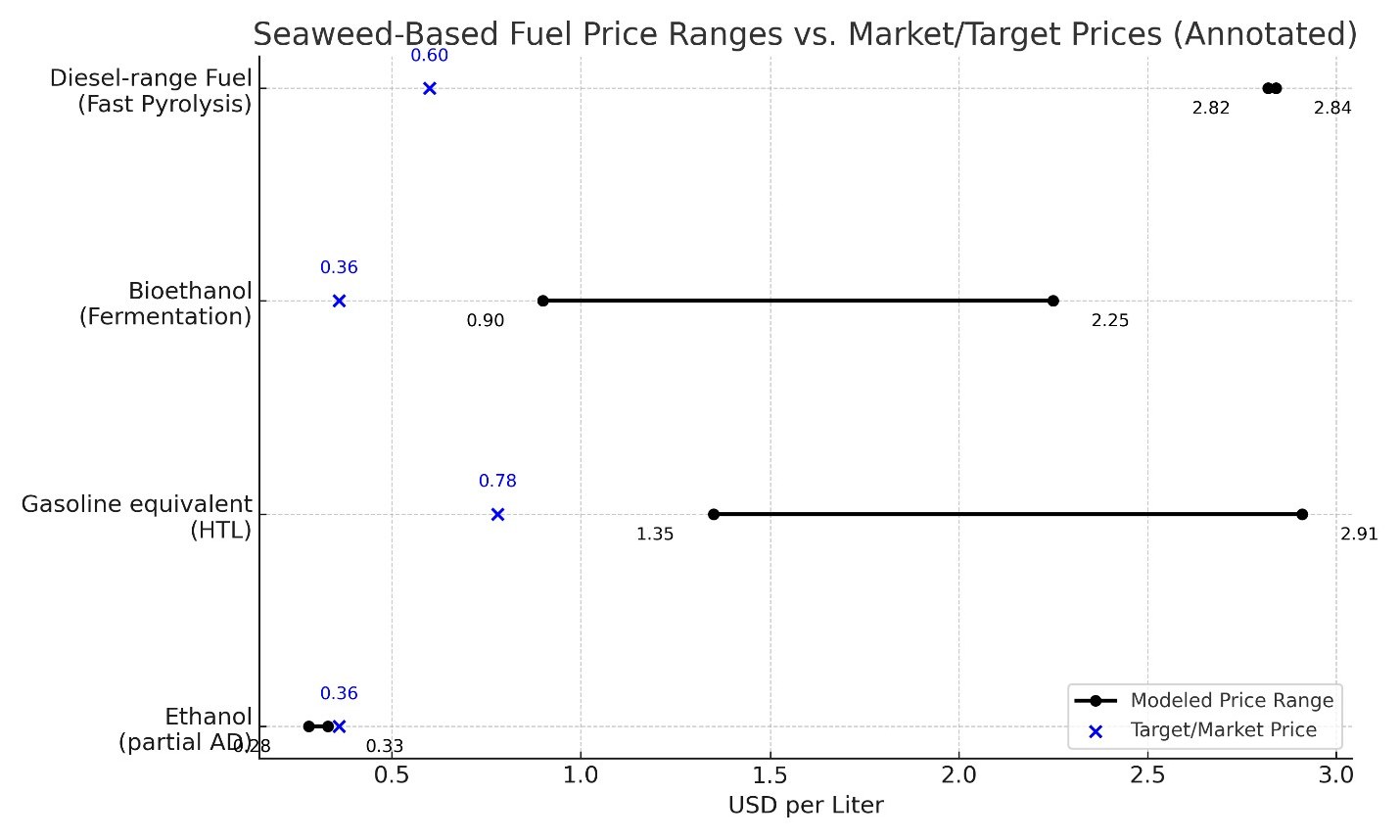
High production costs remain a significant barrier to market adoption as does the absence of carbon pricing or other policies to account for carbon pollution from fossil fuels. Cultivation costs, low cultivation yields, harvest costs, and low conversion yields drive up costs. Incorporation of multiple products besides biofuels in a biorefinery approach can also help with economic viability.
Market Adoption
Commercial activity to develop seaweed-based biofuels is low. Electrification of transport and low oil and gas prices means that the pressure to develop alternative fuels is low. However, voluntary commitments as well as regulations in hard-to-electrify sectors such as aviation (e.g., the United Kingdom’s SAF Mandate) and maritime shipping could result in a premium for low-carbon, drop-in fuel blends. Since these are substantial markets (e.g. maritime sector’s oil consumption is 4.2 million barrels per day), seaweed fuels could play a significant role in helping meet these commitments and requirements.
Costs
Several technoeconomic analyses (TEA) have been done on a range of seaweed species and biofuels products. A few examples are presented below and show that in some of the modeled scenarios, the selling price of seaweed-based biofuels gets close to the current market price or a target price of $0.78/liter for biofuels at scale (for e.g. set by the DOE to compete with oil costing $75-$90 per barrel). [caption id="attachment_12534" align="aligncenter" width="640"] Figure: Summary of technoeconomic analyses of seaweed-based biofuels Sources: Brigljević et al. (2019), Konda et al. (2015), Greene et al. (2020), Jay et al. (2022)[/caption]
High production costs remain a significant barrier to market adoption as does the absence of carbon pricing or other policies to account for carbon pollution from fossil fuels. Cultivation costs, low cultivation yields, harvest costs, and low conversion yields drive up costs. Incorporation of multiple products besides biofuels in a biorefinery approach can also help with economic viability.
Market Adoption
Commercial activity to develop seaweed-based biofuels is low. Electrification of transport and low oil and gas prices means that the pressure to develop alternative fuels is low. However, voluntary commitments as well as regulations in hard-to-electrify sectors such as aviation (e.g., the United Kingdom's SAF Mandate) and maritime shipping could result in a premium for low-carbon, drop-in fuel blends. Since these are substantial markets (e.g. maritime sector’s oil consumption is 4.2 million barrels per day), seaweed fuels could play a significant role in helping meet these commitments and requirements.Costs
Several technoeconomic analyses (TEA) have been done on a range of seaweed species and biofuels products. A few examples are presented below and show that in some of the modeled scenarios, the selling price of seaweed-based biofuels gets close to the current market price or a target price of $0.78/liter for biofuels at scale (for e.g. set by the DOE to compete with oil costing $75-$90 per barrel). [caption id="attachment_12534" align="aligncenter" width="640"] Figure: Summary of technoeconomic analyses of seaweed-based biofuels Sources: Brigljević et al. (2019), Konda et al. (2015), Greene et al. (2020), Jay et al. (2022)[/caption]
High production costs remain a significant barrier to market adoption as does the absence of carbon pricing or other policies to account for carbon pollution from fossil fuels. Cultivation costs, low cultivation yields, harvest costs, and low conversion yields drive up costs. Incorporation of multiple products besides biofuels in a biorefinery approach can also help with economic viability.
Market Adoption
Commercial activity to develop seaweed-based biofuels is low. Electrification of transport and low oil and gas prices means that the pressure to develop alternative fuels is low. However, voluntary commitments as well as regulations in hard to electrify sectors such as aviation and maritime shipping could result in a premium for low-carbon, drop-in fuel blends. Since these are substantial markets (e.g. maritime sector’s oil consumption is 4.2 million barrels per day), seaweed fuels could play a significant role in helping meet these commitments and requirements.Costs
Several technoeconomic analyses (TEA) have been done on a range of seaweed species and biofuels products. A few examples are presented below and show that in some of the modeled scenarios, the selling price of seaweed-based biofuels gets close to the current market price or a target price of $0.78/liter for biofuels at scale (for e.g. set by the DOE to compete with oil costing $75-$90 per barrel). [caption id="attachment_12534" align="aligncenter" width="640"] Figure: Summary of technoeconomic analyses of seaweed-based biofuels Sources: Brigljević et al. (2019), Konda et al. (2015), Greene et al. (2020), Jay et al. (2022)[/caption]
High production costs remain a significant barrier to market adoption as does the absence of carbon pricing or other policies to account for carbon pollution from fossil fuels. Cultivation costs, low cultivation yields, harvest costs, and low conversion yields drive up costs. Incorporation of multiple products besides biofuels in a biorefinery approach can also help with economic viability.
Market Adoption
Commercial activity to develop seaweed-based biofuels is low. Electrification of transport and low oil and gas prices means that the pressure to develop alternative fuels is low. However, voluntary commitments as well as regulations in hard to electrify sectors such as aviation and maritime shipping could result in a premium for low-carbon, drop-in fuel blends. Since these are substantial markets (e.g. maritime sector’s oil consumption is 4.2 million barrels per day), seaweed fuels could play a significant role in helping meet these commitments and requirements.Costs
Several technoeconomic analyses (TEA) have been done on a range of seaweed species and biofuels products. A few examples are presented below and show that in some of the modeled scenarios, the selling price of seaweed-based biofuels gets close to the current market price or a target price of $0.78/liter for biofuels at scale (for e.g. set by the DOE to compete with oil costing $75-$90 per barrel).
Figure: Summary of technoeconomic analyses of seaweed-based biofuels Sources: 1.(Brigljević et al., 2019), 2.(Konda et al., 2015), 3.(Greene et al., 2020), 4.(Jay et al., 2022)
High production costs remain a significant barrier to market adoption as does the absence of carbon pricing or other policies to account for carbon pollution from fossil fuels. Cultivation costs, low cultivation yields, harvest costs, and low conversion yields drive up costs. Incorporation of multiple products besides biofuels in a biorefinery approach can also help with economic viability.
Market Adoption
Commercial activity to develop seaweed-based biofuels is low. Electrification of transport and low oil and gas prices means that the pressure to develop alternative fuels is low. However, voluntary commitments as well as regulations in hard to electrify sectors such as aviation and maritime shipping could result in a premium for low-carbon, drop-in fuel blends. Since these are substantial markets (e.g. maritime sector’s oil consumption is 4.2 million barrels per day), seaweed fuels could play a significant role in helping meet these commitments and requirements.Costs
Several technoeconomic analyses (TEA) have been done on a range of seaweed species and biofuels products. A few examples are presented below and show that in some of the modeled scenarios, the selling price of seaweed-based biofuels gets close to the current market price or a target price of $0.78/liter for biofuels at scale (for e.g. set by the DOE to compete with oil costing $75-$90 per barrel). Figure: Summary of technoeconomic analyses of seaweed-based biofuels 1.(Brigljević et al., 2019) 3.(Greene et al., 2020) High production costs remain a significant barrier to market adoption as does the absence of carbon pricing or other policies to account for carbon pollution from fossil fuels. Cultivation costs, low cultivation yields, harvest costs, and low conversion yields drive up costs. Incorporation of multiple products besides biofuels in a biorefinery approach can also help with economic viability.Market Adoption
Commercial activity to develop seaweed-based biofuels is low. Electrification of transport and low oil and gas prices means that the pressure to develop alternative fuels is low. However, voluntary commitments as well as regulations in hard to electrify sectors such as aviation and maritime shipping could result in a premium for low-carbon, drop-in fuel blends. Since these are substantial markets (e.g. maritime sector’s oil consumption is 4.2 million barrels per day), seaweed fuels could play a significant role in helping meet these commitments and requirements.Environmental Co-benefits and Risks
Benefits
- Seaweeds are cultivated in marine and coastal environments, requiring no arable land and placing no competitive pressure on agricultural land needed for food production.
- Seaweeds also do not require freshwater or fertilizer, herbicide or pesticide applications and therefore can have a lower environmental footprint as compared to fuels derived from land crops (Duarte et al., 2017).
- Seaweed cultivation can provide a range of benefits including bioremediation and can provide a habitat for marine life, increasing local biodiversity. For more information on these and other benefits of the large scale cultivation of seaweed, see the road map chapter, “Cultivation and Drying Considerations”.
Risks
- Achieving the scale of offshore seaweed cultivation required for biofuel production could result in adverse impacts to local ecosystems. Some of the potential effects include competition between macroalgae and phytoplankton resulting in reduced microalgae growth, alteration of seawater properties, altered light climate (reflectance) and underwater light penetration (Boyd et al., 2022). This risk could be mitigated with careful siting and/or artificial upwelling. For more information on these and other risks related to large scale cultivation of seaweed, see the road map chapter, “Cultivation and Drying Considerations”.
- The disposal of residual biomass (like digestate from anaerobic digestion) after processing can be a concern as potentially toxic compounds (e.g., heavy metals, arsenic) may become concentrated, requiring pre-treatment before using in applications such as biostimulants (Nkemka et al., 2014). This risk could be mitigated by developing lower cost and less energy-intensive pre-treatment processes.
- The bioethanol process produces a number of waste streams that must be treated before recycling them back to the process or release to the environment. If the stillage is disposed of into waterways without any treatment, it can cause serious environment issues such as eutrophication and changes in species composition of aquatic flora and fauna. (Dickson et al., 2018). This risk can be mitigated by developing use cases for these residues and by treating effluents.
- Fuels generated from seaweeds release greenhouse gases into the atmosphere on combustion. In order for these solutions to be effective, their life cycle greenhouse gas emissions must be lower than those of the fuels that they replace. This risk can be mitigated by using renewable energy sources to dry seaweed when necessary, wet seaweed when it’s possible to avoid the need to dry it and locating processing facilities close to seaweed production areas.
Benefits
- Seaweeds are cultivated in marine and coastal environments, requiring no arable land and placing no competitive pressure on agricultural land needed for food production.
- Seaweeds also do not require freshwater or fertilizer, herbicide or pesticide applications and therefore can have a lower environmental footprint as compared to fuels derived from land crops (Duarte et al., 2017).
- Seaweed cultivation can provide a range of benefits including bioremediation and can provide a habitat for marine life, increasing local biodiversity. For more information on these and other benefits of the large scale cultivation of seaweed, see the road map chapter, "Cultivation and Drying Considerations".
Risks
- Achieving the scale of offshore seaweed cultivation required for biofuel production could result in adverse impacts to local ecosystems. Some of the potential effects include competition between macroalgae and phytoplankton resulting in reduced microalgae growth, alteration of seawater properties, altered light climate (reflectance) and underwater light penetration (Boyd et al., 2022). This risk could be mitigated with careful siting and/or artificial upwelling. For more information on these and other risks related to large scale cultivation of seaweed, see the road map chapter, "Cultivation and Drying Considerations".
- The disposal of residual biomass (like digestate from anaerobic digestion) after processing can be a concern as potentially toxic compounds (e.g., heavy metals, arsenic) may become concentrated, requiring pre-treatment before using in applications such as biostimulants (Nkemka et al., 2014). This risk could be mitigated by developing lower cost and less energy-intensive pre-treatment processes.
- The bioethanol process produces a number of waste streams that must be treated before recycling them back to the process or release to the environment. If the stillage is disposed of into waterways without any treatment, it can cause serious environment issues such as eutrophication and changes in species composition of aquatic flora and fauna. (Dickson et al., 2018). This risk can be mitigated by developing use cases for these residues and by treating effluents.
- Fuels generated from seaweeds release greenhouse gases into the atmosphere on combustion. In order for these solutions to be effective, their life cycle greenhouse gas emissions must be lower than those of the fuels that they replace. This risk can be mitigated by using renewable energy sources to dry seaweed when necessary, wet seaweed when it's possible to avoid the need to dry it and locating processing facilities close to seaweed production areas.
Benefits
- Seaweeds are cultivated in marine and coastal environments, requiring no arable land and placing no competitive pressure on agricultural land needed for food production.
- Seaweeds also do not require freshwater or fertilizer, herbicide or pesticide applications and therefore can have a lower environmental footprint as compared to fuels derived from land crops(Duarte et al., 2017).
- Seaweed cultivation can provide a range of benefits including bioremediation and can provide a habitat for marine life, increasing local biodiversity. For more information on these and other benefits of the large scale cultivation of seaweed, see the chapter on cultivation and drying.
Risks
- Achieving the scale of offshore seaweed cultivation required for biofuel production could result in adverse impacts to local ecosystems. Some of the potential effects include competition between macroalgae and phytoplankton resulting in reduced microalgae growth, alteration of seawater properties, altered light climate (reflectance) and underwater light penetration. (Boyd et al., 2022). This risk could be mitigated with careful siting and/or artificial upwelling. For more information on these and other risks related to large scale cultivation of seaweed, see the chapter on cultivation and drying.
- The disposal of residual biomass (like digestate from anaerobic digestion) after processing can be a concern as potentially toxic compounds (e.g., heavy metals, arsenic) may become concentrated, requiring pre-treatment before using in applications such as biostimulants (Nkemka et al., 2014). This risk could be mitigated by developing lower cost and less energy-intensive pre-treatment processes.
- The bioethanol process produces a number of waste streams that must be treated before recycling them back to the process or release to the environment. If the stillage is disposed of into waterways without any treatment, it can cause serious environment issues such as eutrophication and changes in species composition of aquatic flora and fauna. (Dickson et al., 2018). This risk can be mitigated by developing use cases for these residues and by treating effluents.
- Fuels generated from seaweeds release greenhouse gases into the atmosphere on combustion. In order for these solutions to be effective, their life cycle greenhouse gas emissions must be lower than those of the fuels that they replace. This risk can be mitigated by using renewable energy sources to dry seaweed when necessary, wet seaweed when it's possible to avoid the need to dry it and locating processing facilities close to seaweed production areas.
Benefits
- Seaweeds are cultivated in marine and coastal environments, requiring no arable land and placing no competitive pressure on agricultural land needed for food production.
- Seaweeds also do not require freshwater or fertilizer, herbicide or pesticide applications and therefore can have a lower environmental footprint as compared to fuels derived from land crops(Duarte et al., 2017).
- Seaweed cultivation can provide a range of benefits including bioremediation and can provide a habitat for marine life, increasing local biodiversity. For more information on these and other benefits of the large scale cultivation of seaweed, see the chapter on cultivation and drying.
Risks
- Achieving the scale of offshore seaweed cultivation required for biofuel production could result in adverse impacts to local ecosystems. Some of the potential effects include competition between macroalgae and phytoplankton resulting in reduced microalgae growth, alteration of seawater properties, altered light climate (reflectance) and underwater light penetration. (Boyd et al., 2022). This risk could be mitigated with careful siting and/or artificial upwelling. For more information on these and other risks related to large scale cultivation of seaweed, see the chapter on cultivation and drying.
- The disposal of residual biomass (like digestate from anaerobic digestion) after processing can be a concern as potentially toxic compounds (e.g., heavy metals, arsenic) may become concentrated, requiring pre-treatment before using in applications such as biostimulants(Nkemka et al., 2014). This risk could be mitigated by developing lower cost and less energy-intensive pre-treatment processes.
- The bioethanol process produces a number of waste streams that must be treated before recycling them back to the process or release to the environment. If the stillage is disposed of into waterways without any treatment, it can cause serious environment issues such as eutrophication and changes in species composition of aquatic flora and fauna. (Dickson et al., 2018). This risk can be mitigated by developing use cases for these residues and by treating effluents.
- Fuels generated from seaweeds release greenhouse gases into the atmosphere on combustion. In order for these solutions to be effective, their life cycle greenhouse gas emissions must be lower than those of the fuels that they replace. This risk can be mitigated by using renewable energy sources to dry seaweed when necessary, wet seaweed when it's possible to avoid the need to dry it and locating processing facilities close to seaweed production areas.
Benefits
- Seaweeds are cultivated in marine and coastal environments, requiring no arable land and placing no competitive pressure on agricultural land needed for food production.
- Seaweeds also do not require freshwater or fertilizer, herbicide or pesticide applications and therefore can have a lower environmental footprint as compared to fuels derived from land crops(Duarte et al., 2017).
- Seaweed cultivation can provide a range of benefits including bioremediation and can provide a habitat for marine life, increasing local biodiversity. For more information on these and other benefits of the large scale cultivation of seaweed, see the Cross Cutting Cultivation chapter.
Risks
- Achieving the scale of offshore seaweed cultivation required for biofuel production could result in adverse impacts to local ecosystems. Some of the potential effects include competition between macroalgae and phytoplankton resulting in reduced microalgae growth, alteration of seawater properties, altered light climate (reflectance) and underwater light penetration. (Boyd et al., 2022). This risk could be mitigated with careful siting and/or artificial upwelling. For more information on these and other risks related to large scale cultivation of seaweed, see the Cross Cutting Cultivation chapter.
- The disposal of residual biomass (like digestate from anaerobic digestion) after processing can be a concern as potentially toxic compounds (e.g., heavy metals, arsenic) may become concentrated, requiring pre-treatment before using in applications such as biostimulants(Nkemka et al., 2014). This risk could be mitigated by developing lower cost and less energy-intensive pre-treatment processes.
- The bioethanol process produces a number of waste streams that must be treated before recycling them back to the process or release to the environment. If the stillage is disposed of into waterways without any treatment, it can cause serious environment issues such as eutrophication and changes in species composition of aquatic flora and fauna. (Dickson et al., 2018). This risk can be mitigated by developing use cases for these residues and by treating effluents.
- Fuels generated from seaweeds release greenhouse gases into the atmosphere on combustion. In order for these solutions to be effective, their life cycle greenhouse gas emissions must be lower than those of the fuels that they replace. This risk can be mitigated by using renewable energy sources tp dry seaweed when necessary, wet seaweed when it's possible to avoid the need to dry it and locating processing facilities close to seaweed production areas.
Benefits
Seaweeds are cultivated in marine and coastal environments, requiring no arable land and placing no competitive pressure on agricultural land needed for food production. Seaweeds also do not require freshwater or fertilizer, herbicide or pesticide applications and therefore can have a lower environmental footprint as compared to fuels derived from land crops(Duarte et al., 2017). Seaweed cultivation can provide a range of benefits including bioremediation and can provide a habitat for marine life, increasing local biodiversity. For more information on these and other benefits of the large scale cultivation of seaweed, see the Cross Cutting Cultivation chapter.Risks
- Achieving the scale of offshore seaweed cultivation required for biofuel production could result in adverse impacts to local ecosystems. Some of the potential effects include competition between macroalgae and phytoplankton resulting in reduced microalgae growth, alteration of seawater properties, altered light climate (reflectance) and underwater light penetration. (Boyd et al., 2022). This risk could be mitigated with careful siting and/or artificial upwelling. For more information on these and other risks related to large scale cultivation of seaweed, see the Cross Cutting Cultivation chapter.
- The disposal of residual biomass (like digestate from anaerobic digestion) after processing can be a concern as potentially toxic compounds (e.g., heavy metals, arsenic) may become concentrated, requiring pre-treatment before using in applications such as biostimulants(Nkemka et al., 2014). This risk could be mitigated by developing lower cost and less energy-intensive pre-treatment processes.
- The bioethanol process produces a number of waste streams that must be treated before recycling them back to the process or release to the environment. If the stillage is disposed of into waterways without any treatment, it can cause serious environment issues such as eutrophication and changes in species composition of aquatic flora and fauna. (Dickson et al., 2018). This risk can be mitigated by developing use cases for these residues and by treating effluents.
- Fuels generated from seaweeds release greenhouse gases into the atmosphere on combustion. In order for these solutions to be effective, their life cycle greenhouse gas emissions must be lower than those of the fuels that they replace. This risk can be mitigated by using renewable energy sources tp dry seaweed when necessary, wet seaweed when it's possible to avoid the need to dry it and locating processing facilities close to seaweed production areas.
Policy and Regulation
The regulatory landscape for cultivation of seaweed offshore in large farms can be a barrier, particularly in Europe and the United States. For example, in California, it is estimated that a seaweed farm can take between 3 and 10 years to license. In Asian countries with a tradition for seaweed aquaculture, permitting is far less onerous. China’s Sea Area Use Administration Law authorizes mariculture use of sea areas for up to 15 years. In practice, local governments allocate these rights through competitive bidding for projects. In the Philippines, nearshore permits are under the jurisdiction of municipalities, simplifying the process. For more information related to the policies driving seaweed cultivation, refer to the Cross Cutting Cultivation chapter.
Biofuel production and use are primarily driven by government policies aimed at reducing dependence on fossil fuels and increasing the share of renewable energy for mitigating CO2 emissions. Mechanisms used to support nascent industries include blending mandates, tax exemptions, grants for facilities, premiums for energy crops, and funding for research, development and deployment (RD&D). Here are some of the significant recent initiatives that have encouraged RD&D for seaweed-based biofuels.
| Region | Policy Type | Policy/Agency Title | Description |
| EU | Renewable Portfolio Standard | Delegated Regulation (EU/2023/1640) | The revised Renewable Energy Directive establishes binding targets for the share of renewable energy in the transport sector, including maritime and aviation. By 2030, EU countries are supposed to meet a combined sub-target for renewable hydrogen and advanced biofuels of 5.5%. |
| EU | Renewable Portfolio Standard | Revised Renewable Energy Directive (EU/2023/2413) | Overarching policy for the promotion and use of energy from renewable sources in the EU. To address the risk of indirect land use change (ILUC) due to the extension of agricultural production, the directive sets a target of zero high ILUC fuels by 2030. |
| China | Five Year Plans | According to the 12th Five-Year Plan (2011-2015) for strategic emerging industries, China aimed to develop biomass energy sources to develop second generation biofuels including production of 5,068 ML (4 million tons) of cellulosic fuel ethanol, and 1.1 BL of algae-based biodiesel. In May 2017, China’s Central Government announced its 13th Five-Year Plan for Biological Innovation. The plan focused on promoting innovation in biological-based technologies, including new energy sources using bio-based feedstock like cellulosic ethanol. | |
| USA | Government Funded RD&D | ARPE-E MARINER (2017)
ARPA-E HAEJO (2025) |
MARINER (Macroalgae Research Inspiring Novel Energy Resources) launched in 2017–2018 to catalyze seaweed cultivation in U.S. waters for bioenergy and bioproducts. MARINER funded 18 projects (~$22 M total) across five categories: farm design and deployment systems; autonomous components/automation; hydrodynamic and growth modeling; farm monitoring technologies; and breeding/genetic tools. HAEJO(Harnessing Autonomy for Energy Joint ventures Offshore) targets deep-water offshore cultivation at scales of millions of tons by developing autonomous sensors/robots, offshore nutrient delivery and dewatering systems, and focuses on building out existing seaweed markets (e.g., seaweed biostimulants) to scale production and lower costs. |
| USA | Government Funded RD&D | US Department of Energy (2024) programs jointly managed by Bioenergy Technologies Office and Fossil Energy and Carbon Management | 6 projects focused on converting macroalgae to low-carbon fuels, chemicals and plastics that can lower emissions in domestic transportation and industry |
| EU | Government Funded R&D | EU Horizon 2020 programs | MacroFuels project (2016-2019) funded by the EU’s Horizon 2020 program aimed to produce advanced biofuels including ethanol, butanol, and furanics. A significant milestone from this project was the production of approximately 20 liters of seaweed-derived fuel, which was then blended with petrol and used to power a test car that drove 80 kilometers.
The MACRO CASCADE project (2016–2021) set out to prove the concept of the cascading marine macroalgal biorefinery covering the entire technological chain from seaweed cultivation to high-value products
|
| South Korea | Government funded projects | US$30M R&D program (sister program to HAEJO) funded by South Korea on seaweed technology development for “carbon elimination”. Collaboration with US entities is strongly encouraged in their proposal call. A KIOST scientist has won that award and is currently negotiating with his consortium of teams.
|
Table 3: Worldwide policies supporting the development of seaweed-based biofuels
| Region | Policy Type | Policy/Agency Title | Description |
| EU | Renewable Portfolio Standard | Delegated Regulation (EU/2023/1640) | The revised Renewable Energy Directive establishes binding targets for the share of renewable energy in the transport sector, including maritime and aviation. By 2030, EU countries are supposed to meet a combined sub-target for renewable hydrogen and advanced biofuels of 5.5%. |
| EU | Renewable Portfolio Standard | Revised Renewable Energy Directive (EU/2023/2413) | Overarching policy for the promotion and use of energy from renewable sources in the EU. To address the risk of indirect land use change (ILUC) due to the extension of agricultural production, the directive sets a target of zero high ILUC fuels by 2030. |
| China | Five Year Plans | According to the 12th Five-Year Plan (2011-2015) for strategic emerging industries, China aimed to develop biomass energy sources to develop second generation biofuels including production of 5,068 ML (4 million tons) of cellulosic fuel ethanol, and 1.1 BL of algae-based biodiesel. In May 2017, China’s Central Government announced its 13th Five-Year Plan for Biological Innovation. The plan focused on promoting innovation in biological-based technologies, including new energy sources using bio-based feedstock like cellulosic ethanol. | |
| USA | Government Funded RD&D | ARPE-E MARINER (2017) ARPA-E HAEJO (2025) | MARINER (Macroalgae Research Inspiring Novel Energy Resources) launched in 2017–2018 to catalyze seaweed cultivation in U.S. waters for bioenergy and bioproducts. MARINER funded 18 projects (~$22 M total) across five categories: farm design and deployment systems; autonomous components/automation; hydrodynamic and growth modeling; farm monitoring technologies; and breeding/genetic tools. HAEJO(Harnessing Autonomy for Energy Joint ventures Offshore) targets deep-water offshore cultivation at scales of millions of tons by developing autonomous sensors/robots, offshore nutrient delivery and dewatering systems, and focuses on building out existing seaweed markets (e.g., seaweed biostimulants) to scale production and lower costs. |
| USA | Government Funded RD&D | US Department of Energy (2024) programs jointly managed by Bioenergy Technologies Office and Fossil Energy and Carbon Management | 6 projects focused on converting macroalgae to low-carbon fuels, chemicals and plastics that can lower emissions in domestic transportation and industry |
| EU | Government Funded R&D | EU Horizon 2020 programs | MacroFuels project (2016-2019) funded by the EU’s Horizon 2020 program aimed to produce advanced biofuels including ethanol, butanol, and furanics. A significant milestone from this project was the production of approximately 20 liters of seaweed-derived fuel, which was then blended with petrol and used to power a test car that drove 80 kilometers. The MACRO CASCADE project (2016–2021) set out to prove the concept of the cascading marine macroalgal biorefinery covering the entire technological chain from seaweed cultivation to high-value products |
| South Korea | Government funded projects | US$30M R&D program (sister program to HAEJO) funded by South Korea on seaweed technology development for “carbon elimination”. Collaboration with US entities is strongly encouraged in their proposal call. A KIOST scientist has won that award and is currently negotiating with his consortium of teams. |
| Region | Policy Type | Policy/Agency Title | Description |
| EU | Renewable Portfolio Standard | Delegated Regulation (EU/2023/1640) | The revised Renewable Energy Directive establishes binding targets for the share of renewable energy in the transport sector, including maritime and aviation. By 2030, EU countries are supposed to meet a combined sub-target for renewable hydrogen and advanced biofuels of 5.5%. |
| EU | Renewable Portfolio Standard | Revised Renewable Energy Directive (EU/2023/2413) | Overarching policy for the promotion and use of energy from renewable sources in the EU. To address the risk of indirect land use change (ILUC) due to the extension of agricultural production, the directive sets a target of zero high ILUC fuels by 2030. |
| China | Five Year Plans | According to the 12th Five-Year Plan (2011-2015) for strategic emerging industries, China aimed to develop biomass energy sources to develop second generation biofuels including production of 5,068 ML (4 million tons) of cellulosic fuel ethanol, and 1.1 BL of algae-based biodiesel. In May 2017, China’s Central Government announced its 13th Five-Year Plan for Biological Innovation. The plan focused on promoting innovation in biological-based technologies, including new energy sources using bio-based feedstock like cellulosic ethanol. | |
| USA | Government Funded RD&D | ARPE-E MARINER (2017) ARPA-E HAEJO (2025) | MARINER (Macroalgae Research Inspiring Novel Energy Resources) launched in 2017–2018 to catalyze seaweed cultivation in U.S. waters for bioenergy and bioproducts. MARINER funded 18 projects (~$22 M total) across five categories: farm design and deployment systems; autonomous components/automation; hydrodynamic and growth modeling; farm monitoring technologies; and breeding/genetic tools. HAEJO(Harnessing Autonomy for Energy Joint ventures Offshore) targets deep-water offshore cultivation at scales of millions of tons by developing autonomous sensors/robots, offshore nutrient delivery and dewatering systems, and focuses on building out existing seaweed markets (e.g., seaweed biostimulants) to scale production and lower costs. |
| USA | Government Funded RD&D | US Department of Energy (2024) programs jointly managed by Bioenergy Technologies Office and Fossil Energy and Carbon Management | 6 projects focused on converting macroalgae to low-carbon fuels, chemicals and plastics that can lower emissions in domestic transportation and industry |
| EU | Government Funded R&D | EU Horizon 2020 programs | MacroFuels project (2016-2019) funded by the EU’s Horizon 2020 program aimed to produce advanced biofuels including ethanol, butanol, and furanics. A significant milestone from this project was the production of approximately 20 liters of seaweed-derived fuel, which was then blended with petrol and used to power a test car that drove 80 kilometers. The MACRO CASCADE project (2016–2021) set out to prove the concept of the cascading marine macroalgal biorefinery covering the entire technological chain from seaweed cultivation to high-value products |
| South Korea | Government funded projects | US$30M R&D program (sister program to HAEJO) funded by South Korea on seaweed technology development for “carbon elimination”. Collaboration with US entities is strongly encouraged in their proposal call. A KIOST scientist has won that award and is currently negotiating with his consortium of teams. |
| Region | Policy Type | Policy/Agency Title | Description |
| EU | Renewable Portfolio Standard | Delegated Regulation (EU/2023/1640) | The revised Renewable Energy Directive establishes binding targets for the share of renewable energy in the transport sector, including maritime and aviation. By 2030, EU countries are supposed to meet a combined sub-target for renewable hydrogen and advanced biofuels of 5.5%. |
| EU | Renewable Portfolio Standard | Revised Renewable Energy Directive (EU/2023/2413) | Overarching policy for the promotion and use of energy from renewable sources in the EU. To address the risk of indirect land use change (ILUC) due to the extension of agricultural production, the directive sets a target of zero high ILUC fuels by 2030. |
| China | Five Year Plans | According to the 12th Five-Year Plan (2011-2015) for strategic emerging industries, China aimed to develop biomass energy sources to develop second generation biofuels including production of 5,068 ML (4 million tons) of cellulosic fuel ethanol, and 1.1 BL of algae-based biodiesel. In May 2017, China’s Central Government announced its 13th Five-Year Plan for Biological Innovation. The plan focused on promoting innovation in biological-based technologies, including new energy sources using bio-based feedstock like cellulosic ethanol. | |
| USA | Government Funded RD&D | ARPE-E MARINER (2017) ARPA-E HAEJO (2025) | MARINER (Macroalgae Research Inspiring Novel Energy Resources) launched in 2017–2018 to catalyze seaweed cultivation in U.S. waters for bioenergy and bioproducts. MARINER funded 18 projects (~$22 M total) across five categories: farm design and deployment systems; autonomous components/automation; hydrodynamic and growth modeling; farm monitoring technologies; and breeding/genetic tools. HAEJO(Harnessing Autonomy for Energy Joint ventures Offshore) targets deep-water offshore cultivation at scales of millions of tons by developing autonomous sensors/robots, offshore nutrient delivery and dewatering systems, and focuses on building out existing seaweed markets (e.g., seaweed biostimulants) to scale production and lower costs. |
| USA | Government Funded RD&D | US Department of Energy (2024) programs jointly managed by Bioenergy Technologies Office and Fossil Energy and Carbon Management | 6 projects focused on converting macroalgae to low-carbon fuels, chemicals and plastics that can lower emissions in domestic transportation and industry |
| EU | Government Funded R&D | EU Horizon 2020 programs | MacroFuels project (2016-2019) funded by the EU’s Horizon 2020 program aimed to produce advanced biofuels including ethanol, butanol, and furanics. A significant milestone from this project was the production of approximately 20 liters of seaweed-derived fuel, which was then blended with petrol and used to power a test car that drove 80 kilometers. The MACRO CASCADE project (2016–2021) set out to prove the concept of the cascading marine macroalgal biorefinery covering the entire technological chain from seaweed cultivation to high-value products |
| South Korea | Government funded projects | US$30M R&D program (sister program to HAEJO) funded by South Korea on seaweed technology development for “carbon elimination”. Collaboration with US entities is strongly encouraged in their proposal call. A KIOST scientist has won that award and is currently negotiating with his consortium of teams. |
How to submit comments:
Thanks for helping to advance these roadmaps. Here is how it works!
Or, send general feedback to info@oceanvisions.org
All submitted comments will be reviewed by the Ocean Visions team to ensure that they are true, verifiable, and additive before being added to the road maps. You can increase the likelihood that your comments will be incorporated into the road maps by providing references (where appropriate).