Sustainable and scalable seaweed cultivation is critical to producing low-carbon seaweed-based products that can mitigate global greenhouse gas (GHG) emissions at the gigaton-scale (DeAngelo et al., 2023). Meeting this potential requires innovations in infrastructure materials, fuel use, and dewatering/drying to increase seaweed production with a low carbon footprint. Therefore, this section analyzes the state of the science, market, and policies involved in seaweed cultivation and dewatering/drying, associated knowledge gaps, and first-order priorities for filling said gaps.
Elements of Seaweed Cultivation
Nurseries / hatcheries
Some seaweeds pass through a hatchery and/or nursery before its grow-out phase on a farm. Hatcheries are controlled facilities where spores or cuttings are germinated, conditioned, and grown to transplant-ready seedlings under managed light, temperature, and nutrient conditions (Andersen et al., 2005). Traditionally, these seedlings are sown onto a substrate like a rope in a nursery during its most vulnerable juvenile stage, allowing for early growth in a controlled environment. Nurseries/hatcheries enable large-scale industrialization by supplying farms with high yields of genetically standardized seedlings, helping control genetic variability so the harvested biomass—and resulting products—remain consistent, and by providing seedlings that are free of pathogens and pests. In mature and emerging markets alike, a single nursery/hatchery often supplies multiple growers (Andersen et al., 2005).
Seaweed Cultivation approaches
Seaweed has been used by humans for over 10,000 years and cultivated for generations in certain communities (Mouritsen et al., 2024). Today, cultivation is practiced across three broad settings — nearshore, onshore, and offshore — each defined by its distance from shore, degree of environmental control, number of inputs, and suitability for different scales and end-uses. Nearshore cultivation has been the most common approach, but research and innovation in management practices and farm infrastructure has expanded cultivation on to land as well as further offshore.
Nearshore
Nearshore cultivation typically occurs within three nautical miles of the shore (Tullberg et al., 2022). They range in size from 0.1–1 hectare low-input smallholder farms to 15,000-hectare high-input commercial farms.
Onshore
Onshore seaweed cultivation grows seaweed in terrestrial facilities, operating in open or closed systems to circulate nutrients through tanks, raceways, photobioreactors, or ponds (Buschmann et al., 2017). It permits tighter operational and environmental controls than near- or offshore cultivation.
Offshore
Offshore seaweed cultivation, defined as farming beyond three nautical miles but within 200 nautical miles, can supply biomass at a scale that nearshore and onshore cultivation cannot match (ARPA-E, 2025; Golberg et al., 2018; Ross et al., 2025). Studies suggest that if offshore cultivation was conducted at scale, roughly 650 million hectares or 1.8% of ocean area, it could produce ~6.5 billion tons of dry seaweed per year; however, the area needed for cultivated could reach up to 20 billion hectares given geographic variation in nutrient limitations (Arzeno-Soltero et al., 2023; Spillias et al., 2023).
Harvesting
Harvesting practices remove seaweed from the farm for transport to processing sites that develop the raw biomass into end-products; strategy varies according to the species lifecycle, location, and seasonality (Amponsah et al., 2024; Buschmann et al., 2014; Vásquez et al., 2012). For example, seaweed destined for agricultural supplements requires harvesting systems timed to peak bioactive compound concentration and rapid onsite stabilization (Hafting et al., 2015).
Cleaning
Cleaning begins as soon as seaweed is harvested and scales in intensity with product quality. At its simplest (e.g., in making construction materials), cleaning involves a deck hose rinse to remove sand and surface debris. At its most rigorous (e.g., in blue food development), it encompasses sequential washes, manual quality selection, heat treatment to neutralize biotoxins, and chemical and microbial analysis to verify compliance with regulatory standards (Radulovich et al., 2015).
Dewatering and Drying
Seaweed holds 70–90% water by weight; it must be dried for cost-effective storage, transport and downstream processing. Because of this, drying can account for as much as 75% of a product’s net emissions and critically impacts the carbon footprint of a seaweed end-product (Albright & Fujita, 2023; Nilsson et al., 2022). In practice, dewatering and drying are two sequential steps rather than alternatives. Mechanical dewatering — using screw presses, belt presses, or centrifuges — removes bulk water first, typically reducing moisture to ~50–60% without heat; this reduces transport weight and the load placed on subsequent drying. Thermal or passive drying then brings moisture down to 10-20%.
Sustainable and scalable seaweed cultivation is critical to producing low-carbon seaweed-based products that can mitigate global greenhouse gas (GHG) emissions at the gigaton-scale (DeAngelo et al., 2023). Meeting this potential requires innovations in infrastructure materials, fuel use, and dewatering/drying to increase seaweed production with a low carbon footprint. Therefore, this section analyzes the state of the science, market, and policies involved in seaweed cultivation and dewatering/drying, associated knowledge gaps, and first-order priorities for filling said gaps.
Elements of Seaweed Cultivation
Nurseries / hatcheries
Some seaweeds pass through a hatchery and/or nursery before its grow-out phase on a farm. Hatcheries are controlled facilities where spores or cuttings are germinated, conditioned, and grown to transplant-ready seedlings under managed light, temperature, and nutrient conditions (Andersen et al., 2005). Traditionally, these seedlings are sown onto a substrate like a rope in a nursery during its most vulnerable juvenile stage, allowing for early growth in a controlled environment. Nurseries/hatcheries enable large-scale industrialization by supplying farms with high yields of genetically standardized seedlings, helping control genetic variability so the harvested biomass—and resulting products—remain consistent, and by providing seedlings that are free of pathogens and pests. In mature and emerging markets alike, a single nursery/hatchery often supplies multiple growers (Andersen et al., 2005).
Seaweed Cultivation approaches
Seaweed has been used by humans for over 10,000 years and cultivated for generations in certain communities (Mouritsen et al., 2024). Today, cultivation is practiced across three broad settings — nearshore, onshore, and offshore — each defined by its distance from shore, degree of environmental control, number of inputs, and suitability for different scales and end-uses. Nearshore cultivation has been the most common approach, but research and innovation in management practices and farm infrastructure has expanded cultivation on to land as well as further offshore.
Nearshore
Nearshore cultivation typically occurs within three nautical miles of the shore (Tullberg et al., 2022). They range in size from 0.1–1 hectare low-input smallholder farms to 15,000-hectare high-input commercial farms.
Onshore
Onshore seaweed cultivation grows seaweed in terrestrial facilities, operating in open or closed systems to circulate nutrients through tanks, raceways, photobioreactors, or ponds (Buschmann et al., 2017). It permits tighter operational and environmental controls than near- or offshore cultivation.
Offshore
Offshore seaweed cultivation, defined as farming beyond three nautical miles but within 200 nautical miles, can supply biomass at a scale that nearshore and onshore cultivation cannot match (ARPA-E, 2025; Golberg et al., 2018; Ross et al., 2025). Studies suggest that if offshore cultivation was conducted at scale, roughly 650 million hectares or 1.8% of ocean area, it could produce ~6.5 billion tons of dry seaweed per year; however, the area needed for cultivated could reach up to 20 billion hectares given geographic variation in nutrient limitations (Arzeno-Soltero et al., 2023; Spillias et al., 2023).
Harvesting
Harvesting practices remove seaweed from the farm for transport to processing sites that develop the raw biomass into end-products; strategy varies according to the species lifecycle, location, and seasonality (Amponsah et al., 2024; Buschmann et al., 2014; Vásquez et al., 2012). For example, seaweed destined for agricultural supplements requires harvesting systems timed to peak bioactive compound concentration and rapid onsite stabilization (Hafting et al., 2015).
Cleaning
Cleaning begins as soon as seaweed is harvested and scales in intensity with product quality. At its simplest (e.g., in making construction materials), cleaning involves a deck hose rinse to remove sand and surface debris. At its most rigorous (e.g., in blue food development), it encompasses sequential washes, manual quality selection, heat treatment to neutralize biotoxins, and chemical and microbial analysis to verify compliance with regulatory standards (Radulovich et al., 2015).
Dewatering and Drying
Seaweed holds 70–90% water by weight; it must be dried for cost-effective storage, transport and downstream processing. Because of this, drying can account for as much as 75% of a product’s net emissions and critically impacts the carbon footprint of a seaweed end-product (Albright & Fujita, 2023; Nilsson et al., 2022). In practice, dewatering and drying are two sequential steps rather than alternatives. Mechanical dewatering — using screw presses, belt presses, or centrifuges — removes bulk water first, typically reducing moisture to ~50–60% without heat; this reduces transport weight and the load placed on subsequent drying. Thermal or passive drying then brings moisture down to 10-20%.
Sustainable and scalable seaweed cultivation is critical to producing low-carbon seaweed-based products that can mitigate global greenhouse gas (GHG) emissions at the gigaton-scale (DeAngelo et al., 2023). Meeting this potential requires innovations in infrastructure materials, fuel use, and dewatering/drying to increase seaweed production with a low carbon footprint. Therefore, this section analyzes the state of the science, market, and policies involved in seaweed cultivation and dewatering/drying, associated knowledge gaps, and first-order priorities for filling said gaps.
Elements of Seaweed Cultivation
Nurseries / hatcheries
Some seaweeds pass through a hatchery and/or nursery before its grow-out phase on a farm. Hatcheries are controlled facilities where spores or cuttings are germinated, conditioned, and grown to transplant-ready seedlings under managed light, temperature, and nutrient conditions (Andersen et al., 2005). Traditionally, these seedlings are sown onto a substrate like a rope in a nursery during its most vulnerable juvenile stage, allowing for early growth in a controlled environment. Nurseries/hatcheries enable large-scale industrialization by supplying farms with high yields of genetically standardized seedlings, helping control genetic variability so the harvested biomass—and resulting products—remain consistent, and by providing seedlings that are free of pathogens and pests. In mature and emerging markets alike, a single nursery/hatchery often supplies multiple growers (Andersen et al., 2005).
Seaweed Cultivation approaches
Seaweed has been used by humans for over 10,000 years and cultivated for generations in certain communities (Mouritsen et al., 2024). Today, cultivation is practiced across three broad settings — nearshore, onshore, and offshore — each defined by its distance from shore, degree of environmental control, number of inputs, and suitability for different scales and end-uses. Nearshore cultivation has been the most common approach, but research and innovation in management practices and farm infrastructure has expanded cultivation on to land as well as further offshore.
Nearshore
Nearshore cultivation typically occurs within three nautical miles of the shore (Tullberg et al., 2022). They range in size from 0.1–1 hectare low-input smallholder farms to 15,000-hectare high-input commercial farms.
Onshore
Onshore seaweed cultivation grows seaweed in terrestrial facilities, operating in open or closed systems to circulate nutrients through tanks, raceways, photobioreactors, or ponds (Buschmann et al., 2017). It permits tighter operational and environmental controls than near- or offshore cultivation.
Offshore
Offshore seaweed cultivation, defined as farming beyond three nautical miles but within 200 nautical miles, can supply biomass at a scale that nearshore and onshore cultivation cannot match (ARPA-E, 2025; Golberg et al., 2018; Ross et al., 2025). Studies suggest that if offshore cultivation was conducted at scale, roughly 650 million hectares or 1.8% of ocean area, it could produce ~6.5 billion tons of dry seaweed per year (Spillias et al., 2023).
Harvesting
Harvesting practices remove seaweed from the farm for transport to processing sites that develop the raw biomass into end-products; strategy varies according to the species lifecycle, location, and seasonality (Amponsah et al., 2024; Buschmann et al., 2014; Vásquez et al., 2012). For example, seaweed destined for agricultural supplements requires harvesting systems timed to peak bioactive compound concentration and rapid onsite stabilization (Hafting et al., 2015).
Cleaning
Cleaning begins as soon as seaweed is harvested and scales in intensity with product quality. At its simplest (e.g., in making construction materials), cleaning involves a deck hose rinse to remove sand and surface debris. At its most rigorous (e.g., in blue food development), it encompasses sequential washes, manual quality selection, heat treatment to neutralize biotoxins, and chemical and microbial analysis to verify compliance with regulatory standards (Radulovich et al., 2015).
Dewatering and Drying
Seaweed holds 70–90% water by weight; it must be dried for cost-effective storage, transport and downstream processing. Because of this, drying can account for as much as 75% of a product’s net emissions and critically impacts the carbon footprint of a seaweed end-product (Albright & Fujita, 2023; Nilsson et al., 2022). In practice, dewatering and drying are two sequential steps rather than alternatives. Mechanical dewatering — using screw presses, belt presses, or centrifuges — removes bulk water first, typically reducing moisture to ~50–60% without heat; this reduces transport weight and the load placed on subsequent drying. Thermal or passive drying then brings moisture down to 10-20%.
Sustainable and scalable seaweed cultivation is critical to producing low-carbon seaweed-based products that can mitigate global greenhouse gas (GHG) emissions at the gigaton-scale (DeAngelo et al., 2023). Meeting this potential requires innovations in infrastructure materials, fuel use, and dewatering/drying to increase seaweed production with a low carbon footprint. Therefore, this section analyzes the state of the science, market, and policies involved in seaweed cultivation and dewatering/drying, associated knowledge gaps, and first-order priorities for filling said gaps.
Elements of Seaweed Cultivation
Nurseries / hatcheries
Some seaweeds pass through a hatchery and/or nursery before its grow-out phase on a farm. Hatcheries are controlled facilities where spores or cuttings are germinated, conditioned, and grown to transplant-ready seedlings under managed light, temperature, and nutrient conditions (Andersen et al., 2005). Traditionally, these seedlings are sown onto a substrate like a rope in a nursery during its most vulnerable juvenile stage, allowing for early growth in a controlled environment. Nurseries/hatcheries enable large-scale industrialization by supplying farms with high yields of genetically standardized seedlings, helping control genetic variability so the harvested biomass—and resulting products—remain consistent, and by providing seedlings that are free of pathogens and pests. In mature and emerging markets alike, a single nursery/hatchery often supplies multiple growers (Andersen et al., 2005).
Seaweed Cultivation approaches
Seaweed has been used by humans for over 10,000 years and cultivated for generations in certain communities (Mouritsen et al., 2024). Today, cultivation is practiced across three broad settings — nearshore, onshore, and offshore — each defined by its distance from shore, degree of environmental control, number of inputs, and suitability for different scales and end-uses. Nearshore cultivation has been the most common approach, but research and innovation in management practices and farm infrastructure has expanded cultivation on to land as well as further offshore.
Nearshore
Nearshore cultivation typically occurs within three nautical miles of the shore (Tullberg et al., 2022). They range in size from 0.1–1 hectare low-input smallholder farms to 15,000-hectare high-input commercial farms.
Onshore
Onshore seaweed cultivation grows seaweed in terrestrial facilities, operating in open or closed systems to circulate nutrients through tanks, raceways, photobioreactors, or ponds (Buschmann et al., 2017). It permits tighter operational and environmental controls than near- or offshore cultivation.
Offshore
Offshore seaweed cultivation, defined as farming beyond three nautical miles but within 200 nautical miles, can supply biomass at a scale that nearshore and onshore cultivation cannot match (ARPA-E, 2025; Golberg et al., 2018; Ross et al., 2025). Studies suggest that if offshore cultivation was conducted at scale, roughly 650 million hectares or 1.8% of ocean area, it could produce ~6.5 billion tons of dry seaweed per year (Spillias et al., 2023).
Harvesting
Harvesting practices remove seaweed from the farm for transport to processing sites that develop the raw biomass into end-products; strategy varies according to the species lifecycle, location, and seasonality (Amponsah et al., 2024; Buschmann et al., 2014; Vásquez et al., 2012). For example, seaweed destined for agricultural supplements requires harvesting systems timed to peak bioactive compound concentration and rapid onsite stabilization (Hafting et al., 2015).
Cleaning
Cleaning begins as soon as seaweed is harvested and scales in intensity with product quality. At its simplest (e.g., in making construction materials), cleaning involves a deck hose rinse to remove sand and surface debris. At its most rigorous (e.g., in blue food development), it encompasses sequential washes, manual quality selection, heat treatment to neutralize biotoxins, and chemical and microbial analysis to verify compliance with regulatory standards (Radulovich et al., 2015).
Dewatering and Drying
Seaweed holds 70–90% water by weight; it must be dried for cost-effective storage, transport and downstream processing. Because of this, drying can account for as much as 75% of a product’s net emissions and critically impacts the carbon footprint of a seaweed end-product (Albright & Fujita, 2023; Nilsson et al., 2022). In practice, dewatering and drying are two sequential steps rather than alternatives. Mechanical dewatering — using screw presses, belt presses, or centrifuges — removes bulk water first, typically reducing moisture to ~50–60% without heat; this reduces transport weight and the load placed on subsequent drying. Thermal or passive drying then brings moisture down to 10-20%.
Sustainable and scalable seaweed cultivation is critical to producing low-carbon seaweed-based products that can mitigate global greenhouse gas (GHG) emissions at the gigaton-scale (DeAngelo et al., 2023). Meeting this potential requires innovations in infrastructure materials, fuel use, and dewatering/drying to increase seaweed production with a low carbon footprint. Therefore, this section analyzes the state of the science, market, and policies involved in seaweed cultivation and dewatering/drying, associated knowledge gaps, and first-order priorities for filling said gaps.
Elements of Seaweed Cultivation
Nurseries / hatcheries
Some seaweeds pass through a hatchery and/or nursery before its grow-out phase on a farm. Hatcheries are controlled facilities where spores or cuttings are germinated, conditioned, and grown to transplant-ready seedlings under managed light, temperature, and nutrient conditions (Andersen et al., 2005). Traditionally, these seedlings are sown onto a substrate like a rope in a nursery during its most vulnerable juvenile stage, allowing for early growth in a controlled environment. Nurseries/hatcheries enable large-scale industrialization by supplying farms with high yields of genetically standardized seedlings, helping control genetic variability so the harvested biomass—and resulting products—remain consistent, and by providing seedlings that are free of pathogens and pests. In mature and emerging markets alike, a single nursery/hatchery often supplies multiple growers (Andersen et al., 2005).
Seaweed Cultivation approaches
Seaweed has been used by humans for over 10,000 years and cultivated for generations in certain communities (Mouritsen et al., 2024). Today, cultivation is practiced across three broad settings — nearshore, onshore, and offshore — each defined by its distance from shore, degree of environmental control, number of inputs, and suitability for different scales and end-uses. Nearshore cultivation has been the most common approach, but research and innovation in management practices and farm infrastructure has expanded cultivation on to land as well as further offshore.
Nearshore
Nearshore cultivation typically occurs within three nautical miles of the shore (Tullberg et al., 2022). They range in size from 0.1–1 hectare low-input smallholder farms to 15,000-hectare high-input commercial farms.
Onshore
Onshore seaweed cultivation grows seaweed in terrestrial facilities, operating in open or closed systems to circulate nutrients through tanks, raceways, photobioreactors, or ponds (Buschmann et al., 2017). It permits tighter operational and environmental controls than near- or offshore cultivation.
Offshore
Offshore seaweed cultivation, defined as farming beyond three nautical miles but within 200 nautical miles, can supply biomass at a scale that nearshore and onshore cultivation cannot match (ARPA-E, 2025; Golberg et al., 2018; Ross et al., 2025). Studies suggest that if offshore cultivation was conducted at scale, roughly 650 million hectares or 1.8% of ocean area, it could produce ~6.5 billion tons of dry seaweed per year (Spillias et al., 2023).
Harvesting
Harvesting practices remove seaweed from the farm for transport to processing sites that develop the raw biomass into end-products; strategy varies according to the species lifecycle, location, and seasonality (Amponsah et al., 2024; Buschmann et al., 2014; Vásquez et al., 2012). For example, seaweed destined for agricultural supplements requires harvesting systems timed to peak bioactive compound concentration and rapid onsite stabilization (Hafting et al., 2015).
Cleaning
Cleaning begins as soon as seaweed is harvested and scales in intensity with product quality. At its simplest (e.g., in making construction materials), cleaning involves a deck hose rinse to remove sand and surface debris. At its most rigorous (e.g., in blue food development), it encompasses sequential washes, manual quality selection, heat treatment to neutralize biotoxins, and chemical and microbial analysis to verify compliance with regulatory standards (Radulovich et al., 2015).
Dewatering and Drying
Seaweed holds 70–90% water by weight; it must be dried for cost-effective storage, transport and downstream processing. Because of this, drying can account for as much as 75% of a product’s net emissions and critically impacts the carbon footprint of a seaweed end-product (Albright & Fujita, 2023; Nilsson et al., 2022). In practice, dewatering and drying are two sequential steps rather than alternatives. Mechanical dewatering — using screw presses, belt presses, or centrifuges — removes bulk water first, typically reducing moisture to ~50–60% without heat; this reduces transport weight and the load placed on subsequent drying. Thermal or passive drying then brings moisture down to 10-20%.
Sustainable and scalable seaweed cultivation is critical to producing low-carbon seaweed-based products that can mitigate global greenhouse gas (GHG) emissions at the gigaton-scale (DeAngelo et al., 2023). Meeting this potential requires innovations in infrastructure materials, fuel use, and dewatering/drying to increase seaweed production with a low carbon footprint. Therefore, this section analyzes the state of the science, market, and policies involved in seaweed cultivation and dewatering/drying, associated knowledge gaps, and first-order priorities for filling said gaps.
Nurseries / hatcheries
Some seaweeds pass through a hatchery and/or nursery before its grow-out phase on a farm. Hatcheries are controlled facilities where spores or cuttings are germinated, conditioned, and grown to transplant-ready seedlings under managed light, temperature, and nutrient conditions (Andersen et al., 2005). Traditionally, these seedlings are sown onto a substrate like a rope in a nursery during its most vulnerable juvenile stage, allowing for early growth in a controlled environment. Nurseries/hatcheries enable large-scale industrialization by supplying farms with high yields of genetically standardized seedlings, helping control genetic variability so the harvested biomass—and resulting products—remain consistent, and by providing seedlings that are free of pathogens and pests. In mature and emerging markets alike, a single nursery/hatchery often supplies multiple growers (Andersen et al., 2005).
Seaweed Cultivation approaches
Seaweed has been used by humans for over 10,000 years and cultivated for generations in certain communities (Mouritsen et al., 2024). Today, cultivation is practiced across three broad settings — nearshore, onshore, and offshore — each defined by its distance from shore, degree of environmental control, number of inputs, and suitability for different scales and end-uses. Nearshore cultivation has been the most common approach, but research and innovation in management practices and farm infrastructure has expanded cultivation on to land as well as further offshore.
Nearshore
Nearshore cultivation typically occurs within three nautical miles of the shore (Tullberg et al., 2022). They range in size from 0.1–1 hectare low-input smallholder farms to 15,000-hectare high-input commercial farms.
Onshore
Onshore seaweed cultivation grows seaweed in terrestrial facilities, operating in open or closed systems to circulate nutrients through tanks, raceways, photobioreactors, or ponds (Buschmann et al., 2017). It permits tighter operational and environmental controls than near- or offshore cultivation.
Offshore
Offshore seaweed cultivation, defined as farming beyond three nautical miles but within 200 nautical miles, can supply biomass at a scale that nearshore and onshore cultivation cannot match (ARPA-E, 2025; Golberg et al., 2018; Ross et al., 2025). Studies suggest that if offshore cultivation was conducted at scale, roughly 650 million hectares or 1.8% of ocean area, it could produce ~6.5 billion tons of dry seaweed per year (Spillias et al., 2023).
Harvesting
Harvesting practices remove seaweed from the farm for transport to processing sites that develop the raw biomass into end-products; strategy varies according to the species lifecycle, location, and seasonality (Amponsah et al., 2024; Buschmann et al., 2014; Vásquez et al., 2012). For example, seaweed destined for agricultural supplements requires harvesting systems timed to peak bioactive compound concentration and rapid onsite stabilization (Hafting et al., 2015).
Cleaning
Cleaning begins as soon as seaweed is harvested and scales in intensity with product quality. At its simplest (e.g., in making construction materials), cleaning involves a deck hose rinse to remove sand and surface debris. At its most rigorous (e.g., in blue food development), it encompasses sequential washes, manual quality selection, heat treatment to neutralize biotoxins, and chemical and microbial analysis to verify compliance with regulatory standards (Radulovich et al., 2015).
Sustainable and scalable seaweed cultivation is critical to producing low-carbon seaweed-based products that can mitigate global greenhouse gas (GHG) emissions at the gigaton-scale (DeAngelo et al., 2023). Meeting this potential requires innovations in infrastructure materials, fuel use, and dewatering/drying to increase seaweed production with a low carbon footprint. Therefore, this section analyzes the state of the science, market, and policies involved in seaweed cultivation and dewatering/drying, associated knowledge gaps, and first-order priorities for filling said gaps.
There are over 10,000 species of seaweed that vary substantially in their life cycles, biochemical compositions, and how they interact with marine biodiversity. That variation impacts the full life cycle of a product, determining how well it performs and ultimately whether and how it can contribute to gigaton-level decarbonization of an industry. However, only about eight genera are responsible for more than 96% of current global seaweed production, and more than 90% of that production is used for the food and pharmaceutical industries (Chopin & Tacon, 2021; Albright and Fujita, 2023; The State of World Fisheries and Aquaculture, 2024; Table 1).
Type
Genera
Yield (Mt fresh weight)
% of World Production
Red
Eucheuma
9.4
29.0
Kappaphycus
1.6
4.9
Gracilaria
3.5
10.7
Porphyra/Pyropia
2.9
8.9
Brown
Saccharina / Laminaria
11.4
35.3
Undaria
2.3
7.2
Sargassum
0.3
0.8
Other
0.9
2.8
Green
—
0.1
0.4
Total
32.4
100%
Table 1. Top cultivated seaweed genera in the world, as of 2020. Adapted from Chopin and Tacon (2021).
Species selection in practice is shaped by farm type and context. Nearshore farms generally cultivate endemic species suited to local growing conditions – Kappaphycus and Eucheuma in the Coral Triangle are the clearest example — though non-endemic cultivation does occur (e.g., Saccharina japonica in China; Duarte et al., 2022). Onshore operations select for species that perform well under tightly controlled environmental conditions (CO₂, pH, nutrients, water motion), making species endemism a secondary consideration relative to product performance. For offshore cultivation, the high cost of farm deployment and maintenance drives selection toward large-bodied, buoyant, and fast-growing species — including Sargassum, Saccharina, Laminaria, Macrocystis, and Ulva — that can generate commercially viable biomass yields. This is occurring in China and other parts of the world. For example, Ocean Rainforest grows Saccharina latissima in the Faroe Islands nearshore and are researching scalable cultivation techniques in the open ocean off of the United States (Camarena Gómez and Lähteenmäki-Uutela, 2024). Sea6 Energy grows Kappaphycus alvarezii in the open ocean off of Indonesia (Albright & Fujita, 2023).
Climate mitigation goals are increasingly shaping species selection, but major seaweed species are already near the limits of their temperature optima—and in some cases their physiological tolerance, and current practices are not set up to adapt to the impacts of climate change (Corrigan et al., 2025). For example, in Indonesia farmers rely on recycling cultivars from previous harvests; this practice is leading to genetic fatigue, slower growth, greater disease susceptibility, and inferior yield while stalling adaptive practices to breed more climate-resilient strains (reviewed in Rahmadi et al., 2026).
Hatcheries/Nurseries
For species that are cultivated during their sexually reproductive life cycles, modern hatcheries clone individuals as “broodstock” for their desirable traits (e.g., fast growth, disease resistance). This reduces the time needed to produce genetically stable, high-performing seedstock, shortens the nursery stage, and cuts production costs (e.g., Li et al., 1999). The broodstock are maintained in controlled tanks, where they release reproductive cells onto seeding substrates; the resulting seedlings are grown to transplant size (typically 2–5 cm) in nurseries before transfer to farms, or frozen for future use(Buschmann et al., 2017).
For species with vegetative reproduction lifecycle phases (e.g., Kappaphycus), cuttings are placed directly onto cultivation lines or in tanks to grow. This is simpler and more cost-effective, but decades of repeated cloning have narrowed genetic diversity, contributing to yield declines of up to 15% in Indonesian Kappaphycus and Eucheuma farms in recent decades Rimmer et al., 2021).
Recent advances are accelerating hatchery productivity on several fronts. This includes testing ways to optimize process steps from fertilization to seedling retention on substrates and creating protocols to standardize these steps (Aldridge, 2025). Space and energy savings are being pursued through drawer-based spool incubation systems. In countries in Asia, nurseries often employ seed collector frames (thin twine wound around frames and packed at high density, leaving only narrow gaps for light) that increase packing efficiency by orders of magnitude (see Figure 1). Hatchery processes are also being optimized with eventual farm yield in mind. Chinese summer seedling techniques, like growing seedlings to 5–20 cm over summer before autumn sea deployment to increase resilience, are being trialed in Europe with early promising yield results. Selective breeding programs, a standard practice in China, South Korea, the Philippines, and Japan for over 50 years, are now being developed in the Western countries, with genomic tools such as gene sequencing and statistical breeding pair selection accelerating strain improvement for yield, nutritional composition, and climate tolerance (Aldridge, 2025).
Traditionally, nurseries in Asia have relied on incubation—growing seedlings on thin twine in controlled tanks before transferring them to cultivation rope. Direct seeding — applying seedlings directly onto cultivation rope before sea deployment and bypassing the nursery stage entirely — has attracted interest as a lower-cost alternative, but has shown inconsistent results in Western contexts, with yields in some locations up to four times lower than nursery-incubated seedlings due to the greater vulnerability of seedlings to biofouling and dislodgement before holdfast attachment (Aldridge, 2025).
Cultivation
Cultivation approaches vary in the infrastructure and operational management needed to maintain consistent high-quality yields and a productive working environment.
Nearshore (Technological Readiness Level 9)
Farming methods depend on species and geography and use three broad classes of cultivation structure – lines, rafts or nets (see Figure 2). Fixed and floating systems — including off-bottom long-lines, hanging long-lines, and floating rafts — dominate in tropical smallholder operations across Southeast Asia, where low capital is a primary constraint. All three structures are sensitive to stronger wave energy and weather events; fixed off-bottom systems also experience higher seedling loss and difficulty managing epiphytic growth, while floating rafts carry ecological risk from drifting over large distances.
Long-line and grid systems — horizontal and vertical long-lines and horizontal grid/raft configurations — are used in temperate East Asian commercial operations for Saccharina and Undaria cultivation. They offer better light distribution and space efficiency, and horizontal grids are suited to large-scale operations, but all require more labor than fixed and floating systems. Horizontal grids also carry a risk of shading benthic habitats below the farms.
Net systems — floating turnover nets, semi-floating nets, and fixed nets — are used almost exclusively for Pyropia cultivation in East Asia. Their advantage is flexibility across tidal depths; their main operational cost is the need to raise nets daily to mitigate biofouling. For detailed configuration specifications, species coverage, and geographic distribution, see Hatch Blue Seaweed Insights (2026).
Onshore cultivation systems are currently being developed by businesses looking to either bring more control to the cultivation process or because they are unable to grow seaweed in regional waters (e.g., CH4 Global, Figure 3). Operators and researchers are pursuing several approaches to reduce operational costs and improve overall efficiency; Table 2 below summarizes current innovations, examples, and readiness/status levels.
Figure 3. CH4 Global CEO Steve Meller with a flask of Asparagopsis taxiformis in a large-scale cultivation pond in Louth Bay, South Australia. Image Credit: Innovation News Network (2025).
Offshore farms must endure difficult water conditions alongside nutrient and light limitations. Current farm designs use floating long-lines, rafts, and net systems with controlled buoyancy, like the tension leg platforms developed by the Korean Institute of Ocean Science and Technology for Saccharina japonica designed to withstand 50-year typhoon conditions (Chung et al., 2015). An active R&D focus is depth cycling and artificial upwelling to improve nutrient access and reduce storm exposure, yielding tradeoffs between growth and quality. For example, Navarette et al., 2021 found that depth-cycled Macrocystis pyrifera grew faster than fixed-method and naturally growing kelp, but with greater morphological variation. Table 3 summarizes the current state of offshore structural and operational innovations (Buck & Buchholz, 2004; Chung et al., 2015).
Innovation /
Topic
What It Is /
How It Works
Example(s)
Claimed Benefits /
Purpose
Readiness /
Status
Storm- and wave-resistant offshore structures
Floating long-lines, rafts with controlled buoyancy
Table 3. Offshore cultivation innovations, current examples, proposed benefits of the innovations, and readiness/status.
Figure 4. Ocean Rainforest MacroAlgal Cultivation Rig. Figure 2 in Bak et al. (2018).
Harvesting
Harvesting falls into two strategic approaches — total and partial — and two operational modes — manual and automated. These choices interact: partial harvests favor manual or semi-automated methods for precision; total harvests favor automated approaches. Operationally, harvesting is carried out manually at smallholder and quality-sensitive farms, and by mechanized or automated systems at large-scale and offshore operations (see Table 4 for a summarized comparison of approaches).
Total Harvest
Partial Harvest
Definition
Entire seaweed biomass and cultivation infrastructure removed from the water
Subset of biomass removed; cultivation infrastructure and remaining biomass returned to the water for regrowth
When used
To achieve maximum yield per harvest
Reset farm in response to environmental changes, disease pressure, or quality decline
Standard practice where species’ lifecycles allow
Favored where product quality standardization is a priority
Advantages
Maximum biomass yield per harvest
Clears the farm of existing disease and/or biofouling
Multiple harvests per year; age-specific selection (e.g., younger blades for blue food applications)
Lower infrastructure costs
Reduces biofouling and disease accumulation
Limitations
Higher infrastructure and labor cost per cycle
More time between harvests
Requires precise timing and monitoring
Not suited to all species, farm designs, or products
Typical settings
Nearshore and Offshore
All sites if used to reset farm for environmental changes/disease management
Nearshore and Onshore
Table 4. Comparison of total versus partial harvesting approaches
Offshore
The harsh conditions of offshore cultivation and high operational costs are driving research into automated harvesting. For example, Sea6 Energy has developed an automated harvester that trims younger growth, removes and reseeds the tube nets with a portion of the trimmed younger growth for future harvest (Albright & Fujita, 2023).
Dewatering/drying
The appropriate dewatering and drying processes vary with final product, farm location, and operational scale. Smallholder nearshore farms typically rely on passive drying without mechanical pre-treatment (e.g., Dineshkumar et al., 2024); large commercial operations use screw press dewatering (e.g., in agriculture supplement production) followed by thermal drying. Dewatering/drying processes typically occur at or near to the cultivation site given the short shelf life of fresh seaweed (Paine et al., 2021).
Emerging technologies are focused on integrating multiple methods, reducing drying time, final moisture content, and energy consumption for small- and large-scale operations (Santhoshkumar et al., 2023). For example, MAVUNOLAB developed a low-cost solar-powered dryer to dry seaweed and fish on-site, helping small-scale farmers avoid post-harvest losses from spoilage (Royal Academy of Engineering, accessed 2026). In 2025, the United States’ Department of Energy sent out a funding call for at-sea dewatering and preservation technologies to reduce water content as low as 10% and prevent decomposition for ≥14 days, including non-evaporative thermal, ultrasound-based, and freeze-drying approaches (ARPA-E, 2025).
Technology
Status
Final moisture content
R&D innovation focus
Air / shade drying
Commercial
~50–65%
Tray dryers with dehumidifiers to address high-humidity tropical contexts
Centrifuge
Commercial
~60–70%
Compact offshore-rated systems; integration with at-sea processing lines
Hot air (tray / tunnel / oven)
Commercial
10–20%
Renewable energy co-location; hybrid integration to reduce lifecycle emissions
Screw press/Belt Press
Commercial
~50–60%
At-sea deployment on harvest vessels; integration with offshore logistics
Sun drying
Commercial
~35–40%
Transition to solar cabinet and heat pump systems to improve control and reduce weather dependence
Freeze-drying
Commercial (niche)
<1–7%
Energy efficiency via lyophilization to reduce emissions
Far-infrared radiation
R&D
~28%
Hybrid integration with freeze-drying; residual moisture reduction
Fluidized bed
R&D
~10%
Seaweed-specific airflow and particle size optimization; ultrasound-assisted variants
Microwave drying
R&D
10–20%
Species and power-level optimization; scaling to commercial throughput
Solar cabinet / convection dryer
R&D
30–35%
Species-specific optimization; integration with remote off-grid farm contexts.
Solar-assisted heat pump
R&D
<38%
Hybrid integration with thermal drying; tropical high-humidity performance.
Ultrasound assisted drying
R&D
~10%
Scale-up engineering; frequency optimization for intact seaweed biomass.
Table 5. Seaweed dewatering and drying technologies used, the status of their commercial readiness, seaweed final moisture content, and R&D innovation focus (Source: Santhoshkumar et al., 2023).
Post-drying preservation and storage
Low-carbon methods of preservation such as ensiling (the preservation of wet seaweed biomass through lactic acid fermentation under anaerobic conditions, or by direct acid addition) and process optimization such as cascading biorefineries, and/or co-locating harvest and processing operations, are being explored as ways to bypass the energy costs of mechanical dewatering and drying while still preserving seaweed biomass for downstream processing (Nilsson et al., 2022).
Species Selection
There are over 10,000 species of seaweed that vary substantially in their life cycles, biochemical compositions, and how they interact with marine biodiversity. That variation impacts the full life cycle of a product, determining how well it performs and ultimately whether and how it can contribute to gigaton-level decarbonization of an industry. However, only about eight genera are responsible for more than 96% of current global seaweed production, and more than 90% of that production is used for the food and pharmaceutical industries (Chopin & Tacon, 2021; Albright and Fujita, 2023; The State of World Fisheries and Aquaculture, 2024; Table 1).
Type
Genera
Yield (Mt fresh weight)
% of World Production
Red
Eucheuma
9.4
29.0
Kappaphycus
1.6
4.9
Gracilaria
3.5
10.7
Porphyra/Pyropia
2.9
8.9
Brown
Saccharina / Laminaria
11.4
35.3
Undaria
2.3
7.2
Sargassum
0.3
0.8
Other
0.9
2.8
Green
—
0.1
0.4
Total
32.4
100%
Table 1. Top cultivated seaweed genera in the world, as of 2020. Adapted from Chopin and Tacon (2021).
Species selection in practice is shaped by farm type and context. Nearshore farms generally cultivate endemic species suited to local growing conditions - Kappaphycus and Eucheuma in the Coral Triangle are the clearest example — though non-endemic cultivation does occur (e.g., Saccharina japonica in China; Duarte et al., 2022). Onshore operations select for species that perform well under tightly controlled environmental conditions (CO₂, pH, nutrients, water motion), making species endemism a secondary consideration relative to product performance. For offshore cultivation, the high cost of farm deployment and maintenance drives selection toward large-bodied, buoyant, and fast-growing species — including Sargassum, Saccharina, Laminaria, Macrocystis, and Ulva — that can generate commercially viable biomass yields. This is occurring in China and other parts of the world. For example, Ocean Rainforest grows Saccharina latissima in the Faroe Islands nearshore and are researching scalable cultivation techniques in the open ocean off of the United States (Camarena Gómez and Lähteenmäki-Uutela, 2024). Sea6 Energy grows Kappaphycus alvarezii in the open ocean off of Indonesia (Albright & Fujita, 2023).
Climate mitigation goals are increasingly shaping species selection, but major seaweed species are already near the limits of their temperature optima—and in some cases their physiological tolerance, and current practices are not set up to adapt to the impacts of climate change (Corrigan et al., 2025). For example, in Indonesia farmers rely on recycling cultivars from previous harvests; this practice is leading to genetic fatigue, slower growth, greater disease susceptibility, and inferior yield while stalling adaptive practices to breed more climate-resilient strains (reviewed in Rahmadi et al., 2026).
Cultivation approaches vary in the infrastructure and operational management needed to maintain consistent high-quality yields and a productive working environment.
Nearshore (Technological Readiness Level 9)
Farming methods depend on species and geography and use three broad classes of cultivation structure – lines, rafts or nets (see Figure 2). Fixed and floating systems — including off-bottom long-lines, hanging long-lines, and floating rafts — dominate in tropical smallholder operations across Southeast Asia, where low capital is a primary constraint. All three structures are sensitive to stronger wave energy and weather events; fixed off-bottom systems also experience higher seedling loss and difficulty managing epiphytic growth, while floating rafts carry ecological risk from drifting over large distances.
Long-line and grid systems — horizontal and vertical long-lines and horizontal grid/raft configurations — are used in temperate East Asian commercial operations for Saccharina and Undaria cultivation. They offer better light distribution and space efficiency, and horizontal grids are suited to large-scale operations, but all require more labor than fixed and floating systems. Horizontal grids also carry a risk of shading benthic habitats below the farms.
Net systems — floating turnover nets, semi-floating nets, and fixed nets — are used almost exclusively for Pyropia cultivation in East Asia. Their advantage is flexibility across tidal depths; their main operational cost is the need to raise nets daily to mitigate biofouling. For detailed configuration specifications, species coverage, and geographic distribution, see Hatch Blue Seaweed Insights (2026).
[caption id="attachment_12180" align="aligncenter" width="1430"] Figure 2. Different styles of nearshore cultivation methods. A-C: Eucheuma hanging long-line, fixed off-bottom, floating raft; D-F: Saccharina/Undaria horizontal long-line, vertical long-line, horizontal grid/raft; G-I: Pyropia floating (turnover) net, semi-floating net, fixed net. Images taken from Seaweed Insights (Hatch Blue, 2026).[/caption]
There is active research on how seaweed cultivation can grow in integrated multi-trophic aquaculture (IMTA) systems, where seaweed can enhance productivity and play a buffering role against eutrophication, ocean acidification, and deoxygenation (Li et al., 2016; Tullberg et al., 2022).
Onshore (Technological Readiness Level 7–8)
Onshore cultivation systems are currently being developed by businesses looking to either bring more control to the cultivation process or because they are unable to grow seaweed in regional waters (e.g., CH4 Global, Figure 3). Operators and researchers are pursuing several approaches to reduce operational costs and improve overall efficiency; Table 2 below summarizes current innovations, examples, and readiness/status levels.
Offshore seaweed cultivation remains limited to a small number of pilot and demonstration sites, primarily off the coasts of Norway, the United States, and the Faroe Islands (Fisheries, 2025; van den Burg et al., 2013; Marine Biological Laboratory; NOAA National Centers for Coastal Ocean Science).
Offshore farms must endure difficult water conditions alongside nutrient and light limitations. Current farm designs use floating long-lines, rafts, and net systems with controlled buoyancy, like the tension leg platforms developed by the Korean Institute of Ocean Science and Technology for Saccharina japonica designed to withstand 50-year typhoon conditions (Chung et al., 2015). An active R&D focus is depth cycling and artificial upwelling to improve nutrient access and reduce storm exposure, yielding tradeoffs between growth and quality. For example, Navarette et al., 2021 found that depth-cycled Macrocystis pyrifera grew faster than fixed-method and naturally growing kelp, but with greater morphological variation. Table 3 summarizes the current state of offshore structural and operational innovations (Buck & Buchholz, 2004; Chung et al., 2015).
Innovation /Topic
What It Is /How It Works
Example(s)
Claimed Benefits /Purpose
Readiness /Status
Storm- and wave-resistant offshore structures
Floating long-lines, rafts with controlled buoyancy
Table 3. Offshore cultivation innovations, current examples, proposed benefits of the innovations, and readiness/status.
[caption id="attachment_12182" align="aligncenter" width="574"]Figure 4. Ocean Rainforest MacroAlgal Cultivation Rig. Figure 2 in Bak et al. (2018).[/caption]
Harvesting
Harvesting falls into two strategic approaches — total and partial — and two operational modes — manual and automated. These choices interact: partial harvests favor manual or semi-automated methods for precision; total harvests favor automated approaches. Operationally, harvesting is carried out manually at smallholder and quality-sensitive farms, and by mechanized or automated systems at large-scale and offshore operations (see Table 4 for a summarized comparison of approaches).
Total Harvest
Partial Harvest
Definition
Entire seaweed biomass and cultivation infrastructure removed from the water
Subset of biomass removed; cultivation infrastructure and remaining biomass returned to the water for regrowth
When used
To achieve maximum yield per harvest
Reset farm in response to environmental changes, disease pressure, or quality decline
Standard practice where species’ lifecycles allow
Favored where product quality standardization is a priority
Advantages
Maximum biomass yield per harvest
Clears the farm of existing disease and/or biofouling
Multiple harvests per year; age-specific selection (e.g., younger blades for blue food applications)
Lower infrastructure costs
Reduces biofouling and disease accumulation
Limitations
Higher infrastructure and labor cost per cycle
More time between harvests
Requires precise timing and monitoring
Not suited to all species, farm designs, or products
Typical settings
Nearshore and Offshore
All sites if used to reset farm for environmental changes/disease management
Nearshore and Onshore
Table 4. Comparison of total versus partial harvesting approaches
Offshore
The harsh conditions of offshore cultivation and high operational costs are driving research into automated harvesting. For example, Sea6 Energy has developed an automated harvester that trims younger growth, removes and reseeds the tube nets with a portion of the trimmed younger growth for future harvest (Albright & Fujita, 2023).
Dewatering/drying
The appropriate dewatering and drying processes vary with final product, farm location, and operational scale. Smallholder nearshore farms typically rely on passive drying without mechanical pre-treatment (e.g., Dineshkumar et al., 2024); large commercial operations use screw press dewatering (e.g., in agriculture supplement production) followed by thermal drying. Dewatering/drying processes typically occur at or near to the cultivation site given the short shelf life of fresh seaweed (Paine et al., 2021).
Emerging technologies are focused on integrating multiple methods, reducing drying time, final moisture content, and energy consumption for small- and large-scale operations (Santhoshkumar et al., 2023). For example, MAVUNOLAB developed a low-cost solar-powered dryer to dry seaweed and fish on-site, helping small-scale farmers avoid post-harvest losses from spoilage (Royal Academy of Engineering, accessed 2026). In 2025, the United States’ Department of Energy sent out a funding call for at-sea dewatering and preservation technologies to reduce water content as low as 10% and prevent decomposition for ≥14 days, including non-evaporative thermal, ultrasound-based, and freeze-drying approaches (ARPA-E, 2025).
Technology
Status
Final moisture content
R&D innovation focus
Air / shade drying
Commercial
~50–65%
Tray dryers with dehumidifiers to address high-humidity tropical contexts
Centrifuge
Commercial
~60–70%
Compact offshore-rated systems; integration with at-sea processing lines
Hot air (tray / tunnel / oven)
Commercial
10–20%
Renewable energy co-location; hybrid integration to reduce lifecycle emissions
Screw press/Belt Press
Commercial
~50–60%
At-sea deployment on harvest vessels; integration with offshore logistics
Sun drying
Commercial
~35–40%
Transition to solar cabinet and heat pump systems to improve control and reduce weather dependence
Freeze-drying
Commercial (niche)
<1–7%
Energy efficiency via lyophilization to reduce emissions
Far-infrared radiation
R&D
~28%
Hybrid integration with freeze-drying; residual moisture reduction
Fluidized bed
R&D
~10%
Seaweed-specific airflow and particle size optimization; ultrasound-assisted variants
Microwave drying
R&D
10–20%
Species and power-level optimization; scaling to commercial throughput
Solar cabinet / convection dryer
R&D
30–35%
Species-specific optimization; integration with remote off-grid farm contexts.
Solar-assisted heat pump
R&D
<38%
Hybrid integration with thermal drying; tropical high-humidity performance.
Ultrasound assisted drying
R&D
~10%
Scale-up engineering; frequency optimization for intact seaweed biomass.
Table 5. Seaweed dewatering and drying technologies used, the status of their commercial readiness, seaweed final moisture content, and R&D innovation focus (Source: Santhoshkumar et al., 2023).
Post-drying preservation and storage
Low-carbon methods of preservation such as ensiling (the preservation of wet seaweed biomass through lactic acid fermentation under anaerobic conditions, or by direct acid addition) and process optimization such as cascading biorefineries, and/or co-locating harvest and processing operations, are being explored as ways to bypass the energy costs of mechanical dewatering and drying while still preserving seaweed biomass for downstream processing (Nilsson et al., 2022).
Species Selection
There are over 10,000 species of seaweed that vary substantially in their life cycles, biochemical compositions, and how they interact with marine biodiversity. That variation impacts the full life cycle of a product, determining how well it performs and ultimately whether and how it can contribute to gigaton-level decarbonization of an industry. However, only about eight genera are responsible for more than 96% of current global seaweed production, and more than 90% of that production is used for the food and pharmaceutical industries (Chopin & Tacon, 2021; Albright and Fujita, 2023; The State of World Fisheries and Aquaculture, 2024; Table 1).
Type
Genera
Yield (Mt fresh weight)
% of World Production
Red
Eucheuma
9.4
29.0
Kappaphycus
1.6
4.9
Gracilaria
3.5
10.7
Porphyra/Pyropia
2.9
8.9
Brown
Saccharina / Laminaria
11.4
35.3
Undaria
2.3
7.2
Sargassum
0.3
0.8
Other
0.9
2.8
Green
—
0.1
0.4
Total
32.4
100%
Table 1. Top cultivated seaweed genera in the world, as of 2020. Adapted from Chopin and Tacon (2021).
Species selection in practice is shaped by farm type and context. Nearshore farms generally cultivate endemic species suited to local growing conditions - Kappaphycus and Eucheuma in the Coral Triangle are the clearest example — though non-endemic cultivation does occur (e.g., Saccharina japonica in China; Duarte et al., 2022). Onshore operations select for species that perform well under tightly controlled environmental conditions (CO₂, pH, nutrients, water motion), making species endemism a secondary consideration relative to product performance. For offshore cultivation, the high cost of farm deployment and maintenance drives selection toward large-bodied, buoyant, and fast-growing species — including Sargassum, Saccharina, Laminaria, Macrocystis, and Ulva — that can generate commercially viable biomass yields. This is occurring in China and other parts of the world. For example, Ocean Rainforest grows Saccharina latissima in the Faroe Islands nearshore and are researching scalable cultivation techniques in the open ocean off of the United States (Camarena Gómez and Lähteenmäki-Uutela, 2024). Sea6 Energy grows Kappaphycus alvarezii in the open ocean off of Indonesia (Albright & Fujita, 2023).
Climate mitigation goals are increasingly shaping species selection, but major seaweed species are already near the limits of their temperature optima—and in some cases their physiological tolerance, and current practices are not set up to adapt to the impacts of climate change (Corrigan et al., 2025). For example, in Indonesia farmers rely on recycling cultivars from previous harvests; this practice is leading to genetic fatigue, slower growth, greater disease susceptibility, and inferior yield while stalling adaptive practices to breed more climate-resilient strains (reviewed in Rahmadi et al., 2026).
Cultivation approaches vary in the infrastructure and operational management needed to maintain consistent high-quality yields and a productive working environment.
Nearshore (Technological Readiness Level 9)
Farming methods depend on species and geography and use three broad classes of cultivation structure – lines, rafts or nets (see Figure 2). Fixed and floating systems — including off-bottom long-lines, hanging long-lines, and floating rafts — dominate in tropical smallholder operations across Southeast Asia, where low capital is a primary constraint. All three structures are sensitive to stronger wave energy and weather events; fixed off-bottom systems also experience higher seedling loss and difficulty managing epiphytic growth, while floating rafts carry ecological risk from drifting over large distances.
Long-line and grid systems — horizontal and vertical long-lines and horizontal grid/raft configurations — are used in temperate East Asian commercial operations for Saccharina and Undaria cultivation. They offer better light distribution and space efficiency, and horizontal grids are suited to large-scale operations, but all require more labor than fixed and floating systems. Horizontal grids also carry a risk of shading benthic habitats below the farms.
Net systems — floating turnover nets, semi-floating nets, and fixed nets — are used almost exclusively for Pyropia cultivation in East Asia. Their advantage is flexibility across tidal depths; their main operational cost is the need to raise nets daily to mitigate biofouling. For detailed configuration specifications, species coverage, and geographic distribution, see Hatch Blue Seaweed Insights (2026).
[caption id="attachment_12180" align="aligncenter" width="1430"] Figure 2. Different styles of nearshore cultivation methods. A-C: Eucheuma hanging long-line, fixed off-bottom, floating raft; D-F: Saccharina/Undaria horizontal long-line, vertical long-line, horizontal grid/raft; G-I: Pyropia floating (turnover) net, semi-floating net, fixed net. Images taken from Seaweed Insights (Hatch Blue, 2026).[/caption]
There is active research on how seaweed cultivation can grow in integrated multi-trophic aquaculture (IMTA) systems, where seaweed can enhance productivity and play a buffering role against eutrophication, ocean acidification, and deoxygenation (Li et al., 2016; Tullberg et al., 2022).
Onshore (Technological Readiness Level 7–8)
Onshore cultivation systems are currently being developed by businesses looking to either bring more control to the cultivation process or because they are unable to grow seaweed in regional waters (e.g., CH4 Global, Figure 3). Operators and researchers are pursuing several approaches to reduce operational costs and improve overall efficiency; Table 2 below summarizes current innovations, examples, and readiness/status levels.
Offshore seaweed cultivation remains limited to a small number of pilot and demonstration sites, primarily off the coasts of Norway, the United States, and the Faroe Islands (Fisheries, 2025; van den Burg et al., 2013; Marine Biological Laboratory; NOAA National Centers for Coastal Ocean Science).
Offshore farms must endure difficult water conditions alongside nutrient and light limitations. Current farm designs use floating long-lines, rafts, and net systems with controlled buoyancy, like the tension leg platforms developed by the Korean Institute of Ocean Science and Technology for Saccharina japonica designed to withstand 50-year typhoon conditions (Chung et al., 2015). An active R&D focus is depth cycling and artificial upwelling to improve nutrient access and reduce storm exposure, yielding tradeoffs between growth and quality. For example, Navarette et al., 2021 found that depth-cycled Macrocystis pyrifera grew faster than fixed-method and naturally growing kelp, but with greater morphological variation. Table 3 summarizes the current state of offshore structural and operational innovations (Buck & Buchholz, 2004; Chung et al., 2015).
Innovation /Topic
What It Is /How It Works
Example(s)
Claimed Benefits /Purpose
Readiness /Status
Storm- and wave-resistant offshore structures
Floating long-lines, rafts with controlled buoyancy
Table 3. Offshore cultivation innovations, current examples, proposed benefits of the innovations, and readiness/status.
[caption id="attachment_12182" align="aligncenter" width="574"]Figure 4. Ocean Rainforest MacroAlgal Cultivation Rig. Figure 2 in Bak et al. (2018).[/caption]
Harvesting
Harvesting falls into two strategic approaches — total and partial — and two operational modes — manual and automated. These choices interact: partial harvests favor manual or semi-automated methods for precision; total harvests favor automated approaches. Operationally, harvesting is carried out manually at smallholder and quality-sensitive farms, and by mechanized or automated systems at large-scale and offshore operations (see Table 4 for a summarized comparison of approaches).
Total Harvest
Partial Harvest
Definition
Entire seaweed biomass and cultivation infrastructure removed from the water
Subset of biomass removed; cultivation infrastructure and remaining biomass returned to the water for regrowth
When used
To achieve maximum yield per harvest
Reset farm in response to environmental changes, disease pressure, or quality decline
Standard practice where species’ lifecycles allow
Favored where product quality standardization is a priority
Advantages
Maximum biomass yield per harvest
Clears the farm of existing disease and/or biofouling
Multiple harvests per year; age-specific selection (e.g., younger blades for blue food applications)
Lower infrastructure costs
Reduces biofouling and disease accumulation
Limitations
Higher infrastructure and labor cost per cycle
More time between harvests
Requires precise timing and monitoring
Not suited to all species, farm designs, or products
Typical settings
Nearshore and Offshore
All sites if used to reset farm for environmental changes/disease management
Nearshore and Onshore
Table 4. Comparison of total versus partial harvesting approaches
Offshore
The harsh conditions of offshore cultivation and high operational costs are driving research into automated harvesting. For example, Sea6 Energy has developed an automated harvester that trims younger growth, removes and reseeds the tube nets with a portion of the trimmed younger growth for future harvest (Albright & Fujita, 2023).
Dewatering/drying
The appropriate dewatering and drying processes vary with final product, farm location, and operational scale. Smallholder nearshore farms typically rely on passive drying without mechanical pre-treatment (e.g., Dineshkumar et al., 2024); large commercial operations use screw press dewatering (e.g., in agriculture supplement production) followed by thermal drying. Dewatering/drying processes typically occur at or near to the cultivation site given the short shelf life of fresh seaweed (Paine et al., 2021).
Emerging technologies are focused on integrating multiple methods, reducing drying time, final moisture content, and energy consumption for small- and large-scale operations (Santhoshkumar et al., 2023). For example, MAVUNOLAB developed a low-cost solar-powered dryer to dry seaweed and fish on-site, helping small-scale farmers avoid post-harvest losses from spoilage (Royal Academy of Engineering, accessed 2026). In 2025, the United States’ Department of Energy sent out a funding call for at-sea dewatering and preservation technologies to reduce water content as low as 10% and prevent decomposition for ≥14 days, including non-evaporative thermal, ultrasound-based, and freeze-drying approaches (ARPA-E, 2025).
Technology
Status
Final moisture content
R&D innovation focus
Air / shade drying
Commercial
~50–65%
Tray dryers with dehumidifiers to address high-humidity tropical contexts
Centrifuge
Commercial
~60–70%
Compact offshore-rated systems; integration with at-sea processing lines
Hot air (tray / tunnel / oven)
Commercial
10–20%
Renewable energy co-location; hybrid integration to reduce lifecycle emissions
Screw press/Belt Press
Commercial
~50–60%
At-sea deployment on harvest vessels; integration with offshore logistics
Sun drying
Commercial
~35–40%
Transition to solar cabinet and heat pump systems to improve control and reduce weather dependence
Freeze-drying
Commercial (niche)
<1–7%
Energy efficiency via lyophilization to reduce emissions
Far-infrared radiation
R&D
~28%
Hybrid integration with freeze-drying; residual moisture reduction
Fluidized bed
R&D
~10%
Seaweed-specific airflow and particle size optimization; ultrasound-assisted variants
Microwave drying
R&D
10–20%
Species and power-level optimization; scaling to commercial throughput
Solar cabinet / convection dryer
R&D
30–35%
Species-specific optimization; integration with remote off-grid farm contexts.
Solar-assisted heat pump
R&D
<38%
Hybrid integration with thermal drying; tropical high-humidity performance.
Ultrasound assisted drying
R&D
~10%
Scale-up engineering; frequency optimization for intact seaweed biomass.
Table 5. Seaweed dewatering and drying technologies used, the status of their commercial readiness, seaweed final moisture content, and R&D innovation focus (Source: Santhoshkumar et al., 2023).
Post-drying preservation and storage
Low-carbon methods of preservation such as ensiling (the preservation of wet seaweed biomass through lactic acid fermentation under anaerobic conditions, or by direct acid addition) and process optimization such as cascading biorefineries, and/or co-locating harvest and processing operations, are being explored as ways to bypass the energy costs of mechanical dewatering and drying while still preserving seaweed biomass for downstream processing (Nilsson et al., 2022).
Species Selection
There are over 10,000 species of seaweed that vary substantially in their life cycles, biochemical compositions, and how they interact with marine biodiversity. That variation impacts the full life cycle of a product, determining how well it performs and ultimately whether and how it can contribute to gigaton-level decarbonization of an industry. However, only about eight genera are responsible for more than 96% of current global seaweed production, and more than 90% of that production is used for the food and pharmaceutical industries (Chopin & Tacon, 2021; Albright and Fujita, 2023; The State of World Fisheries and Aquaculture, 2024; Table 1).
Type
Genera
Yield (Mt fresh weight)
% of World Production
Red
Eucheuma
9.4
29.0
Kappaphycus
1.6
4.9
Gracilaria
3.5
10.7
Porphyra/Pyropia
2.9
8.9
Brown
Saccharina / Laminaria
11.4
35.3
Undaria
2.3
7.2
Sargassum
0.3
0.8
Other
0.9
2.8
Green
—
0.1
0.4
Total
32.4
100%
Table 1. Top cultivated seaweed genera in the world, as of 2020. Adapted from Chopin and Tacon (2021).
Species selection in practice is shaped by farm type and context. Nearshore farms generally cultivate endemic species suited to local growing conditions - Kappaphycus and Eucheuma in the Coral Triangle are the clearest example — though non-endemic cultivation does occur (e.g., Saccharina japonica in China; Duarte et al., 2022). Onshore operations select for species that perform well under tightly controlled environmental conditions (CO₂, pH, nutrients, water motion), making species endemism a secondary consideration relative to product performance. For offshore cultivation, the high cost of farm deployment and maintenance drives selection toward large-bodied, buoyant, and fast-growing species — including Sargassum, Saccharina, Laminaria, Macrocystis, and Ulva — that can generate commercially viable biomass yields. This is occurring in China and other parts of the world. For example, Ocean Rainforest grows Saccharina latissima in the Faroe Islands nearshore and are researching scalable cultivation techniques in the open ocean off of the United States (Camarena Gómez and Lähteenmäki-Uutela, 2024). Sea6 Energy grows Kappaphycus alvarezii in the open ocean off of Indonesia (Albright & Fujita, 2023).
Climate mitigation goals are increasingly shaping species selection, but some major seaweed species are already near the limits of their temperature optima—and in some cases their physiological tolerance (Corrigan et al., 2025). The most direct example is Asparagopsis taxiformis, whose high bromoform content makes it effective as a livestock feed supplement to reduce enteric methane emissions; this has led to selective breeding programs focused on maximizing bromoform yield and growth rate in controlled cultivation environments (e.g., Symbrosia; Albright & Fujita, 2023).
Cultivation approaches vary in the infrastructure and operational management needed to maintain consistent high-quality yields and a productive working environment.
Nearshore (Technological Readiness Level 9)
Farming methods depend on species and geography and use three broad classes of cultivation structure – lines, rafts or nets (see Figure 2). Fixed and floating systems — including off-bottom long-lines, hanging long-lines, and floating rafts — dominate in tropical smallholder operations across Southeast Asia, where low capital is a primary constraint. All three structures are sensitive to stronger wave energy and weather events; fixed off-bottom systems also experience higher seedling loss and difficulty managing epiphytic growth, while floating rafts carry ecological risk from drifting over large distances.
Long-line and grid systems — horizontal and vertical long-lines and horizontal grid/raft configurations — are used in temperate East Asian commercial operations for Saccharina and Undaria cultivation. They offer better light distribution and space efficiency, and horizontal grids are suited to large-scale operations, but all require more labor than fixed and floating systems. Horizontal grids also carry a risk of shading benthic habitats below the farms.
Net systems — floating turnover nets, semi-floating nets, and fixed nets — are used almost exclusively for Pyropia cultivation in East Asia. Their advantage is flexibility across tidal depths; their main operational cost is the need to raise nets daily to mitigate biofouling. For detailed configuration specifications, species coverage, and geographic distribution, see Hatch Blue Seaweed Insights (2026).
[caption id="attachment_12180" align="aligncenter" width="1430"] Figure 2. Different styles of nearshore cultivation methods. A-C: Eucheuma hanging long-line, fixed off-bottom, floating raft; D-F: Saccharina/Undaria horizontal long-line, vertical long-line, horizontal grid/raft; G-I: Pyropia floating (turnover) net, semi-floating net, fixed net. Images taken from Seaweed Insights (Hatch Blue, 2026).[/caption]
There is active research on how seaweed cultivation can grow in integrated multi-trophic aquaculture (IMTA) systems, where seaweed can enhance productivity and play a buffering role against eutrophication, ocean acidification, and deoxygenation (Li et al., 2016; Tullberg et al., 2022).
Onshore (Technological Readiness Level 7–8)
Onshore cultivation systems are currently being developed by businesses looking to either bring more control to the cultivation process or because they are unable to grow seaweed in regional waters (e.g., CH4 Global, Figure 3). Operators and researchers are pursuing several approaches to reduce operational costs and improve overall efficiency; Table 2 below summarizes current innovations, examples, and readiness/status levels.
Offshore seaweed cultivation remains limited to a small number of pilot and demonstration sites, primarily off the coasts of Norway, the United States, and the Faroe Islands (Fisheries, 2025; van den Burg et al., 2013; Marine Biological Laboratory; NOAA National Centers for Coastal Ocean Science).
Offshore farms must endure difficult water conditions alongside nutrient and light limitations. Current farm designs use floating long-lines, rafts, and net systems with controlled buoyancy, like the tension leg platforms developed by the Korean Institute of Ocean Science and Technology for Saccharina japonica designed to withstand 50-year typhoon conditions (Chung et al., 2015). An active R&D focus is depth cycling and artificial upwelling to improve nutrient access and reduce storm exposure, yielding tradeoffs between growth and quality. For example, Navarette et al., 2021 found that depth-cycled Macrocystis pyrifera grew faster than fixed-method and naturally growing kelp, but with greater morphological variation. Table 3 summarizes the current state of offshore structural and operational innovations (Buck & Buchholz, 2004; Chung et al., 2015).
Innovation /Topic
What It Is /How It Works
Example(s)
Claimed Benefits /Purpose
Readiness /Status
Storm- and wave-resistant offshore structures
Floating long-lines, rafts with controlled buoyancy
Table 3. Offshore cultivation innovations, current examples, proposed benefits of the innovations, and readiness/status.
[caption id="attachment_12182" align="aligncenter" width="574"]Figure 4. Ocean Rainforest MacroAlgal Cultivation Rig. Figure 2 in Bak et al. (2018).[/caption]
Harvesting
Harvesting falls into two strategic approaches — total and partial — and two operational modes — manual and automated. These choices interact: partial harvests favor manual or semi-automated methods for precision; total harvests favor automated approaches. Operationally, harvesting is carried out manually at smallholder and quality-sensitive farms, and by mechanized or automated systems at large-scale and offshore operations (see Table 4 for a summarized comparison of approaches).
Total Harvest
Partial Harvest
Definition
Entire seaweed biomass and cultivation infrastructure removed from the water
Subset of biomass removed; cultivation infrastructure and remaining biomass returned to the water for regrowth
When used
To achieve maximum yield per harvest
Reset farm in response to environmental changes, disease pressure, or quality decline
Standard practice where species’ lifecycles allow
Favored where product quality standardization is a priority
Advantages
Maximum biomass yield per harvest
Clears the farm of existing disease and/or biofouling
Multiple harvests per year; age-specific selection (e.g., younger blades for blue food applications)
Lower infrastructure costs
Reduces biofouling and disease accumulation
Limitations
Higher infrastructure and labor cost per cycle
More time between harvests
Requires precise timing and monitoring
Not suited to all species, farm designs, or products
Typical settings
Nearshore and Offshore
All sites if used to reset farm for environmental changes/disease management
Nearshore and Onshore
Table 4. Comparison of total versus partial harvesting approaches
Offshore
The harsh conditions of offshore cultivation and high operational costs are driving research into automated harvesting. For example, Sea6 Energy has developed an automated harvester that trims younger growth, removes and reseeds the tube nets with a portion of the trimmed younger growth for future harvest (Albright & Fujita, 2023).
Dewatering/drying
The appropriate dewatering and drying processes vary with final product, farm location, and operational scale. Smallholder nearshore farms typically rely on passive drying without mechanical pre-treatment (e.g., Dineshkumar et al., 2024); large commercial operations use screw press dewatering (e.g., in agriculture supplement production) followed by thermal drying. Dewatering/drying processes typically occur at or near to the cultivation site given the short shelf life of fresh seaweed (Paine et al., 2021).
Emerging technologies are focused on integrating multiple methods, reducing drying time, final moisture content, and energy consumption for small- and large-scale operations (Santhoshkumar et al., 2023). For example, MAVUNOLAB developed a low-cost solar-powered dryer to dry seaweed and fish on-site, helping small-scale farmers avoid post-harvest losses from spoilage (Royal Academy of Engineering, accessed 2026). In 2025, the United States’ Department of Energy sent out a funding call for at-sea dewatering and preservation technologies to reduce water content as low as 10% and prevent decomposition for ≥14 days, including non-evaporative thermal, ultrasound-based, and freeze-drying approaches (ARPA-E, 2025).
Technology
Status
Final moisture content
R&D innovation focus
Air / shade drying
Commercial
~50–65%
Tray dryers with dehumidifiers to address high-humidity tropical contexts
Centrifuge
Commercial
~60–70%
Compact offshore-rated systems; integration with at-sea processing lines
Hot air (tray / tunnel / oven)
Commercial
10–20%
Renewable energy co-location; hybrid integration to reduce lifecycle emissions
Screw press/Belt Press
Commercial
~50–60%
At-sea deployment on harvest vessels; integration with offshore logistics
Sun drying
Commercial
~35–40%
Transition to solar cabinet and heat pump systems to improve control and reduce weather dependence
Freeze-drying
Commercial (niche)
<1–7%
Energy efficiency via lyophilization to reduce emissions
Far-infrared radiation
R&D
~28%
Hybrid integration with freeze-drying; residual moisture reduction
Fluidized bed
R&D
~10%
Seaweed-specific airflow and particle size optimization; ultrasound-assisted variants
Microwave drying
R&D
10–20%
Species and power-level optimization; scaling to commercial throughput
Solar cabinet / convection dryer
R&D
30–35%
Species-specific optimization; integration with remote off-grid farm contexts.
Solar-assisted heat pump
R&D
<38%
Hybrid integration with thermal drying; tropical high-humidity performance.
Ultrasound assisted drying
R&D
~10%
Scale-up engineering; frequency optimization for intact seaweed biomass.
Table 5. Seaweed dewatering and drying technologies used, the status of their commercial readiness, seaweed final moisture content, and R&D innovation focus (Source: Santhoshkumar et al., 2023).
Post-drying preservation and storage
Low-carbon methods of preservation such as ensiling (the preservation of wet seaweed biomass through lactic acid fermentation under anaerobic conditions, or by direct acid addition) and process optimization such as cascading biorefineries, and/or co-locating harvest and processing operations, are being explored as ways to bypass the energy costs of mechanical dewatering and drying while still preserving seaweed biomass for downstream processing (Nilsson et al., 2022).
Species Selection
There are over 10,000 species of seaweed that vary substantially in their life cycles, biochemical compositions, and how they interact with marine biodiversity. That variation impacts the full life cycle of a product, determining how well it performs and ultimately whether and how it can contribute to gigaton-level decarbonization of an industry. However, only about eight genera are responsible for more than 96% of current global seaweed production, and more than 90% of that production is used for the food and pharmaceutical industries (Chopin & Tacon, 2021; Albright and Fujita, 2023; The State of World Fisheries and Aquaculture, 2024; Table 1).
Type
Genera
Yield (Mt fresh weight)
% of World Production
Red
Eucheuma
9.4
29.0
Kappaphycus
1.6
4.9
Gracilaria
3.5
10.7
Porphyra/Pyropia
2.9
8.9
Brown
Saccharina
11.4
35.3
Undaria
2.3
7.2
Sargassum
0.3
0.8
Other
0.9
2.8
Green
—
0.1
0.4
Total
32.4
100%
Table 1. Top cultivated seaweed genera in the world, as of 2020. Adapted from Chopin and Tacon (2021).
Species selection in practice is shaped by farm type and context. Nearshore farms generally cultivate endemic species suited to local growing conditions - Kappaphycus and Eucheuma in the Coral Triangle are the clearest example — though non-endemic cultivation does occur (e.g., Saccharina japonica in China; Duarte et al., 2022). Onshore operations select for species that perform well under tightly controlled environmental conditions (CO₂, pH, nutrients, water motion), making species endemism a secondary consideration relative to product performance. For offshore cultivation, the high cost of farm deployment and maintenance drives selection toward large-bodied, buoyant, and fast-growing species — including Sargassum, Saccharina, Laminaria, Macrocystis, and Ulva — that can generate commercially viable biomass yields. This is occurring in China and other parts of the world. For example, Ocean Rainforest grows Saccharina latissima in the Faroe Islands nearshore and are researching scalable cultivation techniques in the open ocean off of the United States (Camarena Gómez and Lähteenmäki-Uutela, 2024). Sea6 Energy grows Kappaphycus alvarezii in the open ocean off of Indonesia (Albright & Fujita, 2023).
Climate mitigation goals are increasingly shaping species selection, but some major seaweed species are already near the limits of their temperature optima—and in some cases their physiological tolerance (Corrigan et al., 2025). The most direct example is Asparagopsis taxiformis, whose high bromoform content makes it effective as a livestock feed supplement to reduce enteric methane emissions; this has led to selective breeding programs focused on maximizing bromoform yield and growth rate in controlled cultivation environments (e.g., Symbrosia; Albright & Fujita, 2023).
Cultivation approaches vary in the infrastructure and operational management needed to maintain consistent high-quality yields and a productive working environment.
Nearshore (Technological Readiness Level 9)
Farming methods depend on species and geography and use three broad classes of cultivation structure – lines, rafts or nets (see Figure 2). Fixed and floating systems — including off-bottom long-lines, hanging long-lines, and floating rafts — dominate in tropical smallholder operations across Southeast Asia, where low capital is a primary constraint. All three structures are sensitive to stronger wave energy and weather events; fixed off-bottom systems also experience higher seedling loss and difficulty managing epiphytic growth, while floating rafts carry ecological risk from drifting over large distances.
Long-line and grid systems — horizontal and vertical long-lines and horizontal grid/raft configurations — are used in temperate East Asian commercial operations for Saccharina and Undaria cultivation. They offer better light distribution and space efficiency, and horizontal grids are suited to large-scale operations, but all require more labor than fixed and floating systems. Horizontal grids also carry a risk of shading benthic habitats below the farms.
Net systems — floating turnover nets, semi-floating nets, and fixed nets — are used almost exclusively for Pyropia cultivation in East Asia. Their advantage is flexibility across tidal depths; their main operational cost is the need to raise nets daily to mitigate biofouling. For detailed configuration specifications, species coverage, and geographic distribution, see Hatch Blue Seaweed Insights (2026).
[caption id="attachment_12180" align="aligncenter" width="1430"] Figure 2. Different styles of nearshore cultivation methods. A-C: Eucheuma hanging long-line, fixed off-bottom, floating raft; D-F: Saccharina/Undaria horizontal long-line, vertical long-line, horizontal grid/raft; G-I: Pyropia floating (turnover) net, semi-floating net, fixed net. Images taken from Seaweed Insights (Hatch Blue, 2026).[/caption]
There is active research on how seaweed cultivation can grow in integrated multi-trophic aquaculture (IMTA) systems, where seaweed can enhance productivity and play a buffering role against eutrophication, ocean acidification, and deoxygenation (Li et al., 2016; Tullberg et al., 2022).
Onshore (Technological Readiness Level 7–8)
Onshore cultivation systems are currently being developed by businesses looking to either bring more control to the cultivation process or because they are unable to grow seaweed in regional waters (e.g., CH4 Global, Figure 3). Operators and researchers are pursuing several approaches to reduce operational costs and improve overall efficiency; Table 2 below summarizes current innovations, examples, and readiness/status levels.
Offshore seaweed cultivation remains limited to a small number of pilot and demonstration sites, primarily off the coasts of Norway, the United States, and the Faroe Islands (Fisheries, 2025; van den Burg et al., 2013; Marine Biological Laboratory; NOAA National Centers for Coastal Ocean Science).
Offshore farms must endure difficult water conditions alongside nutrient and light limitations. Current farm designs use floating long-lines, rafts, and net systems with controlled buoyancy, like the tension leg platforms developed by the Korean Institute of Ocean Science and Technology for Saccharina japonica designed to withstand 50-year typhoon conditions (Chung et al., 2015). An active R&D focus is depth cycling and artificial upwelling to improve nutrient access and reduce storm exposure, yielding tradeoffs between growth and quality. For example, Navarette et al., 2021 found that depth-cycled Macrocystis pyrifera grew faster than fixed-method and naturally growing kelp, but with greater morphological variation. Table 3 summarizes the current state of offshore structural and operational innovations (Buck & Buchholz, 2004; Chung et al., 2015).
Innovation /Topic
What It Is /How It Works
Example(s)
Claimed Benefits /Purpose
Readiness /Status
Storm- and wave-resistant offshore structures
Floating long-lines, rafts with controlled buoyancy
Table 3. Offshore cultivation innovations, current examples, proposed benefits of the innovations, and readiness/status.
[caption id="attachment_12182" align="aligncenter" width="574"]Figure 4. Ocean Rainforest MacroAlgal Cultivation Rig. Figure 2 in Bak et al. (2018).[/caption]
Harvesting
Harvesting falls into two strategic approaches — total and partial — and two operational modes — manual and automated. These choices interact: partial harvests favor manual or semi-automated methods for precision; total harvests favor automated approaches. Operationally, harvesting is carried out manually at smallholder and quality-sensitive farms, and by mechanized or automated systems at large-scale and offshore operations (see Table 4 for a summarized comparison of approaches).
Total Harvest
Partial Harvest
Definition
Entire seaweed biomass and cultivation infrastructure removed from the water
Subset of biomass removed; cultivation infrastructure and remaining biomass returned to the water for regrowth
When used
To achieve maximum yield per harvest
Reset farm in response to environmental changes, disease pressure, or quality decline
Standard practice where species’ lifecycles allow
Favored where product quality standardization is a priority
Advantages
Maximum biomass yield per harvest
Clears the farm of existing disease and/or biofouling
Multiple harvests per year; age-specific selection (e.g., younger blades for blue food applications)
Lower infrastructure costs
Reduces biofouling and disease accumulation
Limitations
Higher infrastructure and labor cost per cycle
More time between harvests
Requires precise timing and monitoring
Not suited to all species, farm designs, or products
Typical settings
Nearshore and Offshore
All sites if used to reset farm for environmental changes/disease management
Nearshore and Onshore
Table 4. Comparison of total versus partial harvesting approaches
Offshore
The harsh conditions of offshore cultivation and high operational costs are driving research into automated harvesting. For example, Sea6 Energy has developed an automated harvester that trims younger growth, removes and reseeds the tube nets with a portion of the trimmed younger growth for future harvest (Albright & Fujita, 2023).
Dewatering/drying
The appropriate dewatering and drying processes vary with final product, farm location, and operational scale. Smallholder nearshore farms typically rely on passive drying without mechanical pre-treatment (e.g., Dineshkumar et al., 2024); large commercial operations use screw press dewatering (e.g., in agriculture supplement production) followed by thermal drying. Dewatering/drying processes typically occur at or near to the cultivation site given the short shelf life of fresh seaweed (Paine et al., 2021).
Emerging technologies are focused on integrating multiple methods, reducing drying time, final moisture content, and energy consumption for small- and large-scale operations (Santhoshkumar et al., 2023). For example, MAVUNOLAB developed a low-cost solar-powered dryer to dry seaweed and fish on-site, helping small-scale farmers avoid post-harvest losses from spoilage (Royal Academy of Engineering, accessed 2026). In 2025, the United States’ Department of Energy sent out a funding call for at-sea dewatering and preservation technologies to reduce water content as low as 10% and prevent decomposition for ≥14 days, including non-evaporative thermal, ultrasound-based, and freeze-drying approaches (ARPA-E, 2025).
Technology
Status
Final moisture content
R&D innovation focus
Air / shade drying
Commercial
~50–65%
Tray dryers with dehumidifiers to address high-humidity tropical contexts
Centrifuge
Commercial
~60–70%
Compact offshore-rated systems; integration with at-sea processing lines
Hot air (tray / tunnel / oven)
Commercial
10–20%
Renewable energy co-location; hybrid integration to reduce lifecycle emissions
Screw press/Belt Press
Commercial
~50–60%
At-sea deployment on harvest vessels; integration with offshore logistics
Sun drying
Commercial
~35–40%
Transition to solar cabinet and heat pump systems to improve control and reduce weather dependence
Freeze-drying
Commercial (niche)
<1–7%
Energy efficiency via lyophilization to reduce emissions
Far-infrared radiation
R&D
~28%
Hybrid integration with freeze-drying; residual moisture reduction
Fluidized bed
R&D
~10%
Seaweed-specific airflow and particle size optimization; ultrasound-assisted variants
Microwave drying
R&D
10–20%
Species and power-level optimization; scaling to commercial throughput
Solar cabinet / convection dryer
R&D
30–35%
Species-specific optimization; integration with remote off-grid farm contexts.
Solar-assisted heat pump
R&D
<38%
Hybrid integration with thermal drying; tropical high-humidity performance.
Ultrasound assisted drying
R&D
~10%
Scale-up engineering; frequency optimization for intact seaweed biomass.
Table 5. Seaweed dewatering and drying technologies used, the status of their commercial readiness, seaweed final moisture content, and R&D innovation focus (Source: Santhoshkumar et al., 2023).
Post-drying preservation and storage
Low-carbon methods of preservation such as ensiling (the preservation of wet seaweed biomass through lactic acid fermentation under anaerobic conditions, or by direct acid addition) and process optimization such as cascading biorefineries, and/or co-locating harvest and processing operations, are being explored as ways to bypass the energy costs of mechanical dewatering and drying while still preserving seaweed biomass for downstream processing (Nilsson et al., 2022).
Species Selection
There are over 10,000 species of seaweed that vary substantially in their life cycles, biochemical compositions, and how they interact with marine biodiversity. That variation impacts the full life cycle of a product, determining how well it performs and ultimately whether and how it can contribute to gigaton-level decarbonization of an industry. However, only about eight genera are responsible for more than 96% of current global seaweed production, and more than 90% of that production is used for the food and pharmaceutical industries (Chopin & Tacon, 2021; Albright and Fujita, 2023; The State of World Fisheries and Aquaculture, 2024; Table 1).
Type
Genera
Yield (Mt fresh weight)
% of World Production
Red
Eucheuma
9.4
29.0
Kappaphycus
1.6
4.9
Gracilaria
3.5
10.7
Porphyra/Pyropia
2.9
8.9
Brown
Saccharina
11.4
35.3
Undaria
2.3
7.2
Sargassum
0.3
0.8
Other
0.9
2.8
Green
—
0.1
0.4
Total
32.4
100%
Table 1. Top cultivated seaweed genera in the world, as of 2020. Adapted from Chopin and Tacon (2021).
Species selection in practice is shaped by farm type and context. Nearshore farms generally cultivate endemic species suited to local growing conditions - Kappaphycus and Eucheuma in the Coral Triangle are the clearest example — though non-endemic cultivation does occur (e.g., Saccharina japonica in China; Duarte et al., 2022). Onshore operations select for species that perform well under tightly controlled environmental conditions (CO₂, pH, nutrients, water motion), making species endemism a secondary consideration relative to product performance. For offshore cultivation, the high cost of farm deployment and maintenance drives selection toward large-bodied, buoyant, and fast-growing species — including Sargassum, Saccharina, Laminaria, Macrocystis, and Ulva — that can generate commercially viable biomass yields. This is occurring in China and other parts of the world. For example, Ocean Rainforest grows Saccharina latissima in the Faroe Islands nearshore and are researching scalable cultivation techniques in the open ocean off of the United States (Camarena Gómez and Lähteenmäki-Uutela, 2024). Sea6 Energy grows Kappaphycus alvarezii in the open ocean off of Indonesia (Albright & Fujita, 2023).
Climate mitigation goals are increasingly shaping species selection, but some major seaweed species are already near the limits of their temperature optima—and in some cases their physiological tolerance (Corrigan et al., 2025). The most direct example is Asparagopsis taxiformis, whose high bromoform content makes it effective as a livestock feed supplement to reduce enteric methane emissions; this has led to selective breeding programs focused on maximizing bromoform yield and growth rate in controlled cultivation environments (e.g., Symbrosia; Albright & Fujita, 2023).
Cultivation approaches vary in the infrastructure and operational management needed to maintain consistent high-quality yields and a productive working environment.
Nearshore (Technological Readiness Level 9)
Farming methods depend on species and geography and use three broad classes of cultivation structure – lines, rafts or nets (see Figure 2). Fixed and floating systems — including off-bottom long-lines, hanging long-lines, and floating rafts — dominate in tropical smallholder operations across Southeast Asia, where low capital is a primary constraint. All three structures are sensitive to stronger wave energy and weather events; fixed off-bottom systems also experience higher seedling loss and difficulty managing epiphytic growth, while floating rafts carry ecological risk from drifting over large distances.
Long-line and grid systems — horizontal and vertical long-lines and horizontal grid/raft configurations — are used in temperate East Asian commercial operations for Saccharina and Undaria cultivation. They offer better light distribution and space efficiency, and horizontal grids are suited to large-scale operations, but all require more labor than fixed and floating systems. Horizontal grids also carry a risk of shading benthic habitats below the farms.
Net systems — floating turnover nets, semi-floating nets, and fixed nets — are used almost exclusively for Pyropia cultivation in East Asia. Their advantage is flexibility across tidal depths; their main operational cost is the need to raise nets daily to mitigate biofouling. For detailed configuration specifications, species coverage, and geographic distribution, see Hatch Blue Seaweed Insights (2026).
[caption id="attachment_12180" align="aligncenter" width="1430"] Figure 2. Different styles of nearshore cultivation methods. A-C: Eucheuma hanging long-line, fixed off-bottom, floating raft; D-F: Saccharina/Undaria horizontal long-line, vertical long-line, horizontal grid/raft; G-I: Pyropia floating (turnover) net, semi-floating net, fixed net. Images taken from Seaweed Insights (Hatch Blue, 2026).[/caption]
There is active research on how seaweed cultivation can grow in integrated multi-trophic aquaculture (IMTA) systems, where seaweed can enhance productivity and buffer against negative environmental impacts like eutrophication, ocean acidification, and deoxygenation (Li et al., 2016; Tullberg et al., 2022).
Onshore (Technological Readiness Level 7–8)
Onshore cultivation systems are currently being developed by businesses looking to either bring more control to the cultivation process or because they are unable to grow seaweed in regional waters (e.g., CH4 Global, Figure 3). Operators and researchers are pursuing several approaches to reduce operational costs and improve overall efficiency; Table 2 below summarizes current innovations, examples, and readiness/status levels.
Offshore seaweed cultivation remains limited to a small number of pilot and demonstration sites, primarily off the coasts of Norway, the United States, and the Faroe Islands (Fisheries, 2025; van den Burg et al., 2013; Marine Biological Laboratory; NOAA National Centers for Coastal Ocean Science).
Offshore farms must endure difficult water conditions alongside nutrient and light limitations. Current farm designs use floating long-lines, rafts, and net systems with controlled buoyancy, like the tension leg platforms developed by the Korean Institute of Ocean Science and Technology for Saccharina japonica designed to withstand 50-year typhoon conditions (Chung et al., 2015). An active R&D focus is depth cycling and artificial upwelling to improve nutrient access and reduce storm exposure, yielding tradeoffs between growth and quality. For example, Navarette et al., 2021 found that depth-cycled Macrocystis pyrifera grew faster than fixed-method and naturally growing kelp, but with greater morphological variation. Table 3 summarizes the current state of offshore structural and operational innovations (Buck & Buchholz, 2004; Chung et al., 2015).
Innovation /Topic
What It Is /How It Works
Example(s)
Claimed Benefits /Purpose
Readiness /Status
Storm- and wave-resistant offshore structures
Floating long-lines, rafts with controlled buoyancy
Table 3. Offshore cultivation innovations, current examples, proposed benefits of the innovations, and readiness/status.
[caption id="attachment_12182" align="aligncenter" width="574"]Figure 4. Ocean Rainforest MacroAlgal Cultivation Rig. Figure 2 in Bak et al. (2018).[/caption]
Harvesting
Harvesting falls into two strategic approaches — total and partial — and two operational modes — manual and automated. These choices interact: partial harvests favor manual or semi-automated methods for precision; total harvests favor automated approaches. Operationally, harvesting is carried out manually at smallholder and quality-sensitive farms, and by mechanized or automated systems at large-scale and offshore operations (see Table 4 for a summarized comparison of approaches).
Total Harvest
Partial Harvest
Definition
Entire seaweed biomass and cultivation infrastructure removed from the water
Subset of biomass removed; cultivation infrastructure and remaining biomass returned to the water for regrowth
When used
To achieve maximum yield per harvest
Reset farm in response to environmental changes, disease pressure, or quality decline
Standard practice where species’ lifecycles allow
Favored where product quality standardization is a priority
Advantages
Maximum biomass yield per harvest
Clears the farm of existing disease and/or biofouling
Multiple harvests per year; age-specific selection (e.g., younger blades for blue food applications)
Lower infrastructure costs
Reduces biofouling and disease accumulation
Limitations
Higher infrastructure and labor cost per cycle
More time between harvests
Requires precise timing and monitoring
Not suited to all species, farm designs, or products
Typical settings
Nearshore and Offshore
All sites if used to reset farm for environmental changes/disease management
Nearshore and Onshore
Table 4. Comparison of total versus partial harvesting approaches
Offshore
The harsh conditions of offshore cultivation and high operational costs are driving research into automated harvesting. For example, Sea6 Energy has developed an automated harvester that trims younger growth, removes and reseeds the tube nets with a portion of the trimmed younger growth for future harvest (Albright & Fujita, 2023).
Dewatering/drying
The appropriate dewatering and drying processes vary with final product, farm location, and operational scale. Smallholder nearshore farms typically rely on passive drying without mechanical pre-treatment (e.g., Dineshkumar et al., 2024); large commercial operations use screw press dewatering (e.g., in agriculture supplement production) followed by thermal drying. Dewatering/drying processes typically occur at or near to the cultivation site given the short shelf life of fresh seaweed (Paine et al., 2021).
Emerging technologies are focused on integrating multiple methods, reducing drying time, final moisture content, and energy consumption for small- and large-scale operations (Santhoshkumar et al., 2023). For example, MAVUNOLAB developed a low-cost solar-powered dryer to dry seaweed and fish on-site, helping small-scale farmers avoid post-harvest losses from spoilage (Royal Academy of Engineering, accessed 2026). In 2025, the United States’ Department of Energy sent out a funding call for at-sea dewatering and preservation technologies to reduce water content as low as 10% and prevent decomposition for ≥14 days, including non-evaporative thermal, ultrasound-based, and freeze-drying approaches (ARPA-E, 2025).
Technology
Status
Final moisture content
R&D innovation focus
Air / shade drying
Commercial
~50–65%
Tray dryers with dehumidifiers to address high-humidity tropical contexts
Centrifuge
Commercial
~60–70%
Compact offshore-rated systems; integration with at-sea processing lines
Hot air (tray / tunnel / oven)
Commercial
10–20%
Renewable energy co-location; hybrid integration to reduce lifecycle emissions
Screw press/Belt Press
Commercial
~50–60%
At-sea deployment on harvest vessels; integration with offshore logistics
Sun drying
Commercial
~35–40%
Transition to solar cabinet and heat pump systems to improve control and reduce weather dependence
Freeze-drying
Commercial (niche)
<1–7%
Energy efficiency via lyophilization to reduce emissions
Far-infrared radiation
R&D
~28%
Hybrid integration with freeze-drying; residual moisture reduction
Fluidized bed
R&D
~10%
Seaweed-specific airflow and particle size optimization; ultrasound-assisted variants
Microwave drying
R&D
10–20%
Species and power-level optimization; scaling to commercial throughput
Solar cabinet / convection dryer
R&D
30–35%
Species-specific optimization; integration with remote off-grid farm contexts.
Solar-assisted heat pump
R&D
<38%
Hybrid integration with thermal drying; tropical high-humidity performance.
Ultrasound assisted drying
R&D
~10%
Scale-up engineering; frequency optimization for intact seaweed biomass.
Table 5. Seaweed dewatering and drying technologies used, the status of their commercial readiness, seaweed final moisture content, and R&D innovation focus (Source: Santhoshkumar et al., 2023).
Post-drying preservation and storage
Low-carbon methods of preservation such as ensiling (the preservation of wet seaweed biomass through lactic acid fermentation under anaerobic conditions, or by direct acid addition) and process optimization such as cascading biorefineries, and/or co-locating harvest and processing operations, are being explored as ways to bypass the energy costs of mechanical dewatering and drying while still preserving seaweed biomass for downstream processing (Nilsson et al., 2022).
Species Selection
There are over 10,000 species of seaweed that vary substantially in their life cycles, biochemical compositions, and how they interact with marine biodiversity. That variation impacts the full life cycle of a product, determining how well it performs and ultimately whether and how it can contribute to gigaton-level decarbonization of an industry. However, only about eight genera are responsible for more than 96% of current global seaweed production, and more than 90% of that production is used for the food and pharmaceutical industries (Chopin & Tacon, 2021; Albright and Fujita, 2023; The State of World Fisheries and Aquaculture, 2024; Table 1).
Type
Genera
Yield (Mt fresh weight)
% of World Production
Red
Eucheuma
9.4
29.0
Kappaphycus
1.6
4.9
Gracilaria
3.5
10.7
Porphyra/Pyropia
2.9
8.9
Brown
Saccharina
11.4
35.3
Undaria
2.3
7.2
Sargassum
0.3
0.8
Other
0.9
2.8
Green
—
0.1
0.4
Total
32.4
100%
Table 1. Top cultivated seaweed genera in the world, as of 2020. Adapted from Chopin and Tacon (2021).
Species selection in practice is shaped by farm type and context. Nearshore farms generally cultivate endemic species suited to local growing conditions - Kappaphycus and Eucheuma in the Coral Triangle are the clearest example — though non-endemic cultivation does occur (e.g., Saccharina japonica in China; Duarte et al., 2022). Onshore operations select for species that perform well under tightly controlled environmental conditions (CO₂, pH, nutrients, water motion), making species endemism a secondary consideration relative to product performance. For offshore cultivation, the high cost of farm deployment and maintenance drives selection toward large-bodied, buoyant, and fast-growing species — including Sargassum, Saccharina, Laminaria, Macrocystis, and Ulva — that can generate commercially viable biomass yields. This is occurring in China and other parts of the world. For example, Ocean Rainforest grows Saccharina latissima in the Faroe Islands nearshore and are researching scalable cultivation techniques in the open ocean off of the United States (Camarena Gómez and Lähteenmäki-Uutela, 2024). Sea6 Energy grows Kappaphycus alvarezii in the open ocean off of Indonesia (Albright & Fujita, 2023).
Climate mitigation goals are increasingly shaping species selection, but some major seaweed species are already near the limits of their temperature optima—and in some cases their physiological tolerance (Corrigan et al., 2025). The most direct example is Asparagopsis taxiformis, whose high bromoform content makes it effective as a livestock feed supplement to reduce enteric methane emissions; this has led to selective breeding programs focused on maximizing bromoform yield and growth rate in controlled cultivation environments (e.g., Symbrosia; Albright & Fujita, 2023).
Cultivation approaches vary in the infrastructure and operational management needed to maintain consistent high-quality yields and a productive working environment.
Nearshore (Technological Readiness Level 9)
Farming methods depend on species and geography and use three broad classes of cultivation structure – lines, rafts or nets (see Figure 2). Fixed and floating systems — including off-bottom long-lines, hanging long-lines, and floating rafts — dominate in tropical smallholder operations across Southeast Asia, where low capital is a primary constraint. All three structures are sensitive to stronger wave energy and weather events; fixed off-bottom systems also experience higher seedling loss and difficulty managing epiphytic growth, while floating rafts carry ecological risk from drifting over large distances.
Long-line and grid systems — horizontal and vertical long-lines and horizontal grid/raft configurations — are used in temperate East Asian commercial operations for Saccharina and Undaria cultivation. They offer better light distribution and space efficiency, and horizontal grids are suited to large-scale operations, but all require more labor than fixed and floating systems. Horizontal grids also carry a risk of shading benthic habitats below the farms.
Net systems — floating turnover nets, semi-floating nets, and fixed nets — are used almost exclusively for Pyropia cultivation in East Asia. Their advantage is flexibility across tidal depths; their main operational cost is the need to raise nets daily to mitigate biofouling. For detailed configuration specifications, species coverage, and geographic distribution, see Hatch Blue Seaweed Insights (2026).
[caption id="attachment_12180" align="aligncenter" width="1430"] Figure 2. Different styles of nearshore cultivation methods. A-C: Eucheuma hanging long-line, fixed off-bottom, floating raft; D-F: Saccharina/Undaria horizontal long-line, vertical long-line, horizontal grid/raft; G-I: Pyropia floating (turnover) net, semi-floating net, fixed net. Images taken from Seaweed Insights (Hatch Blue, 2026).[/caption]
There is active research on how seaweed cultivation can grow in integrated multi-trophic aquaculture (IMTA) systems, where seaweed can enhance productivity and buffer against negative environmental impacts like eutrophication, ocean acidification, and deoxygenation (Li et al., 2016; Tullberg et al., 2022).
Onshore (Technological Readiness Level 7–8)
Onshore cultivation systems are currently being developed by businesses looking to either bring more control to the cultivation process or because they are unable to grow seaweed in regional waters (e.g., CH4 Global, Figure 3). Operators and researchers are pursuing several approaches to reduce operational costs and improve overall efficiency; Table 2 below summarizes current innovations, examples, and readiness/status levels.
Offshore seaweed cultivation remains limited to a small number of pilot and demonstration sites, primarily off the coasts of Norway, the United States, and the Faroe Islands (Fisheries, 2025; van den Burg et al., 2013; Marine Biological Laboratory; NOAA National Centers for Coastal Ocean Science).
Offshore farms must endure difficult water conditions alongside nutrient and light limitations. Current farm designs use floating long-lines, rafts, and net systems with controlled buoyancy, like the tension leg platforms developed by the Korean Institute of Ocean Science and Technology for Saccharina japonica designed to withstand 50-year typhoon conditions (Chung et al., 2015). An active R&D focus is depth cycling and artificial upwelling to improve nutrient access and reduce storm exposure, yielding tradeoffs between growth and quality. For example, Navarette et al., 2021 found that depth-cycled Macrocystis pyrifera grew faster than fixed-method and naturally growing kelp, but with greater morphological variation. Table 3 summarizes the current state of offshore structural and operational innovations (Buck & Buchholz, 2004; Chung et al., 2015).
Innovation /Topic
What It Is /How It Works
Example(s)
Claimed Benefits /Purpose
Readiness /Status
Storm- and wave-resistant offshore structures
Floating long-lines, rafts with controlled buoyancy
Table 3. Offshore cultivation innovations, current examples, proposed benefits of the innovations, and readiness/status.
[caption id="attachment_12182" align="aligncenter" width="574"]Figure 4. Ocean Rainforest MacroAlgal Cultivation Rig. Figure 2 in Bak et al. (2018).[/caption]
Harvesting
Harvesting falls into two strategic approaches — total and partial — and two operational modes — manual and automated. These choices interact: partial harvests favor manual or semi-automated methods for precision; total harvests favor automated approaches. Operationally, harvesting is carried out manually at smallholder and quality-sensitive farms, and by mechanized or automated systems at large-scale and offshore operations (see Table 4 for a summarized comparison of approaches).
Total Harvest
Partial Harvest
Definition
Entire seaweed biomass and cultivation infrastructure removed from the water
Subset of biomass removed; cultivation infrastructure and remaining biomass returned to the water for regrowth
When used
To achieve maximum yield per harvest
Reset farm in response to environmental changes, disease pressure, or quality decline
Standard practice where species’ lifecycles allow
Favored where product quality standardization is a priority
Advantages
Maximum biomass yield per harvest
Clears the farm of existing disease and/or biofouling
Multiple harvests per year; age-specific selection (e.g., younger blades for blue food applications)
Lower infrastructure costs
Reduces biofouling and disease accumulation
Limitations
Higher infrastructure and labor cost per cycle
More time between harvests
Requires precise timing and monitoring
Not suited to all species, farm designs, or products
Typical settings
Nearshore and Offshore
All sites if used to reset farm for environmental changes/disease management
Nearshore and Onshore
Table 4. Comparison of total versus partial harvesting approaches
Offshore
The harsh conditions of offshore cultivation and high operational costs are driving research into automated harvesting. For example, Sea6 Energy has developed an automated harvester that trims younger growth, removes and reseeds the tube nets with a portion of the trimmed younger growth for future harvest (Albright & Fujita, 2023).
Dewatering/drying
The appropriate dewatering and drying processes vary with final product, farm location, and operational scale. Smallholder nearshore farms typically rely on passive drying without mechanical pre-treatment (e.g., Dineshkumar et al., 2024); large commercial operations use screw press dewatering (e.g., in agriculture supplement production) followed by thermal drying.
Emerging technologies are focused on integrating multiple methods, reducing drying time, final moisture content, and energy consumption for small- and large-scale operations (Santhoshkumar et al., 2023). For example, MAVUNOLAB developed a low-cost solar-powered dryer to dry seaweed and fish on-site, helping small-scale farmers avoid post-harvest losses from spoilage (Royal Academy of Engineering, accessed 2026). In 2025, the United States’ Department of Energy sent out a funding call for at-sea dewatering and preservation technologies to reduce water content as low as 10% and prevent decomposition for ≥14 days, including non-evaporative thermal, ultrasound-based, and freeze-drying approaches (ARPA-E, 2025).
Technology
Status
Final moisture content
R&D innovation focus
Air / shade drying
Commercial
~50–65%
Tray dryers with dehumidifiers to address high-humidity tropical contexts
Centrifuge
Commercial
~60–70%
Compact offshore-rated systems; integration with at-sea processing lines
Hot air (tray / tunnel / oven)
Commercial
10–20%
Renewable energy co-location; hybrid integration to reduce lifecycle emissions
Screw press/Belt Press
Commercial
~50–60%
At-sea deployment on harvest vessels; integration with offshore logistics
Sun drying
Commercial
~35–40%
Transition to solar cabinet and heat pump systems to improve control and reduce weather dependence
Freeze-drying
Commercial (niche)
<1–7%
Energy efficiency via lyophilization to reduce emissions
Far-infrared radiation
R&D
~28%
Hybrid integration with freeze-drying; residual moisture reduction
Fluidized bed
R&D
~10%
Seaweed-specific airflow and particle size optimization; ultrasound-assisted variants
Microwave drying
R&D
10–20%
Species and power-level optimization; scaling to commercial throughput
Solar cabinet / convection dryer
R&D
30–35%
Species-specific optimization; integration with remote off-grid farm contexts.
Solar-assisted heat pump
R&D
<38%
Hybrid integration with thermal drying; tropical high-humidity performance.
Ultrasound assisted drying
R&D
~10%
Scale-up engineering; frequency optimization for intact seaweed biomass.
Table 5. Seaweed dewatering and drying technologies used, the status of their commercial readiness, seaweed final moisture content, and R&D innovation focus (Source: Santhoshkumar et al., 2023).
Post-drying preservation and storage
Low-carbon methods of preservation such as ensiling (the preservation of wet seaweed biomass through lactic acid fermentation under anaerobic conditions, or by direct acid addition) and process optimization such as cascading biorefineries, and/or co-locating harvest and processing operations, are being explored as ways to bypass the energy costs of mechanical dewatering and drying while still preserving seaweed biomass for downstream processing (Nilsson et al., 2022).
Species Selection
There are over 10,000 species of seaweed that vary substantially in their life cycles, biochemical compositions, and how they interact with marine biodiversity. That variation impacts the full life cycle of a product, determining how well it performs and ultimately whether and how it can contribute to gigaton-level decarbonization of an industry. However, only about eight genera are responsible for more than 96% of current global seaweed production, and more than 90% of that production is used for the food and pharmaceutical industries (Chopin & Tacon, 2021; Albright and Fujita, 2023; The State of World Fisheries and Aquaculture, 2024; Table 1).
Type
Genera
Yield (Mt fresh weight)
% of World Production
Red
Eucheuma
9.4
29.0
Kappaphycus
1.6
4.9
Gracilaria
3.5
10.7
Porphyra/Pyropia
2.9
8.9
Brown
Saccharina
11.4
35.3
Undaria
2.3
7.2
Sargassum
0.3
0.8
Other
0.9
2.8
Green
—
0.1
0.4
Total
32.4
100%
Table 1. Top cultivated seaweed genera in the world, as of 2020. Adapted from Chopin and Tacon (2021).
Species selection in practice is shaped by farm type and context. Nearshore farms generally cultivate endemic species suited to local growing conditions - Kappaphycus and Eucheuma in the Coral Triangle are the clearest example — though non-endemic cultivation does occur (e.g., Saccharina japonica in China; Duarte et al., 2022). Onshore operations select for species that perform well under tightly controlled environmental conditions (CO₂, pH, nutrients, water motion), making species endemism a secondary consideration relative to product performance. For offshore cultivation, the high cost of farm deployment and maintenance drives selection toward large-bodied, buoyant, and fast-growing species — including Sargassum, Saccharina, Laminaria, Macrocystis, and Ulva — that can generate commercially viable biomass yields. This is occurring in China and other parts of the world. For example, Ocean Rainforest grows Saccharina latissima in the Faroe Islands nearshore and are researching scalable cultivation techniques in the open ocean off of the United States (Camarena Gómez and Lähteenmäki-Uutela, 2024). Sea6 Energy grows Kappaphycus alvarezii in the open ocean off of Indonesia (Albright & Fujita, 2023).
Climate mitigation goals are increasingly shaping species selection, but some major seaweed species are already near the limits of their temperature optima—and in some cases their physiological tolerance (Corrigan et al., 2025). The most direct example is Asparagopsis taxiformis, whose high bromoform content makes it effective as a livestock feed supplement to reduce enteric methane emissions; this has led to selective breeding programs focused on maximizing bromoform yield and growth rate in controlled cultivation environments (e.g., Symbrosia; Albright & Fujita, 2023).
Cultivation approaches vary in the infrastructure and operational management needed to maintain consistent high-quality yields and a productive working environment.
Nearshore (Technological Readiness Level 9)
Farming methods depend on species and geography and use three broad classes of cultivation structure – lines, rafts or nets (see Figure 2). Fixed and floating systems — including off-bottom long-lines, hanging long-lines, and floating rafts — dominate in tropical smallholder operations across Southeast Asia, where low capital is a primary constraint. All three structures are sensitive to stronger wave energy and weather events; fixed off-bottom systems also experience higher seedling loss and difficulty managing epiphytic growth, while floating rafts carry ecological risk from drifting over large distances.
Long-line and grid systems — horizontal and vertical long-lines and horizontal grid/raft configurations — are used in temperate East Asian commercial operations for Saccharina and Undaria cultivation. They offer better light distribution and space efficiency, and horizontal grids are suited to large-scale operations, but all require more labor than fixed and floating systems. Horizontal grids also carry a risk of shading benthic habitats below the farms.
Net systems — floating turnover nets, semi-floating nets, and fixed nets — are used almost exclusively for Pyropia cultivation in East Asia. Their advantage is flexibility across tidal depths; their main operational cost is the need to raise nets daily to mitigate biofouling. For detailed configuration specifications, species coverage, and geographic distribution, see Hatch Blue Seaweed Insights (2026).
[caption id="attachment_12180" align="aligncenter" width="1430"] Figure 2. Different styles of nearshore cultivation methods. A-C: Eucheuma hanging long-line, fixed off-bottom, floating raft; D-F: Saccharina/Undaria horizontal long-line, vertical long-line, horizontal grid/raft; G-I: Pyropia floating (turnover) net, semi-floating net, fixed net. Images taken from Seaweed Insights (Hatch Blue, 2026).[/caption]
There is active research on how seaweed cultivation can grow in integrated multi-trophic aquaculture (IMTA) systems, where seaweed can enhance productivity and buffer against negative environmental impacts like eutrophication, ocean acidification, and deoxygenation (Li et al., 2016; Tullberg et al., 2022).
Onshore (Technological Readiness Level 7–8)
Onshore cultivation systems are currently being developed by businesses looking to either bring more control to the cultivation process or because they are unable to grow seaweed in regional waters (e.g., CH4 Global, Figure 3). Operators and researchers are pursuing several approaches to reduce operational costs and improve overall efficiency; Table 2 below summarizes current innovations, examples, and readiness/status levels.
Offshore seaweed cultivation remains limited to a small number of pilot and demonstration sites, primarily off the coasts of Norway, the United States, and the Faroe Islands (Fisheries, 2025; van den Burg et al., 2013; Marine Biological Laboratory; NOAA National Centers for Coastal Ocean Science).
Offshore farms must endure difficult water conditions alongside nutrient and light limitations. Current farm designs use floating long-lines, rafts, and net systems with controlled buoyancy, like the tension leg platforms developed by the Korean Institute of Ocean Science and Technology for Saccharina japonica designed to withstand 50-year typhoon conditions (Chung et al., 2015). An active R&D focus is depth cycling and artificial upwelling to improve nutrient access and reduce storm exposure, yielding tradeoffs between growth and quality. For example, Navarette et al., 2021 found that depth-cycled Macrocystis pyrifera grew faster than fixed-method and naturally growing kelp, but with greater morphological variation. Table 3 summarizes the current state of offshore structural and operational innovations (Buck & Buchholz, 2004; Chung et al., 2015).
Innovation /Topic
What It Is /How It Works
Example(s)
Claimed Benefits /Purpose
Readiness /Status
Storm- and wave-resistant offshore structures
Floating long-lines, rafts with controlled buoyancy
Table 3. Offshore cultivation innovations, current examples, proposed benefits of the innovations, and readiness/status.
[caption id="attachment_12182" align="aligncenter" width="574"]Figure 4. Ocean Rainforest MacroAlgal Cultivation Rig. Figure 2 in Bak et al. (2018).[/caption]
Harvesting
Harvesting falls into two strategic approaches — total and partial — and two operational modes — manual and automated. These choices interact: partial harvests favor manual or semi-automated methods for precision; total harvests favor automated approaches. Operationally, harvesting is carried out manually at smallholder and quality-sensitive farms, and by mechanized or automated systems at large-scale and offshore operations (see Table 4 for a summarized comparison of approaches).
Total Harvest
Partial Harvest
Definition
Entire seaweed biomass and cultivation infrastructure removed from the water
Subset of biomass removed; cultivation infrastructure and remaining biomass returned to the water for regrowth
When used
To achieve maximum yield per harvest
Reset farm in response to environmental changes, disease pressure, or quality decline
Standard practice where species’ lifecycles allow
Favored where product quality standardization is a priority
Advantages
Maximum biomass yield per harvest
Clears the farm of existing disease and/or biofouling
Multiple harvests per year; age-specific selection (e.g., younger blades for blue food applications)
Lower infrastructure costs
Reduces biofouling and disease accumulation
Limitations
Higher infrastructure and labor cost per cycle
More time between harvests
Requires precise timing and monitoring
Not suited to all species, farm designs, or products
Typical settings
Nearshore and Offshore
All sites if used to reset farm for environmental changes/disease management
Nearshore and Onshore
Table 4. Comparison of total versus partial harvesting approaches
Offshore
The harsh conditions of offshore cultivation and high operational costs are driving research into automated harvesting. For example, Sea6 Energy has developed an automated harvester that trims younger growth, removes and reseeds the tube nets with a portion of the trimmed younger growth for future harvest (Albright & Fujita, 2023).
Dewatering/drying
The appropriate dewatering and drying processes vary with final product, farm location, and operational scale. Smallholder nearshore farms typically rely on passive drying without mechanical pre-treatment (e.g., Dineshkumar et al., 2024); large commercial operations use screw press dewatering followed by thermal drying.
Emerging technologies are focused on integrating multiple methods, reducing drying time, final moisture content, and energy consumption for small- and large-scale operations (Santhoshkumar et al., 2023). For example, MAVUNOLAB developed a low-cost solar-powered dryer to dry seaweed and fish on-site, helping small-scale farmers avoid post-harvest losses from spoilage (Royal Academy of Engineering, accessed 2026). In 2025, the United States’ Department of Energy sent out a funding call for at-sea dewatering and preservation technologies to reduce water content as low as 10% and prevent decomposition for ≥14 days, including non-evaporative thermal, ultrasound-based, and freeze-drying approaches (ARPA-E, 2025).
Technology
Status
Final moisture content
R&D innovation focus
Air / shade drying
Commercial
~50–65%
Tray dryers with dehumidifiers to address high-humidity tropical contexts
Centrifuge
Commercial
~60–70%
Compact offshore-rated systems; integration with at-sea processing lines
Hot air (tray / tunnel / oven)
Commercial
10–20%
Renewable energy co-location; hybrid integration to reduce lifecycle emissions
Screw press/Belt Press
Commercial
~50–60%
At-sea deployment on harvest vessels; integration with offshore logistics
Sun drying
Commercial
~35–40%
Transition to solar cabinet and heat pump systems to improve control and reduce weather dependence
Freeze-drying
Commercial (niche)
<1–7%
Energy efficiency via lyophilization to reduce emissions
Far-infrared radiation
R&D
~28%
Hybrid integration with freeze-drying; residual moisture reduction
Fluidized bed
R&D
~10%
Seaweed-specific airflow and particle size optimization; ultrasound-assisted variants
Microwave drying
R&D
10–20%
Species and power-level optimization; scaling to commercial throughput
Solar cabinet / convection dryer
R&D
30–35%
Species-specific optimization; integration with remote off-grid farm contexts.
Solar-assisted heat pump
R&D
<38%
Hybrid integration with thermal drying; tropical high-humidity performance.
Ultrasound assisted drying
R&D
~10%
Scale-up engineering; frequency optimization for intact seaweed biomass.
Table 5. Seaweed dewatering and drying technologies used, the status of their commercial readiness, seaweed final moisture content, and R&D innovation focus (Source: Santhoshkumar et al., 2023).
Post-drying preservation and storage
Low-carbon methods of preservation such as ensiling (the preservation of wet seaweed biomass through lactic acid fermentation under anaerobic conditions, or by direct acid addition) and process optimization such as cascading biorefineries, and/or co-locating harvest and processing operations, are being explored as ways to bypass the energy costs of mechanical dewatering and drying while still preserving seaweed biomass for downstream processing (Nilsson et al., 2022).
Species Selection
There are over 10,000 species of seaweed that vary substantially in their life cycles, biochemical compositions, and how they interact with marine biodiversity. That variation impacts the full life cycle of a product, determining how well it performs and ultimately whether and how it can contribute to gigaton-level decarbonization of an industry. However, only about eight genera are responsible for more than 96% of current global seaweed production, and more than 90% of that production is used for the food and pharmaceutical industries (Chopin & Tacon, 2021; Albright and Fujita, 2023; The State of World Fisheries and Aquaculture, 2024; Table 1).
Type
Genera
Yield (Mt fresh weight)
% of World Production
Red
Eucheuma
9.4
29.0
Kappaphycus
1.6
4.9
Gracilaria
3.5
10.7
Porphyra/Pyropia
2.9
8.9
Brown
Saccharina
11.4
35.3
Undaria
2.3
7.2
Sargassum
0.3
0.8
Other
0.9
2.8
Green
—
0.1
0.4
Total
32.4
100%
Table 1. Top cultivated seaweed genera in the world, as of 2020. Adapted from Chopin and Tacon (2021).
Species selection in practice is shaped by farm type and context. Nearshore farms generally cultivate endemic species suited to local growing conditions - Kappaphycus and Eucheuma in the Coral Triangle are the clearest example — though non-endemic cultivation does occur (e.g., Saccharina japonica in China; Duarte et al., 2022). Onshore operations select for species that perform well under tightly controlled environmental conditions (CO₂, pH, nutrients, water motion), making species endemism a secondary consideration relative to product performance. For offshore cultivation, the high cost of farm deployment and maintenance drives selection toward large-bodied, buoyant, and fast-growing species — including Sargassum, Saccharina, Laminaria, Macrocystis, and Ulva — that can generate commercially viable biomass yields. This is occurring in China and other parts of the world. For example, Ocean Rainforest grows Saccharina latissima in the Faroe Islands nearshore and are researching scalable cultivation techniques in the open ocean off of the United States (Camarena Gómez and Lähteenmäki-Uutela, 2024). Sea6 Energy grows Kappaphycus alvarezii in the open ocean off of Indonesia (Albright & Fujita, 2023).
Climate mitigation goals are increasingly shaping species selection, but some major seaweed species are already near the limits of their temperature optima—and in some cases their physiological tolerance (Corrigan et al., 2025). The most direct example is Asparagopsis taxiformis, whose high bromoform content makes it effective as a livestock feed supplement to reduce enteric methane emissions; this has led to selective breeding programs focused on maximizing bromoform yield and growth rate in controlled cultivation environments (e.g., Symbrosia; Albright & Fujita, 2023).
Cultivation approaches vary in the infrastructure and operational management needed to maintain consistent high-quality yields and a productive working environment.
Nearshore (Technological Readiness Level 9)
Farming methods depend on species and geography and use three broad classes of cultivation structure – lines, rafts or nets (see Figure 2). Fixed and floating systems — including off-bottom long-lines, hanging long-lines, and floating rafts — dominate in tropical smallholder operations across Southeast Asia, where low capital is a primary constraint. All three structures are sensitive to stronger wave energy and weather events; fixed off-bottom systems also experience higher seedling loss and difficulty managing epiphytic growth, while floating rafts carry ecological risk from drifting over large distances.
Long-line and grid systems — horizontal and vertical long-lines and horizontal grid/raft configurations — are used in temperate East Asian commercial operations for Saccharina and Undaria cultivation. They offer better light distribution and space efficiency, and horizontal grids are suited to large-scale operations, but all require more labor than fixed and floating systems. Horizontal grids also carry a risk of shading benthic habitats below the farms.
Net systems — floating turnover nets, semi-floating nets, and fixed nets — are used almost exclusively for Pyropia cultivation in East Asia. Their advantage is flexibility across tidal depths; their main operational cost is the need to raise nets daily to mitigate biofouling. For detailed configuration specifications, species coverage, and geographic distribution, see Hatch Blue Seaweed Insights (2026).
[caption id="attachment_12180" align="aligncenter" width="1430"] Figure 2. Different styles of nearshore cultivation methods. A-C: Eucheuma hanging long-line, fixed off-bottom, floating raft; D-F: Saccharina/Undaria horizontal long-line, vertical long-line, horizontal grid/raft; G-I: Pyropia floating (turnover) net, semi-floating net, fixed net. Images taken from Seaweed Insights (Hatch Blue, 2026).[/caption]
There is active research on how seaweed cultivation can grow in integrated multi-trophic aquaculture (IMTA) systems, where seaweed can enhance productivity and buffer against negative environmental impacts like eutrophication, ocean acidification, and deoxygenation (Li et al., 2016; Tullberg et al., 2022).
Onshore (Technological Readiness Level 7–8)
Onshore cultivation systems are currently being developed by businesses looking to either bring more control to the cultivation process or because they are unable to grow seaweed in regional waters (e.g., CH4 Global, Figure 3). Operators and researchers are pursuing several approaches to reduce operational costs and improve overall efficiency; Table 2 below summarizes current innovations, examples, and readiness/status levels.
Offshore seaweed cultivation remains limited to a small number of pilot and demonstration sites, primarily off the coasts of Norway, the United States, and the Faroe Islands (Fisheries, 2025; van den Burg et al., 2013; Marine Biological Laboratory; NOAA National Centers for Coastal Ocean Science).
Offshore farms must endure difficult water conditions alongside nutrient and light limitations. Current farm designs use floating long-lines, rafts, and net systems with controlled buoyancy, like the tension leg platforms developed by the Korean Institute of Ocean Science and Technology for Saccharina japonica designed to withstand 50-year typhoon conditions (Chung et al., 2015). An active R&D focus is depth cycling and artificial upwelling to improve nutrient access and reduce storm exposure, yielding tradeoffs between growth and quality. For example, Navarette et al., 2021 found that depth-cycled Macrocystis pyrifera grew faster than fixed-method and naturally growing kelp, but with greater morphological variation. Table 3 summarizes the current state of offshore structural and operational innovations (Buck & Buchholz, 2004; Chung et al., 2015).
Innovation /Topic
What It Is /How It Works
Example(s)
Claimed Benefits /Purpose
Readiness /Status
Storm- and wave-resistant offshore structures
Floating long-lines, rafts with controlled buoyancy
Table 3. Offshore cultivation innovations, current examples, proposed benefits of the innovations, and readiness/status.
[caption id="attachment_12182" align="aligncenter" width="574"]Figure 4. Ocean Rainforest MacroAlgal Cultivation Rig. Figure 2 in Bak et al. (2018).[/caption]
Harvesting
Harvesting falls into two strategic approaches — total and partial — and two operational modes — manual and automated. These choices interact: partial harvests favor manual or semi-automated methods for precision; total harvests favor automated approaches. Operationally, harvesting is carried out manually at smallholder and quality-sensitive farms, and by mechanized or automated systems at large-scale and offshore operations (see Table 4 for a summarized comparison of approaches).
Total Harvest
Partial Harvest
Definition
Entire seaweed biomass and cultivation infrastructure removed from the water
Subset of biomass removed; cultivation infrastructure and remaining biomass returned to the water for regrowth
When used
To achieve maximum yield per harvest
Reset farm in response to environmental changes, disease pressure, or quality decline
Standard practice where species’ lifecycles allow
Favored where product quality standardization is a priority
Advantages
Maximum biomass yield per harvest
Clears the farm of existing disease and/or biofouling
Multiple harvests per year; age-specific selection (e.g., younger blades for blue food applications)
Lower infrastructure costs
Reduces biofouling and disease accumulation
Limitations
Higher infrastructure and labor cost per cycle
More time between harvests
Requires precise timing and monitoring
Not suited to all species, farm designs, or products
Typical settings
Nearshore and Offshore
All sites if used to reset farm for environmental changes/disease management
Nearshore and Onshore
Table 4. Comparison of total versus partial harvesting approaches
Offshore
The harsh conditions of offshore cultivation and high operational costs are driving research into automated harvesting. For example, Sea6 Energy has developed an automated harvester that trims younger growth, removes and reseeds the tube nets with a portion of the trimmed younger growth for future harvest (Albright & Fujita, 2023).
Dewatering/drying
The appropriate dewatering and drying processes vary with final product, farm location, and operational scale. Smallholder nearshore farms typically rely on passive drying without mechanical pre-treatment (e.g., Dineshkumar et al., 2024); large commercial operations use screw press dewatering followed by thermal drying.
Emerging technologies are focused on integrating multiple methods, reducing drying time, final moisture content, and energy consumption for small- and large-scale operations (Santhoshkumar et al., 2023). For example, MAVUNOLAB developed a low-cost solar-powered dryer to dry seaweed and fish on-site, helping small-scale farmers avoid post-harvest losses from spoilage (Royal Academy of Engineering, accessed 2026). In 2025, the United States’ Department of Energy sent out a funding call for at-sea dewatering and preservation technologies to reduce water content as low as 10% and prevent decomposition for ≥14 days, including non-evaporative thermal, ultrasound-based, and freeze-drying approaches (ARPA-E, 2025).
Technology
Status
Final moisture content
R&D innovation focus
Air / shade drying
Commercial
~50–65%
Tray dryers with dehumidifiers to address high-humidity tropical contexts
Centrifuge
Commercial
~60–70%
Compact offshore-rated systems; integration with at-sea processing lines
Hot air (tray / tunnel / oven)
Commercial
10–20%
Renewable energy co-location; hybrid integration to reduce lifecycle emissions
Screw press/Belt Press
Commercial
~50–60%
At-sea deployment on harvest vessels; integration with offshore logistics
Sun drying
Commercial
~35–40%
Transition to solar cabinet and heat pump systems to improve control and reduce weather dependence
Freeze-drying
Commercial (niche)
<1–7%
Energy efficiency via modern refrigerants and heat recovery to reduce emissions
Far-infrared radiation
R&D
~28%
Hybrid integration with freeze-drying; residual moisture reduction
Fluidized bed
R&D
~10%
Seaweed-specific airflow and particle size optimization; ultrasound-assisted variants
Microwave drying
R&D
10–20%
Species and power-level optimization; scaling to commercial throughput
Solar cabinet / convection dryer
R&D
30–35%
Species-specific optimization; integration with remote off-grid farm contexts.
Solar-assisted heat pump
R&D
<38%
Hybrid integration with thermal drying; tropical high-humidity performance.
Ultrasound assisted drying
R&D
~10%
Scale-up engineering; frequency optimization for intact seaweed biomass.
Table 5. Seaweed dewatering and drying technologies used, the status of their commercial readiness, seaweed final moisture content, and R&D innovation focus (Source: Santhoshkumar et al., 2023).
Post-drying preservation and storage
Low-carbon methods of preservation such as ensiling (the preservation of wet seaweed biomass through lactic acid fermentation under anaerobic conditions, or by direct acid addition) and process optimization such as cascading biorefineries, and/or co-locating harvest and processing operations, are being explored as ways to bypass the energy costs of mechanical dewatering and drying while still preserving seaweed biomass for downstream processing (Nilsson et al., 2022).
Species Selection
There are over 10,000 species of seaweed that vary substantially in their life cycles, biochemical compositions, and how they interact with marine biodiversity. That variation impacts the full life cycle of a product, determining how well it performs and ultimately whether and how it can contribute to gigaton-level decarbonization of an industry. However, only about eight genera are responsible for more than 96% of current global seaweed production, and more than 90% of that production is used for the food and pharmaceutical industries (Chopin & Tacon, 2021; Albright and Fujita, 2023; The State of World Fisheries and Aquaculture, 2024; Table 1).
Type
Genera
Yield (Mt fresh weight)
% of World Production
Red
Eucheuma
9.4
29.0
Kappaphycus
1.6
4.9
Gracilaria
3.5
10.7
Porphyra/Pyropia
2.9
8.9
Brown
Saccharina
11.4
35.3
Undaria
2.3
7.2
Sargassum
0.3
0.8
Other
0.9
2.8
Green
—
0.1
0.4
Total
32.4
100%
Table 1. Top cultivated seaweed genera in the world, as of 2020. Adapted from Chopin and Tacon (2021).
Species selection in practice is shaped by farm type and context. Nearshore farms generally cultivate endemic species suited to local growing conditions - Kappaphycus and Eucheuma in the Coral Triangle are the clearest example — though non-endemic cultivation does occur (e.g., Saccharina japonica in China; Duarte et al., 2022). Onshore operations select for species that perform well under tightly controlled environmental conditions (CO₂, pH, nutrients, water motion), making species endemism a secondary consideration relative to product performance. For offshore cultivation, the high cost of farm deployment and maintenance drives selection toward large-bodied, buoyant, and fast-growing species — including Sargassum, Saccharina, Laminaria, Macrocystis, and Ulva — that can generate commercially viable biomass yields. This is occurring in China and other parts of the world. For example, Ocean Rainforest grows Saccharina latissima in the Faroe Islands nearshore and are researching scalable cultivation techniques in the open ocean off of the United States (Camarena Gómez and Lähteenmäki-Uutela, 2024). Sea6 Energy grows Kappaphycus alvarezii in the open ocean off of Indonesia (Albright & Fujita, 2023).
Climate mitigation goals are increasingly shaping species selection, but some major seaweed species are already near the limits of their temperature optima—and in some cases their physiological tolerance (Corrigan et al., 2025). The most direct example is Asparagopsis taxiformis, whose high bromoform content makes it effective as a livestock feed supplement to reduce enteric methane emissions; this has led to selective breeding programs focused on maximizing bromoform yield and growth rate in controlled cultivation environments (e.g., Symbrosia; Albright & Fujita, 2023).
Cultivation approaches vary in the infrastructure and operational management needed to maintain consistent high-quality yields and a productive working environment.
Nearshore (Technological Readiness Level 9)
Farming methods depend on species and geography and use three broad classes of cultivation structure – lines, rafts or nets (see Figure 2). Fixed and floating systems — including off-bottom long-lines, hanging long-lines, and floating rafts — dominate in tropical smallholder operations across Southeast Asia, where low capital is a primary constraint. All three structures are sensitive to stronger wave energy and weather events; fixed off-bottom systems also experience higher seedling loss and difficulty managing epiphytic growth, while floating rafts carry ecological risk from drifting over large distances.
Long-line and grid systems — horizontal and vertical long-lines and horizontal grid/raft configurations — are used in temperate East Asian commercial operations for Saccharina and Undaria cultivation. They offer better light distribution and space efficiency, and horizontal grids are suited to large-scale operations, but all require more labor than fixed and floating systems. Horizontal grids also carry a risk of shading benthic habitats below the farms.
Net systems — floating turnover nets, semi-floating nets, and fixed nets — are used almost exclusively for Pyropia cultivation in East Asia. Their advantage is flexibility across tidal depths; their main operational cost is the need to raise nets daily to mitigate biofouling. For detailed configuration specifications, species coverage, and geographic distribution, see Hatch Blue Seaweed Insights (2026).
[caption id="attachment_12180" align="aligncenter" width="1430"] Figure 2. Different styles of nearshore cultivation methods. A-C: Eucheuma hanging long-line, fixed off-bottom, floating raft; D-F: Saccharina/Undaria horizontal long-line, vertical long-line, horizontal grid/raft; G-I: Pyropia floating (turnover) net, semi-floating net, fixed net. Images taken from Seaweed Insights (Hatch Blue, 2026).[/caption]
There is active research on how seaweed cultivation can grow in integrated multi-trophic aquaculture (IMTA) systems, where seaweed can enhance productivity and buffer against negative environmental impacts like eutrophication, ocean acidification, and deoxygenation (Li et al., 2016; Tullberg et al., 2022).
Onshore (Technological Readiness Level 7–8)
Onshore cultivation systems are currently being developed by businesses looking to either bring more control to the cultivation process or because they are unable to grow seaweed in regional waters (e.g., CH4 Global, Figure 3). Operators and researchers are pursuing several approaches to reduce operational costs and improve overall efficiency; Table 2 below summarizes current innovations, examples, and readiness/status levels.
Offshore seaweed cultivation remains limited to a small number of pilot and demonstration sites, primarily off the coasts of Norway, the United States, and the Faroe Islands (Fisheries, 2025; van den Burg et al., 2013; Marine Biological Laboratory; NOAA National Centers for Coastal Ocean Science).
Offshore farms must endure difficult water conditions alongside nutrient and light limitations. Current farm designs use floating long-lines, rafts, and net systems with controlled buoyancy, like the tension leg platforms developed by the Korean Institute of Ocean Science and Technology for Saccharina japonica designed to withstand 50-year typhoon conditions (Chung et al., 2015). An active R&D focus is depth cycling and artificial upwelling to improve nutrient access and reduce storm exposure, yielding tradeoffs between growth and quality. For example, Navarette et al., 2021 found that depth-cycled Macrocystis pyrifera grew faster than fixed-method and naturally growing kelp, but with greater morphological variation. Table 3 summarizes the current state of offshore structural and operational innovations (Buck & Buchholz, 2004; Chung et al., 2015).
Innovation /Topic
What It Is /How It Works
Example(s)
Claimed Benefits /Purpose
Readiness /Status
Storm- and wave-resistant offshore structures
Floating long-lines, rafts with controlled buoyancy
Table 3. Offshore cultivation innovations, current examples, proposed benefits of the innovations, and readiness/status.
[caption id="attachment_12182" align="aligncenter" width="574"]Figure 4. Ocean Rainforest MacroAlgal Cultivation Rig. Figure 2 in Bak et al. (2018).[/caption]
Harvesting
Harvesting falls into two strategic approaches — total and partial — and two operational modes — manual and automated. These choices interact: partial harvests favor manual or semi-automated methods for precision; total harvests favor automated approaches. Operationally, harvesting is carried out manually at smallholder and quality-sensitive farms, and by mechanized or automated systems at large-scale and offshore operations (see Table 4 for a summarized comparison of approaches).
Total Harvest
Partial Harvest
Definition
Entire seaweed biomass and cultivation infrastructure removed from the water
Subset of biomass removed; cultivation infrastructure and remaining biomass returned to the water for regrowth
When used
To achieve maximum yield per harvest
Reset farm in response to environmental changes, disease pressure, or quality decline
Standard practice where species’ lifecycles allow
Favored where product quality standardization is a priority
Advantages
Maximum biomass yield per harvest
Clears the farm of existing disease and/or biofouling
Multiple harvests per year; age-specific selection (e.g., younger blades for blue food applications)
Lower infrastructure costs
Reduces biofouling and disease accumulation
Limitations
Higher infrastructure and labor cost per cycle
More time between harvests
Requires precise timing and monitoring
Not suited to all species, farm designs, or products
Typical settings
Nearshore and Offshore
All sites if used to reset farm for environmental changes/disease management
Nearshore and Onshore
Table 4. Comparison of total versus partial harvesting approaches
Offshore
The harsh conditions of offshore cultivation and high operational costs are driving research into automated harvesting. For example, Sea6 Energy has developed an automated harvester that trims younger growth, removes and reseeds the tube nets with a portion of the trimmed younger growth for future harvest (Albright & Fujita, 2023).
Dewatering/drying
The appropriate dewatering and drying processes vary with final product, farm location, and operational scale. Smallholder nearshore farms typically rely on passive drying without mechanical pre-treatment (e.g., Dineshkumar et al., 2024); large commercial operations use screw press dewatering followed by thermal drying.
Emerging technologies are focused on integrating multiple methods, reducing drying time, final moisture content, and energy consumption for small- and large-scale operations (Santhoshkumar et al., 2023). For example, MAVUNOLAB developed a low-cost solar-powered dryer to dry seaweed and fish on-site, helping small-scale farmers avoid post-harvest losses from spoilage (Royal Academy of Engineering, accessed 2026). In 2025, the United States’ Department of Energy sent out a funding call for at-sea dewatering and preservation technologies to reduce water content as low as 10% and prevent decomposition for ≥14 days, including non-evaporative thermal, ultrasound-based, and freeze-drying approaches (ARPA-E, 2025).
Technology
Status
Final moisture content
R&D innovation focus
Air / shade drying
Commercial
~50–65%
Tray dryers with dehumidifiers to address high-humidity tropical contexts
Centrifuge
Commercial
~60–70%
Compact offshore-rated systems; integration with at-sea processing lines
Hot air (tray / tunnel / oven)
Commercial
10–20%
Renewable energy co-location; hybrid integration to reduce lifecycle emissions
Screw press/Belt Press
Commercial
~50–60%
At-sea deployment on harvest vessels; integration with offshore logistics
Sun drying
Commercial
~35–40%
Transition to solar cabinet and heat pump systems to improve control and reduce weather dependence
Freeze-drying
Commercial (niche)
<1–7%
Energy efficiency via modern refrigerants and heat recovery to reduce emissions
Far-infrared radiation
R&D
~28%
Hybrid integration with freeze-drying; residual moisture reduction
Fluidized bed
R&D
~10%
Seaweed-specific airflow and particle size optimization; ultrasound-assisted variants
Microwave drying
R&D
10–20%
Species and power-level optimization; scaling to commercial throughput
Solar cabinet / convection dryer
R&D
30–35%
Species-specific optimization; integration with remote off-grid farm contexts.
Solar-assisted heat pump
R&D
<38%
Hybrid integration with thermal drying; tropical high-humidity performance.
Ultrasound assisted drying
R&D
~10%
Scale-up engineering; frequency optimization for intact seaweed biomass.
Table 5. Seaweed dewatering and drying technologies used, the status of their commercial readiness, seaweed final moisture content, and R&D innovation focus (Source: Santhoshkumar et al., 2023).
Post-drying preservation and storage
Low-carbon methods of preservation such as ensiling (the preservation of wet seaweed biomass through lactic acid fermentation under anaerobic conditions, or by direct acid addition) and process optimization such as cascading biorefineries, and/or co-locating harvest and processing operations, are being explored as ways to bypass the energy costs of mechanical dewatering and drying while still preserving seaweed biomass for downstream processing (Nilsson et al., 2022).
Species Selection
There are over 10,000 species of seaweed that vary substantially in their life cycles, biochemical compositions, and how they interact with marine biodiversity. That variation impacts the full life cycle of a product, determining how well it performs and ultimately whether and how it can contribute to gigaton-level decarbonization of an industry. However, only about eight genera are responsible for more than 96% of current global seaweed production, and more than 90% of that production is used for the food and pharmaceutical industries (Chopin & Tacon, 2021; Albright and Fujita, 2023; The State of World Fisheries and Aquaculture, 2024; Table 1).
Type
Genera
Yield (Mt fresh weight)
% of World Production
Red
Eucheuma
9.4
29.0
Kappaphycus
1.6
4.9
Gracilaria
3.5
10.7
Porphyra/Pyropia
2.9
8.9
Brown
Saccharina
11.4
35.3
Undaria
2.3
7.2
Sargassum
0.3
0.8
Other
0.9
2.8
Green
—
0.1
0.4
Total
32.4
100%
Table 1. Top cultivated seaweed genera in the world, as of 2020. Adapted from Chopin and Tacon (2021).
Species selection in practice is shaped by farm type and context. Nearshore farms generally cultivate endemic species suited to local growing conditions - Kappaphycus and Eucheuma in the Coral Triangle are the clearest example — though non-endemic cultivation does occur (e.g., Saccharina japonica in China; Duarte et al., 2022). Onshore operations select for species that perform well under tightly controlled environmental conditions (CO₂, pH, nutrients, water motion), making species endemism a secondary consideration relative to product performance. For offshore cultivation, the high cost of farm deployment and maintenance drives selection toward large-bodied, buoyant, and fast-growing species — including Sargassum, Saccharina, Laminaria, Macrocystis, and Ulva — that can generate commercially viable biomass yields. This is occurring in China and other parts of the world. For example, Ocean Rainforest grows Saccharina latissima in the Faroe Islands nearshore and are researching scalable cultivation techniques in the open ocean off of the United States (Camarena Gómez and Lähteenmäki-Uutela, 2024). Sea6 Energy grows Kappaphycus alvarezii in the open ocean off of Indonesia (Albright & Fujita, 2023).
Climate mitigation goals are increasingly shaping species selection, but some major seaweed species are already near the limits of their temperature optima—and in some cases their physiological tolerance (Corrigan et al., 2025). The most direct example is Asparagopsis taxiformis, whose high bromoform content makes it effective as a livestock feed supplement to reduce enteric methane emissions; this has led to selective breeding programs focused on maximizing bromoform yield and growth rate in controlled cultivation environments (e.g., Symbrosia; Albright & Fujita, 2023).
Cultivation approaches vary in the infrastructure and operational management needed to maintain consistent high-quality yields and a productive working environment.
Nearshore (Technological Readiness Level 9)
Farming methods depend on species and geography and use three broad classes of cultivation structure – lines, rafts or nets (see Figure 2). Fixed and floating systems — including off-bottom long-lines, hanging long-lines, and floating rafts — dominate in tropical smallholder operations across Southeast Asia, where low capital is a primary constraint. All three structures are sensitive to stronger wave energy and weather events; fixed off-bottom systems also experience higher seedling loss and difficulty managing epiphytic growth, while floating rafts carry ecological risk from drifting over large distances.
Long-line and grid systems — horizontal and vertical long-lines and horizontal grid/raft configurations — are used in temperate East Asian commercial operations for Saccharina and Undaria cultivation. They offer better light distribution and space efficiency, and horizontal grids are suited to large-scale operations, but all require more labor than fixed and floating systems. Horizontal grids also carry a risk of shading benthic habitats below the farms.
Net systems — floating turnover nets, semi-floating nets, and fixed nets — are used almost exclusively for Pyropia cultivation in East Asia. Their advantage is flexibility across tidal depths; their main operational cost is the need to raise nets daily to mitigate biofouling. For detailed configuration specifications, species coverage, and geographic distribution, see Hatch Blue Seaweed Insights (2026).
[caption id="attachment_12180" align="aligncenter" width="1430"] Figure 2. Different styles of nearshore cultivation methods. A-C: Eucheuma hanging long-line, fixed off-bottom, floating raft; D-F: Saccharina/Undaria horizontal long-line, vertical long-line, horizontal grid/raft; G-I: Pyropia floating (turnover) net, semi-floating net, fixed net. Images taken from Seaweed Insights (Hatch Blue, 2026).[/caption]
There is active research on how seaweed cultivation can grow in integrated multi-trophic aquaculture (IMTA) systems, where seaweed can enhance productivity and buffer against negative environmental impacts like eutrophication, ocean acidification, and deoxygenation (Li et al., 2016; Tullberg et al., 2022).
Onshore (Technological Readiness Level 7–8)
Onshore cultivation systems are currently being developed by businesses looking to either bring more control to the cultivation process or because they are unable to grow seaweed in regional waters (e.g., CH4 Global, Figure 3). Operators and researchers are pursuing several approaches to reduce operational costs and improve overall efficiency; Table 2 below summarizes current innovations, examples, and readiness/status levels.
Offshore seaweed cultivation remains limited to a small number of pilot and demonstration sites, primarily off the coasts of Norway, the United States, and the Faroe Islands (Fisheries, 2025; van den Burg et al., 2013; Marine Biological Laboratory; NOAA National Centers for Coastal Ocean Science).
Offshore farms must endure difficult water conditions alongside nutrient and light limitations. Current farm designs use floating long-lines, rafts, and net systems with controlled buoyancy, like the tension leg platforms developed by the Korean Institute of Ocean Science and Technology for Saccharina japonica designed to withstand 50-year typhoon conditions (Chung et al., 2015). An active R&D focus is depth cycling and artificial upwelling to improve nutrient access and reduce storm exposure, yielding tradeoffs between growth and quality. For example, Navarette et al., 2021 found that depth-cycled Macrocystis pyrifera grew faster than fixed-method and naturally growing kelp, but with greater morphological variation. Table 3 summarizes the current state of offshore structural and operational innovations (Buck & Buchholz, 2004; Chung et al., 2015).
Innovation /Topic
What It Is /How It Works
Example(s)
Claimed Benefits /Purpose
Readiness /Status
Storm- and wave-resistant offshore structures
Floating long-lines, rafts with controlled buoyancy
Table 3. Offshore cultivation innovations, current examples, proposed benefits of the innovations, and readiness/status.
[caption id="attachment_12182" align="aligncenter" width="574"]Figure 4. Ocean Rainforest MacroAlgal Cultivation Rig. Figure 2 in Bak et al. (2018).[/caption]
Harvesting
Harvesting falls into two strategic approaches — total and partial — and two operational modes — manual and automated. These choices interact: partial harvests favor manual or semi-automated methods for precision; total harvests favor automated approaches. Operationally, harvesting is carried out manually at smallholder and quality-sensitive farms, and by mechanized or automated systems at large-scale and offshore operations (see Table 4 for a summarized comparison of approaches).
Total Harvest
Partial Harvest
Definition
Entire seaweed biomass and cultivation infrastructure removed from the water
Subset of biomass removed; cultivation infrastructure and remaining biomass returned to the water for regrowth
When used
To achieve maximum yield per harvest
Reset farm in response to environmental changes, disease pressure, or quality decline
Standard practice where species’ lifecycles allow
Favored where product quality standardization is a priority
Advantages
Maximum biomass yield per harvest
Clears the farm of existing disease and/or biofouling
Multiple harvests per year; age-specific selection (e.g., younger blades for blue food applications)
Lower infrastructure costs
Reduces biofouling and disease accumulation
Limitations
Higher infrastructure and labor cost per cycle
More time between harvests
Requires precise timing and monitoring
Not suited to all species, farm designs, or products
Typical settings
Nearshore and Offshore
All sites if used to reset farm for environmental changes/disease management
Nearshore and Onshore
Table 4. Comparison of total versus partial harvesting approaches
Offshore
The harsh conditions of offshore cultivation and high operational costs are driving research into automated harvesting. For example, Sea6 Energy has developed an automated harvester that trims younger growth, removes and reseeds the tube nets with a portion of the trimmed younger growth for future harvest (Albright & Fujita, 2023).
Dewatering/drying
The appropriate dewatering and drying processes vary with final product, farm location, and operational scale. Smallholder nearshore farms typically rely on passive drying without mechanical pre-treatment (e.g., Dineshkumar et al., 2024); large commercial operations use screw press dewatering followed by thermal drying.
Emerging technologies are focused on integrating multiple methods, reducing drying time, final moisture content, and energy consumption for small- and large-scale operations (Santhoshkumar et al., 2023). For example, MAVUNOLAB developed a low-cost solar-powered dryer to dry seaweed and fish on-site, helping small-scale farmers avoid post-harvest losses from spoilage (Royal Academy of Engineering, accessed 2026). In 2025, the United States’ Department of Energy sent out a funding call for at-sea dewatering and preservation technologies to reduce water content as low as 10% and prevent decomposition for ≥14 days, including non-evaporative thermal, ultrasound-based, and freeze-drying approaches (ARPA-E, 2025).
Technology
Status
Final moisture content
R&D innovation focus
Air / shade drying
Commercial
~50–65%
Tray dryers with dehumidifiers to address high-humidity tropical contexts
Centrifuge
Commercial
~60–70%
Compact offshore-rated systems; integration with at-sea processing lines
Hot air (tray / tunnel / oven)
Commercial
10–20%
Renewable energy co-location; hybrid integration to reduce lifecycle emissions
Screw press/Belt Press
Commercial
~50–60%
At-sea deployment on harvest vessels; integration with offshore logistics
Sun drying
Commercial
~35–40%
Transition to solar cabinet and heat pump systems to improve control and reduce weather dependence
Freeze-drying
Commercial (niche)
<1–7%
Energy efficiency via modern refrigerants and heat recovery to reduce emissions
Far-infrared radiation
R&D
~28%
Hybrid integration with freeze-drying; residual moisture reduction
Fluidized bed
R&D
~10%
Seaweed-specific airflow and particle size optimization; ultrasound-assisted variants
Microwave drying
R&D
10–20%
Species and power-level optimization; scaling to commercial throughput
Solar cabinet / convection dryer
R&D
30–35%
Species-specific optimization; integration with remote off-grid farm contexts.
Solar-assisted heat pump
R&D
<38%
Hybrid integration with thermal drying; tropical high-humidity performance.
Ultrasound assisted drying
R&D
~10%
Scale-up engineering; frequency optimization for intact seaweed biomass.
Table 5. Seaweed dewatering and drying technologies used, the status of their commercial readiness, seaweed final moisture content, and R&D innovation focus (Source: Santhoshkumar et al., 2023).
Post-drying preservation and storage
Low-carbon methods of preservation such as ensiling (the preservation of wet seaweed biomass through lactic acid fermentation under anaerobic conditions, or by direct acid addition) and process optimization such as cascading biorefineries, and/or co-locating harvest and processing operations, are being explored as ways to bypass the energy costs of mechanical dewatering and drying while still preserving seaweed biomass for downstream processing (Nilsson et al., 2022).
Species Selection
There are over 10,000 species of seaweed that vary substantially in their life cycles, biochemical compositions, and how they interact with marine biodiversity. That variation impacts the full life cycle of a product, determining how well it performs and ultimately whether and how it can contribute to gigaton-level decarbonization of an industry. However, only about eight genera are responsible for more than 96% of current global seaweed production, and more than 90% of that production is used for the food and pharmaceutical industries (Chopin & Tacon, 2021; Albright and Fujita, 2023; The State of World Fisheries and Aquaculture, 2024; Table 1).
Type
Genera
Yield (Mt fresh weight)
% of World Production
Red
Eucheuma
9.4
29.0
Kappaphycus
1.6
4.9
Gracilaria
3.5
10.7
Porphyra/Pyropia
2.9
8.9
Brown
Saccharina
11.4
35.3
Undaria
2.3
7.2
Sargassum
0.3
0.8
Other
0.9
2.8
Green
—
0.1
0.4
Total
32.4
100%
Table 1. Top cultivated seaweed genera in the world, as of 2020. Adapted from Chopin and Tacon (2021).
Species selection in practice is shaped by farm type and context. Nearshore farms generally cultivate endemic species suited to local growing conditions - Kappaphycus and Eucheuma in the Coral Triangle are the clearest example — though non-endemic cultivation does occur (e.g., Saccharina japonica in China; Duarte et al., 2022). Onshore operations select for species that perform well under tightly controlled environmental conditions (CO₂, pH, nutrients, water motion), making species endemism a secondary consideration relative to product performance. For offshore cultivation, the high cost of farm deployment and maintenance drives selection toward large-bodied, buoyant, and fast-growing species — including Sargassum, Saccharina, Laminaria, Macrocystis, and Ulva — that can generate commercially viable biomass yields. This is occurring in China and other parts of the world. For example, Ocean Rainforest grows Saccharina latissima in the Faroe Islands nearshore and are researching scalable cultivation techniques in the open ocean off of the United States (Camarena Gómez and Lähteenmäki-Uutela, 2024). Sea6 Energy grows Kappaphycus alvarezii in the open ocean off of Indonesia (Albright & Fujita, 2023).
Climate mitigation goals are increasingly shaping species selection, but some major seaweed species are already near the limits of their temperature optima—and in some cases their physiological tolerance (Corrigan et al., 2025). The most direct example is Asparagopsis taxiformis, whose high bromoform content makes it effective as a livestock feed supplement to reduce enteric methane emissions; this has led to selective breeding programs focused on maximizing bromoform yield and growth rate in controlled cultivation environments (e.g., Symbrosia; Albright & Fujita, 2023).
Cultivation approaches vary in the infrastructure and operational management needed to maintain consistent high-quality yields and a productive working environment.
Nearshore (Technological Readiness Level 9)
Farming methods depend on species and geography and use three broad classes of cultivation structure – lines, rafts or nets (see Figure 2). Fixed and floating systems — including off-bottom long-lines, hanging long-lines, and floating rafts — dominate in tropical smallholder operations across Southeast Asia, where low capital is a primary constraint. All three structures are sensitive to stronger wave energy and weather events; fixed off-bottom systems also experience higher seedling loss and difficulty managing epiphytic growth, while floating rafts carry ecological risk from drifting over large distances.
Long-line and grid systems — horizontal and vertical long-lines and horizontal grid/raft configurations — are used in temperate East Asian commercial operations for Saccharina and Undaria cultivation. They offer better light distribution and space efficiency, and horizontal grids are suited to large-scale operations, but all require more labor than fixed and floating systems. Horizontal grids also carry a risk of shading benthic habitats below the farms.
Net systems — floating turnover nets, semi-floating nets, and fixed nets — are used almost exclusively for Pyropia cultivation in East Asia. Their advantage is flexibility across tidal depths; their main operational cost is the need to raise nets daily to mitigate biofouling. For detailed configuration specifications, species coverage, and geographic distribution, see Hatch Blue Seaweed Insights (2026).
[caption id="attachment_12180" align="aligncenter" width="1430"] Figure 2. Different styles of nearshore cultivation methods. A-C: Eucheuma hanging long-line, fixed off-bottom, floating raft; D-F: Saccharina/Undaria horizontal long-line, vertical long-line, horizontal grid/raft; G-I: Pyropia floating (turnover) net, semi-floating net, fixed net. Images taken from Seaweed Insights (Hatch Blue, 2026).[/caption]
There is active research on how seaweed cultivation can grow in integrated multi-trophic aquaculture (IMTA) systems, where seaweed can enhance productivity and buffer against negative environmental impacts like eutrophication, ocean acidification, and deoxygenation (Li et al., 2016; Tullberg et al., 2022).
Onshore (Technological Readiness Level 7–8)
Onshore cultivation systems are currently being developed by businesses looking to either bring more control to the cultivation process or because they are unable to grow seaweed in regional waters (e.g., CH4 Global, Figure 3). Operators and researchers are pursuing several approaches to reduce operational costs and improve overall efficiency; Table 2 below summarizes current innovations, examples, and readiness/status levels.
Offshore seaweed cultivation remains limited to a small number of pilot and demonstration sites, primarily off the coasts of Norway, the United States, and the Faroe Islands (Fisheries, 2025; van den Burg et al., 2013; Marine Biological Laboratory; NOAA National Centers for Coastal Ocean Science).
Offshore farms must endure difficult water conditions alongside nutrient and light limitations. Current farm designs use floating long-lines, rafts, and net systems with controlled buoyancy, like the tension leg platforms developed by the Korean Institute of Ocean Science and Technology for Saccharina japonica designed to withstand 50-year typhoon conditions (Chung et al., 2015). An active R&D focus is depth cycling and artificial upwelling to improve nutrient access and reduce storm exposure, yielding tradeoffs between growth and quality. For example, Navarette et al., 2021 found that depth-cycled Macrocystis pyrifera grew faster than fixed-method and naturally growing kelp, but with greater morphological variation. Table 3 summarizes the current state of offshore structural and operational innovations (Buck & Buchholz, 2004; Chung et al., 2015).
Innovation /Topic
What It Is /How It Works
Example(s)
Claimed Benefits /Purpose
Readiness /Status
Storm- and wave-resistant offshore structures
Floating long-lines, rafts with controlled buoyancy
Table 3. Offshore cultivation innovations, current examples, proposed benefits of the innovations, and readiness/status.
[caption id="attachment_12182" align="aligncenter" width="574"]Figure 4. Ocean Rainforest MacroAlgal Cultivation Rig. Figure 2 in Bak et al. (2018).[/caption]
Harvesting
Harvesting falls into two strategic approaches — total and partial — and two operational modes — manual and automated. These choices interact: partial harvests favor manual or semi-automated methods for precision; total harvests favor automated approaches. Operationally, harvesting is carried out manually at smallholder and quality-sensitive farms, and by mechanized or automated systems at large-scale and offshore operations (see Table 4 for a summarized comparison of approaches).
Total Harvest
Partial Harvest
Definition
Entire seaweed biomass and cultivation infrastructure removed from the water
Subset of biomass removed; cultivation infrastructure and remaining biomass returned to the water for regrowth
When used
To achieve maximum yield per harvest
Reset farm in response to environmental changes, disease pressure, or quality decline
Standard practice where species’ lifecycles allow
Favored where product quality standardization is a priority
Advantages
Maximum biomass yield per harvest
Clears the farm of existing disease and/or biofouling
Multiple harvests per year; age-specific selection (e.g., younger blades for blue food applications)
Lower infrastructure costs
Reduces biofouling and disease accumulation
Limitations
Higher infrastructure and labor cost per cycle
More time between harvests
Requires precise timing and monitoring
Not suited to all species, farm designs, or products
Typical settings
Nearshore and Offshore
All sites if used to reset farm for environmental changes/disease management
Nearshore and Onshore
Table 4. Comparison of total versus partial harvesting approaches
Offshore
The harsh conditions of offshore cultivation and high operational costs are driving research into automated harvesting. For example, Sea6 Energy has developed an automated harvester that trims younger growth, removes and reseeds the tube nets with a portion of the trimmed younger growth for future harvest (Albright & Fujita, 2023).
Dewatering/drying
The appropriate dewatering and drying processes vary with final product, farm location, and operational scale. Smallholder nearshore farms typically rely on passive drying without mechanical pre-treatment (e.g., Dineshkumar et al., 2024); large commercial operations use screw press dewatering followed by thermal drying.
Emerging technologies are focused on integrating multiple methods, reducing drying time, final moisture content, and energy consumption for small- and large-scale operations (Santhoshkumar et al., 2023). For example, MAVUNOLAB developed a low-cost solar-powered dryer to dry seaweed and fish on-site, helping small-scale farmers avoid post-harvest losses from spoilage (Royal Academy of Engineering, accessed 2026). In 2025, the United States’ Department of Energy sent out a funding call for at-sea dewatering and preservation technologies to reduce water content as low as 10% and prevent decomposition for ≥14 days, including non-evaporative thermal, ultrasound-based, and freeze-drying approaches (ARPA-E, 2025).
Technology
Status
Final moisture content
R&D innovation focus
Air / shade drying
Commercial
~50–65%
Tray dryers with dehumidifiers to address high-humidity tropical contexts
Centrifuge
Commercial
~60–70%
Compact offshore-rated systems; integration with at-sea processing lines
Hot air (tray / tunnel / oven)
Commercial
10–20%
Renewable energy co-location; hybrid integration to reduce lifecycle emissions
Screw press/Belt Press
Commercial
~50–60%
At-sea deployment on harvest vessels; integration with offshore logistics
Sun drying
Commercial
~35–40%
Transition to solar cabinet and heat pump systems to improve control and reduce weather dependence
Freeze-drying
Commercial (niche)
<1–7%
Energy efficiency via modern refrigerants and heat recovery to reduce emissions
Far-infrared radiation
R&D
~28%
Hybrid integration with freeze-drying; residual moisture reduction
Fluidized bed
R&D
~10%
Seaweed-specific airflow and particle size optimization; ultrasound-assisted variants
Microwave drying
R&D
10–20%
Species and power-level optimization; scaling to commercial throughput
Solar cabinet / convection dryer
R&D
30–35%
Species-specific optimization; integration with remote off-grid farm contexts.
Solar-assisted heat pump
R&D
<38%
Hybrid integration with thermal drying; tropical high-humidity performance.
Ultrasound assisted drying
R&D
~10%
Scale-up engineering; frequency optimization for intact seaweed biomass.
Table 5. Seaweed dewatering and drying technologies used, the status of their commercial readiness, seaweed final moisture content, and R&D innovation focus (Source: Santhoshkumar et al., 2023).
Post-drying preservation and storage
Low-carbon methods of preservation such as ensiling (the preservation of wet seaweed biomass through lactic acid fermentation under anaerobic conditions, or by direct acid addition) and process optimization such as cascading biorefineries, and/or co-locating harvest and processing operations, are being explored as ways to bypass the energy costs of mechanical dewatering and drying while still preserving seaweed biomass for downstream processing (Nilsson et al., 2022).
Species Selection
There are over 10,000 species of seaweed that vary substantially in their life cycles, biochemical compositions, and how they interact with marine biodiversity. That variation impacts the full life cycle of a product, determining how well it performs and ultimately whether and how it can contribute to gigaton-level decarbonization of an industry. However, only about eight genera are responsible for more than 96% of current global seaweed production, and more than 90% of that production is used for the food and pharmaceutical industries (Chopin & Tacon, 2021; Albright and Fujita, 2023; The State of World Fisheries and Aquaculture, 2024; Table 1).
Type
Genera
Yield (Mt fresh weight)
% of World Production
Red
Eucheuma
9.4
29.0
Kappaphycus
1.6
4.9
Gracilaria
3.5
10.7
Porphyra/Pyropia
2.9
8.9
Brown
Saccharina
11.4
35.3
Undaria
2.3
7.2
Sargassum
0.3
0.8
Other
0.9
2.8
Green
—
0.1
0.4
Total
32.4
100%
Table 1. Top cultivated seaweed genera in the world, as of 2020. Adapted from Chopin and Tacon (2021).
Species selection in practice is shaped by farm type and context. Nearshore farms generally cultivate endemic species suited to local growing conditions - Kappaphycus and Eucheuma in the Coral Triangle are the clearest example — though non-endemic cultivation does occur (e.g., Saccharina japonica in China; Duarte et al., 2022). Onshore operations select for species that perform well under tightly controlled environmental conditions (CO₂, pH, nutrients, water motion), making species endemism a secondary consideration relative to product performance. For offshore cultivation, the high cost of farm deployment and maintenance drives selection toward large-bodied, buoyant, and fast-growing species — including Sargassum, Saccharina, Laminaria, Macrocystis, and Ulva — that can generate commercially viable biomass yields. This is occurring in China and other parts of the world. For example, Ocean Rainforest grows Saccharina latissima in the Faroe Islands nearshore and are researching scalable cultivation techniques in the open ocean off of the United States (Camarena Gómez and Lähteenmäki-Uutela, 2024). Sea6 Energy grows Kappaphycus alvarezii in the open ocean off of Indonesia (Albright & Fujita, 2023).
Climate mitigation goals are increasingly shaping species selection, but some major seaweed species are already near the limits of their temperature optima—and in some cases their physiological tolerance (Corrigan et al., 2025). The most direct example is Asparagopsis taxiformis, whose high bromoform content makes it effective as a livestock feed supplement to reduce enteric methane emissions; this has led to selective breeding programs focused on maximizing bromoform yield and growth rate in controlled cultivation environments (e.g., Symbrosia; Albright & Fujita, 2023).
Cultivation approaches vary in the infrastructure and operational management needed to maintain consistent high-quality yields and a productive working environment.
Nearshore (Technological Readiness Level 9)
Farming methods depend on species and geography and use three broad classes of cultivation structure – lines, rafts or nets (see Figure 2). Fixed and floating systems — including off-bottom long-lines, hanging long-lines, and floating rafts — dominate in tropical smallholder operations across Southeast Asia, where low capital is a primary constraint. All three structures are sensitive to stronger wave energy and weather events; fixed off-bottom systems also experience higher seedling loss and difficulty managing epiphytic growth, while floating rafts carry ecological risk from drifting over large distances.
Long-line and grid systems — horizontal and vertical long-lines and horizontal grid/raft configurations — are used in temperate East Asian commercial operations for Saccharina and Undaria cultivation. They offer better light distribution and space efficiency, and horizontal grids are suited to large-scale operations, but all require more labor than fixed and floating systems. Horizontal grids also carry a risk of shading benthic habitats below the farms.
Net systems — floating turnover nets, semi-floating nets, and fixed nets — are used almost exclusively for Pyropia cultivation in East Asia. Their advantage is flexibility across tidal depths; their main operational cost is the need to raise nets daily to mitigate biofouling. For detailed configuration specifications, species coverage, and geographic distribution, see Hatch Blue Seaweed Insights (2026).
[caption id="attachment_12180" align="aligncenter" width="1430"] Figure 2. Different styles of nearshore cultivation methods. A-C: Eucheuma hanging long-line, fixed off-bottom, floating raft; D-F: Saccharina/Undaria horizontal long-line, vertical long-line, horizontal grid/raft; G-I: Pyropia floating (turnover) net, semi-floating net, fixed net. Images taken from Seaweed Insights (Hatch Blue, 2026).[/caption]
There is active research on how seaweed cultivation can grow in integrated multi-trophic aquaculture (IMTA) systems, where seaweed can enhance productivity and buffer against negative environmental impacts like eutrophication, ocean acidification, and deoxygenation (Li et al., 2016; Tullberg et al., 2022).
Onshore (Technological Readiness Level 7–8)
Onshore cultivation systems are currently being developed by businesses looking to either bring more control to the cultivation process or because they are unable to grow seaweed in regional waters (e.g., CH4 Global, Figure 3). Operators and researchers are pursuing several approaches to reduce operational costs and improve overall efficiency; Table 2 below summarizes current innovations, examples, and readiness/status levels.
Offshore seaweed cultivation remains limited to a small number of pilot and demonstration sites, primarily off the coasts of Norway, the United States, and the Faroe Islands (Fisheries, 2025; van den Burg et al., 2013; Marine Biological Laboratory; NOAA National Centers for Coastal Ocean Science).
Offshore farms must endure difficult water conditions alongside nutrient and light limitations. Current farm designs use floating long-lines, rafts, and net systems with controlled buoyancy, like the tension leg platforms developed by the Korean Institute of Ocean Science and Technology for Saccharina japonica designed to withstand 50-year typhoon conditions (Chung et al., 2015). An active R&D focus is depth cycling and artificial upwelling to improve nutrient access and reduce storm exposure, yielding tradeoffs between growth and quality. For example, Navarette et al., 2021 found that depth-cycled Macrocystis pyrifera grew faster than fixed-method and naturally growing kelp, but with greater morphological variation. Table 3 summarizes the current state of offshore structural and operational innovations (Buck & Buchholz, 2004; Chung et al., 2015).
Innovation /Topic
What It Is /How It Works
Example(s)
Claimed Benefits /Purpose
Readiness /Status
Storm- and wave-resistant offshore structures
Floating long-lines, rafts with controlled buoyancy
Table 3. Offshore cultivation innovations, current examples, proposed benefits of the innovations, and readiness/status.
[caption id="attachment_12182" align="aligncenter" width="574"]Figure 4. Ocean Rainforest MacroAlgal Cultivation Rig. Figure 2 in Bak et al. (2018).[/caption]
Harvesting
Harvesting falls into two strategic approaches — total and partial — and two operational modes — manual and automated. These choices interact: partial harvests favor manual or semi-automated methods for precision; total harvests favor automated approaches. Operationally, harvesting is carried out manually at smallholder and quality-sensitive farms, and by mechanized or automated systems at large-scale and offshore operations (see Table 4 for a summarized comparison of approaches).
Total Harvest
Partial Harvest
Definition
Entire seaweed biomass and cultivation infrastructure removed from the water
Subset of biomass removed; cultivation infrastructure and remaining biomass returned to the water for regrowth
When used
To achieve maximum yield per harvest
Reset farm in response to environmental changes, disease pressure, or quality decline
Standard practice where species’ lifecycles allow
Favored where product quality standardization is a priority
Advantages
Maximum biomass yield per harvest
Clears the farm of existing disease and/or biofouling
Multiple harvests per year; age-specific selection (e.g., younger blades for blue food applications)
Lower infrastructure costs
Reduces biofouling and disease accumulation
Limitations
Higher infrastructure and labor cost per cycle
More time between harvests
Requires precise timing and monitoring
Not suited to all species, farm designs, or products
Typical settings
Nearshore and Offshore
All sites if used to reset farm for environmental changes/disease management
Nearshore and Onshore
Table 4. Comparison of total versus partial harvesting approaches
Offshore
The harsh conditions of offshore cultivation and high operational costs are driving research into automated harvesting. For example, Sea6 Energy has developed an automated harvester that trims younger growth, removes and reseeds the tube nets with a portion of the trimmed younger growth for future harvest (Albright & Fujita, 2023).
Dewatering/drying
The appropriate dewatering and drying processes vary with final product, farm location, and operational scale. Smallholder nearshore farms typically rely on passive drying without mechanical pre-treatment (e.g., Dineshkumar et al., 2024); large commercial operations use screw press dewatering followed by thermal drying.
Emerging technologies are focused on integrating multiple methods, reducing drying time, final moisture content, and energy consumption for small- and large-scale operations (Santhoshkumar et al., 2023). For example, MAVUNOLAB developed a low-cost solar-powered dryer to dry seaweed and fish on-site, helping small-scale farmers avoid post-harvest losses from spoilage (Royal Academy of Engineering, accessed 2026). In 2025, the United States’ Department of Energy sent out a funding call for at-sea dewatering and preservation technologies to reduce water content as low as 10% and prevent decomposition for ≥14 days, including non-evaporative thermal, ultrasound-based, and freeze-drying approaches (ARPA-E, 2025).
Technology
Status
Final moisture content
R&D innovation focus
Air / shade drying
Commercial
~50–65%
Tray dryers with dehumidifiers to address high-humidity tropical contexts
Centrifuge
Commercial
~60–70%
Compact offshore-rated systems; integration with at-sea processing lines
Hot air (tray / tunnel / oven)
Commercial
10–20%
Renewable energy co-location; hybrid integration to reduce lifecycle emissions
Screw press/Belt Press
Commercial
~50–60%
At-sea deployment on harvest vessels; integration with offshore logistics
Sun drying
Commercial
~35–40%
Transition to solar cabinet and heat pump systems to improve control and reduce weather dependence
Freeze-drying
Commercial (niche)
<1–7%
Energy efficiency via modern refrigerants and heat recovery to reduce emissions
Far-infrared radiation
R&D
~28%
Hybrid integration with freeze-drying; residual moisture reduction
Fluidized bed
R&D
~10%
Seaweed-specific airflow and particle size optimization; ultrasound-assisted variants
Microwave drying
R&D
10–20%
Species and power-level optimization; scaling to commercial throughput
Solar cabinet / convection dryer
R&D
30–35%
Species-specific optimization; integration with remote off-grid farm contexts.
Solar-assisted heat pump
R&D
<38%
Hybrid integration with thermal drying; tropical high-humidity performance.
Ultrasound assisted drying
R&D
~10%
Scale-up engineering; frequency optimization for intact seaweed biomass.
Table 5. Seaweed dewatering and drying technologies used, the status of their commercial readiness, seaweed final moisture content, and R&D innovation focus (Source: Santhoshkumar et al., 2023).
Post-drying preservation and storage
Low-carbon methods of preservation such as ensiling (the preservation of wet seaweed biomass through lactic acid fermentation under anaerobic conditions, or by direct acid addition) and process optimization such as cascading biorefineries, and/or co-locating harvest and processing operations, are being explored as ways to bypass the energy costs of mechanical dewatering and drying while still preserving seaweed biomass for downstream processing (Nilsson et al., 2022).
Species Selection
There are over 10,000 species of seaweed that vary substantially in their life cycles, biochemical compositions, and how they interact with marine biodiversity. That variation impacts the full life cycle of a product, determining how well it performs and ultimately whether and how it can contribute to gigaton-level decarbonization of an industry. However, only about eight genera are responsible for more than 96% of current global seaweed production, and more than 90% of that production is used for the food and pharmaceutical industries (Chopin & Tacon, 2021; Albright and Fujita, 2023; The State of World Fisheries and Aquaculture, 2024; Table 1).
[caption id="attachment_12295" align="aligncenter" width="2151"] Table 1. Top cultivated seaweed genera in the world, as of 2020. Adapted from Chopin and Tacon (2021).[/caption]
Species selection in practice is shaped by farm type and context. Nearshore farms generally cultivate endemic species suited to local growing conditions - Kappaphycus and Eucheuma in the Coral Triangle are the clearest example — though non-endemic cultivation does occur (e.g., Saccharina japonica in China; Duarte et al., 2022). Onshore operations select for species that perform well under tightly controlled environmental conditions (CO₂, pH, nutrients, water motion), making species endemism a secondary consideration relative to product performance. For offshore cultivation, the high cost of farm deployment and maintenance drives selection toward large-bodied, buoyant, and fast-growing species — including Sargassum, Saccharina, Laminaria, Macrocystis, and Ulva — that can generate commercially viable biomass yields. This is occurring in China and other parts of the world. For example, Ocean Rainforest grows Saccharina latissima in the Faroe Islands nearshore and are researching scalable cultivation techniques in the open ocean off of the United States (Camarena Gómez and Lähteenmäki-Uutela, 2024). Sea6 Energy grows Kappaphycus alvarezii in the open ocean off of Indonesia (Albright & Fujita, 2023).
Climate mitigation goals are increasingly shaping species selection, but some major seaweed species are already near the limits of their temperature optima—and in some cases their physiological tolerance (Corrigan et al., 2025). The most direct example is Asparagopsis taxiformis, whose high bromoform content makes it effective as a livestock feed supplement to reduce enteric methane emissions; this has led to selective breeding programs focused on maximizing bromoform yield and growth rate in controlled cultivation environments (e.g., Symbrosia; Albright & Fujita, 2023).
Cultivation approaches vary in the infrastructure and operational management needed to maintain consistent high-quality yields and a productive working environment.
Nearshore (Technological Readiness Level 9)
Farming methods depend on species and geography and use three broad classes of cultivation structure – lines, rafts or nets (see Figure 2). Fixed and floating systems — including off-bottom long-lines, hanging long-lines, and floating rafts — dominate in tropical smallholder operations across Southeast Asia, where low capital is a primary constraint. All three structures are sensitive to stronger wave energy and weather events; fixed off-bottom systems also experience higher seedling loss and difficulty managing epiphytic growth, while floating rafts carry ecological risk from drifting over large distances.
Long-line and grid systems — horizontal and vertical long-lines and horizontal grid/raft configurations — are used in temperate East Asian commercial operations for Saccharina and Undaria cultivation. They offer better light distribution and space efficiency, and horizontal grids are suited to large-scale operations, but all require more labor than fixed and floating systems. Horizontal grids also carry a risk of shading benthic habitats below the farms.
Net systems — floating turnover nets, semi-floating nets, and fixed nets — are used almost exclusively for Pyropia cultivation in East Asia. Their advantage is flexibility across tidal depths; their main operational cost is the need to raise nets daily to mitigate biofouling. For detailed configuration specifications, species coverage, and geographic distribution, see Hatch Blue Seaweed Insights (2026).
[caption id="attachment_12180" align="aligncenter" width="1430"] Figure 2. Different styles of nearshore cultivation methods. A-C: Eucheuma hanging long-line, fixed off-bottom, floating raft; D-F: Saccharina/Undaria horizontal long-line, vertical long-line, horizontal grid/raft; G-I: Pyropia floating (turnover) net, semi-floating net, fixed net. Images taken from Seaweed Insights (Hatch Blue, 2026).[/caption]
There is active research on how seaweed cultivation can grow in integrated multi-trophic aquaculture (IMTA) systems, where seaweed can enhance productivity and buffer against negative environmental impacts like eutrophication, ocean acidification, and deoxygenation (Li et al., 2016; Tullberg et al., 2022).
Onshore (Technological Readiness Level 7–8)
Onshore cultivation systems are currently being developed by businesses looking to either bring more control to the cultivation process or because they are unable to grow seaweed in regional waters (e.g., CH4 Global, Figure 3). Operators and researchers are pursuing several approaches to reduce operational costs and improve overall efficiency; Table 2 below summarizes current innovations, examples, and readiness/status levels.
Offshore seaweed cultivation remains limited to a small number of pilot and demonstration sites, primarily off the coasts of Norway, the United States, and the Faroe Islands (Fisheries, 2025; van den Burg et al., 2013; Marine Biological Laboratory; NOAA National Centers for Coastal Ocean Science).
Offshore farms must endure difficult water conditions alongside nutrient and light limitations. Current farm designs use floating long-lines, rafts, and net systems with controlled buoyancy, like the tension leg platforms developed by the Korean Institute of Ocean Science and Technology for Saccharina japonica designed to withstand 50-year typhoon conditions (Chung et al., 2015). An active R&D focus is depth cycling and artificial upwelling to improve nutrient access and reduce storm exposure, yielding tradeoffs between growth and quality. For example, Navarette et al., 2021 found that depth-cycled Macrocystis pyrifera grew faster than fixed-method and naturally growing kelp, but with greater morphological variation. Table 3 summarizes the current state of offshore structural and operational innovations (Buck & Buchholz, 2004; Chung et al., 2015).
Innovation /Topic
What It Is /How It Works
Example(s)
Claimed Benefits /Purpose
Readiness /Status
Storm- and wave-resistant offshore structures
Floating long-lines, rafts with controlled buoyancy
Table 3. Offshore cultivation innovations, current examples, proposed benefits of the innovations, and readiness/status.
[caption id="attachment_12182" align="aligncenter" width="574"]Figure 4. Ocean Rainforest MacroAlgal Cultivation Rig. Figure 2 in Bak et al. (2018).[/caption]
Harvesting
Harvesting falls into two strategic approaches — total and partial — and two operational modes — manual and automated. These choices interact: partial harvests favor manual or semi-automated methods for precision; total harvests favor automated approaches. Operationally, harvesting is carried out manually at smallholder and quality-sensitive farms, and by mechanized or automated systems at large-scale and offshore operations (see Table 4 for a summarized comparison of approaches).
[caption id="attachment_12190" align="aligncenter" width="1261"] Table 4. Comparison of total versus partial harvesting approaches[/caption]
Offshore
The harsh conditions of offshore cultivation and high operational costs are driving research into automated harvesting. For example, Sea6 Energy has developed an automated harvester that trims younger growth, removes and reseeds the tube nets with a portion of the trimmed younger growth for future harvest (Albright & Fujita, 2023).
Dewatering/drying
The appropriate dewatering and drying processes vary with final product, farm location, and operational scale. Smallholder nearshore farms typically rely on passive drying without mechanical pre-treatment (e.g., Dineshkumar et al., 2024); large commercial operations use screw press dewatering followed by thermal drying.
Emerging technologies are focused on integrating multiple methods, reducing drying time, final moisture content, and energy consumption for small- and large-scale operations (Santhoshkumar et al., 2023). For example, MAVUNOLAB developed a low-cost solar-powered dryer to dry seaweed and fish on-site, helping small-scale farmers avoid post-harvest losses from spoilage (Royal Academy of Engineering, accessed 2026). In 2025, the United States’ Department of Energy sent out a funding call for at-sea dewatering and preservation technologies to reduce water content as low as 10% and prevent decomposition for ≥14 days, including non-evaporative thermal, ultrasound-based, and freeze-drying approaches (ARPA-E, 2025).
[caption id="attachment_12191" align="aligncenter" width="696"]Table 5. Seaweed dewatering and drying technologies used, the status of their commercial readiness, seaweed final moisture content, and R&D innovation focus (Source: Santhoshkumar et al., 2023).[/caption]
Post-drying preservation and storage
Low-carbon methods of preservation such as ensiling (the preservation of wet seaweed biomass through lactic acid fermentation under anaerobic conditions, or by direct acid addition) and process optimization such as cascading biorefineries, and/or co-locating harvest and processing operations, are being explored as ways to bypass the energy costs of mechanical dewatering and drying while still preserving seaweed biomass for downstream processing (Nilsson et al., 2022).
Species Selection
There are over 10,000 species of seaweed that vary substantially in their life cycles, biochemical compositions, and how they interact with marine biodiversity. That variation impacts the full life cycle of a product, determining how well it performs and ultimately whether and how it can contribute to gigaton-level decarbonization of an industry. However, only about eight genera are responsible for more than 96% of current global seaweed production, and more than 90% of that production is used for the food and pharmaceutical industries (Chopin & Tacon, 2021; Albright and Fujita, 2023; The State of World Fisheries and Aquaculture, 2024; Table 1).
[caption id="attachment_12295" align="aligncenter" width="2151"] Table 1. Top cultivated seaweed genera in the world, as of 2020. Adapted from Chopin and Tacon (2021).[/caption]
Species selection in practice is shaped by farm type and context. Nearshore farms generally cultivate endemic species suited to local growing conditions - Kappaphycus and Eucheuma in the Coral Triangle are the clearest example — though non-endemic cultivation does occur (e.g., Saccharina japonica in China; Duarte et al., 2022). Onshore operations select for species that perform well under tightly controlled environmental conditions (CO₂, pH, nutrients, water motion), making species endemism a secondary consideration relative to product performance. For offshore cultivation, the high cost of farm deployment and maintenance drives selection toward large-bodied, buoyant, and fast-growing species — including Sargassum, Saccharina, Laminaria, Macrocystis, and Ulva — that can generate commercially viable biomass yields. This is occurring in China and other parts of the world. For example, Ocean Rainforest grows Saccharina latissima in the Faroe Islands nearshore and are researching scalable cultivation techniques in the open ocean off of the United States (Camarena Gómez and Lähteenmäki-Uutela, 2024). Sea6 Energy grows Kappaphycus alvarezii in the open ocean off of Indonesia (Albright & Fujita, 2023).
Climate mitigation goals are increasingly shaping species selection, but some major seaweed species are already near the limits of their temperature optima—and in some cases their physiological tolerance (Corrigan et al., 2025). The most direct example is Asparagopsis taxiformis, whose high bromoform content makes it effective as a livestock feed supplement to reduce enteric methane emissions; this has led to selective breeding programs focused on maximizing bromoform yield and growth rate in controlled cultivation environments (e.g., Symbrosia; Albright & Fujita, 2023).
Cultivation approaches vary in the infrastructure and operational management needed to maintain consistent high-quality yields and a productive working environment.
Nearshore (Technological Readiness Level 9)
Farming methods depend on species and geography and use three broad classes of cultivation structure – lines, rafts or nets (see Figure 2). Fixed and floating systems — including off-bottom long-lines, hanging long-lines, and floating rafts — dominate in tropical smallholder operations across Southeast Asia, where low capital is a primary constraint. All three structures are sensitive to stronger wave energy and weather events; fixed off-bottom systems also experience higher seedling loss and difficulty managing epiphytic growth, while floating rafts carry ecological risk from drifting over large distances.
Long-line and grid systems — horizontal and vertical long-lines and horizontal grid/raft configurations — are used in temperate East Asian commercial operations for Saccharina and Undaria cultivation. They offer better light distribution and space efficiency, and horizontal grids are suited to large-scale operations, but all require more labor than fixed and floating systems. Horizontal grids also carry a risk of shading benthic habitats below the farms.
Net systems — floating turnover nets, semi-floating nets, and fixed nets — are used almost exclusively for Pyropia cultivation in East Asia. Their advantage is flexibility across tidal depths; their main operational cost is the need to raise nets daily to mitigate biofouling. For detailed configuration specifications, species coverage, and geographic distribution, see Hatch Blue Seaweed Insights (2026).
[caption id="attachment_12180" align="aligncenter" width="1430"] Figure 2. Different styles of nearshore cultivation methods. A-C: Eucheuma hanging long-line, fixed off-bottom, floating raft; D-F: Saccharina/Undaria horizontal long-line, vertical long-line, horizontal grid/raft; G-I: Pyropia floating (turnover) net, semi-floating net, fixed net. Images taken from Seaweed Insights (Hatch Blue, 2026).[/caption]
There is active research on how seaweed cultivation can grow in integrated multi-trophic aquaculture (IMTA) systems, where seaweed can enhance productivity and buffer against negative environmental impacts like eutrophication, ocean acidification, and deoxygenation (Li et al., 2016; Tullberg et al., 2022).
Onshore (Technological Readiness Level 7–8)
Onshore cultivation systems are currently being developed by businesses looking to either bring more control to the cultivation process or because they are unable to grow seaweed in regional waters (e.g., CH4 Global, Figure 3). Operators and researchers are pursuing several approaches to reduce operational costs and improve overall efficiency; Table 2 below summarizes current innovations, examples, and readiness/status levels.
Offshore seaweed cultivation remains limited to a small number of pilot and demonstration sites, primarily off the coasts of Norway, the United States, and the Faroe Islands (Fisheries, 2025; van den Burg et al., 2013; Marine Biological Laboratory; NOAA National Centers for Coastal Ocean Science).
Offshore farms must endure difficult water conditions alongside nutrient and light limitations. Current farm designs use floating long-lines, rafts, and net systems with controlled buoyancy, like the tension leg platforms developed by the Korean Institute of Ocean Science and Technology for Saccharina japonica designed to withstand 50-year typhoon conditions (Chung et al., 2015). An active R&D focus is depth cycling and artificial upwelling to improve nutrient access and reduce storm exposure, yielding tradeoffs between growth and quality. For example, Navarette et al., 2021 found that depth-cycled Macrocystis pyrifera grew faster than fixed-method and naturally growing kelp, but with greater morphological variation. Table 3 summarizes the current state of offshore structural and operational innovations (Buck & Buchholz, 2004; Chung et al., 2015).
Innovation /Topic
What It Is /How It Works
Example(s)
Claimed Benefits /Purpose
Readiness /Status
Storm- and wave-resistant offshore structures
Floating long-lines, rafts with controlled buoyancy
Table 3. Offshore cultivation innovations, current examples, proposed benefits of the innovations, and readiness/status.
[caption id="attachment_12182" align="aligncenter" width="574"]Figure 4. Ocean Rainforest MacroAlgal Cultivation Rig. Figure 2 in Bak et al. (2018).[/caption]
Harvesting
Harvesting falls into two strategic approaches — total and partial — and two operational modes — manual and automated. These choices interact: partial harvests favor manual or semi-automated methods for precision; total harvests favor automated approaches. Operationally, harvesting is carried out manually at smallholder and quality-sensitive farms, and by mechanized or automated systems at large-scale and offshore operations (see Table 4 for a summarized comparison of approaches).
[caption id="attachment_12190" align="aligncenter" width="1261"] Table 4. Comparison of total versus partial harvesting approaches[/caption]
Offshore
The harsh conditions of offshore cultivation and high operational costs are driving research into automated harvesting. For example, Sea6 Energy has developed an automated harvester that trims younger growth, removes and reseeds the tube nets with a portion of the trimmed younger growth for future harvest (Albright & Fujita, 2023).
Dewatering/drying
The appropriate dewatering and drying processes vary with final product, farm location, and operational scale. Smallholder nearshore farms typically rely on passive drying without mechanical pre-treatment (e.g., Dineshkumar et al., 2024); large commercial operations use screw press dewatering followed by thermal drying.
Emerging technologies are focused on integrating multiple methods, reducing drying time, final moisture content, and energy consumption for small- and large-scale operations (Santhoshkumar et al., 2023). For example, MAVUNOLAB developed a low-cost solar-powered dryer to dry seaweed and fish on-site, helping small-scale farmers avoid post-harvest losses from spoilage (Royal Academy of Engineering, accessed 2026). In 2025, the United States’ Department of Energy sent out a funding call for at-sea dewatering and preservation technologies to reduce water content as low as 10% and prevent decomposition for ≥14 days, including non-evaporative thermal, ultrasound-based, and freeze-drying approaches (ARPA-E, 2025).
[caption id="attachment_12191" align="aligncenter" width="696"]Table 5. Seaweed dewatering and drying technologies used, the status of their commercial readiness, seaweed final moisture content, and R&D innovation focus (Source: Santhoshkumar et al., 2023).[/caption]
Post-drying preservation and storage
Low-carbon methods of preservation such as ensiling (the preservation of wet seaweed biomass through lactic acid fermentation under anaerobic conditions, or by direct acid addition) and process optimization such as cascading biorefineries, and/or co-locating harvest and processing operations, are being explored as ways to bypass the energy costs of mechanical dewatering and drying while still preserving seaweed biomass for downstream processing (Nilsson et al., 2022).
Species Selection
There are over 10,000 species of seaweed that vary substantially in their life cycles, biochemical compositions, and how they interact with marine biodiversity. That variation impacts the full life cycle of a product, determining how well it performs and ultimately whether and how it can contribute to gigaton-level decarbonization of an industry. However, only about eight genera are responsible for more than 96% of current global seaweed production, and more than 90% of that production is used for the food and pharmaceutical industries (Chopin & Tacon, 2021; Albright and Fujita, 2023; The State of World Fisheries and Aquaculture, 2024; Table 1).
[caption id="attachment_12295" align="aligncenter" width="2151"] Table 1. Top cultivated seaweed genera in the world, as of 2020. Adapted from Chopin and Tacon (2021).[/caption]
Species selection in practice is shaped by farm type and context. Nearshore farms generally cultivate endemic species suited to local growing conditions - Kappaphycus and Eucheuma in the Coral Triangle are the clearest example — though non-endemic cultivation does occur (e.g., Saccharina japonica in China; Duarte et al., 2022). Onshore operations select for species that perform well under tightly controlled environmental conditions (CO₂, pH, nutrients, water motion), making species endemism a secondary consideration relative to product performance. For offshore cultivation, the high cost of farm deployment and maintenance drives selection toward large-bodied, buoyant, and fast-growing species — including Sargassum, Saccharina, Laminaria, Macrocystis, and Ulva — that can generate commercially viable biomass yields. This is occurring in China and other parts of the world. For example, Ocean Rainforest grows Saccharina latissima in the Faroe Islands nearshore and are researching scalable cultivation techniques in the open ocean off of the United States (Camarena Gómez and Lähteenmäki-Uutela, 2024). Sea6 Energy grows Kappaphycus alvarezii in the open ocean off of Indonesia (Albright & Fujita, 2023).
Climate mitigation goals are increasingly shaping species selection, but some major seaweed species are already near the limits of their temperature optima—and in some cases their physiological tolerance (Corrigan et al., 2025). The most direct example is Asparagopsis taxiformis, whose high bromoform content makes it effective as a livestock feed supplement to reduce enteric methane emissions; this has led to selective breeding programs focused on maximizing bromoform yield and growth rate in controlled cultivation environments (e.g., Symbrosia; Albright & Fujita, 2023).
Cultivation approaches vary in the infrastructure and operational management needed to maintain consistent high-quality yields and a productive working environment.
Nearshore (Technological Readiness Level 9)
Farming methods depend on species and geography and use three broad classes of cultivation structure – lines, rafts or nets (see Figure 2). Fixed and floating systems — including off-bottom long-lines, hanging long-lines, and floating rafts — dominate in tropical smallholder operations across Southeast Asia, where low capital is a primary constraint. All three structures are sensitive to stronger wave energy and weather events; fixed off-bottom systems also experience higher seedling loss and difficulty managing epiphytic growth, while floating rafts carry ecological risk from drifting over large distances.
Long-line and grid systems — horizontal and vertical long-lines and horizontal grid/raft configurations — are used in temperate East Asian commercial operations for Saccharina and Undaria cultivation. They offer better light distribution and space efficiency, and horizontal grids are suited to large-scale operations, but all require more labor than fixed and floating systems. Horizontal grids also carry a risk of shading benthic habitats below the farms.
Net systems — floating turnover nets, semi-floating nets, and fixed nets — are used almost exclusively for Pyropia cultivation in East Asia. Their advantage is flexibility across tidal depths; their main operational cost is the need to raise nets daily to mitigate biofouling. For detailed configuration specifications, species coverage, and geographic distribution, see Hatch Blue Seaweed Insights (2026).
[caption id="attachment_12180" align="aligncenter" width="1430"] Figure 2. Different styles of nearshore cultivation methods. A-C: Eucheuma hanging long-line, fixed off-bottom, floating raft; D-F: Saccharina/Undaria horizontal long-line, vertical long-line, horizontal grid/raft; G-I: Pyropia floating (turnover) net, semi-floating net, fixed net. Images taken from Seaweed Insights (Hatch Blue, 2026).[/caption]
There is active research on how seaweed cultivation can grow in integrated multi-trophic aquaculture (IMTA) systems, where seaweed can enhance productivity and buffer against negative environmental impacts like eutrophication, ocean acidification, and deoxygenation (Li et al., 2016; Tullberg et al., 2022).
Onshore (Technological Readiness Level 7–8)
Onshore cultivation systems are currently being developed by businesses looking to either bring more control to the cultivation process or because they are unable to grow seaweed in regional waters (e.g., CH4 Global, Figure 3). Operators and researchers are pursuing several approaches to reduce operational costs and improve overall efficiency; Table 2 below summarizes current innovations, examples, and readiness/status levels.
Offshore seaweed cultivation remains limited to a small number of pilot and demonstration sites, primarily off the coasts of Norway, the United States, and the Faroe Islands (Fisheries, 2025; van den Burg et al., 2013; Marine Biological Laboratory; NOAA National Centers for Coastal Ocean Science).
Offshore farms must endure difficult water conditions alongside nutrient and light limitations. Current farm designs use floating long-lines, rafts, and net systems with controlled buoyancy, like the tension leg platforms developed by the Korean Institute of Ocean Science and Technology for Saccharina japonica designed to withstand 50-year typhoon conditions (Chung et al., 2015). An active R&D focus is depth cycling and artificial upwelling to improve nutrient access and reduce storm exposure, yielding tradeoffs between growth and quality. For example, Navarette et al., 2021 found that depth-cycled Macrocystis pyrifera grew faster than fixed-method and naturally growing kelp, but with greater morphological variation. Table 3 summarizes the current state of offshore structural and operational innovations (Buck & Buchholz, 2004; Chung et al., 2015).
Innovation /Topic
What It Is /How It Works
Example(s)
Claimed Benefits /Purpose
Readiness /Status
Storm- and wave-resistant offshore structures
Floating long-lines, rafts with controlled buoyancy
Table 3. Offshore cultivation innovations, current examples, proposed benefits of the innovations, and readiness/status.
[caption id="attachment_12182" align="aligncenter" width="574"]Figure 4. Ocean Rainforest MacroAlgal Cultivation Rig. Figure 2 in Bak et al. (2018).[/caption]
Harvesting
Harvesting falls into two strategic approaches — total and partial — and two operational modes — manual and automated. These choices interact: partial harvests favor manual or semi-automated methods for precision; total harvests favor automated approaches. Operationally, harvesting is carried out manually at smallholder and quality-sensitive farms, and by mechanized or automated systems at large-scale and offshore operations (see Table 4 for a summarized comparison of approaches).
[caption id="attachment_12190" align="aligncenter" width="1261"] Table 4. Comparison of total versus partial harvesting approaches[/caption]
Offshore
The harsh conditions of offshore cultivation and high operational costs are driving research into automated harvesting. For example, Sea6 Energy has developed an automated harvester that trims younger growth, removes and reseeds the tube nets with a portion of the trimmed younger growth for future harvest (Albright & Fujita, 2023).
Dewatering/drying
The appropriate dewatering and drying processes vary with final product, farm location, and operational scale. Smallholder nearshore farms typically rely on passive drying without mechanical pre-treatment (e.g., Dineshkumar et al., 2024); large commercial operations use screw press dewatering followed by thermal drying.
Emerging technologies are focused on integrating multiple methods, reducing drying time, final moisture content, and energy consumption for small- and large-scale operations (Santhoshkumar et al., 2023). For example, MAVUNOLAB developed a low-cost solar-powered dryer to dry seaweed and fish on-site, helping small-scale farmers avoid post-harvest losses from spoilage (Royal Academy of Engineering, accessed 2026). In 2025, the United States’ Department of Energy sent out a funding call for at-sea dewatering and preservation technologies to reduce water content as low as 10% and prevent decomposition for ≥14 days, including non-evaporative thermal, ultrasound-based, and freeze-drying approaches (ARPA-E, 2025).
[caption id="attachment_12191" align="aligncenter" width="696"]Table 5. Seaweed dewatering and drying technologies used, the status of their commercial readiness, seaweed final moisture content, and R&D innovation focus (Source: Santhoshkumar et al., 2023).[/caption]
Post-drying preservation and storage
Low-carbon methods of preservation such as ensiling (the preservation of wet seaweed biomass through lactic acid fermentation under anaerobic conditions, or by direct acid addition) and process optimization such as cascading biorefineries, and/or co-locating harvest and processing operations, are being explored as ways to bypass the energy costs of mechanical dewatering and drying while still preserving seaweed biomass for downstream processing (Nilsson et al., 2022).
Species Selection
There are over 10,000 species of seaweed that vary substantially in their life cycles, biochemical compositions, and how they interact with marine biodiversity. That variation impacts the full life cycle of a product, determining how well it performs and ultimately whether and how it can contribute to gigaton-level decarbonization of an industry. However, only about eight genera are responsible for more than 96% of current global seaweed production, and more than 90% of that production is used for the food and pharmaceutical industries (Chopin & Tacon, 2021; Albright and Fujita, 2023; The State of World Fisheries and Aquaculture, 2024; Table 1).
[caption id="attachment_12295" align="aligncenter" width="2151"] Table 1. Top cultivated seaweed genera in the world, as of 2020. Adapted from Chopin and Tacon (2021).[/caption]
Species selection in practice is shaped by farm type and context. Nearshore farms generally cultivate endemic species suited to local growing conditions - Kappaphycus and Eucheuma in the Coral Triangle are the clearest example — though non-endemic cultivation does occur (e.g., Saccharina japonica in China; Duarte et al., 2022). Onshore operations select for species that perform well under tightly controlled environmental conditions (CO₂, pH, nutrients, water motion), making species endemism a secondary consideration relative to product performance. For offshore cultivation, the high cost of farm deployment and maintenance drives selection toward large-bodied, buoyant, and fast-growing species — including Sargassum, Saccharina, Laminaria, Macrocystis, and Ulva — that can generate commercially viable biomass yields. This is occurring in China and other parts of the world. For example, Ocean Rainforest grows Saccharina latissima in the Faroe Islands nearshore and are researching scalable cultivation techniques in the open ocean off of the United States (Camarena Gómez and Lähteenmäki-Uutela, 2024). Sea6 Energy grows Kappaphycus alvarezii in the open ocean off of Indonesia (Albright & Fujita, 2023).
Climate mitigation goals are increasingly shaping species selection, but some major seaweed species are already near the limits of their temperature optima—and in some cases their physiological tolerance (Corrigan et al., 2025). The most direct example is Asparagopsis taxiformis, whose high bromoform content makes it effective as a livestock feed supplement to reduce enteric methane emissions; this has led to selective breeding programs focused on maximizing bromoform yield and growth rate in controlled cultivation environments (e.g., Symbrosia; Albright & Fujita, 2023).
Cultivation approaches vary in the infrastructure and operational management needed to maintain consistent high-quality yields and a productive working environment.
Nearshore (Technological Readiness Level 9)
Farming methods depend on species and geography and use three broad classes of cultivation structure – lines, rafts or nets (see Figure 2). Fixed and floating systems — including off-bottom long-lines, hanging long-lines, and floating rafts — dominate in tropical smallholder operations across Southeast Asia, where low capital is a primary constraint. All three structures are sensitive to stronger wave energy and weather events; fixed off-bottom systems also experience higher seedling loss and difficulty managing epiphytic growth, while floating rafts carry ecological risk from drifting over large distances.
Long-line and grid systems — horizontal and vertical long-lines and horizontal grid/raft configurations — are used in temperate East Asian commercial operations for Saccharina and Undaria cultivation. They offer better light distribution and space efficiency, and horizontal grids are suited to large-scale operations, but all require more labor than fixed and floating systems. Horizontal grids also carry a risk of shading benthic habitats below the farms.
Net systems — floating turnover nets, semi-floating nets, and fixed nets — are used almost exclusively for Pyropia cultivation in East Asia. Their advantage is flexibility across tidal depths; their main operational cost is the need to raise nets daily to mitigate biofouling. For detailed configuration specifications, species coverage, and geographic distribution, see Hatch Blue Seaweed Insights (2026).
[caption id="attachment_12180" align="aligncenter" width="1430"] Figure 2. Different styles of nearshore cultivation methods. A-C: Eucheuma hanging long-line, fixed off-bottom, floating raft; D-F: Saccharina/Undaria horizontal long-line, vertical long-line, horizontal grid/raft; G-I: Pyropia floating (turnover) net, semi-floating net, fixed net. Images taken from Seaweed Insights (Hatch Blue, 2026).[/caption]
There is active research on how seaweed cultivation can grow in integrated multi-trophic aquaculture (IMTA) systems, where seaweed can enhance productivity and buffer against negative environmental impacts like eutrophication, ocean acidification, and deoxygenation (Li et al., 2016; Tullberg et al., 2022).
Onshore (Technological Readiness Level 7–8)
Onshore cultivation systems are currently being developed by businesses looking to either bring more control to the cultivation process or because they are unable to grow seaweed in regional waters (e.g., CH4 Global, Figure 3). Operators and researchers are pursuing several approaches to reduce operational costs and improve overall efficiency; Table 2 below summarizes current innovations, examples, and readiness/status levels.
Offshore seaweed cultivation remains limited to a small number of pilot and demonstration sites, primarily off the coasts of Norway, the United States, and the Faroe Islands (Fisheries, 2025; van den Burg et al., 2013; Marine Biological Laboratory; NOAA National Centers for Coastal Ocean Science).
Offshore farms must endure difficult water conditions alongside nutrient and light limitations. Current farm designs use floating long-lines, rafts, and net systems with controlled buoyancy, like the tension leg platforms developed by the Korean Institute of Ocean Science and Technology for Saccharina japonica designed to withstand 50-year typhoon conditions (Chung et al., 2015). An active R&D focus is depth cycling and artificial upwelling to improve nutrient access and reduce storm exposure, yielding tradeoffs between growth and quality. For example, Navarette et al., 2021 found that depth-cycled Macrocystis pyrifera grew faster than fixed-method and naturally growing kelp, but with greater morphological variation. Table 3 summarizes the current state of offshore structural and operational innovations (Buck & Buchholz, 2004; Chung et al., 2015).
Innovation /Topic
What It Is /How It Works
Example(s)
Claimed Benefits /Purpose
Readiness /Status
Storm- and wave-resistant offshore structures
Floating long-lines, rafts with controlled buoyancy
Table 3. Offshore cultivation innovations, current examples, proposed benefits of the innovations, and readiness/status.
[caption id="attachment_12182" align="aligncenter" width="574"]Figure 4. Ocean Rainforest MacroAlgal Cultivation Rig. Figure 2 in Bak et al. (2018).[/caption]
Harvesting
Harvesting falls into two strategic approaches — total and partial — and two operational modes — manual and automated. These choices interact: partial harvests favor manual or semi-automated methods for precision; total harvests favor automated approaches. Operationally, harvesting is carried out manually at smallholder and quality-sensitive farms, and by mechanized or automated systems at large-scale and offshore operations (see Table 4 for a summarized comparison of approaches).
[caption id="attachment_12190" align="aligncenter" width="1261"] Table 4. Comparison of total versus partial harvesting approaches[/caption]
Offshore
The harsh conditions of offshore cultivation and high operational costs are driving research into automated harvesting. For example, Sea6 Energy has developed an automated harvester that trims younger growth, removes and reseeds the tube nets with a portion of the trimmed younger growth for future harvest (Albright & Fujita, 2023).
Dewatering/drying
The appropriate dewatering and drying processes vary with final product, farm location, and operational scale. Smallholder nearshore farms typically rely on passive drying without mechanical pre-treatment (e.g., Dineshkumar et al., 2024); large commercial operations use screw press dewatering followed by thermal drying.
Emerging technologies are focused on integrating multiple methods, reducing drying time, final moisture content, and energy consumption for small- and large-scale operations (Santhoshkumar et al., 2023). For example, MAVUNOLAB developed a low-cost solar-powered dryer to dry seaweed and fish on-site, helping small-scale farmers avoid post-harvest losses from spoilage (Royal Academy of Engineering, accessed 2026). In 2025, the United States’ Department of Energy sent out a funding call for at-sea dewatering and preservation technologies to reduce water content as low as 10% and prevent decomposition for ≥14 days, including non-evaporative thermal, ultrasound-based, and freeze-drying approaches (ARPA-E, 2025).
[caption id="attachment_12191" align="aligncenter" width="696"]Table 5. Seaweed dewatering and drying technologies used, the status of their commercial readiness, seaweed final moisture content, and R&D innovation focus (Source: Santhoshkumar et al., 2023).[/caption]
Post-drying preservation and storage
Low-carbon methods of preservation such as ensiling (the preservation of wet seaweed biomass through lactic acid fermentation under anaerobic conditions, or by direct acid addition) and process optimization such as cascading biorefineries, and/or co-locating harvest and processing operations, are being explored as ways to bypass the energy costs of mechanical dewatering and drying while still preserving seaweed biomass for downstream processing (Nilsson et al., 2022).
Species Selection
There are over 10,000 species of seaweed that vary substantially in their life cycles, biochemical compositions, and how they interact with marine biodiversity. That variation impacts the full life cycle of a product, determining how well it performs and ultimately whether and how it can contribute to gigaton-level decarbonization of an industry. However, only about eight genera are responsible for more than 96% of current global seaweed production, and more than 90% of that production is used for the food and pharmaceutical industries (Chopin & Tacon, 2021; Albright and Fujita, 2023; The State of World Fisheries and Aquaculture, 2024; Table 1).
[caption id="attachment_12295" align="aligncenter" width="2151"] Table 1. Top cultivated seaweed genera in the world, as of 2020. Adapted from Chopin and Tacon (2021).[/caption]
Species selection in practice is shaped by farm type and context. Nearshore farms generally cultivate endemic species suited to local growing conditions - Kappaphycus and Eucheuma in the Coral Triangle are the clearest example — though non-endemic cultivation does occur (e.g., Saccharina japonica in China; Duarte et al., 2022). Onshore operations select for species that perform well under tightly controlled environmental conditions (CO₂, pH, nutrients, water motion), making species endemism a secondary consideration relative to product performance. For offshore cultivation, the high cost of farm deployment and maintenance drives selection toward large-bodied, buoyant, and fast-growing species — including Sargassum, Saccharina, Laminaria, Macrocystis, and Ulva — that can generate commercially viable biomass yields. This is occurring in China and other parts of the world. For example, Ocean Rainforest grows Saccharina latissima in the Faroe Islands nearshore and are researching scalable cultivation techniques in the open ocean off of the United States (Camarena Gómez and Lähteenmäki-Uutela, 2024). Sea6 Energy grows Kappaphycus alvarezii in the open ocean off of Indonesia (Albright & Fujita, 2023).
Climate mitigation goals are increasingly shaping species selection, but some major seaweed species are already near the limits of their temperature optima—and in some cases their physiological tolerance (Corrigan et al., 2025). The most direct example is Asparagopsis taxiformis, whose high bromoform content makes it effective as a livestock feed supplement to reduce enteric methane emissions; this has led to selective breeding programs focused on maximizing bromoform yield and growth rate in controlled cultivation environments (e.g., Symbrosia; Albright & Fujita, 2023).
Cultivation approaches vary in the infrastructure and operational management needed to maintain consistent high-quality yields and a productive working environment.
Nearshore (Technological Readiness Level 9)
Farming methods depend on species and geography and use three broad classes of cultivation structure – lines, rafts or nets (see Figure 2). Fixed and floating systems — including off-bottom long-lines, hanging long-lines, and floating rafts — dominate in tropical smallholder operations across Southeast Asia, where low capital is a primary constraint. All three structures are sensitive to stronger wave energy and weather events; fixed off-bottom systems also experience higher seedling loss and difficulty managing epiphytic growth, while floating rafts carry ecological risk from drifting over large distances.
Long-line and grid systems — horizontal and vertical long-lines and horizontal grid/raft configurations — are used in temperate East Asian commercial operations for Saccharina and Undaria cultivation. They offer better light distribution and space efficiency, and horizontal grids are suited to large-scale operations, but all require more labor than fixed and floating systems. Horizontal grids also carry a risk of shading benthic habitats below the farms.
Net systems — floating turnover nets, semi-floating nets, and fixed nets — are used almost exclusively for Pyropia cultivation in East Asia. Their advantage is flexibility across tidal depths; their main operational cost is the need to raise nets daily to mitigate biofouling. For detailed configuration specifications, species coverage, and geographic distribution, see Hatch Blue Seaweed Insights (2026).
[caption id="attachment_12180" align="aligncenter" width="1430"] Figure 2. Different styles of nearshore cultivation methods. A-C: Eucheuma hanging long-line, fixed off-bottom, floating raft; D-F: Saccharina/Undaria horizontal long-line, vertical long-line, horizontal grid/raft; G-I: Pyropia floating (turnover) net, semi-floating net, fixed net. Images taken from Seaweed Insights (Hatch Blue, 2026).[/caption]
There is active research on how seaweed cultivation can grow in integrated multi-trophic aquaculture (IMTA) systems, where seaweed can enhance productivity and buffer against negative environmental impacts like eutrophication, ocean acidification, and deoxygenation (Li et al., 2016; Tullberg et al., 2022).
Onshore (Technological Readiness Level 7–8)
Onshore cultivation systems are currently being developed by businesses looking to either bring more control to the cultivation process or because they are unable to grow seaweed in regional waters (e.g., CH4 Global, Figure 3). Operators and researchers are pursuing several approaches to reduce operational costs and improve overall efficiency; Table 2 below summarizes current innovations, examples, and readiness/status levels.
Offshore seaweed cultivation remains limited to a small number of pilot and demonstration sites, primarily off the coasts of Norway, the United States, and the Faroe Islands (Fisheries, 2025; van den Burg et al., 2013; Marine Biological Laboratory; NOAA National Centers for Coastal Ocean Science).
Offshore farms must endure difficult water conditions alongside nutrient and light limitations. Current farm designs use floating long-lines, rafts, and net systems with controlled buoyancy, like the tension leg platforms developed by the Korean Institute of Ocean Science and Technology for Saccharina japonica designed to withstand 50-year typhoon conditions (Chung et al., 2015). An active R&D focus is depth cycling and artificial upwelling to improve nutrient access and reduce storm exposure, yielding tradeoffs between growth and quality. For example, Navarette et al., 2021 found that depth-cycled Macrocystis pyrifera grew faster than fixed-method and naturally growing kelp, but with greater morphological variation. Table 3 summarizes the current state of offshore structural and operational innovations (Buck & Buchholz, 2004; Chung et al., 2015).
Innovation /Topic
What It Is /How It Works
Example(s)
Claimed Benefits /Purpose
Readiness /Status
Storm- and wave-resistant offshore structures
Floating long-lines, rafts with controlled buoyancy
Table 3. Offshore cultivation innovations, current examples, proposed benefits of the innovations, and readiness/status.
[caption id="attachment_12182" align="aligncenter" width="574"]Figure 4. Ocean Rainforest MacroAlgal Cultivation Rig. Figure 2 in Bak et al. (2018).[/caption]
Harvesting
Harvesting falls into two strategic approaches — total and partial — and two operational modes — manual and automated. These choices interact: partial harvests favor manual or semi-automated methods for precision; total harvests favor automated approaches. Operationally, harvesting is carried out manually at smallholder and quality-sensitive farms, and by mechanized or automated systems at large-scale and offshore operations (see Table 4 for a summarized comparison of approaches).
[caption id="attachment_12190" align="aligncenter" width="1261"] Table 4. Comparison of total versus partial harvesting approaches[/caption]
Offshore
The harsh conditions of offshore cultivation and high operational costs are driving research into automated harvesting. For example, Sea6 Energy has developed an automated harvester that trims younger growth, removes and reseeds the tube nets with a portion of the trimmed younger growth for future harvest (Albright & Fujita, 2023).
Dewatering/drying
The appropriate dewatering and drying processes vary with final product, farm location, and operational scale. Smallholder nearshore farms typically rely on passive drying without mechanical pre-treatment (e.g., Dineshkumar et al., 2024); large commercial operations use screw press dewatering followed by thermal drying.
Emerging technologies are focused on integrating multiple methods, reducing drying time, final moisture content, and energy consumption for small- and large-scale operations (Santhoshkumar et al., 2023). For example, MAVUNOLAB developed a low-cost solar-powered dryer to dry seaweed and fish on-site, helping small-scale farmers avoid post-harvest losses from spoilage (Royal Academy of Engineering, accessed 2026). In 2025, the United States’ Department of Energy sent out a funding call for at-sea dewatering and preservation technologies to reduce water content as low as 10% and prevent decomposition for ≥14 days, including non-evaporative thermal, ultrasound-based, and freeze-drying approaches (ARPA-E, 2025).
[caption id="attachment_12191" align="aligncenter" width="696"]Table 5. Seaweed dewatering and drying technologies used, the status of their commercial readiness, seaweed final moisture content, and R&D innovation focus (Source: Santhoshkumar et al., 2023).[/caption]
Post-drying preservation and storage
Low-carbon methods of preservation such as ensiling (the preservation of wet seaweed biomass through lactic acid fermentation under anaerobic conditions, or by direct acid addition) and process optimization such as cascading biorefineries, and/or co-locating harvest and processing operations, are being explored as ways to bypass the energy costs of mechanical dewatering and drying while still preserving seaweed biomass for downstream processing (Nilsson et al., 2022).
Species Selection
There are over 10,000 species of seaweed that vary substantially in their life cycles, biochemical compositions, and how they interact with marine biodiversity. That variation impacts the full life cycle of a product, determining how well it performs and ultimately whether and how it can contribute to gigaton-level decarbonization of an industry. However, only about eight genera are responsible for more than 96% of current global seaweed production, and more than 90% of that production is used for the food and pharmaceutical industries (Chopin & Tacon, 2021; Albright and Fujita, 2023; The State of World Fisheries and Aquaculture, 2024; Table 1).
[caption id="attachment_12178" align="aligncenter" width="1205"] Table 1. Top cultivated seaweed genera in the world, as of 2020. Adapted from Chopin and Tacon (2021).[/caption]
Species selection in practice is shaped by farm type and context. Nearshore farms generally cultivate endemic species suited to local growing conditions - Kappaphycus and Eucheuma in the Coral Triangle are the clearest example — though non-endemic cultivation does occur (e.g., Saccharina japonica in China; Duarte et al., 2022). Onshore operations select for species that perform well under tightly controlled environmental conditions (CO₂, pH, nutrients, water motion), making species endemism a secondary consideration relative to product performance. For offshore cultivation, the high cost of farm deployment and maintenance drives selection toward large-bodied, buoyant, and fast-growing species — including Sargassum, Saccharina, Laminaria, Macrocystis, and Ulva — that can generate commercially viable biomass yields. This is occurring in China and other parts of the world. For example, Ocean Rainforest grows Saccharina latissima in the Faroe Islands nearshore and are researching scalable cultivation techniques in the open ocean off of the United States (Camarena Gómez and Lähteenmäki-Uutela, 2024). Sea6 Energy grows Kappaphycus alvarezii in the open ocean off of Indonesia (Albright & Fujita, 2023).
Climate mitigation goals are increasingly shaping species selection, but some major seaweed species are already near the limits of their temperature optima—and in some cases their physiological tolerance (Corrigan et al., 2025). The most direct example is Asparagopsis taxiformis, whose high bromoform content makes it effective as a livestock feed supplement to reduce enteric methane emissions; this has led to selective breeding programs focused on maximizing bromoform yield and growth rate in controlled cultivation environments (e.g., Symbrosia; Albright & Fujita, 2023).
Cultivation approaches vary in the infrastructure and operational management needed to maintain consistent high-quality yields and a productive working environment.
Nearshore (Technological Readiness Level 9)
Farming methods depend on species and geography and use three broad classes of cultivation structure – lines, rafts or nets (see Figure 2). Fixed and floating systems — including off-bottom long-lines, hanging long-lines, and floating rafts — dominate in tropical smallholder operations across Southeast Asia, where low capital is a primary constraint. All three structures are sensitive to stronger wave energy and weather events; fixed off-bottom systems also experience higher seedling loss and difficulty managing epiphytic growth, while floating rafts carry ecological risk from drifting over large distances.
Long-line and grid systems — horizontal and vertical long-lines and horizontal grid/raft configurations — are used in temperate East Asian commercial operations for Saccharina and Undaria cultivation. They offer better light distribution and space efficiency, and horizontal grids are suited to large-scale operations, but all require more labor than fixed and floating systems. Horizontal grids also carry a risk of shading benthic habitats below the farms.
Net systems — floating turnover nets, semi-floating nets, and fixed nets — are used almost exclusively for Pyropia cultivation in East Asia. Their advantage is flexibility across tidal depths; their main operational cost is the need to raise nets daily to mitigate biofouling. For detailed configuration specifications, species coverage, and geographic distribution, see Hatch Blue Seaweed Insights (2026).
[caption id="attachment_12180" align="aligncenter" width="1430"] Figure 2. Different styles of nearshore cultivation methods. A-C: Eucheuma hanging long-line, fixed off-bottom, floating raft; D-F: Saccharina/Undaria horizontal long-line, vertical long-line, horizontal grid/raft; G-I: Pyropia floating (turnover) net, semi-floating net, fixed net. Images taken from Seaweed Insights (Hatch Blue, 2026).[/caption]
There is active research on how seaweed cultivation can grow in integrated multi-trophic aquaculture (IMTA) systems, where seaweed can enhance productivity and buffer against negative environmental impacts like eutrophication, ocean acidification, and deoxygenation (Li et al., 2016; Tullberg et al., 2022).
Onshore (Technological Readiness Level 7–8)
Onshore cultivation systems are currently being developed by businesses looking to either bring more control to the cultivation process or because they are unable to grow seaweed in regional waters (e.g., CH4 Global, Figure 3). Operators and researchers are pursuing several approaches to reduce operational costs and improve overall efficiency; Table 2 below summarizes current innovations, examples, and readiness/status levels.
Offshore seaweed cultivation remains limited to a small number of pilot and demonstration sites, primarily off the coasts of Norway, the United States, and the Faroe Islands (Fisheries, 2025; van den Burg et al., 2013; Marine Biological Laboratory; NOAA National Centers for Coastal Ocean Science).
Offshore farms must endure difficult water conditions alongside nutrient and light limitations. Current farm designs use floating long-lines, rafts, and net systems with controlled buoyancy, like the tension leg platforms developed by the Korean Institute of Ocean Science and Technology for Saccharina japonica designed to withstand 50-year typhoon conditions (Chung et al., 2015). An active R&D focus is depth cycling and artificial upwelling to improve nutrient access and reduce storm exposure, yielding tradeoffs between growth and quality. For example, Navarette et al., 2021 found that depth-cycled Macrocystis pyrifera grew faster than fixed-method and naturally growing kelp, but with greater morphological variation. Table 3 summarizes the current state of offshore structural and operational innovations (Buck & Buchholz, 2004; Chung et al., 2015).
Innovation /Topic
What It Is /How It Works
Example(s)
Claimed Benefits /Purpose
Readiness /Status
Storm- and wave-resistant offshore structures
Floating long-lines, rafts with controlled buoyancy
Table 3. Offshore cultivation innovations, current examples, proposed benefits of the innovations, and readiness/status.
[caption id="attachment_12182" align="aligncenter" width="574"]Figure 4. Ocean Rainforest MacroAlgal Cultivation Rig. Figure 2 in Bak et al. (2018).[/caption]
Harvesting
Harvesting falls into two strategic approaches — total and partial — and two operational modes — manual and automated. These choices interact: partial harvests favor manual or semi-automated methods for precision; total harvests favor automated approaches. Operationally, harvesting is carried out manually at smallholder and quality-sensitive farms, and by mechanized or automated systems at large-scale and offshore operations (see Table 4 for a summarized comparison of approaches).
[caption id="attachment_12190" align="aligncenter" width="1261"] Table 4. Comparison of total versus partial harvesting approaches[/caption]
Offshore
The harsh conditions of offshore cultivation and high operational costs are driving research into automated harvesting. For example, Sea6 Energy has developed an automated harvester that trims younger growth, removes and reseeds the tube nets with a portion of the trimmed younger growth for future harvest (Albright & Fujita, 2023).
Dewatering/drying
The appropriate dewatering and drying processes vary with final product, farm location, and operational scale. Smallholder nearshore farms typically rely on passive drying without mechanical pre-treatment (e.g., Dineshkumar et al., 2024); large commercial operations use screw press dewatering followed by thermal drying.
Emerging technologies are focused on integrating multiple methods, reducing drying time, final moisture content, and energy consumption for small- and large-scale operations (Santhoshkumar et al., 2023). For example, MAVUNOLAB developed a low-cost solar-powered dryer to dry seaweed and fish on-site, helping small-scale farmers avoid post-harvest losses from spoilage (Royal Academy of Engineering, accessed 2026). In 2025, the United States’ Department of Energy sent out a funding call for at-sea dewatering and preservation technologies to reduce water content as low as 10% and prevent decomposition for ≥14 days, including non-evaporative thermal, ultrasound-based, and freeze-drying approaches (ARPA-E, 2025).
[caption id="attachment_12191" align="aligncenter" width="696"]Table 5. Seaweed dewatering and drying technologies used, the status of their commercial readiness, seaweed final moisture content, and R&D innovation focus (Source: Santhoshkumar et al., 2023).[/caption]
Post-drying preservation and storage
Low-carbon methods of preservation such as ensiling (the preservation of wet seaweed biomass through lactic acid fermentation under anaerobic conditions, or by direct acid addition) and process optimization such as cascading biorefineries, and/or co-locating harvest and processing operations, are being explored as ways to bypass the energy costs of mechanical dewatering and drying while still preserving seaweed biomass for downstream processing (Nilsson et al., 2022).
Species Selection
There are over 10,000 species of seaweed that vary substantially in their life cycles, biochemical compositions, and how they interact with marine biodiversity. That variation impacts the full life cycle of a product, determining how well it performs and ultimately whether and how it can contribute to gigaton-level decarbonization of an industry. However, only about eight genera are responsible for more than 96% of current global seaweed production, and more than 90% of that production is used for the food and pharmaceutical industries (Chopin & Tacon, 2021; Albright and Fujita, 2023; The State of World Fisheries and Aquaculture, 2024; Table 1).
[caption id="attachment_12178" align="aligncenter" width="1205"] Table 1. Top cultivated seaweed genera in the world, as of 2020. Adapted from Chopin and Tacon (2021).[/caption]
Species selection in practice is shaped by farm type and context. Nearshore farms generally cultivate endemic species suited to local growing conditions - Kappaphycus and Eucheuma in the Coral Triangle are the clearest example — though non-endemic cultivation does occur (e.g., Saccharina japonica in China; Duarte et al., 2022). Onshore operations select for species that perform well under tightly controlled environmental conditions (CO₂, pH, nutrients, water motion), making species endemism a secondary consideration relative to product performance. For offshore cultivation, the high cost of farm deployment and maintenance drives selection toward large-bodied, buoyant, and fast-growing species — including Sargassum, Saccharina, Laminaria, Macrocystis, and Ulva — that can generate commercially viable biomass yields. This is occurring in China and other parts of the world. For example, Ocean Rainforest grows Saccharina latissima in the Faroe Islands nearshore and are researching scalable cultivation techniques in the open ocean off of the United States (Camarena Gómez and Lähteenmäki-Uutela, 2024). Sea6 Energy grows Kappaphycus alvarezii in the open ocean off of Indonesia (Albright & Fujita, 2023).
Climate mitigation goals are increasingly shaping species selection, but some major seaweed species are already near the limits of their temperature optima—and in some cases their physiological tolerance (Corrigan et al., 2025). The most direct example is Asparagopsis taxiformis, whose high bromoform content makes it effective as a livestock feed supplement to reduce enteric methane emissions; this has led to selective breeding programs focused on maximizing bromoform yield and growth rate in controlled cultivation environments (e.g., Symbrosia; Albright & Fujita, 2023).
Cultivation approaches vary in the infrastructure and operational management needed to maintain consistent high-quality yields and a productive working environment.
Nearshore (Technological Readiness Level 9)
Farming methods depend on species and geography and use three broad classes of cultivation structure – lines, rafts or nets (see Figure 2). Fixed and floating systems — including off-bottom long-lines, hanging long-lines, and floating rafts — dominate in tropical smallholder operations across Southeast Asia, where low capital is a primary constraint. All three structures are sensitive to stronger wave energy and weather events; fixed off-bottom systems also experience higher seedling loss and difficulty managing epiphytic growth, while floating rafts carry ecological risk from drifting over large distances.
Long-line and grid systems — horizontal and vertical long-lines and horizontal grid/raft configurations — are used in temperate East Asian commercial operations for Saccharina and Undaria cultivation. They offer better light distribution and space efficiency, and horizontal grids are suited to large-scale operations, but all require more labor than fixed and floating systems. Horizontal grids also carry a risk of shading benthic habitats below the farms.
Net systems — floating turnover nets, semi-floating nets, and fixed nets — are used almost exclusively for Pyropia cultivation in East Asia. Their advantage is flexibility across tidal depths; their main operational cost is the need to raise nets daily to mitigate biofouling. For detailed configuration specifications, species coverage, and geographic distribution, see Hatch Blue Seaweed Insights (2026).
[caption id="attachment_12180" align="aligncenter" width="1430"] Figure 2. Different styles of nearshore cultivation methods. A-C: Eucheuma hanging long-line, fixed off-bottom, floating raft; D-F: Saccharina/Undaria horizontal long-line, vertical long-line, horizontal grid/raft; G-I: Pyropia floating (turnover) net, semi-floating net, fixed net. Images taken from Seaweed Insights (Hatch Blue, 2026).[/caption]
There is active research on how seaweed cultivation can grow in integrated multi-trophic aquaculture (IMTA) systems, where seaweed can enhance productivity and buffer against negative environmental impacts like eutrophication, ocean acidification, and deoxygenation (Li et al., 2016; Tullberg et al., 2022).
Onshore (Technological Readiness Level 7–8)
Onshore cultivation systems are currently being developed by businesses looking to either bring more control to the cultivation process or because they are unable to grow seaweed in regional waters (e.g., CH4 Global, Figure 3). Operators and researchers are pursuing several approaches to reduce operational costs and improve overall efficiency; Table 2 below summarizes current innovations, examples, and readiness/status levels.
Offshore seaweed cultivation remains limited to a small number of pilot and demonstration sites, primarily off the coasts of Norway, the United States, and the Faroe Islands (Fisheries, 2025; van den Burg et al., 2013; Marine Biological Laboratory; NOAA National Centers for Coastal Ocean Science).
Offshore farms must endure difficult water conditions alongside nutrient and light limitations. Current farm designs use floating long-lines, rafts, and net systems with controlled buoyancy, like the tension leg platforms developed by the Korean Institute of Ocean Science and Technology for Saccharina japonica designed to withstand 50-year typhoon conditions (Chung et al., 2015). An active R&D focus is depth cycling and artificial upwelling to improve nutrient access and reduce storm exposure, yielding tradeoffs between growth and quality. For example, Navarette et al., 2021 found that depth-cycled Macrocystis pyrifera grew faster than fixed-method and naturally growing kelp, but with greater morphological variation. Table 3 summarizes the current state of offshore structural and operational innovations (Buck & Buchholz, 2004; Chung et al., 2015).
Innovation /Topic
What It Is /How It Works
Example(s)
Claimed Benefits /Purpose
Readiness /Status
Storm- and wave-resistant offshore structures
Floating long-lines, rafts with controlled buoyancy
Table 3. Offshore cultivation innovations, current examples, proposed benefits of the innovations, and readiness/status.
[caption id="attachment_12182" align="aligncenter" width="574"]Figure 4. Ocean Rainforest MacroAlgal Cultivation Rig. Figure 2 in Bak et al. (2018).[/caption]
Harvesting
Harvesting falls into two strategic approaches — total and partial — and two operational modes — manual and automated. These choices interact: partial harvests favor manual or semi-automated methods for precision; total harvests favor automated approaches. Operationally, harvesting is carried out manually at smallholder and quality-sensitive farms, and by mechanized or automated systems at large-scale and offshore operations (see Table 4 for a summarized comparison of approaches).
[caption id="attachment_12190" align="aligncenter" width="1261"] Table 4. Comparison of total versus partial harvesting approaches[/caption]
Offshore
The harsh conditions of offshore cultivation and high operational costs are driving research into automated harvesting. For example, Sea6 Energy has developed an automated harvester that trims younger growth, removes and reseeds the tube nets with a portion of the trimmed younger growth for future harvest (Albright & Fujita, 2023).
Dewatering/drying
The appropriate dewatering and drying processes vary with final product, farm location, and operational scale. Smallholder nearshore farms typically rely on passive drying without mechanical pre-treatment (e.g., Dineshkumar et al., 2024); large commercial operations use screw press dewatering followed by thermal drying.
Emerging technologies are focused on integrating multiple methods, reducing drying time, final moisture content, and energy consumption for small- and large-scale operations (Santhoshkumar et al., 2023). For example, MAVUNOLAB developed a low-cost solar-powered dryer to dry seaweed and fish on-site, helping small-scale farmers avoid post-harvest losses from spoilage (Royal Academy of Engineering, accessed 2026). In 2025, the United States’ Department of Energy sent out a funding call for at-sea dewatering and preservation technologies to reduce water content as low as 10% and prevent decomposition for ≥14 days, including non-evaporative thermal, ultrasound-based, and freeze-drying approaches (ARPA-E, 2025).
[caption id="attachment_12191" align="aligncenter" width="696"]Table 5. Seaweed dewatering and drying technologies used, the status of their commercial readiness, seaweed final moisture content, and R&D innovation focus (Source: Santhoshkumar et al., 2023).[/caption]
Post-drying preservation and storage
Low-carbon methods of preservation such as ensiling (the preservation of wet seaweed biomass through lactic acid fermentation under anaerobic conditions, or by direct acid addition) and process optimization such as cascading biorefineries, and/or co-locating harvest and processing operations, are being explored as ways to bypass the energy costs of mechanical dewatering and drying while still preserving seaweed biomass for downstream processing (Nilsson et al., 2022).
A seaweed farm’s net GHG emissions are determined by the emissions generated by farm operations and the net sequestration of GHGs that occur on and around seaweed farms. Achieving the mitigation potential of low-carbon seaweed products is thus dependent on keeping a seaweed farm’s operational emissions low and understanding and robustly reporting its net sequestration.
This section explores the net emissions of a seaweed farm. Most emissions stem from infrastructure materials, vessel fuel use and post-harvest dewatering/drying, the latter of which is discussed separately. Furthermore, seaweed farms’ carbon sequestration potential through carbon burial would only offset a fraction of emitted emissions. Figure 5 and Table 6 summarizes the operational emissions and net sequestration potential of seaweed farms covered in this section.
There are currently few cradle-to-harvest lifecycle analyses (LCAs) of seaweed cultivation, and the majority are concentrated in the Global North, covering smaller pilot-scale farms that represent approximately 1% of global production (FAO, 2024). This limits confident generalization about the emissions profile of production at current or projected scale (for example, see the table below). If we assume that the average GHG emissions (~108 kg CO2e/ton fresh weight, FW) for commercial seaweed farms in China, for which we have high-quality LCAs, applied to 2023 global seaweed production (~36 million tons FW; FAO, 2024), then global seaweed farms in 2023 would have released roughly 4.9 million tons CO2e, excluding emissions from dewatering/drying.
Dewatering and drying
Dewatering and drying seaweed is the largest single contributor to the climate impact of most seaweed-based products. For example, Nilsson et al. (2022) estimated that the climate impact of producing Saccharina latissima as biorefinery feedstock increased 40-fold from 0.16 kg CO2e per kg FW to 6.12 kg CO2e per kg dry weight after drying (Table 6). Using this value at scale, and assuming that 10 pounds of seaweed make only 1 pound of dry seaweed (following calculations from Li et al., 2017), drying all the seaweed produced in 2023 would have released more than 22 million tons of CO2e.
Embedded emissions
Across Global North LCAs, the embedded emissions of cultivation infrastructure and their materials can make up the second-largest proportion of emissions after dewatering/drying; this is lower in the Global South (Langlois et al., 2012; Taelman et al., 2015; Thomas et al., 2021; Nilsson et al., 2022; Zhang et al., 2022). Using our 2023 assumptions, they would have been responsible for roughly 2.5 million tons CO2e. In commercial farms in the Global South, successful attempts have been made to reduce emissions. Li et al. (2023) found that adopting heat exchangers to recycle water through flow‑through systems could reduce cooling‑related energy use by 20–30%. Furthermore, recycling existing cultivation lines and buoys, and manufacturing new ones from recycled materials, could reduce the farm’s climate impact by 60%.
Vessel fuel use
Vessel fuel use produced between 7 and 25 kg CO2e / ton of fresh seaweed in Chinese commercial farms (Wu et al., 2025; Sun et al., 2026). If applied to 2023 global seaweed production and the LCAs analyzed, this energy hotspot would have contributed nearly 675,000 tons CO2e. Offshore dewatering, onsite sensors and mechanized harvest systems can substantially reduce a farm’s carbon footprint. Sea6 Energy’s integrated automated harvester, which simultaneously trims, removes, and reseeds cultivation lines in a single pass, is an example of this approach in practice (Albright & Fujita, 2023).
Table 6. Comparison of selected cultivation data reported in LCAs of seaweed production. Infrastructure refers to cultivation infrastructure including ropes, buoys, and mooring equipment; values vary by material type (e.g., wood, metal, concrete, polyurethane). GWP after drying data was only available for Nilsson et al. (2022); drying data was not reported in the remaining four studies.
Carbon cycling on seaweed farms
We summarize current understanding of cycling pathways in this section.
Burial of seaweed detritus
Seaweed farms may function as carbon sinks through the sinking and burial of seaweed detritus in sediments below and adjacent to farm sites. Duarte et al. (2022) analyzed sediment cores from 20 seaweed farms and estimated that farms buried an additional 1.06 ± 0.74 tons CO2e/hectare per year; globally, this would equal almost 300,000 tons in incidental CO2e sequestered/year (see Figure 5 above). However, carbon cycles beyond farm limits, and so this is an imperfect measure of sequestration.
Remineralization of biomass after grazing and/or product use
Seaweeds fix dissolved carbon dioxide or bicarbonate into biomass during the cultivation. However, when the biomass is consumed by grazing, or used by consumers as a product, that carbon is re-released to the atmosphere as carbon dioxide (Pessarrodona et al., 2024).
Methane production
Seaweed detritus may be consumed by deep-sea microorganisms that convert carbon to methane; while it should be factored into the life cycle analysis, relatively little is known about this pathway of seaweed decomposition (Ross et al., 2023).
Changes in total alkalinity of surrounding waters
Beyond direct carbon burial, seaweed farms may contribute to mitigation by increasing total alkalinity in surrounding waters. Denitrification and reduction of metals and sulphates during the anaerobic mineralization of seaweed biomass releases alkalinity; if transferred to the water column, this can shift the dissolved inorganic carbon equilibrium and enhance ocean carbon drawdown (Ross et al., 2023). Fakhraee and Planavsky (2026) estimated that this process could remove on average 0.85 tons of CO2e per hectare each year; if applied to 2023 total ocean area used for farming, this would equal almost 230,000 tons CO2e in incidental carbon sequestration (see Figure 5 above).
Indirect impacts from nutrient competitions with marine primary producers
A seaweed farm competes with primary producers (e.g., phytoplankton) for nutrients, possibly suppressing their net primary productivity. Therefore, understanding the net carbon footprint of a seaweed farm requires knowing the counterfactual of what the unfarmed ocean would have sequestered in its absence. The magnitude of both effects under realistic large-scale farm scenarios is not yet quantified, but studies have shown 30-100% of a seaweed system’s carbon fixation is not “new” removal but instead reallocation of nutrients away from existing natural sinks (Bach et al., 2021; Hurd et al., 2022; Ross et al., 2023).
A seaweed farm’s net GHG emissions are determined by the emissions generated by farm operations and the net sequestration of GHGs that occur on and around seaweed farms. Achieving the mitigation potential of low-carbon seaweed products is thus dependent on keeping a seaweed farm’s operational emissions low and understanding and robustly reporting its net sequestration.
This section explores the net emissions of a seaweed farm. Most emissions stem from infrastructure materials, vessel fuel use and post-harvest dewatering/drying, the latter of which is discussed separately. Furthermore, seaweed farms’ carbon sequestration potential through carbon burial would only offset a fraction of emitted emissions. Figure 5 and Table 6 summarizes the operational emissions and net sequestration potential of seaweed farms covered in this section.
[caption id="attachment_12316" align="aligncenter" width="1219"]Figure 5. Estimated 2023 global emissions produced and sequestered by seaweed farm operations. Sources: FAO (2024), Nilsson et al. (2022), Duarte et al. (2022), Li et al. (2023), Fakhraee and Mojtaba (2026)[/caption]
Operational emissions
There are currently few cradle-to-harvest lifecycle analyses (LCAs) of seaweed cultivation, and the majority are concentrated in the Global North, covering smaller pilot-scale farms that represent approximately 1% of global production (FAO, 2024). This limits confident generalization about the emissions profile of production at current or projected scale (for example, see the table below). If we assume that the average GHG emissions (~108 kg CO2e/ton fresh weight, FW) for commercial seaweed farms in China, for which we have high-quality LCAs, applied to 2023 global seaweed production (~36 million tons FW; FAO, 2024), then global seaweed farms in 2023 would have released roughly 4.9 million tons CO2e, excluding emissions from dewatering/drying.
Dewatering and drying
Dewatering and drying seaweed is the largest single contributor to the climate impact of most seaweed-based products. For example, Nilsson et al. (2022) estimated that the climate impact of producing Saccharina latissima as biorefinery feedstock increased 40-fold from 0.16 kg CO2e per kg FW to 6.12 kg CO2e per kg dry weight after drying (Table 6). Using this value at scale, and assuming that 10 pounds of seaweed make only 1 pound of dry seaweed (following calculations from Li et al., 2017), drying all the seaweed produced in 2023 would have released more than 22 million tons of CO2e.
Embedded emissions
Across Global North LCAs, the embedded emissions of cultivation infrastructure and their materials can make up the second-largest proportion of emissions after dewatering/drying; this is lower in the Global South (Langlois et al., 2012; Taelman et al., 2015; Thomas et al., 2021; Nilsson et al., 2022; Zhang et al., 2022). Using our 2023 assumptions, they would have been responsible for roughly 2.5 million tons CO2e. In commercial farms in the Global South, successful attempts have been made to reduce emissions. Li et al. (2023) found that adopting heat exchangers to recycle water through flow‑through systems could reduce cooling‑related energy use by 20–30%. Furthermore, recycling existing cultivation lines and buoys, and manufacturing new ones from recycled materials, could reduce the farm's climate impact by 60%.
Vessel fuel use
Vessel fuel use produced between 7 and 25 kg CO2e / ton of fresh seaweed in Chinese commercial farms (Wu et al., 2025; Sun et al., 2026). If applied to 2023 global seaweed production and the LCAs analyzed, this energy hotspot would have contributed nearly 675,000 tons CO2e. Offshore dewatering, onsite sensors and mechanized harvest systems can substantially reduce a farm’s carbon footprint. Sea6 Energy's integrated automated harvester, which simultaneously trims, removes, and reseeds cultivation lines in a single pass, is an example of this approach in practice (Albright & Fujita, 2023).
Table 6. Comparison of selected cultivation data reported in LCAs of seaweed production. Infrastructure refers to cultivation infrastructure including ropes, buoys, and mooring equipment; values vary by material type (e.g., wood, metal, concrete, polyurethane). GWP after drying data was only available for Nilsson et al. (2022); drying data was not reported in the remaining four studies.
Carbon cycling on seaweed farms
We summarize current understanding of cycling pathways in this section.
Burial of seaweed detritus
Seaweed farms may function as carbon sinks through the sinking and burial of seaweed detritus in sediments below and adjacent to farm sites. Duarte et al. (2022) analyzed sediment cores from 20 seaweed farms and estimated that farms buried an additional 1.06 ± 0.74 tons CO2e/hectare per year; globally, this would equal almost 300,000 tons in incidental CO2e sequestered/year (see Figure 5 above). However, carbon cycles beyond farm limits, and so this is an imperfect measure of sequestration.
Remineralization of biomass after grazing and/or product use
Seaweeds fix dissolved carbon dioxide or bicarbonate into biomass during the cultivation. However, when the biomass is consumed by grazing, or used by consumers as a product, that carbon is re-released to the atmosphere as carbon dioxide (Pessarrodona et al., 2024).
Methane production
Seaweed detritus may be consumed by deep-sea microorganisms that convert carbon to methane; while it should be factored into the life cycle analysis, relatively little is known about this pathway of seaweed decomposition (Ross et al., 2023).
Changes in total alkalinity of surrounding waters
Beyond direct carbon burial, seaweed farms may contribute to mitigation by increasing total alkalinity in surrounding waters. Denitrification and reduction of metals and sulphates during the anaerobic mineralization of seaweed biomass releases alkalinity; if transferred to the water column, this can shift the dissolved inorganic carbon equilibrium and enhance ocean carbon drawdown (Ross et al., 2023). Fakhraee and Planavsky (2026) estimated that this process could remove on average 0.85 tons of CO2e per hectare each year; if applied to 2023 total ocean area used for farming, this would equal almost 230,000 tons CO2e in incidental carbon sequestration (see Figure 5 above).
Indirect impacts from nutrient competitions with marine primary producers
A seaweed farm competes with primary producers (e.g., phytoplankton) for nutrients, possibly suppressing their net primary productivity. Therefore, understanding the net carbon footprint of a seaweed farm requires knowing the counterfactual of what the unfarmed ocean would have sequestered in its absence. The magnitude of both effects under realistic large-scale farm scenarios is not yet quantified, but studies have shown 30-100% of a seaweed system’s carbon fixation is not “new” removal but instead reallocation of nutrients away from existing natural sinks (Bach et al., 2021; Hurd et al., 2022; Ross et al., 2023).
A seaweed farm’s net GHG emissions are determined by the emissions generated by farm operations and the net sequestration of GHGs that occur on and around seaweed farms. Achieving the mitigation potential of low-carbon seaweed products is thus dependent on keeping a seaweed farm’s operational emissions low and understanding and robustly reporting its net sequestration.
This section explores the net emissions of a seaweed farm. Most emissions stem from infrastructure materials, vessel fuel use and post-harvest dewatering/drying, the latter of which is discussed separately. Furthermore, seaweed farms’ carbon sequestration potential through carbon burial would only offset a fraction of emitted emissions. Figure 5 and Table 6 summarizes the operational emissions and net sequestration potential of seaweed farms covered in this section.
[caption id="attachment_12316" align="aligncenter" width="1219"]Figure 5. Estimated 2023 global emissions produced and sequestered by seaweed farm operations. Sources: FAO (2024), Nilsson et al. (2022), Duarte et al. (2022), Li et al. (2023), Fakhraee and Mojtaba (2026)[/caption]
Operational emissions
There are currently few cradle-to-harvest lifecycle analyses (LCAs) of seaweed cultivation, and the majority are concentrated in the Global North, covering smaller pilot-scale farms that represent approximately 1% of global production (FAO, 2024). This limits confident generalization about the emissions profile of production at current or projected scale (for example, see the table below). If we assume that the average GHG emissions (~108 kg CO2e/ton fresh weight, FW) for commercial seaweed farms in China, for which we have high-quality LCAs, applied to 2023 global seaweed production (~36 million tons FW; FAO, 2024), then global seaweed farms in 2023 would have released roughly 4.9 million tons CO2e, excluding emissions from dewatering/drying.
Dewatering and drying
Dewatering and drying seaweed is the largest single contributor to the climate impact of most seaweed-based products. For example, Nilsson et al. (2022) estimated that the climate impact of producing Saccharina latissima as biorefinery feedstock increased 40-fold from 0.16 kg CO2e per kg FW to 6.12 kg CO2e per kg dry weight after drying (Table 6). Using this value at scale, and assuming that 10 pounds of seaweed make only 1 pound of dry seaweed (following calculations from Li et al., 2017), drying all the seaweed produced in 2023 would have released more than 22 million tons of CO2e.
Embedded emissions
Across Global North LCAs, the embedded emissions of cultivation infrastructure and their materials can make up the second-largest proportion of emissions after dewatering/drying; this is lower in the Global South (Langlois et al., 2012; Taelman et al., 2015; Thomas et al., 2021; Nilsson et al., 2022; Zhang et al., 2022). Using our 2023 assumptions, they would have been responsible for roughly 2.5 million tons CO2e. In commercial farms in the Global South, successful attempts have been made to reduce emissions. Li et al. (2023) found that adopting heat exchangers to recycle water through flow‑through systems could reduce cooling‑related energy use by 20–30%. Furthermore, recycling existing cultivation lines and buoys, and manufacturing new ones from recycled materials, could reduce the farm's climate impact by 60%.
Vessel fuel use
Vessel fuel use produced between 7 and 25 kg CO2e / ton of fresh seaweed in Chinese commercial farms (Wu et al., 2025; Sun et al., 2026). If applied to 2023 global seaweed production and the LCAs analyzed, this energy hotspot would have contributed nearly 675,000 tons CO2e. Offshore dewatering, onsite sensors and mechanized harvest systems can substantially reduce a farm’s carbon footprint. Sea6 Energy's integrated automated harvester, which simultaneously trims, removes, and reseeds cultivation lines in a single pass, is an example of this approach in practice (Albright & Fujita, 2023).
Table 6. Comparison of selected cultivation data reported in LCAs of seaweed production. Infrastructure refers to cultivation infrastructure including ropes, buoys, and mooring equipment; values vary by material type (e.g., wood, metal, concrete, polyurethane). GWP after drying data was only available for Nilsson et al. (2022); drying data was not reported in the remaining four studies.
Carbon cycling on seaweed farms
We summarize current understanding of cycling pathways in this section.
Burial of seaweed detritus
Seaweed farms may function as carbon sinks through the sinking and burial of seaweed detritus in sediments below and adjacent to farm sites. Duarte et al. (2022) analyzed sediment cores from 20 seaweed farms and estimated that farms buried an additional 1.06 ± 0.74 tons CO2e/hectare per year; globally, this would equal almost 300,000 tons in incidental CO2e sequestered/year (see Figure 5 above). However, carbon cycles beyond farm limits, and so this is an imperfect measure of sequestration.
Remineralization of biomass after grazing and/or product use
Seaweeds fix dissolved carbon dioxide or bicarbonate into biomass during the cultivation. However, when the biomass is consumed by grazing, or used by consumers as a product, that carbon is re-released to the atmosphere as carbon dioxide (Pessarrodona et al., 2024).
Methane production
Seaweed detritus may be consumed by deep-sea microorganisms that convert carbon to methane; while it should be factored into the life cycle analysis, relatively little is known about this pathway of seaweed decomposition (Ross et al., 2023).
Changes in total alkalinity of surrounding waters
Beyond direct carbon burial, seaweed farms may contribute to mitigation by increasing total alkalinity in surrounding waters. Denitrification and reduction of metals and sulphates during the anaerobic mineralization of seaweed biomass releases alkalinity; if transferred to the water column, this can shift the dissolved inorganic carbon equilibrium and enhance ocean carbon drawdown (Ross et al., 2023). Fakhraee and Planavsky (2026) estimated that this process could remove on average 0.85 tons of CO2e per hectare each year; if applied to 2023 total ocean area used for farming, this would equal almost 230,000 tons CO2e in incidental carbon sequestration (see Figure 5 above).
Indirect impacts from nutrient competitions with marine primary producers
A seaweed farm competes with primary producers (e.g., phytoplankton) for nutrients, possibly suppressing their net primary productivity. Therefore, understanding the net carbon footprint of a seaweed farm requires knowing the counterfactual of what the unfarmed ocean would have sequestered in its absence. The magnitude of both effects under realistic large-scale farm scenarios is not yet quantified, but studies have shown 30-100% of a seaweed system’s carbon fixation is not “new” removal but instead reallocation of nutrients away from existing natural sinks (Bach et al., 2021; Hurd et al., 2022; Ross et al., 2023).
A seaweed farm’s net GHG emissions are determined by the emissions generated by farm operations and the net sequestration of GHGs that occur on and around seaweed farms. Achieving the mitigation potential of low-carbon seaweed products is thus dependent on keeping a seaweed farm’s operational emissions low and understanding and robustly reporting its net sequestration.
This section explores the net emissions of a seaweed farm. Most emissions stem from infrastructure materials, vessel fuel use and post-harvest dewatering/drying, the latter of which is discussed separately. Furthermore, seaweed farms’ carbon sequestration potential through carbon burial would only offset a fraction of emitted emissions. Figure 5 and Table 6 summarizes the operational emissions and net sequestration potential of seaweed farms covered in this section.
[caption id="attachment_12316" align="aligncenter" width="1219"]Figure 5. Estimated 2023 global emissions produced and sequestered by seaweed farm operations. Sources: FAO (2024), Nilsson et al. (2022), Duarte et al. (2022), Li et al. (2023), Fakhraee and Mojtaba (2026)[/caption]
Operational emissions
There are currently few cradle-to-harvest lifecycle analyses (LCAs) of seaweed cultivation, and the majority are concentrated in the Global North, covering smaller pilot-scale farms that represent approximately 1% of global production (FAO, 2024). This limits confident generalization about the emissions profile of production at current or projected scale (for example, see the table below). If we assume that the average GHG emissions (~108 kg CO2e/ton fresh weight, FW) for commercial seaweed farms in China, for which we have high-quality LCAs, applied to 2023 global seaweed production (~36 million tons FW; FAO, 2024), then global seaweed farms in 2023 would have released roughly 4.9 million tons CO2e, excluding emissions from dewatering/drying.
Dewatering and drying
Dewatering and drying seaweed is the largest single contributor to the climate impact of most seaweed-based products. For example, Nilsson et al. (2022) estimated that the climate impact of producing Saccharina latissima as biorefinery feedstock increased 40-fold from 0.16 kg CO2e per kg FW to 6.12 kg CO2e per kg dry weight after drying (Table 6). Using this value at scale, and assuming that 10 pounds of seaweed make only 1 pound of dry seaweed (following calculations from Li et al., 2017), drying all the seaweed produced in 2023 would have released more than 22 million tons of CO2e.
Embedded emissions
Across Global North LCAs, the embedded emissions of cultivation infrastructure and their materials can make up the second-largest proportion of emissions after dewatering/drying; this is lower in the Global South (Langlois et al., 2012; Taelman et al., 2015; Thomas et al., 2021; Nilsson et al., 2022; Zhang et al., 2022). Using our 2023 assumptions, they would have been responsible for roughly 2.5 million tons CO2e. In commercial farms in the Global South, successful attempts have been made to reduce emissions. Li et al. (2023) found that adopting heat exchangers to recycle water through flow‑through systems could reduce cooling‑related energy use by 20–30%. Furthermore, recycling existing cultivation lines and buoys, and manufacturing new ones from recycled materials, could reduce the farm's climate impact by 60%.
Vessel fuel use
Vessel fuel use produced between 7 and 25 kg CO2e / ton of fresh seaweed in Chinese commercial farms (Wu et al., 2025; Sun et al., 2026). If applied to 2023 global seaweed production and the LCAs analyzed, this energy hotspot would have contributed nearly 675,000 tons CO2e. Offshore dewatering, onsite sensors and mechanized harvest systems can substantially reduce a farm’s carbon footprint. Sea6 Energy's integrated automated harvester, which simultaneously trims, removes, and reseeds cultivation lines in a single pass, is an example of this approach in practice (Albright & Fujita, 2023).
Table 6. Comparison of selected cultivation data reported in LCAs of seaweed production. Infrastructure refers to cultivation infrastructure including ropes, buoys, and mooring equipment; values vary by material type (e.g., wood, metal, concrete, polyurethane). GWP after drying data was only available for Nilsson et al. (2022); drying data was not reported in the remaining four studies.
Carbon cycling on seaweed farms
We summarize current understanding of cycling pathways in this section.
Burial of seaweed detritus
Seaweed farms may function as carbon sinks through the sinking and burial of seaweed detritus in sediments below and adjacent to farm sites. Duarte et al. (2022) analyzed sediment cores from 20 seaweed farms and estimated that farms buried an additional 1.06 ± 0.74 tons CO2e/hectare per year; globally, this would equal almost 300,000 tons in incidental CO2e sequestered/year (see Figure 5 above). However, carbon cycles beyond farm limits, and so this is an imperfect measure of sequestration.
Remineralization of biomass after grazing and/or product use
Seaweeds fix dissolved carbon dioxide or bicarbonate into biomass during the cultivation. However, when the biomass is consumed by grazing, or used by consumers as a product, that carbon is re-released to the atmosphere as carbon dioxide (Pessarrodona et al., 2024).
Methane production
Seaweed detritus may be consumed by deep-sea microorganisms that convert carbon to methane; while it should be factored into the life cycle analysis, relatively little is known about this pathway of seaweed decomposition (Ross et al., 2023).
Changes in total alkalinity of surrounding waters
Beyond direct carbon burial, seaweed farms may contribute to mitigation by increasing total alkalinity in surrounding waters. Denitrification and reduction of metals and sulphates during the anaerobic mineralization of seaweed biomass releases alkalinity; if transferred to the water column, this can shift the dissolved inorganic carbon equilibrium and enhance ocean carbon drawdown (Ross et al., 2023). Fakhraee and Planavsky (2026) estimated that this process could remove on average 0.85 tons of CO2e per hectare each year; if applied to 2023 total ocean area used for farming, this would equal almost 230,000 tons CO2e in incidental carbon sequestration (see Figure 5 above).
Indirect impacts from nutrient competitions with marine primary producers
A seaweed farm competes with primary producers (e.g., phytoplankton) for nutrients, possibly suppressing their net primary productivity. Therefore, understanding the net carbon footprint of a seaweed farm requires knowing the counterfactual of what the unfarmed ocean would have sequestered in its absence. The magnitude of both effects under realistic large-scale farm scenarios is not yet quantified, but studies have shown 30-100% of a seaweed system’s carbon fixation is not “new” removal but instead reallocation of nutrients away from existing natural sinks (Bach et al., 2021; Hurd et al., 2022; Ross et al., 2023).
A seaweed farm’s net GHG emissions are determined by the emissions generated by farm operations and the net sequestration of GHGs that occur on and around seaweed farms. Achieving the mitigation potential of low-carbon seaweed products is thus dependent on keeping a seaweed farm’s operational emissions low and understanding and robustly reporting its net sequestration.
This section explores the net emissions of a seaweed farm. Most emissions stem from infrastructure materials, vessel fuel use and post-harvest dewatering/drying, the latter of which is discussed separately. Furthermore, seaweed farms’ carbon sequestration potential through carbon burial would only offset a fraction of emitted emissions. Figure 5 and Table 6 summarizes the operational emissions and net sequestration potential of seaweed farms covered in this section.
[caption id="attachment_12316" align="aligncenter" width="1219"]Figure 5. Estimated 2023 global emissions produced and sequestered by seaweed farm operations. Sources: FAO (2024), Nilsson et al. (2022), Duarte et al. (2022), Li et al. (2023), Fakhraee and Mojtaba (2026)[/caption]
Operational emissions
There are currently few cradle-to-harvest lifecycle analyses (LCAs) of seaweed cultivation, and the majority are concentrated in the Global North, covering smaller pilot-scale farms that represent approximately 1% of global production (FAO, 2024). This limits confident generalization about the emissions profile of production at current or projected scale (for example, see the table below). If we assume that the average GHG emissions (~108 kg CO2e/ton fresh weight, FW) for commercial seaweed farms in China, for which we have high-quality LCAs, applied to 2023 global seaweed production (~36 million tons FW; FAO, 2024), then global seaweed farms in 2023 would have released roughly 4.9 million tons CO2e, excluding emissions from dewatering/drying.
Dewatering and drying
Dewatering and drying seaweed is the largest single contributor to the climate impact of most seaweed-based products. For example, Nilsson et al. (2022) estimated that the climate impact of producing Saccharina latissima as biorefinery feedstock increased 40-fold from 0.16 kg CO2e per kg FW to 6.12 kg CO2e per kg dry weight after drying (Table 6). Using this value at scale, and assuming that 10 pounds of seaweed make only 1 pound of dry seaweed (following calculations from Li et al., 2017), drying all the seaweed produced in 2023 would have released more than 22 million tons of CO2e.
Embedded emissions
Across Global North LCAs, the embedded emissions of cultivation infrastructure and their materials can make up the second-largest proportion of emissions after dewatering/drying; this is lower in the Global South (Langlois et al., 2012; Taelman et al., 2015; Thomas et al., 2021; Nilsson et al., 2022; Zhang et al., 2022). Using our 2023 assumptions, they would have been responsible for roughly 2.5 million tons CO2e. In commercial farms in the Global South, successful attempts have been made to reduce emissions. Li et al. (2023) found that adopting heat exchangers to recycle water through flow‑through systems could reduce cooling‑related energy use by 20–30%. Furthermore, recycling existing cultivation lines and buoys, and manufacturing new ones from recycled materials, could reduce the farm's climate impact by 60%.
Vessel fuel use
Vessel fuel use produced between 7 and 25 kg CO2e / ton of fresh seaweed in Chinese commercial farms (Wu et al., 2025; Sun et al., 2026). If applied to 2023 global seaweed production and the LCAs analyzed, this energy hotspot would have contributed nearly 675,000 tons CO2e. Using onsite sensors and mechanized harvest systems can substantially reduce a farm’s carbon footprint. Sea6 Energy's integrated automated harvester, which simultaneously trims, removes, and reseeds cultivation lines in a single pass, is an example of this approach in practice (Albright & Fujita, 2023).
Table 6. Comparison of selected cultivation data reported in LCAs of seaweed production. Infrastructure refers to cultivation infrastructure including ropes, buoys, and mooring equipment; values vary by material type (e.g., wood, metal, concrete, polyurethane). GWP after drying data was only available for Nilsson et al. (2022); drying data was not reported in the remaining four studies.
Carbon cycling on seaweed farms
We summarize current understanding of cycling pathways in this section.
Burial of seaweed detritus
Seaweed farms may function as carbon sinks through the sinking and burial of seaweed detritus in sediments below and adjacent to farm sites. Duarte et al. (2022) analyzed sediment cores from 20 seaweed farms and estimated that farms buried an additional 1.06 ± 0.74 tons CO2e/hectare per year; globally, this would equal almost 300,000 tons in incidental CO2e sequestered/year (see Figure 5 above). However, carbon cycles beyond farm limits, and so this is an imperfect measure of sequestration.
Remineralization of biomass after grazing and/or product use
Seaweeds fix dissolved carbon dioxide or bicarbonate into biomass during the cultivation. However, when the biomass is consumed by grazing, or used by consumers as a product, that carbon is re-released to the atmosphere as carbon dioxide (Pessarrodona et al., 2024).
Methane production
Seaweed detritus may be consumed by deep-sea microorganisms that convert carbon to methane; while it should be factored into the life cycle analysis, relatively little is known about this pathway of seaweed decomposition (Ross et al., 2023).
Changes in total alkalinity of surrounding waters
Beyond direct carbon burial, seaweed farms may contribute to mitigation by increasing total alkalinity in surrounding waters. Denitrification and reduction of metals and sulphates during the anaerobic mineralization of seaweed biomass releases alkalinity; if transferred to the water column, this can shift the dissolved inorganic carbon equilibrium and enhance ocean carbon drawdown (Ross et al., 2023). Fakhraee and Planavsky (2026) estimated that this process could remove on average 0.85 tons of CO2e per hectare each year; if applied to 2023 total ocean area used for farming, this would equal almost 230,000 tons CO2e in incidental carbon sequestration (see Figure 5 above).
Indirect impacts from nutrient competitions with marine primary producers
A seaweed farm competes with primary producers (e.g., phytoplankton) for nutrients, possibly suppressing their net primary productivity. Therefore, understanding the net carbon footprint of a seaweed farm requires knowing the counterfactual of what the unfarmed ocean would have sequestered in its absence. The magnitude of both effects under realistic large-scale farm scenarios is not yet quantified, but studies have shown 30-100% of a seaweed system’s carbon fixation is not “new” removal but instead reallocation of nutrients away from existing natural sinks (Bach et al., 2021; Hurd et al., 2022; Ross et al., 2023).
A seaweed farm’s net GHG emissions are determined by the emissions generated by farm operations and the net sequestration of GHGs that occur on and around seaweed farms. Achieving the mitigation potential of low-carbon seaweed products is thus dependent on keeping a seaweed farm’s operational emissions low and understanding and robustly reporting its net sequestration.
This section explores the net emissions of a seaweed farm. Most emissions stem from infrastructure materials, vessel fuel use and post-harvest dewatering/drying, the latter of which is discussed separately. Furthermore, seaweed farms’ carbon sequestration potential through carbon burial would only offset a fraction of emitted emissions. Figure 5 and Table 6 summarizes the operational emissions and net sequestration potential of seaweed farms covered in this section.
[caption id="attachment_12316" align="aligncenter" width="1219"]Figure 5. Estimated 2023 global emissions produced and sequestered by seaweed farm operations. Sources: FAO (2024), Nilsson et al. (2022), Duarte et al. (2022), Li et al. (2023), Fakhraee and Mojtaba (2026)[/caption]
Operational emissions
There are currently few cradle-to-harvest lifecycle analyses (LCAs) of seaweed cultivation, and the majority are concentrated in the Global North, covering smaller pilot-scale farms that represent approximately 1% of global production (FAO, 2024). This limits confident generalization about the emissions profile of production at current or projected scale (for example, see the table below). If we assume that the average GHG emissions (~108 kg CO2e/ton fresh weight, FW) for commercial seaweed farms in China, for which we have high-quality LCAs, applied to 2023 global seaweed production (~36 million tons FW; FAO, 2024), then global seaweed farms in 2023 would have released roughly 4.9 million tons CO2e, excluding emissions from dewatering/drying.
Dewatering and drying
Dewatering and drying seaweed is the largest single contributor to the climate impact of most seaweed-based products. For example, Nilsson et al. (2022) estimated that the climate impact of producing Saccharina latissima as biorefinery feedstock increased 40-fold from 0.16 kg CO2e per kg FW to 6.12 kg CO2e per kg dry weight after drying (Table 6). Using this value at scale, and assuming that 10 pounds of seaweed make only 1 pound of dry seaweed (following calculations from Li et al., 2017), drying all the seaweed produced in 2023 would have released more than 22 million tons of CO2e.
Embedded emissions
Across Global North LCAs, the embedded emissions of cultivation infrastructure and their materials can make up the second-largest proportion of emissions after dewatering/drying; this is lower in the Global South (Langlois et al., 2012; Taelman et al., 2015; Thomas et al., 2021; Nilsson et al., 2022; Zhang et al., 2022). Using our 2023 assumptions, they would have been responsible for roughly 2.5 million tons CO2e. In commercial farms in the Global South, successful attempts have been made to reduce emissions. Li et al. (2023) found that adopting heat exchangers to recycle water through flow‑through systems could reduce cooling‑related energy use by 20–30%. Furthermore, recycling existing cultivation lines and buoys, and manufacturing new ones from recycled materials, could reduce the farm's climate impact by 60%.
Vessel fuel use
Vessel fuel use produced between 7 and 25 kg CO2e / ton of fresh seaweed in Chinese commercial farms (Wu et al., 2025; Sun et al., 2026). If applied to 2023 global seaweed production and the LCAs analyzed, this energy hotspot would have contributed nearly 675,000 tons CO2e. Using onsite sensors and mechanized harvest systems can substantially reduce a farm’s carbon footprint. Sea6 Energy's integrated automated harvester, which simultaneously trims, removes, and reseeds cultivation lines in a single pass, is an example of this approach in practice (Albright & Fujita, 2023).
Table 6. Comparison of selected cultivation data reported in LCAs of seaweed production. Infrastructure refers to cultivation infrastructure including ropes, buoys, and mooring equipment; values vary by material type (e.g., wood, metal, concrete, polyurethane). GWP after drying data was only available for Nilsson et al. (2022); drying data was not reported in the remaining four studies.
Carbon cycling on seaweed farms
We summarize current understanding of cycling pathways in this section.
Burial of seaweed detritus
Seaweed farms may function as carbon sinks through the sinking and burial of seaweed detritus in sediments below and adjacent to farm sites. Duarte et al. (2022) analyzed sediment cores from 20 seaweed farms and estimated that farms buried an additional 1.06 ± 0.74 tons CO2e/hectare per year; globally, this would equal almost 300,000 tons in incidental CO2e sequestered/year (see Figure 5 above). However, carbon cycles beyond farm limits, and so this is an imperfect measure of sequestration.
Remineralization of biomass after grazing and/or product use
Seaweeds fix dissolved carbon dioxide or bicarbonate into biomass during the cultivation. However, when the biomass is consumed by grazing, or used by consumers as a product, that carbon is re-released to the atmosphere as carbon dioxide (Pessarrodona et al., 2024).
Methane production
Seaweed detritus may be consumed by deep-sea microorganisms that convert carbon to methane; while it should be factored into the life cycle analysis, relatively little is known about this pathway of seaweed decomposition (Ross et al., 2023).
Changes in total alkalinity of surrounding waters
Beyond direct carbon burial, seaweed farms may contribute to mitigation by increasing total alkalinity in surrounding waters. Denitrification and reduction of metals and sulphates during the anaerobic mineralization of seaweed biomass releases alkalinity; if transferred to the water column, this can shift the dissolved inorganic carbon equilibrium and enhance ocean carbon drawdown (Ross et al., 2023). Fakhraee and Planavsky (2026) estimated that this process could remove on average 0.85 tons of CO2e per hectare each year; if applied to 2023 total ocean area used for farming, this would equal almost 230,000 tons CO2e in incidental carbon sequestration (see Figure 5 above).
Indirect impacts from nutrient competitions with marine primary producers
A seaweed farm competes with primary producers (e.g., phytoplankton) for nutrients, possibly suppressing their net primary productivity. Therefore, understanding the net carbon footprint of a seaweed farm requires knowing the counterfactual of what the unfarmed ocean would have sequestered in its absence. The magnitude of both effects under realistic large-scale farm scenarios is not yet quantified, but studies have shown 30-100% of a seaweed system’s carbon fixation is not “new” removal but instead reallocation of nutrients away from existing natural sinks (Bach et al., 2021; Hurd et al., 2022; Ross et al., 2023).
A seaweed farm’s net GHG emissions are determined by the emissions generated by farm operations and the net sequestration of GHGs that occur on and around seaweed farms. Achieving the mitigation potential of low-carbon seaweed products is thus dependent on keeping a seaweed farm’s operational emissions low and understanding and robustly reporting its net sequestration.
This section explores the net emissions of a seaweed farm. Most emissions stem from infrastructure materials, vessel fuel use and post-harvest dewatering/drying, the latter of which is discussed separately. Furthermore, seaweed farms’ carbon sequestration potential through carbon burial would only offset a fraction of emitted emissions. Figure 5 and Table 6 summarizes the operational emissions and net sequestration potential of seaweed farms covered in this section.
[caption id="attachment_12316" align="aligncenter" width="1219"]Figure 5. Estimated 2023 global emissions produced and sequestered by seaweed farm operations. Sources: FAO (2024), Nilsson et al. (2022), Duarte et al. (2022), Li et al. (2023), Fakhraee and Mojtaba (2026)[/caption]
Operational emissions
There are currently few cradle-to-harvest lifecycle analyses (LCAs) of seaweed cultivation, and the majority are concentrated in the Global North, covering smaller pilot-scale farms that represent approximately 1% of global production (FAO, 2024). This limits confident generalization about the emissions profile of production at current or projected scale (for example, see the table below). If we assume that the average GHG emissions (~108 kg CO2e/ton fresh weight, FW) for commercial seaweed farms in China, for which we have high-quality LCAs, applied to 2023 global seaweed production (~36 million tons FW; FAO, 2024), then global seaweed farms in 2023 would have released roughly 4.9 million tons CO2e, excluding emissions from dewatering/drying.
Dewatering and drying
Dewatering and drying seaweed is the largest single contributor to the climate impact of most seaweed-based products. For example, Nilsson et al. (2022) estimated that the climate impact of producing Saccharina latissima as biorefinery feedstock increased 40-fold from 0.16 kg CO2e per kg FW to 6.12 kg CO2e per kg dry weight after drying (Table 6). Using this value at scale, and assuming that 10 pounds of seaweed make only 1 pound of dry seaweed (following calculations from Li et al., 2017), drying all the seaweed produced in 2023 would have released more than 22 million tons of CO2e.
Embedded emissions
Across Global North LCAs, the embedded emissions of cultivation infrastructure and their materials can make up the second-largest proportion of emissions after dewatering/drying; this is lower in the Global South (Langlois et al., 2012; Taelman et al., 2015; Thomas et al., 2021; Nilsson et al., 2022; Zhang et al., 2022). Using our 2023 assumptions, they would have been responsible for roughly 2.5 million tons CO2e. In commercial farms in the Global South, successful attempts have been made to reduce emissions. Li et al. (2023) found that adopting heat exchangers to recycle water through flow‑through systems could reduce cooling‑related energy use by 20–30%. Furthermore, recycling existing cultivation lines and buoys, and manufacturing new ones from recycled materials, could reduce the farm's climate impact by 60%.
Vessel fuel use
Vessel fuel use produced between 7 and 25 kg CO2e / ton of fresh seaweed in Chinese commercial farms (Wu et al., 2025; Sun et al., 2026). If applied to 2023 global seaweed production and the LCAs analyzed, this energy hotspot would have contributed nearly 675,000 tons CO2e. Using onsite sensors and mechanized harvest systems can substantially reduce a farm’s carbon footprint. Sea6 Energy's integrated automated harvester, which simultaneously trims, removes, and reseeds cultivation lines in a single pass, is an example of this approach in practice (Albright & Fujita, 2023).
Table 6. Comparison of selected cultivation data reported in LCAs of seaweed production. Infrastructure refers to cultivation infrastructure including ropes, buoys, and mooring equipment; values vary by material type (e.g., wood, metal, concrete, polyurethane). GWP after drying data was only available for Nilsson et al. (2022); drying data was not reported in the remaining four studies.
Carbon cycling on seaweed farms
We summarize current understanding of cycling pathways in this section.
Burial of seaweed detritus
Seaweed farms may function as carbon sinks through the sinking and burial of seaweed detritus in sediments below and adjacent to farm sites. Duarte et al. (2022) analyzed sediment cores from 20 seaweed farms and estimated that farms buried an additional 1.06 ± 0.74 tons CO2e/hectare per year; globally, this would equal almost 300,000 tons in incidental CO2e sequestered/year (see Figure 5 above). However, carbon cycles beyond farm limits, and so this is an imperfect measure of sequestration.
Remineralization of biomass after grazing and/or product use
Seaweeds fix dissolved carbon dioxide or bicarbonate into biomass during the cultivation. However, when the biomass is consumed by grazing, or used by consumers as a product, that carbon is re-released to the atmosphere as carbon dioxide (Pessarrodona et al., 2024).
Methane production
Seaweed detritus may be consumed by deep-sea microorganisms that convert carbon to methane; while it should be factored into the life cycle analysis, relatively little is known about this pathway of seaweed decomposition (Ross et al., 2023).
Changes in total alkalinity of surrounding waters
Beyond direct carbon burial, seaweed farms may contribute to mitigation by increasing total alkalinity in surrounding waters. Denitrification and reduction of metals and sulphates during the anaerobic mineralization of seaweed biomass releases alkalinity; if transferred to the water column, this can shift the dissolved inorganic carbon equilibrium and enhance ocean carbon drawdown (Ross et al., 2023). Fakhraee and Planavsky (2026) estimated that this process could remove on average 0.85 tons of CO2e per hectare each year; if applied to 2023 total ocean area used for farming, this would equal almost 230,000 tons CO2e in incidental carbon sequestration (see Figure 5 above).
Indirect impacts from nutrient competitions with marine primary producers
A seaweed farm competes with primary producers (e.g., phytoplankton) for nutrients, possibly suppressing their net primary productivity. Therefore, understanding the net carbon footprint of a seaweed farm requires knowing the counterfactual of what the unfarmed ocean would have sequestered in its absence. The magnitude of both effects under realistic large-scale farm scenarios is not yet quantified, but studies have shown 30-100% of a seaweed system’s carbon fixation is not “new” removal but instead reallocation of nutrients away from existing natural sinks (Bach et al., 2021; Hurd et al., 2022; Ross et al., 2023).
A seaweed farm’s net GHG emissions are determined by the emissions generated by farm operations and the net sequestration of GHGs that occur on and around seaweed farms. Achieving the mitigation potential of low-carbon seaweed products is thus dependent on keeping a seaweed farm’s operational emissions low and understanding and robustly reporting its net sequestration.
This section explores the net emissions of a seaweed farm. Most emissions stem from infrastructure materials, vessel fuel use and post-harvest dewatering/drying, the latter of which is discussed separately. Furthermore, seaweed farms’ carbon sequestration potential through carbon burial would only offset a fraction of emitted emissions. Figure 5 and Table 6 summarizes the operational emissions and net sequestration potential of seaweed farms covered in this section.
[caption id="attachment_12183" align="aligncenter" width="723"]Figure 5. Estimated 2023 global emissions produced and sequestered by seaweed farm operations. Sources: FAO (2024), Nilsson et al. (2022), Duarte et al. (2022), Li et al. (2023), Fakhraee and Mojtaba (2026)[/caption]
Operational emissions
There are currently few cradle-to-harvest lifecycle analyses (LCAs) of seaweed cultivation, and the majority are concentrated in the Global North, covering smaller pilot-scale farms that represent approximately 1% of global production (FAO, 2024). This limits confident generalization about the emissions profile of production at current or projected scale (for example, see the table below). If we assume that the average GHG emissions (~108 kg CO2e/ton fresh weight, FW) for commercial seaweed farms in China, for which we have high-quality LCAs, applied to 2023 global seaweed production (~36 million tons FW; FAO, 2024), then global seaweed farms in 2023 would have released roughly 4.9 million tons CO2e, excluding emissions from dewatering/drying.
Dewatering and drying
Dewatering and drying seaweed is the largest single contributor to the climate impact of most seaweed-based products. For example, Nilsson et al. (2022) estimated that the climate impact of producing Saccharina latissima as biorefinery feedstock increased 40-fold from 0.16 kg CO2e per kg FW to 6.12 kg CO2e per kg dry weight after drying (Table 6). Using this value at scale, and assuming that 10 pounds of seaweed make only 1 pound of dry seaweed (following calculations from Li et al., 2017), drying all the seaweed produced in 2023 would have released more than 22 million tons of CO2e.
Embedded emissions
Across Global North LCAs, the embedded emissions of cultivation infrastructure and their materials can make up the second-largest proportion of emissions after dewatering/drying; this is lower in the Global South (Langlois et al., 2012; Taelman et al., 2015; Thomas et al., 2021; Nilsson et al., 2022; Zhang et al., 2022). Using our 2023 assumptions, they would have been responsible for roughly 2.5 million tons CO2e. In commercial farms in the Global South, successful attempts have been made to reduce emissions. Li et al. (2023) found that adopting heat exchangers to recycle water through flow‑through systems could reduce cooling‑related energy use by 20–30%. Furthermore, recycling existing cultivation lines and buoys, and manufacturing new ones from recycled materials, could reduce the farm's climate impact by 60%.
Vessel fuel use
Vessel fuel use produced between 7 and 25 kg CO2e / ton of fresh seaweed in Chinese commercial farms (Wu et al., 2025; Sun et al., 2026). If applied to 2023 global seaweed production and the LCAs analyzed, this energy hotspot would have contributed nearly 675,000 tons CO2e. Using onsite sensors and mechanized harvest systems can substantially reduce a farm’s carbon footprint. Sea6 Energy's integrated automated harvester, which simultaneously trims, removes, and reseeds cultivation lines in a single pass, is an example of this approach in practice (Albright & Fujita, 2023).
Table 6. Comparison of selected cultivation data reported in LCAs of seaweed production. Infrastructure refers to cultivation infrastructure including ropes, buoys, and mooring equipment; values vary by material type (e.g., wood, metal, concrete, polyurethane). GWP after drying data was only available for Nilsson et al. (2022); drying data was not reported in the remaining four studies.
Carbon cycling on seaweed farms
We summarize current understanding of cycling pathways in this section.
Burial of seaweed detritus
Seaweed farms may function as carbon sinks through the sinking and burial of seaweed detritus in sediments below and adjacent to farm sites. Duarte et al. (2022) analyzed sediment cores from 20 seaweed farms and estimated that farms buried an additional 1.06 ± 0.74 tons CO2e/hectare per year; globally, this would equal almost 300,000 tons in incidental CO2e sequestered/year (see Figure 5 above). However, carbon cycles beyond farm limits, and so this is an imperfect measure of sequestration.
Remineralization of biomass after grazing and/or product use
Seaweeds fix dissolved carbon dioxide or bicarbonate into biomass during the cultivation. However, when the biomass is consumed by grazing, or used by consumers as a product, that carbon is re-released to the atmosphere as carbon dioxide (Pessarrodona et al., 2024).
Methane production
Seaweed detritus may be consumed by deep-sea microorganisms that convert carbon to methane; while it should be factored into the life cycle analysis, relatively little is known about this pathway of seaweed decomposition (Ross et al., 2023).
Changes in total alkalinity of surrounding waters
Beyond direct carbon burial, seaweed farms may contribute to mitigation by increasing total alkalinity in surrounding waters. Denitrification and reduction of metals and sulphates during the anaerobic mineralization of seaweed biomass releases alkalinity; if transferred to the water column, this can shift the dissolved inorganic carbon equilibrium and enhance ocean carbon drawdown (Ross et al., 2023). Fakhraee and Planavsky (2026) estimated that this process could remove on average 0.85 tons of CO2e per hectare each year; if applied to 2023 total ocean area used for farming, this would equal almost 230,000 tons CO2e in incidental carbon sequestration (see Figure 5 above).
Indirect impacts from nutrient competitions with marine primary producers
A seaweed farm competes with primary producers (e.g., phytoplankton) for nutrients, possibly suppressing their net primary productivity. Therefore, understanding the net carbon footprint of a seaweed farm requires knowing the counterfactual of what the unfarmed ocean would have sequestered in its absence. The magnitude of both effects under realistic large-scale farm scenarios is not yet quantified, but studies have shown 30-100% of a seaweed system’s carbon fixation is not “new” removal but instead reallocation of nutrients away from existing natural sinks (Bach et al., 2021; Hurd et al., 2022; Ross et al., 2023).
A seaweed farm’s net GHG emissions are determined by the emissions generated by farm operations and the net sequestration of GHGs that occur on and around seaweed farms. Achieving the mitigation potential of low-carbon seaweed products is thus dependent on keeping a seaweed farm’s operational emissions low and understanding and robustly reporting its net sequestration.
This section explores the net emissions of a seaweed farm. Most emissions stem from infrastructure materials, vessel fuel use and post-harvest dewatering/drying, the latter of which is discussed separately. Furthermore, seaweed farms’ carbon sequestration potential through carbon burial would only offset a fraction of emitted emissions. Figure 5 and Table 6 summarizes the operational emissions and net sequestration potential of seaweed farms covered in this section.
[caption id="attachment_12183" align="aligncenter" width="723"]Figure 5. Estimated 2023 global emissions produced and sequestered by seaweed farm operations. Sources: FAO (2024), Nilsson et al. (2022), Duarte et al. (2022), Li et al. (2023), Fakhraee and Mojtaba (2026)[/caption]
Operational emissions
There are currently few cradle-to-harvest lifecycle analyses (LCAs) of seaweed cultivation, and the majority are concentrated in the Global North, covering smaller pilot-scale farms that represent approximately 1% of global production (FAO, 2024). This limits confident generalization about the emissions profile of production at current or projected scale (for example, see the table below). If we assume that the average GHG emissions (~108 kg CO2e/ton fresh weight, FW) for commercial seaweed farms in China, for which we have high-quality LCAs, applied to 2023 global seaweed production (~36 million tons FW; FAO, 2024), then global seaweed farms in 2023 would have released roughly 4.9 million tons CO2e, excluding emissions from dewatering/drying.
Dewatering and drying
Dewatering and drying seaweed is the largest single contributor to the climate impact of most seaweed-based products. For example, Nilsson et al. (2022) estimated that the climate impact of producing Saccharina latissima as biorefinery feedstock increased 40-fold from 0.16 kg CO2e per kg FW to 6.12 kg CO2e per kg dry weight after drying (Table 6). Using this value at scale, and assuming that 10 pounds of seaweed make only 1 pound of dry seaweed (following calculations from Li et al., 2017), drying all the seaweed produced in 2023 would have released more than 22 million tons of CO2e.
Embedded emissions
Across Global North LCAs, the embedded emissions of cultivation infrastructure and their materials can make up the second-largest proportion of emissions after dewatering/drying; this is lower in the Global South (Langlois et al., 2012; Taelman et al., 2015; Thomas et al., 2021; Nilsson et al., 2022; Zhang et al., 2022). Using our 2023 assumptions, they would have been responsible for roughly 2.5 million tons CO2e. In commercial farms in the Global South, successful attempts have been made to reduce emissions. Li et al. (2023) found that adopting heat exchangers to recycle water through flow‑through systems could reduce cooling‑related energy use by 20–30%. Furthermore, recycling existing cultivation lines and buoys, and manufacturing new ones from recycled materials, could reduce the farm's climate impact by 60%.
Vessel fuel use
Vessel fuel use produced between 7 and 25 kg CO2e / ton of fresh seaweed in Chinese commercial farms (Wu et al., 2025; Sun et al., 2026). If applied to 2023 global seaweed production and the LCAs analyzed, this energy hotspot would have contributed nearly 675,000 tons CO2e. Using onsite sensors and mechanized harvest systems can substantially reduce a farm’s carbon footprint. Sea6 Energy's integrated automated harvester, which simultaneously trims, removes, and reseeds cultivation lines in a single pass, is an example of this approach in practice (Albright & Fujita, 2023).
Table 6. Comparison of selected cultivation data reported in LCAs of seaweed production. Infrastructure refers to cultivation infrastructure including ropes, buoys, and mooring equipment; values vary by material type (e.g., wood, metal, concrete, polyurethane). GWP after drying data was only available for Nilsson et al. (2022); drying data was not reported in the remaining four studies.
Carbon cycling on seaweed farms
We summarize current understanding of cycling pathways in this section.
Burial of seaweed detritus
Seaweed farms may function as carbon sinks through the sinking and burial of seaweed detritus in sediments below and adjacent to farm sites. Duarte et al. (2022) analyzed sediment cores from 20 seaweed farms and estimated that farms buried an additional 1.06 ± 0.74 tons CO2e/hectare per year; globally, this would equal almost 300,000 tons in incidental CO2e sequestered/year (see Figure 5 above). However, carbon cycles beyond farm limits, and so this is an imperfect measure of sequestration.
Remineralization of biomass after grazing and/or product use
Seaweeds fix dissolved carbon dioxide or bicarbonate into biomass during the cultivation. However, when the biomass is consumed by grazing, or used by consumers as a product, that carbon is re-released to the atmosphere as carbon dioxide (Pessarrodona et al., 2024).
Methane production
Seaweed detritus may be consumed by deep-sea microorganisms that convert carbon to methane; while it should be factored into the life cycle analysis, relatively little is known about this pathway of seaweed decomposition (Ross et al., 2023).
Changes in total alkalinity of surrounding waters
Beyond direct carbon burial, seaweed farms may contribute to mitigation by increasing total alkalinity in surrounding waters. Denitrification and reduction of metals and sulphates during the anaerobic mineralization of seaweed biomass releases alkalinity; if transferred to the water column, this can shift the dissolved inorganic carbon equilibrium and enhance ocean carbon drawdown (Ross et al., 2023). Fakhraee and Planavsky (2026) estimated that this process could remove on average 0.85 tons of CO2e per hectare each year; if applied to 2023 total ocean area used for farming, this would equal almost 230,000 tons CO2e in incidental carbon sequestration (see Figure 5 above).
Indirect impacts from nutrient competitions with marine primary producers
A seaweed farm competes with primary producers (e.g., phytoplankton) for nutrients, possibly suppressing their net primary productivity. Therefore, understanding the net carbon footprint of a seaweed farm requires knowing the counterfactual of what the unfarmed ocean would have sequestered in its absence. The magnitude of both effects under realistic large-scale farm scenarios is not yet quantified, but studies have shown 30-100% of a seaweed system’s carbon fixation is not “new” removal but instead reallocation of nutrients away from existing natural sinks (Bach et al., 2021; Hurd et al., 2022; Ross et al., 2023).
Global seaweed production more than tripled between 2000 (10.6 million tons FW) and 2020 (35.1 million tons FW), increasing by roughly 6% per year (FAO, 2024). To meet the production needs for some or all the industries analyzed in this roadmap, annual seaweed yield would need to grow by 12–20% per year until 2050 (Buschmann et al., 2017; DeAngelo et al., 2023; Duarte et al., 2022; World Bank Group, 2016).
Costs of production (COP) varies by approach and region. For example, COP for nearshore farms off the Gulf of Alaska ranged between $250–300/ton DW while in the Gulf of Maine offshore COP was estimated at roughly $2,600/ton FW (; and farm distance to ports (e.g., transport) (Stekoll et al., 2025). Nearshore seaweed farms in the Global South are typically smallholder-owned, with profitability driven by biomass yield, farming systems (e.g., IMTA vs. monoculture), labor management (e.g., individual- vs. family-centric), and access to subsidies that offset startup costs and risks like disease. For example, COP in southeastern India ranged between $430–8,500/ton DW depending on labor management and access to government subsidies (Dineshkumar et al., 2024). In Busan/Ulsan, Peoples’ Republic of Korea, COP was roughly $411/ton FW for Undaria pinnatifida while it could be as high as $8,200/ton DW for cultivating Saccharina japonica; despite the higher costs, IMTA remained the most economically successful and stable approach (Kim and Paek, 2021).
Global seaweed production more than tripled between 2000 (10.6 million tons FW) and 2020 (35.1 million tons FW), increasing by roughly 6% per year (FAO, 2024). To meet the production needs for some or all the industries analyzed in this roadmap, annual seaweed yield would need to grow by 12–20% per year until 2050 (Buschmann et al., 2017; DeAngelo et al., 2023; Duarte et al., 2022; World Bank Group, 2016).
Costs of production (COP) varies by approach and region. For example, COP for nearshore farms off the Gulf of Alaska ranged between $250–300/ton DW while in the Gulf of Maine offshore COP was estimated at roughly $2,600/ton FW (; and farm distance to ports (e.g., transport) (Stekoll et al., 2025). Nearshore seaweed farms in the Global South are typically smallholder-owned, with profitability driven by biomass yield, farming systems (e.g., IMTA vs. monoculture), labor management (e.g., individual- vs. family-centric), and access to subsidies that offset startup costs and risks like disease. For example, COP in southeastern India ranged between $430–8,500/ton DW depending on labor management and access to government subsidies (Dineshkumar et al., 2024). In Busan/Ulsan, Peoples’ Republic of Korea, COP was roughly $411/ton FW for Undaria pinnatifida while it could be as high as $8,200/ton DW for cultivating Saccharina japonica; despite the higher costs, IMTA remained the most economically successful and stable approach (Kim and Paek, 2021).
If intentionally sited, seaweed farms can promote coastal resilience as natural infrastructure by reducing wave energy, stabilizing soil sediment and preventing bioerosion; as natural infrastructure it can also play a nursery role for multiple local species (Cooley et al., 2023; Schutt et al., 2023; Fricke et al., 2024)
If an endemic seaweed farm includes climate resilient strains, crop-to-wild genetic interactions could help bolster wild seaweed populations against climate change impacts (Cheney et al., 1978)
Conditional on region, seasonal seaweed farming can contribute ecosystem services without infringing upon other ocean uses and species assemblage (e.g., benthic marine fauna, Schutt et al., 2023)
Risks
Crop-to-wild interactions from seaweed farms could negatively impact the health and stability of adjacent ecosystems for nearshore and, with lesser understood risks, offshore locations if poorly sited, monitored, and/or managed (Gregr et al., 2026):
Adjacent seaweed communities’ genetic diversity can be negatively impacted, affecting their resilience to environmental changes (Boudouresque & Verlaque, 2002)
Parasites and pathogens aggregate and multiply in seaweed farms, which could diffuse into adjacent ecosystems (Boudouresque & Verlaque, 2002)
At scale, nearshore and offshore seaweed farms may increase the chances of entanglement of new and old cultivation lines with marine life, seabirds, and mammals (Ross et al., 2023)
Increased seaweed detritus at the seafloor and adjacent waters could risk local deoxygenation/hypoxia and benthic biodiversity smothering (Duarte et al., 2022; Ross et al., 2023)
Nutrient drawdown from seaweed farms can impact phytoplankton communities and by extent fisheries (Doney et al., 2024)
At scale, seaweed farms may increase the impact of marine plastics debris through cultivation lines and materials, though this could be mitigated by developing and implementing use of biodegradable materials (see Box 1 in Duarte et al., 2022 )
Onshore systems can strain freshwater and land resources (Duarte et al., 2022)
Benefits
If intentionally sited, seaweed farms can promote coastal resilience as natural infrastructure by reducing wave energy, stabilizing soil sediment and preventing bioerosion; as natural infrastructure it can also play a nursery role for multiple local species (Cooley et al., 2023; Schutt et al., 2023; Fricke et al., 2024)
If an endemic seaweed farm includes climate resilient strains, crop-to-wild genetic interactions could help bolster wild seaweed populations against climate change impacts (Cheney et al., 1978)
Conditional on region, seasonal seaweed farming can contribute ecosystem services without infringing upon other ocean uses and species assemblage (e.g., benthic marine fauna, Schutt et al., 2023)
Risks
Crop-to-wild interactions from seaweed farms could negatively impact the health and stability of adjacent ecosystems for nearshore and, with lesser understood risks, offshore locations if poorly sited, monitored, and/or managed (Gregr et al., 2026):
Adjacent seaweed communities’ genetic diversity can be negatively impacted, affecting their resilience to environmental changes (Boudouresque & Verlaque, 2002)
Parasites and pathogens aggregate and multiply in seaweed farms, which could diffuse into adjacent ecosystems (Boudouresque & Verlaque, 2002)
At scale, nearshore and offshore seaweed farms may increase the chances of entanglement of new and old cultivation lines with marine life, seabirds, and mammals (Ross et al., 2023)
Increased seaweed detritus at the seafloor and adjacent waters could risk local deoxygenation/hypoxia and benthic biodiversity smothering (Duarte et al., 2022; Ross et al., 2023)
Nutrient drawdown from seaweed farms can impact phytoplankton communities and by extent fisheries (Doney et al., 2024)
At scale, seaweed farms may increase the impact of marine plastics debris through cultivation lines and materials, though this could be mitigated by developing and implementing use of biodegradable materials (see Box 1 in Duarte et al., 2022 )
Onshore systems can strain freshwater and land resources (Duarte et al., 2022)
Benefits
If intentionally sited, seaweed farms can promote coastal resilience as natural infrastructure by reducing wave energy, stabilizing soil sediment and preventing bioerosion; as natural infrastructure it can also play a nursery role for multiple local species (Cooley et al., 2023; Schutt et al., 2023; Fricke et al., 2024)
If an endemic seaweed farm includes climate resilient strains, crop-to-wild genetic interactions could help bolster wild seaweed populations against climate change impacts (Cheney et al., 1978)
Crop-to-wild interactions from seaweed farms could negatively impact the health and stability of adjacent ecosystems for nearshore and, with lesser understood risks, offshore locations if poorly sited, monitored, and/or managed (Gregr et al., 2026):
Adjacent seaweed communities’ genetic diversity can be negatively impacted, affecting their resilience to environmental changes (Boudouresque & Verlaque, 2002)
Parasites and pathogens aggregate and multiply in seaweed farms, which could diffuse into adjacent ecosystems (Boudouresque & Verlaque, 2002)
At scale, nearshore and offshore seaweed farms may increase the chances of entanglement of new and old cultivation lines with marine life, seabirds, and mammals (Ross et al., 2023)
Increased seaweed detritus at the seafloor and adjacent waters could risk local deoxygenation/hypoxia and benthic biodiversity smothering (Duarte et al., 2022; Ross et al., 2023)
Nutrient drawdown from seaweed farms can impact phytoplankton communities and by extent fisheries (Doney et al., 2024)
At scale, seaweed farms may increase the impact of marine plastics debris through cultivation lines and materials, though this could be mitigated by developing and implementing use of biodegradable materials (see Box 1 in Duarte et al., 2022 )
Onshore systems can strain freshwater and land resources (Duarte et al., 2022)
Benefits
If intentionally sited, seaweed farms can promote coastal resilience as natural infrastructure by reducing wave energy, stabilizing soil sediment and preventing bioerosion; as natural infrastructure it can also play a nursery role for multiple local species (Cooley et al., 2023; Schutt et al., 2023; Fricke et al., 2024)
If an endemic seaweed farm includes climate resilient strains, crop-to-wild genetic interactions could help bolster wild seaweed populations against climate change impacts (Cheney et al., 1978)
Crop-to-wild interactions from seaweed farms could negatively impact the health and stability of adjacent ecosystems for nearshore and, to a lesser extent, onshore and offshore locations if poorly sited, monitored, and/or managed:
Adjacent seaweed communities’ genetic diversity can be negatively impacted, affecting their resilience to environmental changes (Boudouresque & Verlaque, 2002)
Parasites and pathogens aggregate and multiply in seaweed farms, which could diffuse into adjacent ecosystems (Boudouresque & Verlaque, 2002)
At scale, nearshore and offshore seaweed farms may increase the chances of entanglement of new and old cultivation lines with marine life, seabirds, and mammals (Ross et al., 2023)
Increased seaweed detritus at the seafloor and adjacent waters could risk local deoxygenation/hypoxia and benthic biodiversity smothering (Duarte et al., 2022; Ross et al., 2023)
Nutrient drawdown from seaweed farms can impact phytoplankton communities and by extent fisheries (Doney et al., 2024)
At scale, seaweed farms may increase the impact of marine plastics debris through cultivation lines and materials, though this could be mitigated by developing and implementing use of biodegradable materials (see Box 1 in Duarte et al., 2022 )
Onshore systems can strain freshwater and land resources (Duarte et al., 2022)
Benefits
If intentionally sited, seaweed farms can promote coastal resilience as natural infrastructure by reducing wave energy, stabilizing soil sediment and preventing bioerosion; as natural infrastructure it can also play a nursery role for multiple local species (Cooley et al., 2023; Schutt et al., 2023; Fricke et al., 2024)
If an endemic seaweed farm includes climate resilient strains, crop-to-wild genetic interactions could help bolster wild seaweed populations against climate change impacts (Cheney et al., 1978)
Crop-to-wild interactions from seaweed farms could negatively impact the health and stability of adjacent ecosystems for nearshore and, to a lesser extent, onshore and offshore locations if poorly sited, monitored, and/or managed:
Adjacent seaweed communities’ genetic diversity can be negatively impacted, affecting their resilience to environmental changes (Boudouresque & Verlaque, 2002)
Parasites and pathogens aggregate and multiply in seaweed farms, which could diffuse into adjacent ecosystems (Boudouresque & Verlaque, 2002)
At scale, nearshore and offshore seaweed farms may increase the chances of entanglement of new and old cultivation lines with marine life, seabirds, and mammals (Ross et al., 2023)
Increased seaweed detritus at the seafloor and adjacent waters could risk local deoxygenation/hypoxia and benthic biodiversity smothering (Duarte et al., 2022; Ross et al., 2023)
At scale, seaweed farms may increase the impact of marine plastics debris through cultivation lines and materials, though this could be mitigated by developing and implementing use of biodegradable materials (see Box 1 in Duarte et al., 2022 )
Onshore systems can strain freshwater and land resources (Duarte et al., 2022)
Benefits
If intentionally sited, seaweed farms can promote coastal resilience as natural infrastructure by reducing wave energy, stabilizing soil sediment and preventing bioerosion (Cooley et al., 2023)
If an endemic seaweed farm includes climate resilient strains, crop-to-wild genetic interactions could help bolster wild seaweed populations against climate change impacts (Cheney et al., 1978)
Crop-to-wild interactions from seaweed farms could negatively impact the health and stability of adjacent ecosystems for nearshore and, to a lesser extent, onshore and offshore locations if poorly sited, monitored, and/or managed:
Adjacent seaweed communities’ genetic diversity can be negatively impacted, affecting their resilience to environmental changes (Boudouresque & Verlaque, 2002)
Parasites and pathogens aggregate and multiply in seaweed farms, which could diffuse into adjacent ecosystems (Boudouresque & Verlaque, 2002)
At scale, nearshore and offshore seaweed farms may increase the chances of entanglement of new and old cultivation lines with marine life, seabirds, and mammals (Ross et al., 2023)
Increased seaweed detritus at the seafloor and adjacent waters could risk local deoxygenation/hypoxia and benthic biodiversity smothering (Duarte et al., 2022; Ross et al., 2023)
At scale, seaweed farms may increase the impact of marine plastics debris through cultivation lines and materials, though this could be mitigated by developing and implementing use of biodegradable materials (see Box 1 in Duarte et al., 2022 )
Onshore systems can strain freshwater and land resources (Duarte et al., 2022)
Benefits
If intentionally sited, seaweed farms can promote coastal resilience as natural infrastructure by reducing wave energy, stabilizing soil sediment and preventing bioerosion (Cooley et al., 2023)
If an endemic seaweed farm includes climate resilient strains, crop-to-wild genetic interactions could help bolster wild seaweed populations against climate change impacts (Cheney et al., 1978)
Crop-to-wild interactions from seaweed farms could negatively impact the health and stability of adjacent ecosystems for nearshore and, to a lesser extent, onshore and offshore locations if poorly sited, monitored, and/or managed:
Adjacent seaweed communities’ genetic diversity can be negatively impacted, affecting their resilience to environmental changes (Boudouresque & Verlaque, 2002)
Parasites and pathogens aggregate and multiply in seaweed farms, which could diffuse into adjacent ecosystems (Boudouresque & Verlaque, 2002)
At scale, nearshore and offshore seaweed farms may increase the chances of entanglement of new and old cultivation lines with marine life, seabirds, and mammals (Ross et al., 2023)
Increased seaweed detritus at the seafloor and adjacent waters could risk local deoxygenation/hypoxia and benthic biodiversity smothering (Duarte et al., 2022; Ross et al., 2023)
At scale, seaweed farms may increase the impact of marine plastics debris through cultivation lines and materials, though this could be mitigated by developing and implementing use of biodegradable materials (see Box 1 in Duarte et al., 2022 )
Onshore systems can strain freshwater and land resources (Duarte et al., 2022)
Responsibly scaling seaweed cultivation can contribute to United Nations Sustainable Development Goals (SDGs) on poverty alleviation (SDG 1), food provision (SDG 2), and climate action (SDG 13)
Risks
Environmental risks (see above) of near- and offshore seaweed farms, if not addressed and mitigated, can negatively impact ecological, economic, and cultural services important for local community livelihoods and wellbeing (Spillias et al., 2023)
The harsh conditions and long distances of offshore seaweed farms may make it difficult to build capacity unless there is appropriate compensation (Fujita, pers. comms.)
A significant portion of the seaweed cultivation workforce are part-time workers due to additional means of livelihood and family caregiver roles, which may limit their willingness to join offshore seaweed cultivation compared to near- or onshore
Efforts to replace the workforce in mature seaweed industries with automated infrastructure can risk job security at a level that destabilizes livelihoods (Fujita, pers. comms.)
Seaweed farms and commercial nurseries may compete with other industries like fishing, tourism, conservation, or shipping, which may provoke community pushback if not meaningfully addressed with intentionally-designed engineering, spatial planning and communications strategies (Mather & Fanning, 2019; Thomas et al., 2019; ., Su et al., 2017;St-Gelais et al., 2022)
Scaling and sustaining seaweed farms in a profit-driven sector, if done without intention and engagement, can risk future growth of indigenous livelihood, sustainability, stewardship, and economies (Rostan et al., 2022; Mansfield et al., 2024)
Responsibly scaling seaweed cultivation can contribute to United Nations Sustainable Development Goals (SDGs) on poverty alleviation (SDG 1), food provision (SDG 2), and climate action (SDG 13)
Risks
Environmental risks (see above) of near- and offshore seaweed farms, if not addressed and mitigated, can negatively impact ecological, economic, and cultural services important for local community livelihoods and wellbeing (Spillias et al., 2023)
The harsh conditions and long distances of offshore seaweed farms may make it difficult to build capacity unless there is appropriate compensation (Fujita, pers. comms.)
A significant portion of the seaweed cultivation workforce are part-time workers due to additional means of livelihood and family caregiver roles, which may limit their willingness to join offshore seaweed cultivation compared to near- or onshore
Efforts to replace the workforce in mature seaweed industries with automated infrastructure can risk job security at a level that destabilizes livelihoods (Fujita, pers. comms.)
Seaweed farms and commercial nurseries may compete with other industries like fishing, tourism, conservation, or shipping, which may provoke community pushback if not meaningfully addressed with intentionally-designed engineering, spatial planning and communications strategies (Mather & Fanning, 2019; Thomas et al., 2019; ., Su et al., 2017;St-Gelais et al., 2022)
Scaling and sustaining seaweed farms in a profit-driven sector, if done without intention and engagement, can risk future growth of indigenous livelihood, sustainability, stewardship, and economies (Rostan et al., 2022; Mansfield et al., 2024)
Responsibly scaling seaweed cultivation can contribute to United Nations Sustainable Development Goals (SDGs) on poverty alleviation (SDG 1), food provision (SDG 2), and climate action (SDG 13)
Risks
Environmental risks (see above) of near- and offshore seaweed farms, if not addressed and mitigated, can negatively impact ecological, economic, and cultural services important for local community livelihoods and wellbeing (Spillias et al., 2023)
The harsh conditions and long distances of offshore seaweed farms may make it difficult to build capacity unless there is appropriate compensation (Fujita, pers. comms.)
A significant portion of the seaweed cultivation workforce are part-time workers due to additional means of livelihood and family caregiver roles, which may limit their willingness to join offshore seaweed cultivation compared to near- or onshore
Efforts to replace the workforce in mature seaweed industries with automated infrastructure can risk job security at a level that destabilizes livelihoods (Fujita, pers. comms.)
Seaweed farms and commercial nurseries may compete with other industries like fishing, tourism, conservation, or shipping, which may provoke community pushback if not meaningfully addressed with intentionally-designed engineering, spatial planning and communications strategies (Mather & Fanning, 2019; Thomas et al., 2019; ., Su et al., 2017;St-Gelais et al., 2022)
Responsibly scaling seaweed cultivation can contribute to United Nations Sustainable Development Goals (SDGs) on poverty alleviation (SDG 1), food provision (SDG 2), and climate action (SDG 13)
Risks
Environmental risks (see above) of near- and offshore seaweed farms, if not addressed and mitigated, can negatively impact ecological, economic, and cultural services important for local community livelihoods and wellbeing (Spillias et al., 2023)
The harsh conditions and long distances of offshore seaweed farms may make it difficult to build capacity unless there is appropriate compensation (Fujita, pers. comms.)
A significant portion of the seaweed cultivation workforce are part-time workers due to additional means of livelihood and family caregiver roles, which may limit their willingness to join offshore seaweed cultivation compared to near- or onshore
Efforts to replace the workforce in mature seaweed industries with automated infrastructure can risk job security at a level that destabilizes livelihoods (Fujita, pers. comms.)
Seaweed farms and commercial nurseries may compete with other industries like fishing, tourism, conservation, or shipping, which may provoke community pushback if not meaningfully addressed with intentionally-designed engineering, spatial planning and communications strategies (Mather & Fanning, 2019; Thomas et al., 2019; ., Su et al., 2017;St-Gelais et al., 2022)
Seaweed farms may cause disputes about who has rights to access seaweed. This can be especially true for Indigenous and traditional communities who harvest seaweed
Responsibly scaling seaweed cultivation can contribute to United Nations Sustainable Development Goals (SDGs) on poverty alleviation (SDG 1), food provision (SDG 2), and climate action (SDG 13)
Risks
Environmental risks (see above) of near- and offshore seaweed farms, if not addressed and mitigated, can negatively impact ecological, economic, and cultural services important for local community livelihoods and wellbeing (Spillias et al., 2023)
The harsh conditions and long distances of offshore seaweed farms may make it difficult to build capacity unless there is appropriate compensation (Fujita, pers. comms.)
A significant portion of the seaweed cultivation workforce are part-time workers due to additional means of livelihood and family caregiver roles, which may limit their willingness to join offshore seaweed cultivation compared to near- or onshore
Efforts to replace the workforce in mature seaweed industries with automated infrastructure can risk job security at a level that destabilizes livelihoods (Fujita, pers. comms.)
Seaweed farms and commercial nurseries may compete with other industries like fishing, tourism, conservation, or shipping, which may provoke community pushback if not meaningfully addressed with intentionally-designed spatial planning and communications strategies (Mather & Fanning, 2019; Thomas et al., 2019; ., Su et al., 2017)
Seaweed farms may cause disputes about who has rights to access seaweed. This can be especially true for Indigenous and traditional communities who harvest seaweed
Co-Benefits
Scaling seaweed cultivation can promote job creation and economic growth for local communities, especially as alternative sources of income as climate change impacts weaken existing industries (e.g., unsustainable commercial fishing; Kim and Paek, 2021; Duarte et al., 2022; Radulovich et al., 2015; Robledo et al., 2013).
Responsibly scaling seaweed cultivation can contribute to United Nations Sustainable Development Goals (SDGs) on poverty alleviation (SDG 1), food provision (SDG 2), and climate action (SDG 13)
Risks
Environmental risks (see above) of near- and offshore seaweed farms, if not addressed and mitigated, can negatively impact ecological, economic, and cultural services important for local community livelihoods and wellbeing (Spillias et al., 2023)
The harsh conditions and long distances of offshore seaweed farms may make it difficult to build capacity unless there is appropriate compensation (Fujita, pers. comms.)
A significant portion of the seaweed cultivation workforce are part-time workers due to additional means of livelihood and family caregiver roles, which may limit their willingness to join offshore seaweed cultivation compared to near- or onshore
Efforts to replace the workforce in mature seaweed industries with automated infrastructure can risk job security at a level that destabilizes livelihoods (Fujita, pers. comms.)
Seaweed farms and commercial nurseries may compete with other industries like fishing, tourism, conservation, or shipping, which may provoke community pushback if not meaningfully addressed with intentionally-designed spatial planning and communications strategies (Mather & Fanning, 2019; Thomas et al., 2019; ., Su et al., 2017)
Seaweed farms may cause disputes about who has rights to access seaweed. This can be especially true for Indigenous and traditional communities who harvest seaweed
Co-Benefits
Scaling seaweed cultivation can promote job creation and economic growth for local communities, especially as alternative sources of income as climate change impacts weaken existing industries (e.g., unsustainable commercial fishing; Kim and Paek, 2021; Duarte et al., 2022; Radulovich et al., 2015; Robledo et al., 2013).
Responsibly scaling seaweed cultivation can contribute to United Nations Sustainable Development Goals (SDGs) on poverty alleviation (SDG 1), food provision (SDG 2), and climate action (SDG 13)
Risks
Environmental risks (see above) of near- and offshore seaweed farms, if not addressed and mitigated, can negatively impact ecological, economic, and cultural services important for local community livelihoods and wellbeing (Spillias et al., 2023)
The harsh conditions and long distances of offshore seaweed farms may make it difficult to build capacity unless there is appropriate compensation (Fujita, pers. comms.)
A significant portion of the seaweed cultivation workforce are part-time workers due to additional means of livelihood and family caregiver roles, which may limit their willingness to join offshore seaweed cultivation compared to near- or onshore
Efforts to replace the workforce in mature seaweed industries with automated infrastructure can risk job security at a level that destabilizes livelihoods (Fujita, pers. comms.)
Seaweed farms and commercial nurseries may compete with other industries like fishing, tourism, conservation, or shipping, which may provoke community pushback if not meaningfully addressed with intentionally-designed spatial planning and communications strategies (Mather & Fanning, 2019; Thomas et al., 2019; ., Su et al., 2017)
Seaweed farms may cause disputes about who has rights to access seaweed. This can be especially true for Indigenous and traditional communities who harvest seaweed
Community needs and interests differ according to presence and maturity of seaweed industries and as ocean uses intersect with generational livelihoods and/or cultural identities that center the ocean and its stewardship (Michaela Sten, pers. comm). These perspectives merit intentional meaningful strategies to catalyze and scale low-carbon seaweed cultivation (Billing et al., 2023). For example, in the Global North (e.g., Norway, United States, United Kingdom) the emerging seaweed industry can leverage more automation in cultivation practices, but farms must co-exist with other ocean uses (e.g., fisheries, recreation, non-seaweed cultivation) and solicit social license to operate from local communities (Rostan et al., 2022). The seaweed industry in southeast Asia and the Global South (e.g., Japan, Korea, Indonesia, People’s Republic of China, the Philippines, Chile) is more mature, and achieving community buy-in is more challenging for adopting newer practices (e.g. with the aim of reducing emissions or labor capacity) than for establishing a farm (Abduraup et al., 2025; Waters et al., 2019). Top-down programs are in place in some regions to enable better operations (e.g., the Indonesia Ministry of Marine Affairs and Fisheries Seaweed Cluster Program, which helps local farmers buy quality seed stock, receive technical guidance on better operational practices, and access processing services).
Community needs and interests differ according to presence and maturity of seaweed industries and as ocean uses intersect with generational livelihoods and/or cultural identities that center the ocean and its stewardship (Michaela Sten, pers. comm). These perspectives merit intentional meaningful strategies to catalyze and scale low-carbon seaweed cultivation (Billing et al., 2023). For example, in the Global North (e.g., Norway, United States, United Kingdom) the emerging seaweed industry can leverage more automation in cultivation practices, but farms must co-exist with other ocean uses (e.g., fisheries, recreation, non-seaweed cultivation) and solicit social license to operate from local communities (Rostan et al., 2022). The seaweed industry in southeast Asia and the Global South (e.g., Japan, Korea, Indonesia, People’s Republic of China, the Philippines, Chile) is more mature, and achieving community buy-in is more challenging for adopting newer practices (e.g. with the aim of reducing emissions or labor capacity) than for establishing a farm (Abduraup et al., 2025; Waters et al., 2019). Top-down programs are in place in some regions to enable better operations (e.g., the Indonesia Ministry of Marine Affairs and Fisheries Seaweed Cluster Program, which helps local farmers buy quality seed stock, receive technical guidance on better operational practices, and access processing services).
Community needs and interests differ according to presence and maturity of seaweed industries and as ocean uses intersect with generational livelihoods and/or cultural identities that center the ocean and its stewardship (Michaela Sten, pers. comm). These perspectives merit intentional meaningful strategies to catalyze and scale low-carbon seaweed cultivation (Billing et al., 2023). For example, in the Global North (e.g., Norway, United States, United Kingdom) the emerging seaweed industry can leverage more automation in cultivation practices, but farms must co-exist with other ocean uses (e.g., fisheries, recreation, non-seaweed cultivation) and solicit social license to operate from local communities (Rostan et al., 2022). The seaweed industry in southeast Asia and the Global South (e.g., Japan, Korea, Indonesia, People’s Republic of China, the Philippines, Chile) is more mature, and achieving community buy-in is more challenging for adopting newer practices (e.g. with the aim of reducing emissions or labor capacity) than for establishing a farm (Abduraup et al., 2025; Waters et al., 2019).
Community needs and interests differ according to presence and maturity of seaweed industries and as ocean uses intersect with generational livelihoods and/or cultural identities that center the ocean and its stewardship (Michaela Sten, pers. comm). These perspectives merit intentional meaningful strategies to catalyze and scale low-carbon seaweed cultivation (Billing et al., 2023). For example, in the Global North (e.g., Norway, United States, United Kingdom) the emerging seaweed industry can leverage more automation in cultivation practices, but farms must co-exist with other ocean uses (e.g., fisheries, recreation, non-seaweed cultivation) and solicit social license to operate from local communities (Rostan et al., 2022). The seaweed industry in southeast Asia and the Global South (e.g., Japan, Korea, Indonesia, People’s Republic of China, the Philippines, Chile) is more mature, and achieving community buy-in is more challenging for adopting newer practices (e.g. with the aim of reducing emissions or labor capacity) than for establishing a farm (Abduraup et al., 2025; Waters et al., 2019).
Community needs and interests differ according to presence and maturity of seaweed industries and as it relates to generational livelihoods and/or cultural identities that center the ocean and its stewardship (Michaela Sten, pers. comm). These perspectives merit intentional meaningful strategies to catalyze and scale low-carbon seaweed cultivation (Billing et al., 2023). For example, in the Global North (e.g., Norway, United States, United Kingdom) the emerging seaweed industry can leverage more automation in cultivation practices, but farms must co-exist with other ocean uses (e.g., fisheries, recreation, non-seaweed cultivation) and solicit social license to operate from local communities (Rostan et al., 2022). The seaweed industry in southeast Asia and the Global South (e.g., Japan, Korea, Indonesia, People’s Republic of China, the Philippines, Chile) is more mature, and achieving community buy-in is more challenging for adopting newer practices (e.g. with the aim of reducing emissions or labor capacity) than for establishing a farm (Abduraup et al., 2025; Waters et al., 2019).
Community needs and interests differ according to presence and maturity of seaweed industries, which impacts meaningful strategies to catalyze and scale low-carbon seaweed cultivation (Billing et al., 2023). For example, in the Global North (e.g., Norway, United States, United Kingdom) the emerging seaweed industry can leverage more automation in cultivation practices, but farms must co-exist with other ocean uses (e.g., fisheries, recreation, non-seaweed cultivation) and solicit social license to operate from local communities (Rostan et al., 2022). The seaweed industry in southeast Asia and the Global South (e.g., Japan, Korea, Indonesia, People’s Republic of China, the Philippines, Chile) is more mature, and achieving community buy-in is more challenging for adopting newer practices (e.g. with the aim of reducing emissions or labor capacity) than for establishing a farm (Abduraup et al., 2025; Waters et al., 2019).
As of 2022 four countries (People’s Republic of China, Indonesia, Republic of Korea, the Philippines) produce ~94% of cultivated seaweed in the world (Chopin & Tacon, 2021; FAO, 2024). The governance and policy environment for seaweed cultivation varies with regards to industry presence and maturity, including seaweed as part of fisheries law frameworks. Table 7 summarizes the landscape of policies/regulations that apply to seaweed; all regions generally have to regulate seaweeds’ use in different industries and sites, the unique needs of seaweed cultivation, and harmonize seaweed regulations as they extend to environmental safety and public health.
Permitting and licensing for aquaculture business that uses water areas or tidal flats for seaweed cultivation
Authorization of mariculture in sea areas for up to 15 years, allocated through competitive bidding of projects
Aquaculture development should not negatively affect biodiversity and intertidal ecosystems, should not contribute to the introduction of invasive species, and should not contribute to eutrophication of coastal areas or the open sea
Guidance for floating and anchored structures for aquaculture, and authorizes IMTA activities between seaweed, shellfish, and finfish, including state-by-state permitting guide
State guidelines to cultivate seaweeds to minimize disease transmission and protect genetic diversity in wild and cultured seaweed populations
Limits the distance from site of seaweed collection to location of out planting to 50km by water
Sets minimum number of wild broodstock for each species, area, and year to 50 unrelated individuals
As of 2022 four countries (People’s Republic of China, Indonesia, Republic of Korea, the Philippines) produce ~94% of cultivated seaweed in the world, with 97% of global production concentrated within Asia (Chopin & Tacon, 2021; FAO, 2024). While the governance landscape varies by region, most jurisdictions lack seaweed-specific policies and instead rely on indirect management through customized license conditions based on tangential finfish or shellfish legislation. This reliance on broader aquaculture frameworks results in fragmented governance, administrative overlap, and inconsistent data collection, as the frameworks designed for fin- or shellfish do not adequately capture the unique ecological dynamics of seaweed (e.g., biosecurity provisions; reviewed in Gregr et al., 2026). Table 7 lists examples policies/regulations that apply to seaweed; all regions generally have to regulate seaweeds’ use in different industries and sites, the unique needs of seaweed cultivation, and harmonize seaweed regulations as they extend to environmental safety and public health.
Aquaculture development should not negatively affect biodiversity and intertidal ecosystems, should not contribute to the introduction of invasive species, and should not contribute to eutrophication of coastal areas or the open sea
Guidance for floating and anchored structures for aquaculture, and authorizes IMTA activities between seaweed, shellfish, and finfish, including state-by-state permitting guide
Guidelines for the responsible and sustainable use and exchange of genetic resources essential for seaweed cultivation
Table 7. Example policies and regulations for seaweed cultivation.
As of 2022 four countries (People’s Republic of China, Indonesia, Republic of Korea, the Philippines) produce ~94% of cultivated seaweed in the world, with 97% of global production concentrated within Asia (Chopin & Tacon, 2021; FAO, 2024). While the governance landscape varies by region, most jurisdictions lack seaweed-specific policies and instead rely on indirect management through customized license conditions based on tangential finfish or shellfish legislation. This reliance on broader aquaculture frameworks results in fragmented governance, administrative overlap, and inconsistent data collection, as the frameworks designed for fin- or shellfish do not adequately capture the unique ecological dynamics of seaweed (e.g., biosecurity provisions; reviewed in Gregr et al., 2026). Table 7 lists examples policies/regulations that apply to seaweed; all regions generally have to regulate seaweeds’ use in different industries and sites, the unique needs of seaweed cultivation, and harmonize seaweed regulations as they extend to environmental safety and public health.
Permitting and licensing for aquaculture business that uses water areas or tidal flats for seaweed cultivation
Authorization of mariculture in sea areas for up to 15 years, allocated through competitive bidding of projects
Aquaculture development should not negatively affect biodiversity and intertidal ecosystems, should not contribute to the introduction of invasive species, and should not contribute to eutrophication of coastal areas or the open sea
Governs aquaculture licensing, coastal use, and product/quality rules that apply to seaweed cultivation
Infrastructure investments and development of farmer cooperatives and public-private partnerships
Guidance for floating and anchored structures for aquaculture, and authorizes IMTA activities between seaweed, shellfish, and finfish, including state-by-state permitting guide
State guidelines to cultivate seaweeds to minimize disease transmission and protect genetic diversity in wild and cultured seaweed populations
Limits the distance from site of seaweed collection to location of out planting to 50km by water
Sets minimum number of wild broodstock for each species, area, and year to 50 unrelated individuals
Guidelines for the responsible and sustainable use and exchange of genetic resources essential for seaweed cultivation
Table 7. Example policies and regulations for seaweed cultivation.
As of 2022 four countries (People’s Republic of China, Indonesia, Republic of Korea, the Philippines) produce ~94% of cultivated seaweed in the world, with 97% of global production concentrated within Asia (Chopin & Tacon, 2021; FAO, 2024). While the governance landscape varies by region, most jurisdictions lack seaweed-specific policies and instead rely on indirect management through customized license conditions based on tangential finfish or shellfish legislation. This reliance on broader aquaculture frameworks results in fragmented governance, administrative overlap, and inconsistent data collection, as the frameworks designed for fin- or shellfish do not adequately capture the unique ecological dynamics of seaweed (e.g., biosecurity provisions; reviewed in Gregr et al., 2026). Table 7 lists examples policies/regulations that apply to seaweed; all regions generally have to regulate seaweeds’ use in different industries and sites, the unique needs of seaweed cultivation, and harmonize seaweed regulations as they extend to environmental safety and public health.
Permitting and licensing for aquaculture business that uses water areas or tidal flats for seaweed cultivation
Authorization of mariculture in sea areas for up to 15 years, allocated through competitive bidding of projects
Aquaculture development should not negatively affect biodiversity and intertidal ecosystems, should not contribute to the introduction of invasive species, and should not contribute to eutrophication of coastal areas or the open sea
Guidance for floating and anchored structures for aquaculture, and authorizes IMTA activities between seaweed, shellfish, and finfish, including state-by-state permitting guide
State guidelines to cultivate seaweeds to minimize disease transmission and protect genetic diversity in wild and cultured seaweed populations
Limits the distance from site of seaweed collection to location of out planting to 50km by water
Sets minimum number of wild broodstock for each species, area, and year to 50 unrelated individuals
Guidelines for the responsible and sustainable use and exchange of genetic resources essential for seaweed cultivation
Table 7. Example policies and regulations for seaweed cultivation.
As of 2022 four countries (People’s Republic of China, Indonesia, Republic of Korea, the Philippines) produce ~94% of cultivated seaweed in the world (Chopin & Tacon, 2021; FAO, 2024). The governance and policy environment for seaweed cultivation varies with regards to industry presence and maturity, including seaweed as part of fisheries law frameworks. Table 7 summarizes the landscape of policies/regulations that apply to seaweed; all regions generally have to regulate seaweeds’ use in different industries and sites, the unique needs of seaweed cultivation, and harmonize seaweed regulations as they extend to environmental safety and public health.
Permitting and licensing for aquaculture business that uses water areas or tidal flats for seaweed cultivation
Authorization of mariculture in sea areas for up to 15 years, allocated through competitive bidding of projects
Aquaculture development should not negatively affect biodiversity and intertidal ecosystems, should not contribute to the introduction of invasive species, and should not contribute to eutrophication of coastal areas or the open sea
Guidance for floating and anchored structures for aquaculture, and authorizes IMTA activities between seaweed, shellfish, and finfish, including state-by-state permitting guide
State guidelines to cultivate seaweeds to minimize disease transmission and protect genetic diversity in wild and cultured seaweed populations
Limits the distance from site of seaweed collection to location of out planting to 50km by water
Sets minimum number of wild broodstock for each species, area, and year to 50 unrelated individuals
Guidelines for the responsible and sustainable use and exchange of genetic resources essential for seaweed cultivation
Table 7. Example policies and regulations for seaweed cultivation.
As of 2022 four countries (People’s Republic of China, Indonesia, Republic of Korea, the Philippines) produce ~94% of cultivated seaweed in the world (Chopin & Tacon, 2021; FAO, 2024). The governance and policy environment for seaweed cultivation varies with regards to industry presence and maturity, including seaweed as part of fisheries law frameworks. Table 7 summarizes the landscape of policies/regulations that apply to seaweed; all regions generally have to regulate seaweeds’ use in different industries and sites, the unique needs of seaweed cultivation, and harmonize seaweed regulations as they extend to environmental safety and public health.
Permitting and licensing for aquaculture business that uses water areas or tidal flats for seaweed cultivation
Authorization of mariculture in sea areas for up to 15 years, allocated through competitive bidding of projects
Aquaculture development should not negatively affect biodiversity and intertidal ecosystems, should not contribute to the introduction of invasive species, and should not contribute to eutrophication of coastal areas or the open sea
Guidance for floating and anchored structures for aquaculture, and authorizes IMTA activities between seaweed, shellfish, and finfish, including state-by-state permitting guide
State guidelines to cultivate seaweeds to minimize disease transmission and protect genetic diversity in wild and cultured seaweed populations
Limits the distance from site of seaweed collection to location of out planting to 50km by water
Sets minimum number of wild broodstock for each species, area, and year to 50 unrelated individuals
All submitted comments will be reviewed by the Ocean Visions team to ensure that they are true, verifiable, and additive before being added to the road maps. You can increase the likelihood that your comments will be incorporated into the road maps by providing references (where appropriate).


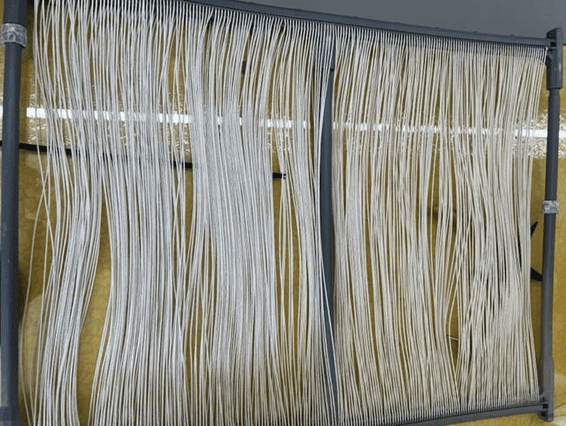
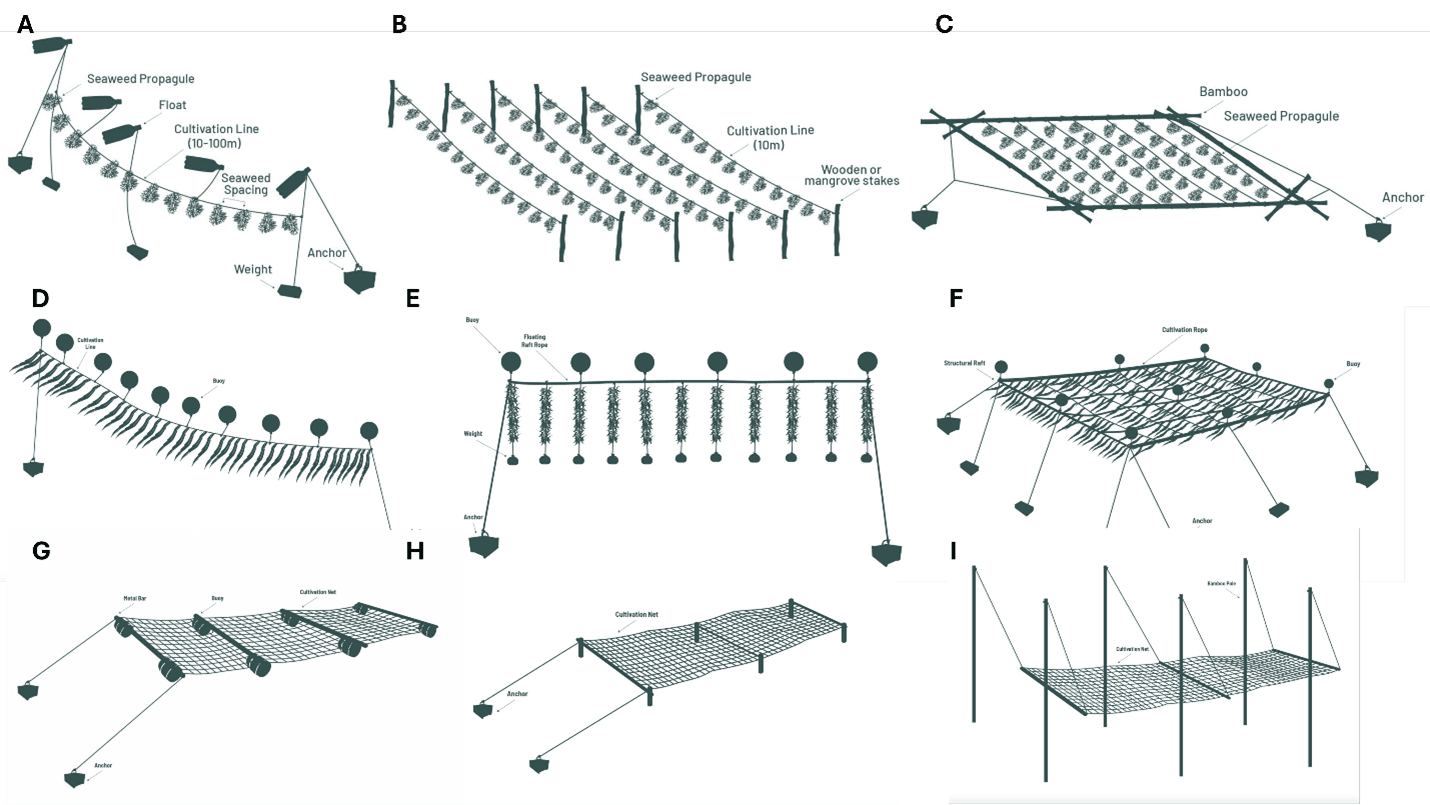
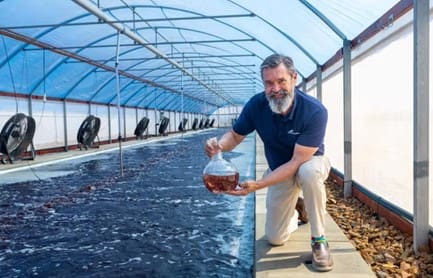
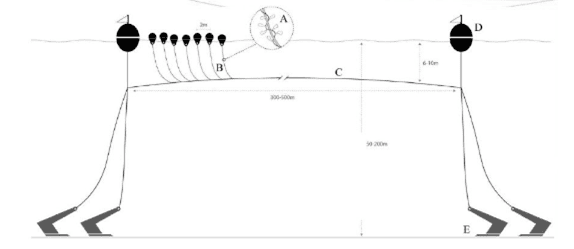
 Table 1. Top cultivated seaweed genera in the world, as of 2020. Adapted from Chopin and Tacon (2021).[/caption]
Species selection in practice is shaped by farm type and context. Nearshore farms generally cultivate endemic species suited to local growing conditions - Kappaphycus and Eucheuma in the Coral Triangle are the clearest example — though non-endemic cultivation does occur (e.g., Saccharina japonica in China; Duarte et al., 2022). Onshore operations select for species that perform well under tightly controlled environmental conditions (CO₂, pH, nutrients, water motion), making species endemism a secondary consideration relative to product performance. For offshore cultivation, the high cost of farm deployment and maintenance drives selection toward large-bodied, buoyant, and fast-growing species — including Sargassum, Saccharina, Laminaria, Macrocystis, and Ulva — that can generate commercially viable biomass yields. This is occurring in China and other parts of the world. For example, Ocean Rainforest grows Saccharina latissima in the Faroe Islands nearshore and are researching scalable cultivation techniques in the open ocean off of the United States (Camarena Gómez and Lähteenmäki-Uutela, 2024). Sea6 Energy grows Kappaphycus alvarezii in the open ocean off of Indonesia (Albright & Fujita, 2023).
Climate mitigation goals are increasingly shaping species selection, but some major seaweed species are already near the limits of their temperature optima—and in some cases their physiological tolerance (Corrigan et al., 2025). The most direct example is Asparagopsis taxiformis, whose high bromoform content makes it effective as a livestock feed supplement to reduce enteric methane emissions; this has led to selective breeding programs focused on maximizing bromoform yield and growth rate in controlled cultivation environments (e.g., Symbrosia; Albright & Fujita, 2023).
Table 1. Top cultivated seaweed genera in the world, as of 2020. Adapted from Chopin and Tacon (2021).[/caption]
Species selection in practice is shaped by farm type and context. Nearshore farms generally cultivate endemic species suited to local growing conditions - Kappaphycus and Eucheuma in the Coral Triangle are the clearest example — though non-endemic cultivation does occur (e.g., Saccharina japonica in China; Duarte et al., 2022). Onshore operations select for species that perform well under tightly controlled environmental conditions (CO₂, pH, nutrients, water motion), making species endemism a secondary consideration relative to product performance. For offshore cultivation, the high cost of farm deployment and maintenance drives selection toward large-bodied, buoyant, and fast-growing species — including Sargassum, Saccharina, Laminaria, Macrocystis, and Ulva — that can generate commercially viable biomass yields. This is occurring in China and other parts of the world. For example, Ocean Rainforest grows Saccharina latissima in the Faroe Islands nearshore and are researching scalable cultivation techniques in the open ocean off of the United States (Camarena Gómez and Lähteenmäki-Uutela, 2024). Sea6 Energy grows Kappaphycus alvarezii in the open ocean off of Indonesia (Albright & Fujita, 2023).
Climate mitigation goals are increasingly shaping species selection, but some major seaweed species are already near the limits of their temperature optima—and in some cases their physiological tolerance (Corrigan et al., 2025). The most direct example is Asparagopsis taxiformis, whose high bromoform content makes it effective as a livestock feed supplement to reduce enteric methane emissions; this has led to selective breeding programs focused on maximizing bromoform yield and growth rate in controlled cultivation environments (e.g., Symbrosia; Albright & Fujita, 2023).
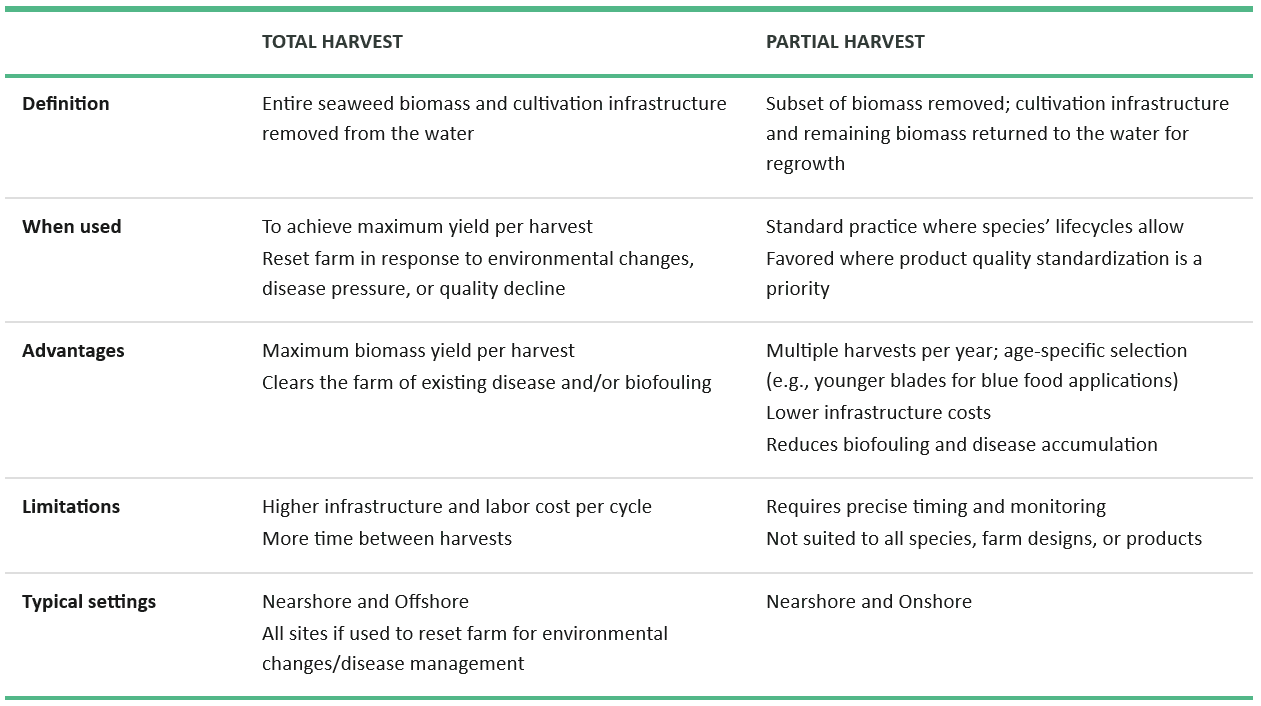 Table 4. Comparison of total versus partial harvesting approaches[/caption]
 Table 5. Seaweed dewatering and drying technologies used, the status of their commercial readiness, seaweed final moisture content, and R&D innovation focus (Source: Santhoshkumar et al., 2023).[/caption]
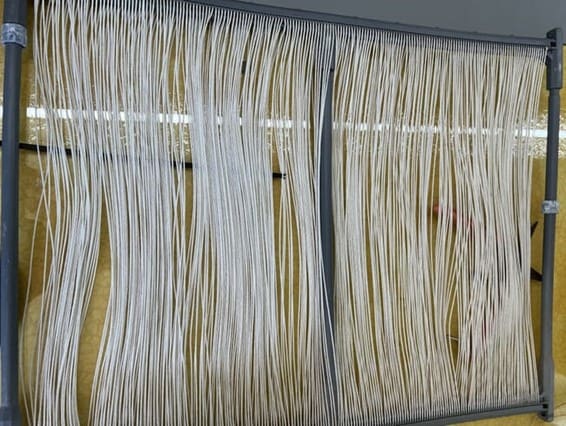 Figure 1. Seed collector frame used in South Korea. Source: TheFishSite; ©Seaweed Insights[/caption]
Traditionally, nurseries in Asia have relied on incubation—growing seedlings on thin twine in controlled tanks before transferring them to cultivation rope. Direct seeding — applying seedlings directly onto cultivation rope before sea deployment and bypassing the nursery stage entirely — has attracted interest as a lower-cost alternative, but has shown inconsistent results in Western contexts, with yields in some locations up to four times lower than nursery-incubated seedlings due to the greater vulnerability of seedlings to biofouling and dislodgement before holdfast attachment (Aldridge, 2025).
Figure 1. Seed collector frame used in South Korea. Source: TheFishSite; ©Seaweed Insights[/caption]
Traditionally, nurseries in Asia have relied on incubation—growing seedlings on thin twine in controlled tanks before transferring them to cultivation rope. Direct seeding — applying seedlings directly onto cultivation rope before sea deployment and bypassing the nursery stage entirely — has attracted interest as a lower-cost alternative, but has shown inconsistent results in Western contexts, with yields in some locations up to four times lower than nursery-incubated seedlings due to the greater vulnerability of seedlings to biofouling and dislodgement before holdfast attachment (Aldridge, 2025).
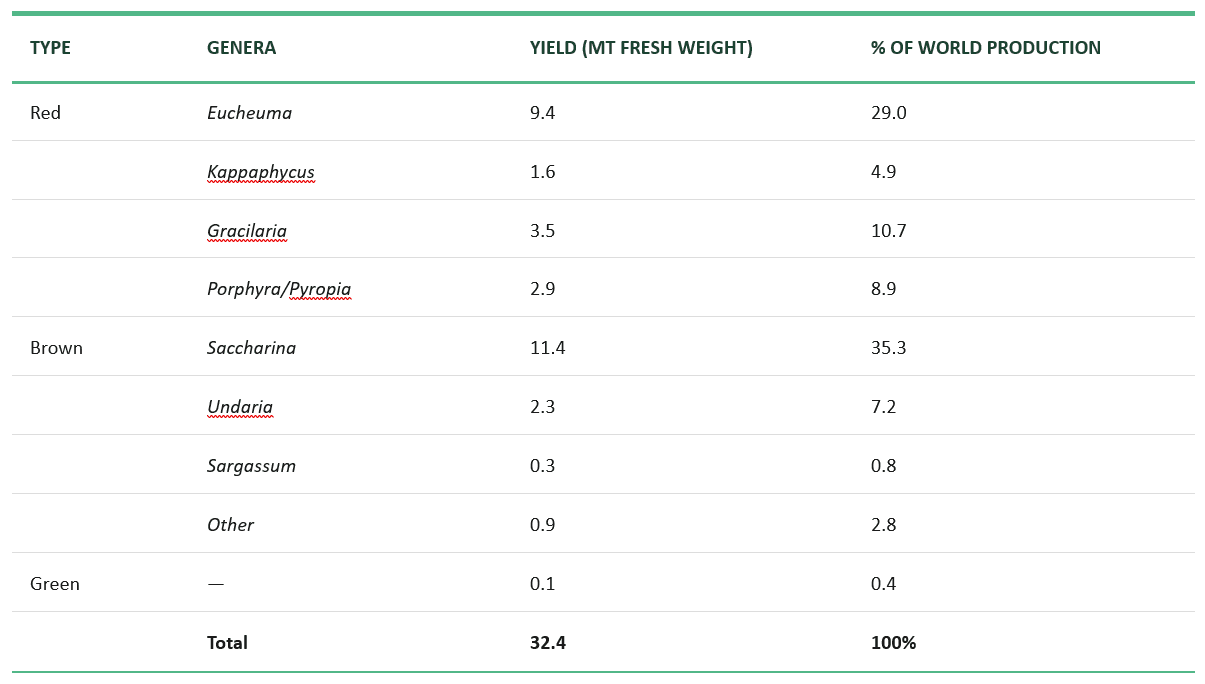 Table 1. Top cultivated seaweed genera in the world, as of 2020. Adapted from Chopin and Tacon (2021).[/caption]
Species selection in practice is shaped by farm type and context. Nearshore farms generally cultivate endemic species suited to local growing conditions - Kappaphycus and Eucheuma in the Coral Triangle are the clearest example — though non-endemic cultivation does occur (e.g., Saccharina japonica in China; Duarte et al., 2022). Onshore operations select for species that perform well under tightly controlled environmental conditions (CO₂, pH, nutrients, water motion), making species endemism a secondary consideration relative to product performance. For offshore cultivation, the high cost of farm deployment and maintenance drives selection toward large-bodied, buoyant, and fast-growing species — including Sargassum, Saccharina, Laminaria, Macrocystis, and Ulva — that can generate commercially viable biomass yields. This is occurring in China and other parts of the world. For example, Ocean Rainforest grows Saccharina latissima in the Faroe Islands nearshore and are researching scalable cultivation techniques in the open ocean off of the United States (Camarena Gómez and Lähteenmäki-Uutela, 2024). Sea6 Energy grows Kappaphycus alvarezii in the open ocean off of Indonesia (Albright & Fujita, 2023).
Climate mitigation goals are increasingly shaping species selection, but some major seaweed species are already near the limits of their temperature optima—and in some cases their physiological tolerance (Corrigan et al., 2025). The most direct example is Asparagopsis taxiformis, whose high bromoform content makes it effective as a livestock feed supplement to reduce enteric methane emissions; this has led to selective breeding programs focused on maximizing bromoform yield and growth rate in controlled cultivation environments (e.g., Symbrosia; Albright & Fujita, 2023).
Table 1. Top cultivated seaweed genera in the world, as of 2020. Adapted from Chopin and Tacon (2021).[/caption]
Species selection in practice is shaped by farm type and context. Nearshore farms generally cultivate endemic species suited to local growing conditions - Kappaphycus and Eucheuma in the Coral Triangle are the clearest example — though non-endemic cultivation does occur (e.g., Saccharina japonica in China; Duarte et al., 2022). Onshore operations select for species that perform well under tightly controlled environmental conditions (CO₂, pH, nutrients, water motion), making species endemism a secondary consideration relative to product performance. For offshore cultivation, the high cost of farm deployment and maintenance drives selection toward large-bodied, buoyant, and fast-growing species — including Sargassum, Saccharina, Laminaria, Macrocystis, and Ulva — that can generate commercially viable biomass yields. This is occurring in China and other parts of the world. For example, Ocean Rainforest grows Saccharina latissima in the Faroe Islands nearshore and are researching scalable cultivation techniques in the open ocean off of the United States (Camarena Gómez and Lähteenmäki-Uutela, 2024). Sea6 Energy grows Kappaphycus alvarezii in the open ocean off of Indonesia (Albright & Fujita, 2023).
Climate mitigation goals are increasingly shaping species selection, but some major seaweed species are already near the limits of their temperature optima—and in some cases their physiological tolerance (Corrigan et al., 2025). The most direct example is Asparagopsis taxiformis, whose high bromoform content makes it effective as a livestock feed supplement to reduce enteric methane emissions; this has led to selective breeding programs focused on maximizing bromoform yield and growth rate in controlled cultivation environments (e.g., Symbrosia; Albright & Fujita, 2023).
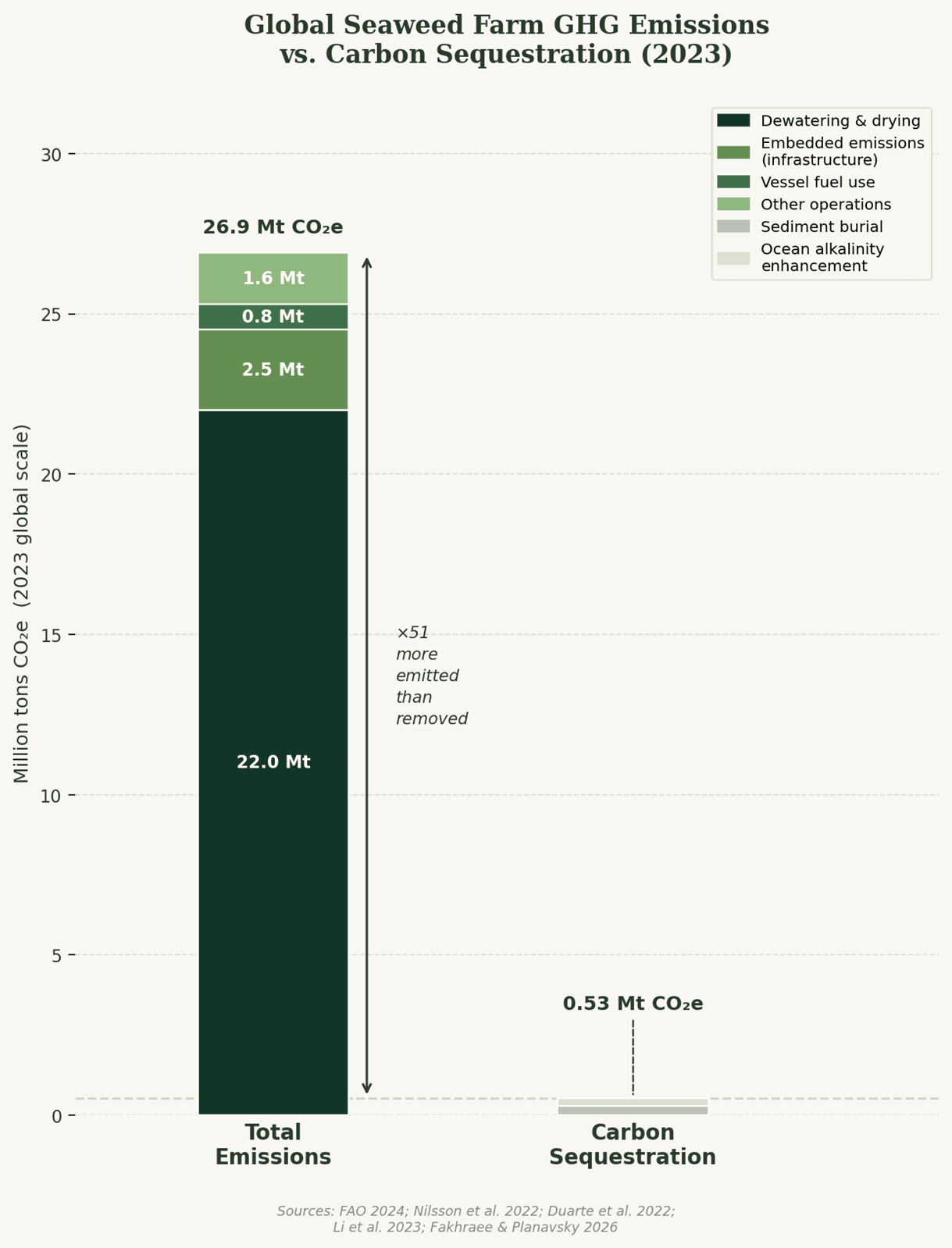
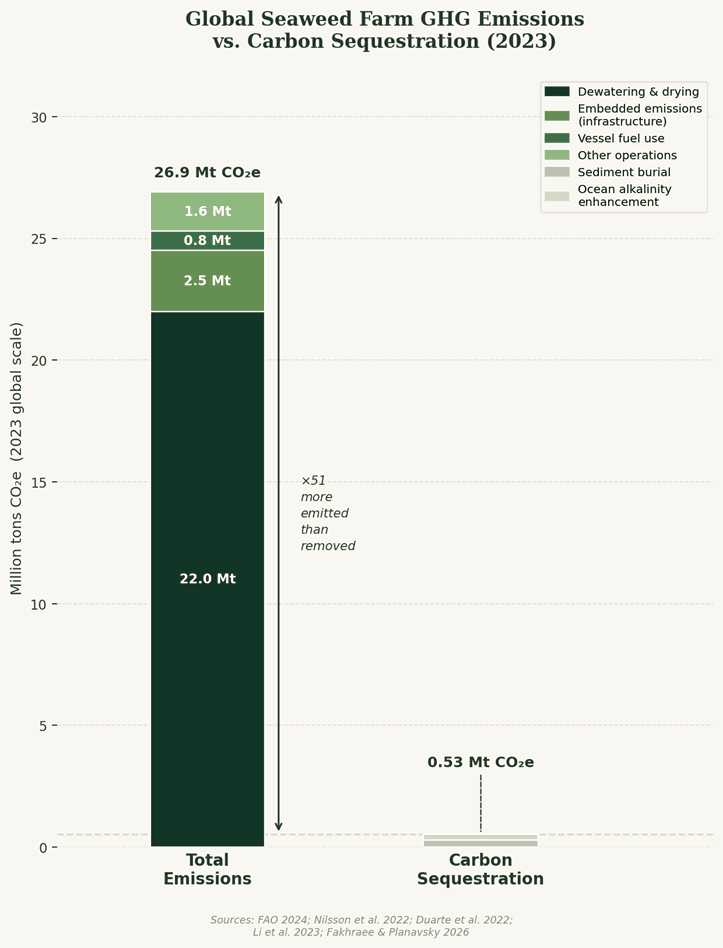 Figure 5. Estimated 2023 global emissions produced and sequestered by seaweed farm operations. Sources: FAO (2024), Nilsson et al. (2022), Duarte et al. (2022), Li et al. (2023), Fakhraee and Mojtaba (2026)[/caption]
How to submit comments:
Thanks for helping to advance these roadmaps. Here is how it works!
Or, send general feedback to info@oceanvisions.org
All submitted comments will be reviewed by the Ocean Visions team to ensure that they are true, verifiable, and additive before being added to the road maps. You can increase the likelihood that your comments will be incorporated into the road maps by providing references (where appropriate).