

State of approach
Overview
The current seaweed bioeconomy is dominated by operations that extract hydrocolloids such as agar, alginate, and carrageenan. These single stream processes utilize only about 15–30% of the seaweed biomass, leaving 70–85% as waste (Liu et al., 2024). The unused residue is often rich in valuable compounds, including proteins, pigments, lipids, minerals, and cellulose. If the seaweed sector is to expand and contribute meaningfully to greenhouse gas mitigation, more efficient and integrated processing systems will be needed.
The cascading seaweed biorefinery concept addresses this inefficiency by co-valorizing multiple products from the same feedstock, where the residue or ‘waste’ stream from one extraction process becomes the feedstock for the next. The seaweed biorefinery concept is often compared to an oil refinery (O’Callaghan, 2016), which processes petroleum into various chemicals and compounds to increase economic viability. A seaweed biorefinery aims to derive a cascade of products ranging from high-value compounds (nutraceuticals, functional food ingredients, pharmaceuticals) to medium-value materials (biostimulants, proteins, bioplastics) and lower-value outputs (biofuels, biogas, biochar) from the same biomass.
Seaweed is particularly well suited for biorefineries because of its natural abundance, species diversity (brown, red, and green), and biochemical richness.
Given the early stage of development, there is an opportunity to design seaweed biorefineries not only for profitability but also for greenhouse gas (GHG) mitigation. This dual objective will require identifying the combination of products and conversion pathways that optimizes for both economic returns and climate benefits. Seaweed-based biorefineries can generate a broad portfolio of potential products that can have a climate impact by helping reduce GHG emissions (see Figure 1).
Promising Products and Biorefinery Platforms
A successful biorefinery platform for climate impact will require the inclusion of seaweed-based products such as biostimulants or biofuels, provided they can be shown to reduce lifecycle emissions when they are used. These products will likely have to be produced along with high-value products such as nutraceuticals to ensure profitability. This process will involve efficiently converting seaweed biomass through a sequence of mechanical, chemical, and biological processing designs that are environmentally benign and minimize toxic residues and polluting wastewater.
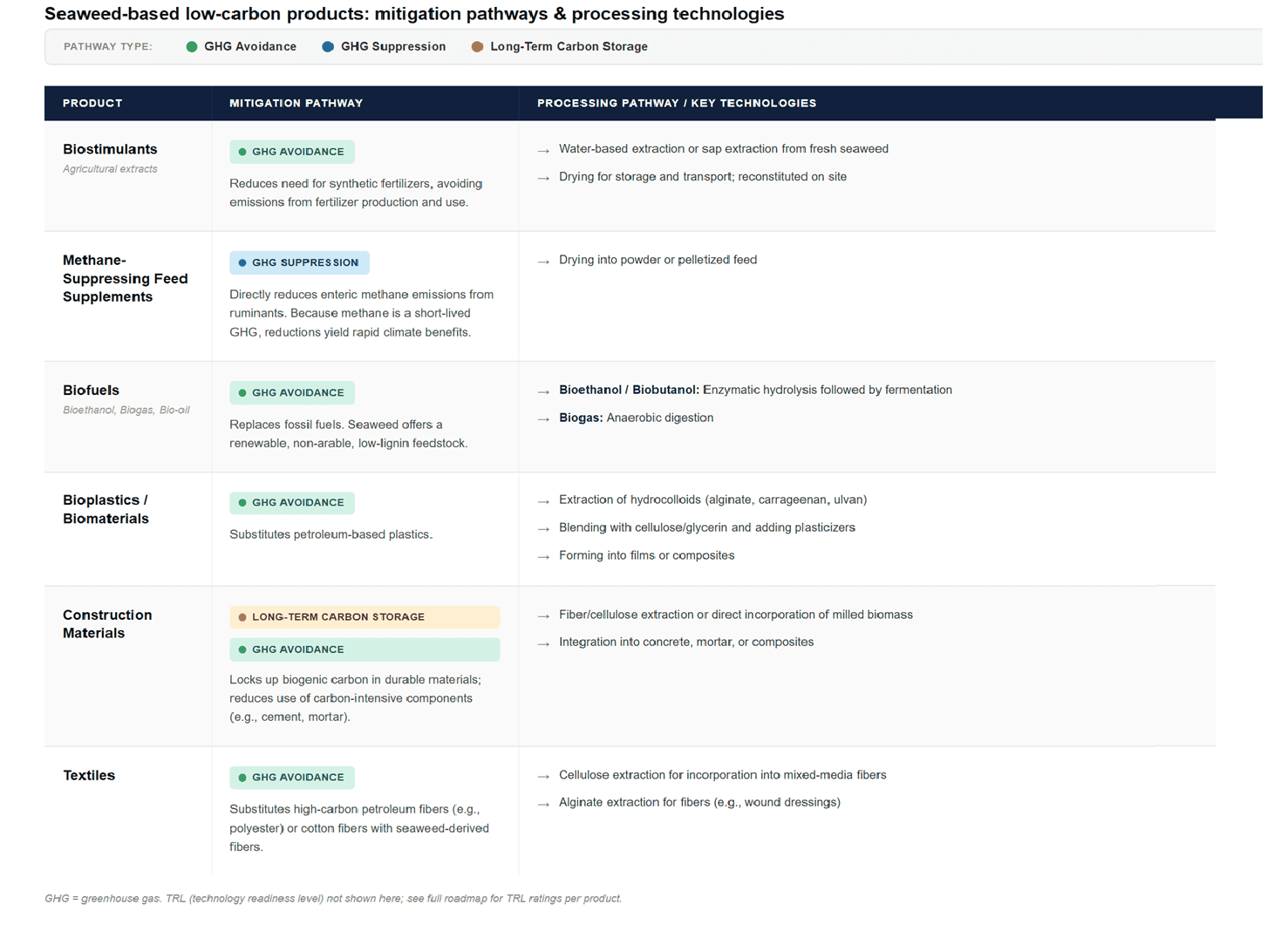
Figure 1: Key Products with potential climate benefits that can be incorporated into biorefineries
Beyond the products highlighted in Figure 1, the cascading biorefinery model should take advantage of the fact that the unused residue is often rich in valuable compounds, including proteins, pigments (e.g. carotenoids, chlorophylls and phycobiliproteins) lipids, minerals, and cellulose, which can be recovered in a cascading biorefinery setting and transformed into high value products such as nutraceuticals (e.g. fucoidan, laminaran) , pharmaceuticals, food colorants, industrial colorants (Liu et al., 2024). The commercial value of these products is critical to making climate-oriented biorefineries economically viable. Carbonaceous residues remaining after primary extraction offer a further opportunity: when processed via low-temperature hydrothermal methods powered by renewable energy, seaweed biomass can serve as feedstock for activated carbon and related carbon-based materials such as nanodiamonds, graphene and carbon nanotubes etc. Activated carbon has a mature commercially relevant market (water filtration) and seaweed-based products could have climate impact by displacing petroleum-derived equivalents. Graphene and carbon nanotubes have exciting applications in energy storage, supercapacitors and fuel cells but are at early technological readiness. Bio-based antifouling coatings derived from seaweed also represent an additional emerging pathway, with an indirect climate benefit through reduced hull biofouling and lower vessel fuel consumption. These applications warrant further lifecycle assessment as the biorefinery sector matures.
Based on concepts identified in the literature, Fujita and Fasciano (2024) proposed biorefinery concepts for different types of seaweeds which include the production of high-value products such as hydrocolloids alongside products with high greenhouse gas mitigation potential (such as biostimulants, bioplastics, biofuels, construction materials, etc.).
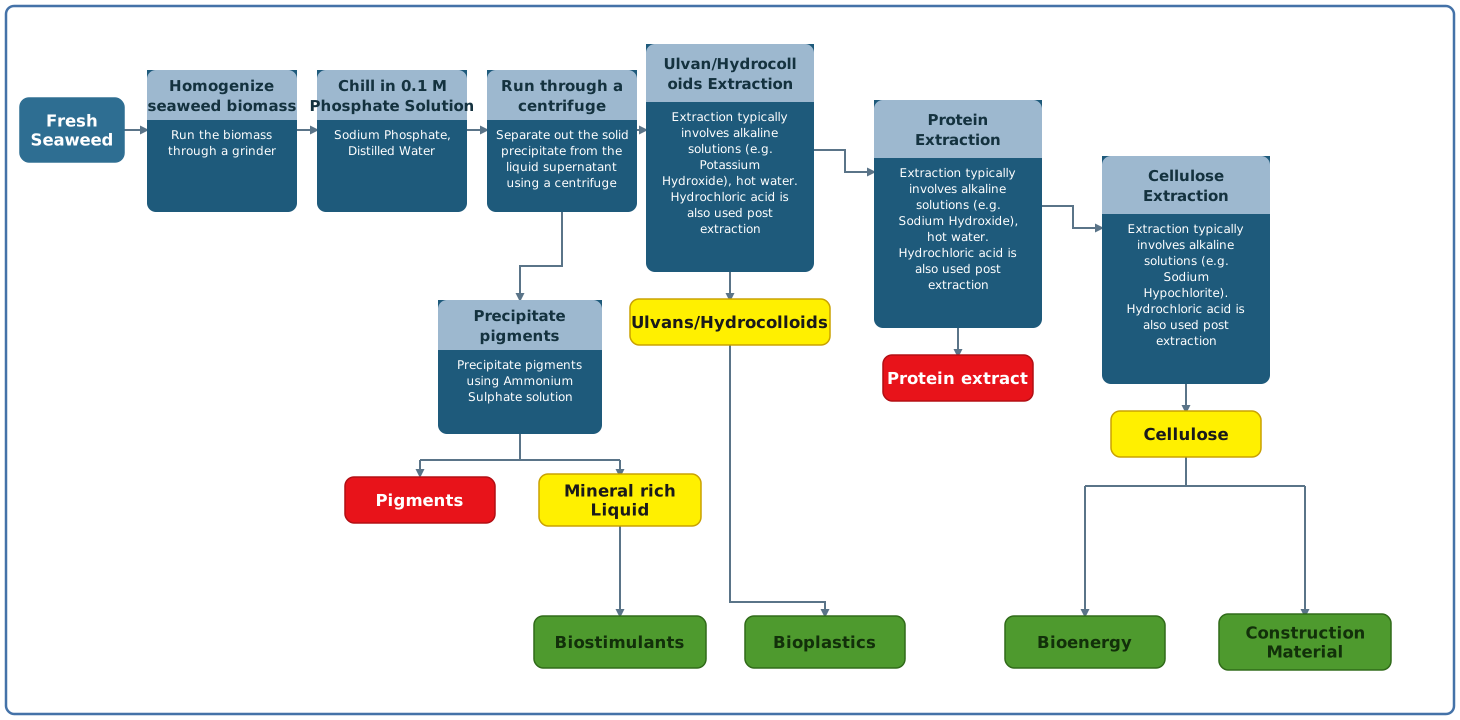
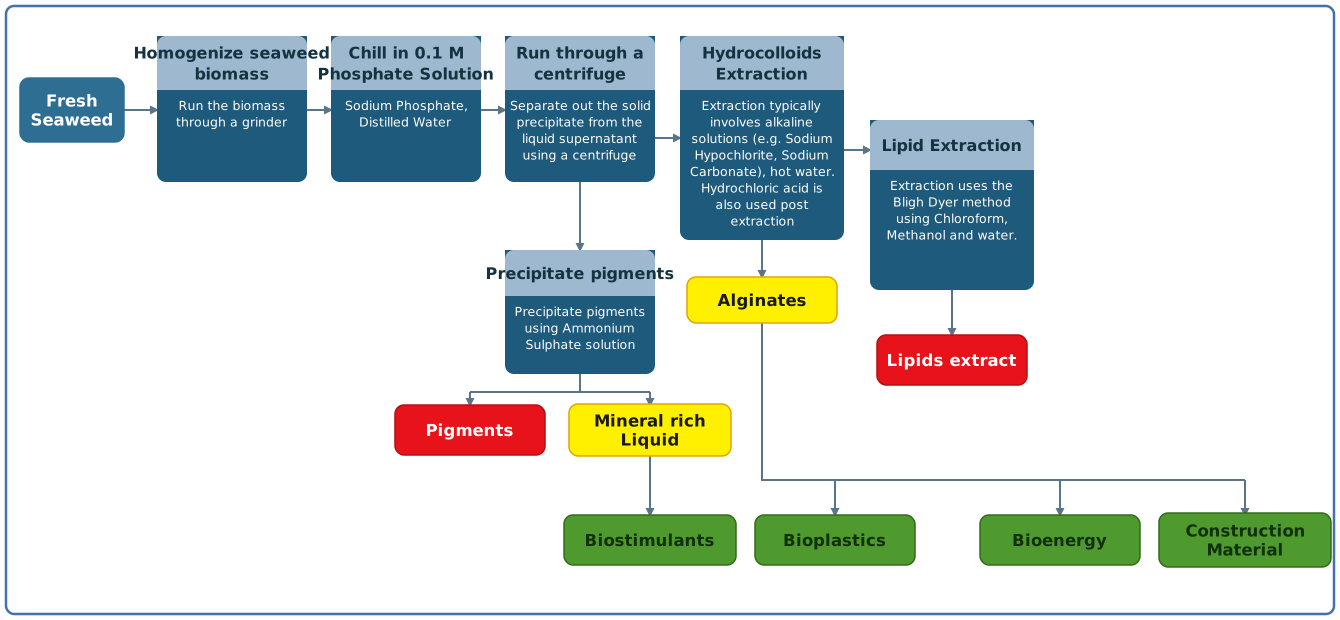
Figure 2: Proposed cascading biorefinery concepts for (a) green/red seaweed and (b) brown seaweed.”. Green boxes indicate final products with GHG mitigation potential. Yellow boxes indicate intermediate products that can then be processed to develop products with GHG mitigation potential.
Promising Products and Biorefinery Platforms
A successful biorefinery platform for climate impact will require the inclusion of seaweed-based products such as biostimulants or biofuels, provided they can be shown to reduce lifecycle emissions when they are used. These products will likely have to be produced along with high-value products such as nutraceuticals to ensure profitability. This process will involve efficiently converting seaweed biomass through a sequence of mechanical, chemical, and biological processing designs that are environmentally benign and minimize toxic residues and polluting wastewater.
Figure 1: Key Products with potential climate benefits that can be incorporated into biorefineries
Beyond the products highlighted in Figure 1, the cascading biorefinery model should take advantage of the fact that the unused residue is often rich in valuable compounds, including proteins, pigments (e.g. carotenoids, chlorophylls and phycobiliproteins) lipids, minerals, and cellulose, which can be recovered in a cascading biorefinery setting and transformed into high value products such as nutraceuticals (e.g. fucoidan, laminaran) , pharmaceuticals, food colorants, industrial colorants (Liu et al., 2024). The commercial value of these products is critical to making climate-oriented biorefineries economically viable. Carbonaceous residues remaining after primary extraction offer a further opportunity: when processed via low-temperature hydrothermal methods powered by renewable energy, seaweed biomass can serve as feedstock for activated carbon and related carbon-based materials such as nanodiamonds, graphene and carbon nanotubes etc. Activated carbon has a mature commercially relevant market (water filtration) and seaweed-based products could have climate impact by displacing petroleum-derived equivalents. Graphene and carbon nanotubes have exciting applications in energy storage, supercapacitors and fuel cells but are at early technological readiness. Bio-based antifouling coatings derived from seaweed also represent an additional emerging pathway, with an indirect climate benefit through reduced hull biofouling and lower vessel fuel consumption. These applications warrant further lifecycle assessment as the biorefinery sector matures. Based on concepts identified in the literature, Fujita and Fasciano (2024) proposed biorefinery concepts for different types of seaweeds which include the production of high-value products such as hydrocolloids alongside products with high greenhouse gas mitigation potential (such as biostimulants, bioplastics, biofuels, construction materials, etc.).
Figure 2: Proposed cascading biorefinery concepts for (a) green/red seaweed and (b) brown seaweed.". Green boxes indicate final products with GHG mitigation potential. Yellow boxes indicate intermediate products that can then be processed to develop products with GHG mitigation potential. Promising Products and Biorefinery Platforms
A successful biorefinery platform for climate impact will require the inclusion of seaweed-based products such as biostimulants or biofuels, provided they can be shown to reduce lifecycle emissions when they are used. These products will likely have to be produced along with high-value products such as nutraceuticals to ensure profitability. This process will involve efficiently converting seaweed biomass through a sequence of mechanical, chemical, and biological processing designs that are environmentally benign and minimize toxic residues and polluting wastewater.
Figure 1: Key Products with potential climate benefits that can be incorporated into biorefineries
Beyond the products highlighted in Figure 1, the cascading biorefinery model should take advantage of the fact that the unused residue is often rich in valuable compounds, including proteins, pigments (e.g. carotenoids, chlorophylls and phycobiliproteins) lipids, minerals, and cellulose, which can be recovered in a cascading biorefinery setting and transformed into high value products such as nutraceuticals (e.g. fucoidan, laminaran) , pharmaceuticals, food colorants, industrial colorants (Liu et al., 2024). The commercial value of these products is critical to making climate-oriented biorefineries economically viable. Carbonaceous residues remaining after primary extraction offer a further opportunity: when processed via low-temperature hydrothermal methods powered by renewable energy, seaweed biomass can serve as feedstock for activated carbon and related carbon-based materials such as nanodiamonds, graphene and carbon nanotubes etc. Activated carbon has a mature commercially relevant market (water filtration) and seaweed-based products could have climate impact by displacing petroleum-derived equivalents. Graphene and carbon nanotubes have exciting applications in energy storage, supercapacitors and fuel cells but are at early technological readiness. Bio-based antifouling coatings derived from seaweed also represent an additional emerging pathway, with an indirect climate benefit through reduced hull biofouling and lower vessel fuel consumption. These applications warrant further lifecycle assessment as the biorefinery sector matures. Based on concepts identified in the literature, Fujita and Fasciano (2024) proposed biorefinery concepts for different types of seaweeds which include the production of high-value products such as hydrocolloids alongside products with high greenhouse gas mitigation potential (such as biostimulants, bioplastics, biofuels, construction materials, etc.).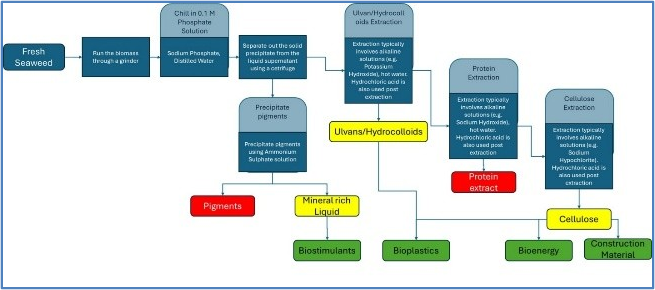 Figure 2: Proposed cascading biorefinery concepts for (a) green/red seaweed and (b) brown seaweed.". Green boxes indicate final products with GHG mitigation potential. Yellow boxes indicate intermediate products that can then be processed to develop products with GHG mitigation potential.
 Promising Products and Biorefinery Platforms
A successful biorefinery platform for climate impact will require the inclusion of seaweed-based products such as biostimulants or biofuels, provided they can be shown to reduce lifecycle emissions when they are used. These products will likely have to be produced along with high-value products such as nutraceuticals to ensure profitability. This process will involve efficiently converting seaweed biomass through a sequence of mechanical, chemical, and biological processing designs that are environmentally benign and minimize toxic residues and polluting wastewater.
Figure 1: Key Products with potential climate benefits that can be incorporated into biorefineries
Beyond the products highlighted in Figure 1, the cascading biorefinery model should take advantage of the fact that the unused residue is often rich in valuable compounds, including proteins, pigments (e.g. carotenoids, chlorophylls and phycobiliproteins) lipids, minerals, and cellulose, which can be recovered in a cascading biorefinery setting and transformed into high value products such as nutraceuticals (e.g. fucoidan, laminaran) , pharmaceuticals, food colorants, industrial colorants (Liu et al., 2024). The commercial value of these products is critical to making climate-oriented biorefineries economically viable. Carbonaceous residues remaining after primary extraction offer a further opportunity: when processed via low-temperature hydrothermal methods powered by renewable energy, seaweed biomass can serve as feedstock for activated carbon and related carbon-based materials such as nanodiamonds, graphene and carbon nanotubes etc. Activated carbon has a mature commercially relevant market (water filtration) and seaweed-based products could have climate impact by displacing petroleum-derived equivalents. Graphene and carbon nanotubes have exciting applications in energy storage, supercapacitors and fuel cells but are at early technological readiness. Bio-based antifouling coatings derived from seaweed also represent an additional emerging pathway, with an indirect climate benefit through reduced hull biofouling and lower vessel fuel consumption. These applications warrant further lifecycle assessment as the biorefinery sector matures. Based on concepts identified in the literature, Fujita and Fasciano (2024) proposed biorefinery concepts for different types of seaweeds which include the production of high-value products such as hydrocolloids alongside products with high greenhouse gas mitigation potential (such as biostimulants, bioplastics, biofuels, construction materials, etc.). 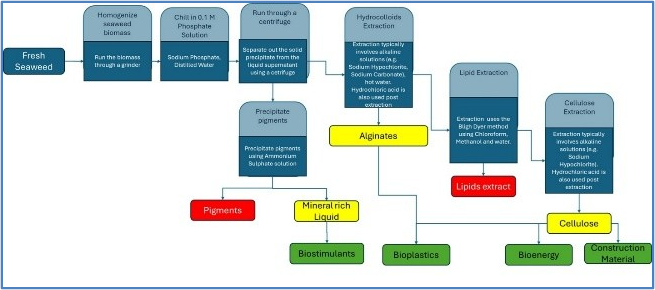 Figure 2: Proposed cascading biorefinery concepts for (a) green/red seaweed and (b) brown seaweed.". Green boxes indicate final products with GHG mitigation potential. Yellow boxes indicate intermediate products that can then be processed to develop products with GHG mitigation potential.
 Promising Products and Biorefinery Platforms
A successful biorefinery platform for climate impact will require the inclusion of seaweed-based products such as biostimulants or biofuels, provided they can be shown to reduce lifecycle emissions when they are used. These products will likely have to be produced along with high-value products such as nutraceuticals to ensure profitability. This process will involve efficiently converting seaweed biomass through a sequence of mechanical, chemical, and biological processing designs that are environmentally benign and minimize toxic residues and polluting wastewater.
Figure 1: Key Products with potential climate benefits that can be incorporated into biorefineries
Beyond the products highlighted in Figure 1, the cascading biorefinery model should take advantage of the fact that the unused residue is often rich in valuable compounds, including proteins, pigments (e.g. carotenoids, chlorophylls and phycobiliproteins) lipids, minerals, and cellulose, which can be recovered in a cascading biorefinery setting and transformed into high value products such as nutraceuticals (e.g. fucoidan, laminaran) , pharmaceuticals, food colorants, industrial colorants (Liu et al., 2024). The commercial value of these products is critical to making climate-oriented biorefineries economically viable. Carbonaceous residues remaining after primary extraction offer a further opportunity: when processed via low-temperature hydrothermal methods powered by renewable energy, seaweed biomass can serve as feedstock for activated carbon and related carbon-based materials such as nanodiamonds, carbon nanotubes etc., displacing coal-derived equivalents in water and air filtration. Bio-based antifouling coatings derived from seaweed also represent an additional emerging pathway, with an indirect climate benefit through reduced hull biofouling and lower vessel fuel consumption. These applications warrant further lifecycle assessment as the biorefinery sector matures. Based on concepts identified in the literature, Fujita and Fasciano (2024) proposed biorefinery concepts for different types of seaweeds which include the production of high-value products such as hydrocolloids alongside products with high greenhouse gas mitigation potential (such as biostimulants, bioplastics, biofuels, construction materials, etc.).
Figure 2: Proposed cascading biorefinery concepts for (a) green/red seaweed and (b) brown seaweed.". Green boxes indicate final products with GHG mitigation potential. Yellow boxes indicate intermediate products that can then be processed to develop products with GHG mitigation potential. Promising Products and Biorefinery Platforms
A successful biorefinery platform for climate impact will require the inclusion of seaweed-based products such as biostimulants or biofuels, provided they can be shown to reduce lifecycle emissions when they are used. These products will likely have to be produced along with high-value products such as nutraceuticals to ensure profitability. This process will involve efficiently converting seaweed biomass through a sequence of mechanical, chemical, and biological processing designs that are environmentally benign and minimize toxic residues and polluting wastewater. This unused residue is often rich in valuable compounds, including proteins, pigments, lipids, minerals, and cellulose, which can be recovered in a cascading biorefinery setting and transformed into high value products such as nutraceuticals as well as products with climate benefits (Liu et al., 2024).
Figure 1: Key Products with potential climate benefits that can be incorporated into biorefineries
Based on concepts identified in the literature, Fujita and Fasciano (2024) proposed biorefinery concepts for different types of seaweeds which include the production of high-value products such as hydrocolloids alongside products with high greenhouse gas mitigation potential (such as biostimulants, bioplastics, biofuels, construction materials, etc.).
Figure 2: Proposed cascading biorefinery concepts for (a) green/red seaweed and (b) brown seaweed.". Green boxes indicate final products with GHG mitigation potential. Yellow boxes indicate intermediate products that can then be processed to develop products with GHG mitigation potential. Promising Products and Biorefinery Platforms
A successful biorefinery platform for climate impact will require the inclusion of seaweed-based products such as biostimulants or biofuels, provided they can be shown to reduce lifecycle emissions when they are used. These products will likely have to be produced along with high-value products such as nutraceuticals to ensure profitability. This process will involve efficiently converting seaweed biomass through a sequence of mechanical, chemical, and biological processing designs that are environmentally benign and minimize toxic residues and polluting wastewater. This unused residue is often rich in valuable compounds, including proteins, pigments, lipids, minerals, and cellulose, which can be recovered in a cascading biorefinery setting and transformed into high value products such as nutraceuticals as well as products with climate benefits (Liu et al., 2024).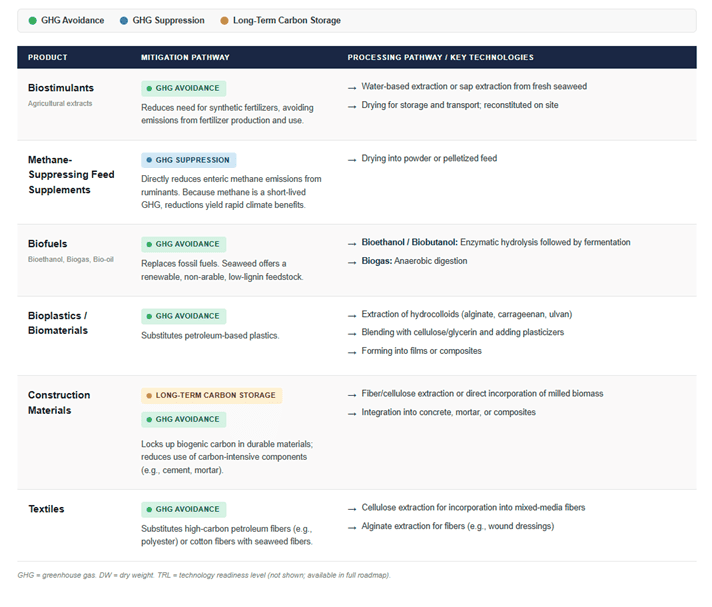
Figure 1: Key Products with potential climate benefits that can be incorporated into biorefineries
Based on concepts identified in the literature, Fujita and Fasciano (2024) proposed biorefinery concepts for different types of seaweeds which include the production of high-value products such as hydrocolloids alongside products with high greenhouse gas mitigation potential (such as biostimulants, bioplastics, biofuels, construction materials, etc.).
Figure 2: Proposed cascading biorefinery concepts for (a) green/red seaweed and (b) brown seaweed.". Green boxes indicate final products with GHG mitigation potential. Yellow boxes indicate intermediate products that can then be processed to develop products with GHG mitigation potential. Promising Products and Biorefinery Platforms
A successful biorefinery platform for climate impact will require the inclusion of seaweed-based products such as biostimulants or biofuels, provided they can be shown to reduce lifecycle emissions when they are used. These products will likely have to be produced along with high-value products such as nutraceuticals to ensure profitability. This process will involve efficiently converting seaweed biomass through a sequence of mechanical, chemical, and biological processing designs that are environmentally benign and minimize toxic residues and polluting wastewater. This unused residue is often rich in valuable compounds, including proteins, pigments, lipids, minerals, and cellulose, which can be recovered in a cascading biorefinery setting and transformed into high value products such as nutraceuticals as well as products with climate benefits (Liu et al., 2024).
Figure 1: Key Products with potential climate benefits that can be incorporated into biorefineries
Based on concepts identified in the literature, Fujita and Fasciano (2024) proposed biorefinery concepts for different types of seaweeds which include the production of high-value products such as hydrocolloids alongside products with high greenhouse gas mitigation potential (such as biostimulants, bioplastics, biofuels, construction materials, etc.).
Figure 2: Proposed cascading biorefinery concepts for (a) green/red seaweed and (b) brown seaweed.". Green boxes indicate final products with GHG mitigation potential. Yellow boxes indicate intermediate products that can then be processed to develop products with GHG mitigation potential. Promising Products and Biorefinery Platforms
A successful biorefinery platform for climate impact will require the inclusion of seaweed-based products such as biostimulants or biofuels, provided they can be shown to reduce lifecycle emissions when they are used. These products will likely have to be produced along with high-value products such as nutraceuticals to ensure profitability. This process will involve efficiently converting seaweed biomass through a sequence of mechanical, chemical, and biological processing designs that are environmentally benign and minimize toxic residues and polluting wastewater. This unused residue is often rich in valuable compounds, including proteins, pigments, lipids, minerals, and cellulose, which can be recovered in a cascading biorefinery setting and transformed into high value products such as nutraceuticals as well as products with climate benefits (Liu et al., 2024).
Figure 1: Key Products with potential climate benefits that can be incorporated into biorefineries
Based on concepts identified in the literature, Fujita and Fasciano (2024) proposed biorefinery concepts for different types of seaweeds which include the production of high-value products such as hydrocolloids alongside products with high greenhouse gas mitigation potential (such as biostimulants, bioplastics, biofuels, construction materials, etc.).
Figure 2: Proposed cascading biorefinery concepts for (a) green/red seaweed and (b) brown seaweed.". Green boxes indicate final products with GHG mitigation potential. Yellow boxes indicate intermediate products that can then be processed to develop products with GHG mitigation potential. Promising Products and Biorefinery Platforms
A successful biorefinery platform for climate impact will require the inclusion of seaweed-based products such as biostimulants or biofuels, provided they can be shown to reduce lifecycle emissions when they are used. These products will likely have to be produced along with high-value products such as nutraceuticals to ensure profitability. This process will involve efficiently converting seaweed biomass through a sequence of mechanical, chemical, and biological processing designs that are environmentally benign and minimize toxic residues and polluting wastewater. This unused residue is often rich in valuable compounds, including proteins, pigments, lipids, minerals, and cellulose, which can be recovered in a cascading biorefinery setting and transformed into high value products such as nutraceuticals as well as products with climate benefits (Liu et al., 2024).
Figure 1: Key Products with potential climate benefits that can be incorporated into biorefineries
Based on concepts identified in the literature, Fujita and Fasciano (2024) proposed biorefinery concepts for different types of seaweeds which include the production of high-value products such as hydrocolloids alongside products with high greenhouse gas mitigation potential (such as biostimulants, bioplastics, biofuels, construction materials, etc.).
Figure 2: Proposed cascading biorefinery concepts for (a) green/red seaweed and (b) brown seaweed.". Green boxes indicate final products with GHG mitigation potential. Yellow boxes indicate intermediate products that can then be processed to develop products with GHG mitigation potential. Promising Products and Biorefinery Platforms
A successful biorefinery platform for climate impact will require the inclusion of seaweed-based products such as biostimulants or biofuels, provided they can be shown to reduce lifecycle emissions when they are used. These products will likely have to be produced along with high-value products such as nutraceuticals to ensure profitability. This process will involve efficiently converting seaweed biomass through a sequence of mechanical, chemical, and biological processing designs that are environmentally benign and minimize toxic residues and polluting wastewater. This unused residue is often rich in valuable compounds, including proteins, pigments, lipids, minerals, and cellulose, which can be recovered in a cascading biorefinery setting and transformed into high value products such as nutraceuticals as well as products with climate benefits (Liu et al., 2024).
Figure 1: Key Products with potential climate benefits that can be incorporated into biorefineries
Based on concepts identified in the literature, Fujita and Fasciano (2024) proposed biorefinery concepts for different types of seaweeds which include the production of high-value products such as hydrocolloids alongside products with high greenhouse gas mitigation potential (such as biostimulants, bioplastics, biofuels, construction materials, etc.).
Figure 2: Proposed cascading biorefinery concepts for (a) green/red seaweed and (b) brown seaweed.". Green boxes indicate final products with GHG mitigation potential. Yellow boxes indicate intermediate products that can then be processed to develop products with GHG mitigation potential.
Science, Technology and Engineering
Species Selection
The composition of seaweed species determines which product cascades are feasible: brown seaweeds are rich in alginate, fucoidan, laminarin, and mannitol; red seaweeds in carrageenan or agar and proteins; green seaweeds in ulvan and proteins. This complementarity means species selection is foundational to biorefinery design. See Figure 3 for the composition of seaweed species and the typical applications and product streams.
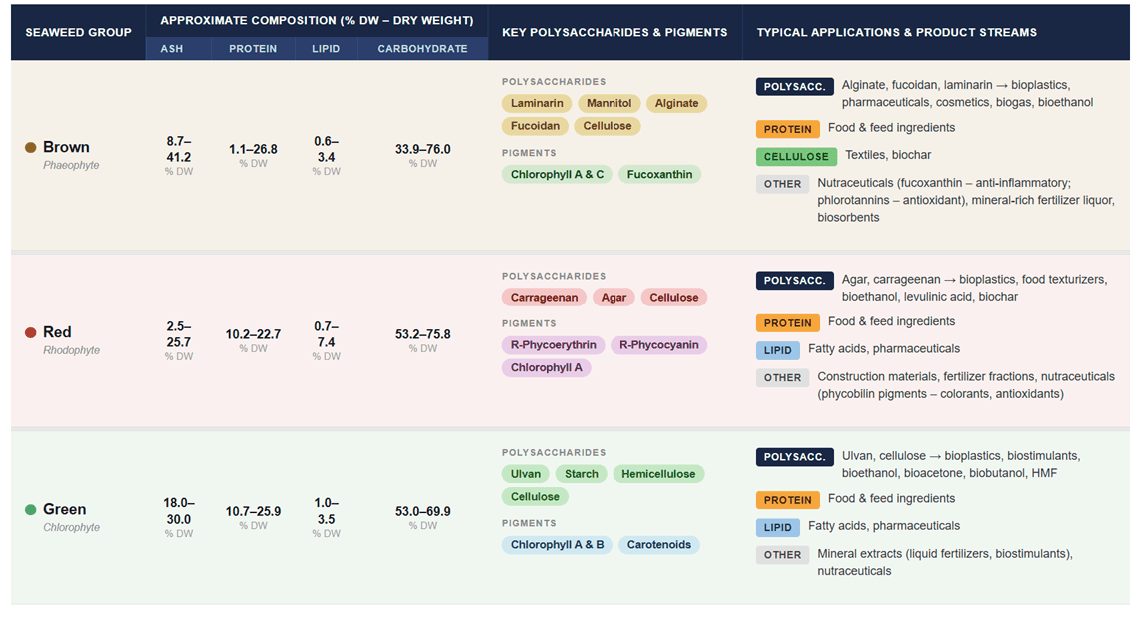
Figure 3: Biochemical composition and associated product portfolio of the three major seaweed groups (brown, red, and green), illustrating the diversity of high- to low-value products that can be derived from each group within a cascading biorefinery framework. The complementary compositions of different species underline the importance of species selection in biorefinery design. (adapted from: Kostas et al. (2021) and references therein)
The seaweed biorefining industry is currently in early stages of development. Large-scale industrialization of a process generating multiple products from seaweed has not yet been realized with the largest production of 5 tons wet weight (ww) per day (Gregerson, 2021) as of 2021. For comparison, commercial biorefineries using terrestrial biomass typically process over 500 tons of feedstock per day. In 2025, Agrisea announced the development of a biorefinery that will produce 1600 kg of nanocellulose from seaweed residues left over after developing products such as biostimulants (no information is available on the amount of seaweed feedstock used).
A key challenge is the complexity inherent in the integration of multiple extraction technologies and purification processes in multi-product biorefineries. This is an achievable end state- for example, in the EU, over 450 biorefineries creating multiple products from agricultural and forestry biomass are commercially operational. However, companies that are closest to commercial viability developing seaweed based products have anchored on two or three primary products to prove unit economics, then plan to build toward additional product streams as scale and operating knowledge develop.
Biorefinery Initiatives and Current Status
The industry is approaching the challenge to move from pilot scale to commercial scale in two distinct operational models that have different cost structures and deployment profiles.
Centralized biorefineries are meant to be large industrial facilities that process high volumes of seaweed and benefit from economies of scale. They require reliable, high-volume feedstock supply chains and proximity to port infrastructure. Their capital intensity means they are suited to established seaweed-producing regions with existing supply chains.
Portable micro-biorefineries are modular, often containerized units designed to be transported to seaweed harvest sites and remote coastal areas. Processing fresh, wet seaweed near the point of harvest avoids or dramatically reduces the drying step that currently accounts for 50–70% of total lifecycle emissions (Chaurasiya et al., 2026). Soleymani et al. (2017) modeled a 35% reduction in costs when processing facilities where established close to the seaweed harvest sites.
| Company | Model | TRL / status | Anchor product(s) | Notes |
| Algaia
|
Centralized; wild-harvested feedstock | TRL 8-9 | Seaweed extracts (enzymatic and supercritical extraction) | European green-extraction operator using enzymatic treatment and supercritical extraction on wild-harvested seaweed. Avoids harsh chemicals. Feedstock is wild, not cultivated. Active example of greener extraction chemistry at commercial scale. |
| Agrisea (NZ)
|
Centralized; biostimulant-first cascade | TRL 7-8 | Biostimulants; nanocellulose from residue | New Zealand operator applying the biostimulant-first cascade model. In 2025 announced production of 1,600 kg of nanocellulose from residues remaining after biostimulant extraction. Illustrates the two-step liquid extract + residue valorization pathway advocated in this document. Cultivated feedstock. |
| Origin by Ocean
|
Centralized | TRL 5–6 — pilot/trials; targeting full commercial 2025 | Sodium alginate | Planned 20,000–100,000 t ww/yr. Alginate as anchor; mycosporin, fucoxanthin, fucoidan, laminarin as co-products. Illustrates anchor-plus-cascade model. |
| GOA Ventures
|
Portable, modular, scalable | TRL 5–6 — pilot tests >100 kg scale since 2017 | Proteins and valuable carbohydrates | Target 25,000 t ww/yr for viability. Multiple species capable. Co-products include biogas and biostimulants/biofertilizers. |
| Thalasso
|
Portable, modular (container) | TRL 4–5 | Biostimulants (Sargassum-based) | Goal: 3–4 t ww/day. Single anchor product currently; plans to expand. Strongest example of biostimulants-first model. |
Table 1: List of companies and their current status. Source: Fujita and Fasciano (2024)
In addition, there are active research initiatives on biorefineries using wild-harvested Sargassum, including the multi-institutional SaBRe project (funded by Schmidt Sciences) and the EU Horizon-funded Sargex project. These are important because they address the separate challenge of valorizing beach-stranded invasive biomass, where harvest costs are near zero but feedstock consistency is lower than cultivated seaweed.
Species Selection
The composition of seaweed species determines which product cascades are feasible: brown seaweeds are rich in alginate, fucoidan, laminarin, and mannitol; red seaweeds in carrageenan or agar and proteins; green seaweeds in ulvan and proteins. This complementarity means species selection is foundational to biorefinery design. See Figure 3 for the composition of seaweed species and the typical applications and product streams.
Figure 3: Biochemical composition and associated product portfolio of the three major seaweed groups (brown, red, and green), illustrating the diversity of high- to low-value products that can be derived from each group within a cascading biorefinery framework. The complementary compositions of different species underline the importance of species selection in biorefinery design. (adapted from: Kostas et al. (2021) and references therein)
The seaweed biorefining industry is currently in early stages of development. Large-scale industrialization of a process generating multiple products from seaweed has not yet been realized with the largest production of 5 tons wet weight (ww) per day (Gregerson, 2021) as of 2021. For comparison, commercial biorefineries using terrestrial biomass typically process over 500 tons of feedstock per day. In 2025, Agrisea announced the development of a biorefinery that will produce 1600 kg of nanocellulose from seaweed residues left over after developing products such as biostimulants (no information is available on the amount of seaweed feedstock used).
A key challenge is the complexity inherent in the integration of multiple extraction technologies and purification processes in multi-product biorefineries. This is an achievable end state- for example, in the EU, over 450 biorefineries creating multiple products from agricultural and forestry biomass are commercially operational. However, companies that are closest to commercial viability developing seaweed based products have anchored on two or three primary products to prove unit economics, then plan to build toward additional product streams as scale and operating knowledge develop.
Biorefinery Initiatives and Current Status
The industry is approaching the challenge to move from pilot scale to commercial scale in two distinct operational models that have different cost structures and deployment profiles. Centralized biorefineries are meant to be large industrial facilities that process high volumes of seaweed and benefit from economies of scale. They require reliable, high-volume feedstock supply chains and proximity to port infrastructure. Their capital intensity means they are suited to established seaweed-producing regions with existing supply chains. Portable micro-biorefineries are modular, often containerized units designed to be transported to seaweed harvest sites and remote coastal areas. Processing fresh, wet seaweed near the point of harvest avoids or dramatically reduces the drying step that currently accounts for 50–70% of total lifecycle emissions (Chaurasiya et al., 2026). Soleymani et al. (2017) modeled a 35% reduction in costs when processing facilities where established close to the seaweed harvest sites.| Company | Model | TRL / status | Anchor product(s) | Notes |
| Algaia | Centralized; wild-harvested feedstock | TRL 8-9 | Seaweed extracts (enzymatic and supercritical extraction) | European green-extraction operator using enzymatic treatment and supercritical extraction on wild-harvested seaweed. Avoids harsh chemicals. Feedstock is wild, not cultivated. Active example of greener extraction chemistry at commercial scale. |
| Agrisea (NZ) | Centralized; biostimulant-first cascade | TRL 7-8 | Biostimulants; nanocellulose from residue | New Zealand operator applying the biostimulant-first cascade model. In 2025 announced production of 1,600 kg of nanocellulose from residues remaining after biostimulant extraction. Illustrates the two-step liquid extract + residue valorization pathway advocated in this document. Cultivated feedstock. |
| Origin by Ocean | Centralized | TRL 5–6 — pilot/trials; targeting full commercial 2025 | Sodium alginate | Planned 20,000–100,000 t ww/yr. Alginate as anchor; mycosporin, fucoxanthin, fucoidan, laminarin as co-products. Illustrates anchor-plus-cascade model. |
| GOA Ventures | Portable, modular, scalable | TRL 5–6 — pilot tests >100 kg scale since 2017 | Proteins and valuable carbohydrates | Target 25,000 t ww/yr for viability. Multiple species capable. Co-products include biogas and biostimulants/biofertilizers. |
| Thalasso | Portable, modular (container) | TRL 4–5 | Biostimulants (Sargassum-based) | Goal: 3–4 t ww/day. Single anchor product currently; plans to expand. Strongest example of biostimulants-first model. |
Species Selection
The composition of seaweed species determines which product cascades are feasible: brown seaweeds are rich in alginate, fucoidan, laminarin, and mannitol; red seaweeds in carrageenan or agar and proteins; green seaweeds in ulvan and protein. This complementarity means species selection is foundational to biorefinery design. See Figure 3 for the composition of seaweed species and the typical applications and product streams.
Figure 3: Biochemical composition and associated product portfolio of the three major seaweed groups (brown, red, and green), illustrating the diversity of high- to low-value products that can be derived from each group within a cascading biorefinery framework. The complementary compositions of different species underline the importance of species selection in biorefinery design. (adapted from: Kostas et al. (2021) and references therein)
The seaweed biorefining industry is currently in early stages of development. Large-scale industrialization of a process generating multiple products from seaweed has not yet been realized with the largest production of 5 tons wet weight (ww) per day (Gregerson, 2021) as of 2021. For comparison, commercial biorefineries using terrestrial biomass typically process over 500 tons of feedstock per day. In 2025, Agrisea announced the development of a biorefinery that will produce 1600 kg of nanocellulose from seaweed residues left over after developing products such as biostimulants (no information is available on the amount of seaweed feedstock used).
A key challenge is the complexity inherent in the integration of multiple extraction technologies and purification processes in multi-product biorefineries. This is an achievable end state- for example, in the EU, over 450 biorefineries creating multiple products from agricultural and forestry biomass are commercially operational. However, companies that are closest to commercial viability developing seaweed based products have anchored on two or three primary products to prove unit economics, then plan to build toward additional product streams as scale and operating knowledge develop.
Biorefinery Initiatives and Current Status
The industry is approaching the challenge to move from pilot scale to commercial scale in two distinct operational models that have different cost structures and deployment profiles. Centralized biorefineries are meant to be large industrial facilities that process high volumes of seaweed and benefit from economies of scale. They require reliable, high-volume feedstock supply chains and proximity to port infrastructure. Their capital intensity means they are suited to established seaweed-producing regions with existing supply chains. Portable micro-biorefineries are modular, often containerized units designed to be transported to seaweed harvest sites and remote coastal areas. Processing fresh, wet seaweed near the point of harvest avoids or dramatically reduces the drying step that currently accounts for 50–70% of total lifecycle emissions (Chaurasiya et al., 2026). Soleymani et al. (2017) modeled a 35% reduction in costs when processing facilities where established close to the seaweed harvest sites.| Company | Model | TRL / status | Anchor product(s) | Notes |
| Algaia | Centralized; wild-harvested feedstock | TRL 8-9 | Seaweed extracts (enzymatic and supercritical extraction) | European green-extraction operator using enzymatic treatment and supercritical extraction on wild-harvested seaweed. Avoids harsh chemicals. Feedstock is wild, not cultivated. Active example of greener extraction chemistry at commercial scale. |
| Agrisea (NZ) | Centralized; biostimulant-first cascade | TRL 7-8 | Biostimulants; nanocellulose from residue | New Zealand operator applying the biostimulant-first cascade model. In 2025 announced production of 1,600 kg of nanocellulose from residues remaining after biostimulant extraction. Illustrates the two-step liquid extract + residue valorization pathway advocated in this document. Cultivated feedstock. |
| Origin by Ocean | Centralized | TRL 5–6 — pilot/trials; targeting full commercial 2025 | Sodium alginate | Planned 20,000–100,000 t ww/yr. Alginate as anchor; mycosporin, fucoxanthin, fucoidan, laminarin as co-products. Illustrates anchor-plus-cascade model. |
| GOA Ventures | Portable, modular, scalable | TRL 5–6 — pilot tests >100 kg scale since 2017 | Protein and valuable carbohydrates | Target 25,000 t ww/yr for viability. Multiple species capable. Co-products include biogas and biostimulants/biofertilizers. |
| Thalasso | Portable, modular (container) | TRL 4–5 | Biostimulants (Sargassum-based) | Goal: 3–4 t ww/day. Single anchor product currently; plans to expand. Strongest example of biostimulants-first model. |
Species Selection
The composition of seaweed species determines which product cascades are feasible: brown seaweeds are rich in alginate, fucoidan, laminarin, and mannitol; red seaweeds in carrageenan or agar and proteins; green seaweeds in ulvan and protein. This complementarity means species selection is foundational to biorefinery design. See Figure 3 for the composition of seaweed species and the typical applications and product streams.
Figure 3: Biochemical composition and associated product portfolio of the three major seaweed groups (brown, red, and green), illustrating the diversity of high- to low-value products that can be derived from each group within a cascading biorefinery framework. The complementary compositions of different species underline the importance of species selection in biorefinery design. (adapted from: Kostas et al. (2021) and references therein)
The seaweed biorefining industry is currently in early stages of development. Large-scale industrialization of a process generating multiple products from seaweed has not yet been realized with the largest production of 5 tons wet weight (ww) per day (Gregerson, 2021) as of 2021. For comparison, commercial biorefineries using terrestrial biomass typically process over 500 tons of feedstock per day. In 2025, Agrisea announced the development of a biorefinery that will produce 1600 kg of nanocellulose from seaweed residues left over after developing products such as biostimulants (no information is available on the amount of seaweed feedstock used).
A key challenge is the complexity inherent in the integration of multiple extraction technologies and purification processes in multi-product biorefineries. This is an achievable end state- for example, in the EU, over 450 biorefineries creating multiple products from agricultural and forestry biomass are commercially operational. However, companies that are closest to commercial viability developing seaweed based products have anchored on two or three primary products to prove unit economics, then plan to build toward additional product streams as scale and operating knowledge develop.
Biorefinery Initiatives and Current Status
The industry is approaching the challenge to move from pilot scale to commercial scale in two distinct operational models that have different cost structures and deployment profiles. Centralized biorefineries are meant to be large industrial facilities that process high volumes of seaweed and benefit from economies of scale. They require reliable, high-volume feedstock supply chains and proximity to port infrastructure. Their capital intensity means they are suited to established seaweed-producing regions with existing supply chains. Portable micro-biorefineries are modular, often containerized units designed to be transported to seaweed harvest sites and remote coastal areas. Processing fresh, wet seaweed near the point of harvest avoids or dramatically reduces the drying step that currently accounts for 50–70% of total lifecycle emissions (Chaurasiya et al., 2026). Soleymani et al. (2017) modeled a 35% reduction in costs when processing facilities where established close to the seaweed harvest sites.| Company | Model | TRL / status | Anchor product(s) | Notes |
| Algaia | Centralized; wild-harvested feedstock | TRL 8-9 | Seaweed extracts (enzymatic and supercritical extraction) | European green-extraction operator using enzymatic treatment and supercritical extraction on wild-harvested seaweed. Avoids harsh chemicals. Feedstock is wild, not cultivated. Active example of greener extraction chemistry at commercial scale. |
| Agrisea (NZ) | Centralized; biostimulant-first cascade | TRL 7-8 | Biostimulants; nanocellulose from residue | New Zealand operator applying the biostimulant-first cascade model. In 2025 announced production of 1,600 kg of nanocellulose from residues remaining after biostimulant extraction. Illustrates the two-step liquid extract + residue valorization pathway advocated in this document. Cultivated feedstock. |
| OCEANIUM (UK) | Centralized, co-located next to farms | TRL 8 — full production campaign (90 t ww processed in KELP-EU project) | Food ingredients (fiber, protein) | Planned 20,000 t ww/yr. Nutraceuticals (fucoidan, beta-glucan) as secondary products. Clear anchor-first model. |
| Origin by Ocean | Centralized | TRL 5–6 — pilot/trials; targeting full commercial 2025 | Sodium alginate | Planned 20,000–100,000 t ww/yr. Alginate as anchor; mycosporin, fucoxanthin, fucoidan, laminarin as co-products. Illustrates anchor-plus-cascade model. |
| GOA Ventures | Portable, modular, scalable | TRL 5–6 — pilot tests >100 kg scale since 2017 | Protein and valuable carbohydrates | Target 25,000 t ww/yr for viability. Multiple species capable. Co-products include biogas and biostimulants/biofertilizers. |
| Thalasso | Portable, modular (container) | TRL 4–5 | Biostimulants (Sargassum-based) | Goal: 3–4 t ww/day. Single anchor product currently; plans to expand. Strongest example of biostimulants-first model. |
Species Selection
The composition of seaweed species determines which product cascades are feasible: brown seaweeds are rich in alginate, fucoidan, laminarin, and mannitol; red seaweeds in carrageenan or agar and proteins; green seaweeds in ulvan and protein. This complementarity means species selection is foundational to biorefinery design. See Figure 3 for the composition of seaweed species and the typical applications and product streams.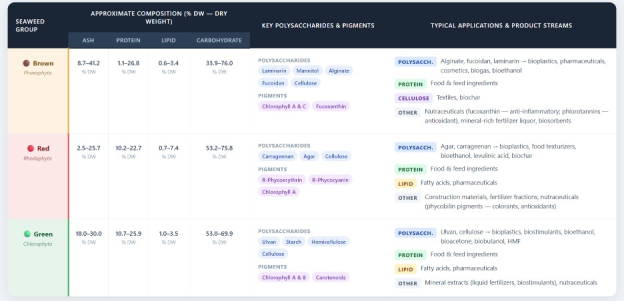 Figure 3: Biochemical composition and associated product portfolio of the three major seaweed groups (brown, red, and green), illustrating the diversity of high- to low-value products that can be derived from each group within a cascading biorefinery framework. The complementary compositions of different species underline the importance of species selection in biorefinery design. (adapted from: Kostas et al. (2021) and references therein)
The seaweed biorefining industry is currently in early stages of development. Large-scale industrialization of a process generating multiple products from seaweed has not yet been realized with the largest production of 5 tons wet weight (ww) per day (Gregerson, 2021) as of 2021. For comparison, commercial biorefineries using terrestrial biomass typically process over 500 tons of feedstock per day. In 2025, Agrisea announced the development of a biorefinery that will produce 1600 kg of nanocellulose from seaweed residues left over after developing products such as biostimulants (no information is available on the amount of seaweed feedstock used).
A key challenge is the complexity inherent in the integration of multiple extraction technologies and purification processes in multi-product biorefineries. This is an achievable end state- for example, in the EU, over 450 biorefineries creating multiple products from agricultural and forestry biomass are commercially operational. However, companies that are closest to commercial viability developing seaweed based products have anchored on two or three primary products to prove unit economics, then plan to build toward additional product streams as scale and operating knowledge develop.
Figure 3: Biochemical composition and associated product portfolio of the three major seaweed groups (brown, red, and green), illustrating the diversity of high- to low-value products that can be derived from each group within a cascading biorefinery framework. The complementary compositions of different species underline the importance of species selection in biorefinery design. (adapted from: Kostas et al. (2021) and references therein)
The seaweed biorefining industry is currently in early stages of development. Large-scale industrialization of a process generating multiple products from seaweed has not yet been realized with the largest production of 5 tons wet weight (ww) per day (Gregerson, 2021) as of 2021. For comparison, commercial biorefineries using terrestrial biomass typically process over 500 tons of feedstock per day. In 2025, Agrisea announced the development of a biorefinery that will produce 1600 kg of nanocellulose from seaweed residues left over after developing products such as biostimulants (no information is available on the amount of seaweed feedstock used).
A key challenge is the complexity inherent in the integration of multiple extraction technologies and purification processes in multi-product biorefineries. This is an achievable end state- for example, in the EU, over 450 biorefineries creating multiple products from agricultural and forestry biomass are commercially operational. However, companies that are closest to commercial viability developing seaweed based products have anchored on two or three primary products to prove unit economics, then plan to build toward additional product streams as scale and operating knowledge develop.
Biorefinery Initiatives and Current Status
The industry is approaching the challenge to move from pilot scale to commercial scale in two distinct operational models that have different cost structures and deployment profiles. Centralized biorefineries are meant to be large industrial facilities that process high volumes of seaweed and benefit from economies of scale. They require reliable, high-volume feedstock supply chains and proximity to port infrastructure. Their capital intensity means they are suited to established seaweed-producing regions with existing supply chains. Portable micro-biorefineries are modular, often containerized units designed to be transported to seaweed harvest sites and remote coastal areas. Processing fresh, wet seaweed near the point of harvest avoids or dramatically reduces the drying step that currently accounts for 50–70% of total lifecycle emissions (Chaurasiya et al., 2026). Soleymani et al. (2017) modeled a 35% reduction in costs when processing facilities where established close to the seaweed harvest sites.| Company | Model | TRL / status | Anchor product(s) | Notes |
| Algaia | Centralized; wild-harvested feedstock | TRL 8-9 | Seaweed extracts (enzymatic and supercritical extraction) | European green-extraction operator using enzymatic treatment and supercritical extraction on wild-harvested seaweed. Avoids harsh chemicals. Feedstock is wild, not cultivated. Active example of greener extraction chemistry at commercial scale. |
| Agrisea (NZ) | Centralized; biostimulant-first cascade | TRL 7-8 | Biostimulants; nanocellulose from residue | New Zealand operator applying the biostimulant-first cascade model. In 2025 announced production of 1,600 kg of nanocellulose from residues remaining after biostimulant extraction. Illustrates the two-step liquid extract + residue valorization pathway advocated in this document. Cultivated feedstock. |
| OCEANIUM (UK) | Centralized, co-located next to farms | TRL 8 — full production campaign (90 t ww processed in KELP-EU project) | Food ingredients (fiber, protein) | Planned 20,000 t ww/yr. Nutraceuticals (fucoidan, beta-glucan) as secondary products. Clear anchor-first model. |
| Origin by Ocean | Centralized | TRL 5–6 — pilot/trials; targeting full commercial 2025 | Sodium alginate | Planned 20,000–100,000 t ww/yr. Alginate as anchor; mycosporin, fucoxanthin, fucoidan, laminarin as co-products. Illustrates anchor-plus-cascade model. |
| GOA Ventures | Portable, modular, scalable | TRL 5–6 — pilot tests >100 kg scale since 2017 | Protein and valuable carbohydrates | Target 25,000 t ww/yr for viability. Multiple species capable. Co-products include biogas and biostimulants/biofertilizers. |
| Thalasso | Portable, modular (container) | TRL 4–5 | Biostimulants (Sargassum-based) | Goal: 3–4 t ww/day. Single anchor product currently; plans to expand. Strongest example of biostimulants-first model. |
Species Selection
The composition of seaweed species determines which product cascades are feasible: brown seaweeds are rich in alginate, fucoidan, laminarin, and mannitol; red seaweeds in carrageenan or agar and proteins; green seaweeds in ulvan and protein. This complementarity means species selection is foundational to biorefinery design. See Figure 3 for the composition of seaweed species and the typical applications and product streams.
Figure 3: Biochemical composition and associated product portfolio of the three major seaweed groups (brown, red, and green), illustrating the diversity of high- to low-value products that can be derived from each group within a cascading biorefinery framework. The complementary compositions of different species underline the importance of species selection in biorefinery design. (adapted from: Kostas et al. (2021) and references therein)
The seaweed biorefining industry is currently in early stages of development. Large-scale industrialization of a process generating multiple products from seaweed has not yet been realized with the largest production of 5 tons wet weight (ww) per day (Gregerson, 2021) as of 2021. For comparison, commercial biorefineries using terrestrial biomass typically process over 500 tons of feedstock per day. In 2025, Agrisea announced the development of a biorefinery that will produce 1600 kg of nanocellulose from seaweed residues left over after developing products such as biostimulants (no information is available on the amount of seaweed feedstock used).
A key challenge is the complexity inherent in the integration of multiple extraction technologies and purification processes in multi-product biorefineries. This is an achievable end state- for example, in the EU, over 450 biorefineries creating multiple products from agricultural and forestry biomass are commercially operational. However, companies that are closest to commercial viability developing seaweed based products have anchored on two or three primary products to prove unit economics, then plan to build toward additional product streams as scale and operating knowledge develop.
Biorefinery Initiatives and Current Status
The industry is approaching the challenge to move from pilot scale to commercial scale in two distinct operational models that have different cost structures and deployment profiles. Centralized biorefineries are meant to be large industrial facilities that process high volumes of seaweed and benefit from economies of scale. They require reliable, high-volume feedstock supply chains and proximity to port infrastructure. Their capital intensity means they are suited to established seaweed-producing regions with existing supply chains. Portable micro-biorefineries are modular, often containerized units designed to be transported to seaweed harvest sites and remote coastal areas. Processing fresh, wet seaweed near the point of harvest avoids or dramatically reduces the drying step that currently accounts for 50–70% of total lifecycle emissions (Chaurasiya et al., 2026). Soleymani et al. (2017) modeled a 35% reduction in costs when processing facilities where established close to the seaweed harvest sites.| Company | Model | TRL / status | Anchor product(s) | Notes |
| Algaia | Centralized; wild-harvested feedstock | TRL 8-9 | Seaweed extracts (enzymatic and supercritical extraction) | European green-extraction operator using enzymatic treatment and supercritical extraction on wild-harvested seaweed. Avoids harsh chemicals. Feedstock is wild, not cultivated. Active example of greener extraction chemistry at commercial scale. |
| Agrisea (NZ) | Centralized; biostimulant-first cascade | TRL 7-8 | Biostimulants; nanocellulose from residue | New Zealand operator applying the biostimulant-first cascade model. In 2025 announced production of 1,600 kg of nanocellulose from residues remaining after biostimulant extraction. Illustrates the two-step liquid extract + residue valorization pathway advocated in this document. Cultivated feedstock. |
| OCEANIUM (UK) | Centralized, co-located next to farms | TRL 8 — full production campaign (90 t ww processed in KELP-EU project) | Food ingredients (fiber, protein) | Planned 20,000 t ww/yr. Nutraceuticals (fucoidan, beta-glucan) as secondary products. Clear anchor-first model. |
| Origin by Ocean | Centralized | TRL 5–6 — pilot/trials; targeting full commercial 2025 | Sodium alginate | Planned 20,000–100,000 t ww/yr. Alginate as anchor; mycosporin, fucoxanthin, fucoidan, laminarin as co-products. Illustrates anchor-plus-cascade model. |
| GOA Ventures | Portable, modular, scalable | TRL 5–6 — pilot tests >100 kg scale since 2017 | Protein and valuable carbohydrates | Target 25,000 t ww/yr for viability. Multiple species capable. Co-products include biogas and biostimulants/biofertilizers. |
| Thalasso | Portable, modular (container) | TRL 4–5 | Biostimulants (Sargassum-based) | Goal: 3–4 t ww/day. Single anchor product currently; plans to expand. Strongest example of biostimulants-first model. |
Species Selection
The composition of seaweed species determines which product cascades are feasible: brown seaweeds are rich in alginate, fucoidan, laminarin, and mannitol; red seaweeds in carrageenan or agar and proteins; green seaweeds in ulvan and protein. This complementarity means species selection is foundational to biorefinery design. See Figure 3 for the composition of seaweed species and the typical applications and product streams.
Figure 3: Biochemical composition and associated product portfolio of the three major seaweed groups (brown, red, and green), illustrating the diversity of high- to low-value products that can be derived from each group within a cascading biorefinery framework. The complementary compositions of different species underline the importance of species selection in biorefinery design. (adapted from: Kostas et al. (2021) and references therein)
The seaweed biorefining industry is currently in early stages of development. Large-scale industrialization of a process generating multiple products from seaweed has not yet been realized with the largest production of 5 tons wet weight (ww) per day (Gregerson, 2021) as of 2021. For comparison, commercial biorefineries using terrestrial biomass typically process over 500 tons of feedstock per day. In 2025, Agrisea announced the development of a biorefinery that will produce 1600 kg of nanocellulose from seaweed residues left over after developing products such as biostimulants (no information is available on the amount of seaweed feedstock used)
A key challenge is the complexity inherent in the integration of multiple extraction technologies and purification processes in multi-product biorefineries. This is an achievable end state- for example, in the EU, over 450 biorefineries creating multiple products from agricultural and forestry biomass are commercially operational. However, companies that are closest to commercial viability developing seaweed based products have anchored on two or three primary products to prove unit economics, then plan to build toward additional product streams as scale and operating knowledge develop.
Biorefinery Initiatives and Current Status
The industry is approaching the challenge to move from pilot scale to commercial scale in two distinct operational models that have different cost structures and deployment profiles. Centralized biorefineries are meant to be large industrial facilities that process high volumes of seaweed and benefit from economies of scale. They require reliable, high-volume feedstock supply chains and proximity to port infrastructure. Their capital intensity means they are suited to established seaweed-producing regions with existing supply chains. Portable micro-biorefineries are modular, often containerized units designed to be transported to seaweed harvest sites and remote coastal areas. Processing fresh, wet seaweed near the point of harvest avoids or dramatically reduces the drying step that currently accounts for 50–70% of total lifecycle emissions (Chaurasiya et al., 2026). Soleymani et al., 2017 modeled a 35% reduction in costs when processing facilities where established close to the seaweed harvest sites.| Company | Model | TRL / status | Anchor product(s) | Notes |
| Algaia | Centralized; wild-harvested feedstock | TRL 8-9 | Seaweed extracts (enzymatic and supercritical extraction) | European green-extraction operator using enzymatic treatment and supercritical extraction on wild-harvested seaweed. Avoids harsh chemicals. Feedstock is wild, not cultivated. Active example of greener extraction chemistry at commercial scale. |
| Agrisea (NZ) | Centralized; biostimulant-first cascade | TRL 7-8 | Biostimulants; nanocellulose from residue | New Zealand operator applying the biostimulant-first cascade model. In 2025 announced production of 1,600 kg of nanocellulose from residues remaining after biostimulant extraction. Illustrates the two-step liquid extract + residue valorization pathway advocated in this document. Cultivated feedstock. |
| OCEANIUM (UK) | Centralized, co-located next to farms | TRL 8 — full production campaign (90 t ww processed in KELP-EU project) | Food ingredients (fiber, protein) | Planned 20,000 t ww/yr. Nutraceuticals (fucoidan, beta-glucan) as secondary products. Clear anchor-first model. |
| Origin by Ocean | Centralized | TRL 5–6 — pilot/trials; targeting full commercial 2025 | Sodium alginate | Planned 20,000–100,000 t ww/yr. Alginate as anchor; mycosporin, fucoxanthin, fucoidan, laminarin as co-products. Illustrates anchor-plus-cascade model. |
| GOA Ventures | Portable, modular, scalable | TRL 5–6 — pilot tests >100 kg scale since 2017 | Protein and valuable carbohydrates | Target 25,000 t ww/yr for viability. Multiple species capable. Co-products include biogas and biostimulants/biofertilizers. |
| Thalasso | Portable, modular (container) | TRL 4–5 | Biostimulants (Sargassum-based) | Goal: 3–4 t ww/day. Single anchor product currently; plans to expand. Strongest example of biostimulants-first model. |
Product Performance
Given the nascent state of seaweed based biorefineries, very little information exists about the comparative performance vs other approaches. As biorefinery approaches are developed, key metrics and considerations with regards to economic feasibility, resource efficiency, and environmental impacts and their tradeoffs will have to be carefully examined.
| Metric Type | Key Metrics | Considerations |
| Economic Feasibility | Capital Expenditure (CAPEX), Operating Expenditure(OPEX), Revenue drivers. Breakeven costs, Rate of Return |
Ensure that revenue drivers are well understood, reduce time to breakeven and maximize rate of return. Comparative assessment should include different types of processes (e.g. standard vs green) chemistry), product platforms and locations/operational models. |
| Resource Efficiency | Percentage Utilization of Biomass, Amount of Waste Generated,
Conversion yield and extraction efficiency. |
Optimize use of biomass and minimize wasted resources |
| Environmental Impact | Greenhouse gas (GHG) emissions and carbon footprint. Nutrient footprint (terrestrial, marine, and freshwater eutrophication). Water and chemical usage (aiming for greener methods). |
Perform LCA analyses at different scales from pilot to commercial scale, identifying hotspots where emissions need to be minimized. Assess other environmental and toxic chemical impacts as well as water use at scale. |
| Social Impact | Income uplift per farmer, % Value captured locally, Gender participation | Ensure that biorefineries do not exacerbate social inequities |
Table 2: Potential Performance Metrics for Biorefineries
| Metric Type | Key Metrics | Considerations |
| Economic Feasibility | Capital Expenditure (CAPEX), Operating Expenditure(OPEX), Revenue drivers. Breakeven costs, Rate of Return | Ensure that revenue drivers are well understood, reduce time to breakeven and maximize rate of return. Comparative assessment should include different types of processes (e.g. standard vs green) chemistry), product platforms and locations/operational models. |
| Resource Efficiency | Percentage Utilization of Biomass, Amount of Waste Generated, Conversion yield and extraction efficiency. | Optimize use of biomass and minimize wasted resources |
| Environmental Impact | Greenhouse gas (GHG) emissions and carbon footprint. Nutrient footprint (terrestrial, marine, and freshwater eutrophication). Water and chemical usage (aiming for greener methods). | Perform LCA analyses at different scales from pilot to commercial scale, identifying hotspots where emissions need to be minimized. Assess other environmental and toxic chemical impacts as well as water use at scale. |
| Social Impact | Income uplift per farmer, % Value captured locally, Gender participation | Ensure that biorefineries do not exacerbate social inequities |
| Metric Type | Key Metrics | Considerations |
| Economic Feasibility | Capital Expenditure (CAPEX), Operating Expenditure(OPEX), Revenue drivers. Breakeven costs, Rate of Return | Ensure that revenue drivers are well understood, reduce time to breakeven and maximize rate of return. Comparative assessment should include different types of processes (e.g. standard vs green) chemistry), product platforms and locations/operational models. |
| Resource Efficiency | Percentage Utilization of Biomass, Amount of Waste Generated, Conversion yield and extraction efficiency. | Optimize use of biomass and minimize wasted resources |
| Environmental Impact | Greenhouse gas (GHG) emissions and carbon footprint. Nutrient footprint (terrestrial, marine, and freshwater eutrophication). Water and chemical usage (aiming for greener methods). | Perform LCA analyses at different scales from pilot to commercial scale, identifying hotspots where emissions need to be minimized. Assess other environmental and toxic chemical impacts as well as water use at scale. |
| Social Impact | Income uplift per farmer, % Value captured locally, Gender participation | Ensure that biorefineries do not exacerbate social inequities |
| Metric Type | Key Metrics | Considerations |
| Economic Feasibility | Capital Expenditure (CAPEX), Operating Expenditure(OPEX), Revenue drivers. Breakeven costs, Rate of Return | Ensure that revenue drivers are well understood, reduce time to breakeven and maximize rate of return. Comparative assessment should include different types of processes (e.g. standard vs green) chemistry), product platforms and locations/operational models. |
| Resource Efficiency | Percentage Utilization of Biomass, Amount of Waste Generated, Conversion yield and extraction efficiency. | Optimize use of biomass and minimize wasted resources |
| Environmental Impact | Greenhouse gas (GHG) emissions and carbon footprint. Nutrient footprint (terrestrial, marine, and freshwater eutrophication). Water and chemical usage (aiming for greener methods). | Perform LCA analyses at different scales from pilot to commercial scale, identifying hotspots where emissions need to be minimized. Assess other environmental and toxic chemical impacts as well as water use at scale. |
| Social Impact | Income uplift per farmer, % Value captured locally, Gender participation | Ensure that biorefineries do not exacerbate social inequities |
| Metric Type | Key Metrics | Considerations |
| Economic Feasibility | Capital Expenditure (CAPEX), Operating Expenditure(OPEX), Revenue drivers. Breakeven costs, Rate of Return | Ensure that revenue drivers are well understood, reduce time to breakeven and maximize rate of return. Comparative assessment should include different types of processes (e.g. standard vs green) chemistry), product platforms and locations/operational models. |
| Resource Efficiency | Percentage Utilization of Biomass, Amount of Waste Generated, Conversion yield and extraction efficiency. | Optimize use of biomass and minimize wasted resources |
| Environmental Impact | Greenhouse gas (GHG) emissions and carbon footprint. Nutrient footprint (terrestrial, marine, and freshwater eutrophication). Water and chemical usage (aiming for greener methods). | Perform LCA analyses at different scales from pilot to commercial scale, identifying hotspots where emissions need to be minimized. Assess other environmental and toxic chemical impacts as well as water use at scale. |
| Social Impact | Income uplift per farmer, % Value captured locally, Gender participation | Ensure that biorefineries do not exacerbate social inequities |
| Metric Type | Key Metrics | Considerations |
| Economic Feasibility | Capital Expenditure (CAPEX), Operating Expenditure(OPEX), Revenue drivers. Breakeven costs, Rate of Return | Ensure that revenue drivers are well understood, reduce time to breakeven and maximize rate of return. Comparative assessment should include different types of processes (e.g. standard vs green) chemistry), product platforms and locations/operational models. |
| Resource Efficiency | Percentage Utilization of Biomass, Amount of Waste Generated, Conversion yield and extraction efficiency. | Optimize use of biomass and minimize wasted resources |
| Environmental Impact | Greenhouse gas (GHG) emissions and carbon footprint. Nutrient footprint (terrestrial, marine, and freshwater eutrophication). Water and chemical usage (aiming for greener methods). | Perform LCA analyses at different scales from pilot to commercial scale, identifying hotspots where emissions need to be minimized. Assess other environmental and toxic chemical impacts as well as water use at scale. |
| Social Impact | Income uplift per farmer, % Value captured locally, Gender participation | Ensure that biorefineries do not exacerbate social inequities |
Environmental Co-benefits and Risks
Co-benefits
- A central tenet of the biorefinery concept is increased utilization of biomass. Current hydrocolloid production discards 70–85% of biomass, which is often disposed of in rivers and coastal areas, causing environmental pollution (Liu et al., 2024)
Risks
- Conventional processing uses acids for hydrolysis generating hydroxymethyl furfural and similar inhibitors (Liu et al., 2005) and organic solvents for lipid and pigment extraction (Garcia-Vaquero et al., 2020), creating worker safety and waste disposal concerns
Co-benefits
- A central tenet of the biorefinery concept is increased utilization of biomass. Current hydrocolloid production discards 70–85% of biomass, which is often disposed of in rivers and coastal areas, causing environmental pollution (Liu et al., 2024)
Risks
- Conventional processing uses acids for hydrolysis generating hydroxymethyl furfural and similar inhibitors (Liu et al., 2005) and organic solvents for lipid and pigment extraction (Garcia-Vaquero et al., 2020), creating worker safety and waste disposal concerns
Co-Benefits
- Waste Minimization and Resource Efficiency : A central tenet of the biorefinery concept is increased utilization of biomass. Current hydrocolloid production discards 70–85% of biomass, which is often disposed of in rivers and coastal areas, causing environmental pollution (Liu et al., 2024).
Risks
- Use of Harsh Chemicals and Toxic Residues: Conventional processing uses acids for hydrolysis generating hydroxymethyl furfural and similar inhibitors (Liu et al., 2005) and organic solvents for lipid and pigment extraction (Garcia-Vaquero et al., 2020), creating worker safety and waste disposal concerns.
Co-Benefits
- Waste Minimization and Resource Efficiency : A central tenet of the biorefinery concept is increased utilization of biomass. Current hydrocolloid production discards 70–85% of biomass, which is often disposed of in rivers and coastal areas, causing environmental pollution (Liu et al., 2024).
Risks
- Use of Harsh Chemicals and Toxic Residues: Conventional processing uses acids for hydrolysis generating hydroxymethyl furfural and similar inhibitors (Liu et al., 2005) and organic solvents for lipid and pigment extraction (Garcia-Vaquero et al., 2020), creating worker safety and waste disposal concerns.
Policy and Regulation
The advancement of seaweed biorefineries is aligned with major policy goals, particularly in the European Union (EU), to advance the transition to a sustainable bio-based economy and contribute to objectives like climate change mitigation. Outside the EU zone there are efforts to fund seaweed cultivation and products but without a clear emphasis on biorefineries.
| Jurisdiction | Specific Policies or Regulation | How it Can Drive Biorefinery Research and Development (R&D) |
| European Union | The EU Bioeconomy Strategy, which refers to the overarching objective of boosting innovation, competitiveness and green jobs in the bioeconomy , while promoting circular and sustainable production. | Marine and aquatic research and innovation is part of the EU bioeconomy strategy.
While the funding mechanisms are unclear, the action plan includes facilitating the deployment of new sustainable biorefineries. The original Bioeconomy Strategy of 2012 also motivated the development of the Bio-Based Industries Joint Undertaking, which was a public-private partnership, investing in seaweed biorefinery R&D through the Horizon programs (e.g. Macrocascade)
|
| UK Innovate | While no concerted biorefinery policies exist, Grants from Innovate UK have supported biorefinery R&D. | Provides direct financial support through funding competitions for businesses working with emerging biorefinery technologies, aiding companies like OCEANIUM in scaling up. |
| Asia | While no concerted biorefinery policies exist, several countries are looking to expand beyond traditional markets of hydrocolloids and food. For example, Indonesia is targeting the seaweed biofuel industry. | The potential for new markets in sectors with a large traditional market could spur biorefinery development to ensure profitability and help some seaweed farmers transition from sellers of commodities to makers of valuable products so as to capture more of the value of their labor and crop. |
Table 3: Policies that can drive biorefinery research and development
| Jurisdiction | Specific Policies or Regulation | How it Can Drive Biorefinery Research and Development (R&D) |
| European Union | The EU Bioeconomy Strategy, which refers to the overarching objective of boosting innovation, competitiveness and green jobs in the bioeconomy , while promoting circular and sustainable production. | Marine and aquatic research and innovation is part of the EU bioeconomy strategy. While the funding mechanisms are unclear, the action plan includes facilitating the deployment of new sustainable biorefineries. The original Bioeconomy Strategy of 2012 also motivated the development of the Bio-Based Industries Joint Undertaking, which was a public-private partnership, investing in seaweed biorefinery R&D through the Horizon programs (e.g. Macrocascade) |
| UK Innovate | While no concerted biorefinery policies exist, Grants from Innovate UK have supported biorefinery R&D. | Provides direct financial support through funding competitions for businesses working with emerging biorefinery technologies, aiding companies like OCEANIUM in scaling up. |
| Asia | While no concerted biorefinery policies exist, several countries are looking to expand beyond traditional markets of hydrocolloids and food. For example, Indonesia is targeting the seaweed biofuel industry. | The potential for new markets in sectors with a large traditional market could spur biorefinery development to ensure profitability and help some seaweed farmers transition from sellers of commodities to makers of valuable products so as to capture more of the value of their labor and crop. |
| Jurisdiction | Specific Policies or Regulation | How it Can Drive Biorefinery Research and Development (R&D) |
| The EU Bioeconomy Strategy, which refers to the overarching objective of boosting innovation, competitiveness and green jobs in the bioeconomy , while promoting circular and sustainable production. | Marine and aquatic research and innovation is part of the EU bioeconomy strategy. While the funding mechanisms are unclear, the action plan includes facilitating the deployment of new sustainable biorefineries. The original Bioeconomy Strategy of 2012 also motivated the development of the Bio-Based Industries Joint Undertaking, which was a public-private partnership, investing in seaweed biorefinery R&D through the Horizon programs (e.g. Macrocascade) | |
| UK Innovate | While no concerted biorefinery policies exist, Grants from Innovate UK have supported biorefinery R&D. | Provides direct financial support through funding competitions for businesses working with emerging biorefinery technologies, aiding companies like OCEANIUM in scaling up. |
| Asia | While no concerted biorefinery policies exist, several countries are looking to expand beyond traditional markets of hydrocolloids and food. For example, Indonesia is targeting the seaweed biofuel industry. | The potential for new markets in sectors with a large traditional market could spur biorefinery development to ensure profitability and help some seaweed farmers transition from sellers of commodities to makers of valuable products so as to capture more of the value of their labor and crop. |
| Jurisdiction | Specific Policies or Regulation | How it Can Drive Biorefinery Research and Development (R&D) |
| The EU Bioeconomy Strategy, which refers to the overarching objective of boosting innovation, competitiveness and green jobs in the bioeconomy , while promoting circular and sustainable production. | Marine and aquatic research and innovation is part of the EU bioeconomy strategy. While the funding mechanisms are unclear, the action plan includes facilitating the deployment of new sustainable biorefineries. The original Bioeconomy Strategy of 2012 also motivated the development of the Bio-Based Industries Joint Undertaking, which was a public-private partnership, investing in seaweed biorefinery R&D through the Horizon programs (e.g. Macrocascade) | |
| UK Innovate | While no concerted biorefinery policies exist, Grants from Innovate UK have supported biorefinery R&D. | Provides direct financial support through funding competitions for businesses working with emerging biorefinery technologies, aiding companies like OCEANIUM in scaling up. |
| Asia | While no concerted biorefinery policies exist, several countries are looking to expand beyond traditional markets of hydrocolloids and food. For example, Indonesia is targeting the seaweed biofuel industry. | The potential for new markets in sectors with a large traditional market could spur biorefinery development to ensure profitability and help some seaweed farmers transition from sellers of commodities to makers of valuable products so as to capture more of the value of their labor and crop. |
| Jurisdiction | Specific Policies or Regulation | How it Can Drive Biorefinery Research and Development (R&D) |
| The EU Bioeconomy Strategy, which refers to the overarching objective of boosting innovation, competitiveness and green jobs in the bioeconomy , while promoting circular and sustainable production. | Marine and aquatic research and innovation is part of the EU bioeconomy strategy. While the funding mechanisms are unclear, the action plan includes facilitating the deployment of new sustainable biorefineries. The original Bioeconomy Strategy of 2012 also motivated the development of the Bio-Based Industries Joint Undertaking, which was a public-private partnership, investing in seaweed biorefinery R&D through the Horizon programs (e.g. Macrocascade) | |
| UK Innovate | While no concerted biorefinery policies exist, Grants from Innovate UK have supported biorefinery R&D. | Provides direct financial support through funding competitions for businesses working with emerging biorefinery technologies, aiding companies like OCEANIUM in scaling up. |
| Asia | While no concerted biorefinery policies exist, several countries are looking to expand beyond traditional markets of hydrocolloids and food. For example, Indonesia is targeting the seaweed biofuel industry. | The potential for new markets in sectors with a large traditional market could spur biorefinery development to ensure profitability and help some seaweed farmers transition from sellers of commodities to makers of valuable products so as to capture more of the value of their labor and crop. |
How to submit comments:
Thanks for helping to advance these roadmaps. Here is how it works!
Or, send general feedback to info@oceanvisions.org
All submitted comments will be reviewed by the Ocean Visions team to ensure that they are true, verifiable, and additive before being added to the road maps. You can increase the likelihood that your comments will be incorporated into the road maps by providing references (where appropriate).